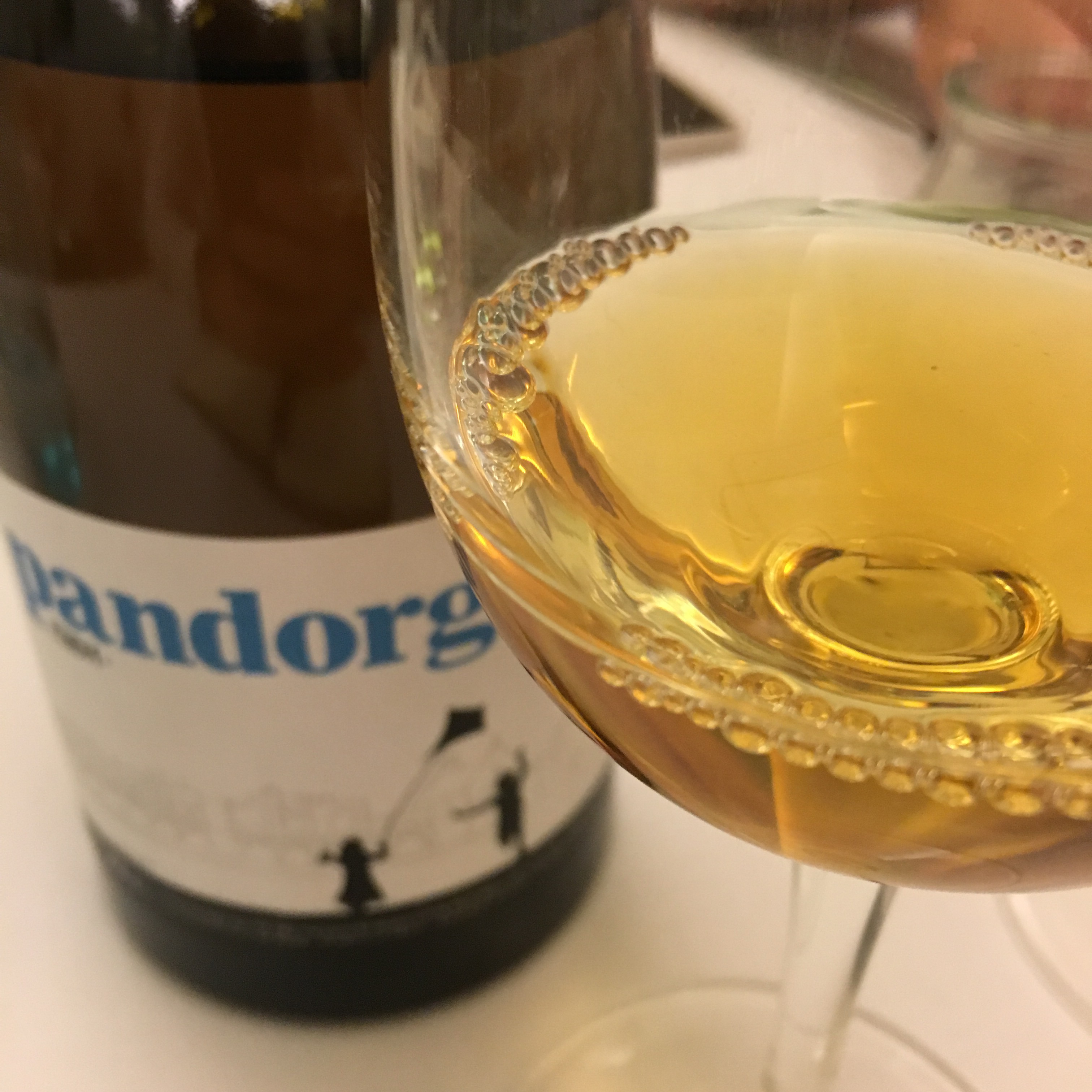
Pandorga 2014

We had this last night at the end of a cracking dinner with a really good little creme brulee (I took no photo of course so I am recyling one).  I also have one of these 100 year old PX beauties down here with me and was nearly tempted to open it but managed to rein myself in in time.

It really is an excellent little wine. A little apricot gem, sweet but mineral, tasty but fresh. Comparisons were made with late harvest rieslings but to me this has a bit more apricot and orange richness than you would find there. But it is a lot more than that: it is terroir specific (the Panesa vineyard, in Carrascal de Jerez), it is a pure expression of the fruit, and it has a specific vintage (2014, obvs). In fact it not only has a vintage, but by choosing to vary the asoleo (less asoleo for a cool season like this one, slightly more for a warm season like 2015), and fermentation without temperature control it almost exaggerates the qualities of that vintage.

But most importantly, a little gem of a wine.


The young flor and the old bota 

Interesting contrast here between two wines that are both 100% palomino fino and have both spent time in bota but with and without flor, respectively. (They are also from opposite ends of the Marco de Jerez.) What I find interesting is the fact that what I recognize as the wood influence of the barrel is much more marked in the Socaire – which has spent two years in an old fino bota – than in the Manzanilla de Añada – which has spent nearly four.

I am no expert here but I am guessing that this lack of wood effect may be a function of the flor at work, or that the barrel influence is balanced by the lack of glycerine and sugar in the wine. Or it maybe that what I am attributing to the wood is really the effect of the wine impregnated into the barrels. On a completely different level, it reminded me of one of the more extraordinary wines that we tasted by Alba a while back: Alba Pago Carrascal Las Alegrías 2014. That wine was un unfortified palomino fino from Pago Carrascal (de Sanlucar) that aged for 18 months in a 650 litre chestnut bocoy that had held oloroso for over 80 years – and as a result had gained a fascinating, fine character and profile. It also brought to mind Mirando al Sur, a fascinating 100% viura from Rioja by Oliviere Riviere that had spent 18 months in a sherry bota.  (Indeed although I am even less of an expert this kind of thing has been de rigueur in the whisky business for donkeys years.)

It is something that has intrigued me ever since I started thinking about these wines: trying to get a handle on the importance of the barrels used. One of the first things a winemaker will tell you about their wines is how much oak it has had, where the oak was from and whether it was old or new. This conversation just never happens in relation to sherry. Maybe because of the historic nature of many soleras and the very limited number of vintage wines: even the new soleras that appear tendo to inherit barrels from old ones, while the vintage wines I know of, from memory, appear to be aged in old botas.

It would be fascinating to try something made in a new barrel, or maybe to make some wine in new american and french oak and give them a run against the oldies. Who knows maybe there is a stack of literature out there that I am not aware of – if so give me a shout.


Manzanilla de añada Callejuela 2012 – 2/11 

After a special week this is a special wine.

A week ago I was feeling a bit of burnout – really tough month with everything going on around the world and to be honest I was ready for some holidays. A couple of nights out with the boys and a long chat with one of the most inspiring winemakers around changed that – and the arrival of this, one of my favourite projects – also helped (thanks to the Cuatrogatos).

It has the same fresh, lemony gold colour as the first bota, but the nose while fruity has a touch more sea breeze. Then on the palate it has a much more explosive zinginess – salinity and sapidity. Still has a good mouthfull of fruit but a little bit spicier and much finer, more vertical and direct. Then a long, long mouthwatering finish. Am watching the Open as I sup and the boys have played their putts and my mouth is still watering.

A definite step up and a much bigger step up than I expected from the first saca. This is a proper manzanilla alright.

Fino la Barajuela 2013 (and a 1er cru controlée)

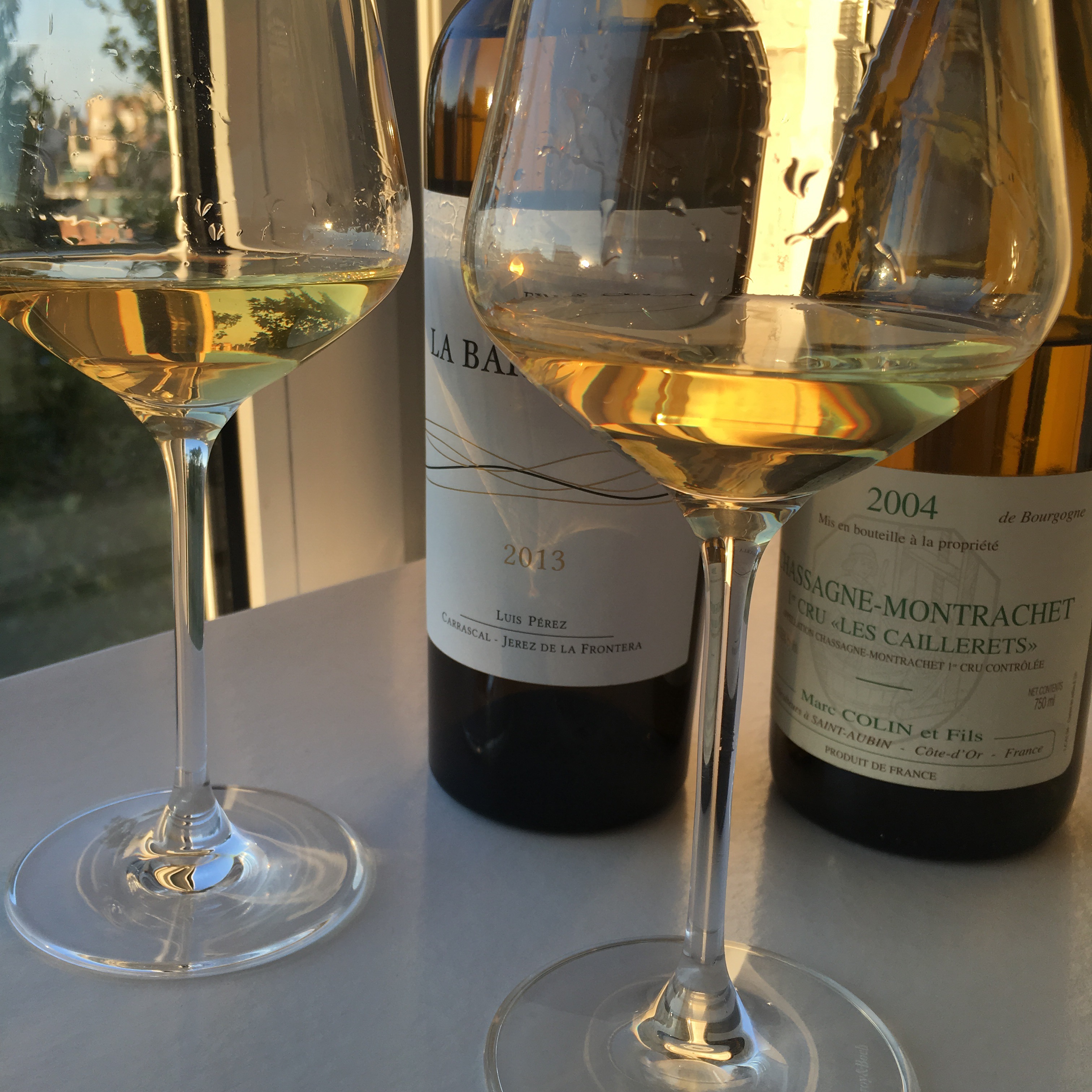
From the comments you read and hear the great wines from Jerez with a bit of personality are often likened to their cousins up in Burgundy, so I thought I would take advantage of having a nice Chassagne Montrachet open to have another look at the Fino la Barajuela.

The Burgundy was glorious, a beautiful bright gold colour, a nice flowery, lemon and limestone nose, then elegance, balance and precision with flavoura of nectar and pollen, pear or apple and citrus acidity. Absolutely top class (I may be over-egging it but it was even better than I expected.)

The Barajuela is the business too but goes about that business in a markedly different manner. The chardonnay is full of fruit and so is the Barajuela – in fact it has more fruit than many of its peers in the sherry triangle, but maybe what strikes you most is the salinity in nose and palate, and the way the salinity and zing takes the place of the acidity. Do they leave room for the full range of flavours that the burgundy has? Perhaps not, but on the other hand the Barajuela’s minerals and muscle give it a different dimension, a uniqueness that lifts it above the comparison.

I originally wrote this note in terms of a comparison but I realize now – thanks to a comment from Alvaro Giron – that that is unhelpful. These are very different kettles of fish and it is the differences that are illuminating. My  verdict: don’t buy the Barajuela if what you want is a chardonnay. It is something else.

Finca Matalian

In the course of tasting the Pitijopos the first time around the most expressive mosto at the first time of asking was one from way down in Chiclana, to the South of Jerez, and a specific pago called Finca Matalian, only 7km from the sea, owned by Primitivo Collantes.

It made such an impression that I have since felt compelled to taste, or retaste, all of the wines I could find from that little patch of land:

I would recommend anyone to do the same.  These are beautifully made, under-rated wines and an excellent opportunity to taste the finos and amontillado alongside the related white wine. It is fascinating to see the difference the flor makes, eating away all that fruit and glycerine and exposing an extremely mineral frame, and equally intriguing to see how the oxidation of the amontillado (probably my favourite and one of the most drinkable wines around) creates the illusion of bringing the fruit back.

And there is more to come. This isn’t the full list – there is another sweet sherry and another Moscatel that I haven’t got to yet, and while theViña Matalian was fermented in Inox but there is also now a related white wine – the Socaire – that has been fermented and aged 12 months in an old sherry cask. I will report back on that shortly and the others in due course. It is also said that Don Primitivo has planted a couple of hectares of “Uva Rey”.

(Photo of Finca Matalian earlier this week, courtesy of Primitivo Collantes.)


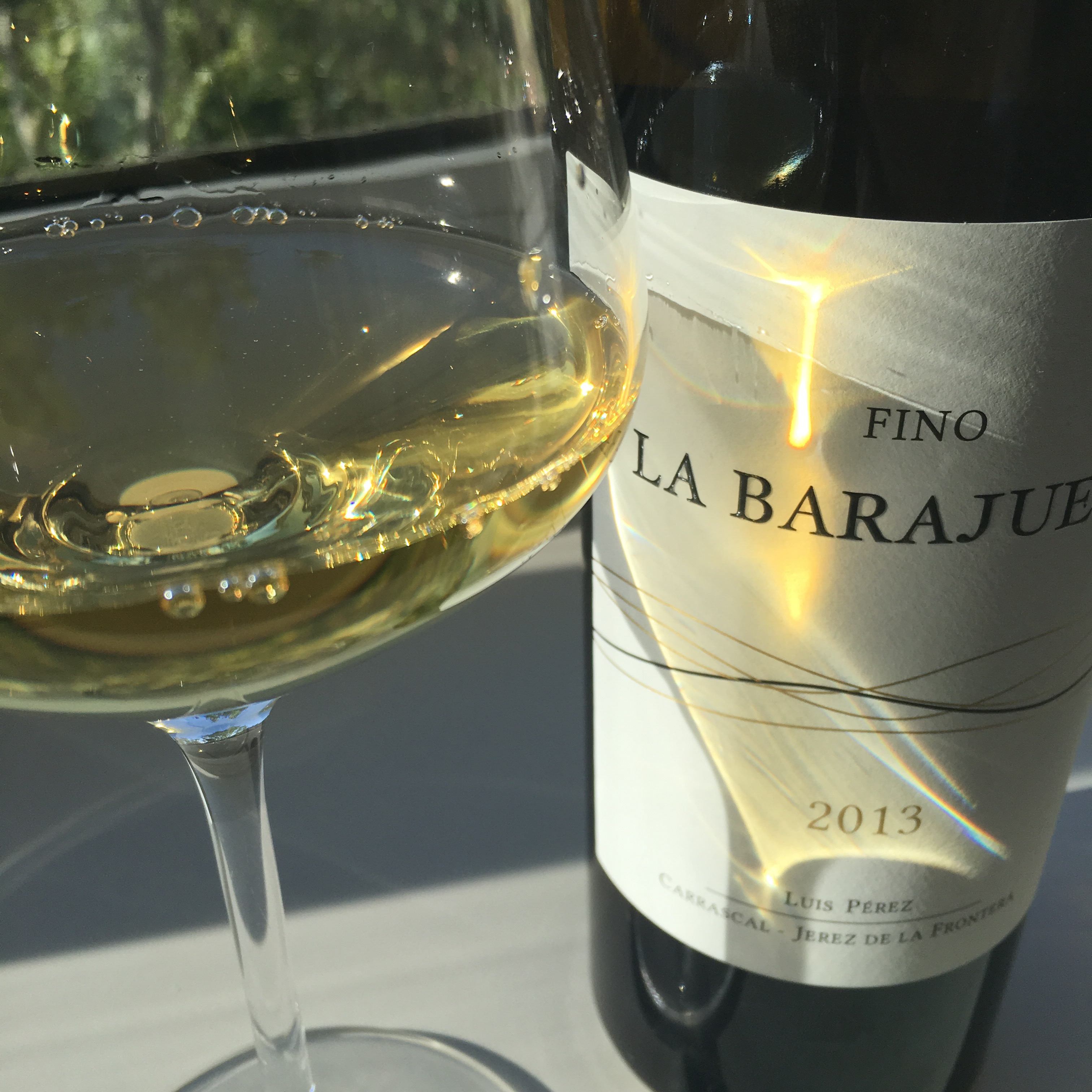
Fino la Barajuela 2013

Happy Father’s Day to me. What a wine this is.

It is a famous wine and one that lives up to its reputation. I first heard about it many moons ago, tried it in March on an overwhelming day in many ways, and have since heard its praises sung from the rooftops. And rightly so.

It may not be what you expect from a fino but it is a very fine wine. In fact, it is the expression of terroir and fruit in Jerez, and of winemaking, that I and many others have been waiting for. I thought it was impressive in March but found it heavy – now it is light on its feet and has the presence and personality of a great wine. I just can’t believe how good it is. It is outrageous.

If anyone tells you palomino is a “neutral vessel” let them taste this (or its Sanlucar cousin, the UBE, when it comes to that). When I first opened it it had that meaty nose of fresh grilled tuna, with a little lemon and coriander. Then as it opened later the nose was all fruit and sweet herbs. On the palate it has those same flavours fruit, sweet herbs, and meatiness, and the profile is horizontal: a long, long flavour that persists. All the while there is spicey saltiness in the background, and the balance of salinity and fruit is perfect – tasty but not clingy, full but not heavy.

Just really delicious. A fantastic wine.

Jerez: a look forward

W&H-LUIS PEREZ 3

Since 2014 and the celebration of Jerez as European capital of wine, Williams & Humbert, has organized a “Ciclo de Conferencias” and on Friday the guest speaker was one of the most revered voices in Spanish winemaking: Luis Perez Rodriguez (on the left in the photo above, with Jesús Medina, director of W&H), a renowned academic and professional, formerly of the legendary Bodegas Domecq, now of Bodegas Luis Pérez, and multiple prize winner for his enological research. I have never met him personally, but people that I consider to be authorities cite this man as “the” authority. Indeed, just this weekend I was sent a link to this account of the conference with the explanation that this was “the person with the most complete knowledge of Jerez by a considerable distance”.

So it is no surprise to hear that over 150 turned up to hear what he had to say – I wish I had been one of them (in fact I missed two great events this week – Alvaro Giron Sierra gave one of his tours de force in Barcelona on Tuesday). As it is, I have only seen the press stories and the press release that was kindly sent to me by Williams & Humbert but from what I have seen some excellent points were made. As such, since I have found no translation I have had a stab at my own below – not as elegant as Don Luis’ original phrasing but one does one’s best .

W&H-LUIS PEREZ 2

As the title above suggests, the main thrust of the presentation was forward looking, and focussed on how to win greater value for the wines of the region, although interestingly he appears also to have addressed one of the issues that I find most fascinating about the region: the dichotomy between the vines and vineyards, on the one hand, and the “high walls” of the bodegas, on the other.

The issue is summarized elegantly: “since no other wine exists that evolves as much during the ageing process as does a jerez wine, it is easy to see that the world of the bodegas has such a dominant role that it beomes very difficult to see beyond its walls”.

It is clear that, for Don Luis, it would be a mistake to focus exclusively on the bodegas. “The reality of Jerez includes a patrimony that goes beyond the bodegas and as long as three thousand years ago captivated the visiting phoenicians: the vineyards, and specifically the pagos of Albariza”. As he put it “one cannot understand the concept of a wine without its vine” a reality which has been “relegated in the last four decades and which must be recovered”.

As examples of the characteristics of the vine and the fruit being given less importance in recent times Don Luis talked about processes that have lead to a “greater standardization” of wines. Specifically mentioned are the belief that finos de jerez have lost their distinctive characteristics and become more similar to the traditional style of manzanillas (the brilliant verb “amanzanillamiento”) or the way that clarification and stabilization of wines had, until the recent popularity of en rama bottlings, lead to wines that were both more expensive to make and, ironically, less distinctive and perceived to be of lower quality.

For Don Luis, giving greater importance to the vines and vineyards of Jerez would give the wines “characteristics that in today’s world would add great value”, making reference to “winegrowing areas that not only value the character of the vines of the pago but also the even more specific qualities of the precise vineyard” and urging the sector to consider “a classification that differentiates, without creating a manichean black and white, so that the winemaker can characterize his wine harmonizing terroir and crianza”.

He also went on to add that “Jerez today has a strategic opportunity to start such a remodelling. We are talking about a denominación de origen whose current vineyards are more than 7.000 hectares, a surface area that permits it to aspire to the very highest levels of qualiy. Its location makes possible a diversity and a singularity that is very attractive and would permit the recovery of some the varieties of Palomino lost during the 20th Century. This would lead to the production of wines with a real vocation to express terroir”. And returning to his key point, “giving importance to the vine in the wine of jerez, would mean giving that wine characteristics that in today’s world would add significantly to its value.”

The professor went on to make a number of other interesting points about the interplay between science and nature, viticulture and enology, and about the iconic, evocative power of wine in general and the wines of Jerez in particular. For those I can only refer you to the official press release (to which I cannot find a link) and other accounts like the one in Diario de Jerez linked above. But these thoughts on terroir and the characteristics that terroir can imprint on the wines strike me as so important that I wanted to share them.

And although Don Luis appears to have stuck to his resolution to look to the future, the dichotomy that he rightly points out between the vineyard and the bodega seems to me to be a subject that deserves some serious attention. There is no doubt about the miracles that can be achieved in the bodega, and the solera, but neither is there any doubt in my mind of the unique characteristics of wines from different vineyards, and for much of the time it seems that the two camps in Don Luis’ dichotomy are on opposite sides and pulling in different directions, a fight which given the relative size of the parties can only result in the dominance of the bodegas. However, and precisely because of that muscle it is those bodegas that stand most to gain, as this thoughtful conference elegantly points out, and if the renaissance of the region is to prove lasting and real then surely those bodegas will play a leading role.

Even if he were not the great authority on the wines of Jerez and Sanlucar that he undoubtedly is, I believe that the evidence of wine regions worldwide, in every style and tradition, proves Don Luis  correct in his analysis, and I fervently hope that the bodegas, who are more important than they perhaps realize, hear the call.


The wines of Alba Viticultores, Spring 2016

It has been a really tough week but what a great way to head into the weekend – a really cracking lunch with some fascinating, delicious wines from Alba Viticultores, a group of young  winemakers that are pushing the boundaries in every direction down in Sanlucar.

They are all (with a couple of noted exceptions) palomino fino from vines on albariza soils in Sanlucar and all impeccably “natural” – no additives, the bare minimum of SO2 (if that), indigenous yeasts, little or no filtering or clarification – and some of the wines I have tried in the past have come across as slightly experimental in character. However this latest crop are the best I have tried yet – really good on any level.

We kicked off with the Alba Rojo Pago Miraflores 2015 (without so2, 10.8º) A red wine from tempranillo (which they describe as a type of Listán – I am assuming we are not talking the same tempranillo of Rioja and Ribera del Duero fame but I may be wrong) from 15 year old vines in the Confitero and Coronado vineyards on Pago Miraflores. The wine goes through “semicarbonic” fermentation in stainless steel tanks and then spent another seven months in deposit before being bottled in April, 2016 without filtering, clarifying or any addition of sulphur. The result is aromatic, delicate, light and refreshing – some reduction at first but then tiny strawberries, then the tingle and lightness of the semi-carbonic fermentation. A really good start.

Second we teed up the first of the sparkling wines –  Alba Ancestral 2015 – 11º. Sparkling wine made with palomino fino using the ancestral method. Fermented in plastic containers for 12 days, bottled before the fermentation completed so as to allow the formation of bubbles from the yeasts and sugars that remain. Racked for five months, disgorged by hand and dosed with the same wine (ie no added dosage). This again was delicious  – really light, very nice creamy aromatics and just a hint of sweetness. No  big structure or acidity but a nice, simple and enjoyable wine. You could drink litres and litres of this no bother.

We then accidentally went very large – we had intended to stick with the sparkling and hit the Ancestral Alegrías del Carrascal 2015 but by mistake we were served the (admittedly similar sounding) Alba Pago Carrascal Las Alegrías 2014 (no SO2, 13,3º) which was a fish of an altogether different kidney. From 50 year old vines of “listán sanluqueña” on the “las Alegrías” vineyard in Pago Carrascal (de Sanlucar), this was fermented and aged in a 650 litre chestnut bocoy that had held oloroso for over 80 years. In total 18 months of ageing, of which four  months were under flor. The guys at Alba describe this as a “natural and direct palo cortado” and it is a fascinating, complex wine. The notes of the barrel, and those 80 years of oloroso, were really something.

After the palo cortado we thought it was time for the Alba sobre tabla 2014 (bota 1, 12º). Not the first time I have had one of these Sobre Tabla wines  – fermented in stainless steel, then aged for 14 months in a 500 litre butt that had held manzanilla for over 50 years (they generally make two butts, bottled separately). Flor had not formed, although space was left for oxygen allowing for a “noble” oxidation and the wine gained half a degree of alcohol as a result of the concentration. It was quite magnificent – full of aroma and flavour, with salinity and structure, notes of cheese and herbs in amongst the ripe apples. World class and my wine of the day.

Alba Pago Miraflores Confitero 2015 (no SO2, 11,7º) is a still palomino wine from 35 year old listán vines in the El Confitero vineyard in Pago Miraflores (right next to the legendary Armijo de Gaspar Florido). This fermented in a 5000 litre fibre glass tank and was aged in stainless steel for four months. Indigenous yeasts, no sulphur or other additives, no filtering or clarification. This had a lot of raw yeast on the nose and was hard to get into at first but when it opened up there was a creaminess to it that grew on you. Not a great deal of structure but a nice bit of salinity that kept it fresh and balanced. (Frankly it was a big ask following the Sobre Tabla.)

Then we intended to go back to the bubbles with the Ancestral Alegrías del Carrascal 2015 (sin so2) another ancestral method wine from the Las Alegrías vineyard mentioned above. Fermented in a 1000 litre tank for two weeks before bottling with some residual yeasts and sugars, they disgorge these by hand to order – this one has around 8 months on the rack before disgorging. When it came to writing this account I was surprised not to have any notes or clear recollection until the restaurant called me to tell me we had left if behind (full). A new blogging low? (Have since tasted it – the TN is here if you are interested).

The bubbles we did have started with the Brut Nature 2013, a “traditional method” sparkling wine from a selection of albariza pagos in Sanlúcar. Fermented in temperature controlled stainless steel tanks, aged in the tank with some flor (which disappears little by little) for around five months. Then it is put in 16 litre demijons in which each develops different veils of flor for around 6 months (the makers say that each demijon tasted different when they came to putting together the assemblage). They were bottled in August 2014 and spent 15 months on the rack. Now this was a really class bottle of sparkling wine – thecomparisons  mentioned were with classic blancs de blancs – had just a bit more bite to it, crisper and more compact.

Finally, another traditional method sparkling wine but one with added devilment, the Brut Nature Sobre Tabla NV. Here they fermented the wine in the butt itself, it was aged for fifteen months of which some were under flor, then into the demijons for a further 8 months, again under flor. After that 20 months on the rack before disgorging by hand, dosage with the same wine. very, very little of this was made and it is a real pity because it is a really class, characterful, impressive sparkling wine: bite, fruit, cheese, herbs, salinity – really brilliant and right up there with the Sobre Tabla as one of my wines of the day.

Different pagos, vintages, different methods, techniques – lots of imagination and attention to detail and, most importantly, some really brilliant wines. The only problem is that there are so few of them – lots of 400 or 500 bottles or even fewer in some cases. A really uplifting day, no doubt about it – I really feel like I have a better handle on what these guys are doing and I can’t wait to see what comes out next.

A word for our fantastic hosts – Carlos and Elisa at La Buena Vida. They took cracking care of us through a long lunch and the eating was, as always here, exceptional: habitas con morcilla, patatas a la importancia con congrio, (outstanding) colmenillas and raya a la mantequilla negra con alcaparras fritas – really superb stuff – which we finished off with an intriguing little bottle of sweet, sparkling Rioja.
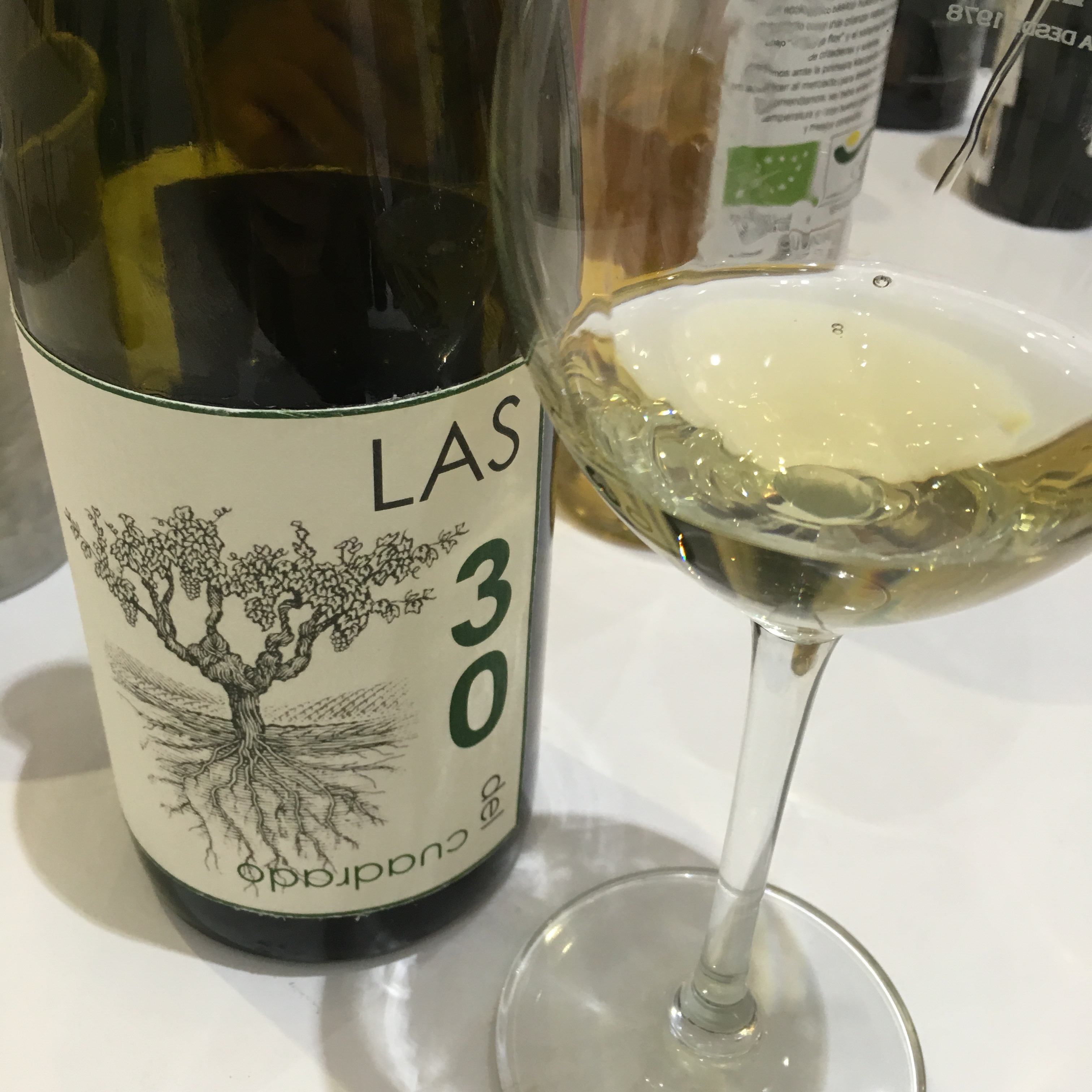
Las 30 del Cuadrado 2015

This morning I added a #palomino tag to the blog to make it easier to find the palomino table wines and in the process discovered that this note was still amongst the “drafts” (with a couple of other lost notes that will surface shortly).

It is a 100% palomino by Bodegas Hidalgo la Gitana and, to judge by the name, from a very special pago: el Cuadrado, which is either a pago by itself or at the Sanlucar end of the Pago de Balbaina, depending on your definition. Whatever it’s status, it is a famous and highly regarded plot of land: one of those names that make the guys down there, and the real experts in these wines, go slightly misty eyed. It is also one of the pagos that I have visited in person and had a chance to judge the lie of the land. (And incidentally, the pago responsible for one of the best wines I have come across so far.)

On the nose this has almonds and tropical fruit and, according to my notes, a hint of pizza herbs like oregano (I must have really liked it). On the palate it is fresh, easy to drink but with a nice body to it: those nuts and fruit again and just a little bit of herbal and calcium bite.

Nice structure and balance and a really promising wine.


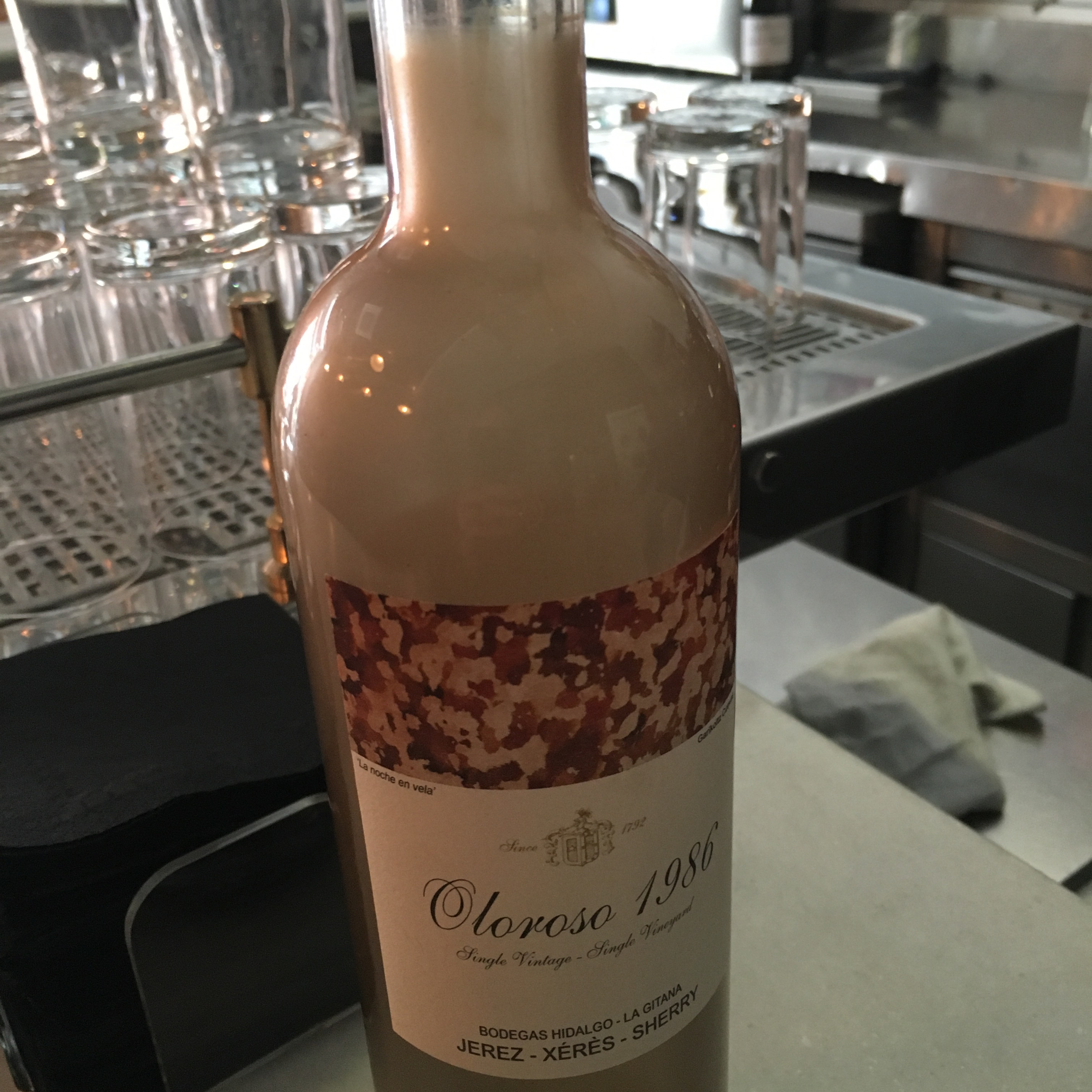
Oloroso 1986, Bodegas Hidalgo – La Gitana

Ana in the Chula de Chamberi very kindly saved the last glass of this for me and I am extremely grateful. It is a beautiful wine.

This is a single vineyard, vintage wine from the legendary Jerez pago “El Cuadrado” (see here for an idea of its location – at the West end of the Barbaina pago, the most sea-influenced of the Jerez pagos). It is by Hidalgo la Gitana and has been twenty years in botas in the San Francisco bodega in the centre of Sanlucar: according to the label 12 botas to start with, but a barely believable 3 by the end. If my maths serve me right it has since spent 10 years in its bottle.

The time has been well spent because it is epic.

First, it has a curious look to it – very black, smokey and murky. Not all that much sediment in the glass – could be a result of having been shaken up but just look at what it has done to the bottle (easiest to see looking at the neck). It really looks like it has been through some sort of trauma (but it still really excellent) – if anyone knows what might have caused this I would be most interested.

On the nose there are relatively muted aromas of old barrels and gingerish spices, black treacle, and Christmas cake. Really none of those polish or solvent, volatile type aromas and maybe that was why it seemed muted (it was also a little cold). Nonetheless a very appetising nose.

Then on the palate it is downright lovely – has the elegance of a Sanlucar wine but a beautifully rich, Christmas-cake body to it. Concentrated but class – a wine where you only need a merest sip and sip after tiny sip give you black treacle flavours fading to toffee, coffee/black chocolate like bitterness and then cloves and woody spices. It is savoury rather than saline – maybe a tingle on the tip and top of the tongue – not at all astringent and just that little bit of acidic bite. Really unbelievably rich, flavourful and smooth and the spices at the end are perfect.

Wonderful. More please!