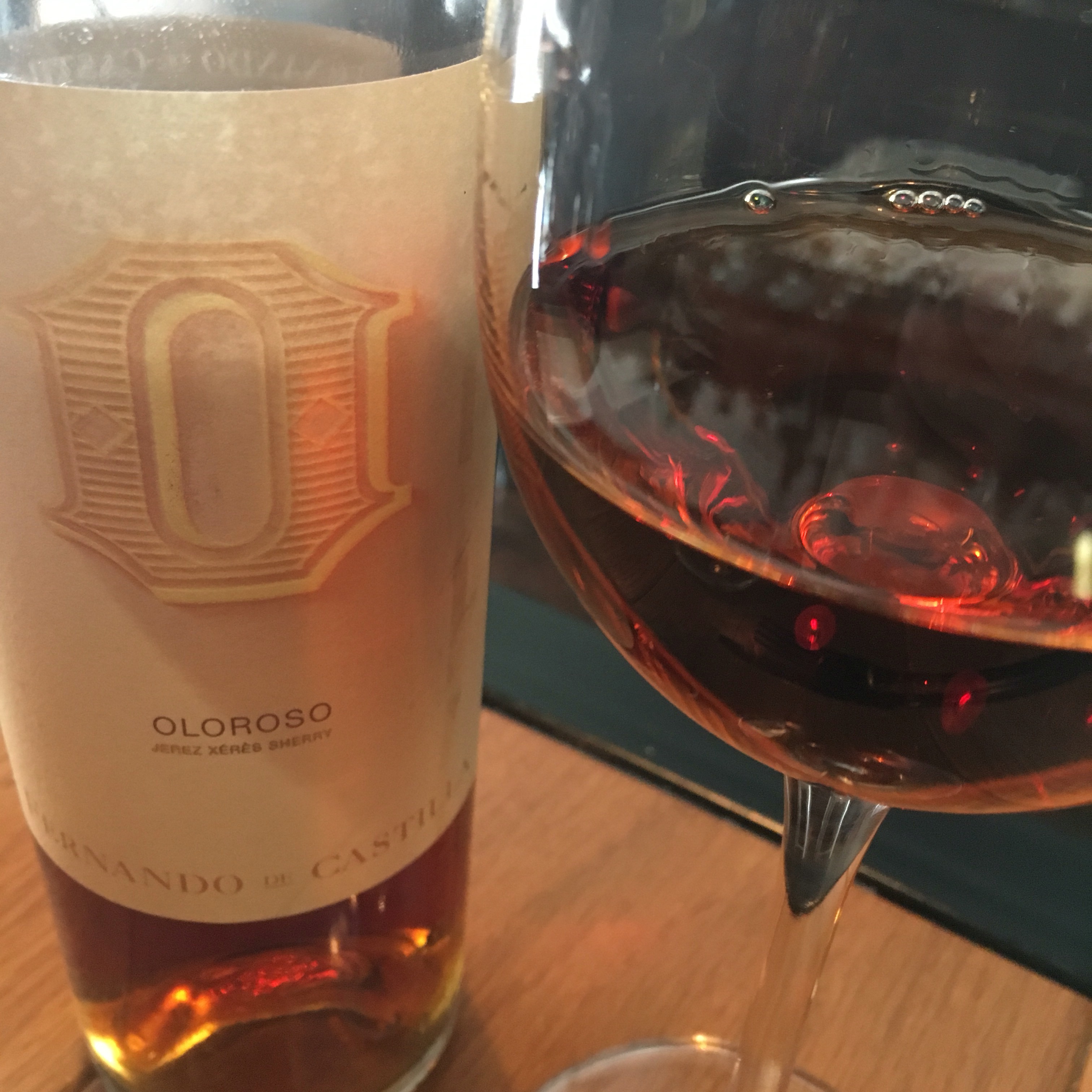
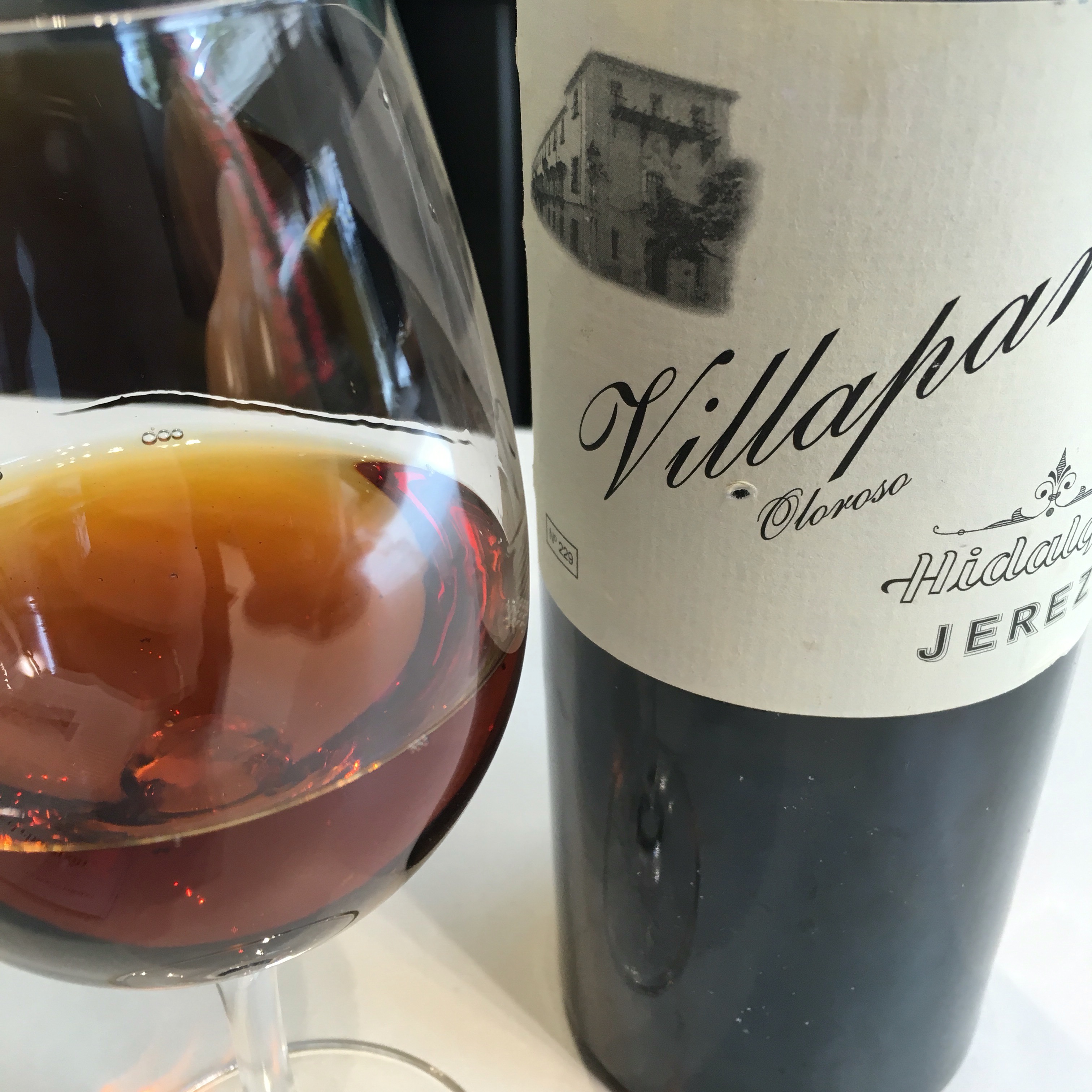
Oloroso Villapanes

  
After the younger, fruitier style olorosos I have bren enjoying lately it is good to come back to this classic. 

You really notice the age and concentration – the barrel and the incipient astringency which comes across as acidity and seems to last forever on the palate and the top of the mouth. And the burnt caramel flavours too – definitely that burnt quality is in there – even mineral ashes after. (Have just finished a bottle of La Panesa at home and am always struck by the savoury richness of these Emilio Hidalgo wines.)

Had this with callos at the bar of the Taberna de Pedro and frankly life should always be like this.


Oloroso Antique 

Another very enjoyable, clean and elegant oloroso here – you would have no difficulty spotting the relationship with last week’s palo cortado. In fact I think this might be even better.

First, a whinge: for such a modern, high quality and forward thinking bodega I am extremely underwhelmed by the fichas (and you know I don’t enjoy having to research my posts). However, after some scratching around on the internet I gather that this is from a relatively young solera started in 1972 and the wine too is not overaged – around 20 years old. Interestingly, the palomino grapes involved were apparently “soleada” (literally, left in the sun” ) for a few days before fermentation – something that wasn’t uncommon back in the day but you don’t see often now.

The wine is a beautiful clear, auburn in appearance and has a nice, sweet nutty nose. On the palate it has very nice compact profile, toasted nut flavours, nicely integrated acid and touches of nutmeg spice and sweetness that lift it out of the caramel/burnt caramel run of the mill. Very clean – no astringency or dustiness about it – but nice and long, a really pleasant sucked toffee taste that lasts nicely.

What I love about these clean, balanced and elegant wines is how versatile they can be. I had this in La Chula and I have to say it was perfect with a range of dishes – navajas a la plancha, corvina and chuletitas – it didn’t intrude on any of them and really added to the corvina and the chuletas.

Elegance personified – give me more olorosos from youthful soleras!


Manzanilla Sacristia AB 2a saca de 2014 

The Sacristia AB series are wines that have been selected by Antonio Barbadillo Mateos (a scion of the Barbadillo family but independent from the Barbadillo group). The Sacristia AB website surprisingly doesn’t have much technical information on the wines but I gather that these manzanillas, like some other illustrious bottlings, are sourced from Sanchez Ayala. In addition, there has been at least one amontillado and the current release is an oloroso.

I have been undecided about these in the past and looking back at my notes I can see a pattern: whereas I found the 1a Saca de 2013 (preblog) zesty and full flavoured, I found the 2a Saca de 20131a Saca de 2014 and Primera Saca de 2015 variously “shy”, “restrained” and “refined”. On the other hand, I also note that they improved once open – something I find can happen with wines that spend a little longer under flor.

In any event I like this one a lot and it is certainly not shy. Crystal clear (glass above had been in heavy use) and the colour of straw with a hint of orange. A nice acetaldehyde aroma profile with citrus and undergrowth, and on the palate zingy sapidity, sides of the tongue gently ablaze and savoury/citrus flavours. Interesting sensation of bitterness and drying on the top of the tongue and in the corners of the mouth, and the mouth keeps watering, keeping the nutty, bready flavours going.

Brilliant.

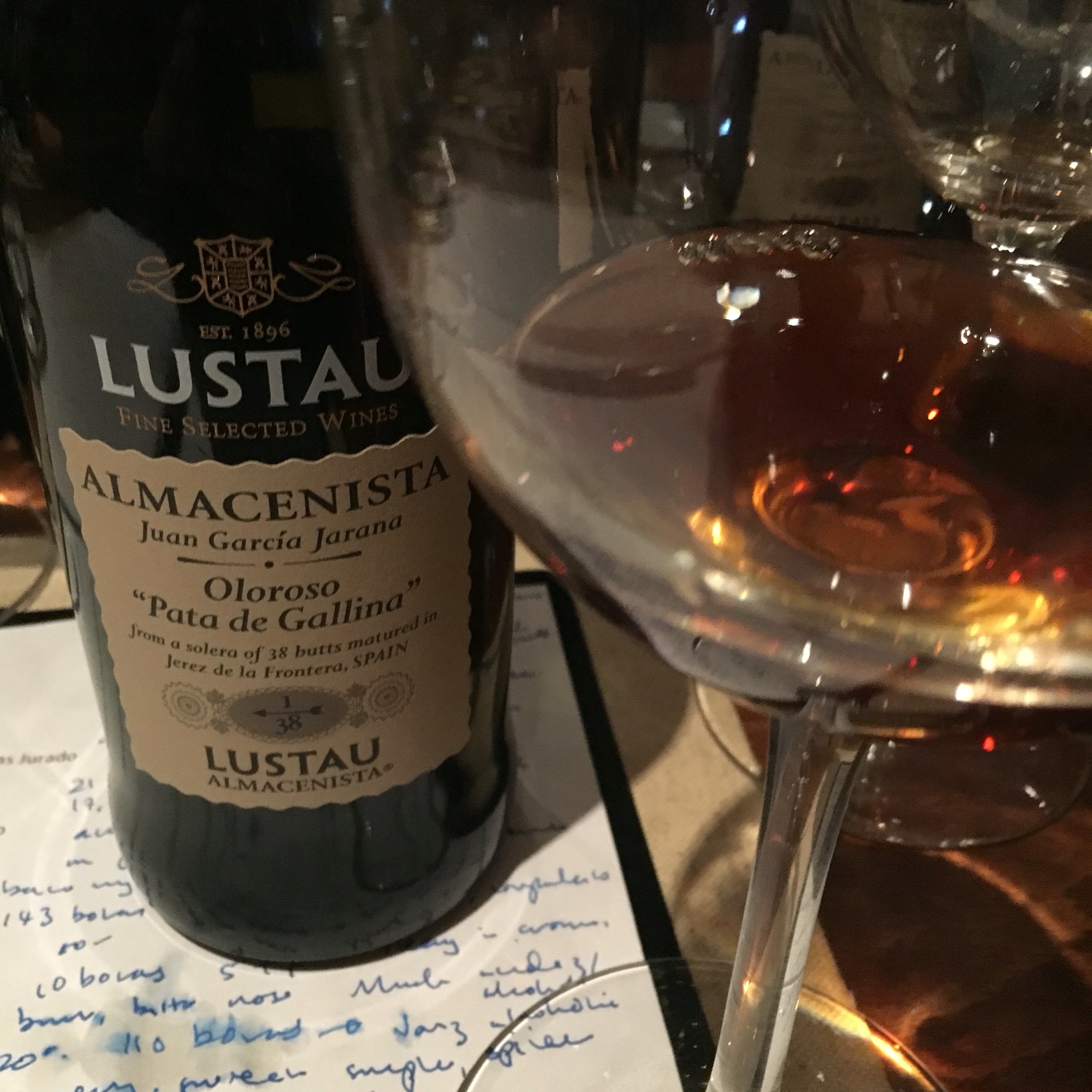
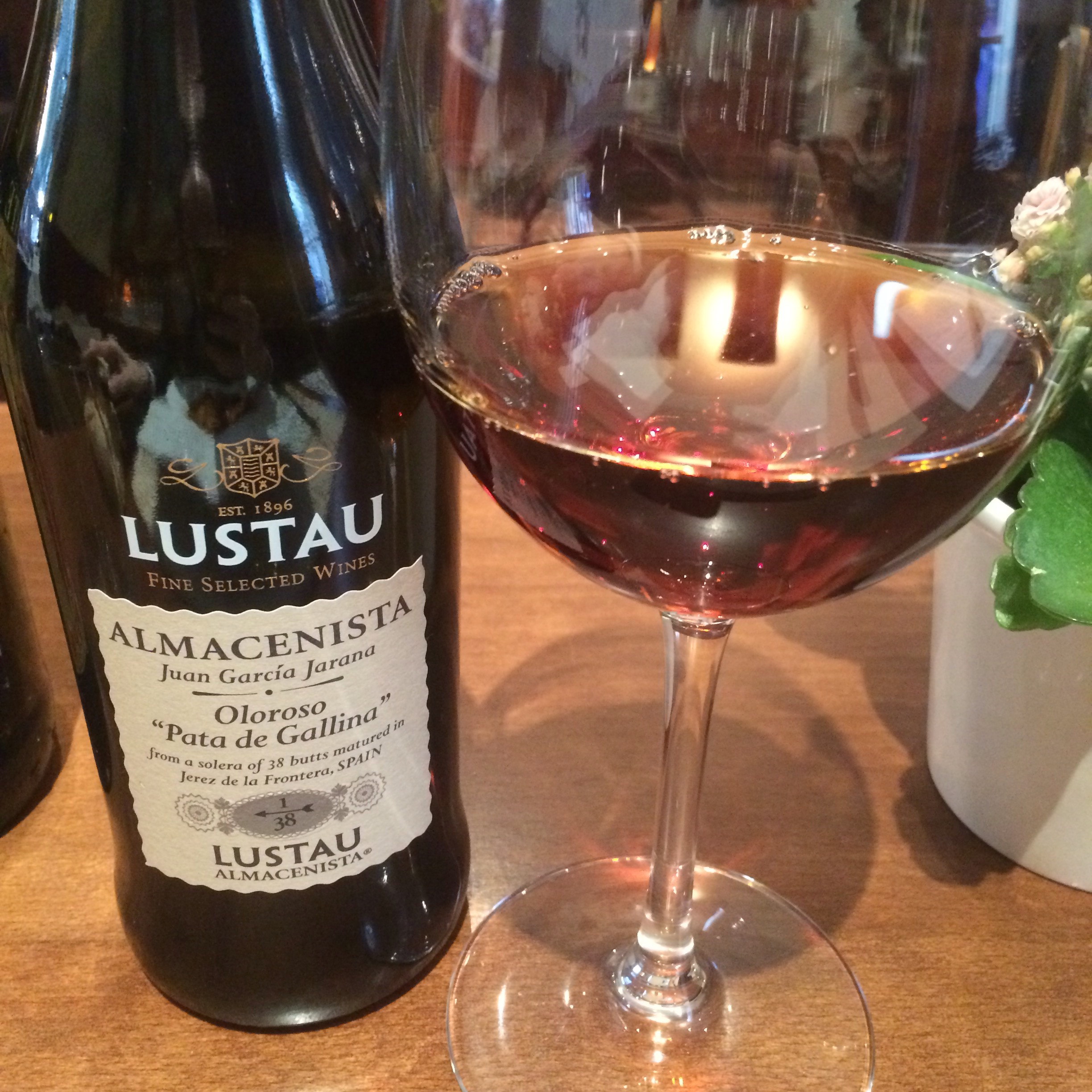
Oloroso Pata de Gallina Juan Garcia Jarana


The last wine of the Almacenistas tasting was this lovely Oloroso by Juan García Jarana. It was the only wine of the cata that I knew of beforehand and one I was looking forward to seeing again and learning more about.

It has been aged for an average of 15 years, is about 20º proof and comes from a solera of 38 butts. Apparently the name “pata de gallina” is a distinction given to wine that has a higher than average amount of glycerol – making the wine seem rounder and fuller than it might otherwise be. Whatever the reason, this is a little gem.

It is a crystal clear chestnut colour with a little more red and a touch less brown than its predecessors (this would have been a good cata for a side by side photo of all seven, had it occurred to me at the time). Almonds were a bit of a theme in this cata and here again there were almonds on the nose with sweet notes too and mineral smokiness underneath. Then on the palate it is full of flavour – zingy buzz to it and nice caramel, almond flavours, but spicey rather than bitter or astringent – very nice harmonious shape to it.

A really beautiful little wine – and my favourite of a very strong lineup.


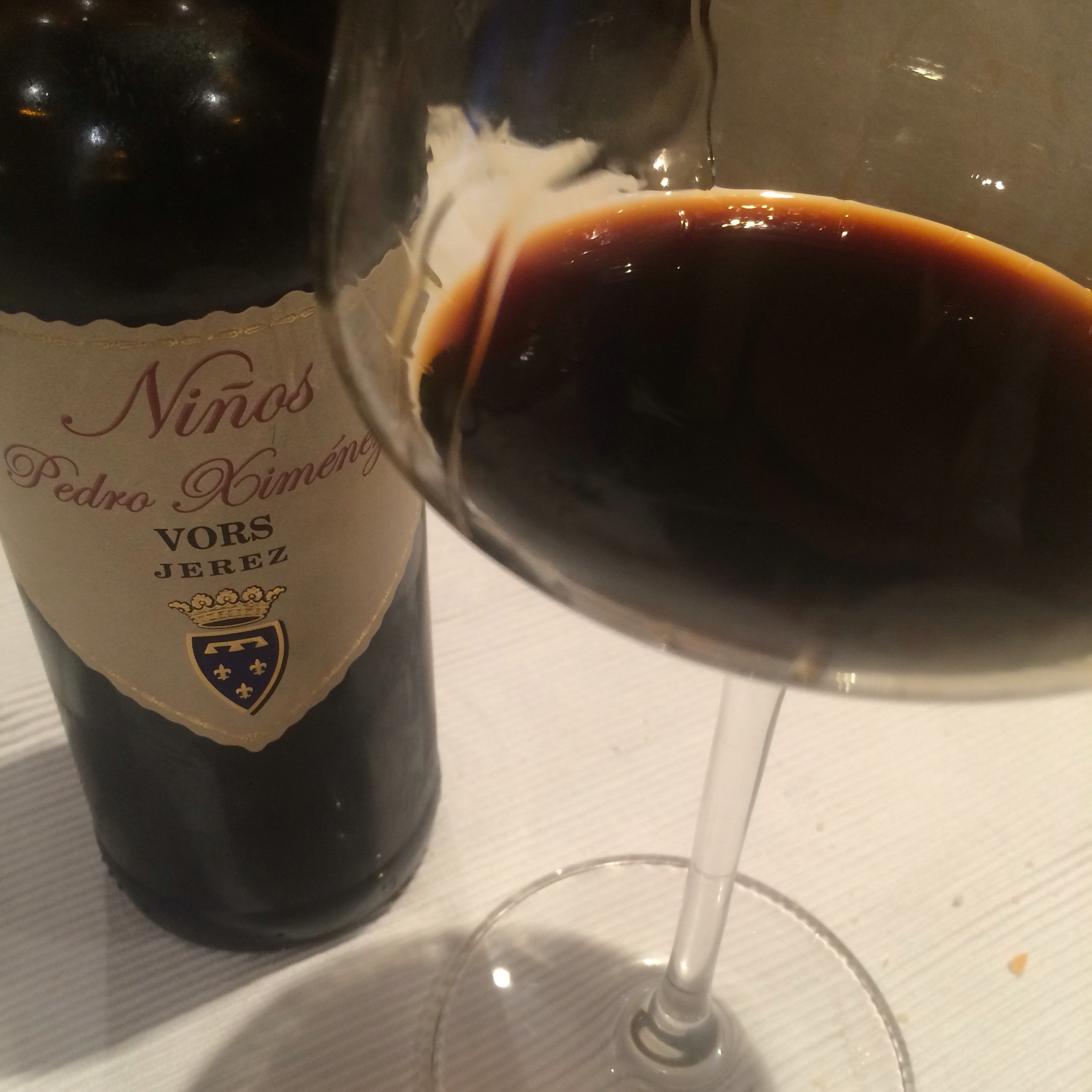
Pedro Ximenez Niños 

What an absolute beast of a wine this is. Magnificent stuff.

And how poor a blogger am I? I was convinced I had written a long post about all the spicey herbs and menthol aromas at the back end of this wine but when I come to update it nowhere to be seen.

So here I am to try again. The scents have that eucalyptus tree freshness over a heavy, sugary, black treacle burntness, then white pepper. The initial taste is sweetness, then black treacle, which lingers a good long while, really long, and at the end those woody, cedar, menthol notes. It is an amazing combination of the viscous sweetness of the PX and the bitter severity of barrel ageing – it is an incredibly piercing nose then a sticky mouthfull that burns where it lingers.

This is awesome.

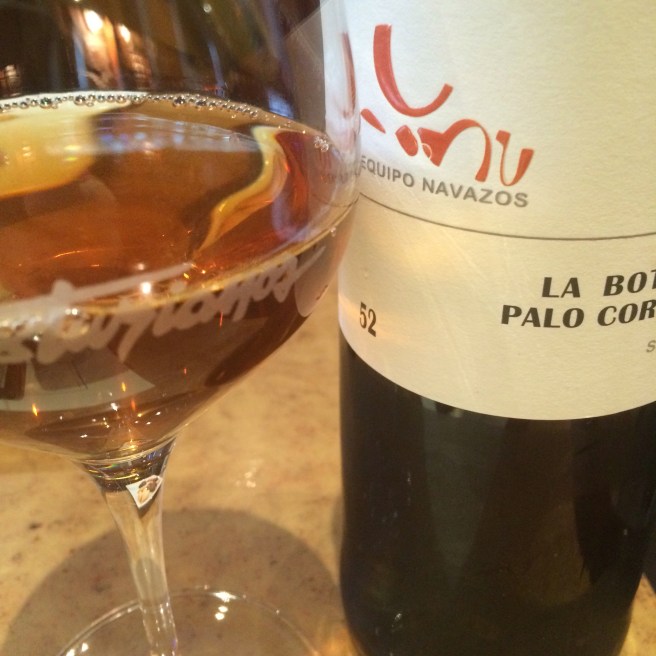
La Bota de Palo Cortado 52, Sanlucar

Writing up my notes from a splendid couple of wines by Equipo Navazos at lunch in Los Asturianos yesterday and this was the star of the show without doubt. First, though, just a moment of admiration for the camerawork here: just look at the way I have framed the reflection of the chorizo and morcilla in the stem. Genius.

As to the details of the wine (since the ficha is only posted in Spanish), this one is from the cellars of Hjos de Rainera Pérez Marín, best known for La Guita. More specifically, the fruit was from selected mostos from Pago Miraflores in Sanlucar,  and it has been aged in a mix of sherry and bordelais botas almost filled (“tocadedos” – or touching the fingers) to prevent an excessive oxidation, of which the botas chosen had wood that was heavily impregnated with amontillado.

The resulting wine is fantastic. It is in fact the third time I have had this – I remember having a bottle (recommended by Santiago at Coallagourmet) when it first came out and it disappearing quickly (pre-blog chaps – no notes taken). The second time I had it was as part of an outstanding pairing, but given the occasion no opportunity to take notes there either (and, frankly, tricky to do a tasting note of anything you are eating with roast garlic). So this time, fabada notwithstanding, I was determined to take notes and they were nearly all superlatives.  

Everything about it is elegant and classy. In colour it is a rich, honeyed amber. It has a really interesting nose that is refined, with a fruity, nutty sweetness backed by saline minerals. On the palate it is super clean, fine and balanced. Honey toffee first up, then zingy minerals and acidity, beautifully integrated alcohol (in fact it is not as alcoholic as some palos at only 18%) and long with nutty and bakery type flavours, mineral smokiness and no bitterness or astringency. Really nice defined structure to it – takes you a journey.

Really lovely, elegant, classy stuff.
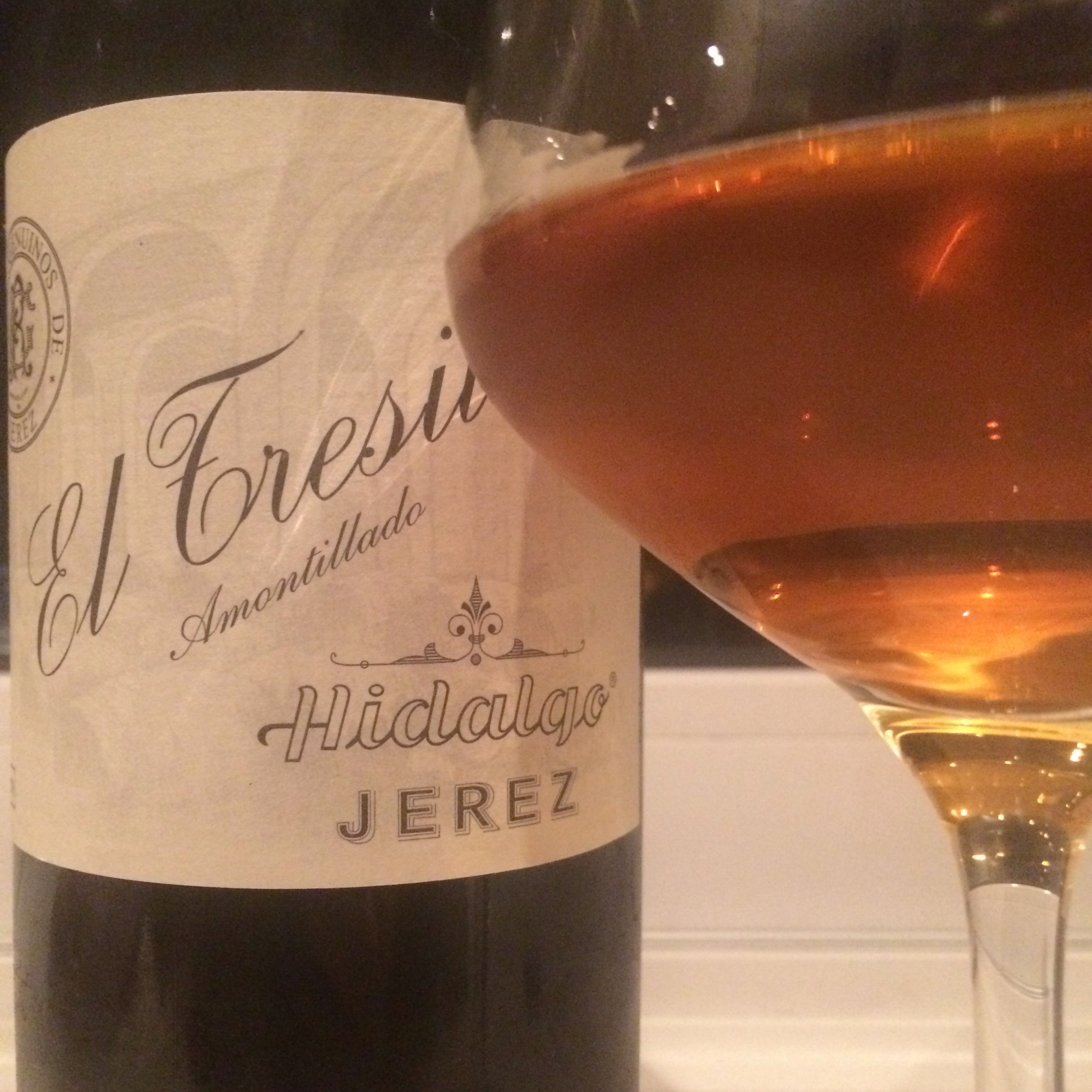
Amontillado fino El Tresillo


Oh my word this is even better than I remembered.  The artsy photo is slightly misleading – the wine is fresh from the cabinet and the condensation on the glass makes it look slightly cloudy when in reality it is as clear as a rich honey coloured bell.

The first waft of this across the nose was divine – hazelnuts in honey. A closer inspection and the salty minerals are more prominent but there is no missing the sweet caramel notes and nuttiness.

Then on the palate well, it is all there – zingy, salty buzz to the tongue, and then super dry and intense but with flavours that suggest sweetness: caramel, nuts and even orange marmalade. Lovely long finish that seems to actually get better.

A world class wine, no doubt.

Oloroso “Pata de Gallina” 

One of Lustau’s “Almacenista” bottlings, this one Juan García Jarana. As you may have seen, I tasted this in the presence of callos, and some really good callos too (the smokey chorizo gives them a really meaty flavour) so you would say this tasting didn’t exactly take place in “laboratory style”conditions.

The superb palo cortado I love best by Equipo Navazos is also called  Pata de Gallina and was also sourced from botas at this same almacenista – in fact I wonder if it was sourced from the same botas. Hard to compare at a distance but this has a lot of the same characteristics.

For a start, it has a lovely dark chestnut colour – maybe slightly darker than the Equipo Navazos bottling – and a very nutty, deep caramel nose, with that come hither smell of sweetness. On the palate it has an intense but pleasant acid buzz (here in particular the callos may have helped) and then it is very tastey and concentrated, with a deep caramel flavour, no stickiness (all the stickiness came from the callos) and no astringency. Very elegant in fact.

Really an excellent oloroso.

Oloroso Villapanes 


Thanks to a tweet by el Colectivo Decantado recently I was lead to a review of this by the guys at http://www.enoarquia.com and when I went to check it against my own post was shocked to find I hadn’t done one. Been a priority since then to make good this omission.

It is a beautiful crystal clear mahogany brown – not really a great picture above (poor background, poor focus) but there are red and orange hues in this that really stand out in the light. The nose is big and imposing – concentrated, some alcohol but aromas of toasted nuts and burnt toffee. (Compared to some younger olorosos the absence of overripe fruit is noticeable – in fact I find there is a real nutty, savoury quality to these Emilio Hidalgo wines in general).

It is acidic and concentrated on the palate and really follows through on the nose. It is actually a gentle, elegant beginning but then the acidity takes over in a big big wave of intense toasted nut and burnt caramel. Then a long, long finish, in which the burnt and toasted flavours come through even more. That burnt, toasted character gives it almost a mineral finish in fact.

A class wine. I cannot believe this is my first bottle since Easter.

El Cerro oloroso


Love this – an oloroso by Callejuela that is deep and rich but light and alive.

I do like the clear bottles and the way they let you see the colours of these wines. Having said that, in the bottle the wine is a rosy Horsechestnut brown although it seems a shade more yellow-brown in the glass. It has a big nose as you would expect (oloroso literally means “odourous”) with that “here comes sweetness” aroma of caramel and burnt cake.

On the palate it is zingy and acidic, really acidic, on the tongue first up but then it is fruity on the tongue, raisins and burnt but not bitter caramel – it is dry but with sweet leanings and it isn’t dusty or astringent. The texture is full bodied – not oily or syrupy but seems dense- frankly I think the texture suits the powerful flavours of the wine.  A long, long burn on the tongue, let alone the caramel flavours it leaves you with.

Really excellent.