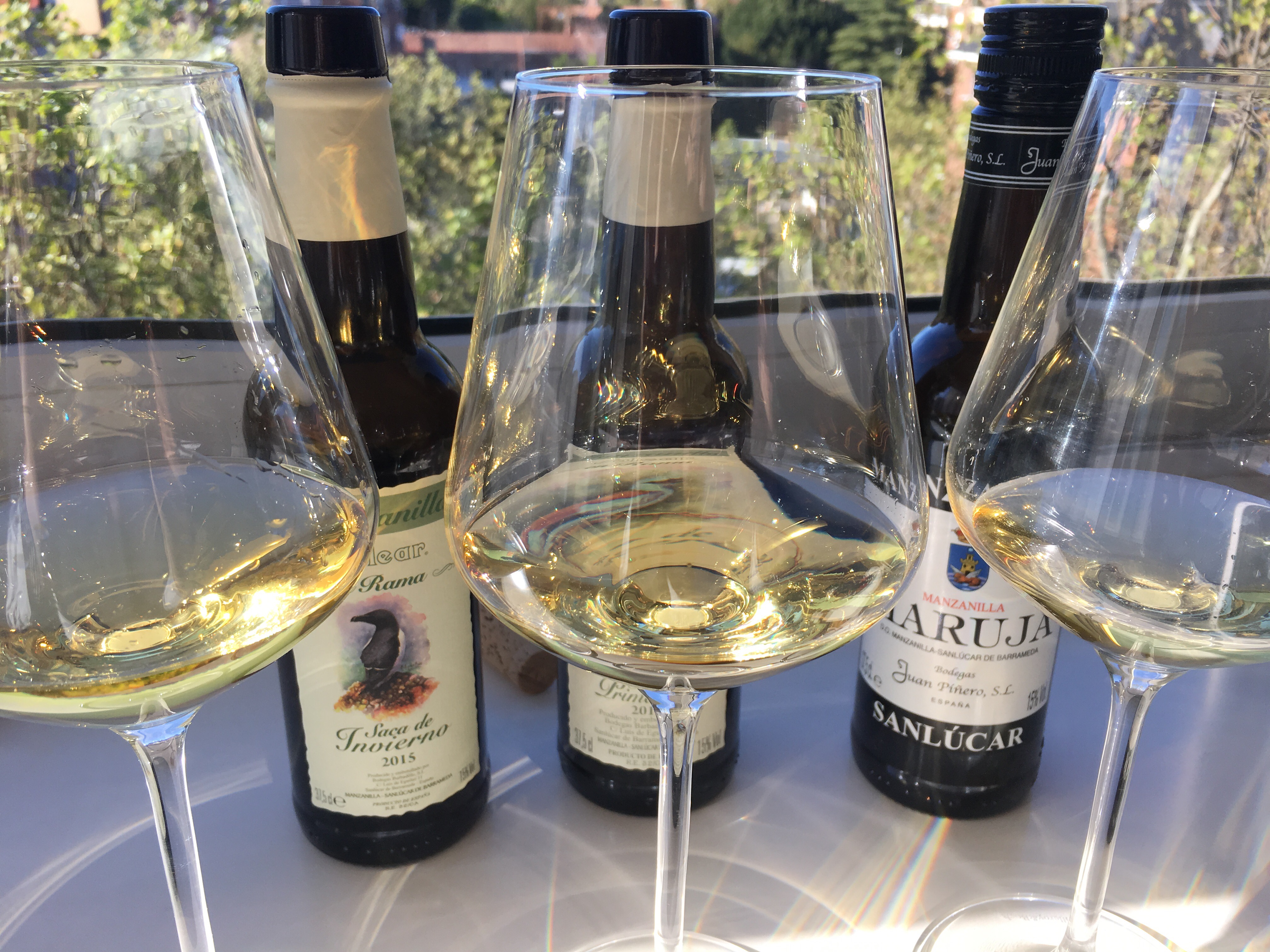
Another unfair comparison

Further to my musings earlier this week on the barrels used to age Socaire I was curious to try it against one of the woodier burgundies (let’s be honest any excuse is a good one).

Just as with my last comparison of wines from these two regions the differences are far more pronounced than the similarities. It is an unfair comparison in so many ways – fundamentally different cepages, ages, and soils – and in this kind of company even very nice wines can come across as a touch rustic.  Moreover it was not a well planned experiment – I expected more wood from the Pouilly Fuissé and now that I look at the ficha I see I have picked the wrong one altogether. Half of this was aged in lined concrete tanks and half in 2nd to the 5th use barrels (although in sherry terms I am guessing that a 5th use barrel would still be considered relatively “new” oak). I really need to sit down and work out a more useful series of side by sides (John set out some cracking minerals suggestions in the comments to that last post – will get working on those too.)

What is evident though is that the attitude to the use of wood in one case and the other seems to be slightly different – to an extent the Socaire makes use not of the wood itself but of the wine impregnated into the wood, trying to extract, with some success, the unique characteristics of the fino, rather than the oak, to enrich the aromas and palate. I was over categoric in my last post when I said that there was no conversation about barrel ageing in Jerez and Sanlucar (and Chiclana) and was duly put right. But although it is true there is indeed much more discussion about the botas used to age wines, I still don’t really see the same level of interest in the age or qualities of the oak itself.


The young flor and the old bota 

Interesting contrast here between two wines that are both 100% palomino fino and have both spent time in bota but with and without flor, respectively. (They are also from opposite ends of the Marco de Jerez.) What I find interesting is the fact that what I recognize as the wood influence of the barrel is much more marked in the Socaire – which has spent two years in an old fino bota – than in the Manzanilla de Añada – which has spent nearly four.

I am no expert here but I am guessing that this lack of wood effect may be a function of the flor at work, or that the barrel influence is balanced by the lack of glycerine and sugar in the wine. Or it maybe that what I am attributing to the wood is really the effect of the wine impregnated into the barrels. On a completely different level, it reminded me of one of the more extraordinary wines that we tasted by Alba a while back: Alba Pago Carrascal Las Alegrías 2014. That wine was un unfortified palomino fino from Pago Carrascal (de Sanlucar) that aged for 18 months in a 650 litre chestnut bocoy that had held oloroso for over 80 years – and as a result had gained a fascinating, fine character and profile. It also brought to mind Mirando al Sur, a fascinating 100% viura from Rioja by Oliviere Riviere that had spent 18 months in a sherry bota.  (Indeed although I am even less of an expert this kind of thing has been de rigueur in the whisky business for donkeys years.)

It is something that has intrigued me ever since I started thinking about these wines: trying to get a handle on the importance of the barrels used. One of the first things a winemaker will tell you about their wines is how much oak it has had, where the oak was from and whether it was old or new. This conversation just never happens in relation to sherry. Maybe because of the historic nature of many soleras and the very limited number of vintage wines: even the new soleras that appear tendo to inherit barrels from old ones, while the vintage wines I know of, from memory, appear to be aged in old botas.

It would be fascinating to try something made in a new barrel, or maybe to make some wine in new american and french oak and give them a run against the oldies. Who knows maybe there is a stack of literature out there that I am not aware of – if so give me a shout.


Sherry: an apology

A couple of weeks ago I put into words some doubts I had as to the value of “Sherry” as a brand and the question of whether we wouldn’t be better off ditching it in favour of “wines of Jerez and Sanlucar” and other longer, but more precise, terms. I did a couple of polls on twitter and nearly 80% (of not many) agreed – most of the feedback I got was along the same lines (many thanks in particular to Alvaro Giron and Pelayo Delgado Zuleta).

But I had a feeling that mostly I was preaching to the converted/the existing tribe – the not particularly numerous  subset of people that read the blog and follow on twitter, so I thought it would be good to widen the circle and asked the chaps over on winebeserkers.com, where I got a lot of useful feedback (from Drew, Ian, Greg, Sanjay, Paul, Leon, David, Doug, Don and David – I think you can see the thread here) that has turned me around on this.

In my original post my concerns were broadly that the use of “sherry” can be thought of as a category separate to “wines”, that the name had a lot of negative baggage, and that it obscured the great variety of wines and zones from the region.

Noone really touched the first point but there is, of course, a positive side to being your own category. As to the second point on negative associations, it was rightly pointed out that other denominations – Chianti and Riesling are examples – have turned it around, and while Champagne never fell all that low the metamorphosis there has driven a lot of new interest. More importantly, it was interesting to read the perspective from Australia and elsewhere: they would snap up the sherry brand in a heartbeat if they could. And as to the third point, and indeed in general, the overall view was that education was the way forward. That must be right: make nice wines and tell the world, educating while you go. No need to throw the centuries -old baby out with the bathwater .

So look, I take it all back. “Sherry” has its place and its role to play. What can I say? It was an early morning flight and something I  just needed to get out of my system (almost as soon as I had done it struck me I was being a touch precious). But it shouldn’t be the whole story: sherry is not the new G&T, it is the family name applied to some unique wines each of which deserve to be famous in their own right.

But the catavinos, sherry glass or schooner, that I do not forgive.


Vintages past, present, and future

IMG_4513

My latest post for the sherry.wine site went up this week and, having eliminated the typos, it is my pleasure to share the link here.

This is one of my obsessions – the more I drink and read about these wines the more I am convinced of the value of this kind of differentiation (and if you don’t believe me just see my posts from September and February, amongst others). More importantly, it is apparently a historic reality – here the experts are the so called “Sobrinos de Haurie“, who are working on an exciting new history of the vintage wines of the region.

The making of these vintage wines is, however, more limiting than I had previously thought. I had the great fortune recently to attend a wine tasting of some really spectacular vintage Montilla Moriles wines in Taberna Palo Cortado and one of the issues that came up that night was that the Montilla Moriles wines had been “moved”, i.e., the barrels had been refreshed from other barrels of the same vintage. This is apparently something I understand would not be permitted in a “vintage” sherry, where a seal is attached to the barrels, and only broken on bottling (or something along those lines). In fact, the “movement” caused some consternation among those present.

All I can say is that the results were first class, and on discussing it with Antonio Barbadillo (whose Sacristia AB series is synonymous with some little gems) he also appeared to be convinced of the need to “move” wines for a number of reasons. Of course it was a tiny sample of 60 year old wines and we only tasted one side of the argument, but it struck me as an interesting issue that might usefully be reconsidered.

For now, though, I repeat my promise of February: make me a vintage sherry and trust me, I will buy it!


What’s in a name

I recently saw a post by Erik Burgess of MontillaMorilesWines.com  pointing out that “Andalucia’s oldest bodega”, Alvear, in Montilla Moriles, “can nevertheless not call itself sherry”. It struck me as an odd point and one that gave me pause for thought.

I must be honest my first instinct was to question the argument. (Frankly what does being in Andalucia and being old have to do with it?) But aside from petty snarkery it also made me think about an issue that has been bothering me for a while.

I am a “sherryblogger”. I like to think of myself as part of the “sherry revolution” (not the silent part). I often tag my tweets “sherrylover”, go to events called “sherryfest” and receive Christmas greetings where “sherry” replaces “merry”. “Sherry” is a big part of my life.

But, frankly, I can’t stand the name “sherry”, and I wondered why a famous old bodega like Alvear would want to saddle their lovely wines with such a moniker.

I have no doubts about the value of “sherry” as a brand, its historic importance, long tradition, and contribution to the “cause”. Neither do I doubt the value of the work put in over the years to protect the name from foreign usurpers. In fact the frustrated desire expressed by the above post shows the value placed in the name by those not entitled to use it.

But I dislike it. I prefer the slightly clunky but much more accurate “wines of Jerez and Sanlucar”, for a number of reasons. (In Spanish I occasionally use “Jereces” but even then under silent mental protest.)

First, and foremost, because I feel that “sherry” contributes to the widespread misconception that “sherries” are somehow a category apart from other wines, undeserving of a place in the wine list or even on the same aisle in the supermarket as the other wines. It is not the only culprit on this score – the lack of vintages, the lack of recognition of terroir, and much of the paraphernalia (the terrible “catavinos” glasses) add to the impression. There is also some truth in the fact that many (not all) of the wines of Jerez and Sanlucar are produced in a fundamentally different way and have highly distinct characteristics. Nevertheless, they are wines (fortified or not) and I strongly feel it would be better if we refer to them as “wines” rather than “sherries”.

Second, because the baggage accumulated over the years by the word “sherry” is not all positive. Not all the wines sold under the name have been as good as they should be, and even when they were, the term “sherry” has become synonymous with certain styles of wines and as commodities, without much room for distinction. If you did a word association with sherry back home I bet the first matching words would be “trifle” and “cooking”. (Yes sherry is great to cook with but it shouldn’t be on the same shelf as the vinegars.)

Third, because it does a misservice to the enormous variety of the wines produced in the region – finos, finos del puerto, manzanillas, manzanilla pasadas, amontillado finos, amontillados, palo cortados, olorosos, amorosos, mediums, creams – they are so different that when someone asks you to define “sherry” in few words you can only do it at a high level of abstraction.

Geographically too, “sherry” gives precedence to Jerez and neglects (or maybe subsumes) the other centres in region, in particular Sanlucar and el Puerto, but also Chiclana and others. This may be no more than historical fact, but I think it is a shame not to celebrate the diversity of terrain at least a little bit. (I also recognize that my “wines of Jerez and Sanlucar” is incomplete but look you only get 140 characters on twitter …) If I had my way in fact we would be talking about Miraflores, Mahina, Macharnudo, Balbaina, los Cuadrados, Carrascal, Añina, etc.

Shapesmoke swoon of avalon may once have said, “a rose by any other name would smell as sweet”, but I honestly believe that if you gave a wine enthusiast some of the wines of Jerez and Sanlucar they would like them more if you didn’t tell them they were “sherries”. In this respect just look at the guys at Equipo Navazos – in many respects the model to follow in terms of the marketing and promotion of these wines. They talk about “the traditional wines of Andalucia” and they celebrate their diversity like crazy (to the tune of 60 odd different wines and counting in just over ten years). You see the same at Emilio Hidalgo, with their “Vinos Genuinos de Jerez”.

So while I will keep on blogging, and drinking, and generally doing everything I can to further the revolution, I will not be killing in the name of “sherry”.
The three last glasses

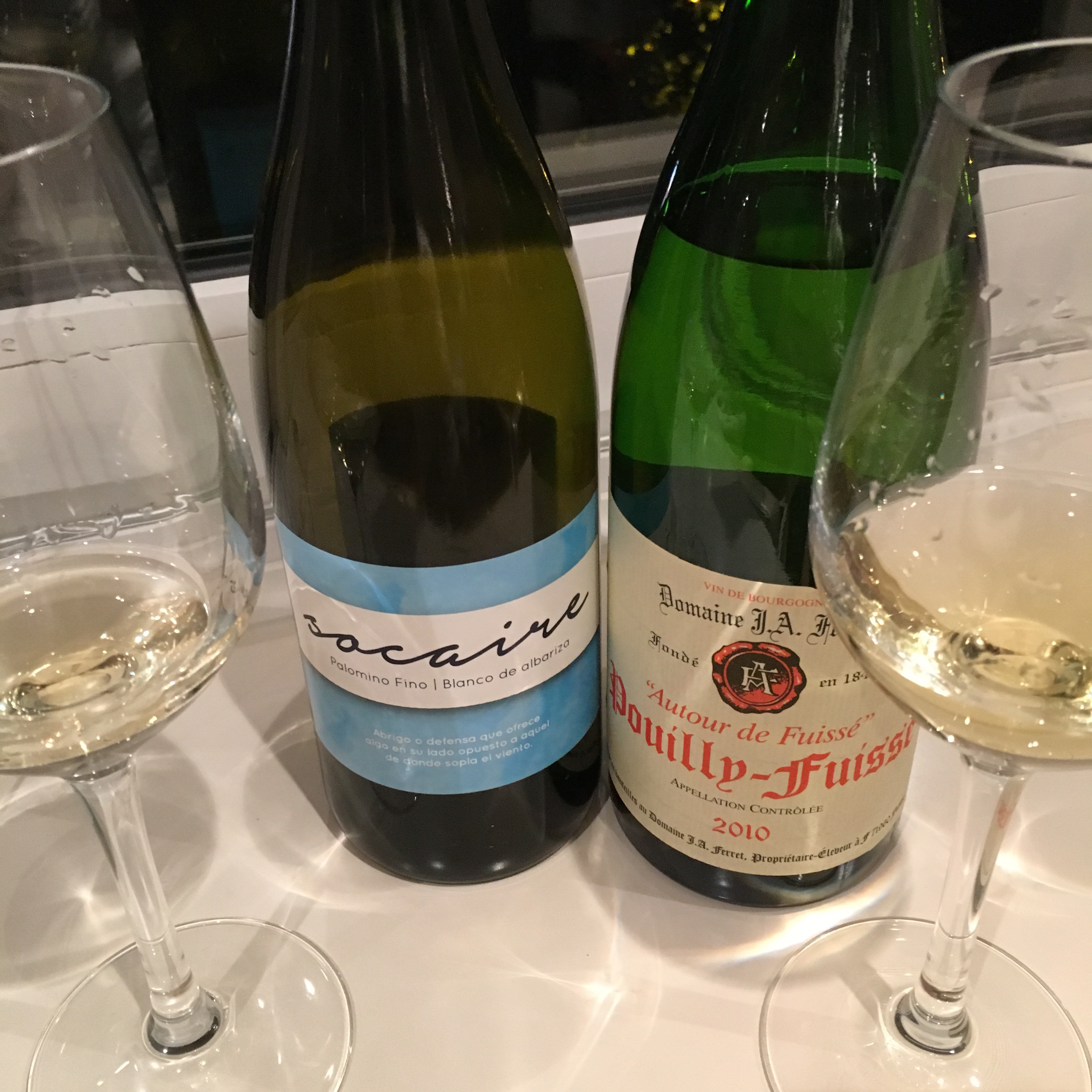
A moment of manzanilla nerdery here – had saved the last glass of these three (two from Monday and one from Yesterday) for a side by side and I am glad I did.

Clear contrast between the Maruja and Solear for a start – the Maruja has a sweeter fruit-like nose and palate while the Solear is much more herbal or vegetable – celery or spicey raddichio. Both have zingy minerals but the Maruja’s tend to creep up on you whereas the Solear’s are more in your face. Of these three I am actually tending towards the Maruja, to my slight surprise. 

As between the two sacas of Solear, questions may have been raised as to whether to taste different sacas but after nearly a week open the gap between these two seems to have opened – the Spring 2016 seems more zingy, saline to the point of acidity, compared to the merely feisty Winter 2015. The Winter, on the other hand, seems to show more of those vegetable flavours. Then right at the last the spring shows a bit more hay bales and becomes more diffuse while the Winter stays more compact. I actually like the haybales – wish I hadn’t finished the Maruja already but I can’t compare!

Or it could all be confirmation bias – anyway it is an excuse to have a glass of three lovely wines and call it science. 
 

Reasons to be cheerful

El Corregidor

A lot has been written about the resurgence of the wines of Jerez and Sanlucar (revolution, resurrection, rebirth, reboot, yadda yadda) and some are concerned that it may all turn into hubristic triumphalism, that cracks will be papered over and an opportunity for the region’s wines to return to greatness lost. For my part, and all joking aside, I take a lot of encouragement from what I see going on, and I am really optimistic for a number of reasons.

First, because of the role that some really quality, interesting wines have played. Equipo Navazos and top bodegas like Emilio Hidalgo, Tradicion and Fernando de Castilla, amongst others, have put the wines of Jerez back at the top of the rankings and have convinced, even educated, wine enthusiasts to think of them like wines. The very largest bodegas and groups deserve significant credit too, with some great collections and series: Gonzalez Byass with their Tio Pepe en Rama, Palmas and VORS ranges; Barbadillo’s Solear en Rama and the Reliquias; and Lustau’s Coleccion Almacenistas; amongst others. Even if volume sales decline the quality of wines on offer is probably higher than at any time in recent years, and that can only be positive.

Second, due to the involvement of top class restaurants, sommeliers and even chefs. I strongly believe that the sustainable future of these wines is in the middle of the dinner table (and preferably during the main course). As such, it is great to see people like Pitu Roca, Guillermo Cruz, Juan Ruiz Henestrosa and David Robledo speaking in public in defense of the wines of Jerez and Sanlucar, and even better to try some of the pairings they come up with. In general there is a growing presence of wines from the region in quality restaurants and a growing quality of the restaurants with strong selections of wines from the region. Closest to home in Madrid, places like Surtopia, Taberna Palo Cortado, Taberna Verdejo,  la Chula de Chamberi, the Restaurante Vinoteca Garcia de la Navarra, Asturianos and others are far, far, more than just “sherry bars”: these are high class restaurants with cuisine that matches the quality of their wine lists.

Third, based on the apparent interest in really learning about the wines. I mentioned in my more light hearted piece on Monday the courses of tastings being run by Enoteca Barolo and Taberna Palo Cortado: even if the 80 odd people that have signed up were already enthusiasts (and I would be one of them if I had the chance) it is surely a positive sign that they are keen to pay for multi-session courses and learn more. In a similar vein, I take great heart from the fact that the most read post on my blog was the post collecting blog entries concerning terroir and the quality of the reading available in general.

Fourth, I believe that innovations like Equipo Navazos Magic Numbers, Sacristia AB’s selected bottlings, the proliferation of dated sacas of en ramas and other wines and the increased prominence of vintages can help by giving critics and consumers a reason to keep trying and writing about these wines and collectors a reason to keep collecting them. (I also think just having that date, that year on the bottle helps reinforce the idea that these are wines like any other.) For the same reason, I am also encouraged by the quality of the “mostos” and still table wines being made from palomino – UBE, 30 del Cuadrado, la Charanga, Viña Matalian, the Florpowers, Navazos Niepoort – a growing list of wines with real potential. Apart from anything else, in the long term new, young wines must be the key: we live in an age of tremendous opportunity for the fans of the older wines, but it will not be sustainable in the long term to be releasing 40 year old vintages.

Most importantly, I am optimistic thanks to the young winemakers that are pushing at the boundaries and asking the important questions. I have written about them repeatedly but I cannot speak too highly of Ramiro Ibañez, Willy Perez and their ilk. Projects like the Pitijopos, the Manzanilla de Añada, Encrucijado, the Barajuela Fino and Oloroso, are just fantastic – as are things like the Williams Coleccion Añadas and Manifesto 119. Not just for the quality of the wines themselves, but due to the thinking behind them, the techniques and ideas being explored that are not just novelty for novelty’s sake, but historic strengths of the region, the terroir and the palomino. While the volumes may be small (the irony sometimes is that the lovely wines they make are sold out even before they reach the ears of the public) their influence is huge (in no small measure due to the efforts of guys like Armando Guerra) and in my view wholly positive. I seriously hope one day to be at the unveiling of a statue or something to these guys.


Sherry fever

IMG_6300

A lot has been written about sherry’s current remake of the Miles Davis classic “birth of the cool“, but whether you want to call it a revolution, resurrection, second coming or involution, whether you want to celebrate the sudden interest, mock the herd mentality, or just point out that the really cool people were into it before it was popular, there is no doubt there is a lot going on.

El Petit Celler had a big event in Barcelona just a few weeks ago, Lavinia raised the curtain socially in Madrid with their sherry palooza a couple of weeks ago, and now this week in Valencia is the Sherryfest itself. Tonight in Enoteca Barolo they will be starting their epic course of 11 classes (of over 2 hours each) dedicated to the wines of Jerez and Manzanilla (they tell me they have sold out the course twice over). Taberna Palo Cortado are in on the act too: last week the great Montse Molina hosted a tasting there and they are due to start their own four session course of tastings lead by Paco del Castillo. More generally, there are tastings and events happening all over town – tonight in Mares Vinos you can try the wines of Bodegas Tradicion, for example. There are new wines knocking around. Recent releases include the new Tio Pepe en Rama and Palmas series, the new Solear en Rama, the Williams Añadas, Equipo Navazos‘ 10 year anniversary release, even an eight grand blockbuster from Barbadillo, and more generally of course there are new and exciting things happening of all shapes and sizes. The blogosphere is on fire with it all: Colectivo Decantado tasted an Inocente and laid down the ground rules for lasting peace in the middle East, Rooster Cogburn have talked of including 60 pages on sherry in their next issue. Coincidentally, Luis G and his minions are also beavering away on a macro-reportage on the state of the sherry and manzanilla nation. Even the mainstream press have woken up to sherry: a fortnight ago El Pais Semanal ended years of silence with a reportage, this week they have followed up with a nice little snapshot of La Panesa, and Andrew Jefford at Decanter just can’t stay away. (The real experts at elmundovino have of course been putting out some cracking stuff all along, but that isn’t news so sorry chaps.)

I am almost certainly forgetting loads of action but you get the picture: it is sherry a go go around here. Exciting times to be alive and interested in sherries in Spain. (Even this blog is into double figures in readership, not counting my immediate family.)


The “other terroir”: the magic of the cellarmen

image.jpg

I write a lot about terroir and vintages, to the point where it may come across that they are all that matter. That certainly is not the case. On the contrary, although it sounds an obvious point, it is a fact that the winemaking processes and, in particular, the ageing processes are absolutely central to making the wines of Jerez and Sanlucar what they are, to the point that they are ofen defined and categorized by the processes used rather than their characteristics as finished wines. I sometimes rebel at this – I occasionally feel that the process centered assumptions (like “the older the better”) get in the way of making the best wines possible, but it is undeniably one of the great strengths of the industry, because while the raw material will determine the possibilities of a wine in general, the processes and techniques that can be brought to bear in the cellar can contribute to creating wines with a staggering range of characteristics, from the utterly ethereal to the bogglingly concentrated and fierce.

At this Friday afternoon’s sherry palooza in Lavinia there was a great opportunity to try the wines of three bodegas that may not be making terroir specific or vintage wines but are making wines of considerable distinction and in that respect were maybe unfairly overlooked in the great EPS article Resurrection of the Wine last weekend: Emilio Hidalgo, Fernando de Castilla, and Bodegas Tradicion.

Emilio Hidalgo is family owned since its foundation in 1860 and is probably the bodega with the highest quality overall range of wines around: La Panesa, El Tresillo, El Tresillo 1874, Gobernador, Villapanes, Privilegio and Santa Ana (preblog but one I am going to have to have again). It is also a perfect example of a bodega focussed on the “other terroir”, where the specific characteristics of the bodega have a key influence on the wines that are produced. The supreme case is La Panesa,  a fino that spends a staggering 15 years, on average, under flor, and is still recognizably a fino. What is really interesting is that the solera with the oldest finos is located in one specific room of the bodega; no other room allows a yeast population to survive on such old wines. That incredible age must also be a tribute to the cellar management and wine making skills of the bodega, since this must surely be the limit of what is technically possible in biological ageing. More generally, it is striking how clear an identity all the wines have – not just la Panesa but also the others have a really rich, savoury quality and density of flavour. Oldest of the old school – no dated sacas etc – but a very modern approach to just making the best wine they can.

Bodegas Tradicion, while a new winery in its current form, also has a historic connection with the wines of Jerez (the Rivero family previously owned “CZ”, one of the most historic brands) and have done as much as anyone to maintain that history alive with a great archive and exhibition. They are a bodega with a clear focus on solera ageing of the highest quality, albeit with one eye on the modern audience: all the wines indicate the date and size of saca, and even the number of the bottle. More importantly the wines, most of which would be classified as VOS (20 years old or more) or even VORS (30 years or more) have a recognizeable style. For me the star of the show is the VORS Amontillado (which I am shocked to learn has not been reviewed on this blog) but the Palo Cortado and Oloroso are not far behind and all the wines have a nice touch of citrus and an excellent structure (even the Pedro Ximenez and Cream, which I have only tried fleetingly, seem to have a more structured shape than you might expect). They have also been capable of producing finos with a long time under flor (an average of 12 years and for my money the successive sacas seem to get better). All this can only be a result of careful selection of mostos and cellaring perfection.

Last but not least, Fernando de Castilla is another relatively new winery in its current form but one that makes very matchable, high quality wines in the old school and, although the soleras may have been acquired from different sources, there is a recognisable identity and quality across the range of wines. Here my favourites would be the Antique Palo Cortado and Oloroso,  but I find that all the wines have a nice acetaldehide profile and balance that makes them very easy to drink and pair with food. They are an interesting contrast to Tradicion because their wines don’t carry the VOS or VORS labels (indeed neither do the Emilio Hidalgo wines) and indeed probably don’t have the years required, but for me they are spot on age-wise: enough age to give them bite and character but young enough to be fresh and not astringent. Fernando de Castilla date the sacas of their Fino en Rama but not, as far as I am aware, the other bottlings.

Three great bodegas old and new that demonstrate just what can be achieved in the cellar. I can feel a glass or two coming on …


Sherry on the wine list

On the basis that the “Customer” is always right and that I am frequently a “Customer”, I reckon I might be occasionally right. As such, this month’s contribution to the Sherry.wine blog is my take on what is going wrong for the wines of Jerez and Sanlucar on wine lists, and what we can maybe do to fix it. There are six points, of which some may be correct.

I have had zero feedback on this other than a like from some of my favourite sommeliers and some pretty surprised comments from the UK. The main issue – that middle aged amontillados, palo cortados and olorosos are the most easily paired wines from the sherry triangle – is surely worth at least thinking about. Anyway, any comments welcome!

Chulalist