Amontillado Muy Viejo Don Paco 

After a week of relative sobriety the wheel nuts are unwinding pretty fast. The magnificent old Sanlucar palo cortado (pictured on the left) that I just had a generous glass of put me in mind of this old, old Sanlucar amontillado that I first tried in Surtopia this year and I couldn’t resist. As I mentioned back then it is a single pago  wine – fruit sourced from Pago Balbaina (Viña las Cañas) it would have spent some several years under flor and is a total of around 50 to 60 years old.

In age and concentration we are comparing very similar animals and as you can see there isn’t much in it in colour terms (although the Gaspar Florido wine possibly has a touch more brilliance). On the nose the Don Paco has that salty sea air and really does have the “full ozone”, with maybe just a hint of spices to it. (The comparison may exaggerate the difference, but it doesn’t have as much “extra” as the palo cortado.)

On the palate it is salty and direct – salinity that goes beyond zingy to stingy – and then there are roasted, almost burn nut flavours and just a touch of sweet, winelike flavour from somewhere. It is long and dry, and the flavours that stay with you are the ozone, the iodine and maybe sweet cedar wood or cigar tobacco.

Absolutely cracking wine.

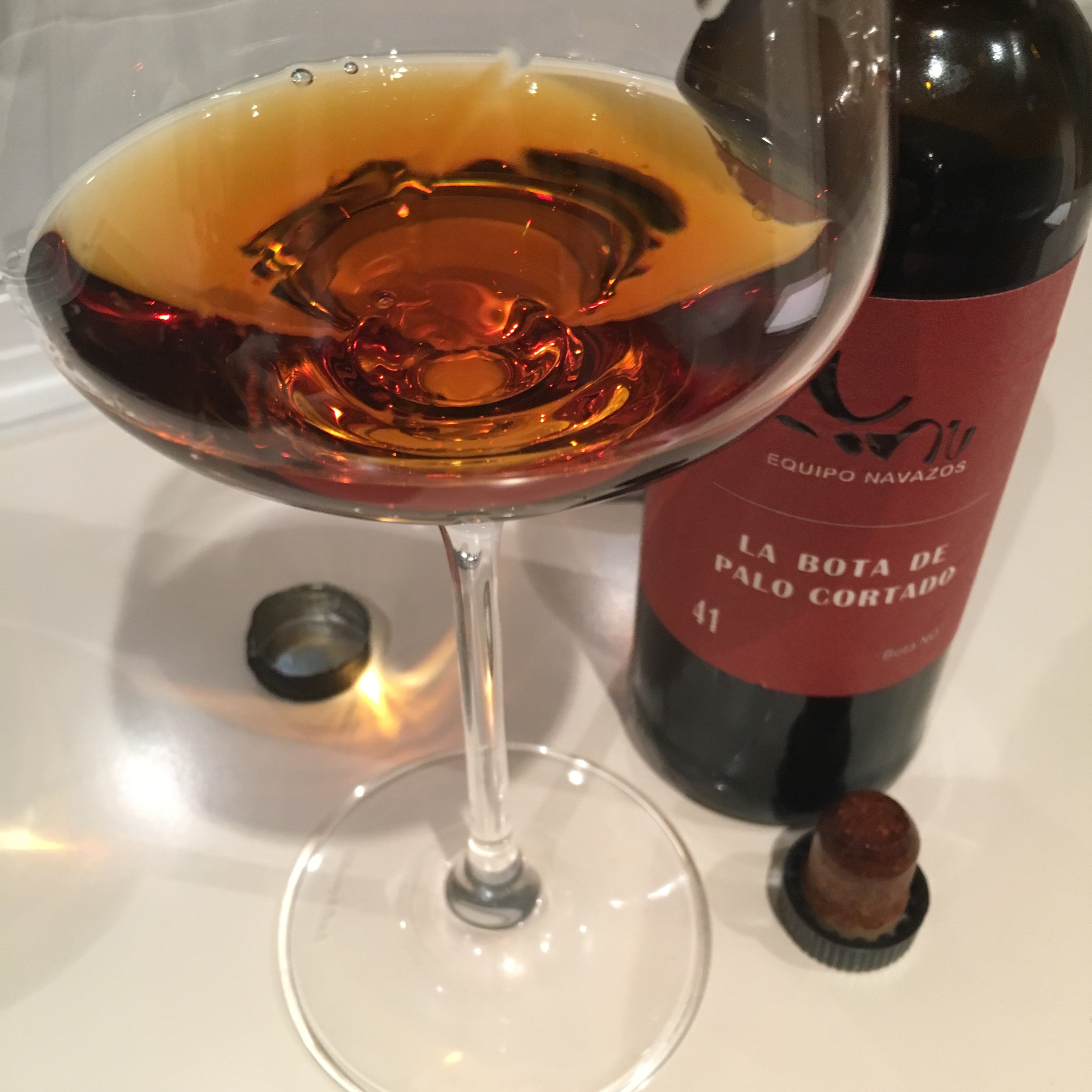
La Bota de Palo Cortado 41 – Bota NO

First sherry in a week so I thought I deserved something a little bit special and this is special.

It is a Sanlucar palo cortado from the now extinct bodega of Gaspar Florido – initially acquired by Pedro Romero before Pedro Romero itself collapsed in tragic circumstances in 2014. This was bottled in February 2013 and I refer you to the excellent Equipo Navazos website for an account of that and their explanation of what it is all about.

In colour it is a gorgeous crystal clear, sparkling, rich chestnut. (Whatever else may be true I find it hard to believe there are more visually appealing wines than these.) On the nose it starts with the dry salty, woody air of the cellar, but maybe not the full ozone of a Sanlucar amontillado. Then give it a swirl and there are rich nutty, spicey and slightly black treacle flavours underneath.

Then on the palate it is stickier and broader than the sleek nose leads you to expect. The same saline power but heavier, black treacle and bitter burnt wood flavours take over, a suggestion of smoked meats on the aftertaste and then flavours fading to a tails of burnt black treacle, with a moody bitterness but also a higher register sweetness. The salinity of these wines gives them incredible length and those the flavours stay with you right to the end.

A really exceptional wine.

undertheflor in 2016

After a week at home in the UK without even a single glass of sherry to lighten the mood I am back, and pawing at the ground, champing at the bit and generally keen to get back to my”vertical style” of wine tasting.

But first it seems a good moment to reflect on these last twelve months. It is only the second year I have been doing this blog, indeeed the first full calendar year, but I doubt I will ever again learn as much in a single twelve month period. It is no exaggeration to say that I learned just enough to understand how little I really know.

The outstanding memory of the year was of a trip to Sanlucar in March and a visit to the pagos of Jerez and Sanlucar lead by the phenomenal Ramiro Ibañez (and the phenomenally affable Federico Ferrer). Even reading my inadequate note of the occasion brings back memories of a day that was stunning in the sense that it literally took me days to work out what had happened, but which once the fog lifted left me with the beginnings of an understanding of the geography of the region. Later in the year I caught up with the other one of Haurie’s nephews, Willy Perez, and was treated to a tasting of the wines of his Barajuela project that in any other year would have been by far the highlight. Two exceptional days that will live long in the memory.

Willy Perez’s  Fino La Barajuela 2013 was by far my wine of the year. It is a superb wine with concentrated, high register fruit, the body, touch, aromas and flavours of a fino and a sharp, deep mineral balance. I am running out of bottles and simply cannot wait for the 2014 (which was monstrous in a good way this summer). There were an awful lot of good wines along the way though – in fact the list would be just too long – there have been so many fantastic wines I wouldn’t be capable of summarizing.

It would also be a daunting task to rank or compare all the fantastic tastings. There were many brilliant nights, but it would be remiss not to mention tasting the Lustau Almacenistas (in Taberna Palo Cortado), the Wines of Alba Viticultores (in La Buena Vida), Toro Albala (in Taberna Palo Cortado again), Mons Urium (in Taberna Palo Cortado again), the Williams Colección Añadas (in Taberna Verdejo), the great Gran Barqueros (in Reserva y Cata) and a fascinating “vertical” of the Tradición Finos (also in Reserva y Cata), to which you would have to add a memorable dinner and lunch at Surtopia with the wines of Jerez and Sanlucar chosen by Mr Ibañez.  In fact it is hard to know where to cut off this category – a lot of the dinners I go to lately end up turning into some sort of tasting: the worst/best culprits here are Angelita, Territorio Era and Taberna Verdejo, but the “problem” is spreading, and I am lucky enough to hang around with some guys that are not shy with their wine cabinets when we meet for dinner.

No doubt about it, it has been a fantastic year, and if I can match that in 2017 I will be very surprised indeed (and very pleased). Bring it on!

Manzanilla Callejuela – Madura vs En Rama

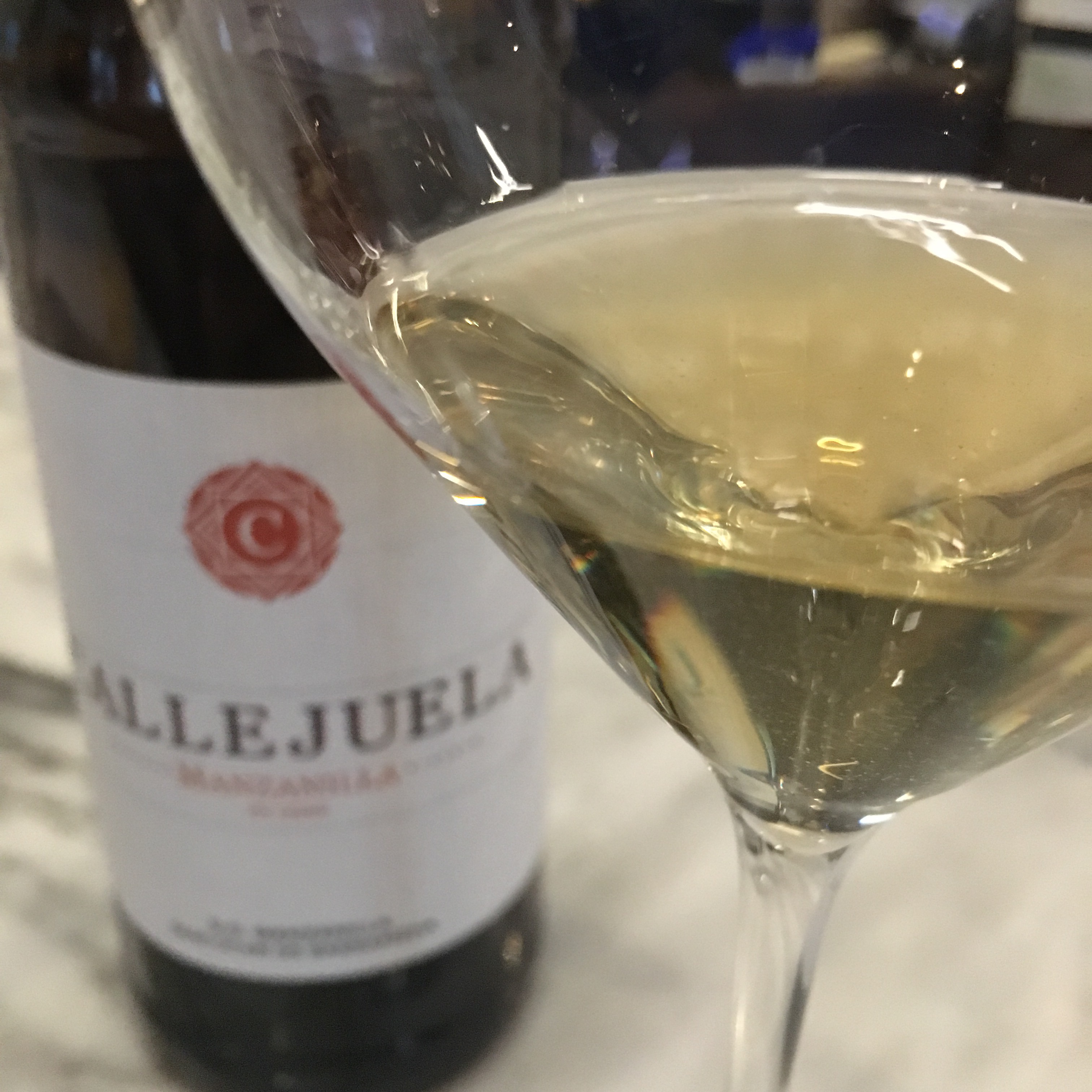
I said I would come back to it and I did. Two of Callejuela’s manzanillas: on the right, the  manzanilla en rama, and on the left the manzanilla madura. These two have had a similar time under flor in the same bodega and although it is not a massive contrast it is an interesting one. 

The difference in colour is a slight increase in depth rather than shade. The difference on nose and palate is a little more marked. The madura has a bit more green apple freshness, the en rama a bit more underbranches and brackish water. 

On the palate: ever since I tasted palulu (liquorice root) I find it everywhere I look and here it is again in both, but much more potent in the en rama. Overall a similar story to the noses – a touch more apple freshness in the madura and a touch more heavy metal in the en rama. 

Overall the comparison tends to confirm the idea that en rama wines are more complex or have more character, but both of these are cracking. 

Fino Lagar Blanco

A good friend of mine recently gave me a chunk of liquorice root – known here as “palulu” – because he maintained that it was important to my wine tasting education to understand this substance. We duly chopped the thing into kindling (using ever larger and sharper knives in defiance of all health and safety regulations and indeed common sense) and gave the splinters a good old suck and chew. The flavour was fascinating – a bitter, sappy aniseed – not to mention the sensation of chewing wood.

He was dead right about its importance in wine tasting terms. It is one of those flavours that you find deep in a lot of the wines from down South, and in particular, I find, in some of these pedro ximenez finos from Montilla Moriles.

This fino by Lagar Blanco – with which we kicked off an excellent lunch at La Malaje yesterday – is one that I have wanted to write about before. It is a seven year old fino that has developed nutty aromas and flavours but underneath there is just a hint of palulu bitterness, which I must admit I had found a little disconcerting in the past (before I embraced the chewing of the root itself). Punchy nose and a gentle, seawater salinity to it – not as sharp or sleek a profile as some and plenty of volume in the mouth, with a nutty character of raw almonds and that hint of rooty devilry.


What to get your favourite sherryblogger for Christmas …

What does one get for a sherry blogger who already drinks and owns far too much sherry as it is but you just can’t stop yourself because you admire his prose and dedication and want to show your appreciation …?

I know that many of you will be pondering this very question so here are some suggestions. As always, I focus here on the new wines I have not yet tried (marketing departments: note how this favours añadas) but I certainly won’t be sending back any bottles of La Panesa, Privilegio, Tresillo, Gran Barquero, 3 en rama, or anything from Finca Matalian etc. (If I get too many of each thing next year I will do a longer list but this risk seems remote …)

  1. Fino La Barajuela 2014 – I was lucky enough to try the wine then in the bota six months ago and it was absolutely epic. Fino La Barajuela 2013 was my favourite wine of 2016 and I cannot wait to meet its successor (and see the Oloroso too if it is ever released)
  2. Volume III of the Pitijopos, and of course the time and opportunity to drink the Pitijopos II that I already have.
  3. Manzanilla de Añada Callejuela 2012, Bota 3/11 – episode III of this fascinating experiment in static ageing.
  4. La Bota de Manzanilla Pasada 20, 40, 50 or 60 – I just love these noughty manzanilla pasadas (and already have some 70, thankyou)
  5. Amontillado Sacristia AB, Saca de 2016 – have had a cheeky preview and can’t wait to get my hands on a full bottle.
  6. Encrucijado 2014 – a more refined, focussed successor to the 2012 or so I am told.
  7. Golpe Maestro – the revolutionary wine by Federico Ferrer of the Cuatrogatos Wine Club
  8. Pandorga 2015 and UBE 2015  – and indeed anything else that comes out of the little goldmine that is Cota 45.
  9. The Juan Piñero VORS wines – which for whatever reason have managed to elude me so far.
  10. The Valdespino Añadas – single vintage wines that were glimpsed at Vinoble but haven’t been seen since (or did I imagine it)

As always, I am convinced I have forgotten something and may have to come back to this – I would be surprised in fact if it was only one thing. In any event, a fella would be pretty happy if the chap in red and/or the other three chaps and their various camels and reindeer could round up the above.

Manzanilla en rama Callejuela – saca de 2016

Was looking forward to tasting this wine. Callejuela is one of the new forces in Sanlucar, the bodega behind the exceptional Manzanilla de Añada and a top class range of manzanilla fina, manzanilla madura, and of course manzanilla pasada (Blanquito). As luck would have it, they had some at Angelita (as you may have realized from the distinctive marble bar top.)

I only had a glass and may need to come back and study this further (apart from anything else, I took no note whatsoever of any information on the label and can’t find any now, so don’t ask me about ages, saca, classes etc). My first impressions are of a heavier, punchier, more rustic style of wine, with more farmyard and aniseed notes in aroma and palate and less sharpness and verticality of profile than the other manzanillas of the bodega. Really characteristic, in fact, of a “river influence” manzanilla.

Vive la différence.

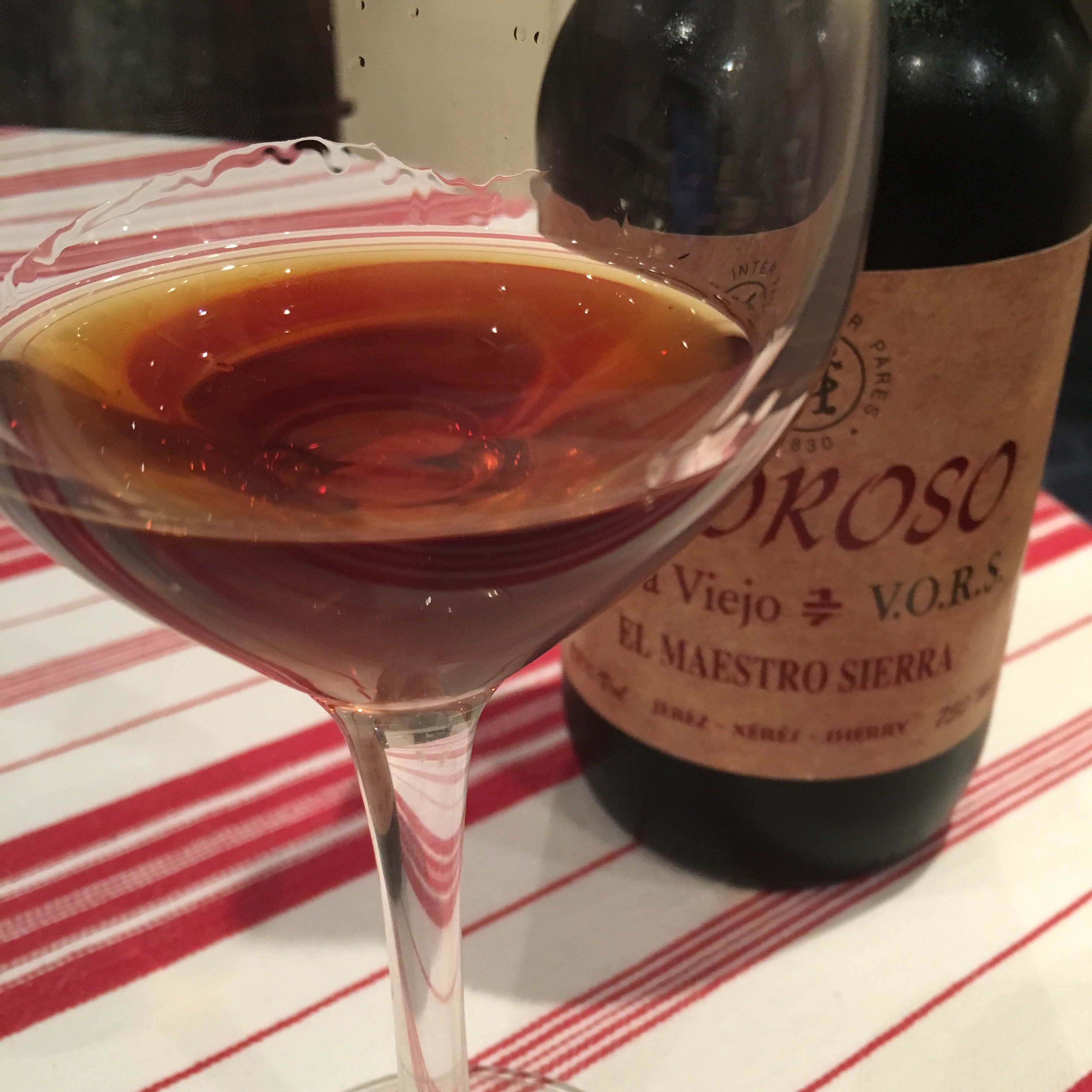
Oloroso Extra Viejo 1/7 El Maestro Sierra

If for any reason you are averse to late night liquids then look away now because this juice is fully nocturnal. It is absolutely a vampire-like, bitter brooding negative version of your day wines, with its furniture polish, sawdust and burnt caramel aroma, bitter bite and walnut wood and tobacco flavours.

I opened this and wrote about it way back in April and have been back to the well several times since. It is intense, and bitter, and there is no doubt you have to be in the right frame of mind (don’t try this lad as an aperitif), but for those moments of silence when everyone else is in bed and the only sound is the sporadic hammering of the laptop keyboard what a wine it is.

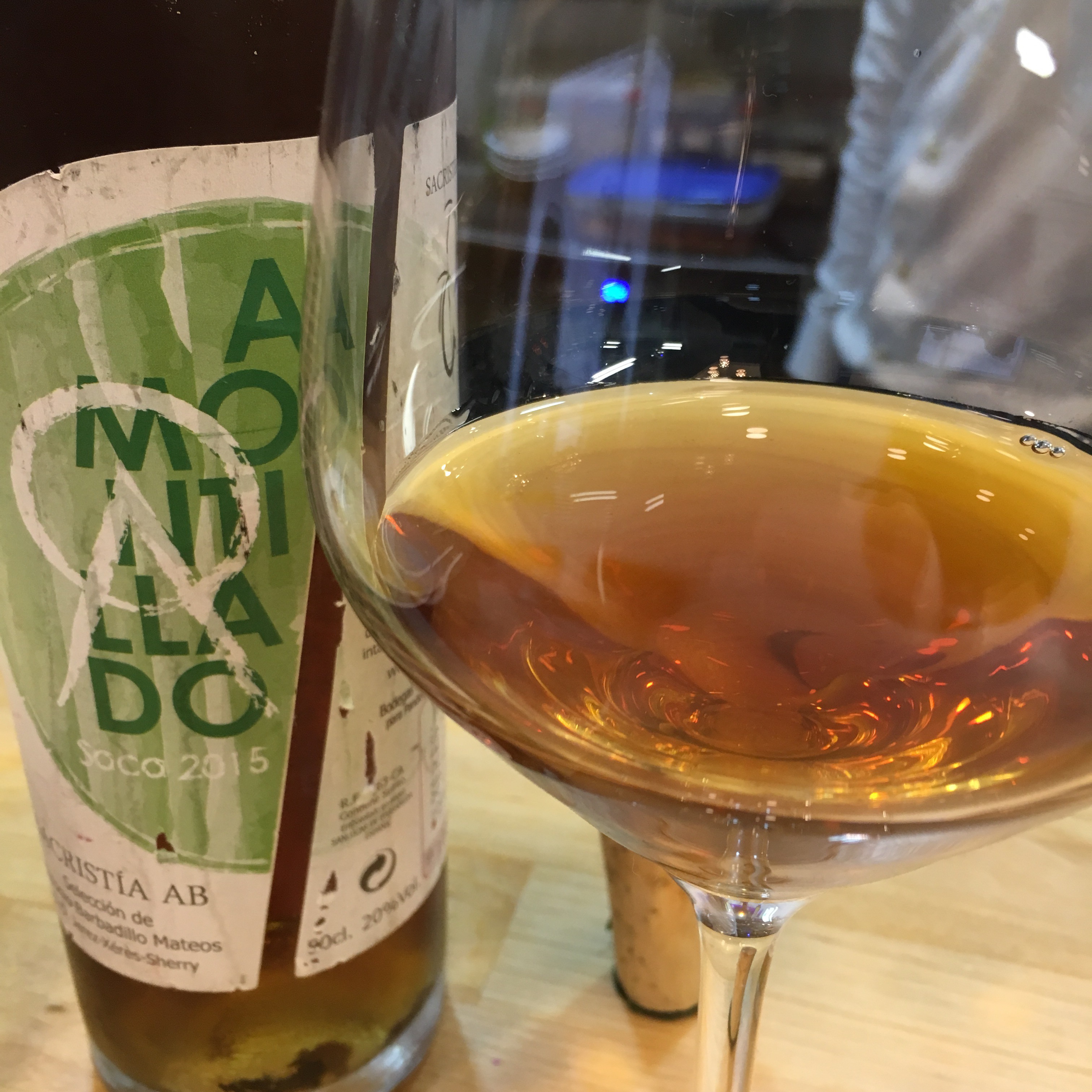
Amontillado Sacristia AB 

Another of these special bottlings by Antonio Barbadillo – one of the most entertaining and knowledgeable blokes you could hope to meet. I bumped into him yesterday, that gave me a hankering to try one of these wines again and, as luck would have it, they happen to have this bottle in Territorio Era.

These releases are all elegant and flavourful in my experience – and this is an absolute beauty. A gold amber/chestnut in colour, with salty caramel on the nose and salinity and acidity on the tongue. A hint of gingery, dusty age at the finish.

Top class, and even better news is that 2016 is on the way …

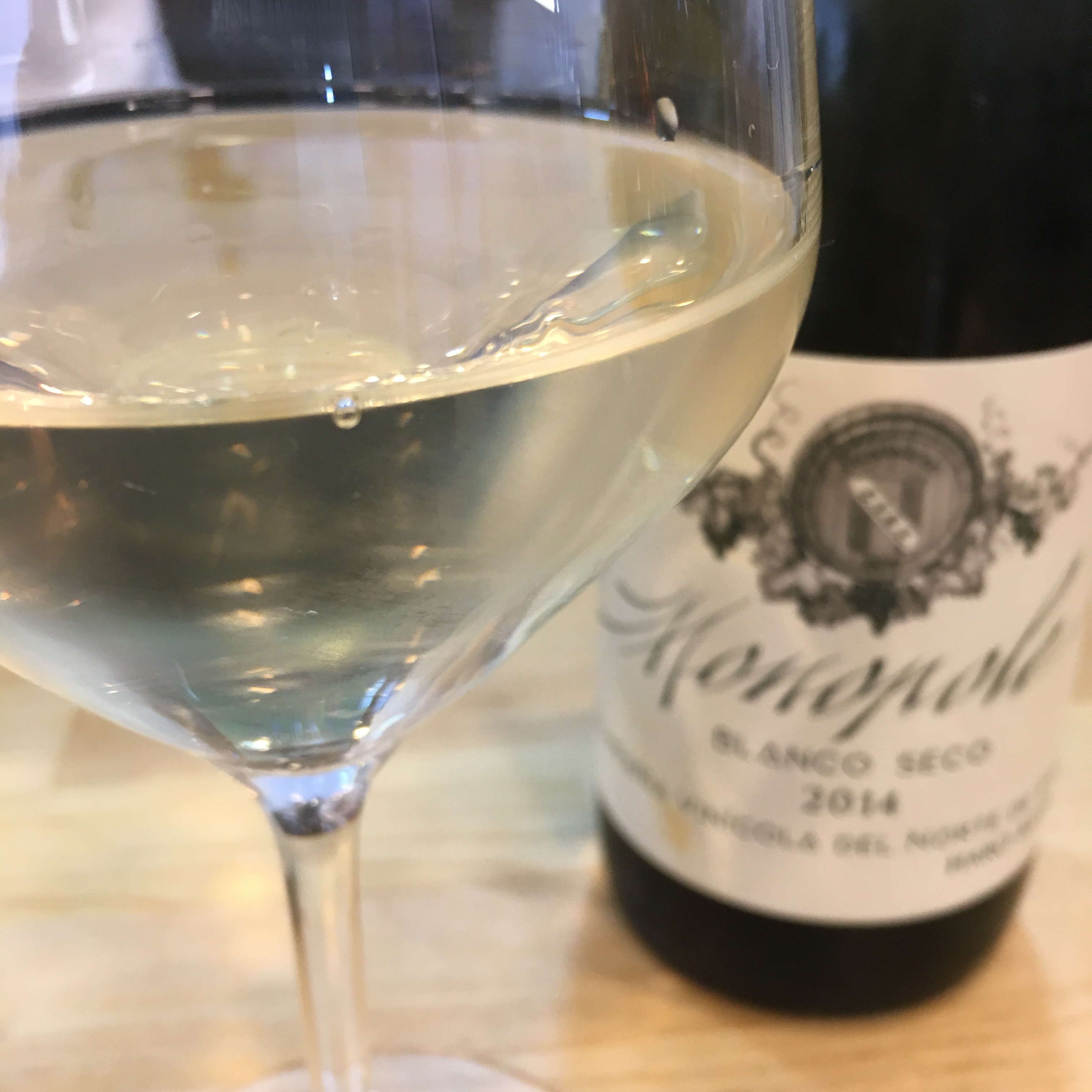
Monopole Blanco Seco 2014 

A much talked about new/old release from Rioja giant CVNE, this is a classic that was discontinued for a good while before being brought back in 2014 to celebrate the centenary of the brand. It gets reported on here because although it is nearly all viura from la Rioja, it has been topped up (somewhere between 15 and 20%) with manzanilla de Sanlucar (and from no less a bodega than Hidalgo-la Gitana). (And because they have it in Territorio Era.)

As you can see it is very very pale in colour. It is possible there is some sea breeze on the nose alongside the peachy, floral viura but I may be imagining it. On the palate again you have a nice combination of white fruit acidity and that touch of salinity – bitey at the front and mouthwatering at the end. The manzanilla definitely adds to the flavour profile too – gives it a bit of savoury depth. 

A fresh, tasty and enjoyable wine and a very happy return.