The young flor and the old bota 

Interesting contrast here between two wines that are both 100% palomino fino and have both spent time in bota but with and without flor, respectively. (They are also from opposite ends of the Marco de Jerez.) What I find interesting is the fact that what I recognize as the wood influence of the barrel is much more marked in the Socaire – which has spent two years in an old fino bota – than in the Manzanilla de Añada – which has spent nearly four.

I am no expert here but I am guessing that this lack of wood effect may be a function of the flor at work, or that the barrel influence is balanced by the lack of glycerine and sugar in the wine. Or it maybe that what I am attributing to the wood is really the effect of the wine impregnated into the barrels. On a completely different level, it reminded me of one of the more extraordinary wines that we tasted by Alba a while back: Alba Pago Carrascal Las Alegrías 2014. That wine was un unfortified palomino fino from Pago Carrascal (de Sanlucar) that aged for 18 months in a 650 litre chestnut bocoy that had held oloroso for over 80 years – and as a result had gained a fascinating, fine character and profile. It also brought to mind Mirando al Sur, a fascinating 100% viura from Rioja by Oliviere Riviere that had spent 18 months in a sherry bota.  (Indeed although I am even less of an expert this kind of thing has been de rigueur in the whisky business for donkeys years.)

It is something that has intrigued me ever since I started thinking about these wines: trying to get a handle on the importance of the barrels used. One of the first things a winemaker will tell you about their wines is how much oak it has had, where the oak was from and whether it was old or new. This conversation just never happens in relation to sherry. Maybe because of the historic nature of many soleras and the very limited number of vintage wines: even the new soleras that appear tendo to inherit barrels from old ones, while the vintage wines I know of, from memory, appear to be aged in old botas.

It would be fascinating to try something made in a new barrel, or maybe to make some wine in new american and french oak and give them a run against the oldies. Who knows maybe there is a stack of literature out there that I am not aware of – if so give me a shout.


Socaire 2014 


I firat had this last week at Surtopia but having received an emergency aid package from the Cuatrogatos I wanted to give it a proper run out in its own right.

It is a 100% palomino by Primitivo Collantes that I have been looking forward to ever aince I tried its little brother, the Viña Matalian. It is unfortified and has not spent time under flor but was fermented and aged for two years in botas that had formerly held Fino Arroyuelo. 

The result has a beautiful gold colouring and a lush nose with fruit, almonds and sweet herbs as it opens up. It has a chalky touch and is very slightly saline without being zingy – minerals like a chablis as we said the other night. Like its brethren it is long rather than wide – tastier for that time in the barrel but elegant and fresh.

Really good, another Chiclana classic. 

Ramiro Ibañez in Surtopia: Day 2


Day 2 of Ramiro Ibañez´s masterclass on wines of the marco and while Day 1 was – with the exception of one very fine manzanilla – all about tuna and the meaty, muscular flavours of the rest of the region, in Day 2 there was a clear emphasis on the langostinos and all things Sanlucar.

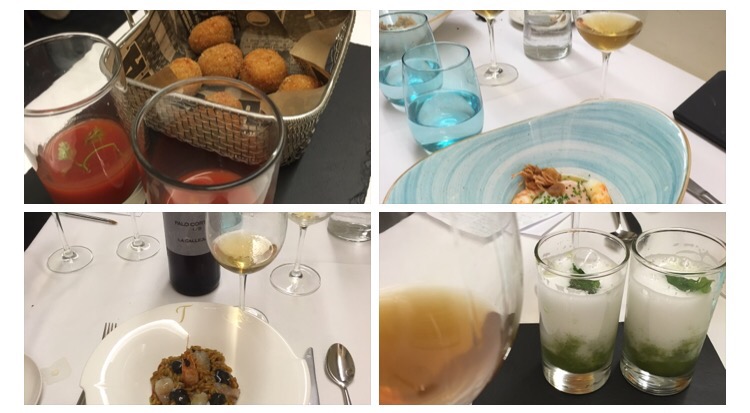
The solid matter was again absolutely top class. We kicked off with some croquetas (langostino, obvs) and Surtopia’s signature bloody sherry, then a carpaccio of langostino with a foam of manzanilla, a ceviche (of guess what), an absolutely brilliant dish of langostinos and poached egg (give me an egg and call me an idiot, as they say around here), a tasty, tender false rice with, ahem, langostinos and finally some refreshing rebujito ice cream shots. No complaints whatever: on another day this post would be about the food.

But today was about the wines, and what wines they were.

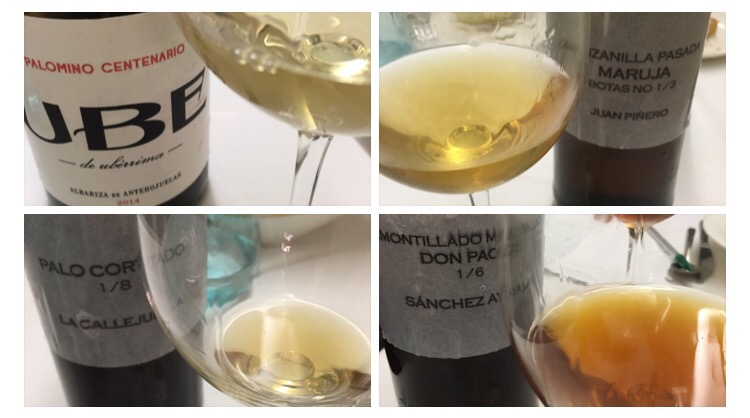
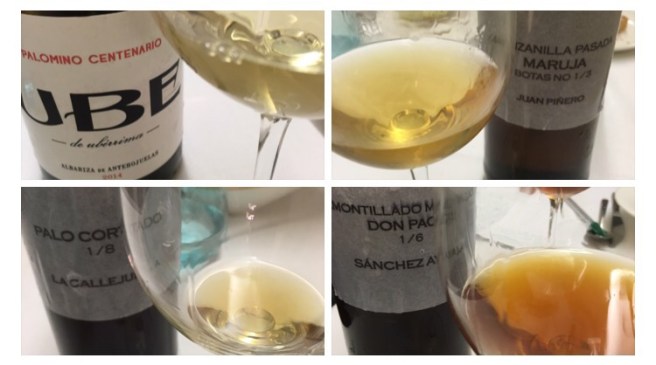
Wine #1 was none other than UBE 2014, by Ramiro himself at Cota 45. This is an unfortified, 100% palomino (from three strains) from Pago Miraflores, fermented at atmospheric temperature before ageing 14 months in bota (but not under flor). Interestingly, Ramiro reckons this to be both the simplest wine to describe and the hardest to understand, and you can see where he is coming from because for a straight up palomino this has a few unexpected dimensions. Beautiful bright, gold colour with some goldish green hues. On the nose first up it was pure blanc des blancs – strawberry pastry aromas. On the palate the first sensation is the dissolved chalk sizzle of the minerals – really buzzy -and then a big dose of tasty, viney fruit but then what Ramiro calls the “verticality” takes over – long, direct and mineral. Lovely fresh finish. It maybe difficult to understand but it is a doddle to drink. Cracking start.

Wine #2 was an absolute beauty: Maruja Manzanilla Pasada “Bota No” 1/3 – from one of three botas kept to one side in the Maruja solera and only refreshed as necessary to replace the merma. The result is a wine that has slightly more golden, less orange colour than the Maruja Manzanilla Pasada and a more refined but somewhat less fruitful profile. There is a lot of acetaldehide, herbs in the nose and on the palate and a rich, salty butter texture that indicates a long exposure to the cabezuelas (something more common in finos than manzanillas). One step beyond in manzanilla pasada terms.

Wine #3 was another rarely (never) seen wine, a Palo Cortado la Callejuela 1/8. A rare example of a Sanlucar palo cortado (at least I can’t think of many) but there is no doubt about the classification. A nice brown-gold in colour and a lovely sweet nose with those toasted, burnt butter aromas. On the palate it is salty, spicey and slightly bitter, with liquorice and even coffee flavours. Not the most intense, acidic or explosive of palo cortados but elegant and enjoyable.

Wine #4 was the star of the show for me, the Amontillado Muy Viejo Don Paco 1/6 from Sanchez Ayala. A single pago  wine – fruit sourced from Pago Balbaina (Viña las Cañas) it would have spent some several years under flor and is a total of around 50 to 60 years old. A tone darker and redder than the preceding wine it had a salty, fine nose with just a bit of sweet nutmeg to it – a spicier sweetness rather than a pastry one. On the palate the intensity of sapidity and salinity is remarkable – a real all enveloping zingy power to it that gives it an explosive start and a big impact up front, with toasted nut and spiey nutmeg flavours that just balance the salinity. From there it is long lasting but without dragging its feet – not astringent or harsh. As luck would have it there was also a bonus glass that was even better.

Last but not least, wine #5 was another vino de la casa: the 11540 Medium Sweet. Again sourced from Sanchez Ayala this is a fascinating little wine made up of 60% amontillado, 20% youngish PX, and, innovatively,20% manzanilla Gabriela Oro  that spent a short time in bota together before bottling and hang together really nicely. It is an attractive dark-straw gold in colour and whereas I find that some medium wines can come across as spirity and over sweet on the nose – but this, while ripe-tomato sweet has a nice balance with a little bit of herbs and sea breeze. That little bit of manzanilla also gives it a bit more balance on the palate at front and back – a little bit of bite going in and a freshness to the palate. Ramiro described it as more “vertical” than many mediums and I would buy that. Interesting, imaginative stuff.

And that was that: five more unique wines in a variety of styles and a fascinating contrast with the first day. All in all a really fantastic event and a great chance to fire some questions at the maestro himself. There will be more to come from my notes when I get a chance to write them up.


Manzanilla de añada Callejuela 2012 – 2/11 

After a special week this is a special wine.

A week ago I was feeling a bit of burnout – really tough month with everything going on around the world and to be honest I was ready for some holidays. A couple of nights out with the boys and a long chat with one of the most inspiring winemakers around changed that – and the arrival of this, one of my favourite projects – also helped (thanks to the Cuatrogatos).

It has the same fresh, lemony gold colour as the first bota, but the nose while fruity has a touch more sea breeze. Then on the palate it has a much more explosive zinginess – salinity and sapidity. Still has a good mouthfull of fruit but a little bit spicier and much finer, more vertical and direct. Then a long, long mouthwatering finish. Am watching the Open as I sup and the boys have played their putts and my mouth is still watering.

A definite step up and a much bigger step up than I expected from the first saca. This is a proper manzanilla alright.

Ramiro Ibañez in Surtopia – Day 1 

I have a total of 25 pages of notes from the two days that Ramiro Ibañez was doing the butling at Surtopia. It was not just interesting, it was fascinating. Will take me a good while to write them all up but no time like the present etc.

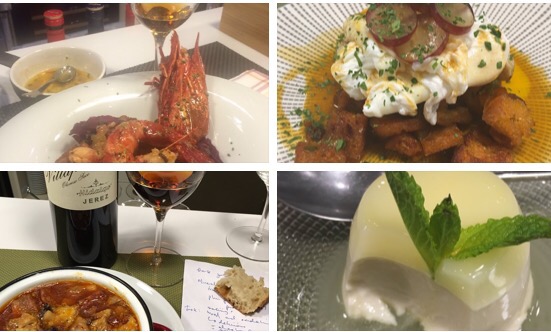
The first night involved five wines chosen to accompany some fatty, meaty tuna dishes (at this stage the so-called “blogger” realizes that none of the 25 pages of notes refer to the food and hopes noone will notice the lack of detail). In fact I only have three pictures even …


At least I have some notes of the wines:

Wine #1 was Socaire 2014, a 100% palomino by Primitivo Collantes that I have been after for a while (in fact my first bottles were delived the same afternoon I went to dinner). 100% palomino from Finca Matalian, it is unfortified and has not spent time under flor but was fermented and aged for two years in botas that had formerly held Fino Arroyuelo. They were two years very well spent. The result is a beautiful dark gold colour and has a fantastic, lush nose that is blanc des blancs champagne first up, and gets more and more herbal – sweet herbs like rosemary or oregano – as it opens up. On the palate it is chalky and slightly saline without being zingy – austere minerals like a chablis. Long rather than wide, but wider than its little brother the Viña Matalian and a really interesting wine.

Wine #2 was the new edition of the 11540 Manzanilla. Whereas previous editions were selected from Barbadillo’s Solear, this fella is from legendary Sanlucar bodega Sanchez Ayala – from  1/46 of the original Gabriela Oro solera to be precise. Sanchez Ayala has been a happy hunting ground for exclusive bottlings in the past and the wines have a high acetaldehide style that is extremely attractive (and fashionable). This one has an average age of about five years and has been through 7 classes. It is a shade darker than the Socaire, a dark straw colour, and has a massive nose of hay bales, salty brine, roasted apples and spices. On the palate it is zingy, salty, with a suggestion of that baked apple but then a long, nutty finish. Really excellent again.

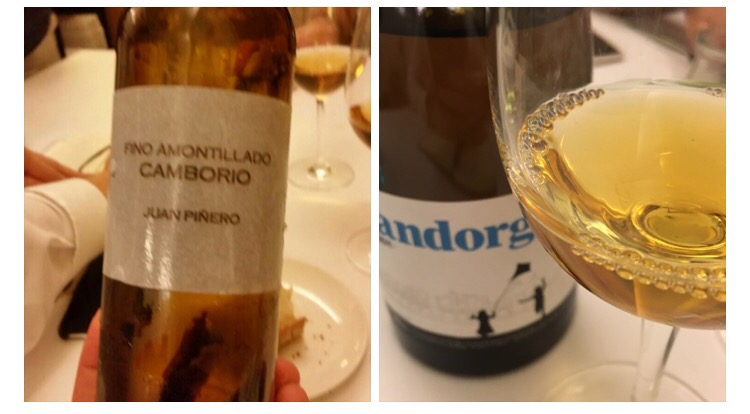
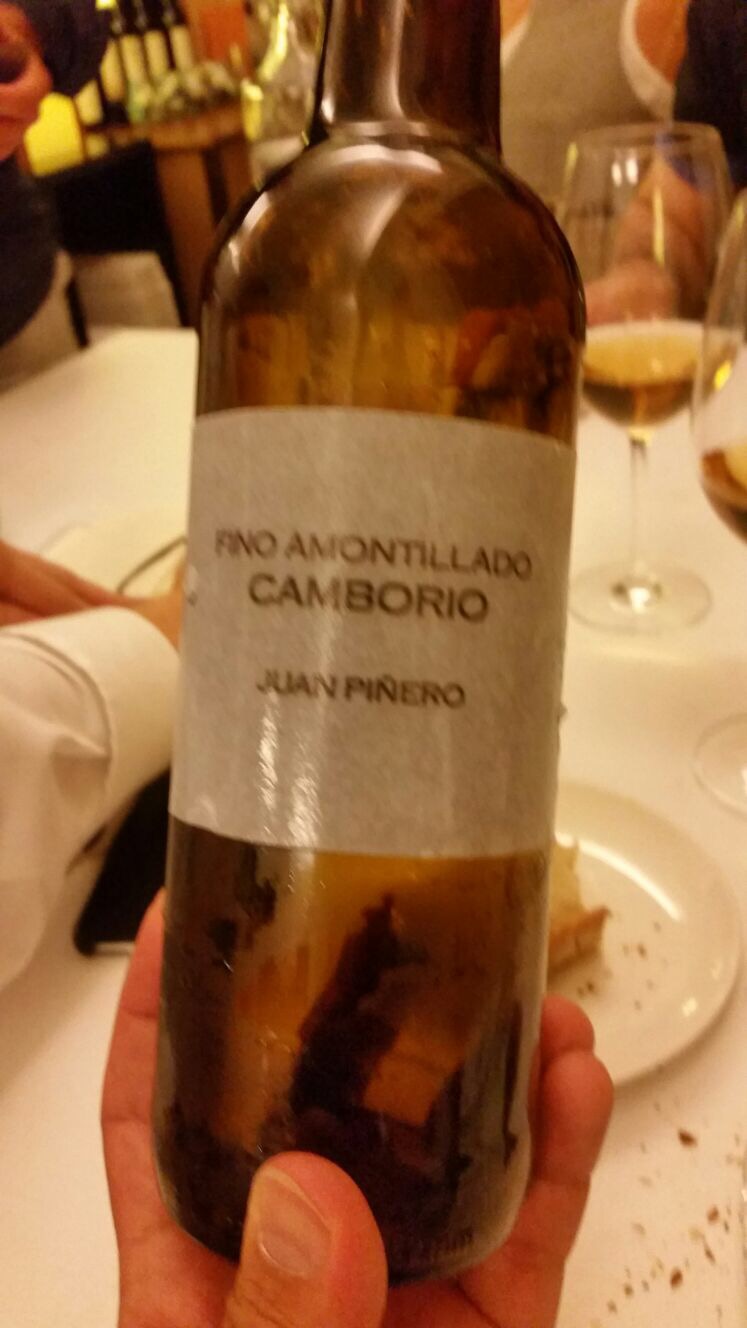
Wine #3 was the wine of the night for me: a Fino Amontillado Camborio. Fino from the legendary Camborio solera with those 10/11 years of biological ageing and that mineral structure that has been given a year of oxidation and has gained in character. Again a big acetaldehide profile of green apple over the sea air minerals of the fino but also touches of lemon on the nose. On the palate there is a suggestion of that green apple, then spices and herbs and a long, mouthwatering bitter almond finish. Really rich in feel and flavour but elegant too. Really superb.

Wine #4 was the only wine of the night that I had tried before – the Pandorga 2014, the stunning fruit bomb pedro ximenez  from la Panesa vineyard in Carrascal de Jerez. After a relatively cool growing season the grapes and 11 days of asoleo before fermentation in bota without any kind of temperature control. Fermentation lasted six weeks producing a wine that is 12º, has 270g of sugar, and more importantly has bags of fruit flavours and aromas including olives, apricots and orange marmalade. A delicious expression of year, terroir and fruit that has already become a classic.

Wine #5  was the “big dog” of the night, an old old Oloroso 1/12 from Almacenista Santiago. Really powerful, rustic, old school almacenista oloroso. It is a dark reddish brown in colour, with a cigar box woody nose and a really powerful, bitter palate. Real acidity and concentration and although it didn’t have any noticeable juicy sweetness neither was it astringent or dusty. Good salinity too but not over powering. No doubt about it: a fighting wine.


And that, as they say, was that for the first night (but not for my notes thereof – the remaining five pages of increasingly illiterate scrawl need much more work and reflection). Five really unique wines and a privilege to have been there.


Ramiro Ibañez in Surtopia


My most sincere congratulations to Surtopia and Ramiro Ibañez for a great night last night and an epic lunch today. Yesterday was Jerez, oxidative wines and the fatty tuna. Today was Sanlucar, biological wines and the soft fleshy langostinos. I won’t give away more details because I know there is a full house due to dine tonight but look, both were top class.

Suffice it to say that:

First, Surtopia is really an excellent place. For any wine lover, and particularly a lover of the wines of Sanlucar and Jerez, it is already a fixture, but the food is better every time I go – the tuna with chimichurri de Sanlucar and the confit in manteca colorao last night and [a couple of the dishes today – spoilers removed] were outstanding.

Second, Ramiro Ibañez is the real, real thing. I have no less than 25 pages of notes from two meals. The bloke drops knowledge like it is confetti at a wedding and it will take me a while (maybe months) to absorb, let alone write up, everything I have learned over the last 24 hours. He is also a born educator: the 10 wines selected were unique, hard to get, and illustrative (to give you an idea, I had only tried two out of ten).

So if you are going tonight, I know you are going to enjoy. I wish I was going again!


La Fisna Vinos 

Great night and a long overdue visit to La Fisna – a top quality new wine bar in Lavapies. 

We only had one glass of sherry – the frankly brilliant Tradicion Cream – but as you can see we had a choice of 11 crackers by the glass and more by the bottle from the sacristy/store in the back. Not that we only had one glass of wine – far, far from it. We had a goodish number of top drawer wines from Burgundy and, ahem,  surrounding areas. Different styles and profiles and really interesting contrasts – your man Iñaki really, really knows his stuff and for me at least it was a bit of an education.

We didn’t really get stuck in to the food,  but you certainly could if needed: simple stuff but perfect accompaniments to the main attraction (the rilletes in particular were top class). 

Cracking, convivial company too last night. All in all a brilliant spot. 

VERDEJO taberna artesana

Taberna Verdejo is one of my favourite places in Madrid and it should be one of yours too.

First, the cooking is just outstanding. By some miracle I found on my phone some pictures of the brilliant mollejitas, one of their escabeches and a salpicon (above), but there I am only scratching the surface. The menu changes constantly with the seasons, the product used is first class and the results excellent. The mollejitas and the escabeches are absolutely delicious and other favourites include piparras fritas, navajas, the callos (“guiso de morro, pata y callo”), and the steak tartare. They elevate very traditional dishes – the huevos rotos, the carabinero and sweetbread “salad” and one amazing coquelet spring to mind – and they have a fantastic touch with game of all kinds. It was the first and is still the only place I have had roast thrushes, they have duck of every feather and the last time I was there I had a tartare and an escabeche of “corzo” (roe deer) that would make even the most convinced fan see the movie “Bambi” differently. Simple stuff (or at least it seems simple, but I dare you to ask them what is involved in each dish) but there is such great imagination in the accompaniments and composition, and such attention to detail, that the results are sublime. I haven’t even mentioned the desserts – and particularly not the oloroso pana cotta, which is just ridiculously good.


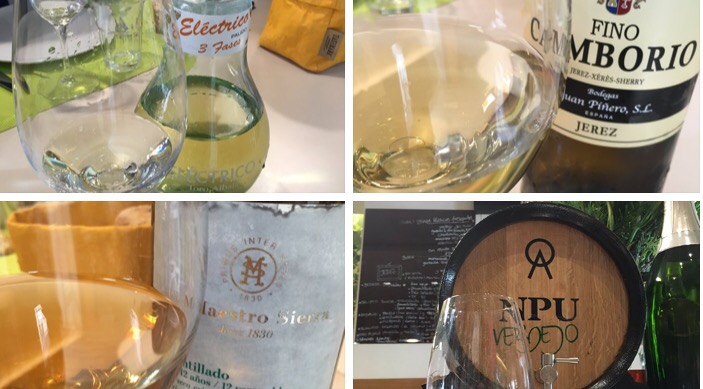
Second, the quality of the liquid on offer is also brilliant. They don’t only have sherries – they have a short but brilliantly chosen wine list with some brilliant wines – but we are where we are and it is, frankly, a sherry lover’s paradise. I actually started going to Verdejo before this blog was born but just looking back at my blog the wines I have tried there include the Fino Perdido, Antique Palo Cortado, Arroyuelo En Rama, Fossi, Goya and Goya XL, Williams Oloroso de 2009, UBE 2013, Tio Pepe en Rama, and Tosca Cerrada, among many more. The last time I was there was had a brilliant lunch accompanied by Electrico en Rama, Fino Camborio, el Maestro Sierra 12 yr Amontillado and a cracking Sanchez Romate amontillado from their very own bota (see the picture below). Absolutely brilliant – the guys I went with weren’t sherry fans when they arrived but I am pretty sure they are now. The pairing choices were superb (as are the wines, of course).

But if you were to ask any of the many devotees of Verdejo what is the best thing about the place, I am pretty sure that noone would bore you with lists of dishes and wines. The best things about the place, by a distance, are the people there. I only really know Marian and Mamen well but it is clear that the team as a whole is good people. Most importantly, though, Marian and Mamen are just lovely. Despite all that attention to detail  (it is very soothing to the soul to relax with a glass of wine and watch people work so hard) they are friendly, cheery and fun, love a joke (they even laugh at some of mine) and will look after you way better than your own family ever would.

Their website says they “love what they do” and it shows. I also love what they do, and I really love they way they do it.


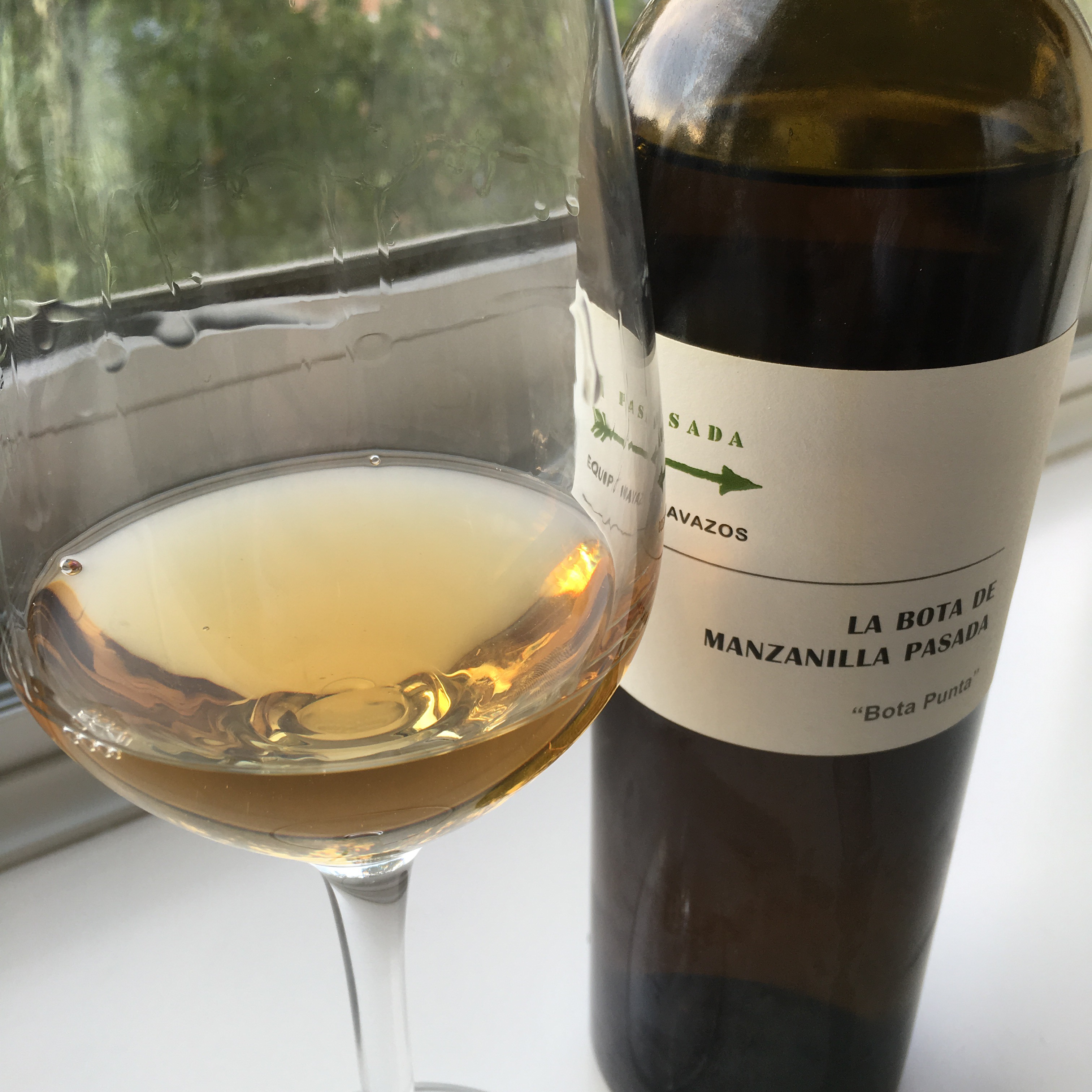
La Bota de Manzanilla Pasada 60 – Bota Punta

This is my second bottle of this cracking manzanilla pasada by Equipo Navazos and I am really wondering if I was in possession of my senses the first time around.

Back then I highlighted the elegance and, reading between the lines, seemed to consider it a bit quiet. Coming back to it now that seems outlandish. It has absolutely bags of flavour and power: salty brine, haybales, stewed, baked apples, and a spicey finish. In fact, if anything the flavours seem almost too vivid. The salty haybales and jammy fruits balance each other in some ways but like an hourglass – there is too little middle ground. The result seems to lack overall harmony.

Last night I opened it alongside an older riesling from a famously chalky vineyard but in retrospect it wasn’t a great comparison – a completely different profile – and that side by side may be behind my fixation on the saltiness and yeasty hay bales. What was clear from the comparison was just how complex and full of life the wines of Sanlucar and Jerez are when compared to the “table” wines of other regions.

Nevertheless I intend to take my time with this bottle and will write more soon.

Fino y amontillado de la familia

At first I was alarmed that my team in the office had discovered my blog (will have to be careful about posting at lunchtime) but I was very touched when one of my colleagues brought me these from the family vault in Aguilar de la Frontera.

The “fino” is apparently a bota they have had for 30 years that gets refreshed with mosto year after year. It doesn’t seem to have developed flor but there is just a bit of oxidation and the result is a potent little wine – big farmyard and baked apple nose on it, no real acidity but big in profile on the palate, again with baked apples, and pretty long. Very tasty.

The amontillado – said to be from great grandad’s day – is even better. Very nice caramel and nuts on the nose and palate, again potent and dry but not too salty or astringent. A bit of alcoholic heat but the sort of wine you could drink a lot of.

Two cracking wines and a great way to start the weekend. Many thanks!