Manzanilla la Kika

This was new to me when I tried it yesterday at the Feria de Vinos organized by Lavinia and is a very attractive manzanilla from Bodegas Yuste.

La Kika (pictured on the label) is or was the mother of the owner of bodega and the grandmother of the young lad who served it to me and the wine and everything about it is apparently a homage to her. In the circumstances, I feel a bit of a curmudgeon for complaining, but this is yet another case of a unique bottle shape that plays havoc with a fella’s storage arrangements (you can see why better on the ficha). In fact the bottle is an Italian olive oil bottle – even has a small lip – and just look at the cahoba stopper on that cork. As it happens I don’t have any bottles of this but if I did I don’t know where I would put them.

Anyway, the more important thing here is the wine in the bottle. This is a manzanilla (from palomino all sourced in Balbaina – or at least is now all sourced in Balbaina) that has passed through nine classes located in three different bodegas –  the first three in Miraflores, then three in Los Angeles, then the last three in Santa Ana. At the end the average age under flor is about 10 years. It is apparently unfiltered and bottled by hand – real artisanship.

The colour is a nice rich gold – a touch of brown gives a hint of its age. On the nose first up it is creamy and I detected Jura-like cheese aromas, seaside aromas like a puerto fino, yeasty green grass and unsalted almonds. Then similar richness on the palate – creamy texture and buttery flavour at first, then really punchy yeastiness and a long slightly bitter, nutty, mineral finish: really zingy and fresh, almost drying.

Really good, expressive and full of character. A fitting tribute to anyone’s grandmother.

Feria de vinos: Jerez del Siglo XXI


Had a pretty enjoyable afternoon yesterday in Lavinia tasting some nice wines from the likes of Emilio Hidalgo, Tradicion, Fernando de Castilla, Valdespino, Barbadillo, Gonzalez Byass, La Sacristia AB, Diez Merito, Yuste, Maestro Sierra and Baron. There may have been more but memories and notes are somewhat blurred (there was definitely a new bodega with only a palo cortado but the name has gone) – and not for the first time.

Despite the title reference to the 21st century the emphasis was old school/old favourites (notwithstanding some happy discoveries like the manzanilla La Kika). It was pretty rammed by the end but early doors I was able to try the Guita en rama (October 2015), Solear en rama (Winter 2015), Sacristia AB manzanilla en rama (Second saca of 2015), and Fernando de Castilla en rama (December 2015) in quick succession and with the Pastora manzanilla pasada en rama (2015, and which had much less of the apple profile this time, which I was told could have to do with the time in bottle). Very interesting comparison across those wines: a lot of the characteristics that I had remembered were there. I was also able to compare the Sacristia AB manzanilla (from Yuste) against la Kika (also Yuste) then the Tradicion Fino (November 2015) and Panesa, before moving up the gears with marvels like the Tresillo, the Fino Imperial, the Antique oloroso from Fernando de Castilla and the 2014 amontillado and 2015 oloroso by Sacristia AB.

Probably the highlight was trying three Panesa’s bottled in different years – a 2015, 2014 and 2013 (not labelled as such but – the differences were subtle but interesting. Of course it is  debatable whether the differences are due to the wine coming out different in the sacas or the time in the bottle – most likely a bit of both – but at least yesterday the 2013 seemed to have a bit more expression to it.

Unfortunately my methodical approach meant I missed out on some beauties as the horde of patrons consumed all the older and sweeter wines – will have to come back for the Tradicion PX and cream – but by the end I was a few over the eight and over an hour late home so maybe it is just as well.

Overall a cracking event and kudos to Lavinia for organizing. Was also a good opportunity to see some old friends – was great to see Cesar Martin from Lakasa – and meet some top characters from the world of wine and blogosphere. Look forward to the next one!

The “other terroir”: the magic of the cellarmen

image.jpg

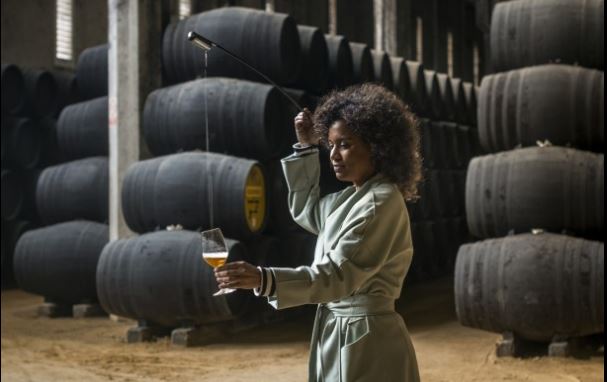
I write a lot about terroir and vintages, to the point where it may come across that they are all that matter. That certainly is not the case. On the contrary, although it sounds an obvious point, it is a fact that the winemaking processes and, in particular, the ageing processes are absolutely central to making the wines of Jerez and Sanlucar what they are, to the point that they are ofen defined and categorized by the processes used rather than their characteristics as finished wines. I sometimes rebel at this – I occasionally feel that the process centered assumptions (like “the older the better”) get in the way of making the best wines possible, but it is undeniably one of the great strengths of the industry, because while the raw material will determine the possibilities of a wine in general, the processes and techniques that can be brought to bear in the cellar can contribute to creating wines with a staggering range of characteristics, from the utterly ethereal to the bogglingly concentrated and fierce.

At this Friday afternoon’s sherry palooza in Lavinia there was a great opportunity to try the wines of three bodegas that may not be making terroir specific or vintage wines but are making wines of considerable distinction and in that respect were maybe unfairly overlooked in the great EPS article Resurrection of the Wine last weekend: Emilio Hidalgo, Fernando de Castilla, and Bodegas Tradicion.

Emilio Hidalgo is family owned since its foundation in 1860 and is probably the bodega with the highest quality overall range of wines around: La Panesa, El Tresillo, El Tresillo 1874, Gobernador, Villapanes, Privilegio and Santa Ana (preblog but one I am going to have to have again). It is also a perfect example of a bodega focussed on the “other terroir”, where the specific characteristics of the bodega have a key influence on the wines that are produced. The supreme case is La Panesa,  a fino that spends a staggering 15 years, on average, under flor, and is still recognizably a fino. What is really interesting is that the solera with the oldest finos is located in one specific room of the bodega; no other room allows a yeast population to survive on such old wines. That incredible age must also be a tribute to the cellar management and wine making skills of the bodega, since this must surely be the limit of what is technically possible in biological ageing. More generally, it is striking how clear an identity all the wines have – not just la Panesa but also the others have a really rich, savoury quality and density of flavour. Oldest of the old school – no dated sacas etc – but a very modern approach to just making the best wine they can.

Bodegas Tradicion, while a new winery in its current form, also has a historic connection with the wines of Jerez (the Rivero family previously owned “CZ”, one of the most historic brands) and have done as much as anyone to maintain that history alive with a great archive and exhibition. They are a bodega with a clear focus on solera ageing of the highest quality, albeit with one eye on the modern audience: all the wines indicate the date and size of saca, and even the number of the bottle. More importantly the wines, most of which would be classified as VOS (20 years old or more) or even VORS (30 years or more) have a recognizeable style. For me the star of the show is the VORS Amontillado (which I am shocked to learn has not been reviewed on this blog) but the Palo Cortado and Oloroso are not far behind and all the wines have a nice touch of citrus and an excellent structure (even the Pedro Ximenez and Cream, which I have only tried fleetingly, seem to have a more structured shape than you might expect). They have also been capable of producing finos with a long time under flor (an average of 12 years and for my money the successive sacas seem to get better). All this can only be a result of careful selection of mostos and cellaring perfection.

Last but not least, Fernando de Castilla is another relatively new winery in its current form but one that makes very matchable, high quality wines in the old school and, although the soleras may have been acquired from different sources, there is a recognisable identity and quality across the range of wines. Here my favourites would be the Antique Palo Cortado and Oloroso,  but I find that all the wines have a nice acetaldehide profile and balance that makes them very easy to drink and pair with food. They are an interesting contrast to Tradicion because their wines don’t carry the VOS or VORS labels (indeed neither do the Emilio Hidalgo wines) and indeed probably don’t have the years required, but for me they are spot on age-wise: enough age to give them bite and character but young enough to be fresh and not astringent. Fernando de Castilla date the sacas of their Fino en Rama but not, as far as I am aware, the other bottlings.

Three great bodegas old and new that demonstrate just what can be achieved in the cellar. I can feel a glass or two coming on …


Fino Imperial (in Taberna Palo Cortado)

Madrid is fortunate indeed to have a place like Taberna Palo Cortado, which has a fantastic list of wines by the glass that includes (apart from the reds, whites, champagnes, Tokay, Jura, etc. that are not within my jurisdiction):

  • 19 finos
  • 17 manzanillas
  • 22 amontillados
  • 13 oloroso
  • 15 palo cortados
  • 2 cream
  • 6 pedro ximenez (not counting the finos, amontillados, etc) and
  • 2 moscatels

Not just any wines, either: you can come here and have a glass (or two) of truly special wines like this Fino Imperial, a 30+ year old VORS amontillado fino from Diez Merito.

It has a pretty complete ficha: fruit from pagos that are classified as Jerez Superior (the precise pago is not identified, however), five years under flor then 25 years of oxidative ageing in a solera with five criaderas.

It is a really beautiful colour – slightly reddish amber and seems to glow – beautiful the way the sunshine emanates from it. On the nose there is a touch of volatile (which I love in moderation) then caramel and hazelnut, and even vanilla, with maybe just a bit of residual hay bales at the end from those five years.

Despite the volatile on the nose it doesn’t seem acidic on the palate: tingly more than zingy. A silky texture, in fact, pleasant caramel, hazelnut flavours first up then under cover of that silky caramel “old wine” notes of tobacco, wood and bitter walnut skin – all nicely balanced and a long slightly peppery finish.

Smooth, elegant, tasty and spicey at the end. Really good.

Manzanilla fina Callejuela 

Here is a classic manzanilla from a newish, smallish producer that is a favourite of mine. I love the label, which in addition to a picture of the vineyard (big tick) also tells us that they have “10 “aranzadas” [a traditional unit of area like an acre – how much land a man can work in a day sort of thing] in Macharnudo, 19 in Añina, and 30 in Callejuela”. Am having this as an aperitif in the Taberna Palo Cortado – about which more later.

Although it claims to be very pale, I don’t find it pale for a manzanilla – quite a solid gold colour. On the nose it is punchy and slightly citric – more fruit than yeast for me – and again on the palate it is saline and punchy but like a fleshy fruit rather than almonds – very fruity, consistent texture. Then a nice mouthwatering, fresh finish.

Refreshing manzanilla, but with a pleasing fruity character.

Manzanilla Pasada Maruja


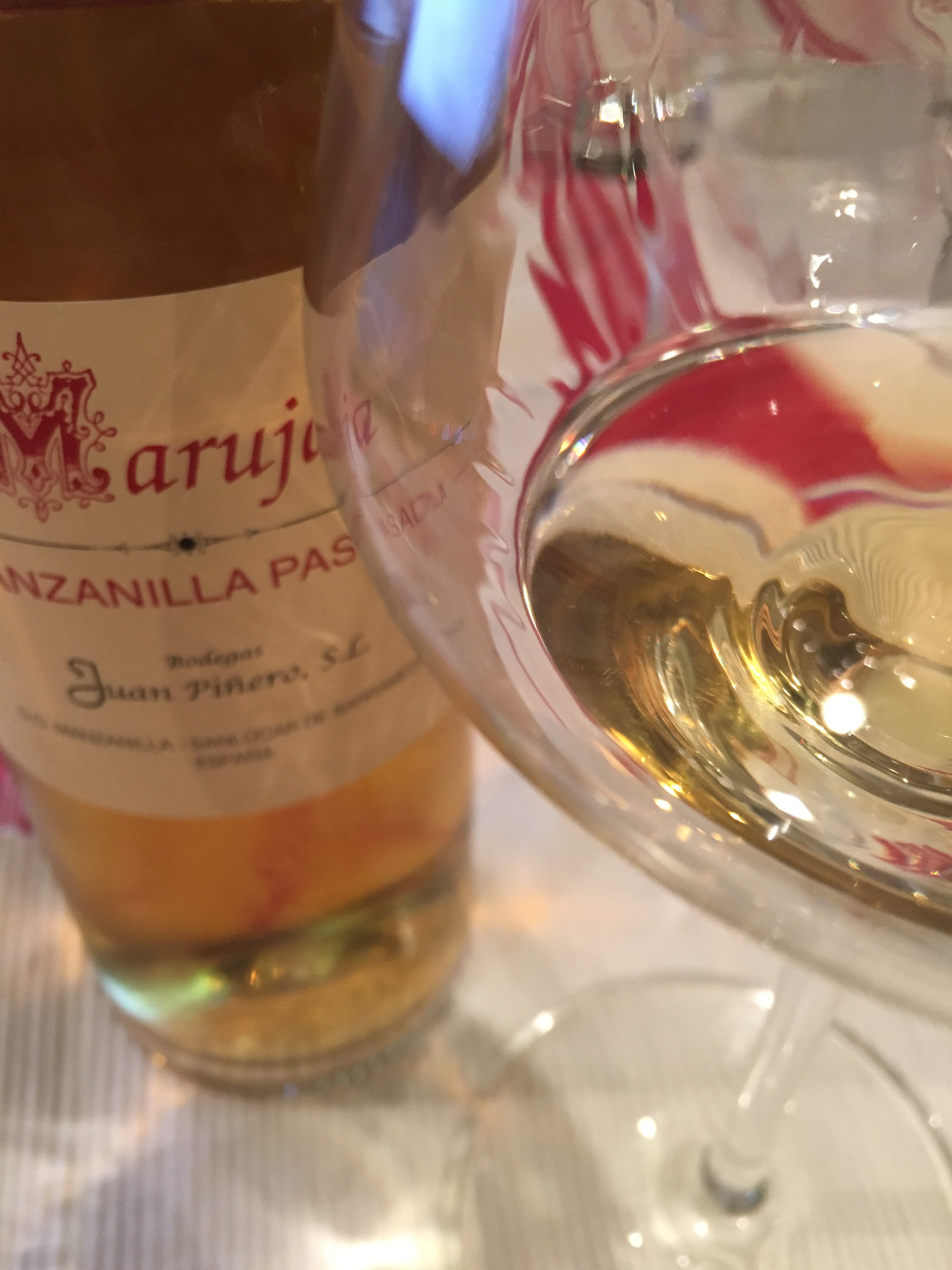
Celebrating yesterday’s EPS article with a little drop of this lovely manzanilla pasada. I remember it as herbs, minerals and hay bales but with a bit of apricot or something.

The colour is no different of course but the nose and palate are quite different. The key words here are salt and pepper. Really zingy minerals and spicey –  white pepper – and not as much fruit (or haybale) as I remember. I am intrigued by the difference actually – both the previous bottles I remember had this jammy fruit sensation to them and this seems much more spice than fruit (and much more in keeping with the Maruja Manzanilla).


Jerez, la resurrección del vino

Paola

After last week’s Coming of Jesus, and just to prove that Spanish editors are equally partial to borderline blasphemous Easter-related headlines this week’s El Pais Semanal, the Sunday supplement of one of Spain’s biggest newspapers, had an 8 page reportage on Jerez under the title “Jerez, the resurrection of the wine“.

And a pretty good one it is too. They managed to interview most of the movers and shakers: Armando Guerra (Der Guerrita), Willy Perez (Bodegas Luis Perez and Studio 54), Ramiro Ibañez (Cota 45), Paola Medina (Williams & Humbert), Antonio Flores (Gonzalez Byass), Eduardo Ojeda (Estevez and Equipo Navazos), Jesus Barquin (Equipo Navazos), Juan Carlos and Carmen Gutierrez Colosia (Gutierrez Colosia), and Rocio Ruiz (Urium). It even references the legendary Cuatrogatos wine club.

[May 1: There is now an abridged translation in English on the Sherry.wine site – enjoy.]

The article manage to cram in a lot of the history and describes a lot of the promising green shoots that have lead to so many “sherry revolution” pieces lately: the interest of critics like Luis G, the support by top class restaurants like Can Roca and Aponiente, and the sherry bars popping up all over the place. Best of all, it does a good job of capturing the convivial enthusiasm and invention of the young winemakers that are shaking things up.

If I were to have one criticism it would be that there isn’t all that much discussion of the wines themselves – or the new ideas that have helped bring them back (such as the Magic Numbers and the rebirth of interest in vintages and terroir). It is fantastic that a widely read publication like this is celebrating the wines of Jerez and Sanlucar , but it would have been even better if the piece could have explained just why they should be celebrated. (If they intend to translate this for the international edition I would also recommend removing the reference to Sir Francis Drake being a “pirate”.)

Still, it is really great to see a lot of people I admire getting at least some of the recognition they deserve. I duly bought the newspaper for the first time in ages and hopefully will look back at a faded copy of this a few years from now when these ladies and gentlemen are all household names. (In fact maybe I should try and get it autographed now …)


Manzanilla La Cigarrera

  
This is a classic manzanilla by the homonymous Bodegas Cigarrera. There is an excellent profile of the bodega – a former almacenista for Lustau – on Sherrynotes.  I picked this up from Reserva y Cata for little more than a song.

The wine has an average age under flor or around four or five years, having passed through 7 “classes” on its way to the solera. Unfortunately no information on the pagos involved – fruit is acquired from the cooperative. 

In colour it is the classic gold straw – the sunset on the picture above makes it look a bit more orange than it really is. On the nose there is sea air and citrus – quite a pungent nose – and if not quite hay bales or flowers then at least dried grasses on sand dunes. 

If you like the nose you will enjoy the palate because it is as you would expect – salty, zingy, a touch of citrus and then the mouthwatering, fresh and more herbal finish. In fact more than herbs it is  like spinach or bitter lettuce. 

Refreshing, bracing stuff. 

Reserva y Cata

About time I posted something on one of my favourite spots for picking up interesting wines in Madrid. Reserva y Cata has a cracking range of sherries, with old classics and hard to get modern classics. In fact, this was the only place I know of in Madrid that was selling the Manzanilla de Añada back in the day.

I won’t be able to remember all the wines I have had from here but they have all the Tradicion wines (including different sacas – at the moment three sacas of the fino, and only because I too the last 2014 – but really all you need is the majestic May 2015), they have the wines of Finca Matalian (Arroyuelo, Arroyuelo en Rama, Fossi, and Viña Matalian 2013 and 2015) and indeed this was the first place I found the Viña Matalian. They have had the Maruja, they had the Maruja Manzanilla Pasada (I took the last one) and they also had the Cream. A good source for Fernando de Castilla Antique wines, they had the Williams Vintage Fino, the Guita en rama, they have all the Gran Barquero wines, the Electrico en Rama, in fact I could go on all night (but won’t).

In fact to be honest I may be writing this at the wrong time – they generally have an even better collection  and are expecting some new arrivals shortly, but as is often the case the small production indy sherries you can pick up here run out quickly – only yesterday some joker bought the last 2014 Tradicion and the last Maruja Manzanilla Pasada (he looks guiltily at his wine cabinet).

So get down there – and if you don’t believe me read this piece by proper journalist Spanishwinelover.