Ramiro Ibañez in Surtopia: Day 2


Day 2 of Ramiro Ibañez´s masterclass on wines of the marco and while Day 1 was – with the exception of one very fine manzanilla – all about tuna and the meaty, muscular flavours of the rest of the region, in Day 2 there was a clear emphasis on the langostinos and all things Sanlucar.

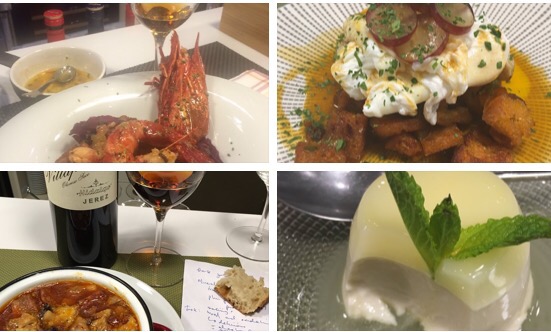
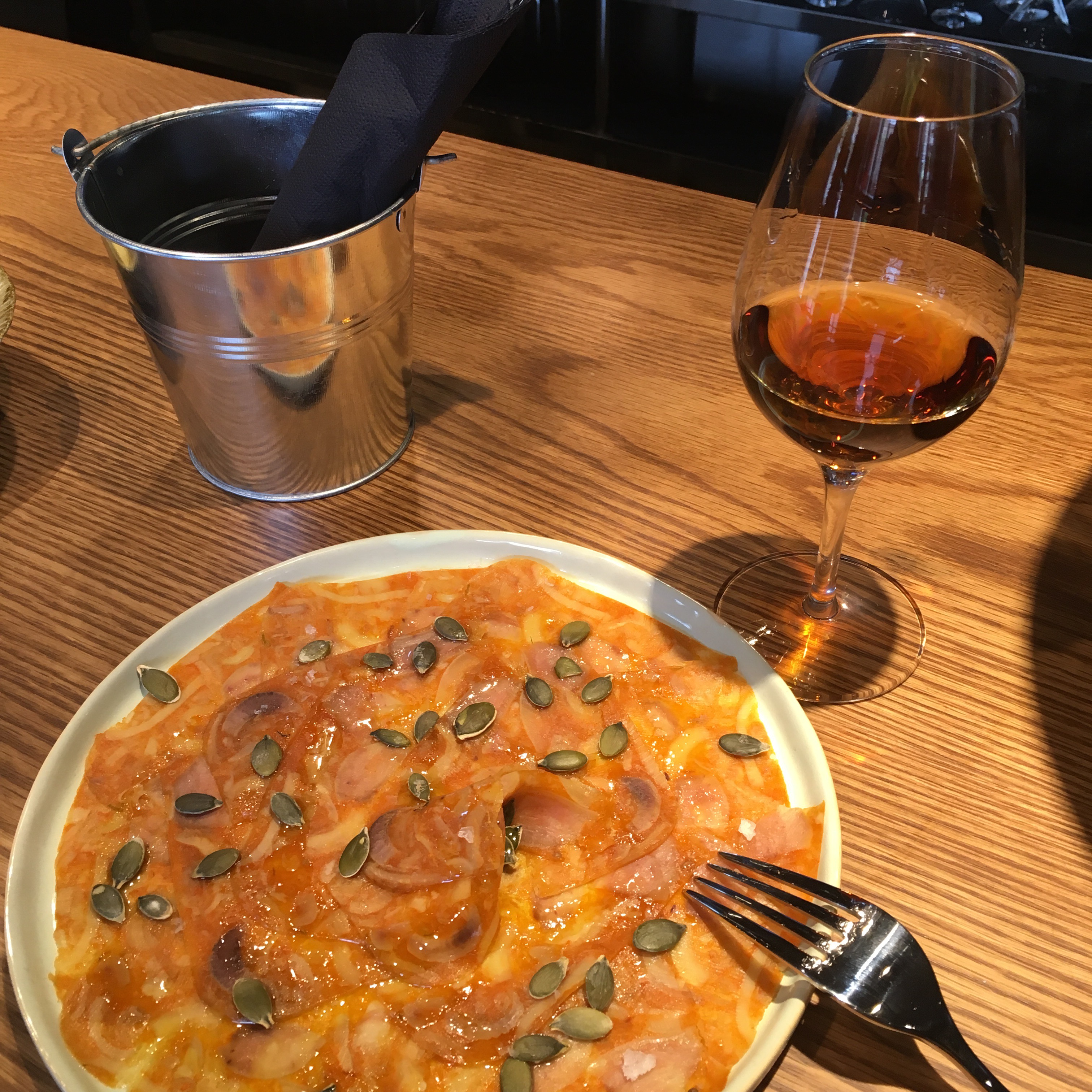
The solid matter was again absolutely top class. We kicked off with some croquetas (langostino, obvs) and Surtopia’s signature bloody sherry, then a carpaccio of langostino with a foam of manzanilla, a ceviche (of guess what), an absolutely brilliant dish of langostinos and poached egg (give me an egg and call me an idiot, as they say around here), a tasty, tender false rice with, ahem, langostinos and finally some refreshing rebujito ice cream shots. No complaints whatever: on another day this post would be about the food.
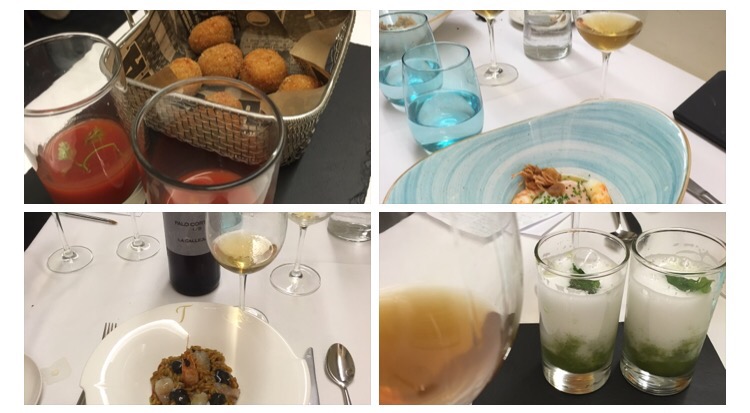
But today was about the wines, and what wines they were.

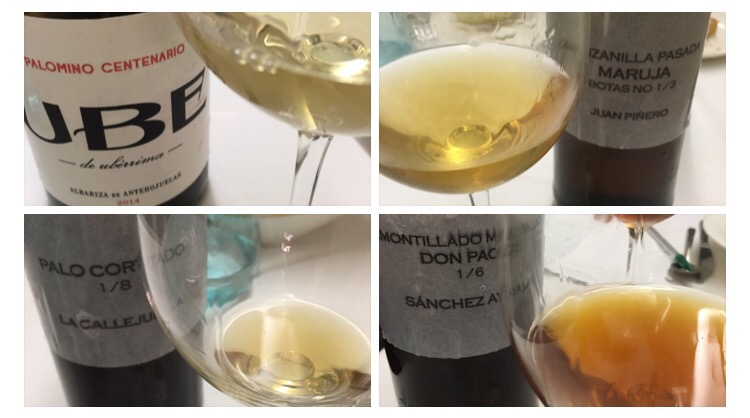
Wine #1 was none other than UBE 2014, by Ramiro himself at Cota 45. This is an unfortified, 100% palomino (from three strains) from Pago Miraflores, fermented at atmospheric temperature before ageing 14 months in bota (but not under flor). Interestingly, Ramiro reckons this to be both the simplest wine to describe and the hardest to understand, and you can see where he is coming from because for a straight up palomino this has a few unexpected dimensions. Beautiful bright, gold colour with some goldish green hues. On the nose first up it was pure blanc des blancs – strawberry pastry aromas. On the palate the first sensation is the dissolved chalk sizzle of the minerals – really buzzy -and then a big dose of tasty, viney fruit but then what Ramiro calls the “verticality” takes over – long, direct and mineral. Lovely fresh finish. It maybe difficult to understand but it is a doddle to drink. Cracking start.

Wine #2 was an absolute beauty: Maruja Manzanilla Pasada “Bota No” 1/3 – from one of three botas kept to one side in the Maruja solera and only refreshed as necessary to replace the merma. The result is a wine that has slightly more golden, less orange colour than the Maruja Manzanilla Pasada and a more refined but somewhat less fruitful profile. There is a lot of acetaldehide, herbs in the nose and on the palate and a rich, salty butter texture that indicates a long exposure to the cabezuelas (something more common in finos than manzanillas). One step beyond in manzanilla pasada terms.

Wine #3 was another rarely (never) seen wine, a Palo Cortado la Callejuela 1/8. A rare example of a Sanlucar palo cortado (at least I can’t think of many) but there is no doubt about the classification. A nice brown-gold in colour and a lovely sweet nose with those toasted, burnt butter aromas. On the palate it is salty, spicey and slightly bitter, with liquorice and even coffee flavours. Not the most intense, acidic or explosive of palo cortados but elegant and enjoyable.

Wine #4 was the star of the show for me, the Amontillado Muy Viejo Don Paco 1/6 from Sanchez Ayala. A single pago  wine – fruit sourced from Pago Balbaina (Viña las Cañas) it would have spent some several years under flor and is a total of around 50 to 60 years old. A tone darker and redder than the preceding wine it had a salty, fine nose with just a bit of sweet nutmeg to it – a spicier sweetness rather than a pastry one. On the palate the intensity of sapidity and salinity is remarkable – a real all enveloping zingy power to it that gives it an explosive start and a big impact up front, with toasted nut and spiey nutmeg flavours that just balance the salinity. From there it is long lasting but without dragging its feet – not astringent or harsh. As luck would have it there was also a bonus glass that was even better.

Last but not least, wine #5 was another vino de la casa: the 11540 Medium Sweet. Again sourced from Sanchez Ayala this is a fascinating little wine made up of 60% amontillado, 20% youngish PX, and, innovatively,20% manzanilla Gabriela Oro  that spent a short time in bota together before bottling and hang together really nicely. It is an attractive dark-straw gold in colour and whereas I find that some medium wines can come across as spirity and over sweet on the nose – but this, while ripe-tomato sweet has a nice balance with a little bit of herbs and sea breeze. That little bit of manzanilla also gives it a bit more balance on the palate at front and back – a little bit of bite going in and a freshness to the palate. Ramiro described it as more “vertical” than many mediums and I would buy that. Interesting, imaginative stuff.

And that was that: five more unique wines in a variety of styles and a fascinating contrast with the first day. All in all a really fantastic event and a great chance to fire some questions at the maestro himself. There will be more to come from my notes when I get a chance to write them up.


Ramiro Ibañez in Surtopia – Day 1 

I have a total of 25 pages of notes from the two days that Ramiro Ibañez was doing the butling at Surtopia. It was not just interesting, it was fascinating. Will take me a good while to write them all up but no time like the present etc.

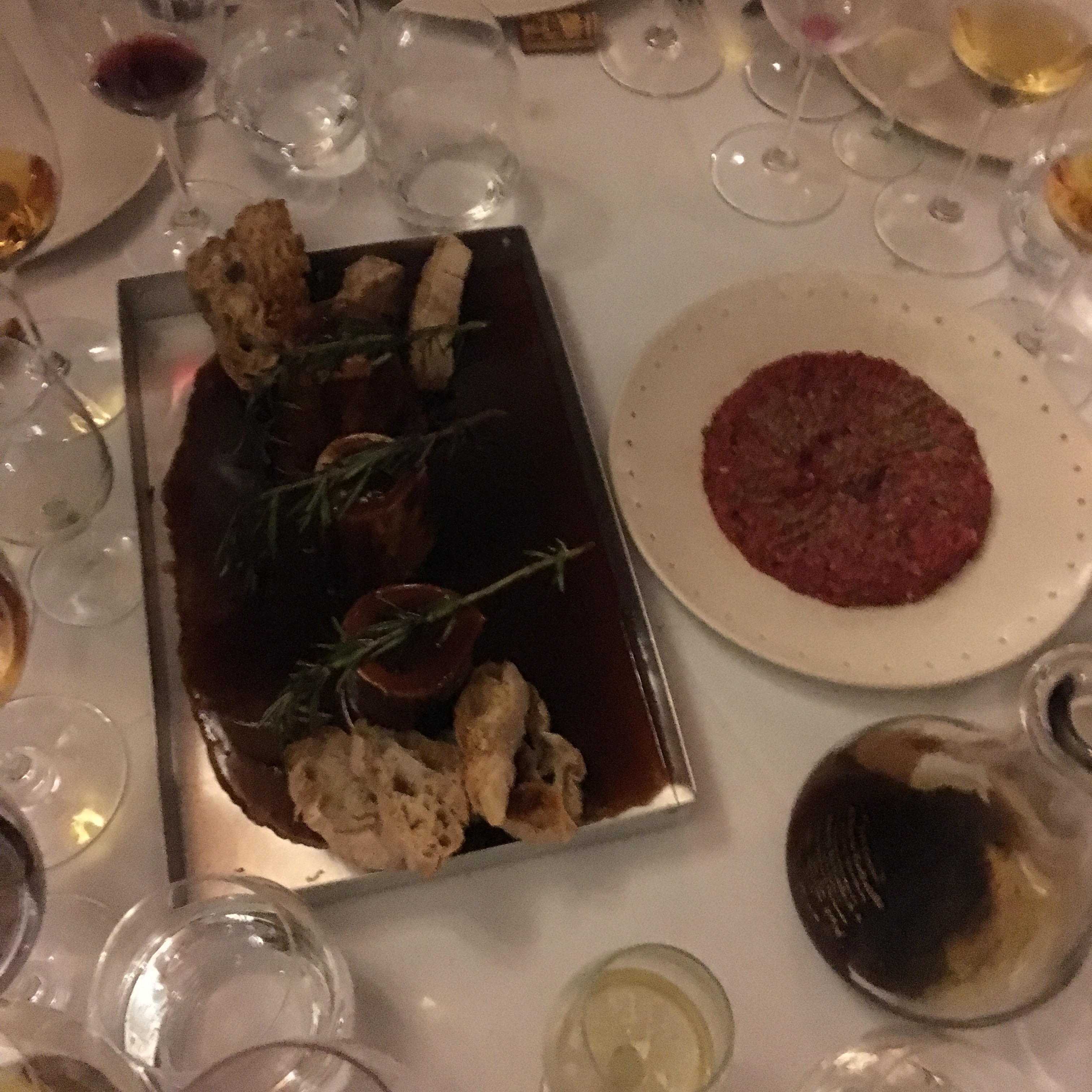
The first night involved five wines chosen to accompany some fatty, meaty tuna dishes (at this stage the so-called “blogger” realizes that none of the 25 pages of notes refer to the food and hopes noone will notice the lack of detail). In fact I only have three pictures even …


At least I have some notes of the wines:

Wine #1 was Socaire 2014, a 100% palomino by Primitivo Collantes that I have been after for a while (in fact my first bottles were delived the same afternoon I went to dinner). 100% palomino from Finca Matalian, it is unfortified and has not spent time under flor but was fermented and aged for two years in botas that had formerly held Fino Arroyuelo. They were two years very well spent. The result is a beautiful dark gold colour and has a fantastic, lush nose that is blanc des blancs champagne first up, and gets more and more herbal – sweet herbs like rosemary or oregano – as it opens up. On the palate it is chalky and slightly saline without being zingy – austere minerals like a chablis. Long rather than wide, but wider than its little brother the Viña Matalian and a really interesting wine.

Wine #2 was the new edition of the 11540 Manzanilla. Whereas previous editions were selected from Barbadillo’s Solear, this fella is from legendary Sanlucar bodega Sanchez Ayala – from  1/46 of the original Gabriela Oro solera to be precise. Sanchez Ayala has been a happy hunting ground for exclusive bottlings in the past and the wines have a high acetaldehide style that is extremely attractive (and fashionable). This one has an average age of about five years and has been through 7 classes. It is a shade darker than the Socaire, a dark straw colour, and has a massive nose of hay bales, salty brine, roasted apples and spices. On the palate it is zingy, salty, with a suggestion of that baked apple but then a long, nutty finish. Really excellent again.

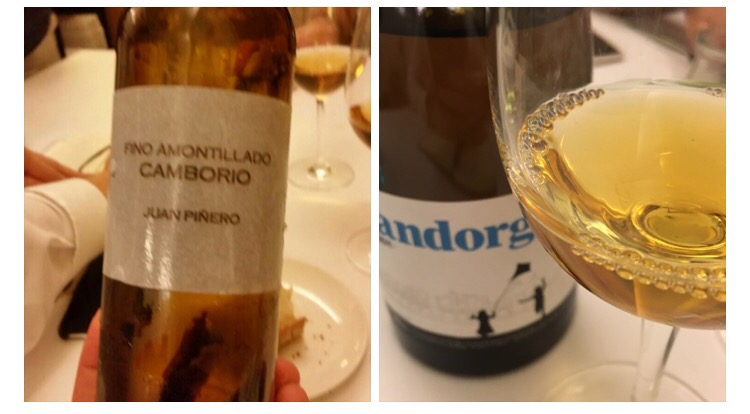
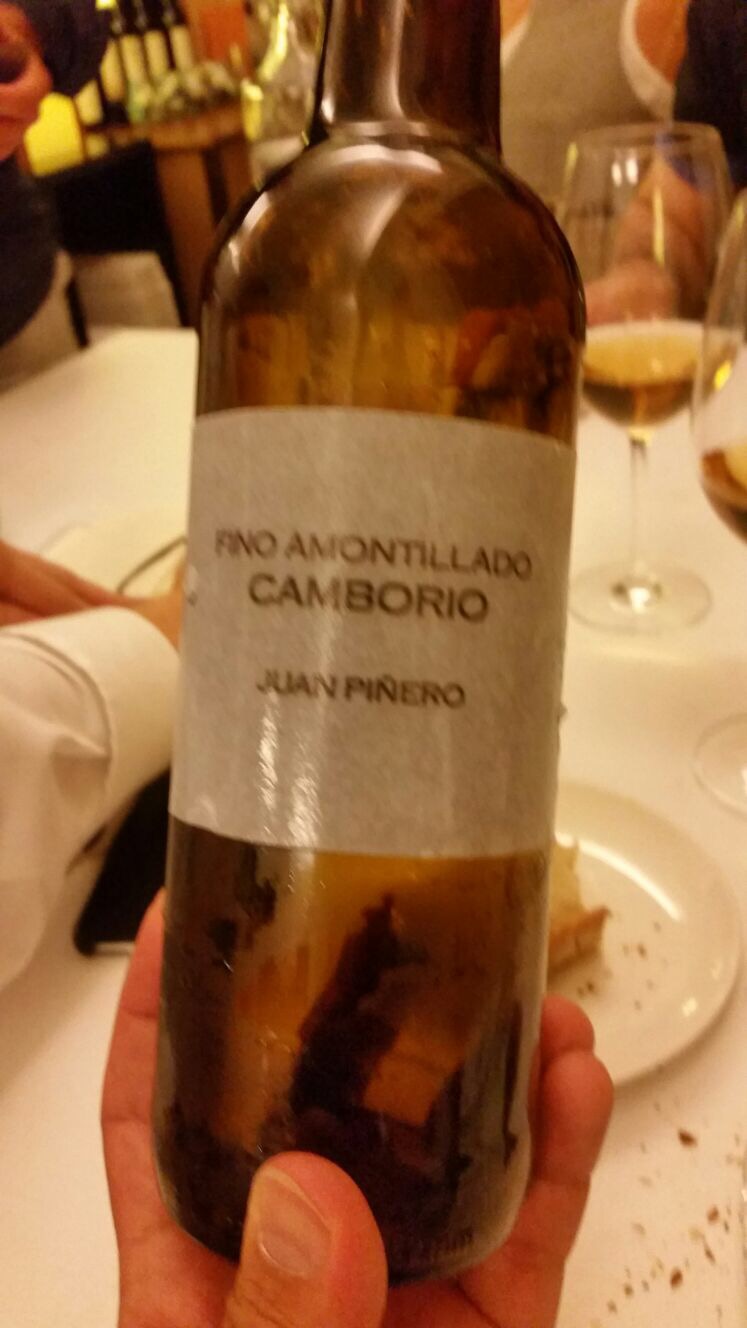
Wine #3 was the wine of the night for me: a Fino Amontillado Camborio. Fino from the legendary Camborio solera with those 10/11 years of biological ageing and that mineral structure that has been given a year of oxidation and has gained in character. Again a big acetaldehide profile of green apple over the sea air minerals of the fino but also touches of lemon on the nose. On the palate there is a suggestion of that green apple, then spices and herbs and a long, mouthwatering bitter almond finish. Really rich in feel and flavour but elegant too. Really superb.

Wine #4 was the only wine of the night that I had tried before – the Pandorga 2014, the stunning fruit bomb pedro ximenez  from la Panesa vineyard in Carrascal de Jerez. After a relatively cool growing season the grapes and 11 days of asoleo before fermentation in bota without any kind of temperature control. Fermentation lasted six weeks producing a wine that is 12º, has 270g of sugar, and more importantly has bags of fruit flavours and aromas including olives, apricots and orange marmalade. A delicious expression of year, terroir and fruit that has already become a classic.

Wine #5  was the “big dog” of the night, an old old Oloroso 1/12 from Almacenista Santiago. Really powerful, rustic, old school almacenista oloroso. It is a dark reddish brown in colour, with a cigar box woody nose and a really powerful, bitter palate. Real acidity and concentration and although it didn’t have any noticeable juicy sweetness neither was it astringent or dusty. Good salinity too but not over powering. No doubt about it: a fighting wine.


And that, as they say, was that for the first night (but not for my notes thereof – the remaining five pages of increasingly illiterate scrawl need much more work and reflection). Five really unique wines and a privilege to have been there.


Ramiro Ibañez in Surtopia


My most sincere congratulations to Surtopia and Ramiro Ibañez for a great night last night and an epic lunch today. Yesterday was Jerez, oxidative wines and the fatty tuna. Today was Sanlucar, biological wines and the soft fleshy langostinos. I won’t give away more details because I know there is a full house due to dine tonight but look, both were top class.

Suffice it to say that:

First, Surtopia is really an excellent place. For any wine lover, and particularly a lover of the wines of Sanlucar and Jerez, it is already a fixture, but the food is better every time I go – the tuna with chimichurri de Sanlucar and the confit in manteca colorao last night and [a couple of the dishes today – spoilers removed] were outstanding.

Second, Ramiro Ibañez is the real, real thing. I have no less than 25 pages of notes from two meals. The bloke drops knowledge like it is confetti at a wedding and it will take me a while (maybe months) to absorb, let alone write up, everything I have learned over the last 24 hours. He is also a born educator: the 10 wines selected were unique, hard to get, and illustrative (to give you an idea, I had only tried two out of ten).

So if you are going tonight, I know you are going to enjoy. I wish I was going again!


La Fisna Vinos 

Great night and a long overdue visit to La Fisna – a top quality new wine bar in Lavapies. 

We only had one glass of sherry – the frankly brilliant Tradicion Cream – but as you can see we had a choice of 11 crackers by the glass and more by the bottle from the sacristy/store in the back. Not that we only had one glass of wine – far, far from it. We had a goodish number of top drawer wines from Burgundy and, ahem,  surrounding areas. Different styles and profiles and really interesting contrasts – your man Iñaki really, really knows his stuff and for me at least it was a bit of an education.

We didn’t really get stuck in to the food,  but you certainly could if needed: simple stuff but perfect accompaniments to the main attraction (the rilletes in particular were top class). 

Cracking, convivial company too last night. All in all a brilliant spot. 

VERDEJO taberna artesana

Taberna Verdejo is one of my favourite places in Madrid and it should be one of yours too.

First, the cooking is just outstanding. By some miracle I found on my phone some pictures of the brilliant mollejitas, one of their escabeches and a salpicon (above), but there I am only scratching the surface. The menu changes constantly with the seasons, the product used is first class and the results excellent. The mollejitas and the escabeches are absolutely delicious and other favourites include piparras fritas, navajas, the callos (“guiso de morro, pata y callo”), and the steak tartare. They elevate very traditional dishes – the huevos rotos, the carabinero and sweetbread “salad” and one amazing coquelet spring to mind – and they have a fantastic touch with game of all kinds. It was the first and is still the only place I have had roast thrushes, they have duck of every feather and the last time I was there I had a tartare and an escabeche of “corzo” (roe deer) that would make even the most convinced fan see the movie “Bambi” differently. Simple stuff (or at least it seems simple, but I dare you to ask them what is involved in each dish) but there is such great imagination in the accompaniments and composition, and such attention to detail, that the results are sublime. I haven’t even mentioned the desserts – and particularly not the oloroso pana cotta, which is just ridiculously good.


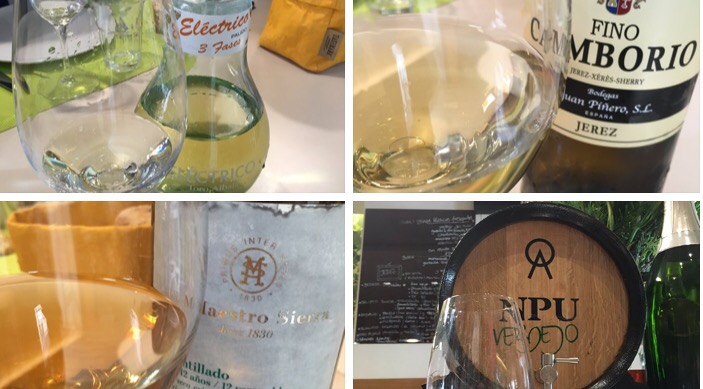
Second, the quality of the liquid on offer is also brilliant. They don’t only have sherries – they have a short but brilliantly chosen wine list with some brilliant wines – but we are where we are and it is, frankly, a sherry lover’s paradise. I actually started going to Verdejo before this blog was born but just looking back at my blog the wines I have tried there include the Fino Perdido, Antique Palo Cortado, Arroyuelo En Rama, Fossi, Goya and Goya XL, Williams Oloroso de 2009, UBE 2013, Tio Pepe en Rama, and Tosca Cerrada, among many more. The last time I was there was had a brilliant lunch accompanied by Electrico en Rama, Fino Camborio, el Maestro Sierra 12 yr Amontillado and a cracking Sanchez Romate amontillado from their very own bota (see the picture below). Absolutely brilliant – the guys I went with weren’t sherry fans when they arrived but I am pretty sure they are now. The pairing choices were superb (as are the wines, of course).

But if you were to ask any of the many devotees of Verdejo what is the best thing about the place, I am pretty sure that noone would bore you with lists of dishes and wines. The best things about the place, by a distance, are the people there. I only really know Marian and Mamen well but it is clear that the team as a whole is good people. Most importantly, though, Marian and Mamen are just lovely. Despite all that attention to detail  (it is very soothing to the soul to relax with a glass of wine and watch people work so hard) they are friendly, cheery and fun, love a joke (they even laugh at some of mine) and will look after you way better than your own family ever would.

Their website says they “love what they do” and it shows. I also love what they do, and I really love they way they do it.


Surtopia – Cota 45 – Atún – Langostino

The sherry event of the summer here in Madrid – five dishes and five wines, with José Calleja of Surtopia providing the food and Ramiro Ibañez of Cota 45 providing the wines. In fact ten dishes and ten wines, with tuna on July 13 and langostinos on July 14 (lunch and dinner).

No clues yet about the wines involved but I have been told that I haven’t tried most of them (I find it hard to believe) and that they include some “massive cucumbers” (pepinazos gordos): you will have to take my word for it but this is a good thing.

I know I will be there – will be absolutely cracking. 

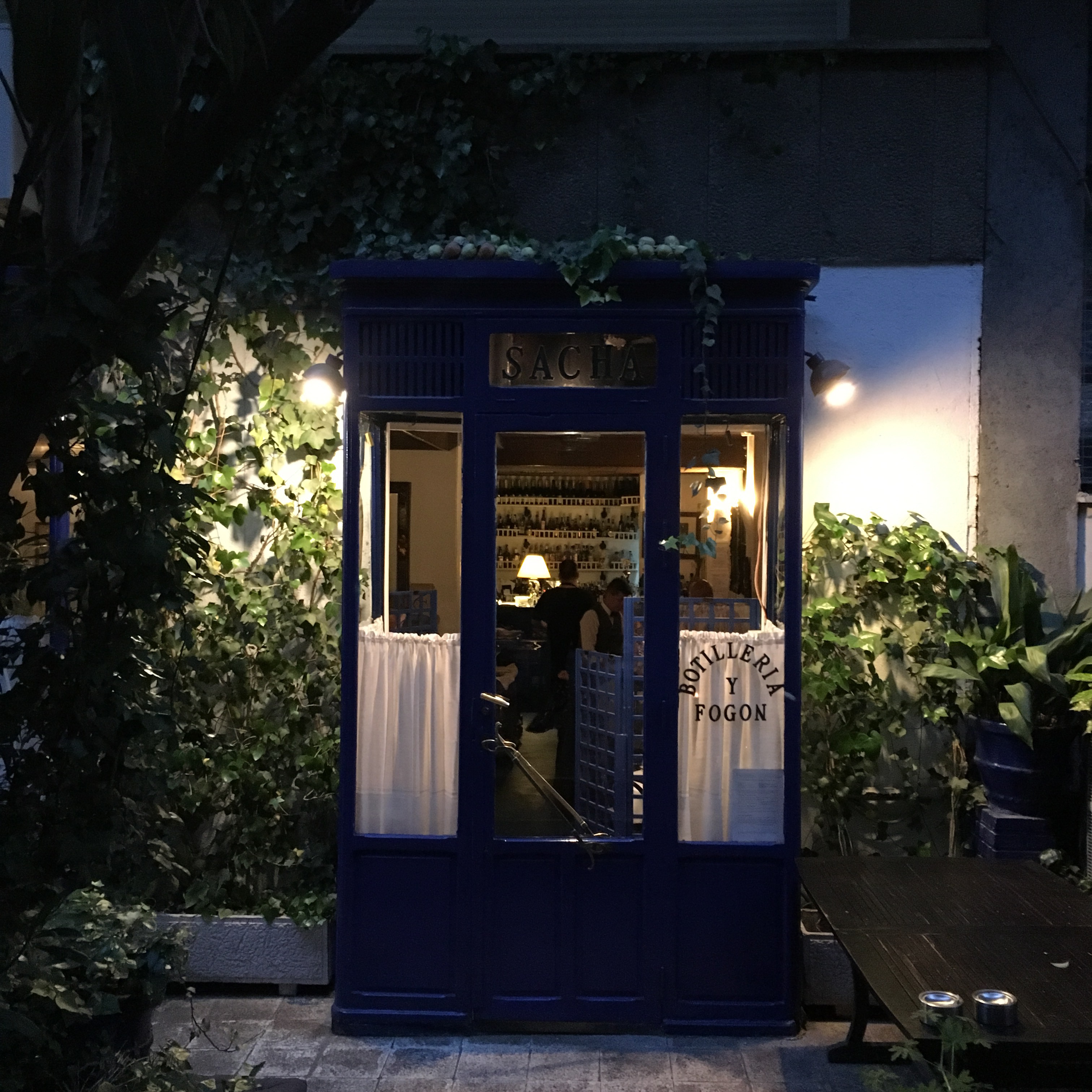
Sacha 

This last few days has been a trying period, stuck in Madrid while sherrylovers of every description have been tasting, drinking, and partying down in Jerez during Vinoble. But on the whole I can’t complain too much since some friends and I were able to get a cheeky table for seven at Sacha this Monday evening (might sound easy enough but the place was chock full to the rafters).

Sacha is very much the Chef’s choice of restauranteur in Madrid and once you have been it is easy to see why. Simple but perfectly executed preparations of first class produce and a series of super flavours. The shellfish we had on Monday had some of the lads wishing they were otters, and the good stuff kept coming: asparagus, mushrooms, ray, steak tartare, tuetano, spicey lamb, a yogurt dessert – and although it would be very hard to leave any of them out if I had to pick one it would be the “lazy tortilla” with truffle. Absolutely first class.

The service was excellent in trying circumstances (we tend to bring the chaos with us – tables full of wine glasses etc) Sacha was on hand to explain the dishes to us and his sense of humour added to the fun considerably. He comes across as a chap who knows a few things but is able to focus on the important ones, and a really good bloke to have around.

Of course it also helped that we were able to wash it all down with some equally excellent bottles, and while I completely failed to take a picture or even a note of the famously concise and precise winelist, I can tell you that they had some very interesting bottles indeed: some of those little ones with numbers on the labels by Equipo Navazos, a magnum of “Zerej”, and when we asked what to pair with an asparugus, the lovely manzanilla en rama by Blanca Reyes.  Take my word for it, you can go here safe in the knowledge that nice bottles of sherry are available.


The wines of Alba Viticultores, Spring 2016

It has been a really tough week but what a great way to head into the weekend – a really cracking lunch with some fascinating, delicious wines from Alba Viticultores, a group of young  winemakers that are pushing the boundaries in every direction down in Sanlucar.

They are all (with a couple of noted exceptions) palomino fino from vines on albariza soils in Sanlucar and all impeccably “natural” – no additives, the bare minimum of SO2 (if that), indigenous yeasts, little or no filtering or clarification – and some of the wines I have tried in the past have come across as slightly experimental in character. However this latest crop are the best I have tried yet – really good on any level.

We kicked off with the Alba Rojo Pago Miraflores 2015 (without so2, 10.8º) A red wine from tempranillo (which they describe as a type of Listán – I am assuming we are not talking the same tempranillo of Rioja and Ribera del Duero fame but I may be wrong) from 15 year old vines in the Confitero and Coronado vineyards on Pago Miraflores. The wine goes through “semicarbonic” fermentation in stainless steel tanks and then spent another seven months in deposit before being bottled in April, 2016 without filtering, clarifying or any addition of sulphur. The result is aromatic, delicate, light and refreshing – some reduction at first but then tiny strawberries, then the tingle and lightness of the semi-carbonic fermentation. A really good start.

Second we teed up the first of the sparkling wines –  Alba Ancestral 2015 – 11º. Sparkling wine made with palomino fino using the ancestral method. Fermented in plastic containers for 12 days, bottled before the fermentation completed so as to allow the formation of bubbles from the yeasts and sugars that remain. Racked for five months, disgorged by hand and dosed with the same wine (ie no added dosage). This again was delicious  – really light, very nice creamy aromatics and just a hint of sweetness. No  big structure or acidity but a nice, simple and enjoyable wine. You could drink litres and litres of this no bother.

We then accidentally went very large – we had intended to stick with the sparkling and hit the Ancestral Alegrías del Carrascal 2015 but by mistake we were served the (admittedly similar sounding) Alba Pago Carrascal Las Alegrías 2014 (no SO2, 13,3º) which was a fish of an altogether different kidney. From 50 year old vines of “listán sanluqueña” on the “las Alegrías” vineyard in Pago Carrascal (de Sanlucar), this was fermented and aged in a 650 litre chestnut bocoy that had held oloroso for over 80 years. In total 18 months of ageing, of which four  months were under flor. The guys at Alba describe this as a “natural and direct palo cortado” and it is a fascinating, complex wine. The notes of the barrel, and those 80 years of oloroso, were really something.

After the palo cortado we thought it was time for the Alba sobre tabla 2014 (bota 1, 12º). Not the first time I have had one of these Sobre Tabla wines  – fermented in stainless steel, then aged for 14 months in a 500 litre butt that had held manzanilla for over 50 years (they generally make two butts, bottled separately). Flor had not formed, although space was left for oxygen allowing for a “noble” oxidation and the wine gained half a degree of alcohol as a result of the concentration. It was quite magnificent – full of aroma and flavour, with salinity and structure, notes of cheese and herbs in amongst the ripe apples. World class and my wine of the day.

Alba Pago Miraflores Confitero 2015 (no SO2, 11,7º) is a still palomino wine from 35 year old listán vines in the El Confitero vineyard in Pago Miraflores (right next to the legendary Armijo de Gaspar Florido). This fermented in a 5000 litre fibre glass tank and was aged in stainless steel for four months. Indigenous yeasts, no sulphur or other additives, no filtering or clarification. This had a lot of raw yeast on the nose and was hard to get into at first but when it opened up there was a creaminess to it that grew on you. Not a great deal of structure but a nice bit of salinity that kept it fresh and balanced. (Frankly it was a big ask following the Sobre Tabla.)

Then we intended to go back to the bubbles with the Ancestral Alegrías del Carrascal 2015 (sin so2) another ancestral method wine from the Las Alegrías vineyard mentioned above. Fermented in a 1000 litre tank for two weeks before bottling with some residual yeasts and sugars, they disgorge these by hand to order – this one has around 8 months on the rack before disgorging. When it came to writing this account I was surprised not to have any notes or clear recollection until the restaurant called me to tell me we had left if behind (full). A new blogging low? (Have since tasted it – the TN is here if you are interested).

The bubbles we did have started with the Brut Nature 2013, a “traditional method” sparkling wine from a selection of albariza pagos in Sanlúcar. Fermented in temperature controlled stainless steel tanks, aged in the tank with some flor (which disappears little by little) for around five months. Then it is put in 16 litre demijons in which each develops different veils of flor for around 6 months (the makers say that each demijon tasted different when they came to putting together the assemblage). They were bottled in August 2014 and spent 15 months on the rack. Now this was a really class bottle of sparkling wine – thecomparisons  mentioned were with classic blancs de blancs – had just a bit more bite to it, crisper and more compact.

Finally, another traditional method sparkling wine but one with added devilment, the Brut Nature Sobre Tabla NV. Here they fermented the wine in the butt itself, it was aged for fifteen months of which some were under flor, then into the demijons for a further 8 months, again under flor. After that 20 months on the rack before disgorging by hand, dosage with the same wine. very, very little of this was made and it is a real pity because it is a really class, characterful, impressive sparkling wine: bite, fruit, cheese, herbs, salinity – really brilliant and right up there with the Sobre Tabla as one of my wines of the day.

Different pagos, vintages, different methods, techniques – lots of imagination and attention to detail and, most importantly, some really brilliant wines. The only problem is that there are so few of them – lots of 400 or 500 bottles or even fewer in some cases. A really uplifting day, no doubt about it – I really feel like I have a better handle on what these guys are doing and I can’t wait to see what comes out next.

A word for our fantastic hosts – Carlos and Elisa at La Buena Vida. They took cracking care of us through a long lunch and the eating was, as always here, exceptional: habitas con morcilla, patatas a la importancia con congrio, (outstanding) colmenillas and raya a la mantequilla negra con alcaparras fritas – really superb stuff – which we finished off with an intriguing little bottle of sweet, sparkling Rioja.

Lakasa


Another long awaited reopening here in Madrid – Lakasa. The new edition is bigger, brighter, sleeker, in a cosy new location and, as promised, has a super list of sherries and manzanillas. 

There are 23 in total and 19 by the glass (and even 15 by the half glass, which strikes me as a fantastic idea). Some of them are absolute classics too – Fino ImperialToneles, the 1986 Oloroso de AñadaPandorga, and El Tresillo, to name just five, and I am told they have more in reserve to juice things up as necessary. The prices are very fair (you would struggle to beat some of these prices online, let alone in a restaurant) and the list also has a great structure: there are plenty of versatile wines in every category (El Fossi should be on every sherry list and it is here).

And all that without starting on the full wine list – 20 wines and ciders by the glass, 130 in total, including five from Jura (a Vin Jaune by the glass even) – and without getting stuck in to the menu.  Solids are not my hobby but the fiambre de callos I had was top notch – even the bread was delicious – and again nearly everything on the menu was available in half portions, which is great. 

Even the location is perfect – a 20 minute walk back to the office will look great on the old Apple health app tonight!

Sudestada 

Sudestada is a brilliant spot – one of Madrid’s best pan-asiatic restaurants (and I mean pan-asiatic – tonight we had nems, samosas, tandoori and panueng, with the house caipirinhas).  It is also a real fun place for dinner – finger food, both hands food, dipping sauces – it is enjoyably messy at times – and a cracking list of cocktails. I hadn’t been for a couple of years and really can’t explain why: a testament to all Madrid’s great restaurants I suppose. 

I am even more surprised now to be honest because just look at that list of wines by the glass above. I think in any circumstances it is a fantastic list of wines from Jerez and Sanlucar, and not just any wines either: top class wines by Equipo Navazos. 15 not counting brandies – remarkable. Indeed the wine list is pretty excellent all round – not massive but some really well chosen wines. 

The wines of Jerez and Sanlucar work perfectly here too – the structured profile, body and punchiness of them is superb with the spices and fragrant leafy herbs that seem to cover all the plates. Tonight I had la Bota de Fino 54 and la Bota de Palo Cortado 52 – two classic, elegant creations and they were just ideal. Really excellent dinner in fact – won’t be years before I go back.