Manzanilla La Cigarrera

  
This is a classic manzanilla by the homonymous Bodegas Cigarrera. There is an excellent profile of the bodega – a former almacenista for Lustau – on Sherrynotes.  I picked this up from Reserva y Cata for little more than a song.

The wine has an average age under flor or around four or five years, having passed through 7 “classes” on its way to the solera. Unfortunately no information on the pagos involved – fruit is acquired from the cooperative. 

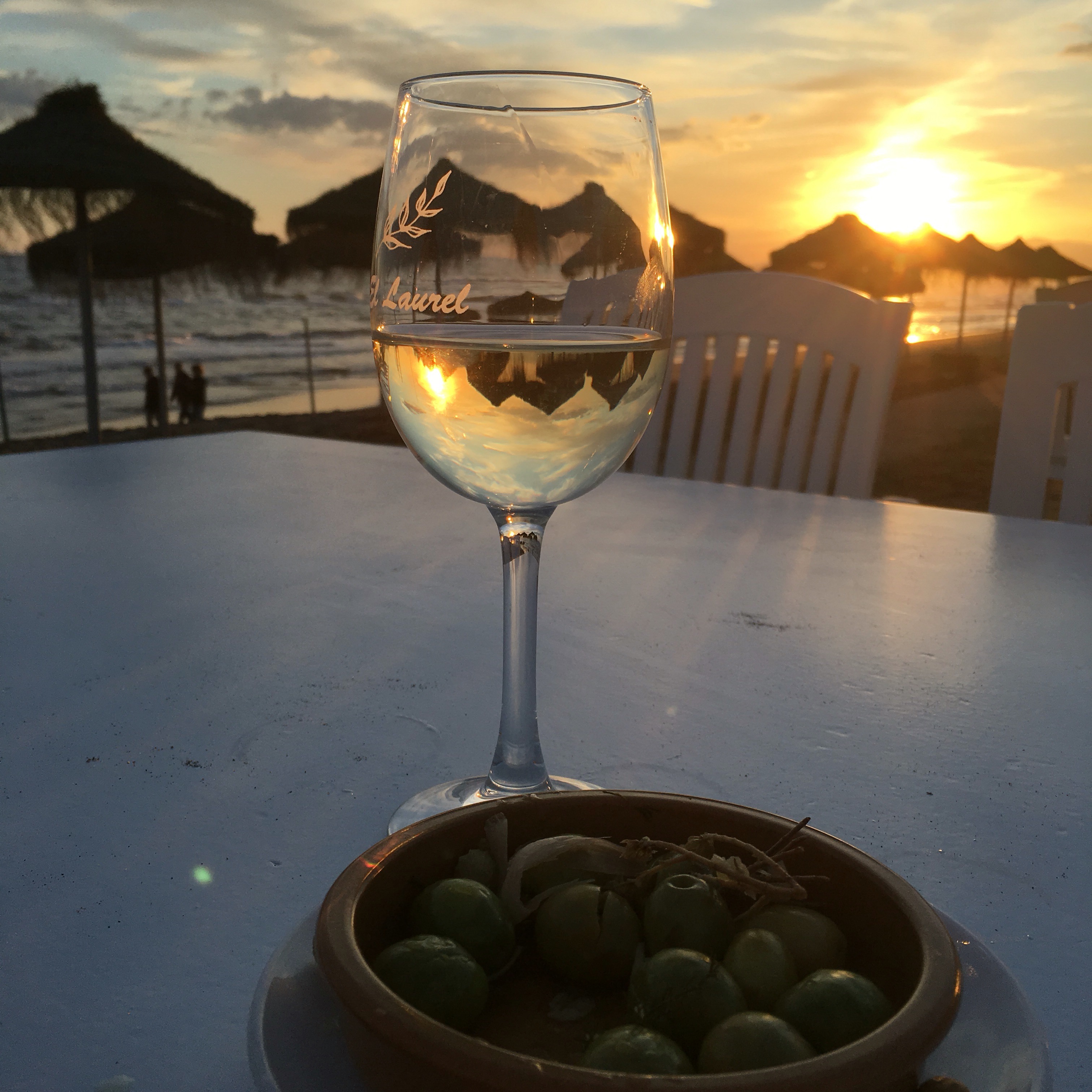
In colour it is the classic gold straw – the sunset on the picture above makes it look a bit more orange than it really is. On the nose there is sea air and citrus – quite a pungent nose – and if not quite hay bales or flowers then at least dried grasses on sand dunes. 

If you like the nose you will enjoy the palate because it is as you would expect – salty, zingy, a touch of citrus and then the mouthwatering, fresh and more herbal finish. In fact more than herbs it is  like spinach or bitter lettuce. 

Refreshing, bracing stuff. 

Manzanilla Sacristia AB – 2a saca 2012


I have had mixed experiences wih these (the 1a saca de 2013 (preblog), the 2a saca de 2013, the 1a saca de 2014, the 2a saca de 2014, and the 1a saca de 2015) but it was only recently that I found out that the these sacas are from different bodegas. According to this piece by Spanishwinelover, the first few (the first sacas were 2010) are from Sanchez Ayala, the more recent from Bodegas Francisco Yuste (a new bodega but one that acquired the historic solera of Conde de Aldama).

Wherever it comes from (and I am assuming Sanchez Ayala) this is a real beauty. The colour is a dark, dark gold, on the nose it is very aromatic and yeasty (lot of hay bales for a manzanilla), then on the palate baked apple-like fruit, zingy salinity, and a long, long tail of those fading apple, yeast and mineral flavours.

A really tasty, almost explosive, wine. I have found some of the others shy, refined or restrained but this is none of those things. Wonderful stuff.

La Guita 

  
Not a bad spot – sure beats the office. And not a bad wine at all. Very pallid straw colour, citric, slightly herbal nose, again a meaty almond/citrus start, salinity that is just short of zingy and then a long, long finish with that nutty/lemon feel to it. 

Perfick. The wine was gone before the sun was. 

Manzanilla en rama La Guita October 2015


Second crack at one of these little bottles and all those same ingredients are there: the evolved colour, slightly metallic nose, the citrus notes, the briney background, the salinity, ozone and bitter, slightly drying finish. A mineral but flavorful and easy to drink wine.

Tasting it again brought back memories of a vertical of La Guita – bottlings from 2009, 2011 and 2014 – that I did a year or so ago. As you can see from the photo, the colour of this en rama is very close to that of the 2009.

Manzanilla Sacristia AB 2a saca de 2014 

The Sacristia AB series are wines that have been selected by Antonio Barbadillo Mateos (a scion of the Barbadillo family but independent from the Barbadillo group). The Sacristia AB website surprisingly doesn’t have much technical information on the wines but I gather that these manzanillas, like some other illustrious bottlings, are sourced from Sanchez Ayala. In addition, there has been at least one amontillado and the current release is an oloroso.

I have been undecided about these in the past and looking back at my notes I can see a pattern: whereas I found the 1a Saca de 2013 (preblog) zesty and full flavoured, I found the 2a Saca de 20131a Saca de 2014 and Primera Saca de 2015 variously “shy”, “restrained” and “refined”. On the other hand, I also note that they improved once open – something I find can happen with wines that spend a little longer under flor.

In any event I like this one a lot and it is certainly not shy. Crystal clear (glass above had been in heavy use) and the colour of straw with a hint of orange. A nice acetaldehyde aroma profile with citrus and undergrowth, and on the palate zingy sapidity, sides of the tongue gently ablaze and savoury/citrus flavours. Interesting sensation of bitterness and drying on the top of the tongue and in the corners of the mouth, and the mouth keeps watering, keeping the nutty, bready flavours going.

Brilliant.

Manzanilla Gabriela Oro

  
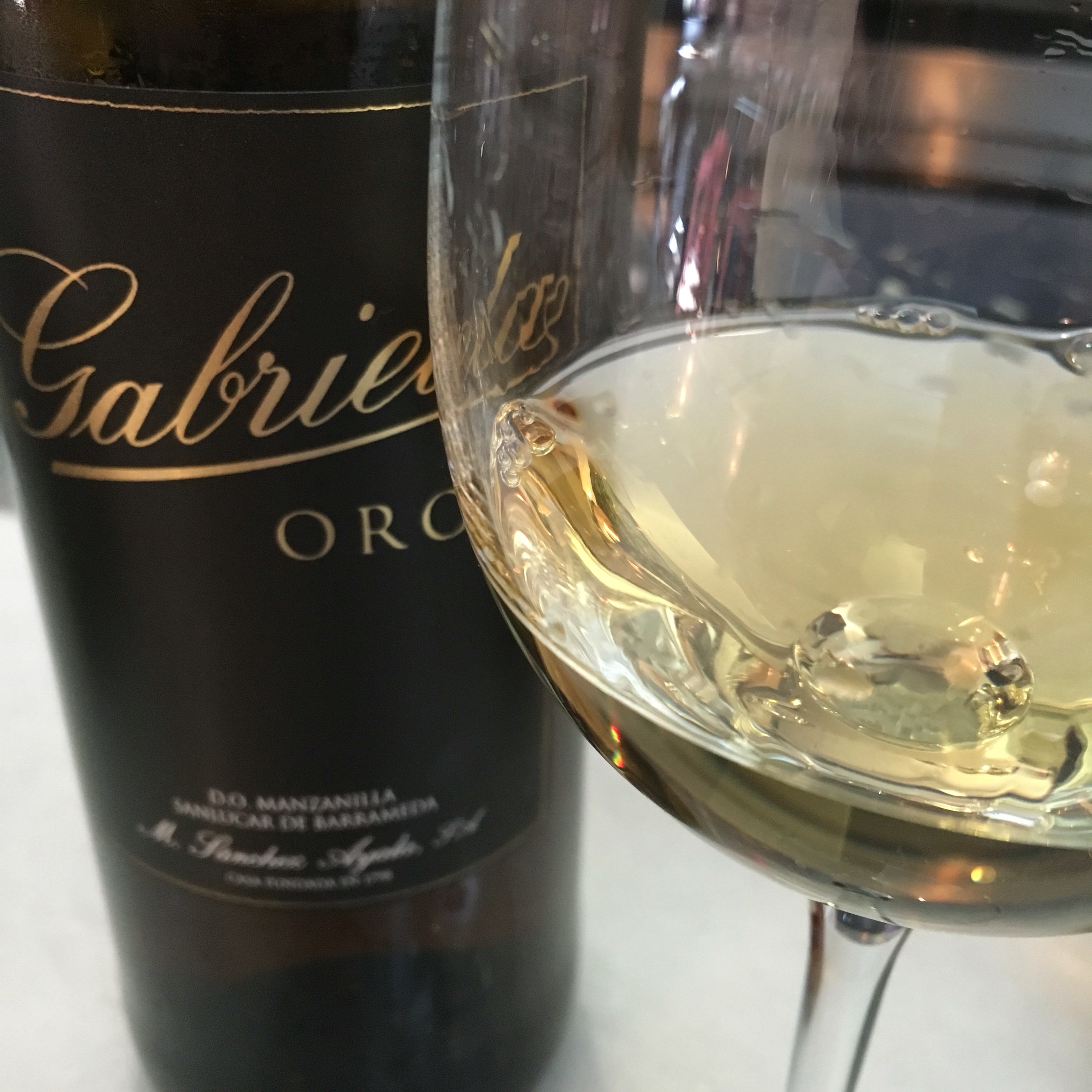
Like this very much – slightly dull, pale gold colour, wonderful refined yeasty aromas – citrus and undergrowth – and a very pleasant silkiness on the palate. Salinity is there giving it volume and sapidity but it is cool on the tongue and there is no zing to it. Salty, mouthwatering finish. 
This is by Sanchez Ayala and has a Little brother

Manzanilla Entusiastica


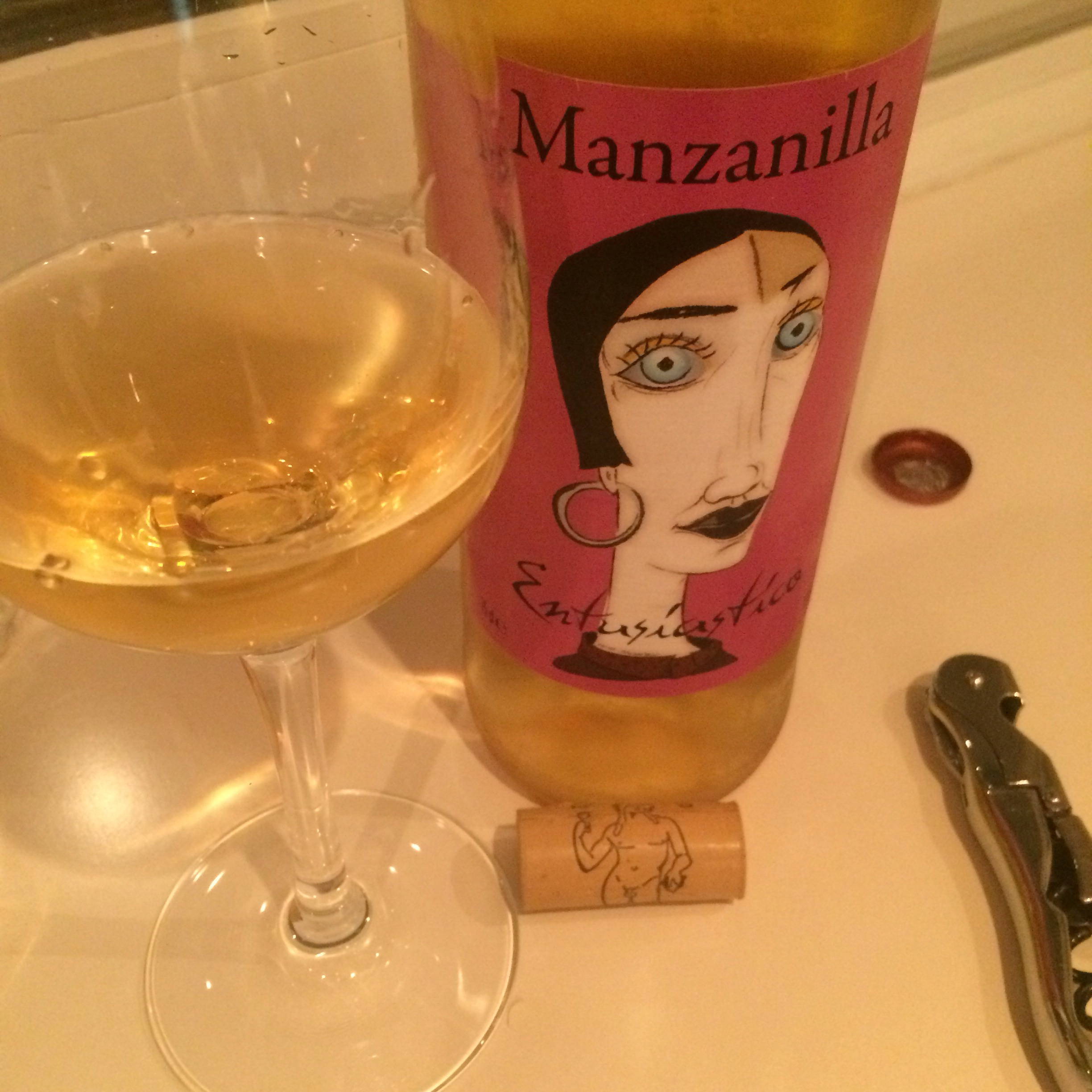
Advertised as the first “ecological” manzanilla (strikes me as surprising but if they say so). Has bright, modern (clear glass) and cheeky packaging – a naked chap on the (natural) cork no less. He doesn’t look all that enthusiastic to be honest, and I would admit to misgivings myself when picking this up from Vila Viniteca last week, if only because I tend to be a bit suspicious of anything gimmicky.

I soon overcame any such doubts tasting it however. This is a subtly floral fruity manzanilla that is right up one of my many streets and different enough to be interesting.

The colour is a rich gold, and the nose is like a palomino table wine: less aromatic than I expect from a manzanilla, fruit with a hint of herbs and cheese. On the palate too it is less mineral and more organic than many. The minerals are there – a little buzz on the tongue – and so are those same flavours, but maybe it is a little underpowered in punch and length. More interesting and different than I expected – and nice flavours too.

…. Coming back to this a day later I have now located this interesting piece by Cosasdecome.com (which also seems to be cosasdebebe.com) with some excellent detail. Ecologically grown, single vineyard palomino from pago Burujena de Jerez  (where he also apparently is growing some “castellano” – one of those 40 odd varieties). The first harvest was 2012, refreshed in 2013 and 2014 and this is the first saca from October 2015. What is fascinating is that the first year was presumably the solera, 2013 provided a first criadera, 2014 a second, etc: the criaderas would have been literally stacking up as the years go by. This may of course explain why this tastes so fresh and raw – not only if the wine only three years under flor but the solera is brand new, so the average ages will be well down. I am not sure I have ever had a wine from a new solera before.

In fact a day later as a wine it has lost the element of surprise a little – it still has the fresh, raw character I mentioned but the fruit doesn’t stand out to me quite as much (the nose actually seems a little alcoholic), and I find myself missing some of the mineral freshness on the finish of a classic manzanilla.

Nevertheless, it is a rare example of a really new solera (new and proud of it) and for that alone worth trying – and coming back to over the years to see how it might evolve.

Manzanilla Alexander Jules 5/41


Can this be as good as the Fino? Well, since it is manzanilla Monday seems like the perfect time to find out.

Dark gold colour with even a touch of orange. On the nose there are grass cuttings, dried herbs, almonds, minerals, a bit of citrus, maybe creaminess. On the palate the citrus seems more present, there is zingy salinity on the sides of the tongue then dried herbs – parsley and bitter almonds and salty ozone.  A nice mineral, juicy and herby manzanilla.

Now I have tasted it and jotted down my thoughts, I feel able to look up the details on the splendiferous website, which again doesn’t let anyone down. Cracking technical detail again such as:

“selected from 5 of the 41 barrels that make up the top row of the Maruja solera. The solera is organized in 4 rows of 41 to 44 barrels, one stacked upon another. The lower rows, being closer to the albero floor (a type of sand, frequently watered and used to maintain humidity in bodegas), are exposed to higher humidity and lower temperatures, the higher rows receiving lower humidity and (somewhat) higher temperatures.”

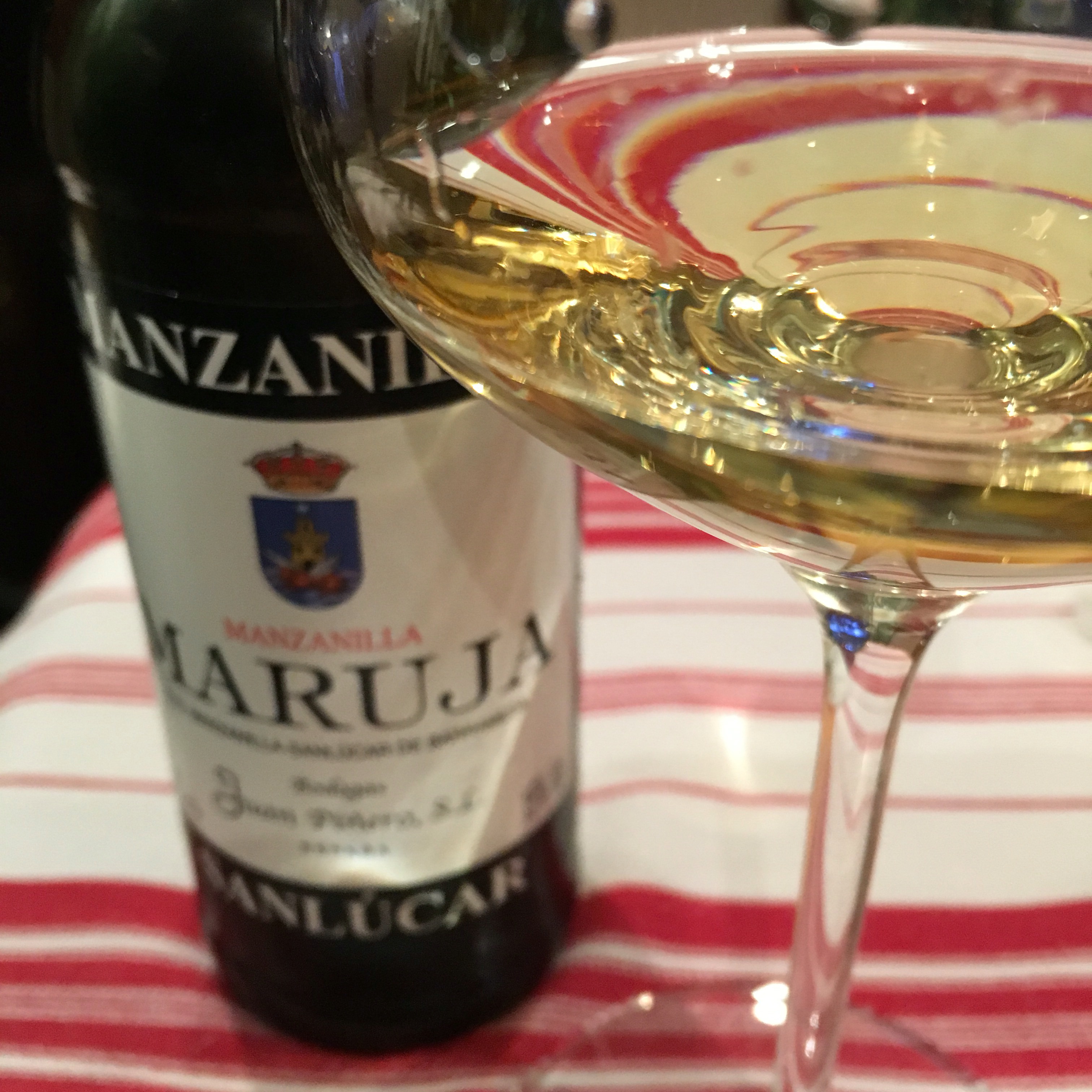
More importantly, this wine is from the same solera as the maruja and maruja manzanilla pasada – fruit from the El Hornillo pago and a highly dynamic solera – lots of rotation here. The yeast was apparently less developed and prolific on these botas: the maker thinks it has made it even more mineral but for me it is a touch less mineral than my memory of the maruja itself – and maybe a bit more full flavoured.

Look I can’t lie I am more of a fino man, particularly when they are big, generously umami finos like the splendid 4/65, but this is still lovely stuff.