La Bota de Palo Cortado 34 – Pata de Gallina 

This was the wine that gave rise to my current obsession with the wines of Jerez and Sanlucar and it is still one of my favourites – I have a dwindling stash put away but am treating myself after a tough weekend of slings and arrows of every variety (my last bottles were in May and August).

I am satisfied that the value is not just sentimental – it is attractive looking (no filters above – just look at that honey coloured nectar), enticing on the nose (nutty, sweetness and hay bales), delicious, complex, balanced and elegant.

Really an exceptional wine.

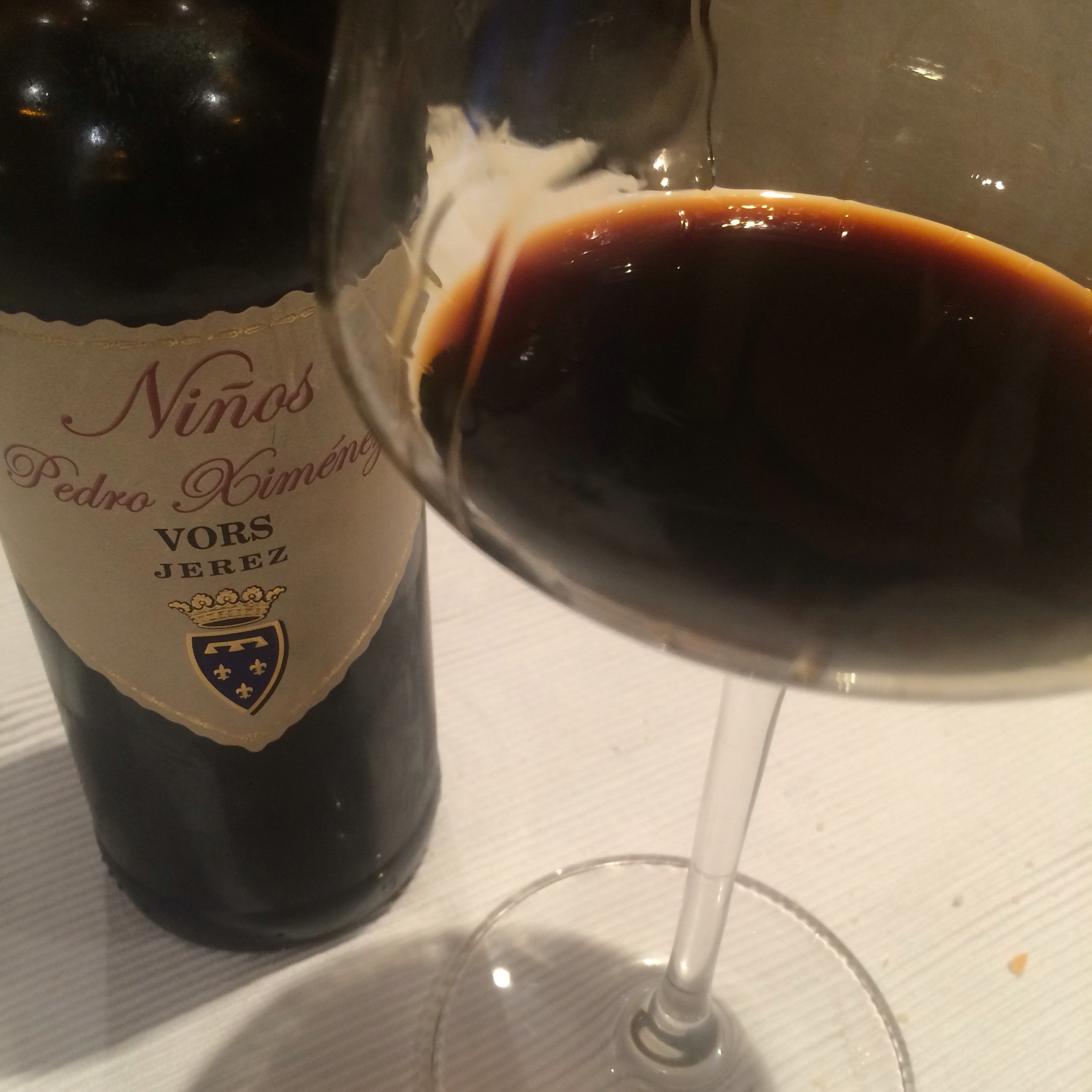
Pedro Ximenez Niños 

What an absolute beast of a wine this is. Magnificent stuff.

And how poor a blogger am I? I was convinced I had written a long post about all the spicey herbs and menthol aromas at the back end of this wine but when I come to update it nowhere to be seen.

So here I am to try again. The scents have that eucalyptus tree freshness over a heavy, sugary, black treacle burntness, then white pepper. The initial taste is sweetness, then black treacle, which lingers a good long while, really long, and at the end those woody, cedar, menthol notes. It is an amazing combination of the viscous sweetness of the PX and the bitter severity of barrel ageing – it is an incredibly piercing nose then a sticky mouthfull that burns where it lingers.

This is awesome.

Pedro Ximenez Toro Albala 1986 

  
By Toro Albala, the top men when it comes to PX, and a vintage too. Has a cracking Ficha

Anyway, this is late night material. Dark black brown, gloopy, nose of black raisins and spices. 

On the palate it is sweet and concentrated, grapey raisins. Concentrated raisin – lightly spicey, sugary. It is a full flavour alright. Still juicy raisins though, california raisins from a little red box.

Luxurious and not OTT – really good. 

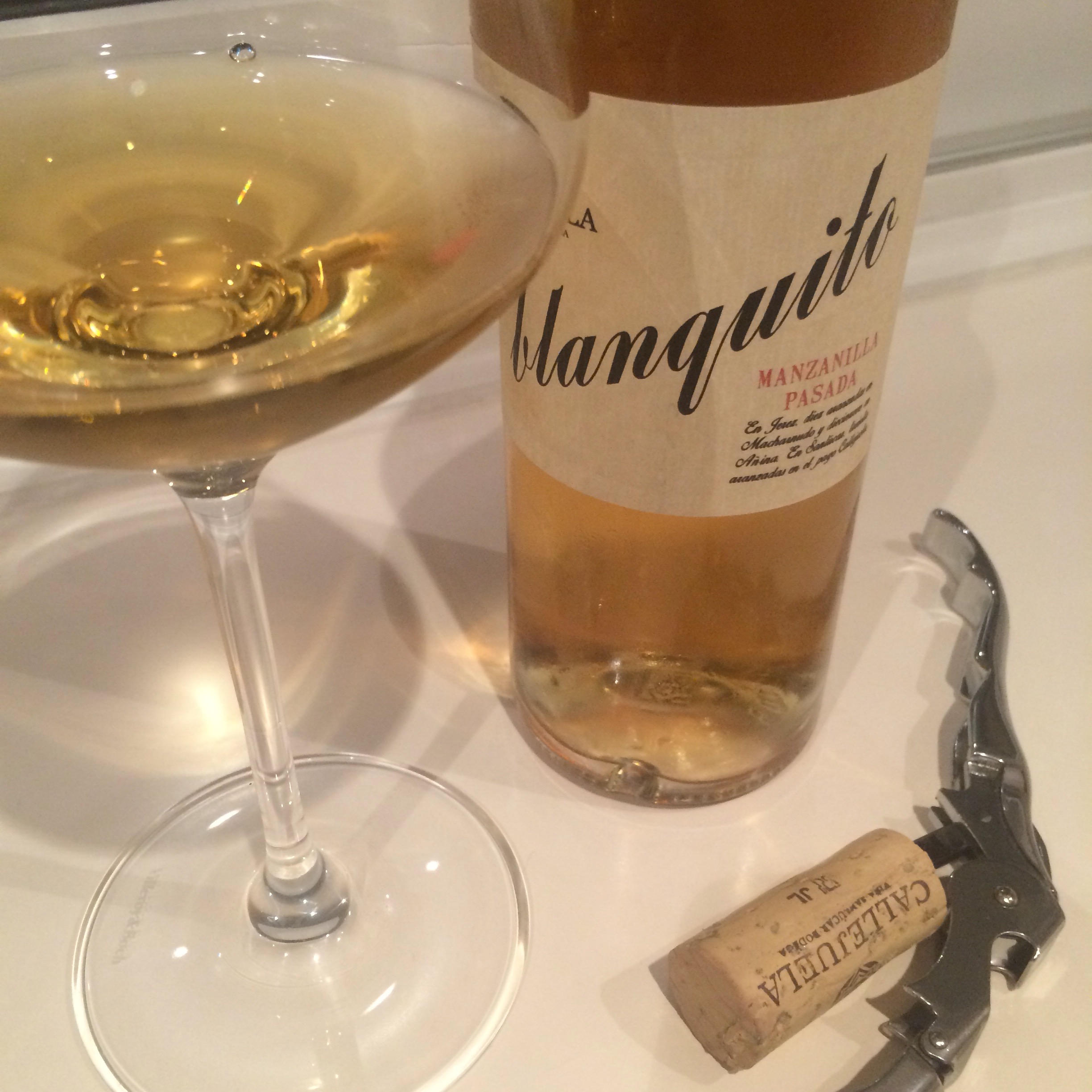
Manzanilla pasada Blanquito 


This was a gift a friend kindly brought back from a trip to Der Guerrita in Sanlucar and a very welcome one too. By Callejuela, one of my favourite bodegas, and by the hand of Ramiro Ibañez (in fact I have had it before).

Love the fleeting aroma of apples from this first up – apples that ripe, juicy, maybe even starting to rot in the bowl. Then the minerals seem to take over – that sea air/ozone. I don’t find the apples again after a while but I get blossoms and flowers in amongst the seaside fumes.

On the palate it is full bodied, saline, sapid and dry but with suggestions of those apples again – very nicely integrated – just turns bitter on the quite long, clingy finish. Mineral with a hint of fruit rather than the reverse.

Enjoying this with Camaron de la Isla – a moment of superb tranquility.

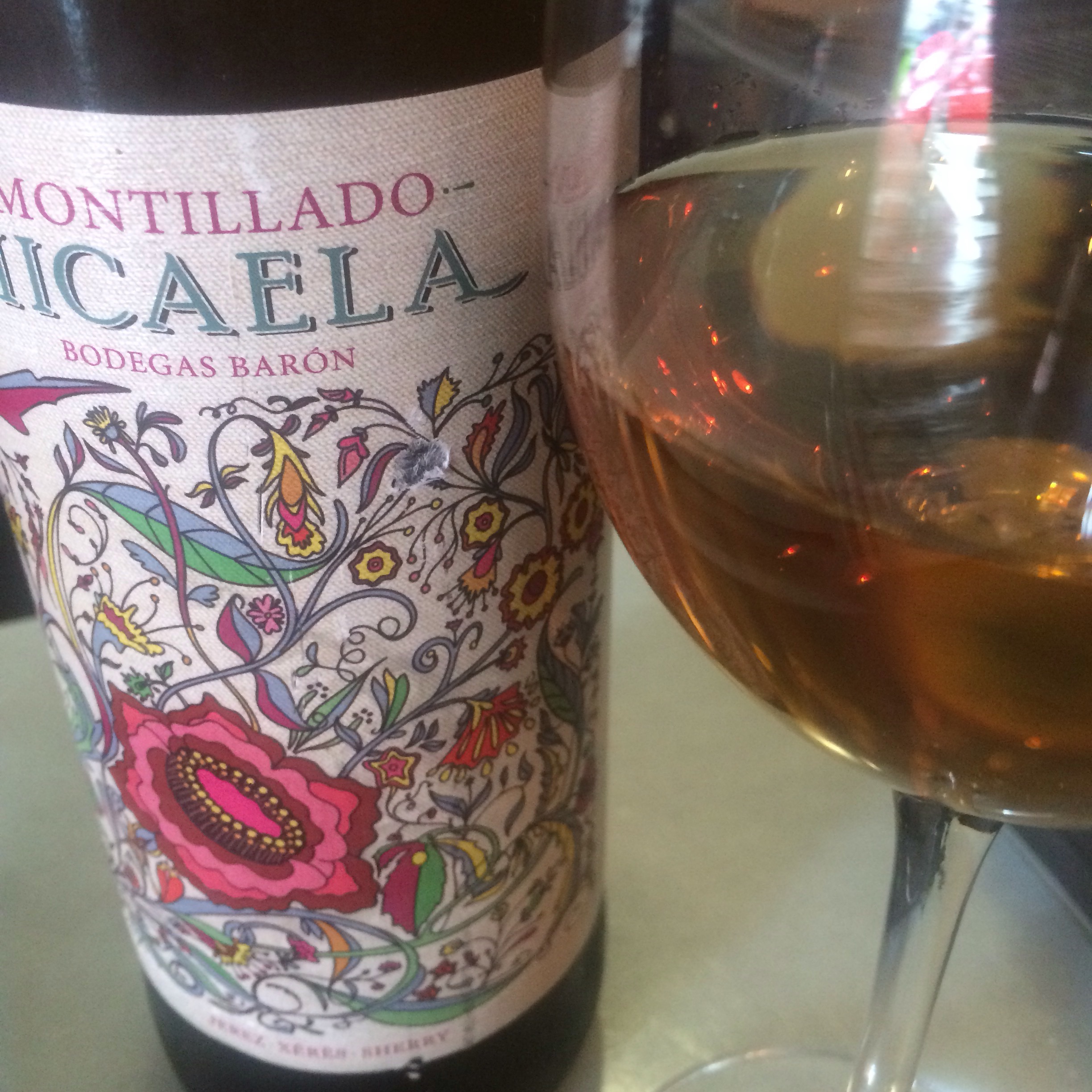
Amontillado Micaela

I first had this ages ago, pre-blog, in the Chula, and finding myself at said locale once more (first time this week) I thought I would continue my mini-streak of Sanlucar amontillados and palo cortados .

It is a young amontillado (4-5 years old) from Bodegas Baron in Sanlucar. (Bodegas Baron produce no fewer than 4 amontillados under their different brands: this and the Pino Viejo are 4-5 years old, then there is the Xixarito at 14 years and the Soluqua at 30 years.) Like all the Bodegas Baron wines this one is nicely presented, with a kind of antique floral label.

As you can see, the wine itself is darkish amber in colour – more yellow than orange – and it has a quite baked apple/mineral nose. I would guess it was under the flor for at least a couple of those 4-5 years because it is really zingy, the salinity makes the caramel flavours seem intense, then there are smoky minerals and burned sugar flavours that seem to last a long time.

Maybe not quite as full flavoured/varied in the middle but plenty tasty alright.

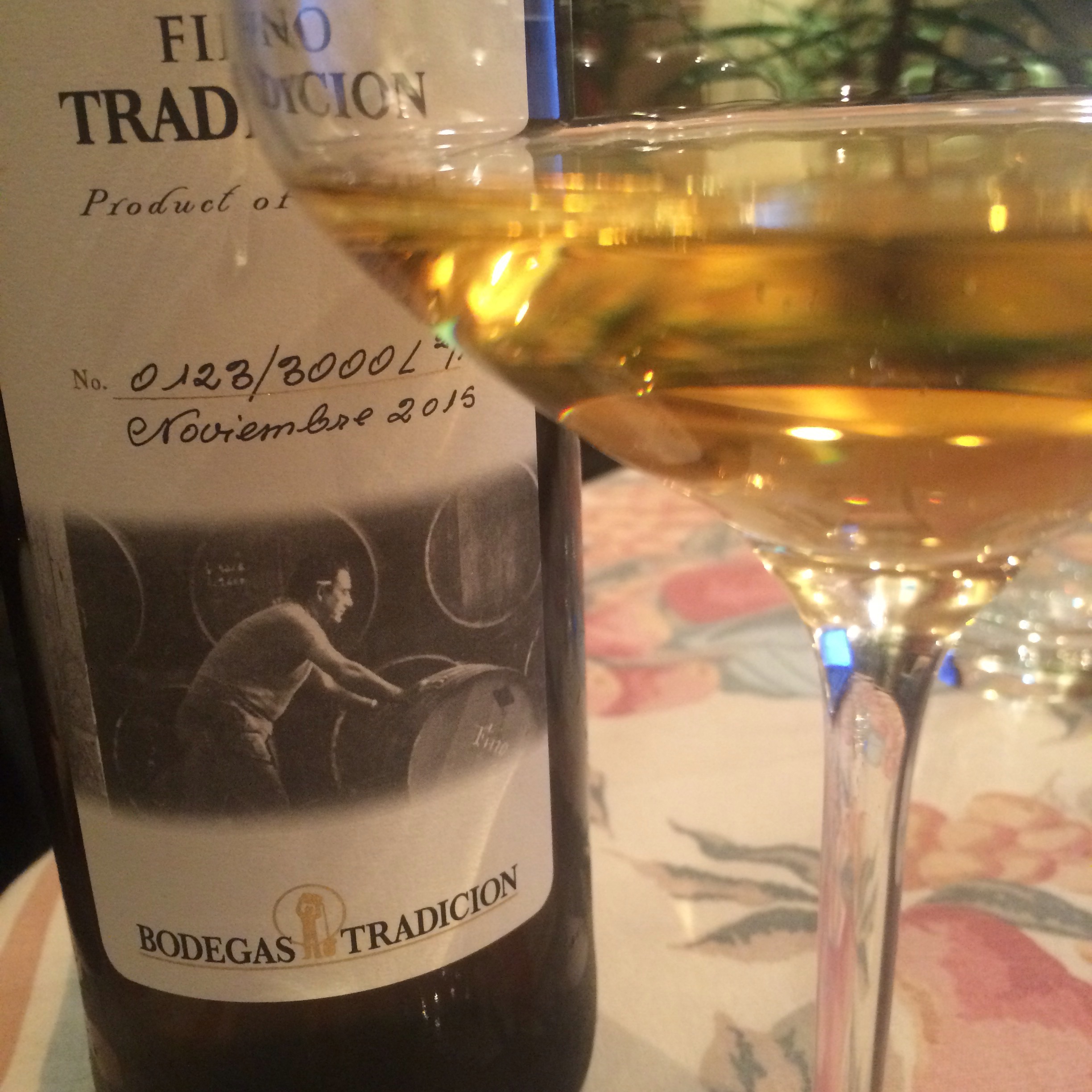
Fino Tradicion november 2015 


Bodegas Tradicion really are a quality outfit. As I have said before, they have done as much as anyone to open up the market for quality sherries, and this is a quality wine. The ficha is not as detailed as it could be but the wine itself is top class.

This bottle is half full (sorry, I mean empty, as in half finished) in a flash – a really elegant, nutty, yeasty fino. Has less citrus than the May 2015 and much more my bag. Tasty stuff. It is literally disappearing by the minute.


Manzanilla Alexander Jules 5/41


Can this be as good as the Fino? Well, since it is manzanilla Monday seems like the perfect time to find out.

Dark gold colour with even a touch of orange. On the nose there are grass cuttings, dried herbs, almonds, minerals, a bit of citrus, maybe creaminess. On the palate the citrus seems more present, there is zingy salinity on the sides of the tongue then dried herbs – parsley and bitter almonds and salty ozone.  A nice mineral, juicy and herby manzanilla.

Now I have tasted it and jotted down my thoughts, I feel able to look up the details on the splendiferous website, which again doesn’t let anyone down. Cracking technical detail again such as:

“selected from 5 of the 41 barrels that make up the top row of the Maruja solera. The solera is organized in 4 rows of 41 to 44 barrels, one stacked upon another. The lower rows, being closer to the albero floor (a type of sand, frequently watered and used to maintain humidity in bodegas), are exposed to higher humidity and lower temperatures, the higher rows receiving lower humidity and (somewhat) higher temperatures.”

More importantly, this wine is from the same solera as the maruja and maruja manzanilla pasada – fruit from the El Hornillo pago and a highly dynamic solera – lots of rotation here. The yeast was apparently less developed and prolific on these botas: the maker thinks it has made it even more mineral but for me it is a touch less mineral than my memory of the maruja itself – and maybe a bit more full flavoured.

Look I can’t lie I am more of a fino man, particularly when they are big, generously umami finos like the splendid 4/65, but this is still lovely stuff.

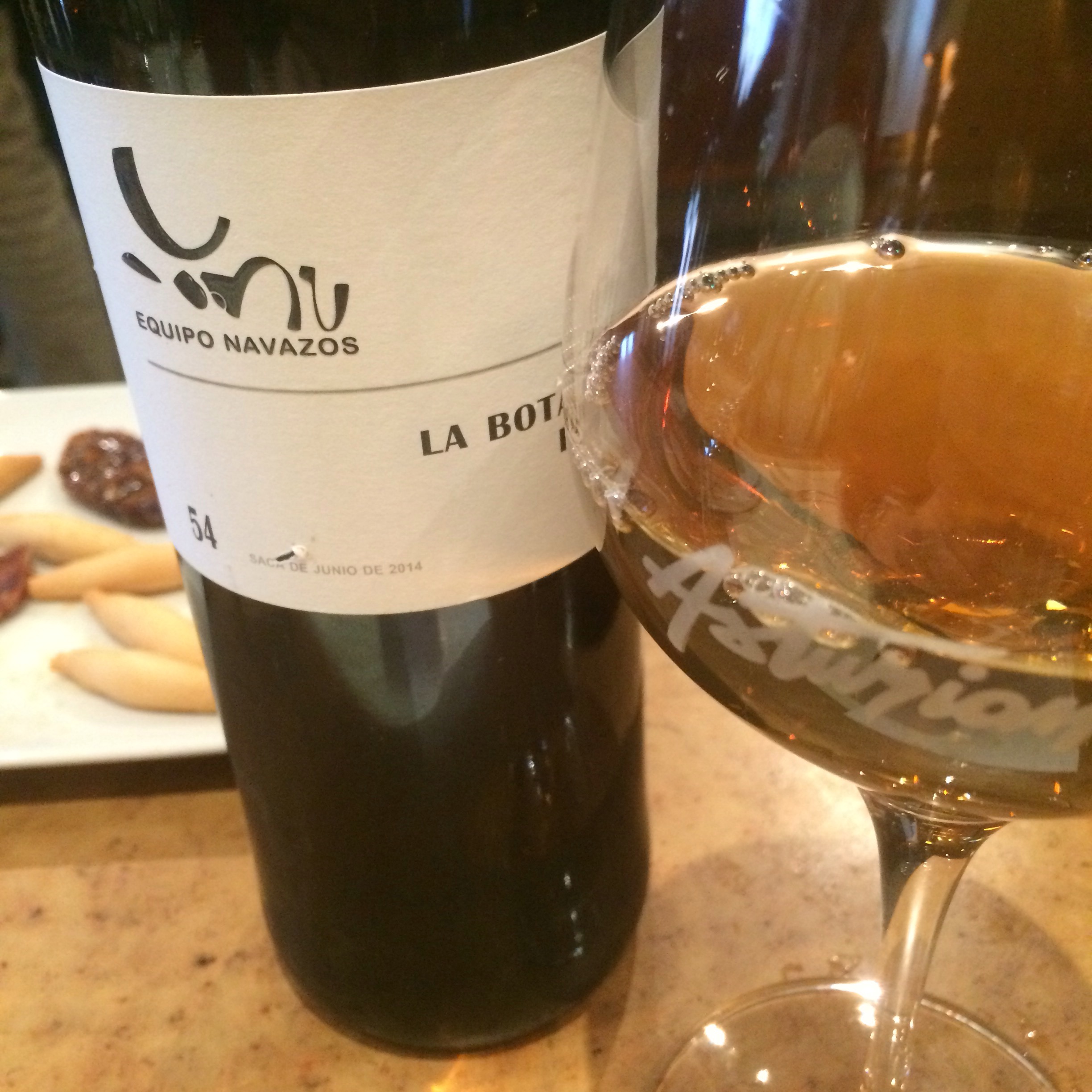
La Bota de Fino 54, “Macharnudo Alto”

Getting around to writing up the second great wine from my trip to Asturianos on Friday and it is another excellent wine by Equipo Navazos.

Fans of terroir in Jerez will note that the name refers to one of the great pagos of Jerez (there are four major pagos, Balbaina, Macharnudo, of which this would the “Alto” part, Añina and Carrascal) – you can see the pagos of Jerez marked on this cracking map that a friend emailed me last week (doesn’t reach into Sanlucar unfortunately).  Historically Macharnudo Alto has always been very highly considered – maybe the most famous single vineyard fino, Inocente, is from up there – I even recall someone (maybe Luis G?) referring to it once as the “DRC” of Jerez (which seems a bit of a stretch, but I think I see where he is going).

Since the ficha is again only available in Spanish a little background. This is a new saca (in June 2014) from the solera from which “La Bota” Numbers 2, 7, 15, 18, 27 and 35 came, and was solected from both the solera and the (somewhat younger wine in the) second criadera with an average underflor of about 10 years.

And it is a joy of a wine. I had it with a “revuelto de gambas, algas, y erizos” (scrambled eggs with prawns, seaweed and sea urchin) but it is so meaty it overpowered the eggs and might have been better with something meatier.

Has a very evolved, dark colour, and on the nost there is dark, . earthy straw or undergrowth with maybe just a hint of something sweet. Big and creamy in texture, nice integrated salinity giving a buzz on the tongue and more yeasty, vegetable flavours on the palate. Again slight hints of sweetness or fruit and a juicy, yeasty, fine finish.

Excellent stuff yet again.

Ask not what Jerez can do for you …

After a fantastic visit of Emilio Hidalgo a couple of years ago in Jerez, and struck by what a tragedy it was that I had only just found about these amazing wines, I asked our host what I could do to repay him. His answer was simple: “you seem to eat in the right places, do me a favour and ask for my wines”. I have not stopped doing so ever since.

The best places do indeed have his wines (even if some of them don’t know as much about them as they think), and even if they don’t, it is a technique that has paid dividends. For a start, mortified sommeliers around the world have been too embarassed to charge me for the fino that was not La Panesa, and even if you don’t get a consolation invitation, there is nothing wrong with letting the sommelier know that you know about these wines: I have yet to meet a really good sommelier that didn’t know her or his sherries.

Now, my standard routine has a couple of additional steps. “Esker vous avez la Panesa?”, if not, “would you have a fino or a manzanilla?” and, if so, “which do you have?”. Don´t stop at finos and manzanillas either. One of my biggest successes in terms of introducing friends to sherry is generally the callos and oloroso pairing. A group of friends and I are in the process of exploring the callos of Madrid, with score sheets and a ranking system tracking the best callos around town, and since I introduced them to oloroso restaurants are severely marked down if they don’t have it. (Even if you can’t get callos, oloroso, palo cortado or amontillado can be a cracking pair for almost anything tasty, so should be asked for at every opportunity.)

You will be surprized at how many places have sherry and even good sherry. I have had some very pleasant surprises along the way: the little gem of a sherry list at Punto MX would be one; my hotel bar in Vienna was another; and probably the best of all was a flight with Iberia enlived by Tio Pepe and his mate Alfonso.  Even if they don’t these wines on the list they may have some excellent bottles hidden under the bar or about the premises. I remember one fantastic mystery oloroso, label on the bottle completely obliterated, that was produced from heaven knows where in one place.

And if the restaurant in question doesn’t have these amazing wines (for shame), it is amazing the effect that we can have just by asking: in this day and age of instant reviews on twitter, facebook, tripadvisor and their ilk most places seem keen to keep us consumers smiling. If we all keep asking they will eventually get the message, and if they were to stop and look at the prices of these wines surely it shouldn’t take long to realize that for a small investment they can keep some of their more knowledgeable consumers happier.

And while we are at it – let’s all please insist on quality stemware!

La Bota de Palo Cortado 52, Sanlucar

Writing up my notes from a splendid couple of wines by Equipo Navazos at lunch in Los Asturianos yesterday and this was the star of the show without doubt. First, though, just a moment of admiration for the camerawork here: just look at the way I have framed the reflection of the chorizo and morcilla in the stem. Genius.

As to the details of the wine (since the ficha is only posted in Spanish), this one is from the cellars of Hjos de Rainera Pérez Marín, best known for La Guita. More specifically, the fruit was from selected mostos from Pago Miraflores in Sanlucar,  and it has been aged in a mix of sherry and bordelais botas almost filled (“tocadedos” – or touching the fingers) to prevent an excessive oxidation, of which the botas chosen had wood that was heavily impregnated with amontillado.

The resulting wine is fantastic. It is in fact the third time I have had this – I remember having a bottle (recommended by Santiago at Coallagourmet) when it first came out and it disappearing quickly (pre-blog chaps – no notes taken). The second time I had it was as part of an outstanding pairing, but given the occasion no opportunity to take notes there either (and, frankly, tricky to do a tasting note of anything you are eating with roast garlic). So this time, fabada notwithstanding, I was determined to take notes and they were nearly all superlatives.  

Everything about it is elegant and classy. In colour it is a rich, honeyed amber. It has a really interesting nose that is refined, with a fruity, nutty sweetness backed by saline minerals. On the palate it is super clean, fine and balanced. Honey toffee first up, then zingy minerals and acidity, beautifully integrated alcohol (in fact it is not as alcoholic as some palos at only 18%) and long with nutty and bakery type flavours, mineral smokiness and no bitterness or astringency. Really nice defined structure to it – takes you a journey.

Really lovely, elegant, classy stuff.