Los Asturianos, Madrid


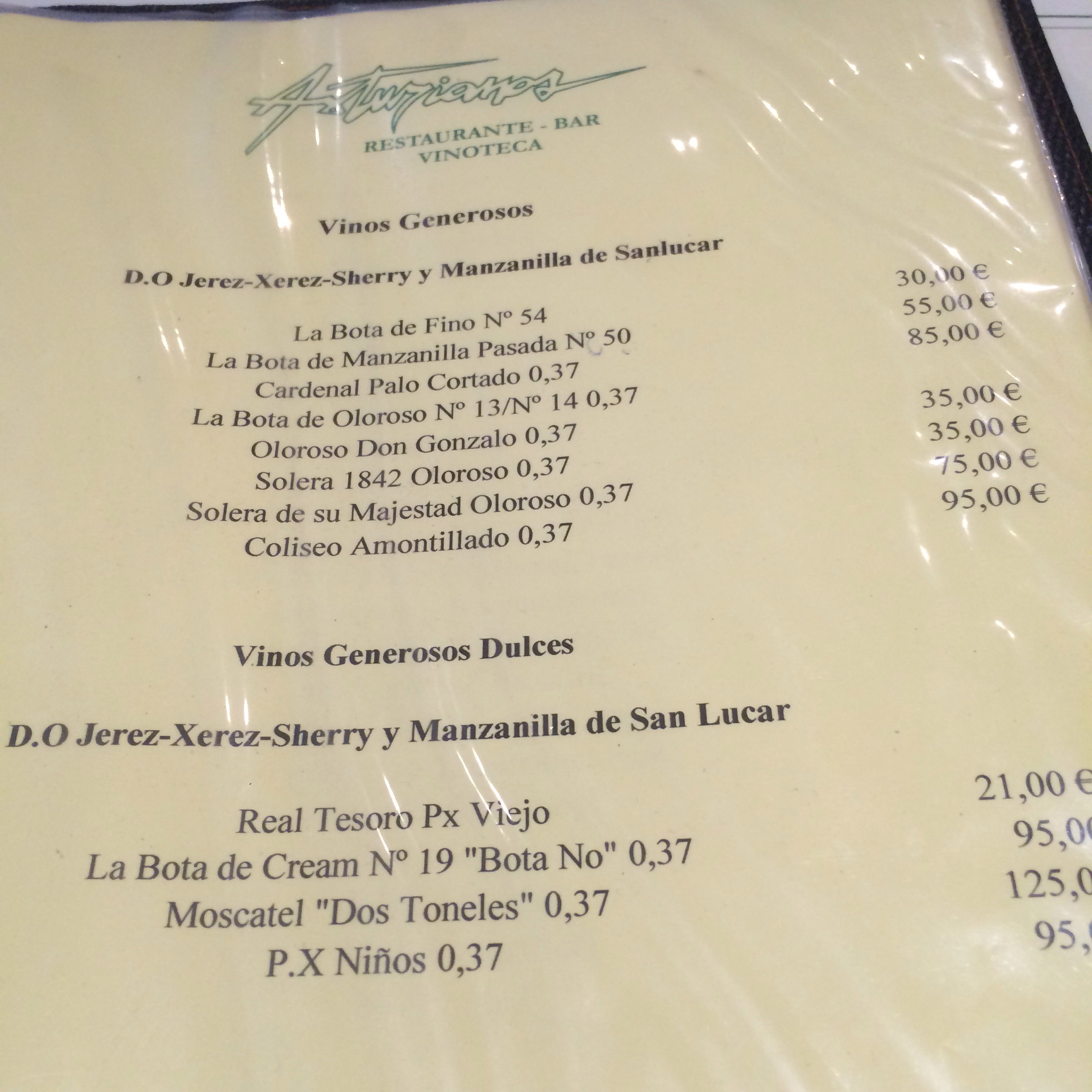
There is something about Asturias and top quality wine. Recently I have been updating my “where to drink it” page and one of the first suggestions for places I needed to try was this one, and after only one visit it is easy to see why. Just look at the list above – some very high quality and hard to get wines there, and a pretty nice coverage of the range. To quibble, they could probably add a fresher, lighter fino or manzanilla and maybe a youngish (12-15 year) amontillado or palo cortado, but they are definitely way above average as it is.

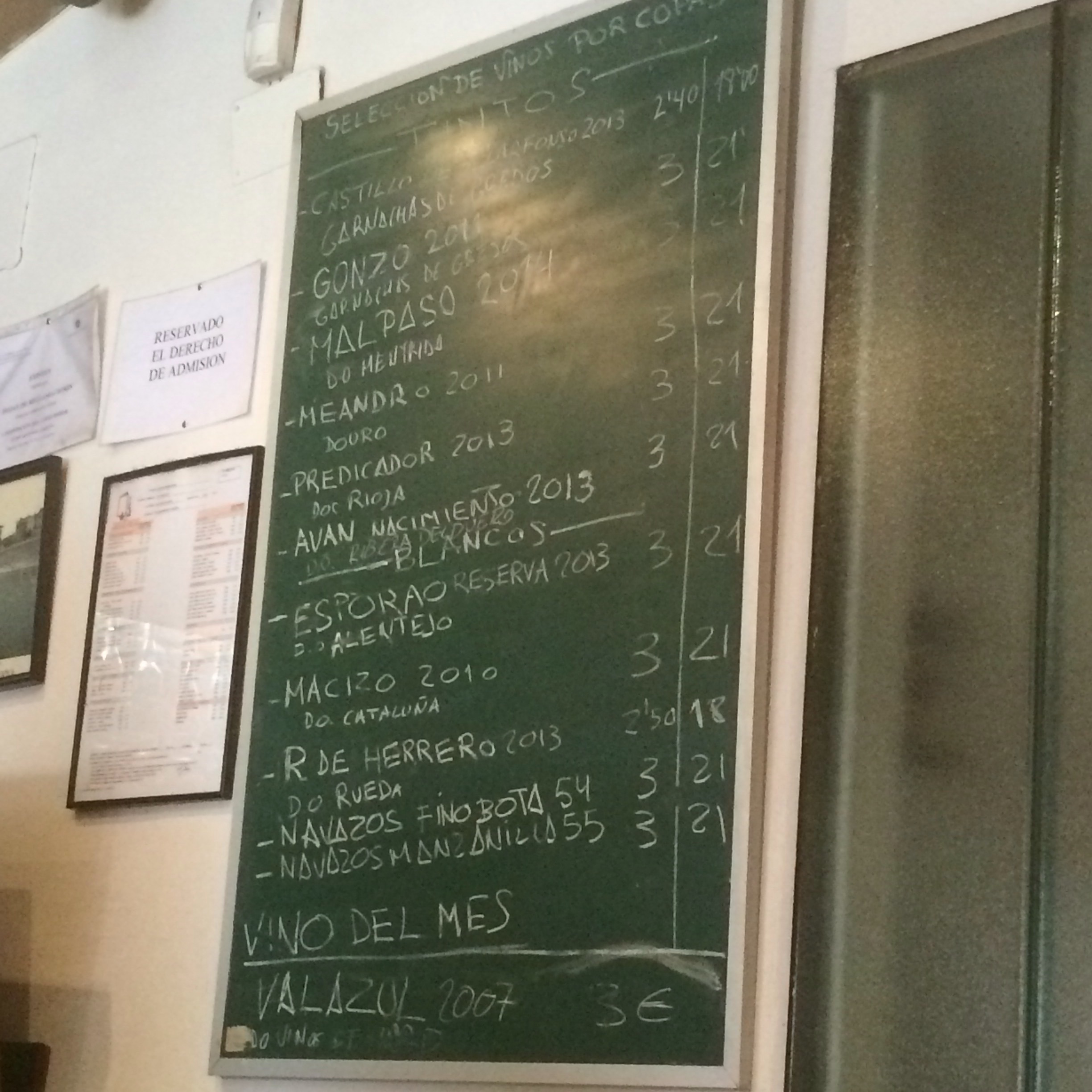
Even better, on the blackboard (see below) they had La Bota de Manzanilla 55 and La Bota de Fino 54 at the ridiculous price of €3 a glass/€21 a bottle, and even better than that, the friendly waiter also announced he had La Bota de Palo Cortado 52 and charged me that same price. So if you want to treat yourself to a rare bottle or even just glug down some Equipo Navazos at bargain prices (for example, just compare that €3 a glass to this or this) then this is the place for you, and that is even before the food comes into the equation.


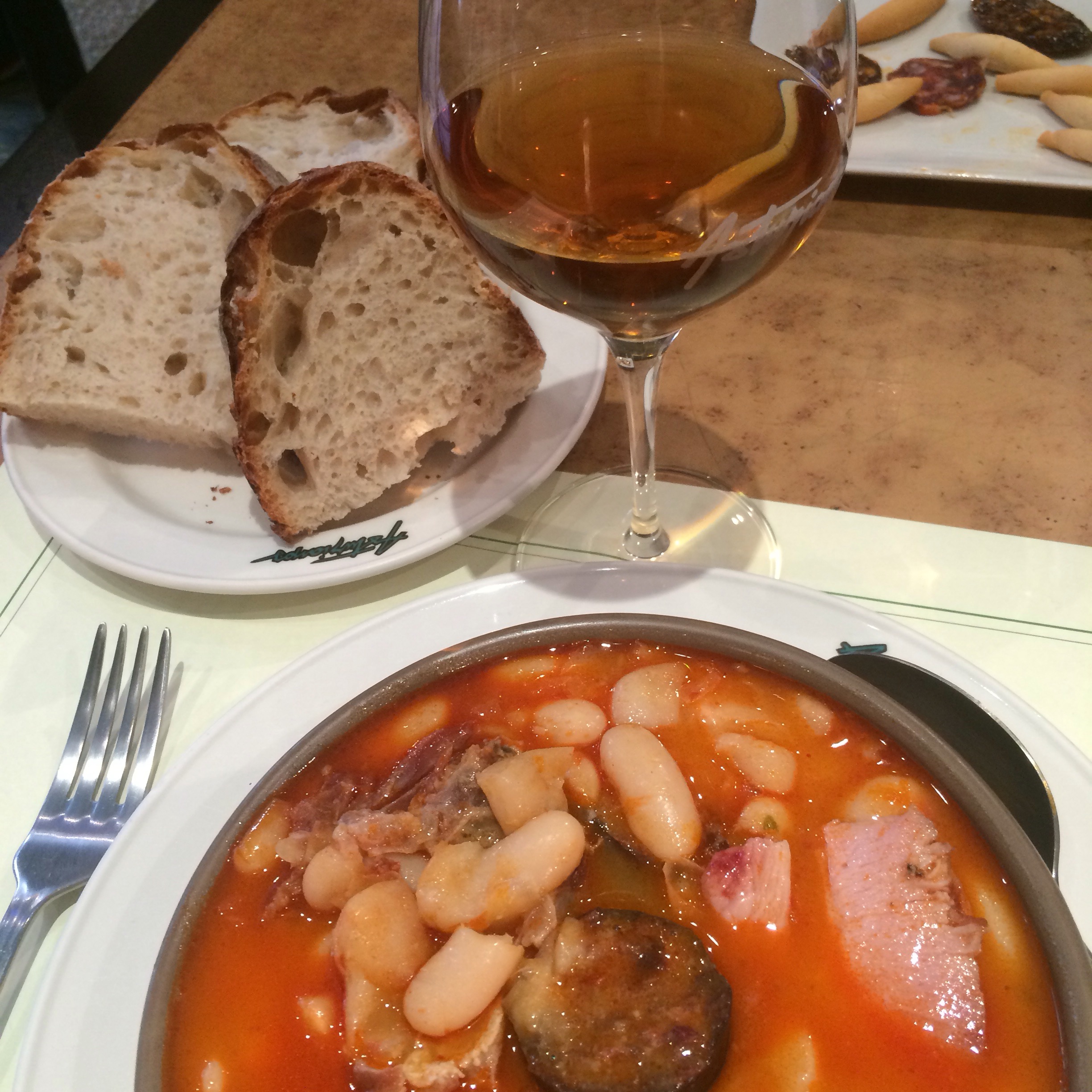
But to be quite honest, the food really ought to come into the equation. Up in Asturias they really know how to feed, and the food here is absolutely cracking – just take a look at the fabada below (a bit garish in colour terms, but the beans were butter soft and the sauce and compango was excellent), the cracking bread and the smart little aperitivo of salsichon and morcilla – absolutely brilliant.

So yes, it is staying on the list and now if you don’t mind I am going to rest my eyelids for a while.

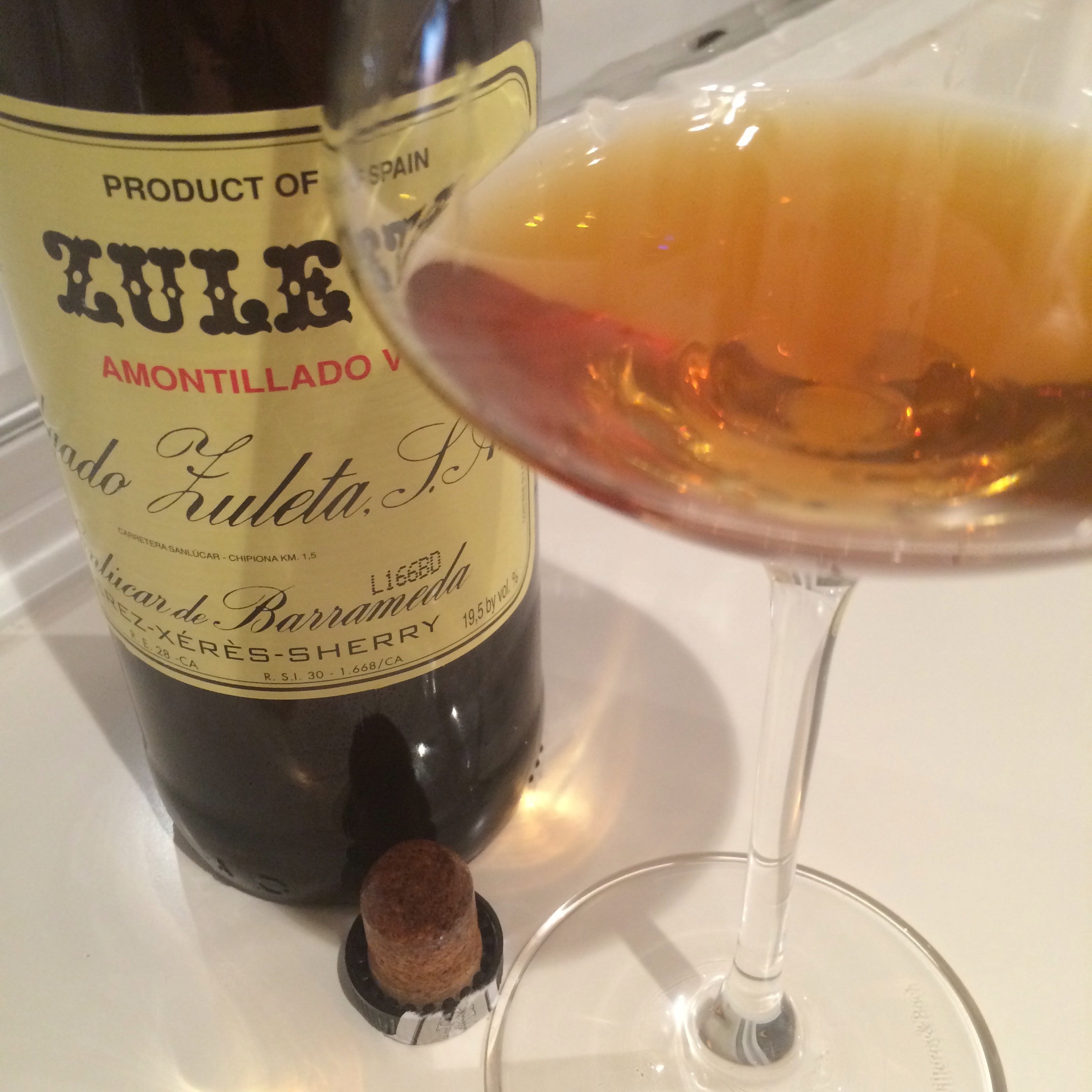
Amontillado viejo Zuleta

Ths is an old amontillado from a finite supply – no longer being made and only a few cases are left. I got this (and a twin) from the Cuatrogatos Wine Club, a great source for small bottlings, rare sherries and other indie wines. It is by Delgado Zuleta (but don’t look for this on their web). 

Not keen on the look of the cork I must say – not sure how long I would trust that to keep this wine safe.

As to the wine itself, it has a nice orange colour to it but not fully clear. Also has that distinctive refined petroleum nose – sweet, salty, and alcoholic. 

Zingy acidity and sapidity on the palate too – sweetness and a nice hint of burnt wood, then saltiness Maybe a hint of age about it – slightly dusty, astringent vibe and woody, tobacco flavours.

Nice wine, no doubt, one that was brilliant tonight with roast chicken, but while tasty I find its flavours a little on the barrel side. 

Vintage chic

992ae23a-d032-4d31-94af-1902d89eaec2

The issue of vintages has been on my mind a great deal lately. First, a couple of weeks ago I was lucky enough to take part in a brilliant tasting of vintage port organized by Vila Viniteca here in Madrid – including four examples of the fantastic 1994 vintage and a wonderful Niepoort from 1970 (thanks David). After that tasting, a few of us went for dinner which we washed down with a couple of vintage champagnes (what else would you drink after port?), including an amazing Pascual Doquet 1995 (thanks Guille). After all those vintages from those two splendid regions, this blogger was left musing on why he so rarely saw vintage sherries.

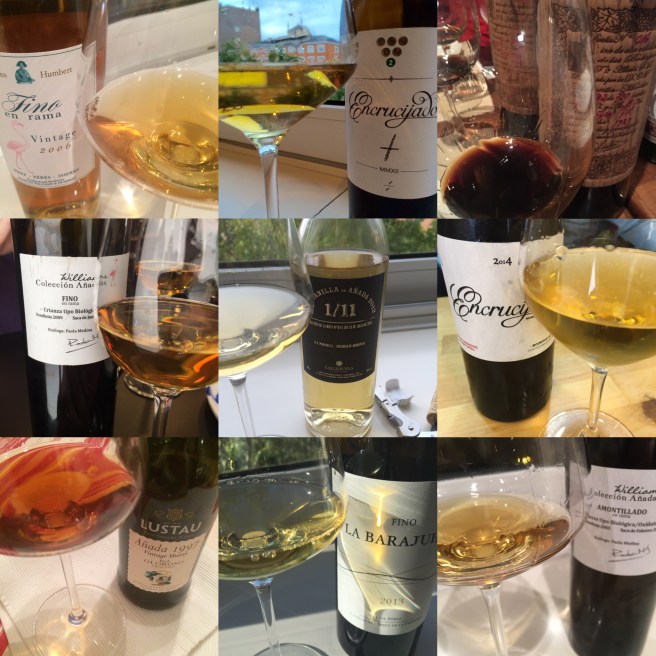
Not that there are none. The half dozen or so avid readers of this blog will recall brushes with vintage wines by Cota 45 (the Encrucijado MMXII, and again), Willams & Humbert (2006 fino en rama), Lustau (1997 Oloroso), la Callejuela 2012 Manzanilla de Añada (not once but twice), Ximenez Spinola (2014 Pedro Ximenez) and, most recently, Cota 45 again(the 2014 Pandorga), and although not blogged I have been lucky enough to imbibe several vintage palo cortados (the 1974, 1983 and 1987) by the great Gonzalez Byass (my favourite, the 1974, I haven’t seen around much).

Nevertheless, in percentage terms we are not talking a great deal of wine – eight posts of a total of 287 to date – which is surprising. I bet if you looked at a blog specialized in Port or Champagne it would be a different story and it is a situation I have lamented in the past.

I am not saying do away with soleras – you certainly should maintain miraculous creations like La Panesa, Inocente and others. I also appreciate that soleras do more than merely blend wines: the wines of different average ages contain different nutrients that interact with the different strains of flor and produce different effects (which is why it is frustrating that more producers don’t specify how many criaderas they use).

But it would be great to see how much can be achieved by the fruit of an individual year’s harvest. Anyone involved in cultivation will tell you that harvests can vary widely from year to year – I remember a cracking chat in a cider bar in Gijon where the lads were worrying about that year’s apples – and while it is mathematically impossible for every year to be above average, the same laws tell us that quite a few of them will be.

Indeed, although at this level anecdotal and not very scientific, I once carried out a comparison of vintage vs solera (the 2006 Fino en Rama and the Fino Tradicion may 2015). On that occasion, although the wines were different to start with, they would have been of approximately the same age at the time of consumption and the benefit of the solera was clear – the lovely umami fullness from the action of the flor – but so was the individuality of the vintage wine (which I slightly preferred).

This is why I am increasingly of the mind that a sytem similar to the one used in the Douro – where at the sobretablas stage, say, makers and Consejo Regulador determine whether to declare a vintage or not – would be an excellent way forward. (Particularly if allied with a bit of self restraint by the makers, say 2 or 3 vintages a decade like the best Port houses.) At the same time, they could of course continue solera production.

So it is great to see stuff like the piece this week by Paz Ivison in elmundovino (which has also been transcribed into English by the excellent sherrynotes) and even more exciting to see the first sections of the book being written by Ramiro Ibañez and Willy Perez (“Las Añadas en el marco de Jerez” or “Vintages in the Jerez Region”).

I really hope that it is just the beginning. I believe vintages are more interesting and provide scope for greater expression and differentiation and must be worth exploring further. In fact, winemakers: I promise that if you make them, I will buy them.
Amontillado 1730

This is a VORS (30 year old) amontillado by bodegas Alvaro Domecq (not the lost, lamented giant, but a scion of the family that bought the business of Pilar Aranda, a historic almacenista). I got this one so cheap I was intrigued but it turned out to be a really tasty little bottle of amontillado.

Beautiful red colour – maybe not quite as crystal clear as some. On the nose it is like barrel aged toffee – little bit of that gasoline buzz in the background. Then on the palate it isn’t all that full but there is acidity, toffee and burnt flavours.

Very pleasant drop all told.

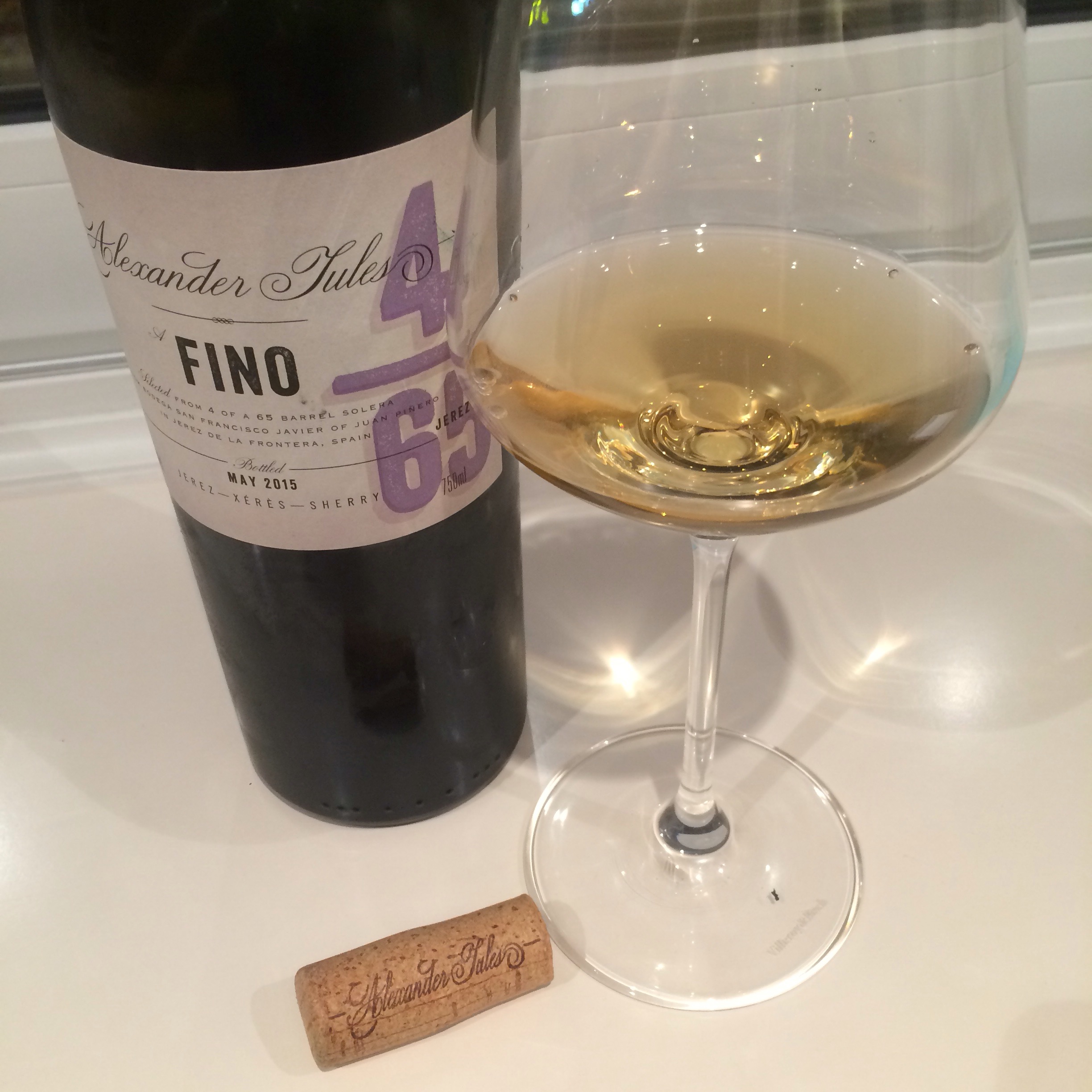
Fino Alexander Jules may 2015 

I must say I feel more than a little envious, and in awe, of this guy. Listen to this:

Alexander Jules is my label of barrel selected sherries. I search the Sherry Triangle for soleras I love in unique and great bodegas, tasting each barrel in the solera, marking with chalk those I feel to be the most complex and elegant, or those that reflect the profile I would like to bring out from within the solera. All bottlings are en rama, being only gently filtered or entirely unfiltered and, starting in 2014, no sulfites are added.

The label reference indicates that this wine has been taken from 4 botas selected from 65 in a solera of Juan Piñero (hence the 4/65). The reference to Juan Piñero makes me wonder: are we talking about Fino Camborio? If so the result is surprisingly different. But it is indeed and the reason is explained perfectly in this superb note on the website.

And the wine is as good as you might expect. If you like big yeasty finos you will love this. Old gold colour, big hay bales, nuts and minerals on the nose. In the mouth it is silky, sapid and tasty – easy, cool entry, real salty zing on the tongue and the sides of the mouth and then big yeasty flavours. Seems to last for ages – and keeps on making the mouth water too.

Only a 1000 of them bottled so get hold if you can.

Pandorga 2014 

Here’s another interesting wine from Ramiro Ibañez at Cota 45, the “Pandorga” (meaning kite, hence the label), a 100% pedro ximenez, this one from 2014 and a much anticipated purchase from the Cuatrogatos Wine Club.

Interestingly, according to a note I just read this comes from PX grown on a vineyard you may have heard of: La Panesa, in Carrascal (which I think I am right in saying used to be the property of Emilio Hidalgo, and inspired the name of their famous fino). Harvested slightly late, the fruit is left in the sun in the traditional way (although I would guess slightly less than is usual), fermented and spends a year in bota – I believe this has literally just been bottled.

As with other wines by Cota 45, there seems to be a deliberate intention to allow the characteristics of the fruit to shine through: it is only 12% proof so you know it is going to be sweet and it doesn’t disappoint on that score, but it is relatively fresh and light by comparison to the heavier, darker styles of PX you may be accustomed to (not unlike the Ximenez Spinola Vintage 2014, although I think I remember that one as more raisiny).

As I have often said, I struggle to pick out the structure and features of sweeter wines, and on first tasting this it was no different, but a day later I am getting more from it. It is a honey-like amber in colour and not as cloudy as the picture above suggests (not sure what has happened there) – maybe just a little short of crystal clear. On the nose it is more grapey than raisiny – with a suggestion of that marmalade, old fruit aroma you get in the more intense champagnes.

On the tongue it is sugary rich like a fruit juice first up, very nicely integrated acidity, and now I am getting a real marmalade/intense apricot jam vibe at the back -bittersweet fruit. The finish isn’t sticky at all, but those fruit flavours hang around.

This is wine that you could drink gallons of without realizing (probably a good thing it comes in slightly smaller 50cl bottles) but also merits some study.