Fino Pando


I got this for a song from Vila Viniteca (it really is a crime how cheap these wines are) with one of the few remaining 2006 Vintage finos and it is no slouch at all.

This is an 8 year old, 9 criadera fino from fruit (100% palomino fino, of course) from Pago Balbaina (Jerez Superior) by Williams & Humbert and has a cracking ficha (although the translation is a bit tricky and the Spanish version is a bit clearer).

It has a very pale gold colour, a punchy nose with plenty of aromas of citrus and acetaldehydes. It is full bodied and full flavoured too, a real mouthful. The salinity is very mellow, but it is long and lingering and there are ash-like minerals towards the end.

A big, bold fino, in the classic Jerez style.


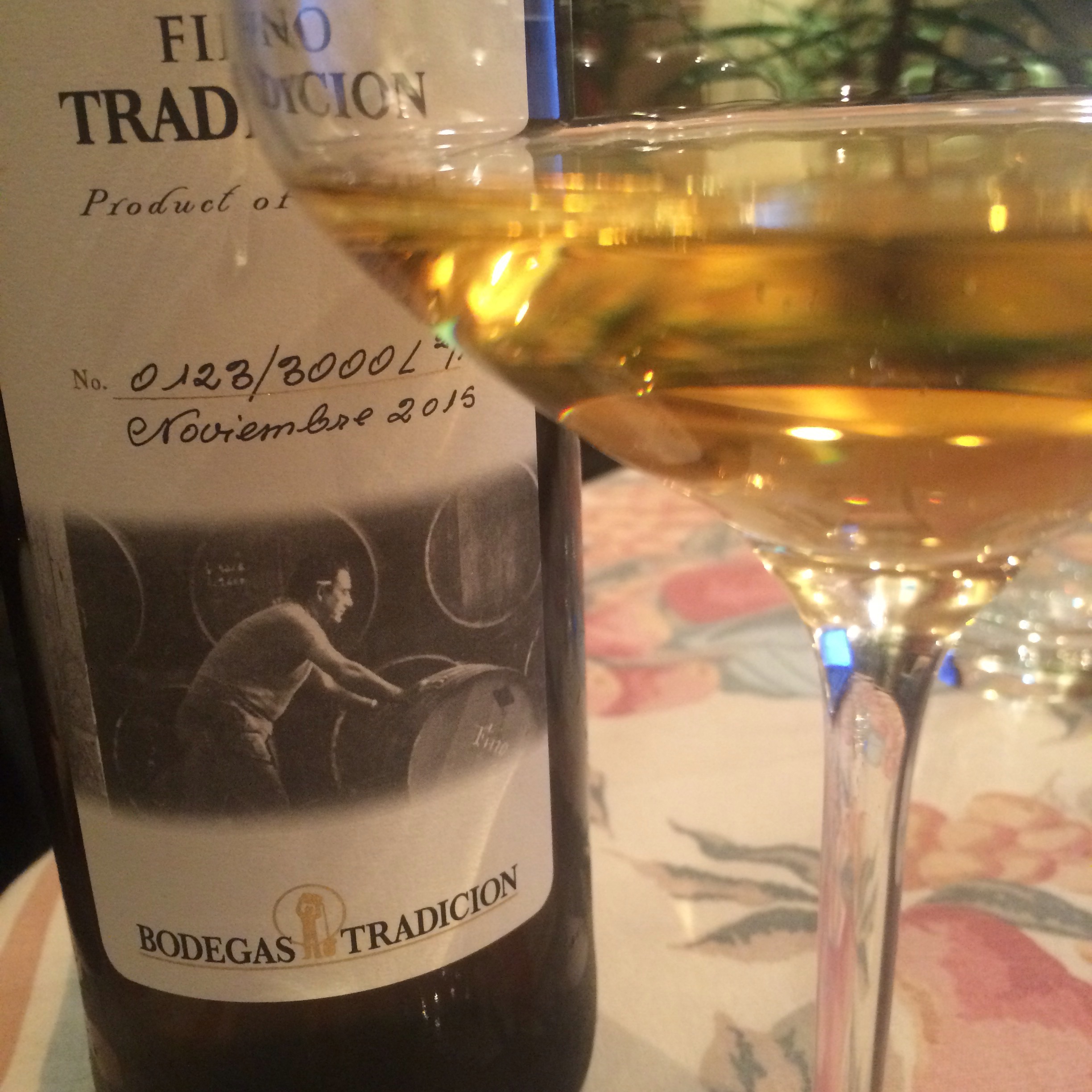
Fino Tradicion november 2015 


Bodegas Tradicion really are a quality outfit. As I have said before, they have done as much as anyone to open up the market for quality sherries, and this is a quality wine. The ficha is not as detailed as it could be but the wine itself is top class.

This bottle is half full (sorry, I mean empty, as in half finished) in a flash – a really elegant, nutty, yeasty fino. Has less citrus than the May 2015 and much more my bag. Tasty stuff. It is literally disappearing by the minute.


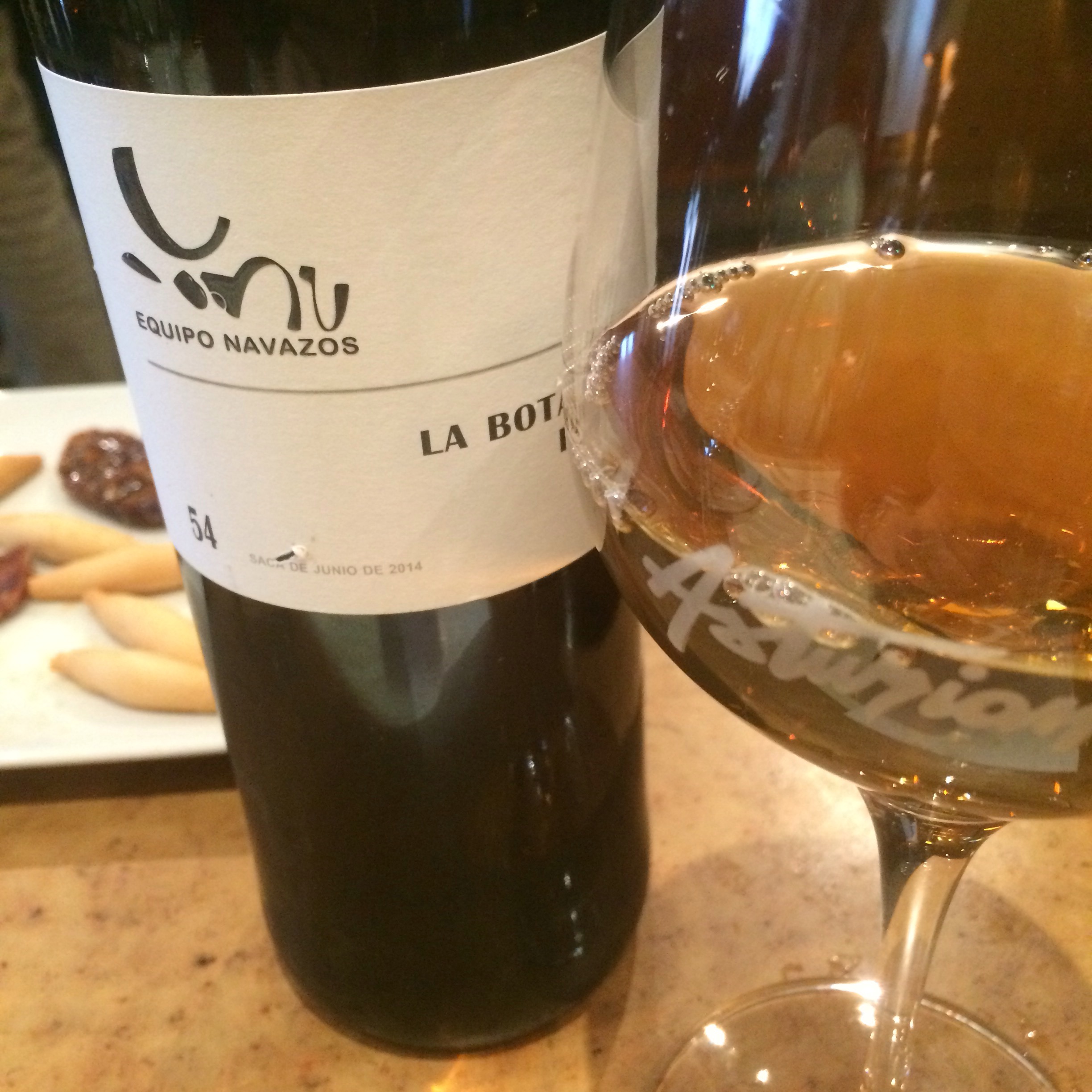
La Bota de Fino 54, “Macharnudo Alto”

Getting around to writing up the second great wine from my trip to Asturianos on Friday and it is another excellent wine by Equipo Navazos.

Fans of terroir in Jerez will note that the name refers to one of the great pagos of Jerez (there are four major pagos, Balbaina, Macharnudo, of which this would the “Alto” part, Añina and Carrascal) – you can see the pagos of Jerez marked on this cracking map that a friend emailed me last week (doesn’t reach into Sanlucar unfortunately).  Historically Macharnudo Alto has always been very highly considered – maybe the most famous single vineyard fino, Inocente, is from up there – I even recall someone (maybe Luis G?) referring to it once as the “DRC” of Jerez (which seems a bit of a stretch, but I think I see where he is going).

Since the ficha is again only available in Spanish a little background. This is a new saca (in June 2014) from the solera from which “La Bota” Numbers 2, 7, 15, 18, 27 and 35 came, and was solected from both the solera and the (somewhat younger wine in the) second criadera with an average underflor of about 10 years.

And it is a joy of a wine. I had it with a “revuelto de gambas, algas, y erizos” (scrambled eggs with prawns, seaweed and sea urchin) but it is so meaty it overpowered the eggs and might have been better with something meatier.

Has a very evolved, dark colour, and on the nost there is dark, . earthy straw or undergrowth with maybe just a hint of something sweet. Big and creamy in texture, nice integrated salinity giving a buzz on the tongue and more yeasty, vegetable flavours on the palate. Again slight hints of sweetness or fruit and a juicy, yeasty, fine finish.

Excellent stuff yet again.

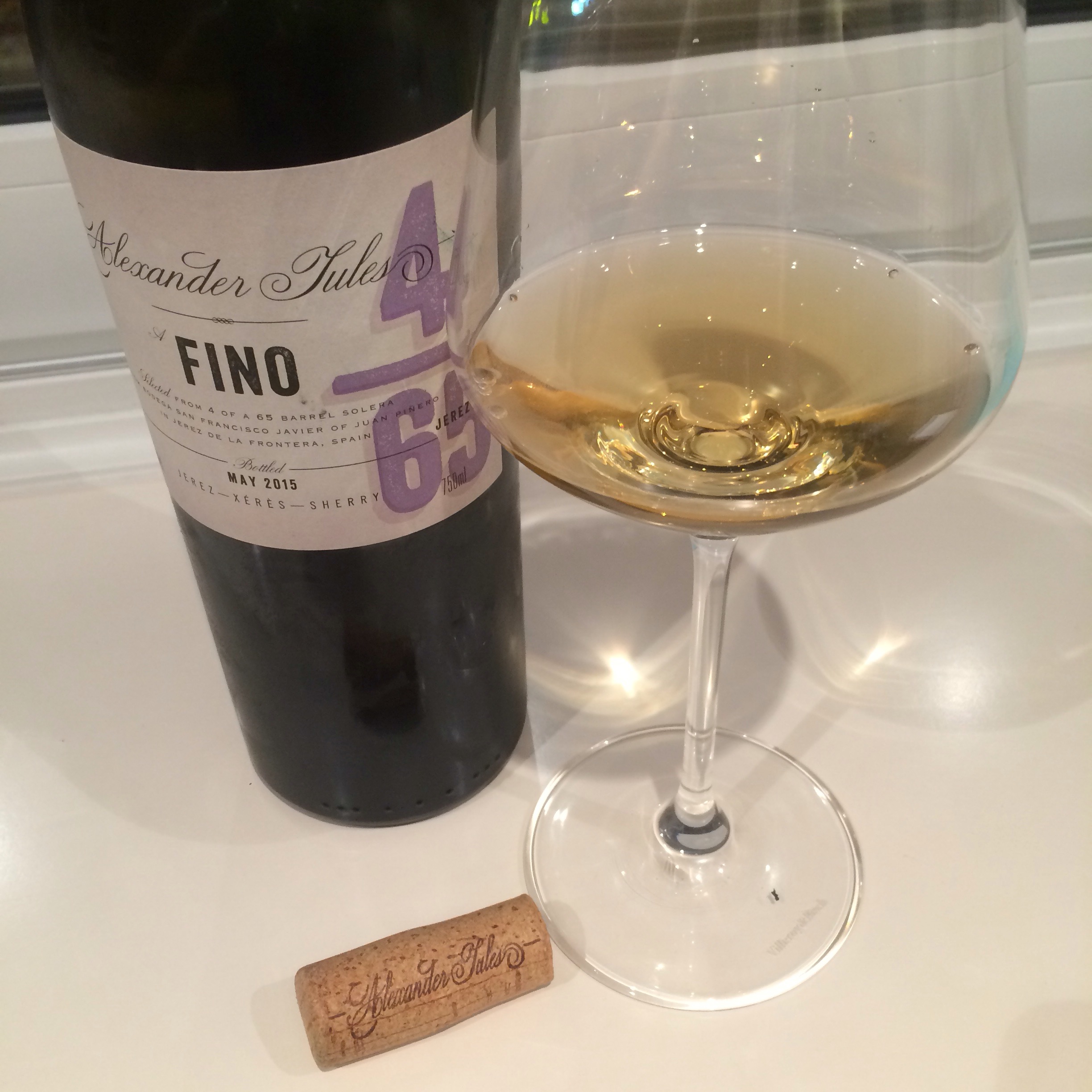
Fino Alexander Jules may 2015 

I must say I feel more than a little envious, and in awe, of this guy. Listen to this:

Alexander Jules is my label of barrel selected sherries. I search the Sherry Triangle for soleras I love in unique and great bodegas, tasting each barrel in the solera, marking with chalk those I feel to be the most complex and elegant, or those that reflect the profile I would like to bring out from within the solera. All bottlings are en rama, being only gently filtered or entirely unfiltered and, starting in 2014, no sulfites are added.

The label reference indicates that this wine has been taken from 4 botas selected from 65 in a solera of Juan Piñero (hence the 4/65). The reference to Juan Piñero makes me wonder: are we talking about Fino Camborio? If so the result is surprisingly different. But it is indeed and the reason is explained perfectly in this superb note on the website.

And the wine is as good as you might expect. If you like big yeasty finos you will love this. Old gold colour, big hay bales, nuts and minerals on the nose. In the mouth it is silky, sapid and tasty – easy, cool entry, real salty zing on the tongue and the sides of the mouth and then big yeasty flavours. Seems to last for ages – and keeps on making the mouth water too.

Only a 1000 of them bottled so get hold if you can.

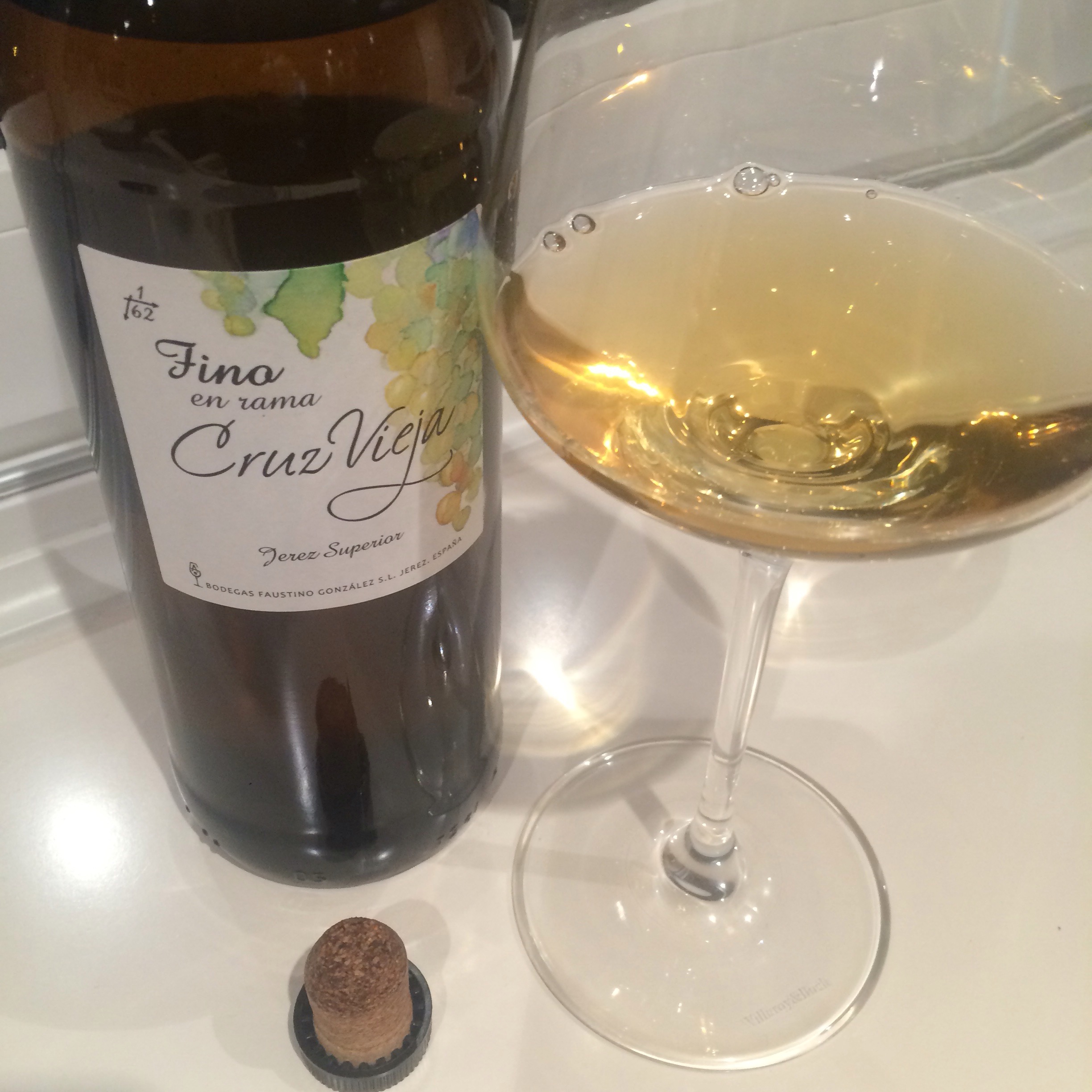
Fino en rama Cruz Vieja 


You can’t beat a fino en rama and I am enjoying this one by Bodegas Faustino Gonzalez.

According to the Ficha the wine is 100% palomino from Pago de Montealegre in Jerez Superior and has an average age under flor of 5-7 years (seems oddly approximate). There is no mention of the number of criaderas or sacas (or of which saca this is).

It is dark gold in colour and has that yeasty hay bale/undergrowth aroma – may even be a bit fungal – and bitter lemon or grapefruit. Big flavour – salty, bitter citrus, with nice integrated salinity and a longish, slightly soapy finish.

Maybe not quite as much definition or expression as some finos, but a yeasty mouthful and just what I needed on a Monday night.

Fino Tio Mateo 


After all this manzanilla I thought I would go fino tonight and this one by Marques del Real Tesoro (like Valdespino, part of the Grupo Estevez) intrigued me.

Two things caught my attention:  an interesting Elmundovino piece about a Supreme Court judgment permitting the use of the phrase “low in histamines” (although the current label makes no mention); and the Estevez website’s intriguing claim that it is the first wine in Spain made using the “Estevez method“. In fact really there is only one issue, because it turned out the Estevez method was developed to eliminate the histamines from the wine. But that only made me more intrigued: why would you seek to eliminate the Histamines? Are people actually allergic to sherry?  Given that I had never heard of anything being low in histamines it seemed an odd marketing ploy to say the least.

In fact it appears that there is indeed a small percentage of the population (below 5%) that apparently do react badly (may suffer headaches and other allergy symptoms) to consumption of food and drink of different kinds (not just sherry but everything from champagne to strawberries). As such, while only a small percentage of that small percentage would have such a reaction to sherry, by eliminating the histamines you would be able to just about truthfully say that your sherry is “less likely to give you a headache”. (Which also explains the opposition to the marketing: the sector in general was understandably unimpressed by the suggestion that their wines were riddled with unhealthy histamines.) I wonder why they don’t say it on the label any more?

Anyway, the wine is also perfectly nice. It is a watery/hay bale gold and has a mineral, yeasty nose. It is zingy on the tongue – real bite and tingle to it and is thick in texture, and then developes a salty almond, nutty flavour.

I just can’t help wondering what it might be like with histamines.

Lustau 3 en rama one week later


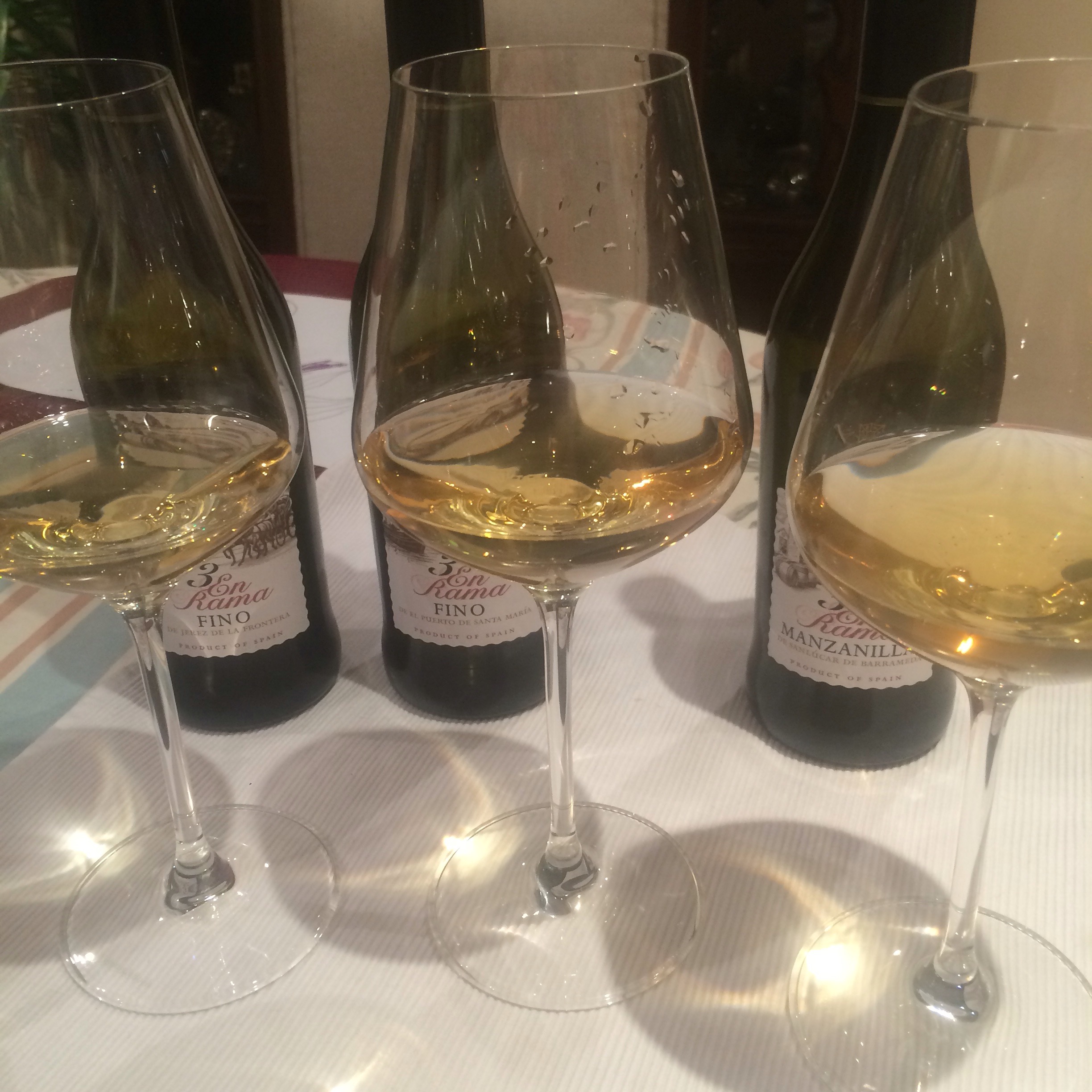
I thought it would be worth hanging on to see how these three wines reacted to a few days after opening and as you can even see from the photo above (with the Jerez de la Frontera left, Puerto de Santa Maria centre and the Manzanilla right) they have reacted in quite different ways to the experience.

First, the manzanilla which when fresh opened was crystal clear with a tinge of green is now cloudy and has taken on a shade of orange. I am not surprised it shows the most evolution – even after one day it had started to go – but it is quite a big difference. There is a definite tinny metalic aroma to it now and signs of age on the palate too. I actually had a glass on day 3 and think it might have been optimum then.

Next up the fino del Puerto de Santa Maria – originally my favourite and this has taken the week in its stride with comparative aplomb. It may be a shade darker but it is still crystal clear and the aromas seem to have gained in sweetness. Still really good.

Finally the fino de Jerez de la Frontera seems to be the least changed. Less discernible change in colour and it seems zesty and intense compared to the other two: a real zingy salinity to it and still that bitter citrus finish.

Nothing scientific about all this of course but I will make a mental note to not let manzanillas sit around too long – or maybe I will try and save a glass of the next couple to see if there is a pattern. As to the wines themselves, the fino del Puerto still seems to have a wider range of expression than the others, but all three are delicious.

3 en rama – day 2

all three.png

Always think it is interesting to see how these develop once open – if you don’t agree feel free to skate on, as they say.

One day on I would say all three wines have quietened down a little in terms of punch – they seem that little bit smoother – but they are still full of flavour.  The biggest change is in the manzanilla – today I am really struck by the smokey mineral finish to it, which I like very much. The fino del puerto – probably my favourite yesterday – hasn’t changed as much but has also come on a little. The fino de jerez is also a little more approachable (or am I just forewarned, expecting the big sensations of yesterday) but shows the same characteristics – a really nice fino with citrus edges.

Yet again, a great little collection – would love to know more about the source of the mosto, the age under flor, criaderas, sacas etc – will see what I can find out.

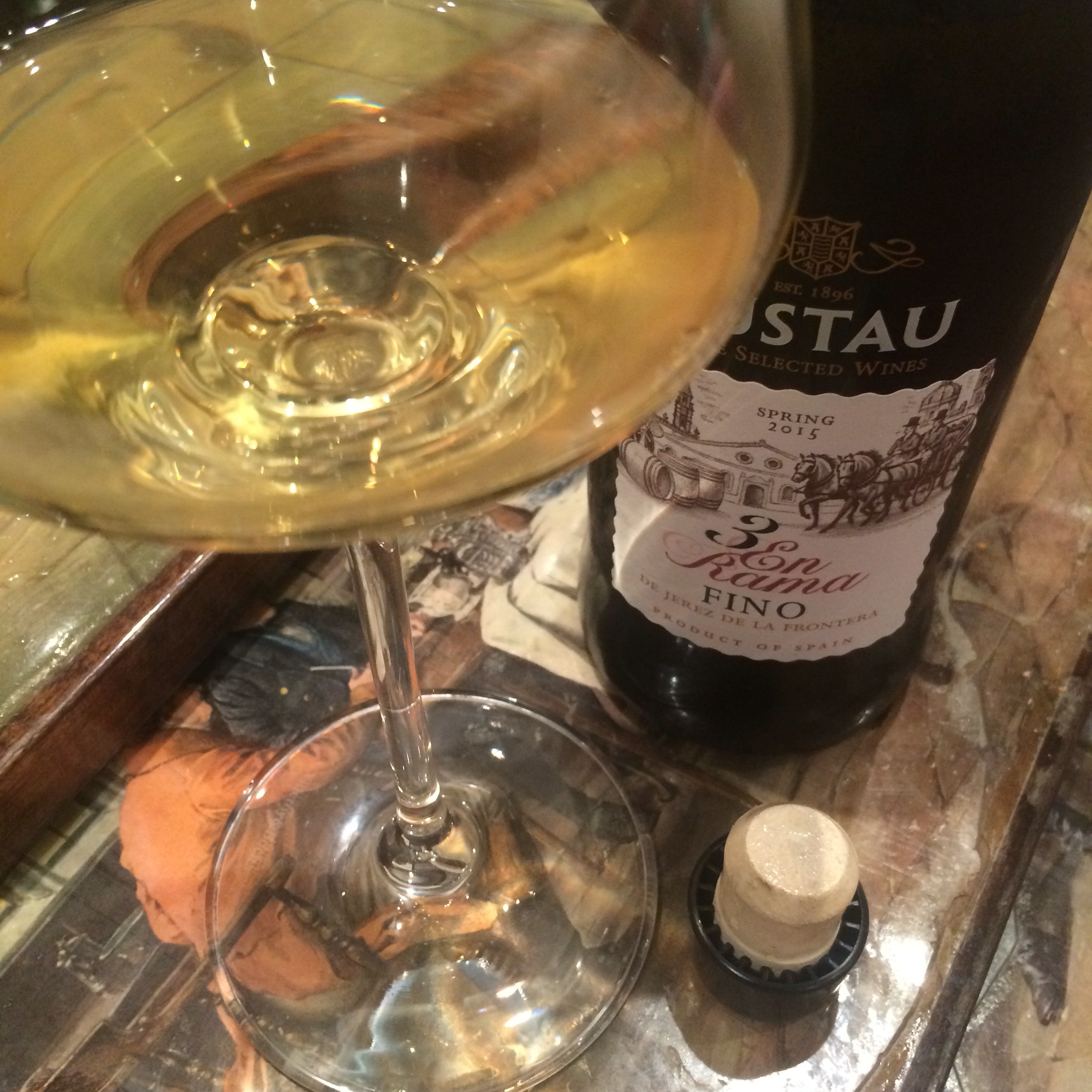
Fino 3 en rama de Jerez – spring 2015


Number 3 of the 3 en rama (after the manzanilla and the  fino de el Puerto) this one is a fino from a solera in Jerez de la Frontera itself.

The colour here again is an attractive gold – doesn’t seem to have the green or yellow tinges of its brethren. On the nose there is sea air, yeast, nuts and maybe a little citrus. Definitely more haybales here than green grass – really nice nose.

On the palate there is that mineral punch – you can really detect that these three wines are from the same maker – although in this wine the flavours are straightaway bitter almonds, and some citrus, which takes over so that the tail end of the flavour is more bitter citrus – a grapefruit like flavour (without the acidity).

Mineral, punchy, flavourful stuff – with those citrus and bitter flavours that are not quite my bag but this is proper fino, no doubt.

Fino Camborio

Due to a virus (microbial, not computer related) this is the first sherry I have had in a while and it is one I picked up yesterday in Chamartin market. The Fino Camborio, from Bodegas Juan Piñero (a winery where Ramiro Ibañez consults on the winemaking),  a brother to the Manzanilla Maruja and Manzanilla Pasada Maruja.  Like Maruja, it used to be a brand owned by Terry before being acquired and revived by the Piñero.

It has an interesting ficha (in fact, a great ficha – a lesson in transparency). The palomino is sourced from Macharnudo and Añina (I guess we are talking Pitijopos numbers 4 and 5 (wish I had another box)). The wine has been aged for 9-10 years in a solera with only three criaderas, with one saca per year. (The manzanilla Maruja, by comparison, is 8-9 years but from a solera with eight criaderas and 8-10 sacas each year.)

It has a nice light gold colour with maybe the merest touch of green but it has a really mineral nose – salty sea air and olive juice – a very spikey aroma indeed with just a little macadamia nut umami in the background. It is also piercing on the palate: really mineral, with zingy salinity and, again, green olive flavours. The salinity gives it a nice volume and there is again, just that hint of underlying umami, like very salty almonds. Long with the zingy olive flavours prevailing then fading.

Punchy stuff but I like it more and more.