Sudestada 

Sudestada is a brilliant spot – one of Madrid’s best pan-asiatic restaurants (and I mean pan-asiatic – tonight we had nems, samosas, tandoori and panueng, with the house caipirinhas).  It is also a real fun place for dinner – finger food, both hands food, dipping sauces – it is enjoyably messy at times – and a cracking list of cocktails. I hadn’t been for a couple of years and really can’t explain why: a testament to all Madrid’s great restaurants I suppose. 

I am even more surprised now to be honest because just look at that list of wines by the glass above. I think in any circumstances it is a fantastic list of wines from Jerez and Sanlucar, and not just any wines either: top class wines by Equipo Navazos. 15 not counting brandies – remarkable. Indeed the wine list is pretty excellent all round – not massive but some really well chosen wines. 

The wines of Jerez and Sanlucar work perfectly here too – the structured profile, body and punchiness of them is superb with the spices and fragrant leafy herbs that seem to cover all the plates. Tonight I had la Bota de Fino 54 and la Bota de Palo Cortado 52 – two classic, elegant creations and they were just ideal. Really excellent dinner in fact – won’t be years before I go back.
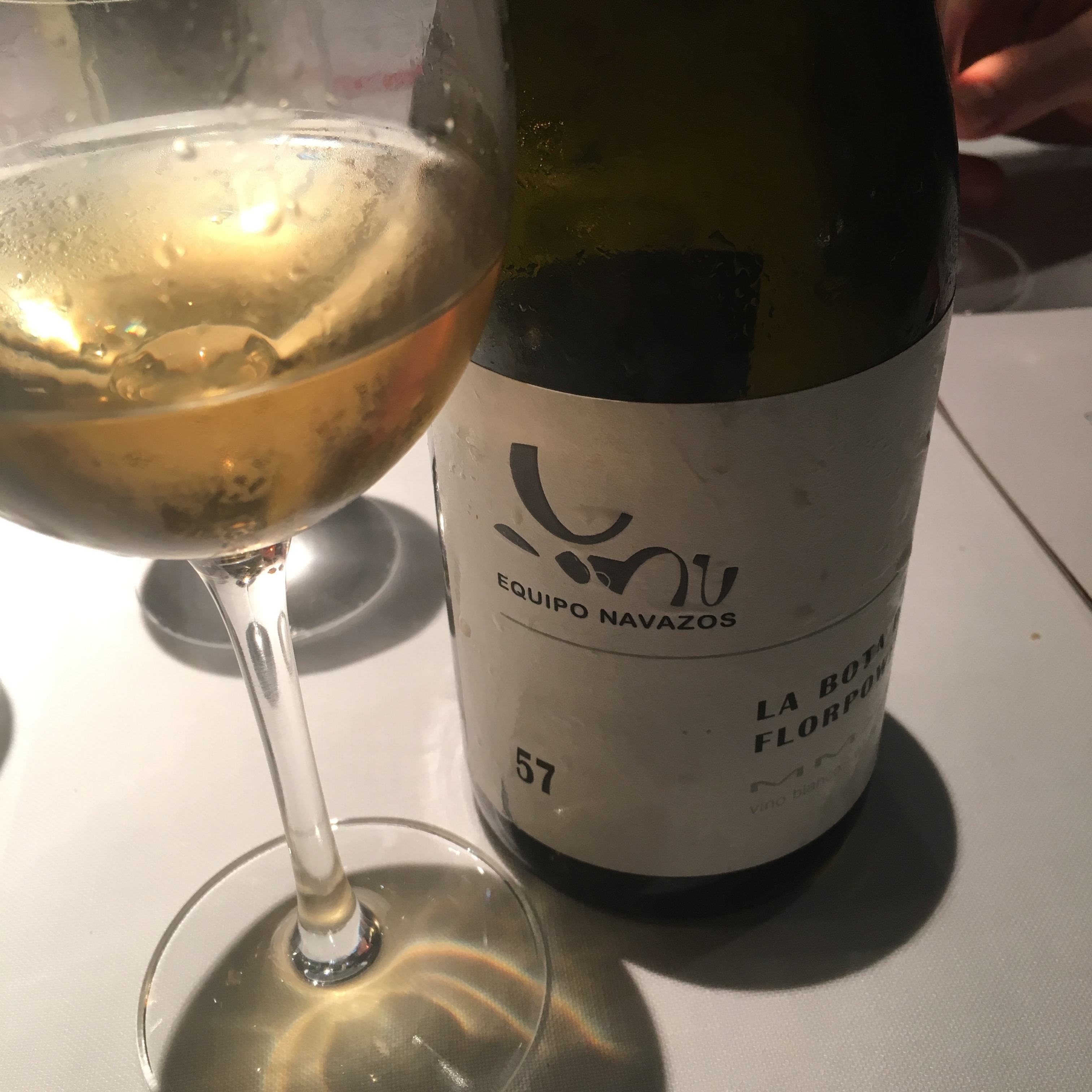
La Bota de Florpower 57 MMXII

This is another of the wines that has been languishing amongst the drafts since I had it – a good few weeks ago now. As you can see from the photo we had this at dinner and as such I don’t have very clear notes. Nevertheless, I have a pretty strong recollection of the basic facts.

Picture the scene. We are four enthusiasts in a place with an excellent wine list, but the sommelier is on holiday. We have had the waiters in all sorts of difficulty with our wine orders all dinner, and with a pretty meaty dish coming and none other than the Bota de Palo Cortado Nº34 listed – a perfect accompaniment you would say –  it was duly ordered. The unfortunate waiter then disappeared for a good few minutes and, having presumably searched fruitlessly high and low in the cellar, reappeared with a wine that, while it may be many things, is certainly not a palo cortado. In his defense, he did a great job of appearing unconcerned and giving the impression that all “Equipo Navazos” wines are more or less interchangeable.  Frankly it could have gone either way – you keep these lads waiting 10 minutes for a glass of wine at your peril, and bringing the wrong one after a wait like that is a risky strategy – but fortunately we were just consumed with mirth and had it anyway.

I am glad we did because it proved to be excellent. It was a little difficult at first: maybe it was a little cold and the profile came across as overbalanced with minerals or even oxidated. But even in the time it took us to finish (and there were four thirsty travellers involved so not long) it seemed to grow in stature and flavour, and by the end I finally began to see the comparison that gets made with the white burgundies – crisp, defined, solid flavours and a lovely finish . (This is in fact something I have noticed a couple of times with these palomino wines – they may just need a bit of time to breathe first up.)

One of the best palomino white wines I have had and these are definitely growing on me.


Fino de añada 2009, Williams Colección Añadas

These Williams Colección Añadas are really fascinating. These are “vintage” sherries that have been statically aged – the year’s mostos put in botas and left to get on with it rather than forming part of a solera. As a result there is a bigger scope for variation in the resulting wine due to the different characteristics of the fruit and mosto used and the formation and development of the flor in the botas, meaning a bigger variation in what comes out of the barrel compared to the solera wines. This is a case in point: it is so utterly different to the 2006 Vintage Fino and the Pando it is remarkable.

This one is from palomino from old vines (between 60 and 20 years of age) in albariza vineyards in Añina and Carrascal (Jerez) and has been statically ageing for seven years in botas of american oak of 500 and 600L before the saca in february of this year, classification as a fino and en rama bottling.

The first time I had this I didn’t really have the time to study it in detail but I am quite pleased with the tasting note I came up with. The colour is indeed evolved, it has a fruitful, sweet and oxidized or “sherryfied” nose. On the palate it is rich and full bodied – a sensation of glycerin- and a resulting impression of fruity sweetness. It is as if the flor hasn’t really got to work on this. Having said that you can still taste the minerals in the background – a sensation almost like a mineral red. Finally there is also a touch of age in the finish – as if it was already heading down the woody path.

(Due to agenda issues I am still working on the horizontal/vertical/diagonal of the full set that I picked up weeks ago from Coalla Gourmet – in the meantime I have picked up a few bottles from  Reserva y Cata in Madrid so at least have some bottles to keep me going. Kudos to both for stocking these fascinating wines.)


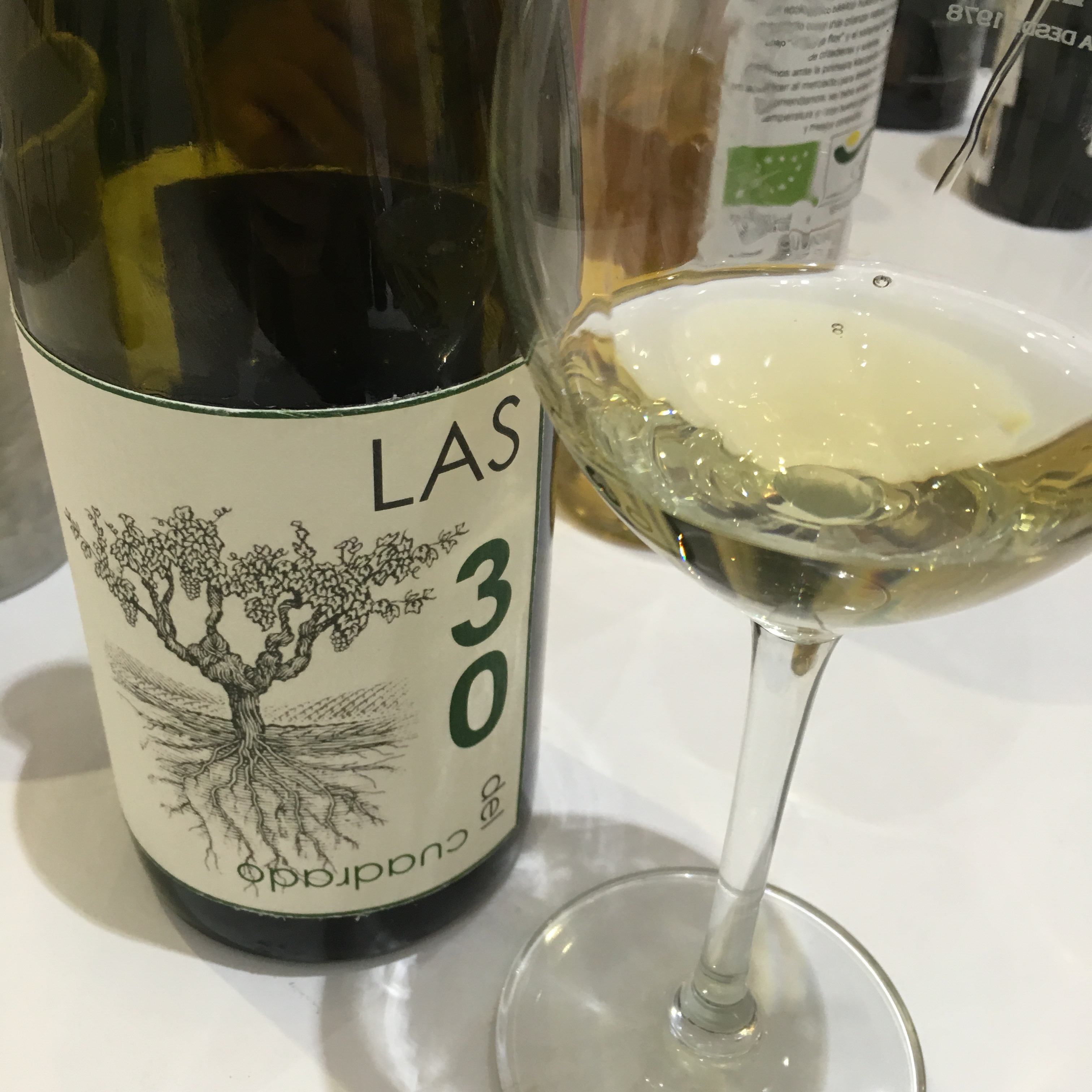
Las 30 del Cuadrado 2015

This morning I added a #palomino tag to the blog to make it easier to find the palomino table wines and in the process discovered that this note was still amongst the “drafts” (with a couple of other lost notes that will surface shortly).

It is a 100% palomino by Bodegas Hidalgo la Gitana and, to judge by the name, from a very special pago: el Cuadrado, which is either a pago by itself or at the Sanlucar end of the Pago de Balbaina, depending on your definition. Whatever it’s status, it is a famous and highly regarded plot of land: one of those names that make the guys down there, and the real experts in these wines, go slightly misty eyed. It is also one of the pagos that I have visited in person and had a chance to judge the lie of the land. (And incidentally, the pago responsible for one of the best wines I have come across so far.)

On the nose this has almonds and tropical fruit and, according to my notes, a hint of pizza herbs like oregano (I must have really liked it). On the palate it is fresh, easy to drink but with a nice body to it: those nuts and fruit again and just a little bit of herbal and calcium bite.

Nice structure and balance and a really promising wine.


Palomino fino en rama Tosca Cerrada

Was in Taberna Verdejo for a quick bite of lunch (some fantastic migas and an even better panna cotta) and bumped into a nice chap from the business who happened to be supping on this. I have actually had it before – the first time I had it blind in Surtopia – but I must admit that my curiosity was piqued by a recent review I had read and wanted to give it another look.

It is of course named after one of the major types of albariza and is “by” Delgado Zuleta and “for” Mario Rovira – an experimental catalan winemaker who is said to be experimenting with biological ageing of his own palomino at his bodega in el Bierzo in Northwest Spain (Akilia). This one is from Cadiz, however, and is an unfortified 100% palomino fino with seven months in manzanilla botas – of which three or four months are under flor. (As an aside, it strikes me that the label “palomino fino en rama”, containing as it does the words “fino en rama” could be considered a bit misleading.)

A shade darker than I remembered it – whereas I expected a more radiant green gold this seemed slightly darker. As with the first time I found it had plenty of fruit, calcium and herbs on the nose – if anything this time it seemed even more herbal-  but on the palante the fruit and herbs took over a little. Really meaty texture to it and maybe could do with just a touch more acidity.

Overall I found it a little bit heavy and lacking in structure, but no doubt that is tasty stuff.


In der sherrygarten

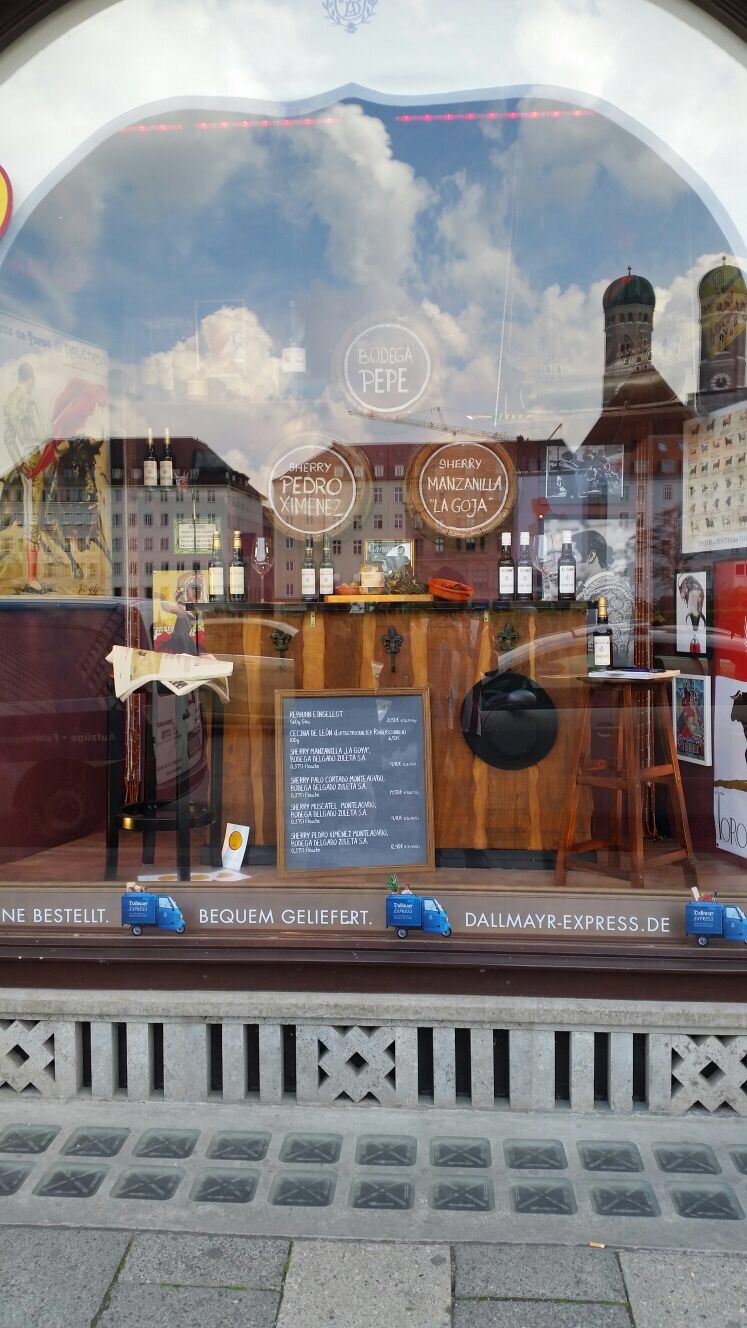
One of the lads was in Munich for the semifinal yesterday and sent this cracking picture of one of the windows in the historic Dallmayr store (est 1700) in the main square. Bit of cecina and manzanilla la Goya  – lovely.

If this was an attempt to sell sherries to the Atletico fans in town it was probably a little optimistic (but I am pretty sure it wasn’t).

The three last glasses

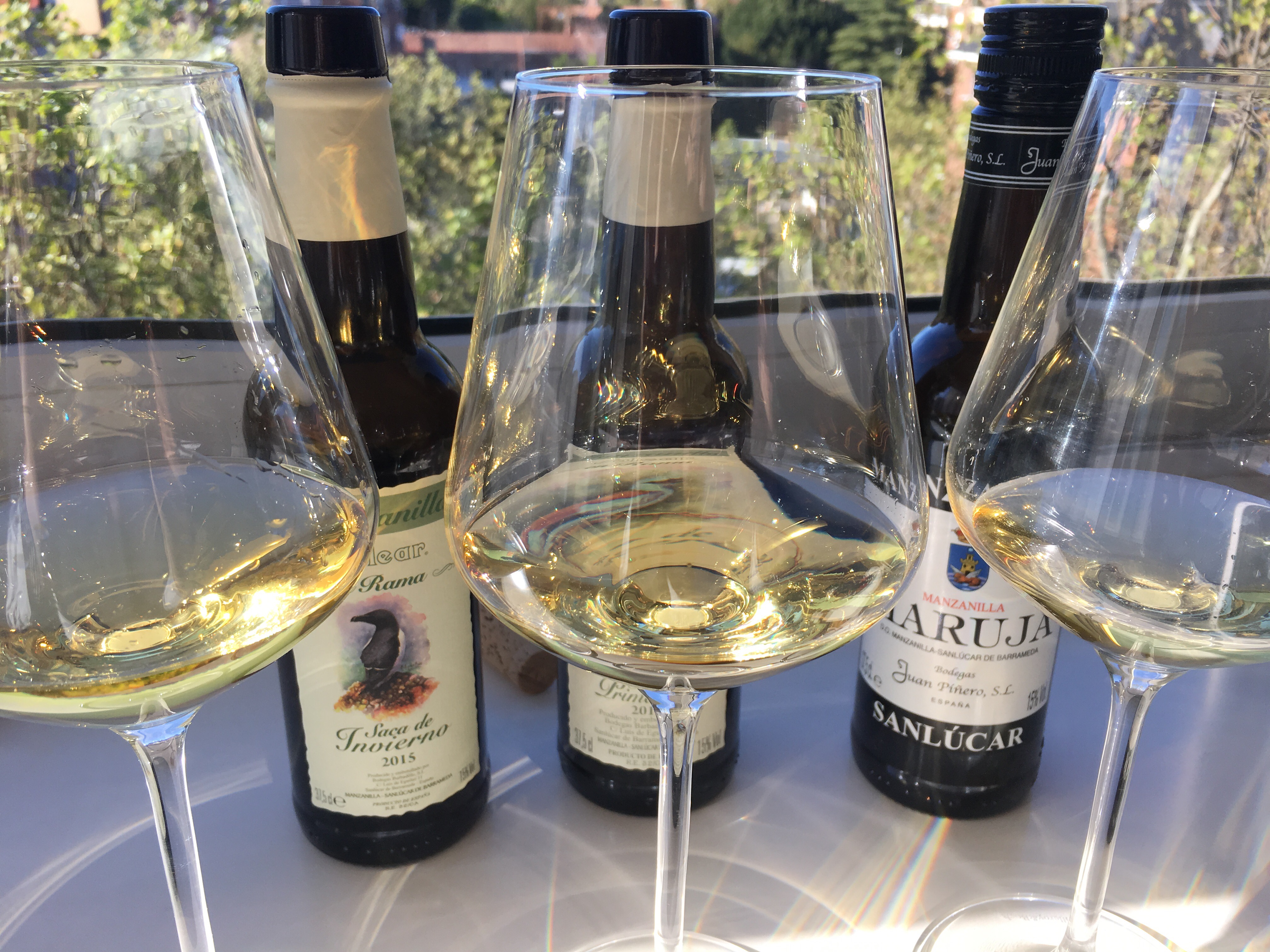
A moment of manzanilla nerdery here – had saved the last glass of these three (two from Monday and one from Yesterday) for a side by side and I am glad I did.

Clear contrast between the Maruja and Solear for a start – the Maruja has a sweeter fruit-like nose and palate while the Solear is much more herbal or vegetable – celery or spicey raddichio. Both have zingy minerals but the Maruja’s tend to creep up on you whereas the Solear’s are more in your face. Of these three I am actually tending towards the Maruja, to my slight surprise. 

As between the two sacas of Solear, questions may have been raised as to whether to taste different sacas but after nearly a week open the gap between these two seems to have opened – the Spring 2016 seems more zingy, saline to the point of acidity, compared to the merely feisty Winter 2015. The Winter, on the other hand, seems to show more of those vegetable flavours. Then right at the last the spring shows a bit more hay bales and becomes more diffuse while the Winter stays more compact. I actually like the haybales – wish I hadn’t finished the Maruja already but I can’t compare!

Or it could all be confirmation bias – anyway it is an excuse to have a glass of three lovely wines and call it science.