Manzanilla La Guita en rama, Octubre 2015

Have been meaning to have another crack at this since a memorable dinner with its maker, Eduardo Ojeda, a little while ago in Lavinia. Although I had really enjoyed it last January and again in March, for one reason or another I hadn’t come across it for ages until that dinner.

It is a wine with a lot of personality, no doubt. A rich brass colour and a very aromatic nose of citrus, minerals (rusty metal), nuts, chamomile and herbs, then again on the palate fresh, sweet seeming citrus to baked citrus, a zesty orange sponge kind of flavour, almonds to roast almonds, and sweet herbs, and the citrus lasts a long time giving a really pleasant, sweet feel to the finish.

An excellent wine. I can’t wait for this year’s saca.


Fino Williams Colección Añadas 2009 – Saca de February 2017

They are back, the Williams Coleccion Añadas by Williams & Humbert, probably the leading champions of añada wines in el marco. Here by the glass (or two) at Territorio Era.

And this new saca is even more like the old one – maybe even better. The gorgeous colour, the sweet hazelnut nose and the sweet/salty combination in the palate – incredible hazelnut sweetness tempered with a mineral saltiness – and a zingy finish,  which again leaves a long nutty sweetness in its wake.

Not comparable to other finos, or even amontillados, that I can think of (except the ones in its own family of course). A unique wine and a fantastic advert for finos de añada.

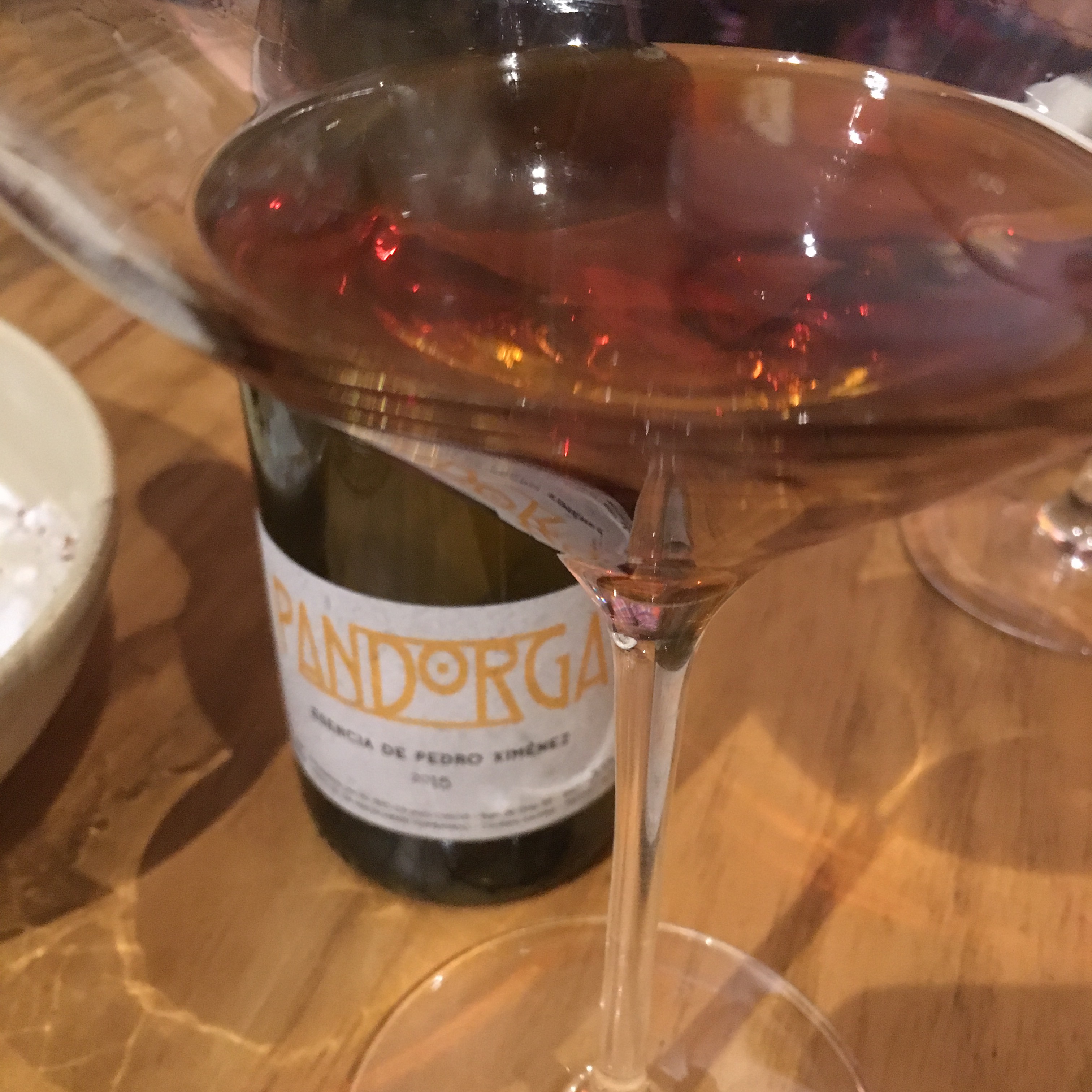
Pandorga 2015 – Essencia de Pedro Ximenez

Here is a wine you won’t see much of, if indeed it is a wine. 

It is the second edition of Ramiro Ibañez’s Pandorga pedro ximenez and, like the first, seeks to express the characteristics of the fruit and the añada – a young wine fermented in bota and no attempt to “correct” the effects of the growing season on the fruit. In most cases of industrial production a cool drying season might be corrected by more days of asoleo and fermentation at higher temperature, and a hot season with fewer days and more controlled temperatures. Ramiro’s approach is pro-cyclical: the effects of the cooler 2014 season given very little asoleo and accentuated by the naturally lower temperatures of fermentation. By comparison the hotter 2015 growing season meant more asoleo and a warmer fermentation. The result is an extraordinary, a tiny amount (and thus sold in tiny bottles) of nectar with 520g/l of sugar and only 5% alcohol – too little to allow it to be labelled wine. 

And if the 2014 was apricot jam this is fresh, ripe apricot juice. Just a touch of acidity to keep it honest, but the words that spring to mind are along the lines of ambrosia, nectar, sherbet and similar. 

Really an exceptional thing. I have my own tiny bottle at home, but we enjoyed this at the end of a sensational dinner at Angelita. (And what other restaurant can offer you wines as rare and unique as this?) 

Manzanilla de añada 2012 – 2/11 – May 2016

The visit of some good friends gave me an excuse to open this special manzanilla and see how it was getting on in the bottle after nearly a year. It is a vintage or “de añada” manzanilla from palomino fino harvested in 2012, fermented and fortified to around 15% and set aside for “static ageing” in individual botas instead of in a solera. There were 11 botas in total and this is the second bota to be bottled (hence the 2/11), on this occasion with around three and a half years under flor.

It is a lovely crystal clear gold colour with just a hint of green to it – exuding fresh green apple, and it did indeed have a sweetness to the nose and at the beginning of the palate, but more like the slight sweetness of fresh almonds, but then some spicey and bitter grapefruit notes that I associate with the time in the bottle (at least I don’t remember it quite as bitter). An exuberantly zingy mouthful and also quite full bodied, maybe even a touch heavy at the back end.

My feeling, looking back at my notes from July, October and November last year is that I enjoyed it a little more back then, particularly in November, and that this may be a touch quieter even only four months later. Unfortunately only two bottles left and one is being saved for the great vertical of 2026, but if I happen upon a stash in the next few months I may need to have another dip.


Las 30 del Cuadrado 2015

This is not an easy wine to get hold of by any means, so it was a small thrill to see it on the wine list at Surtopia, still for me Madrid’s supreme temple to all things Sanlucar.

The only other time I had tried it before it was still a prototype just over a year ago, and that time in the bottle has really helped it come along.  Almonds and sweet herbs on the nose and the dry/sweet flavours of almond and herbs on the palate too. Mineral and saline with those tasty mountain herbs and a fresh finish. After a little while open the aromatics and flavours grow a little more intense and become almost stewy.

A really nice balance of subtle fruit and savoury. I can’t help seeing these wines as evidence in the argument about the qualities of palomino and its ability to make quality white wine. This one certainly shows that it can.


CGWF17: Part 4 – the Barajuelas 

I have written about these wines before but would never miss the opportunity to have another dig, so when I heard the capsule coming off from across the room – even early doors – my feet seemed to move by themselves.

First the Fino 2013, a wine with a massive range from low to high, with a yeasty fruity nose, big intense concentrated fruit, sharp, deep salinity and a crisp finish. A fruit full fino, or a superpotent white wine with added mineral kick. Absolute belter whatever you call it.

Second, the as yet unreleased Oloroso 2013 – here the minerals are turned down a touch but if the fino was full bodied this is immense. That oxidation is still getting to grips with the wine – not caramel juice here just concentrated fruit with a bit of burn to it. Above all there is an impression of solidity about this wine. Love it and hope it will be released soon.

Not a bad breakfast by any standards. 

CGWF17: Part 1 – Mayeteria Sanluqueña

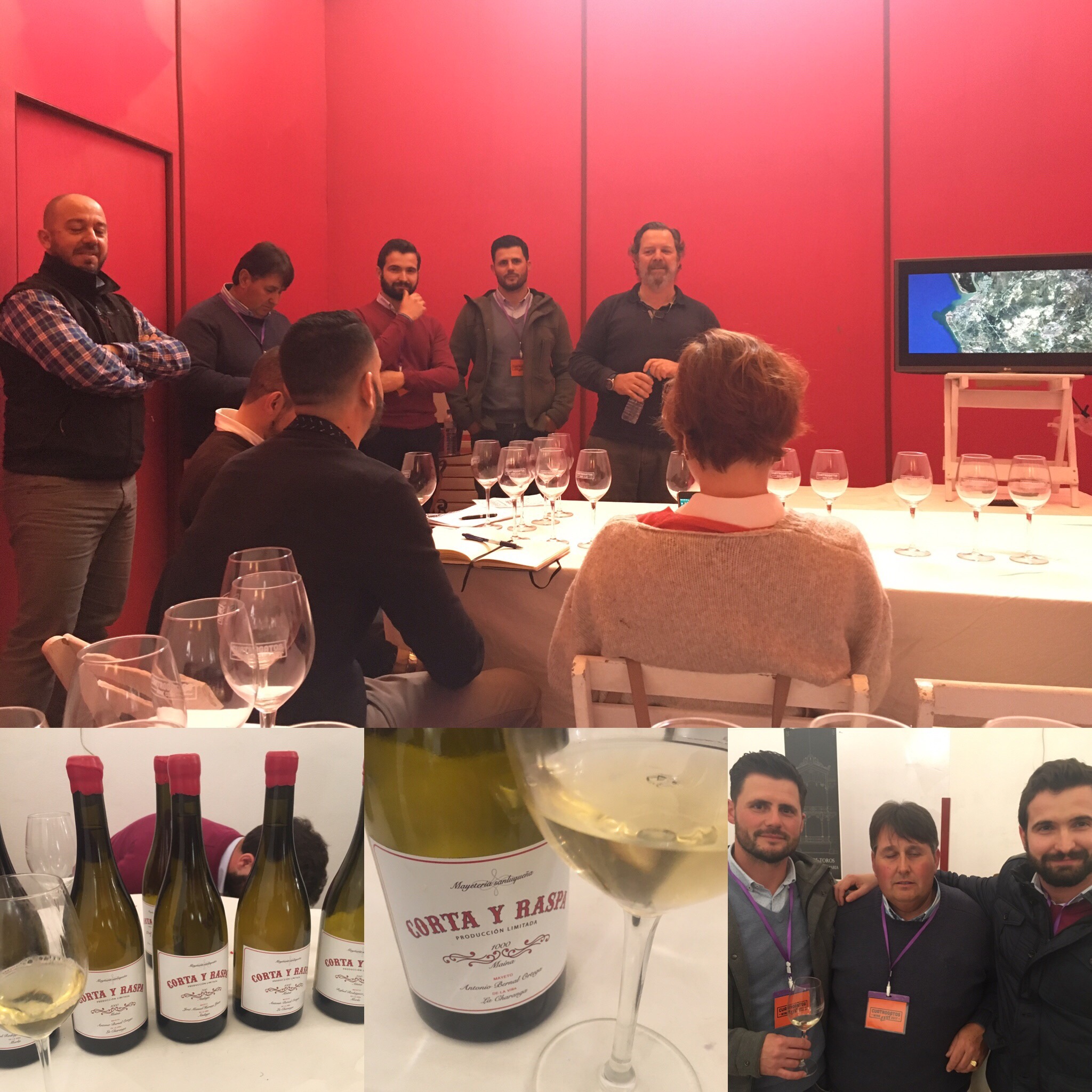
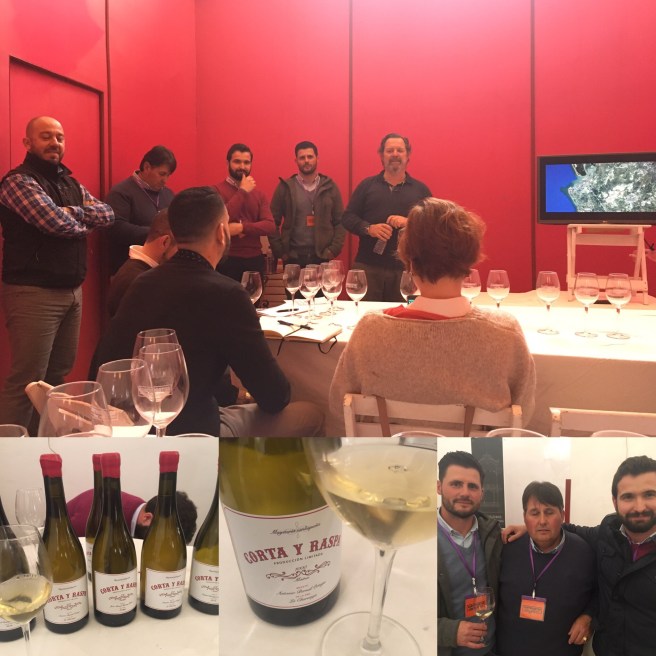
The Cuatrogatos Wine Fest was an absolute blast and there were fantastic wines everywhere you looked, but for me the highlight of the day was the unveiling of the “Mayeteria Sanluqueña”.

The project, the brainchild of Ramiro Ibañez, is aimed at encouraging and helping mayetos, or the small scale owner/growers who traditionally supply fruit to the cooperatives and other producers, to instead make and sell their own quality wines. The wines are vineyard specific from low yield (<7,000kg/ha), hand-harvested fruit and are fermented in bota, but otherwise the mayetos have a free hand to experiment and try and coax the best they can out of their vines, some of which have been in the family for generations.  Today we met the first wave – three guys who brought along four wines – but they are just the start, with other mayetos experimenting and working on their own wines up and down el marco.

As my half-dozen regular readers will know, I believe that this is exactly what el marco needs to do. There was a pretty vehement debate on Saturday afternoon amongst some big names on the role the vineyard and the vine should play in the future of Jerez but for me there is no doubt: the vines and vineyards of el Marco are capable of producing white wines of a quality and expression comparable to any great region worldwide, and seeking out and making those wines – and charting out the vineyards that make them – is surely the best way for el marco to get back to the top table.

And these wines were a further confirmation of the potential of the region:

  • Atalaya – by Jose Manuel “Manu” Harana Yuste – had a punchy nose of iodine and salty sea air (and a touch of reduction to start, although it improved a lot after 30 minutes or so) and a similarly direct and mineral profile on the palate, with a touch of steel, slightly stewy bitter almond flavours and a seashell finish
  • La Morla (Pago de Añina) – by Rafael Rodriguez Jiménez – was a totally different proposition. While the Atalaya was all coastal minerals the Añina was a delight on the nose, like a Cotes du Jura with ripe apple and pastry, and a nice concentration first up on the palate
  • La Charanga (Pago de Maina) – by Antonio Bernal Ortega – was probably the best of the lot, with a sea-air, almond and apple pie nose and a fantastic shape to it, with mineral zing to the start, a long finish and a big flavour profile in between – slightly more concentrated fruit and a hint of vegetable and peppery spice.

We were also given a sneak preview of two other wines – from Miraflores and Macharnudo – and later in the day I also had a chance to try another Añina wine by Rafael Rodriguez Jimenez. In fact it was one of those dream days when I was also able to have a dip into UBE 2014, a diatomic bomb “UBE Maína 2016” and another look at the three vineyard specific wines by Callejuela. Nearly a dozen palomino wines that were anything but the neutral, dowdy solera fodder that we have been brought up to expect: these were fantastic, quality and unique wines, and although it has been pointed out to me that I usually use “interesting” to describe wines I don’t like that much, these were interesting in a very good way.

I appreciate that the opportunity I had yesterday was special, but if you get the chance to try even some of these wines then you should grab it with both hands.


Los Pagos de Callejuela Vinos

A real treat today courtesy of the guys at Montenegro at whose brilliant event I met, at long last, the Blanco brothers from Callejuela Vinos and was given a sneak peek at their latest project – three pago specific young palomino wines.  

The wines are from Callejuela (Sanlucar, by the Guadalquivir), Añina and Macharnudo and really expressed those origins, with a clear step in structure and body from wine to wine. With only six months in bota they were fresh and aromatic and frankly very promising indeed. 

Three wines to look out for – there was talk of them being released in May. 

Viña Matalian vs Socaire, 2014 

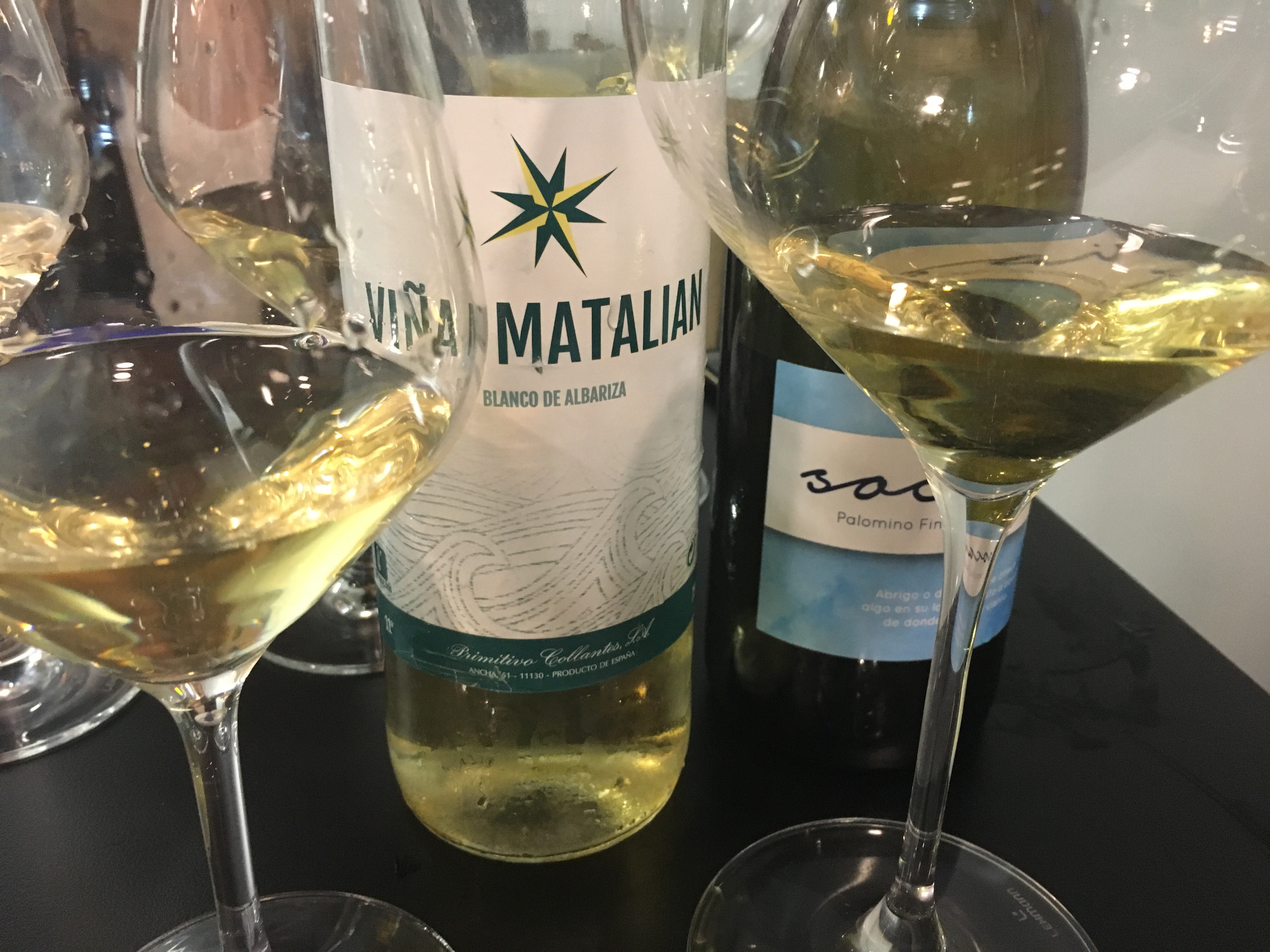
A nice little demonstration of what wine making choices are all about. The same fruit (palomino fino), parcel of land (Finca Matalian, near Chiclana), vintage (2014) and producer (Primitivo Collantes) but two utterly distinct wines.

The Viña Matalian was fermented in temperature controlled inox and as far as I know hasn’t had any barrel and what you get is a very quiet, refined and refreshing little wine. Very pale in colour it has a sweet almond and herb (rosemary) nose, and then a dryer, more mineral almond palate with just a hint of chalky texture. What really stood out about it for me (although to be honest I went looking for it) is how soft and smooth it was – no edges at all. Nothing spectacular but a very pleasant tipple.

By comparison the Socaire comes across as a bit of a beast. Unlike the Viña Matalian it has been barrel fermented without any temperature control, and has then spent two years in a bota – and not just any bota, but a bota that had previously held fino. The result has a more pronounced gold colour and a pungent nose that is lush by comparison, with over-ripe fruit on top of the almonds and herbs. It also has a chalky touch but there is a more pronounced bite to the minerals, and in comparison to its more refined twin it has a big personality on the palate too – far tastier for that time in the barrel.

Fascinating stuff – and brilliant with the superb tomato salad at Territorio ERA.