CGWF17: Part 2 – Zerej Volume II 

There is a lot to like about Armando Guerra’s Zerej releases, of which this is the second.

The first volume would be a few years ago now and was something of a pioneer: a boxed set of four magnums of wines for with different amounts of biological ageing, accompanied by an explanatory booklet. The idea is for a group of friends to hammer their way through the four magnums and the booklet and by so doing learn about the miracle of the flor. I never tried it but would have loved it – and the format (in particular the magnums) is dead right.

The second volume is the oxidative ageing version and now Armando Guerra has the full might of Barbadillo behind him, so your box includes magnums of a white wine (in the style of Mirabras), an amontillado (think Principe de Barbadillo), an oloroso (the classic Cuco) and a stately old palo cortado (Obispo Gascon). This time around I did get the chance to try them, although not without some difficulty: on the day the man was absolutely mobbed as the locals piled in.

They are classic wines, full of the spikey character I associate with Barbadillo. Really interesting too to be able to taste the spicey, vegetable white wine and see the evolution in that character. They also undoubtedly serve their educational purpose – particularly if you had the discipline to wade through the accompanying literature – although for my money more an illustration of classic styles than the effects purely of oxidative ageing (I wouldn’t mind seeing the same wine with six, twelve and eighteen years of oxidation, say).

Not sure how many of these sets there are, but given Barbadillo’s distribution muscle there must be a chance of this being available internationally. I certainly hope so – there are too few opportunities to sit down with four magnums of sherry and a few mates!

Blanquito, La Casilla and El Cerro

For me today’s Feria started and finished at the stand of Callejuela Vinos – but whereas I started with their newest, as yet unreleased project I had to finish with these old beauties.

I utterly failed to take note of saca dates and any other kind of technical detail but the wines were as class as I remembered: the sharp, roast apple and salt and pepper Blanquito; the sleek, bitter-dry caramel Casilla; and the most elegant of olorosos – fine at both ends and nutty and juicy in the middle – El Cerro.

Fantastic to try them again – and to try them together too.

Primitivo Collantes in Enoteca Barolo

Primitivo Collantes is one of the true unsung heroes of the so called sherry revolution. He and his wines are from the Southernmost tip of el marco in Chiclana – outside the traditional centres of Jerez, Sanlucar and el Puerto – but the wines are as good as any that you will find from El Marco and on Monday Primitivo himself gave a masterclass on the new wine making in the region to a packed house in Enoteca Barolo.

A really excellent tasting in fact. As you can see above, we had explanations of the geography and climate, sobretablas from different soils, samples of the soils themselves (including from the famous Finca Matalian), wines of different styles and at different stages of ageing, explanations of the major choices made in making the wines and some really neat nuggets of technical wisdom.

Most importantly, the wines were cracking – Socaire, the Arroyuelo Fino en Rama and Amontillado Fossi you may have already heard of, but we also had the chance to try a Socaire with a touch of oxidation from an additional 8 months ageing and a frankly beautiful, elegant, light and spritely fifty year old moscatel.

As always, will take me sometime to write up my notes – for the time being my congratulations to Enoteca Barolo and the man himself. Bravo!


El Amontillado Olvidado 1/5 to the rescue

A fella is suffering here – an inflamed nasal passage (sinusitis like but less runny) and a pounding head and the certain knowledge that tomorrow will be even worse. 

But this is just the job. Deceptively golden amber in colour, real walnut polish on the nose and the bags of flavour and punch on the palate. Top class, sizzling finish – real spice and bite. 

My symptoms are the same but the mood is substantially improved! 

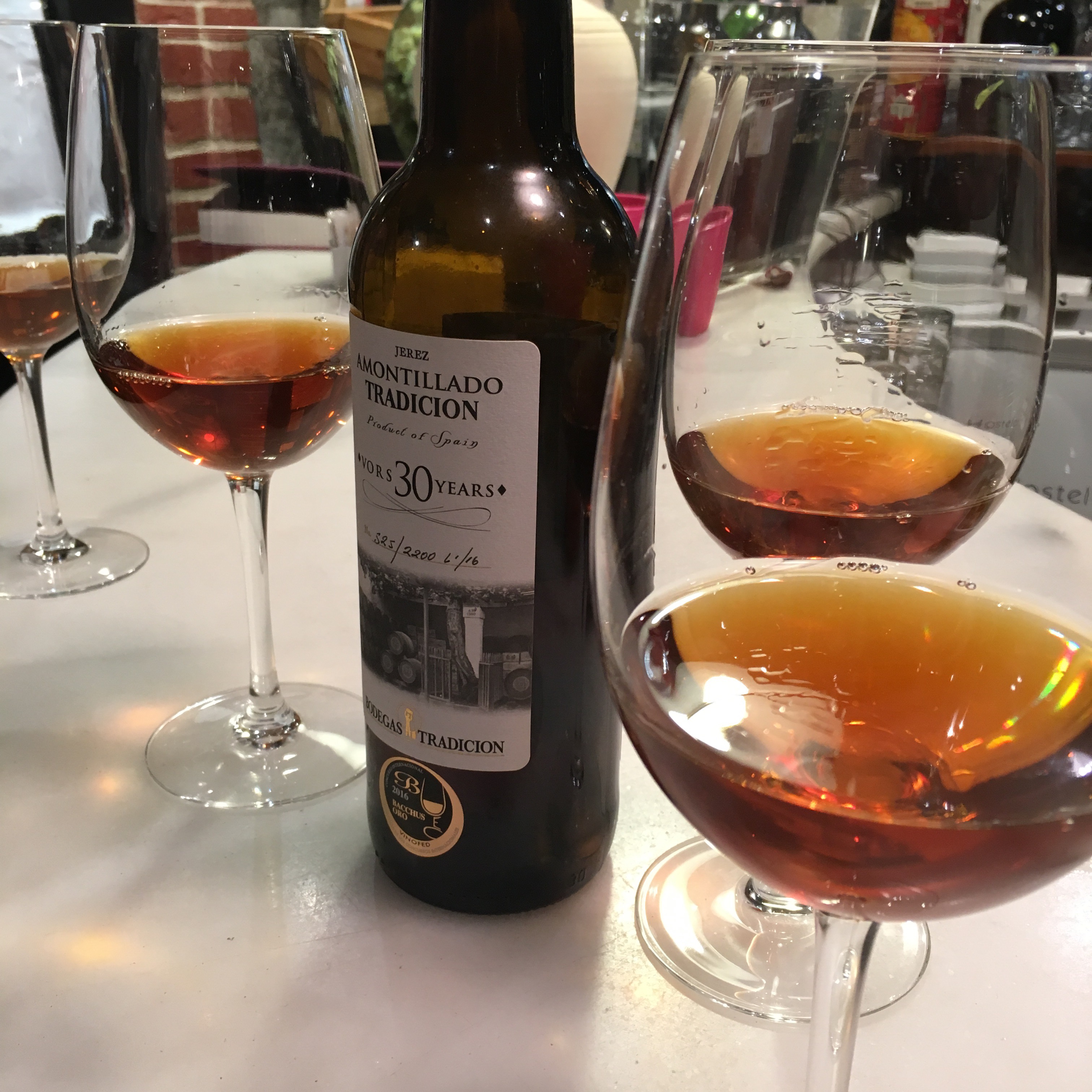
Amontillado Tradición 

No more than a quick snifter last night at Taberna Palo Cortado but there is always time for a classic wine like this. Potent but one of the most beautifully elegant wines around. A quick search reveals that I have not posted about this wine before, which is shockingly remiss of me. I can assure you there have been a few glasses over the last year or so –

Said to be of much more than 30 years old, it nevertheless has a finesse and balance that escapes many of the dinosaurs you find around. The nose is piercing but refined and brandy-like, and on the palate it is dry rather than bitter, sharp and crisp and with a zingy salinity that is integrated into the lovely nutty and fruity/figgy and spicey flavours. Above all there is none of the astringency or old barrel flavours you so often come across.

A thing of beauty and everything an old amontillado should be.

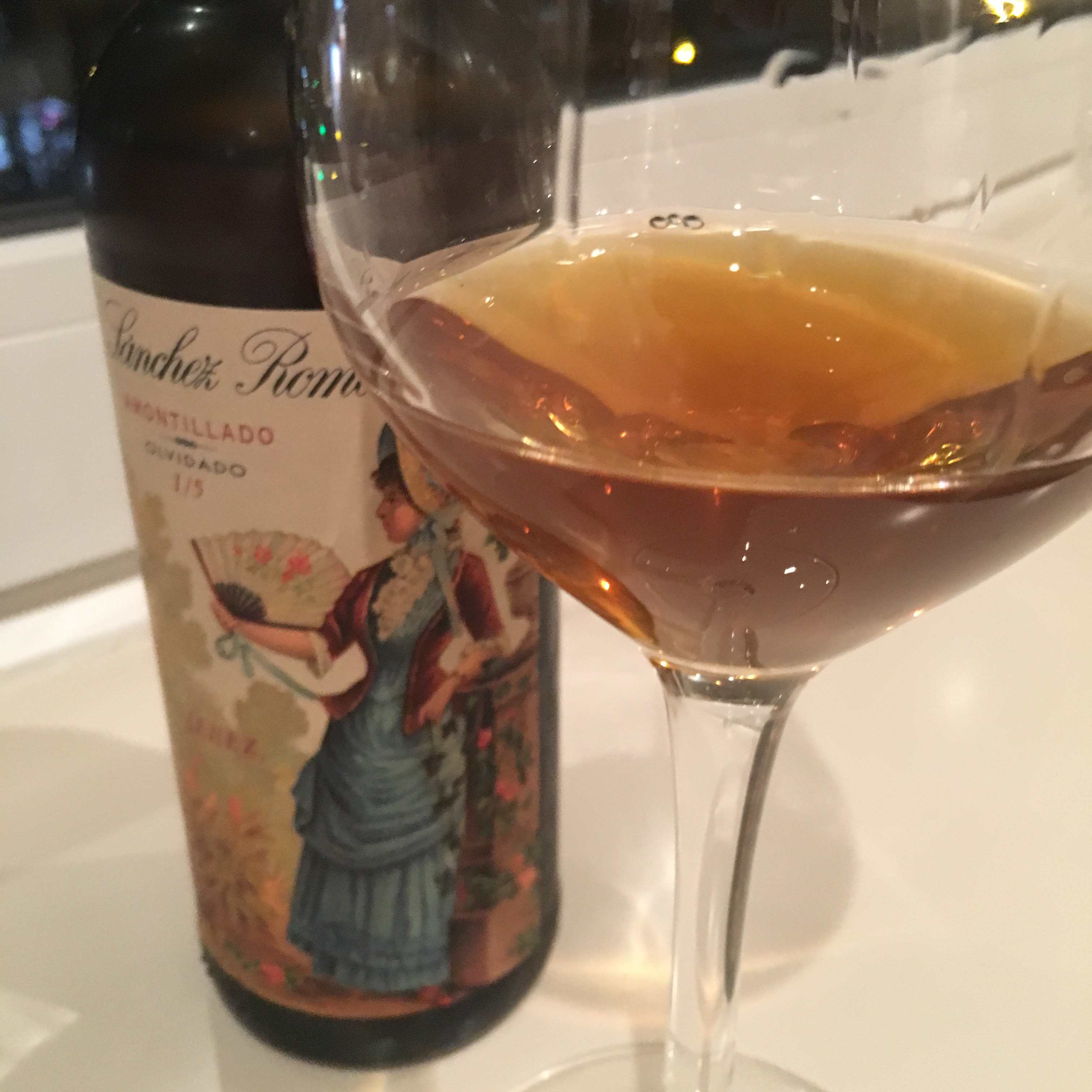
El Amontillado Olvidado 1/5

Have been curious about this wine for a while. By Sanchez Romate, the name is evocative – the “forgotten amontillado” – and I am a big fan of its nephew the “Fino Perdido“. I have also seen it on the Coalla Gourmet website a few times but nearly always sold out – more luck this time.

As the name indicates this was until recently “forgotten” in the cellars, reportedly for 25 years in 1000 litre toneles, and there is no doubt that despite its lightish brown shade it is a wine of real age and concentration. It has a pronounced, piercing nutty wood polish nose, then one of those sizzling mouthfuls – an entry of baked apple flavours then acidic bite and then mouthwatering salinity – a bitter wood and burnt walnut finish. But a lot of sizzle  – the tongue is cooking away for ages after it is gone. 

Worth the wait – quite a little handful and another top class wine. 

Amontillado Muy Viejo Don Paco 

After a week of relative sobriety the wheel nuts are unwinding pretty fast. The magnificent old Sanlucar palo cortado (pictured on the left) that I just had a generous glass of put me in mind of this old, old Sanlucar amontillado that I first tried in Surtopia this year and I couldn’t resist. As I mentioned back then it is a single pago  wine – fruit sourced from Pago Balbaina (Viña las Cañas) it would have spent some several years under flor and is a total of around 50 to 60 years old.

In age and concentration we are comparing very similar animals and as you can see there isn’t much in it in colour terms (although the Gaspar Florido wine possibly has a touch more brilliance). On the nose the Don Paco has that salty sea air and really does have the “full ozone”, with maybe just a hint of spices to it. (The comparison may exaggerate the difference, but it doesn’t have as much “extra” as the palo cortado.)

On the palate it is salty and direct – salinity that goes beyond zingy to stingy – and then there are roasted, almost burn nut flavours and just a touch of sweet, winelike flavour from somewhere. It is long and dry, and the flavours that stay with you are the ozone, the iodine and maybe sweet cedar wood or cigar tobacco.

Absolutely cracking wine.

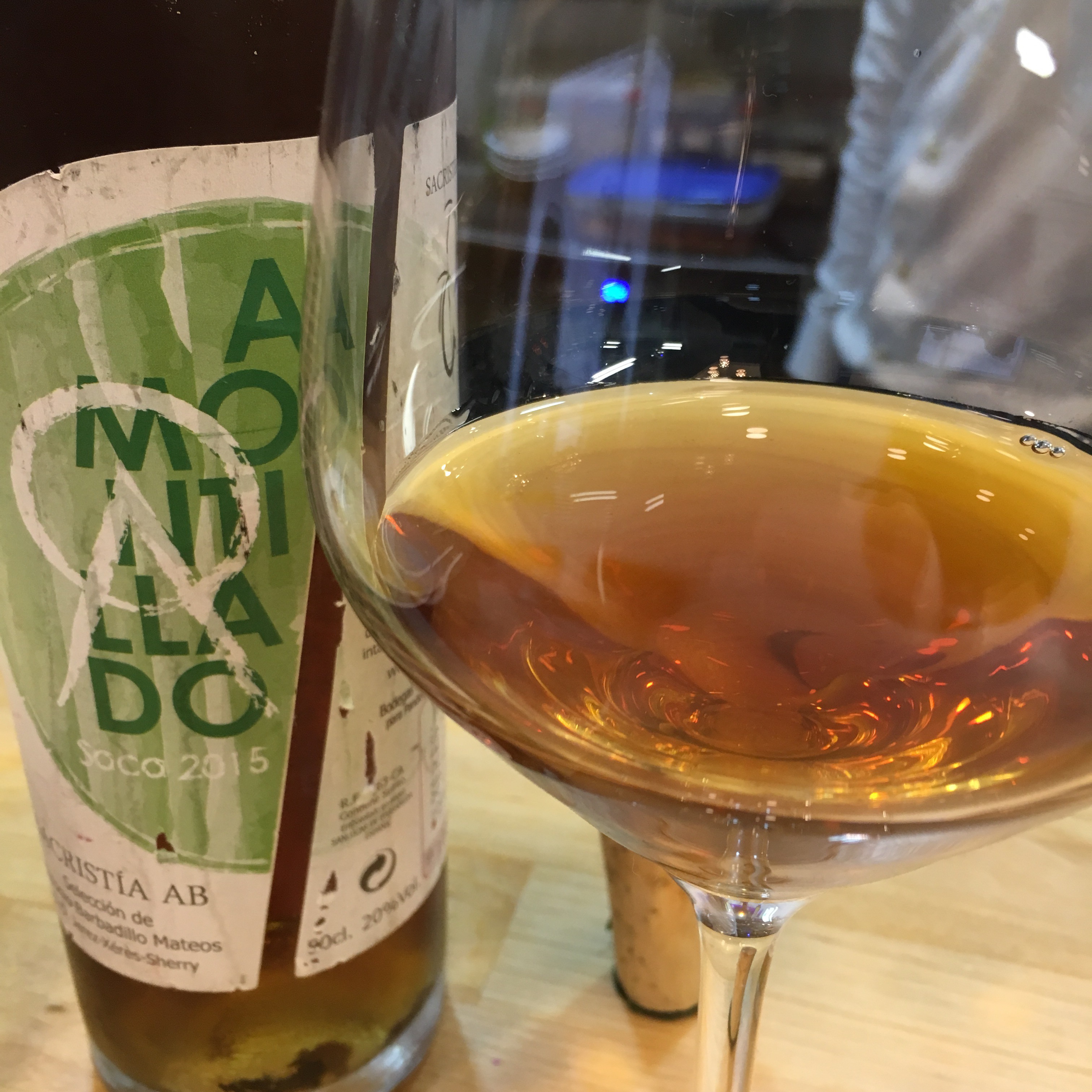
Amontillado Sacristia AB 

Another of these special bottlings by Antonio Barbadillo – one of the most entertaining and knowledgeable blokes you could hope to meet. I bumped into him yesterday, that gave me a hankering to try one of these wines again and, as luck would have it, they happen to have this bottle in Territorio Era.

These releases are all elegant and flavourful in my experience – and this is an absolute beauty. A gold amber/chestnut in colour, with salty caramel on the nose and salinity and acidity on the tongue. A hint of gingery, dusty age at the finish.

Top class, and even better news is that 2016 is on the way …

Lustau biological wines in Taberna Palo Cortado

Finally getting around to writing up my notes – thumbs a blur across the iphone screen – of the fascinating tasting of Lustau biological wines at Taberna Palo Cortado last week. We got to try wines from all along the solera process – including the sobretabla and a wine from an intermediate criadera.

Anyway, here we go with my thoughts:

  • Sobretabla – one year old wine that has been fortified and will be used to refresh the La Jarana solera. As a wine you would find it alcoholic, rustic, unready and undefined, but it has personality alright – a really earthy, punchy little brawler. Whatever, I still appreciate the chance to try these whenever I can, because they can give you an appreciation of where the wines come from.
  • Fino Jarana – after the sobretabla you could really appreciate the fine quality of this and the work of the flor, of which it has had around four years. A very nice green apple and salty nose, and green apple on the palate too, with salinity giving it buzz and volume. A very decent young fino.
  • 1a criadera of los Arcos. This wine was not a successor to the last – from the first criadera of amontillado, but fed with manzanilla (I guess the Papirusa) rather than the Jarana. It had four years under flor and around two of traditional ageing. Like the sobretabla it was exuberant and a little unmade/undefined – fascinatingly so. Light in colour and slightly turbid, it had a slightly fuzzy, still pungent and salty nose with a little hazelnut to it. Again on the palate you noticed the salinity, which seemed to slightly overpower the nuttiness when it came.
  • Los Arcos itself is the real thing and showed some real benefit for its additional couple of years of traditional ageing (and of course finishing – whereas the previous wine was a bota sample this was a finished product). Four years under flor and four years traditional ageing this had greater clarity and sharpness. Refined hazel/apple or even tomato on the nose here – a sweet cherry tomato. Then a nice zingy bite on the palate and roasted nut flavours with a nice tasty finish.
  • Escuadrilla – now we come back to Jerez, and an amontillado with four years under flor (the Jarana) and a further eight years of traditional ageing. This was a cracking wine, crystal clear and a lovely chestnut colour, with a nose of hazelnut spread – really appetising nose. On the palate too it just seemed to have a bit more flavour and class than its predecessor – nice rich hazelnut and a long mouthwatering finish keeping the flavour going.
  • Amontillado VORS. It was followed by the senior amontillado of the range – a VORS (i.e., at least 30 years old in total). A rich red chestnut colour, again crystalline, this had a much more pronounced sawdust on the nose, then a palate that was more acidic first up, even dryer, concentrated flavour and then a very dry finish.

A really interesting group of wines and the kind of tasting that can be really instructive. I think my favourite was the Escuadrilla but there was no doubting the power and class of the VORS or the spriteliness of the Arcos. Excellent range of wines.

But there was more to come – a bottle of East India Solera was produced with the deserts, and although I am not in general a fan of creams and mediums this one struck me as most opportune and went down very nicely indeed.

And in fact there was even more to come because Abel Valdenebro, a genial chap and genius photographer, had brought along a lovely old Lustau amontillado from the 1960s, which was then followed by another couple of vintage bottles purchased by popular subscription (a whip around) from Paki’s fantastic collection, including a sublime Inocente that had been in the bottle at least forty years. (I rather cheekily asked Paki for a 2016 Inocente as a comparison and it was as stark a comparison as I can remember – will write on that anon.)

So many thanks once again to Carlos from Lustau and to Paki for a cracking evening, and to Abel and the other subscribers to the other wines. Top class all around.