3 en rama – day 2

all three.png

Always think it is interesting to see how these develop once open – if you don’t agree feel free to skate on, as they say.

One day on I would say all three wines have quietened down a little in terms of punch – they seem that little bit smoother – but they are still full of flavour.  The biggest change is in the manzanilla – today I am really struck by the smokey mineral finish to it, which I like very much. The fino del puerto – probably my favourite yesterday – hasn’t changed as much but has also come on a little. The fino de jerez is also a little more approachable (or am I just forewarned, expecting the big sensations of yesterday) but shows the same characteristics – a really nice fino with citrus edges.

Yet again, a great little collection – would love to know more about the source of the mosto, the age under flor, criaderas, sacas etc – will see what I can find out.

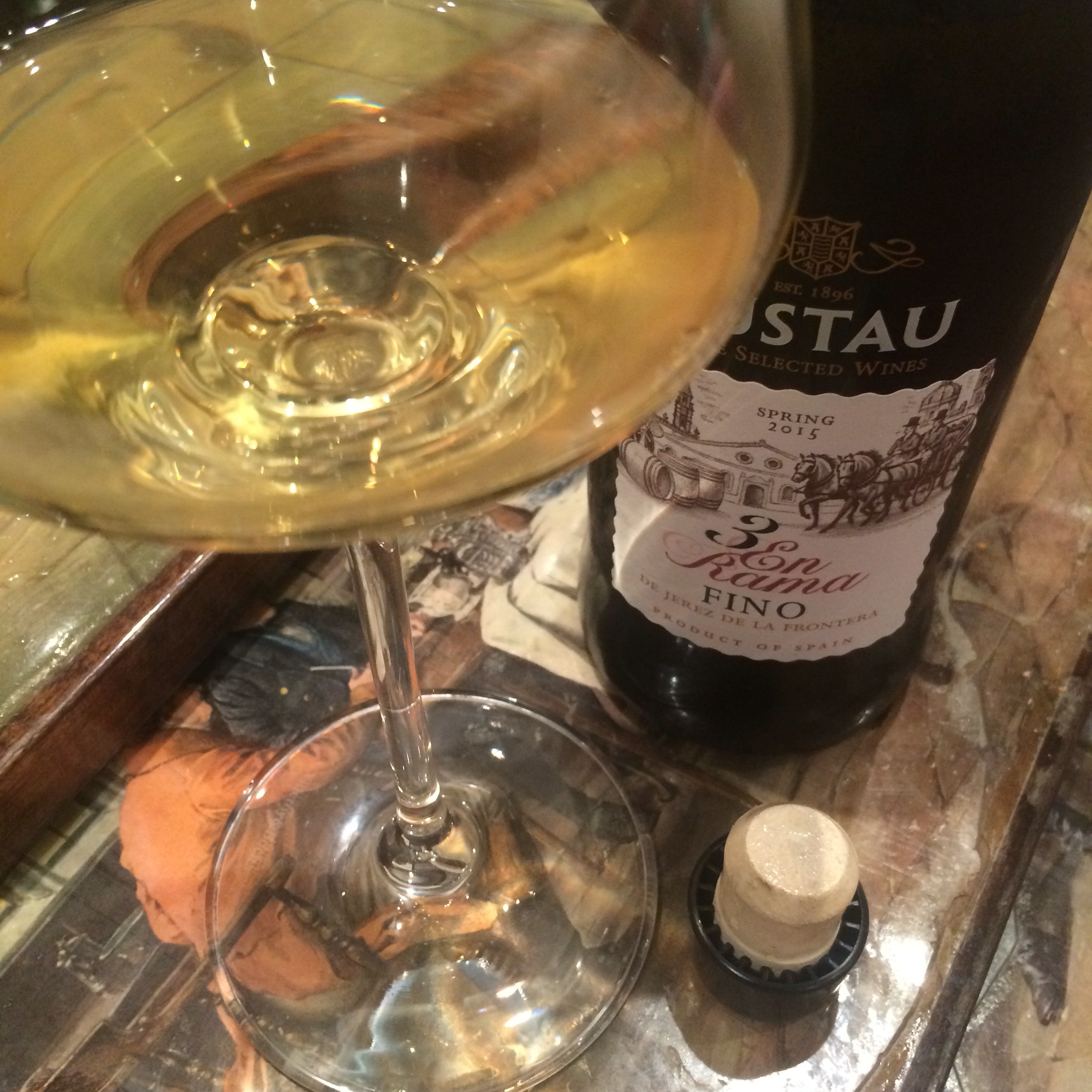
Fino 3 en rama de Jerez – spring 2015


Number 3 of the 3 en rama (after the manzanilla and the  fino de el Puerto) this one is a fino from a solera in Jerez de la Frontera itself.

The colour here again is an attractive gold – doesn’t seem to have the green or yellow tinges of its brethren. On the nose there is sea air, yeast, nuts and maybe a little citrus. Definitely more haybales here than green grass – really nice nose.

On the palate there is that mineral punch – you can really detect that these three wines are from the same maker – although in this wine the flavours are straightaway bitter almonds, and some citrus, which takes over so that the tail end of the flavour is more bitter citrus – a grapefruit like flavour (without the acidity).

Mineral, punchy, flavourful stuff – with those citrus and bitter flavours that are not quite my bag but this is proper fino, no doubt.

Fino 3 en rama de el Puerto – spring 2015 


Second of the 3 en rama of the evening is the fino en rama de el Puerto de Santamaria. (Not sure if this is the right order – although this is a seaside wine like the manzanilla, it is further away in km. In any event, here we go.)

Has a very similar colour – deep gold with that slight green tinge, maybe slightly more yellow. Has an even more expressive nose – again minerals but this one is more yeasty and has some creamy, almond like aromas.

On the palate there are more of those minerals – a salinity that is integrated at the outset but intense and zingy at the end. A nice yeasty mouthful with a little bit more nuttiness that the manzanilla. The salinity slightly overpowers the nuts and leaves you with a bitter almond (think biscotti) taste.

An even nicer bottle and right up my street.

Manzanilla 3 en rama – spring 2015  


I have been after these 3 en rama for a while – a set of a manzanilla (Sanlucar de Barremeda, obviously) and two finos (from Jerez and el Puerto de Santa Maria respectively) all en rama by Lustau and their star enologist, Manuel Lozano. He picked a very small number of botas for this bottling.  I picked them up this week and here we go.

First up is the manzanilla. It is a rich gold with a note of green. The nose is mineral, ozone/sea air, and a fresh, raw yeastiness – more bales of green grass than bales of hay.

It is full of flavour, again zingy minerals, nice salty water texture and a full mouthful of yeasty, herbal flavours. Minteral on the finish – a nice smokey finish in fact.

Very nice wine indeed. Good start to the evening.

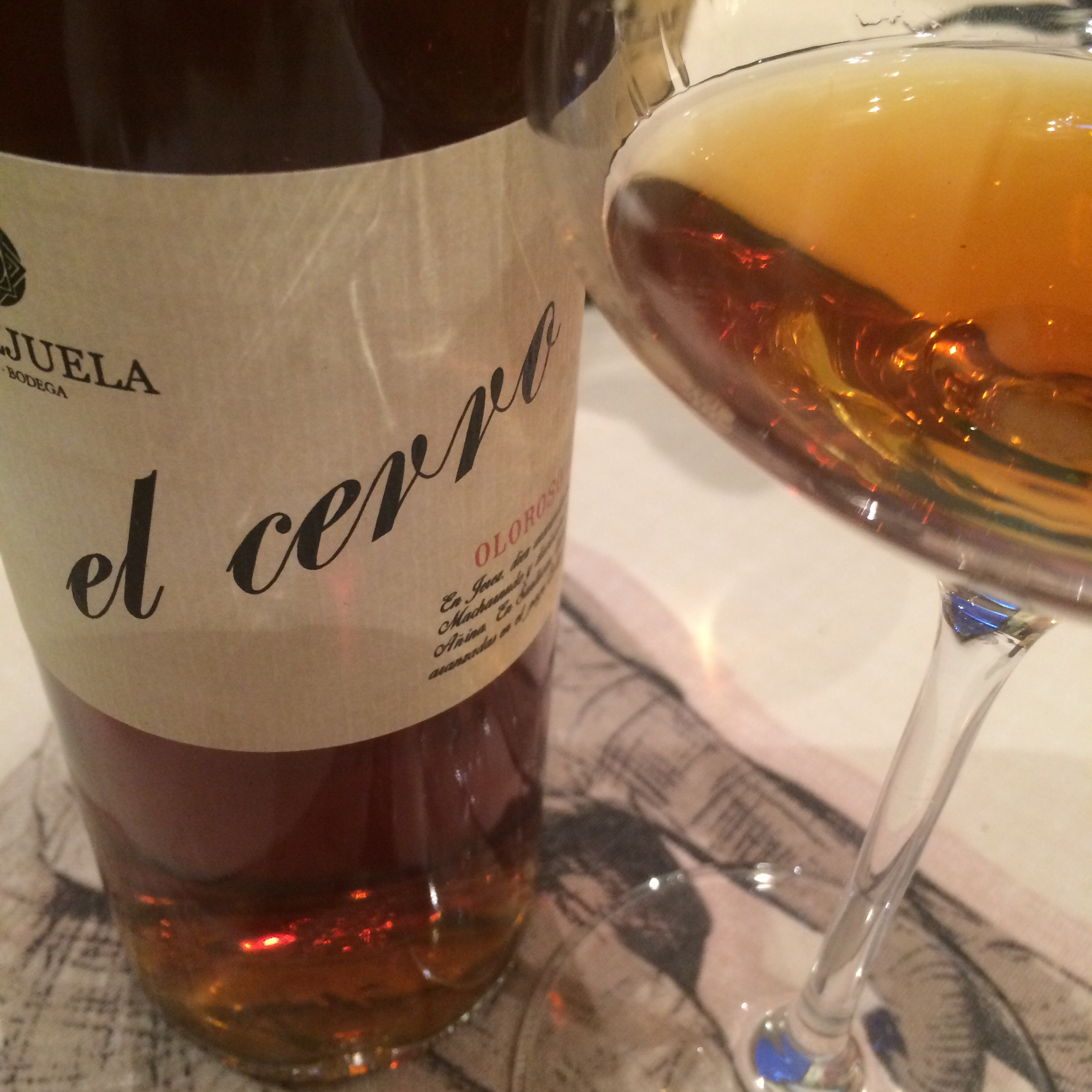
Elmundovino’s wines of the year including … El Cerro 

 I am over the moon to report that elmundovino.com have chosen el Cerro oloroso as one of their three Wines of the Year
I tried it for the first time in November and loved it. Since then I have had another bottle and have not changed my opinion

Hats off, too, to Elmundovino – there are higher profile, highly rated releases this year that are more extreme and more expensive but what sets this one apart is its elegance. As they rightly say, it is a modern classic. 

A manifesto in favour of Spain’s unique vineyards 

Spanishwinelover.com really do an excellent job and their coverage of the aforementioned manifesto is no exception. I think the manifesto is an incredibly important, and positive, development and I could not agree more with the aims expressed (you can see some of my own musings on uniqueness in jerez here and here).

Given its importance I take the liberty of reproducing the translation of the manifesto itself below but I recommend you look at the Spanishwinelover post to see the background, signatories and other details.

Spain boasts the richest biodiversity and the most varied landscapes in Europe but it also faces the greatest challenges in terms of environmental awareness and conservation. The world of wine is no exception.

The Spanish wine appellation system has proved effective in protecting geographical names and origin, but it has been oblivious to soil differentiation and levels of quality. Efforts have been aimed at turning our vineyards into the world’s biggest, not the best.

However, we have the history, the places and also the passion needed to make the most out of our exceptional crus and vineyards.

Deep changes are needed to boost our wine heritage and bring a sense of self-worth onto Spanish wine. It must be a global change for everyone involved, from producers to the authorities.

All the great wines in the world come from exceptional vineyards. That’s why the most revered wine regions have passed laws to defend and protect those unique sites.

We firmly believe that the best way to identify wines based on their origin, quality, identity and authenticity is by means of a pyramid-like structure. Wines made anywhere in the region would be at the base; village wines would be a step above while single-vineyard wines would be at the very top.

All producers will benefit from such a structure. Only by raising the bar and demanding ourselves more, will we be able to improve quality and explain Spain’s wine reality more accurately. It will also help to sell all kinds of wine better.

Therefore, we call upon the Regulatory Boards to be sensitive to the new wine reality that is emerging all over Spain and to approach a classification of the land in terms of quality. We are certain that establishing such distinctions is the first step towards excellence. Beyond emerging as an unstoppable trend, terroir wines are the best way to improve the quality of Spanish wines and achieve international recognition.

I really have never understood the resistance to going down this kind of path – surely the “volume” producers also benefit from the increased profile of their regions? In any event, bravo to all involved, I wish them good luck and I truly hope something can be done.

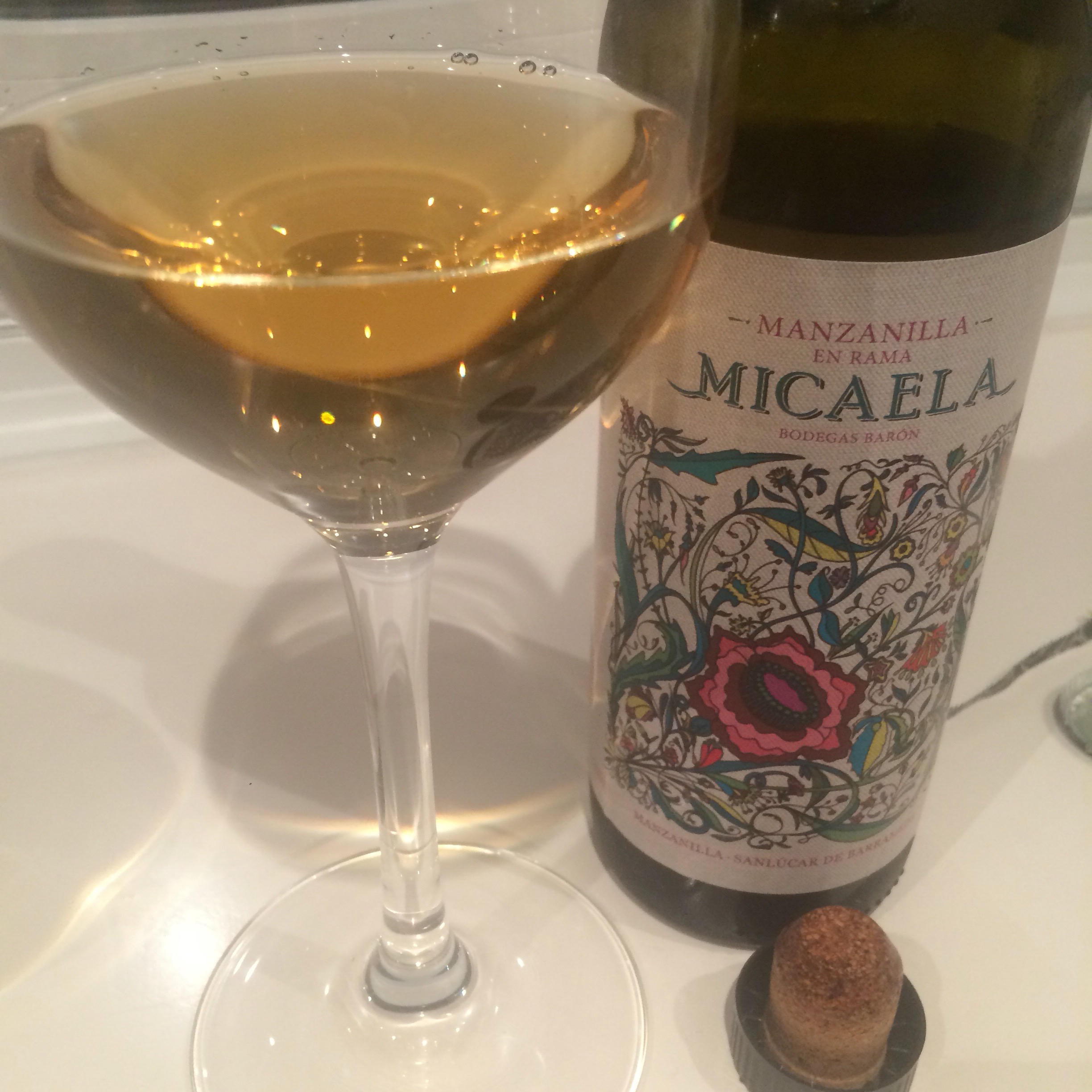
Manzanilla en rama Micaela


I was certain I had tried this manzanilla by bodegas Baron before but in fact back in May I had the straight manzanilla. This one is the en rama which I picked up at the weekend from a cracking little store near my office called Vino & Compania. According to the ficha it is the same age as the straight up manzanilla, at 3-4 years under flor and the chief difference between them is the level of filtering – this one only very lightly filtered with egg whites. There is no indication that I can see of when this was bottled.

It is dark gold and crystal clear (quite a dark gold for a 4 year old wine) and has an interesting nose of copper, metals, somewhere between vegetable and fruit (a sweet tomato ) and sweet herbs. Maybe a little bit of bottle age – but hard to tell. Very gentle salinity first up (although it creeps up on you and tingles on the tongue) and without being massive in flavour it is nicely rounded – again fruit and juicy yeasty herbs.

Not overdone in any way and seems to have more oomph than the filtered version – a really nice little bottle.

Desert Island Drams 

 A great pleasure to participate in Desert Island Drams on Amateurdrammer.com – really fun idea and some great posts each week. 

I like a dram every once in a while – my big mistake at the end of many a long night out used to be “winding down” with a bottle of the water of life. I can’t claim to be any kind of expert – Andy the amateurdrammer and other true experts have me in awe (in proof terms their job is at least twice as hard as mine). In my experience, however, there is a lot of common experience in drinking sherries and whiskies. 

Not just the use of sherry barrels in some whisky production either: the parallel between the solera and the blending process, and the effects of barrel ageing. Even the drinks themselves: the minerality, barrel influence, finesse. I also think the sherry sector can learn from the success of whisky in recent years. It may be just my relative ignorance speaking but it seems to me there is an ever larger range of quality whiskies around – specific malts, casks and batches – with a focus on quality, individuality and expression. 

And if you don’t believe me – just check out amateurdrammer.com! 

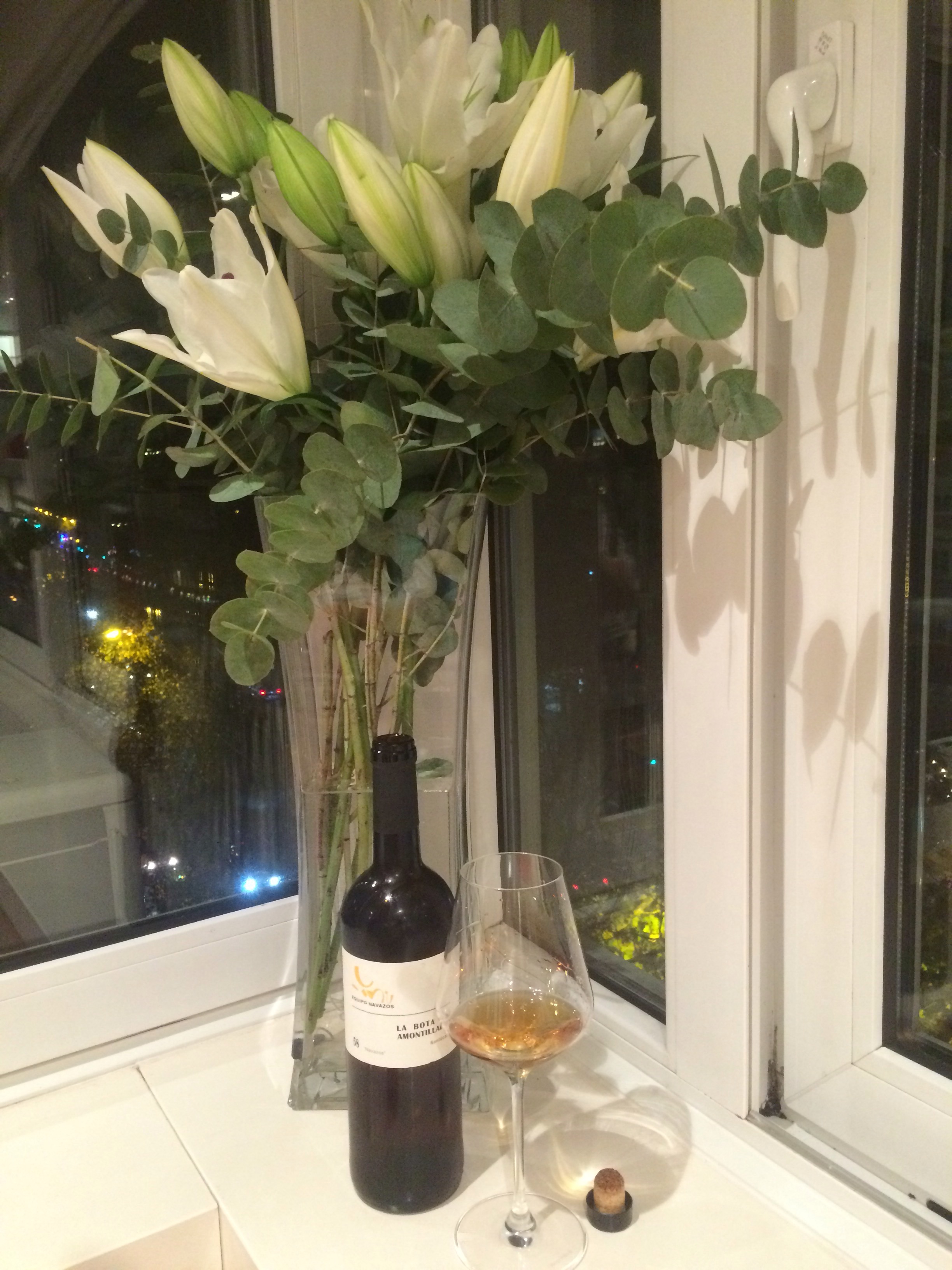
La Bota de Amontillado 58 – a second bottle


Seen here in the shadow of a delightful floral offering. My third time so I have kept it short (see episodes one and two here and here).

This is top drawer – a really cracking, drinkable but complex amontillado. Honey and hay on the nose (in fact the lilies are an excellent comparison – similar aroma) and a honey style sweetness on the front end but some saline zing, yeast and spice to give it style.

Really approachable and something that any wine lover should try.

Fino Camborio

Due to a virus (microbial, not computer related) this is the first sherry I have had in a while and it is one I picked up yesterday in Chamartin market. The Fino Camborio, from Bodegas Juan Piñero (a winery where Ramiro Ibañez consults on the winemaking),  a brother to the Manzanilla Maruja and Manzanilla Pasada Maruja.  Like Maruja, it used to be a brand owned by Terry before being acquired and revived by the Piñero.

It has an interesting ficha (in fact, a great ficha – a lesson in transparency). The palomino is sourced from Macharnudo and Añina (I guess we are talking Pitijopos numbers 4 and 5 (wish I had another box)). The wine has been aged for 9-10 years in a solera with only three criaderas, with one saca per year. (The manzanilla Maruja, by comparison, is 8-9 years but from a solera with eight criaderas and 8-10 sacas each year.)

It has a nice light gold colour with maybe the merest touch of green but it has a really mineral nose – salty sea air and olive juice – a very spikey aroma indeed with just a little macadamia nut umami in the background. It is also piercing on the palate: really mineral, with zingy salinity and, again, green olive flavours. The salinity gives it a nice volume and there is again, just that hint of underlying umami, like very salty almonds. Long with the zingy olive flavours prevailing then fading.

Punchy stuff but I like it more and more.