Socaire 2014

You guessed it, I forgot to take a picture of this one while still live so have had to edit the skyline shot (not for the first time). Anyway, it is another wine I have tried before – the Socaire 2014 – a 100% palomino fino from my favourite corner of Chiclana that has spent a full 24 months in an old bota that had been used for the Fino Arroyuelo. Apparently the name Socaire means a shelter from the wind, and refers to the breezy conditions up on Finca Matalian, which is near to the sea but a good 100 metres above sea level.

This one was brought to dinner at Territorio ERA by the maker himself and it was a rare chance to try it alongside a couple of other palominos (including its sibling, the Viña Matalian), as well as some wines from Jura, Arbois and the like.

And it must be said it stood up pretty well against all comers on the night, with loads of fino like character on the nose, the fruit/herb of the palomino added to a bit of almond and a more pronounced minerality on the palate and a nice fresh finish.

A really nice wine by any standards.


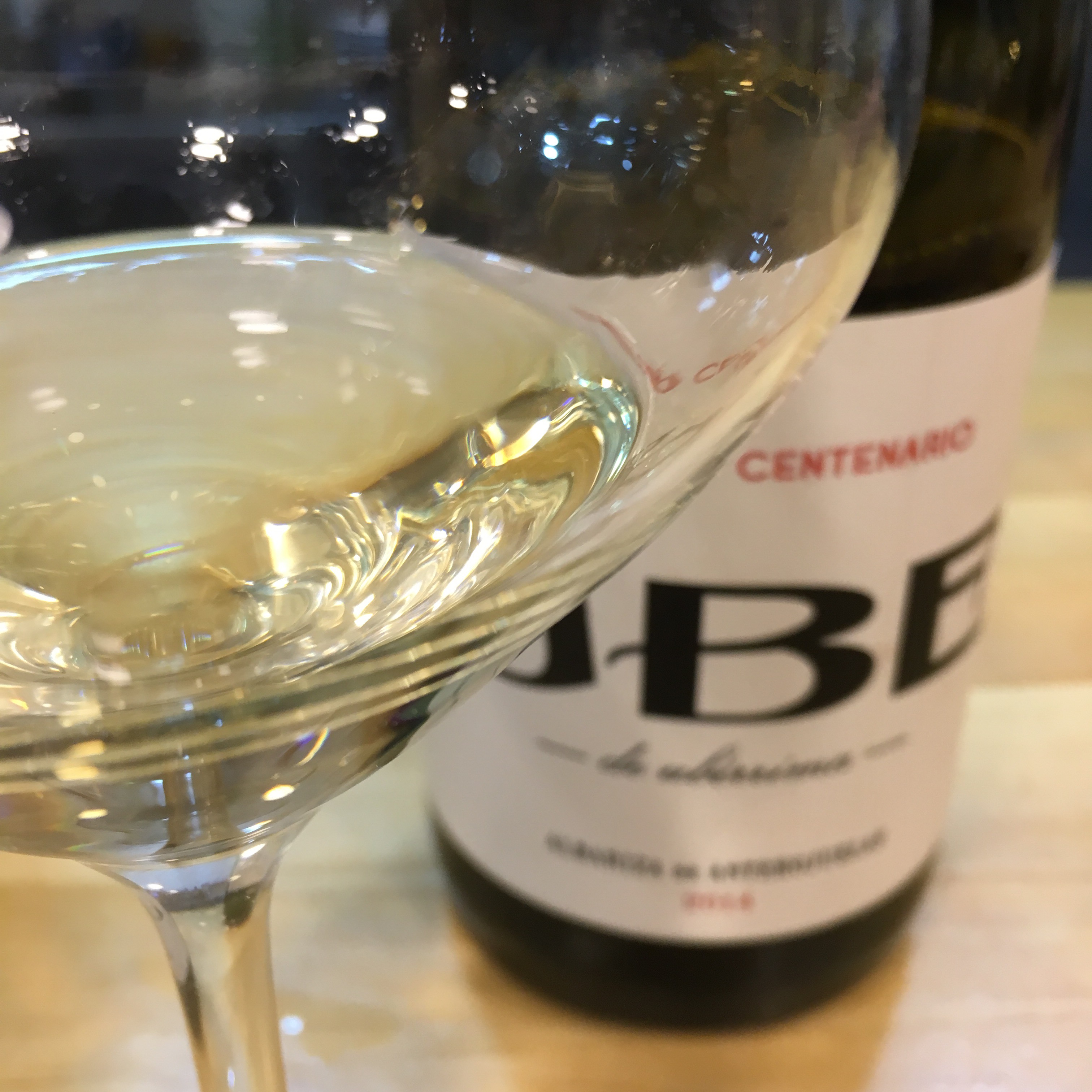
UBE 2014

The epitome of a Sanlucar palomino. I have written all about this wine (and its 2013 predecessor) on numerous occasions – for background look here and also here on the 2013 and here and here for the 2014. Nevertheless, I had another chance to drink it this weekend at a dinner in Territorio Era (formerly known as Era Espacio Gastronomico) and couldn’t resist sharing my thoughts.

Compared to other unfortified palominos this has a different profile and it seems like a couple of additional dimensions. First, it has a rich gold colour – on other occasions I remember more of a green tinge but here not. Then it has a tremendous nose of herbs tending to stewed herbs as it opens – like a stockpot bubbling away in the corner of the kitchen. Finally, on the palate it is tightly flavoured, vertical and direct (or, to use the maker’s own word, “fluid”), with salinity and acidity in line giving it a clean, fine feel, and an effervescent, fresh finish.

It is a fascinating wine (and I mean that in a good way).

Viña Matalian 2013

Was fortunate enough this week to meet Primitivo Collantes, the man behind one of my favourite wineries in the sherry triangle and the best piece of real estate in Chiclana: Finca Matalian. Given the occasion I thought it was time to see how this palomino fino from that little plot in 2013 had developed in bottle and it wasn’t at all bad.

Quite a dark colour, with clear signs of a little bit of bottle oxidation, but on the nose it still had nice aromas of some fruit and some sweet herbs – maybe more herbs than fruit compared to when it was young. Similarly on the palate it had jammy fruit and it seemed to us to have gained a bit of spice and saline intensity.

A nice wine ageing gracefully (still have another bottle somewhere too).


Callejuela Manzanilla de Añada 2012 – the Story so Far

Wanted to write something about one of the more interesting projects to have come out of the sherry triangle in recent years – something that was apparently almost accidental in its conception but I believe may prove to be historically important for the sector.

The Callejuela manzanilla de “añada”, or vintage manzanilla, comes from old vine palomino fino in a vineyard called “El Hornillo”. The soil is albariza of the “tosca cerrada” variety – the classic and most widely found soil type and the pago is to the North of Sanlucar along the Guadalquivir, on Pago “Callejuela”, from which the bodega takes its name, and as such you would say it has a “continental” influence. It is not one of the most highly rated pagos historically – I think in the classifications from the 19th Century they would have had it a notch or two below the top pagos – but recently the wines from this unthought of corner of the world have been raising eyebrows.

This 2012 vintage was top class and the harvest was even better. As such, the Blanco brothers, the genial owners of Callejuela, and Ramiro Ibañez, the genius who works as technical director, decided that 11 butts were good enough to be bottled as vintage manzanillas. Those 11 butts have been set aside and are being “statically aged” – ie under flor but not in a solera, which is why we can talk about a “vintage” in the true sense. Also, there is no mixing, even between these 11 butts (unlike, for example, the vintage wines from Montilla Moriles).

What is really fun about the project is that each year Ramiro and the Blanco brothers select one of the butts for bottling: the first bottling, in 2015, was Butt 1/11 of 2012, a manzanilla with three years under flor, while 2/11, bottled in 2016 had four years under flor and future years will clearly be different, with more biological ageing in the first few years and the effects of the death of the flor and resulting oxidation later (although time will tell). The last butt will be bottled, if all goes well, in 2025. There isn’t a lot of it on the market as you can guess – less than 800 bottles each year.

Most importantly, the first two wines have been absolutely cracking. The first time I tried Bota 1/11 I loved it, and even accounting for my enthusiasm going in there is a lot to love about this wine. In general I really like biological wines with a little less time under flor – there is more influence from the fruit and a little more body to the wine – I found the same with the vintage Williams Fino from 2012 and the vintage Barajuela Fino 2013 (although there is even more to like about that one). The second time I opened a bottle it came across even better and even got a spontaneous round of applause from the guys I shared it with. Really a special wine and I am having to resist hard to preserve the couple of bottles I have left.

A year later the second wine (the 2/11) seemed to have taken a clear step forward in terms of biological ageing – it seemed that bit sharper and more saline, more vertical and direct. Absolutely brilliant though (and as I drank it it even seemed to make the golf better, as Mickelson and Stenson slugged it out in the most amazing final round at the Open). Then coming to another bottle a little while ago I got more fruit again, in fact it really came across as a brilliant little wine in its own right.

I realize even as I write this that by giving airtime to the joy of these tiny releases I may be shooting myself in the foot in terms of acquiring later releases but this is one of those projects that, to my mind, deserves to be rewarded, and I would encourage anyone interested in learning more about what is possible for the wines of Sanlucar to get interested. I know of three places where it can be acquired – from Federico of the Cuatrogatos Wine Club, from Armando Guerra at Der Guerrita, and from Ezequiel of Reserva y Cata in Madrid. Hopefully they will save me a couple of bottles!

Riodiel Condado Viejo

The second wine from this bodega in el Condado de Huelva that I have tried. Whereas the Espinapura could almost fool you into thinking it was a fino, however, this traditionally aged wine was quite a different beast. 

It is a 100% palomino aged for over 20 years which is fully dry but seems rich on the nose and the palate. There is quite a lot of Christmas cake aroma and flavour – tending towards burnt Christmas cake – but there doesn’t seem to be much noticeable salinity. Maybe as a result it comes across as a bit heavy and its 18% alcohol seems very noticeable.

Bags of flavour but maybe missing the elegance of its cousins further South. 

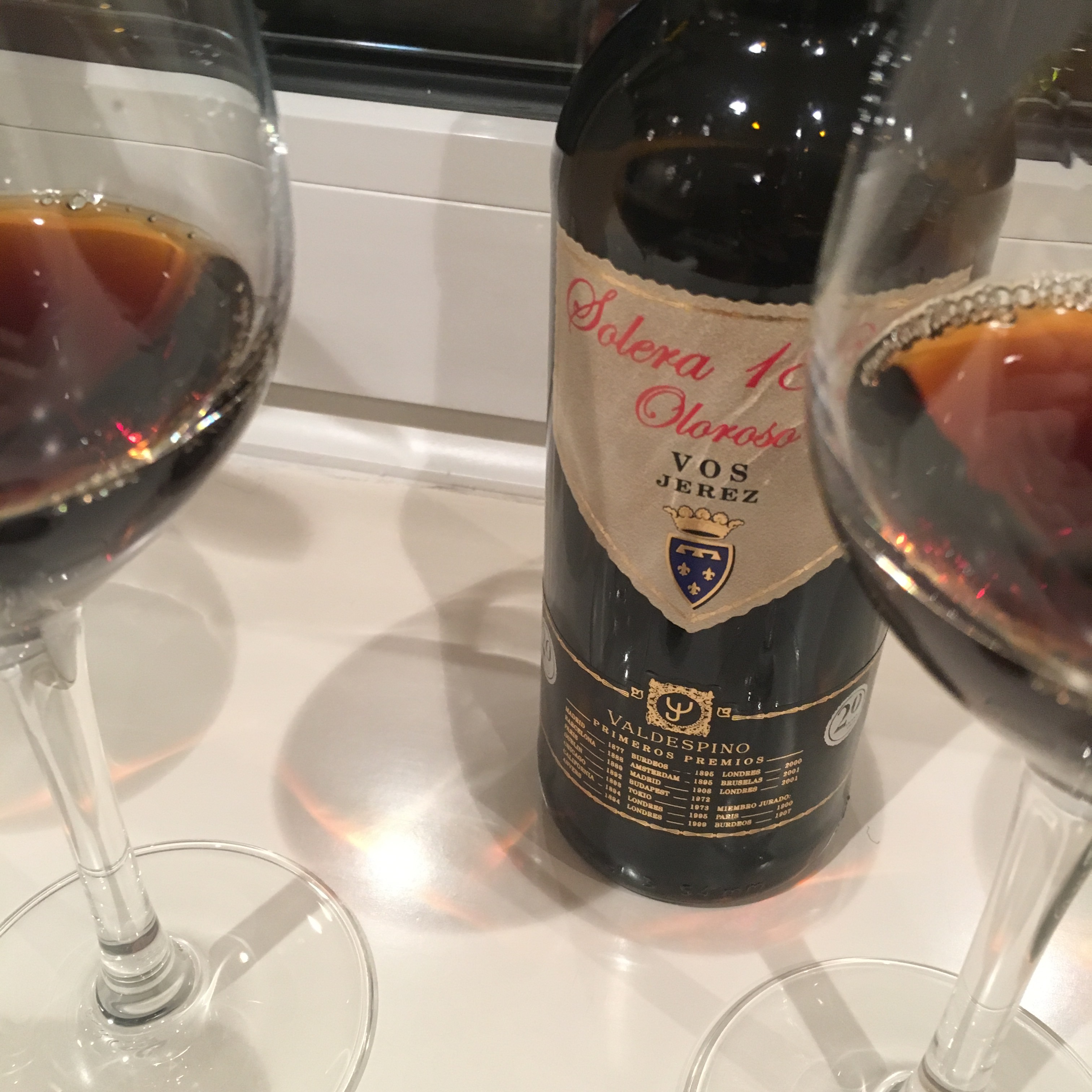
Oloroso Solera 1842 

I am not big into the sweeter wines but I thought this one – a VOS from Valdespino – was worth a dip. Neither is it all that sweet – you would say abocado or encabezado (not sure what the order is) and since it calls itself an oloroso I guess it is under 15% PX. 

Not all that expressive first up – came out of the wine fridge at 11 degrees and may be a little on the cool side.  A bit of a woody aroma like a pine forest and a nice a grapey/nuttiness to it on the palate. Very nicely integrated and balanced but I must admit I expected more oomph.

Will come back to this one. 

Flor the sake of it

The veil of flor has a bit of mystique to it nowadays and as a result you find wines popping up all over that claim an acquaintance. Here we have Aires de Vendimia, by Jose Antonio Garcia, a 100% old vine godello from Bierzo that is labelled “oxidative ageing” but, we were told, had had occasional spells under flor, which I tried this week at the IV Salon de Vinos de Terruño. (In recent times I have also tried similar wines from la Rioja, Gredos, and even further afield.)

This is perfectly nice stuff, no doubt, and probably a welcome variation for those accustomed to a straight up godello, but as always I miss the mineral power that the flor in Jerez and Sanlucar reveals in its palomino hosts and, as a result, the oxidative touches in the wine seem to make it a little bit top heavy compared to a very young palomino oloroso.

I guess the veil of flor involved is a different strain of saccharomyces and the conditions are certainly different – Bierzo is a long way from Jerez. In fact a better comparison would probably be with Jura or Arbois rather than Jerez and Sanlucar. As a result, the flor on these more northern wines never seems to have got to work like the flor of Jerez and Sanlucar.

More importantly, the wine involved just doesn’t seem to have the same mineral depth. Palomino is often written off as a “neutral vessel” but the really good palomino wines are capable of really powerful flavour and sapidity – just try an UBE and tell me it is “neutral”. When you don’t have that underlying power and sapidity, the overall effect of flor and wine is less substantial: I often think of the wines of Jura and Arbois as like ocean going yachts, with a cloud of sail above the surface and a sleek profile below, while the wines of Jerez and Sanlucar are like big salty icebergs, with a craggy profile above water and a massive presence beneath (and you know who would win a head to head there).

Monge en rama 

Not a sherry this one, but a palomino fino aged in solera under flor at the mouth of the Guadalete, a trib of the Guadalquivir that meets the sea at Puerto de Santa Maria. Not clear to me why this isn’t under the DO – the bodega’s address is in el Puerto as well. 

There is a little bit of reduction/farmyard on the nose which is a bit off putting and you don’t get much pungency, then again on the palate the salinity is restrained, there is a little bit of fruit to it but not much punch, bite or power. 

File this one under interesting I think. 

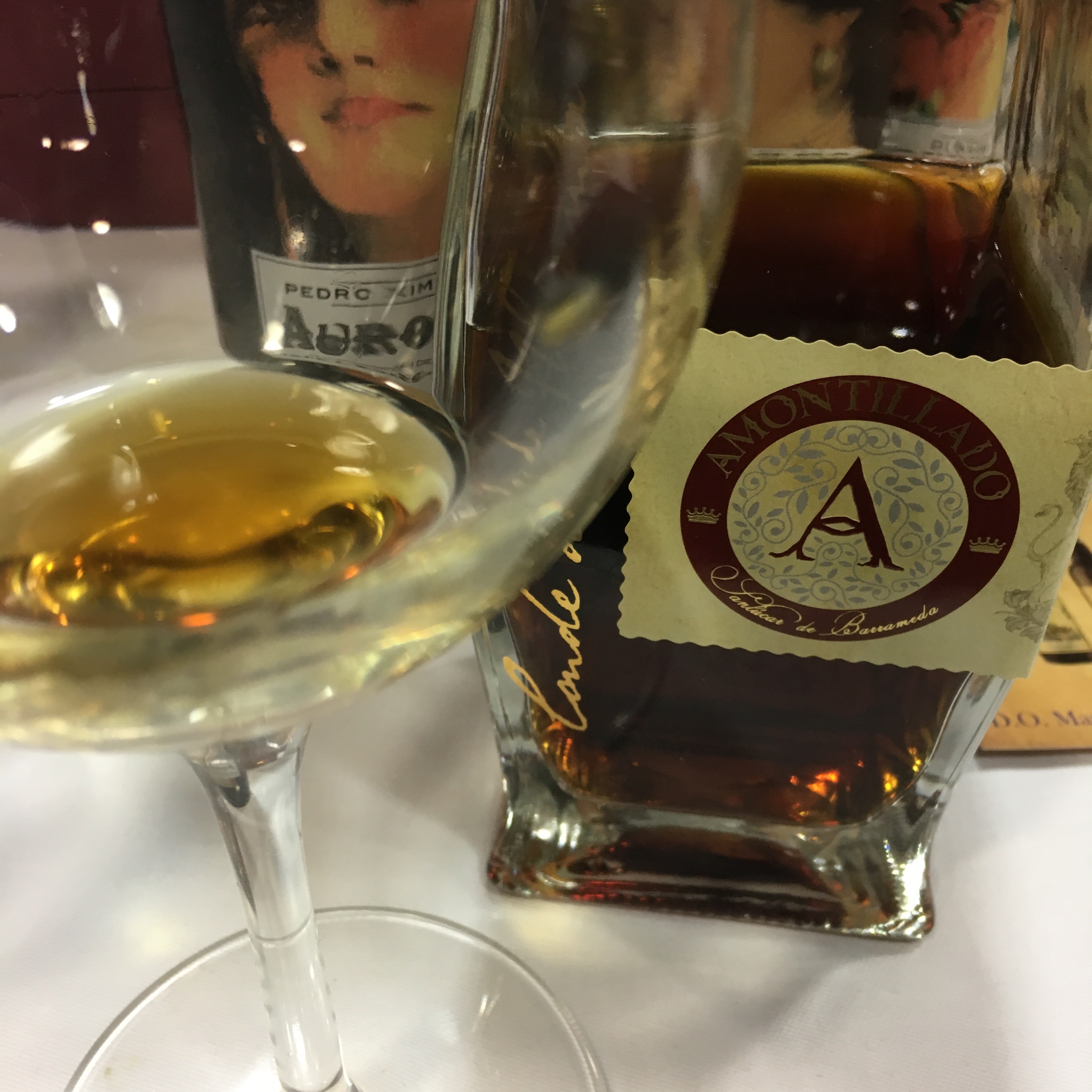
Amontillado viejisimo Conde de Aldama

The star wine of my brief visit to the Salon de Vinos de Terruño yesterday was this very special old Sanlucar amontillado. It is by Bodegas Yuste and we were told that it comes from a solera based around four botas that were untouched for a full 120 years before being put back into action relatively recently.

I had nearly finished before I remembered to take a photo but as you can see it is a chestnut brown in colour and was ice water clear. Had a fantasticly expressive nose of brandy, nuts, cigar box and sawdust. On the palate too it had all the qualities of a majestic old Sanlucar amontillado, with a piercing saline freshness to it despite the intense nuts and cigar box flavours. The word here is dry and then some.

The only problem was that it seemed to disappear all too quickly: will have to get myself a bottle for further study.


IV Salon de los Vinos de Terruño 

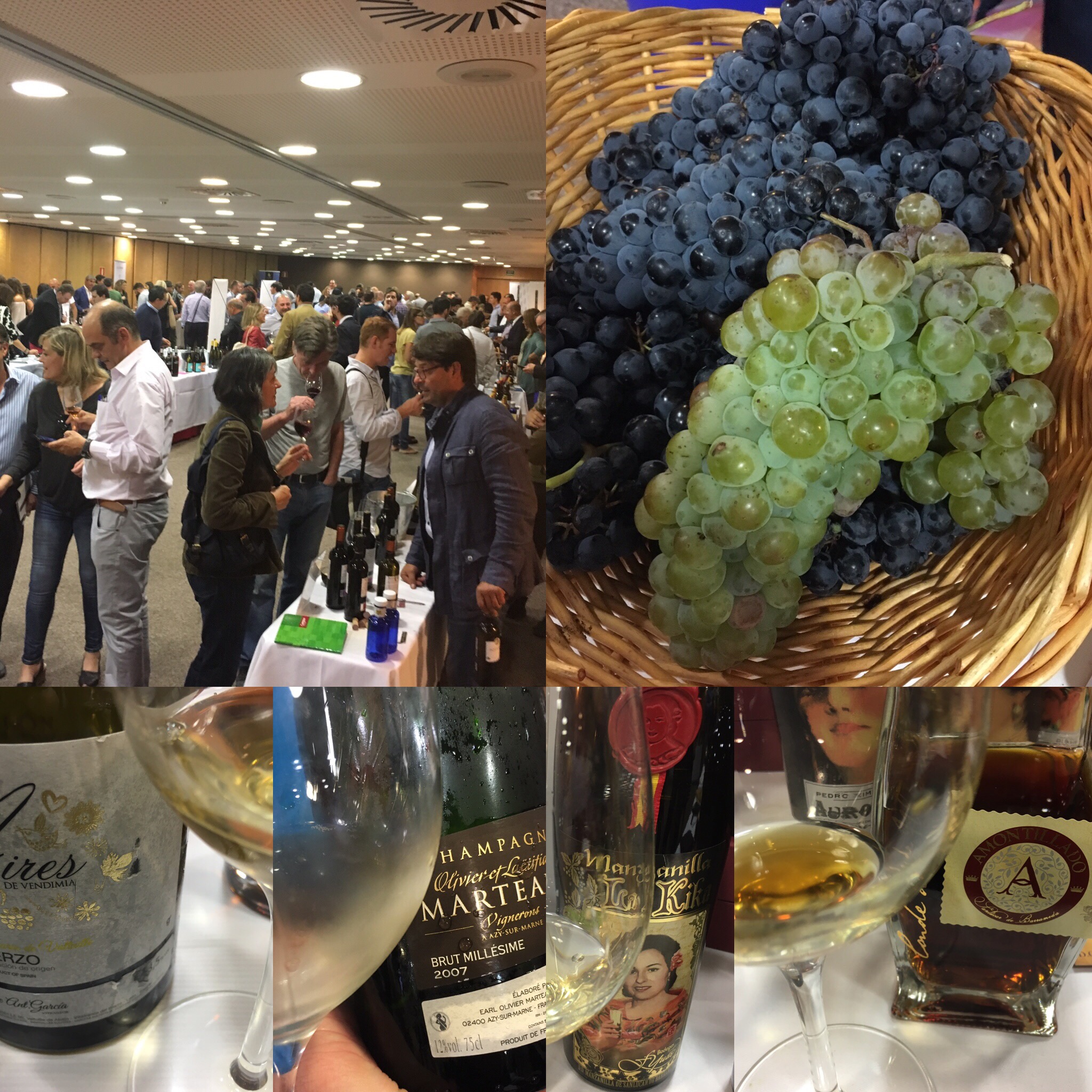
Just got back from a flying visit to a cracking event  underway here in Madrid – el 4º Salon de Vinos de Terruño (the 4th Salon of Terroir Wines) organized by the distributor Mibil Vinos. Some pretty interesting stuff – everything from champagnes (Marteaux, Pascual Doquet, Bereche and Lassaigne) to brandies, via an oxidatively aged Godello (pictured above).

Sherry fans are catered for by the Bodegas Yuste/Argueso with an impressive range of wines, including their special manzanilla La Kika and the very old amontillado Conde de Aldama. A real treat (although not very terroir focussed if we are honest).

As always, the real fun of the Salon is the other people that go to it and this one was no exception on that score with lots of friends and many of my favourite restauranteurs on hand. I couldn’t go for very long but there are worse ways to start the week.