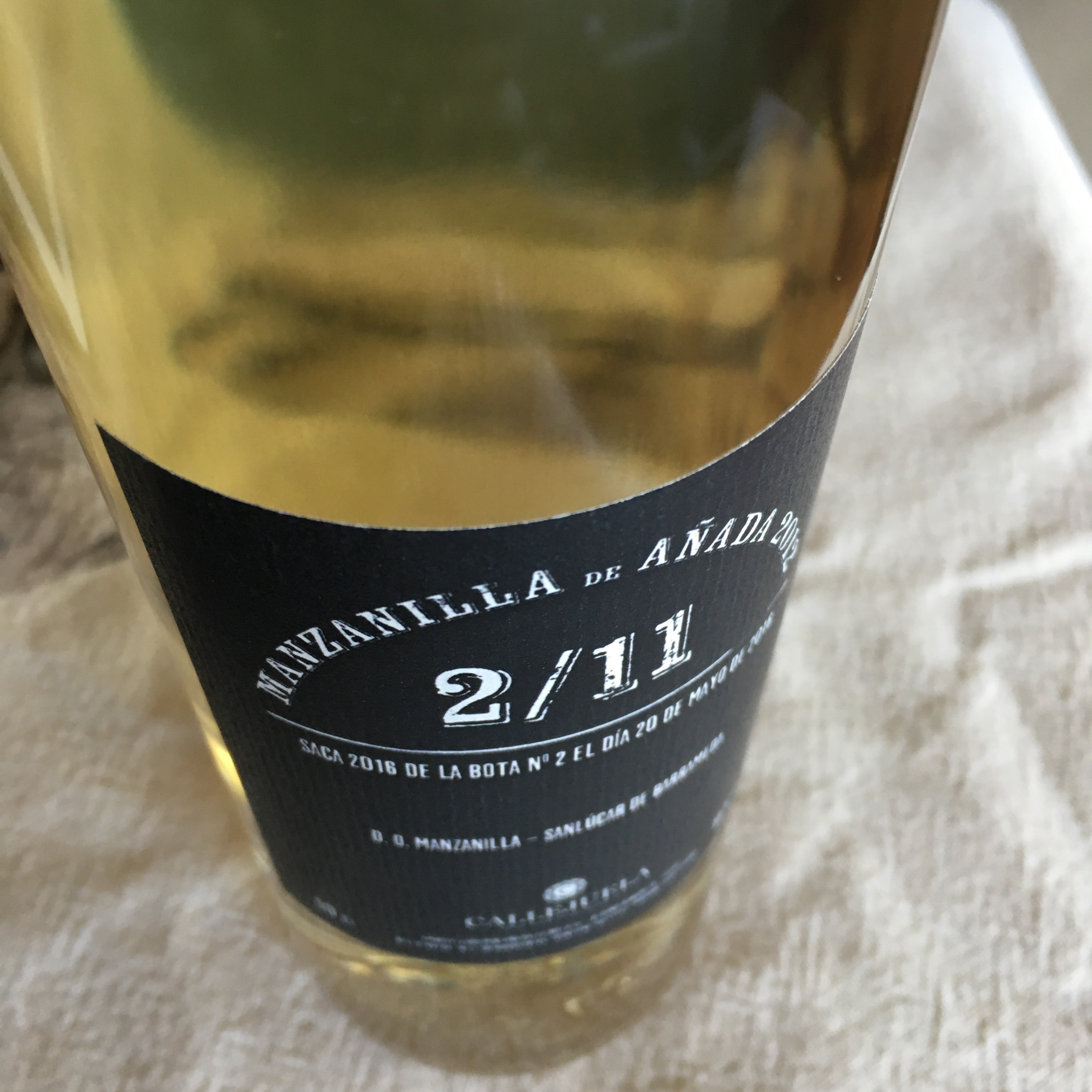
Manzanilla de añada Callejuela 2012, 2/11 

During the latest of many brilliant lunches yesterday at Madrid Angelita we were served this little beauty. It is not the first time I have had it – and it is not the first one of these wines I have had – but it surprised me in a number of ways.

I remembered this second volume of the series as a proper manzanilla with an edge of zingy salinity, but this had more green apple fruit and mountainside herbs – oregano and rosemary – than I remembered, adding up to a really lovely, characteristic chamomile tea nose. Then on the palate it packs a little punch of fresh almonds and juicy herbs – really flavourful and tasty – and compared to the añada finos that I have had recently it had a noticeable elegance and silky fine quality to it. I found it a little warm at the end with the salinity but a pleasant finish nevertheless.

A bit more than just a proper manzanilla – a very good one – and of course much more even than that.


Las Añadas de Williams & Humbert

5e9b9cb3-ae40-4d2b-8a32-7f3c5ed34a0cHas been an intense start to the new academic year with a lot of work and, for some reason, a lot of hangovers, so apologies for the delay in getting around to writing up these notes of what was an absolutely fantastic tasting nearly two weeks ago (gulp).

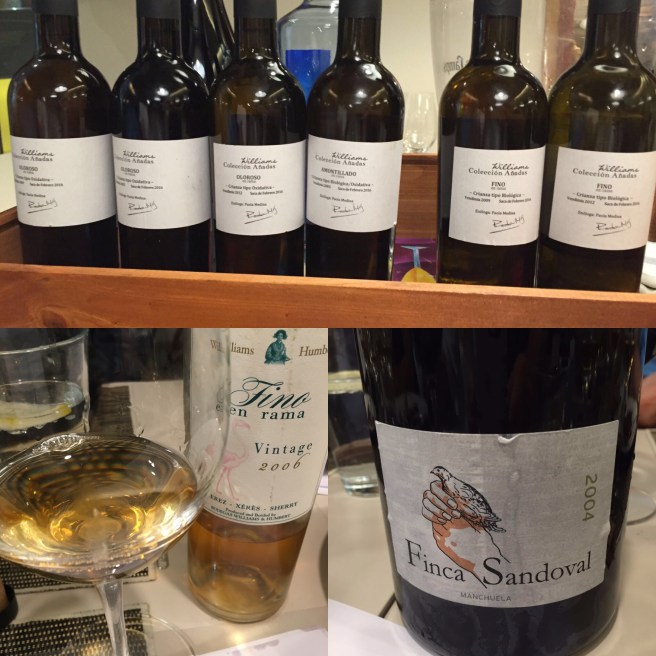
I have written before about the genius concept of this Colección Añadas, about a few of the individual wines and also about an interloper in this tasting: the Vintage Fino from 2006. What made this tasting so interesting, though, was the chance to taste them all in close succession and the resulting comparisons were revealing.

Since the Collection is known as the “añadas” (or “vintages”) collection we felt we should go vintage by vintage (although it would also have been good to go biological first etc – if only we had had two sets, and time) so here we go in order.

  • 2012 Fino- I really liked it. Very clean nose of almonds, fresh, compact and elegant, nice sensation of acidity gives it an incisive entry and then it has decent salinity, stretching out the finish. Really good and to my mind another great advert for this style of younger finos.
  • 2012 Oloroso – again very good. The almonds are still there on the nose and on the palate but they are toasted on the palate and there is a clear oloroso imprint to it. Bit heavier, slightly spicier flavour but not as much acidity up front and a touch less salinity. Less elegant in profile and a bit more boisterous, you would say.
  • 2009 Fino – if anything the impression I had was that there was more fruit in the 2009 than the 2012 fino but this could be because it was slightly less compact. The saline zing up front and the fresh finish are more marked and the hazelnut/juiciness also seems more pronounced – gives it balance if not quite elegance.
  • 2009 Oloroso – again big on flavour and this is for me the best of the olorosos. Again heavier bodied than the fino but now the sweet hazelnut flavours are much more pronounced making it a really juicy wine.
  • 2006 Fino – probably my favourite wine on the night, this really had a bit of everything. Not a straight comparison with the other since this was bottled in 2014, so really had 8 years under the flor compared to 7 for the 2009, and has had two years in the bottle. Whatever the case you have to say it was bottled bang in its prime – a lovely combination of salinity and almonds that almost gives you dairy aromas, zingy minerals, a creamy texture, those flavours, a long fresh finish. Absolutely brilliant.
  • 2003 Amontillado – ran it pretty close however. This would be the smoothest, most elegant and drinkable 20% alcohol wine I can remember, with sweet hazelnut beginning to mix in with the bitter almond flavours and a touch of acidity to go with the minerals. Difficult not to enjoy this.
  • 2003 Oloroso – had a tough task following those last two wines and was noticeably less refined and compact – the fino/oloroso gap opening over the years. Hazelnut flavours beginning to taste toasted, nice acidic spiciness and more obvious alcoholic heat.

I feel like the tasting gave me an insight into the curve that these wines follow as they age under flor or in the open air. On the other hand, despite an identifiable common personality, given the different amounts of ageing I found it hard to get a feeling for the different vintages as such, and as I look back I have almost more questions than answers. In particular I would love to be able to taste the mostos that were used and know a bit more about them.

As I say, at the end I wished I could start again (but as it happened a magnum of an excellent 2004 Finca Sandoval took my mind off it – thanks Victor!).
No doubt about it though, seven excellent, enjoyable wines and educational too – well done to Williams & Humbert on a fantastic collection.


Mirabras 2014 

I first tried this a while ago but fleetingly and, although a palomino purchasing moratorium is currently in place, I couldn’t resist picking up a bottle this week in Reserva y Cata.

Small production – just 2000 bottles, from a single vintage of a named vineyard  (Cerro de Leyes) – which the web describes as home to the oldest vines on the Santa Lucia pago. The grapes were left to dry in the sun a little, then the wine was fermented in an old sherry bota, was a few months on its lees, a few months in bota and then in inox.

It is a rich gold colour and on the nose has the distinctive sweet herb aromas of palomino. Then on the palate there is no mistaking where this comes from. It has nice acidity the sweetish fruit of the palomino but then there is zingy salinity and celery-like spices, salt and pepper. A real chip off the Solear en rama block.

Really distinctive and very tasty.

Las Añadas de Williams & Humbert in Taberna Verdejo

The author is suffering from a severe hangover this morning but one that was well earned after a great night drinking some brilliant wines (and, it must be said, a top brandy).

As always, it will take a while to fully digest the learnings – and indeed find my notes – from last night but I wanted to share some immediate general impressions.

  • First, the Coleccion Añadas is a brilliant concept well executed. Sincere congratulations and thanks to Williams & Humbert for putting together this boxed set which made for a fascinating tasting.
  • Most importantly, the wines are very attractive, approachable wines with a clear personality to them – elegant for the most part but with juicy hazelnut, and very attractive on the nose in particular.
  • In the spirit of the collection we tasted by añadas – the 2012s followed by the 2009s, the 2006 Vintage Fino and the 2003s – and although we were not comparing like with like it was curious to note that the wines from warmer years came across as finer, more elegant than we might have expected.
  • There was of course a very notable difference in character between the finos and the olorosos – even at the younger end of the scale – but the differences between the different years were just as marked and very interesting. In particular, the finos became richer and more oxidated as went back in time and definitely gained in complexity – the 2006 Vintage Fino in particular was superb and the 2003 Amontillado was almost as good.
  • Having said that, I also thought the 2012s were excellent and a great advertisement for the “less is more” theory of wine making. I really think these wines with limited biological or traditional ageing are a way forward for the region in terms of winning over wine enthusiasts in general.

So all in all some cracking wines and another great learning experience, which was enriched in particular thanks to the great Victor de la Serna, who joined us as a special guest and brought along, in addition to some quality insights, a Magnum of his excellent 2004 Finca Sandoval.

And finally, a word on the food, which was absolutely delicious – the pisto, the rabbit, the pigeon, really out of this world.  Yet another enormous thankyou to the crew at Taberna Verdejo for their outstanding hospitality. 


Tasting the Barajuela project

Wanted to jot down my thoughts and impressions of a fantastic tasting I did with Willy Perez last Friday in relation to a project I find fascinating (and a wine that I really love). 

As I have written about ad nauseam the Barajuela project is all about recovering the old school wines of Jerez that once ruled the world. This means big, concentrated wines with a clear identity quite distinct from the lighter “manzanilla” style of current wines. It means low yields, later harvests in several passes (first for brandy, then fino, then oloroso) a short period of asoleo or sun drying to further boost concentration and a focus in the cellar on the wine rather than the flor or barrel effects. (For example, unlike many modern finos with pronounced acetaldehide profiles here efforts were made to keep a balance with the wine’s other characteristics – a balance that is achieved despite a very high level of acetaldehide.) The wines are also terroir and vintage specific and, since single vintage wines age quite differently to their solera counterparts, the back label seeks to recover the old school “palmas” system of classification. 

The tasting could be broken down into three sections, each a nice illustration of what the project is all about. 

First up, we had a run at the mostos from 2015, exploring the effects of the maturity of the grapes in the different “passes” at harvesting. We tasted the mosto for brandy, the greenest, least developed fruit, harvested in early to mid August, the mosto from grapes harvested two or three weeks later, and the mosto for the fino, from fruit harvested a week later still. There was a clear progression in aroma, weight and flavour in the three wines: more and more honeyed on the nose (the mosto de fino in particular had a lovely nose that reminded me of the “cojonudo” pastries you get in the mountains North of Madrid) and, quite apart from the growing strength and weight, more and more (extremely ripe) melon on the palate. Obviously there was a big step from the first mosto to the second, but it was amazing to see the step from second to third – the difference that that selection and one week of sunshine had made. 

Next up was an exploration of the effects of the flor on those mostos (not that much flor – these botas were filled more than usual). The fourth wine was a 2014 mosto de fino, followed by a bottle of the 2013 Fino la Barajuela and a 2013 Palma (roughly speaking, the 2013 fino with six or so more months under flor). Again, the steps between the wines were as instructive as the wines themselves: the 2014 mosto was extraordinary compared to its 2015 equivalent with a noticeably full and mineral mouthfeel – real power and zing to it- the 2013 Fino had that brilliant balance of concentrated fruit and mineral grunt and the Palma was just a touch sharper in both salinity and in the fruit flavour. I would find it very hard to choose between the two 2013s – would love to have tasted them blind – but since I was asked I reckon the fino was dead right, with enough fleshy juice to it despite all that power. (There may also have been some effect from its time in the bottle.) As for the 2014, my mouth is literally watering at the prospect of when that is ready.

Then out came the lesser spotted 2013 Oloroso la Barajuela. This wine is from grapes harvested later still – important to remember this is a different wine from the same vines, not a continuation of the fino – and has another step up in concentration. Rather than under flor it has been “traditionally” aged (but not for very long, which I gather has been the source of some issues with the DO and the traditional classifications, hopefully soon to be resolved). The power and solidity of it is impressive – for now it just has an edge of burn and oxidation but you get a feeling that given time it will be capable of the most amazing full bodied, high register caramel flavours. No bones about it – it is an absolute beast.

We didn’t in fact finish there, we also tried a 2014 pedro ximenez, an excellent mineral and refreshing 2015 Tintilla de Rota rosé and the 2015, 2014 and 2013 Tintilla de Rota reds, but by then my mind was wandering (I even left my notes behind before remembering just in time and dashing back in). It was a brilliant tasting  in which I learned a lot, and even better with some really cracking wines and a few laughs thrown in. Blessed are the rulebreakers and long live the new old school.
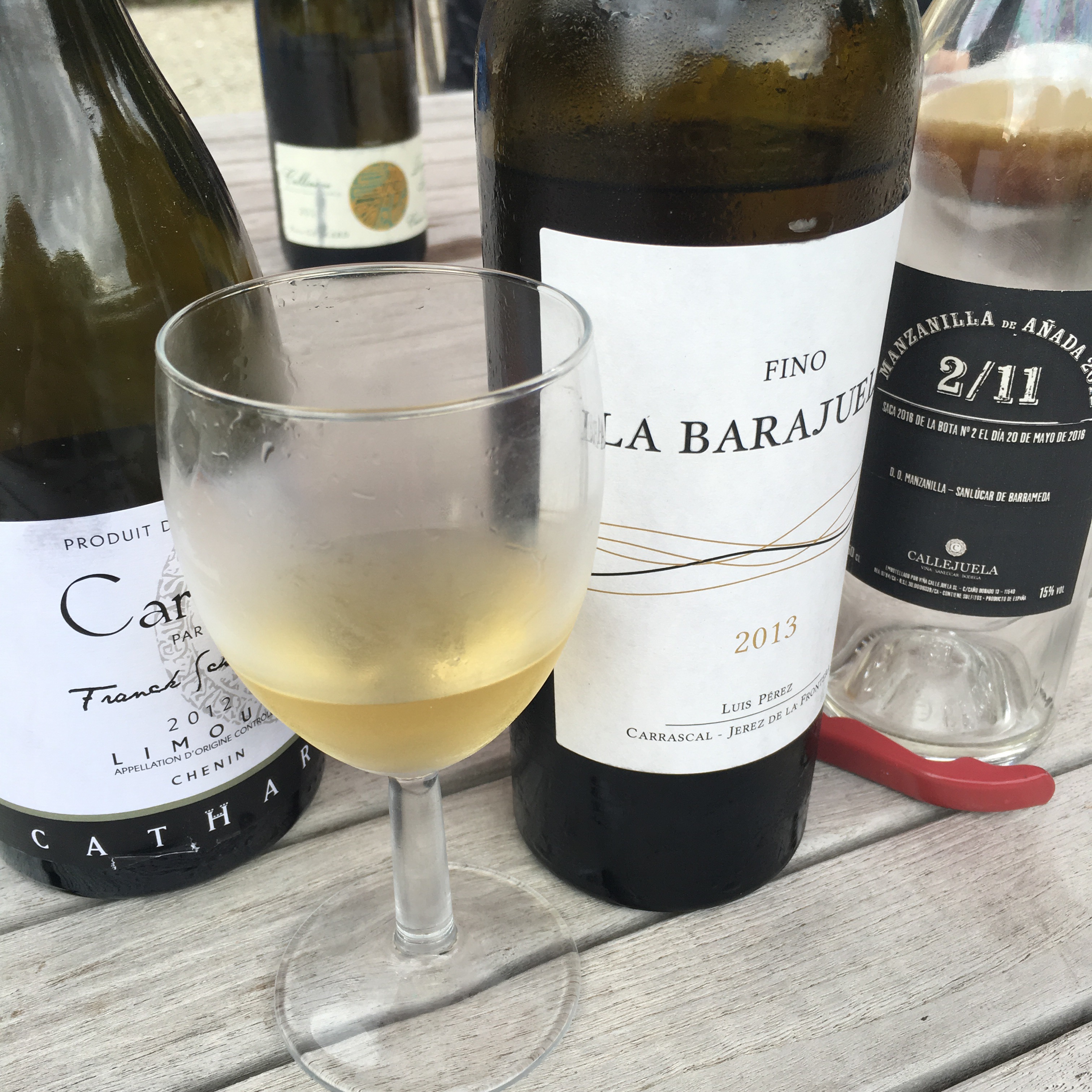
Fino la Barajuela 2013

In a week of brilliant wines from all over this was for me the best of them all. Enough mineral power to set it apart from the crowd but more fruit and expression than the crowd expected from a fino. Really excellent. It is fortunate that there isn’t too much more of it or this blog would become a fanpage. (I absolutely love this wine.)

Apparently a second “palma” is to be released a few years down the road with a few more years under flor and it is going to be fascinating to see what that flor action does to this wine. Would also be interesting to see what happens with time in bottle – but for that I would have to keep some long enough.

UBE 2014 

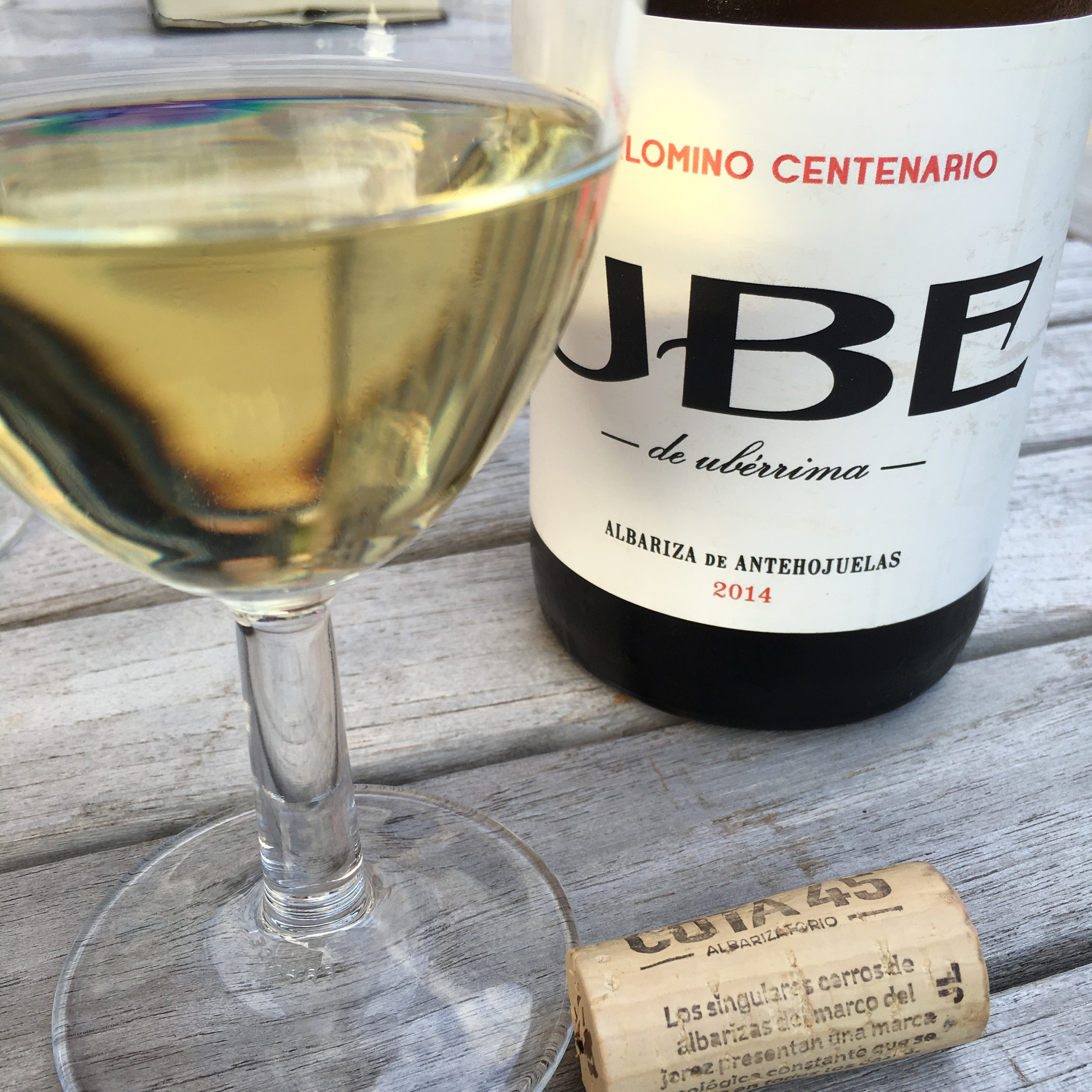
A really fine bottle of wine from Cota 45 – this is a little ball of flavour. One of a number of cracking bottles of wine opened on a sunny terrace what stood out about this was the savoury, herbal quality of the flavours. Not acidic but a nice freshness to it. A class wine. 

Pandorga 2014

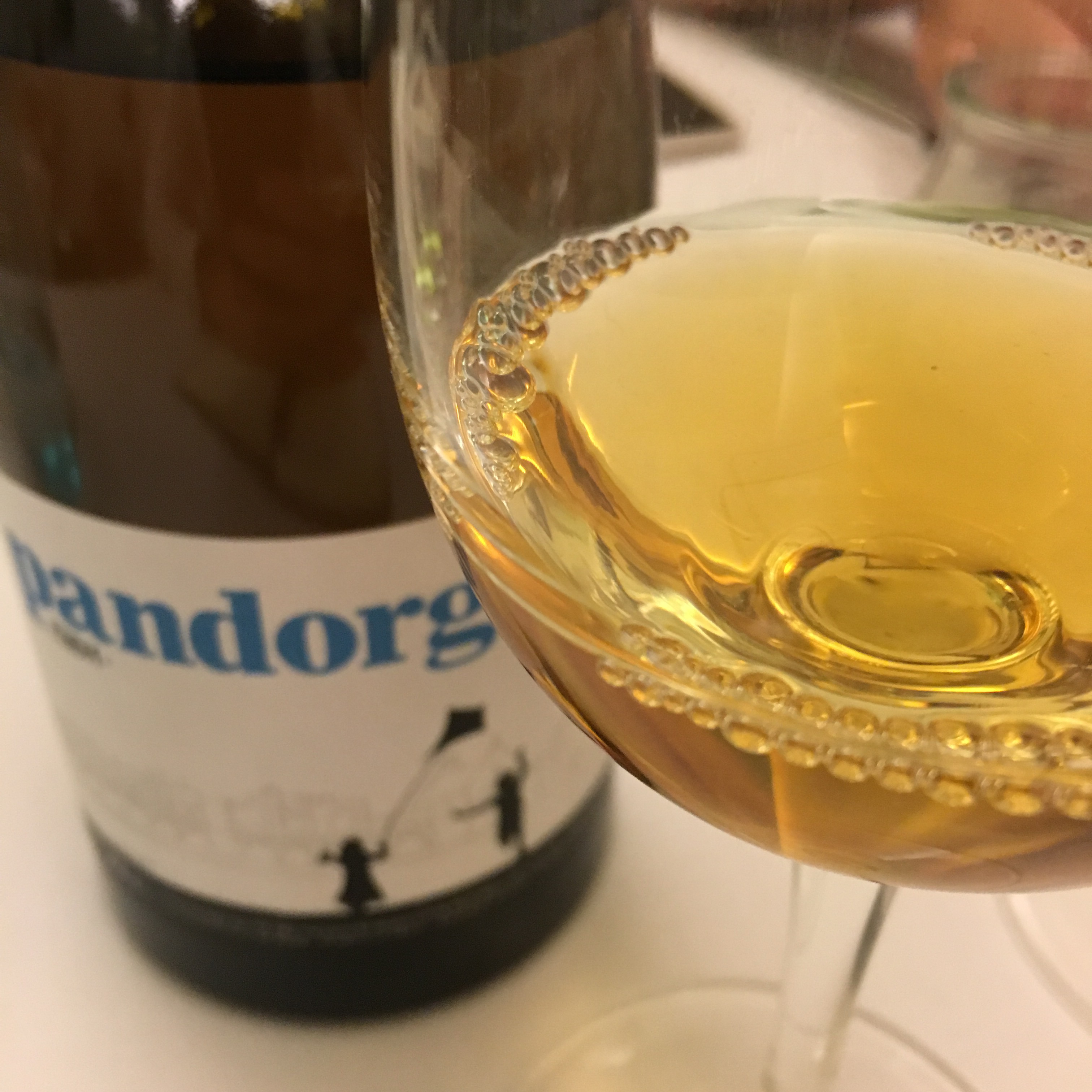
We had this last night at the end of a cracking dinner with a really good little creme brulee (I took no photo of course so I am recyling one).  I also have one of these 100 year old PX beauties down here with me and was nearly tempted to open it but managed to rein myself in in time.

It really is an excellent little wine. A little apricot gem, sweet but mineral, tasty but fresh. Comparisons were made with late harvest rieslings but to me this has a bit more apricot and orange richness than you would find there. But it is a lot more than that: it is terroir specific (the Panesa vineyard, in Carrascal de Jerez), it is a pure expression of the fruit, and it has a specific vintage (2014, obvs). In fact it not only has a vintage, but by choosing to vary the asoleo (less asoleo for a cool season like this one, slightly more for a warm season like 2015), and fermentation without temperature control it almost exaggerates the qualities of that vintage.

But most importantly, a little gem of a wine.


The young flor and the old bota 

Interesting contrast here between two wines that are both 100% palomino fino and have both spent time in bota but with and without flor, respectively. (They are also from opposite ends of the Marco de Jerez.) What I find interesting is the fact that what I recognize as the wood influence of the barrel is much more marked in the Socaire – which has spent two years in an old fino bota – than in the Manzanilla de Añada – which has spent nearly four.

I am no expert here but I am guessing that this lack of wood effect may be a function of the flor at work, or that the barrel influence is balanced by the lack of glycerine and sugar in the wine. Or it maybe that what I am attributing to the wood is really the effect of the wine impregnated into the barrels. On a completely different level, it reminded me of one of the more extraordinary wines that we tasted by Alba a while back: Alba Pago Carrascal Las Alegrías 2014. That wine was un unfortified palomino fino from Pago Carrascal (de Sanlucar) that aged for 18 months in a 650 litre chestnut bocoy that had held oloroso for over 80 years – and as a result had gained a fascinating, fine character and profile. It also brought to mind Mirando al Sur, a fascinating 100% viura from Rioja by Oliviere Riviere that had spent 18 months in a sherry bota.  (Indeed although I am even less of an expert this kind of thing has been de rigueur in the whisky business for donkeys years.)

It is something that has intrigued me ever since I started thinking about these wines: trying to get a handle on the importance of the barrels used. One of the first things a winemaker will tell you about their wines is how much oak it has had, where the oak was from and whether it was old or new. This conversation just never happens in relation to sherry. Maybe because of the historic nature of many soleras and the very limited number of vintage wines: even the new soleras that appear tendo to inherit barrels from old ones, while the vintage wines I know of, from memory, appear to be aged in old botas.

It would be fascinating to try something made in a new barrel, or maybe to make some wine in new american and french oak and give them a run against the oldies. Who knows maybe there is a stack of literature out there that I am not aware of – if so give me a shout.


Manzanilla de añada Callejuela 2012 – 2/11 

After a special week this is a special wine.

A week ago I was feeling a bit of burnout – really tough month with everything going on around the world and to be honest I was ready for some holidays. A couple of nights out with the boys and a long chat with one of the most inspiring winemakers around changed that – and the arrival of this, one of my favourite projects – also helped (thanks to the Cuatrogatos).

It has the same fresh, lemony gold colour as the first bota, but the nose while fruity has a touch more sea breeze. Then on the palate it has a much more explosive zinginess – salinity and sapidity. Still has a good mouthfull of fruit but a little bit spicier and much finer, more vertical and direct. Then a long, long mouthwatering finish. Am watching the Open as I sup and the boys have played their putts and my mouth is still watering.

A definite step up and a much bigger step up than I expected from the first saca. This is a proper manzanilla alright.