Criadera /A

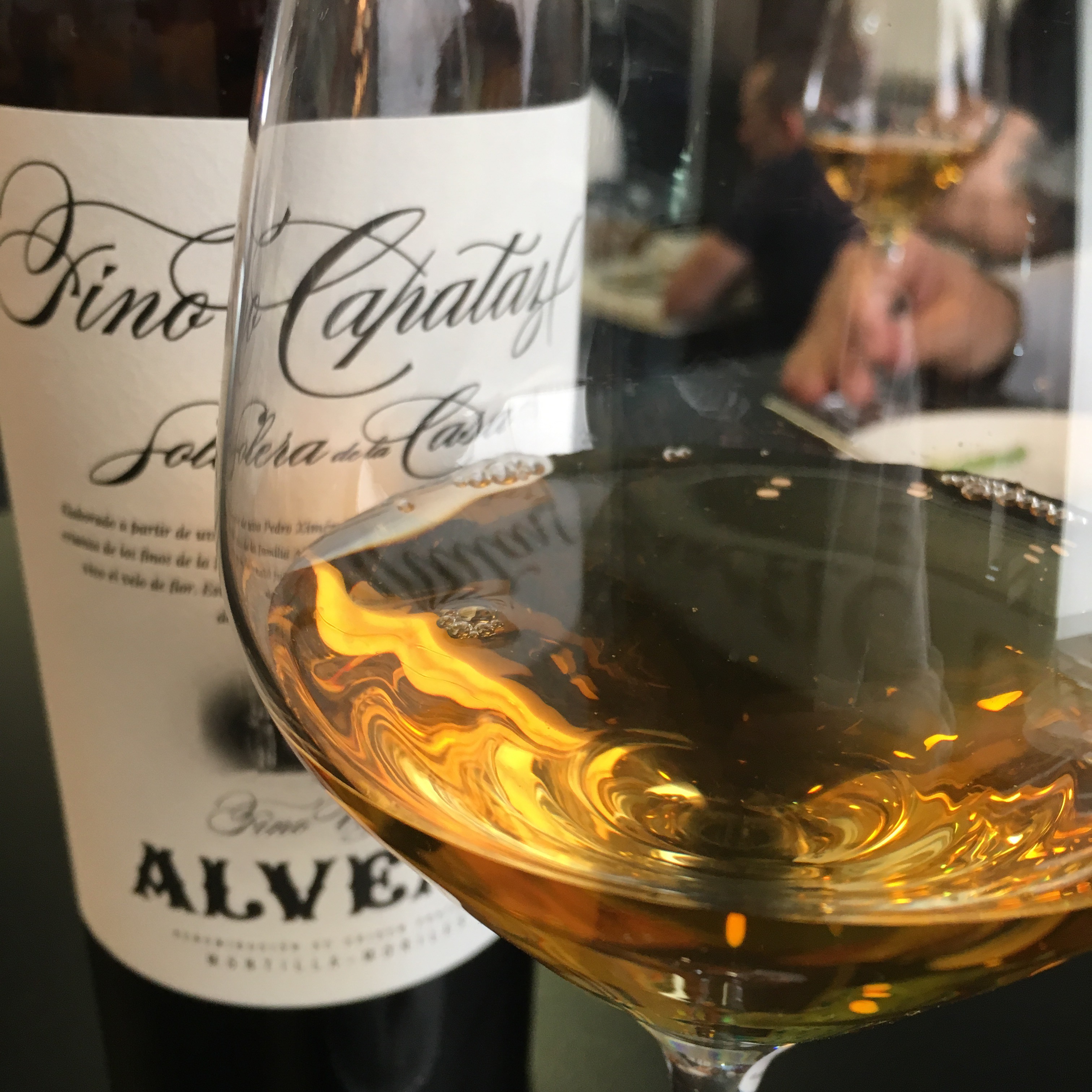
Am going with the short version of the name here. This was wine number four of an outstanding lunch with Bodegas Alvear last week and had a tough gig, wedged as it was between an outstanding fino (the Fino Capataz Solera de la Familia) and a quite sensational amontillado (Amontillado Solera Fundacional). 

Said to have an average age of around 13/14 years (compared to 10/12 for the fino) this is the “fino que va para amontillado” – the biological wine headed for the amontillado solera. It has had more oxidation than the fino – the flor starting to disappear for seasons from around eight years onwards – but hasn’t really had the full roast of oxidation of an amontillado. 

It is only slightly richer in colour than the fino, a lovely rich amber. On the nose it is less aromatic – you really notice the reduced exposure to flor – and although there is a touch more hazelnut in the nose there is less of the sweet wet hay aroma, making it seems less sweet overall. 

On the palate it is a similar story, a tighter, slightly less expressive wine compared to the fino, with a touch more intensity and a sharper profile. Punchy, acidic start and a fresh finish gives it a nice elegant profile. (Curiously once the glass is empty the aromas are much more lively – sweetness and haybales.)

Another very fine wine, elegance and intensity. 

Fino CB 

The second wine from my epic lunch with Alvear last week was the Fino CB, a six year old fino, once again from 100% pedro ximenez, and from wine that did not require fortification. Am realizing that it is a house that venerates its former capatazes and here is another example: it is apparently named after Capataz Villanueva (in the, erm, old Spanish, Billanueva). 

As you can just about see it was a pale straw colour with just a hint of green. A punchy nose with a touch of yeasty bread about it. Was interesting to try it after the Marques de la Sierra, because whereas that wine was leafy and had notes of fennel and anise this one takes it up a notch and has that liquorice root flavour I associate with pedro ximenez finos. Has a slightly richer texture to it. If the Marques was silky this has a bit more velvety, oily body – and a warm, savoury palate and a nicely integrated salinity that is more sapid than saline. 

An underrated and enjoyable fino with its own character. Good old Captain Villanueva! 

Marques de la Sierra 

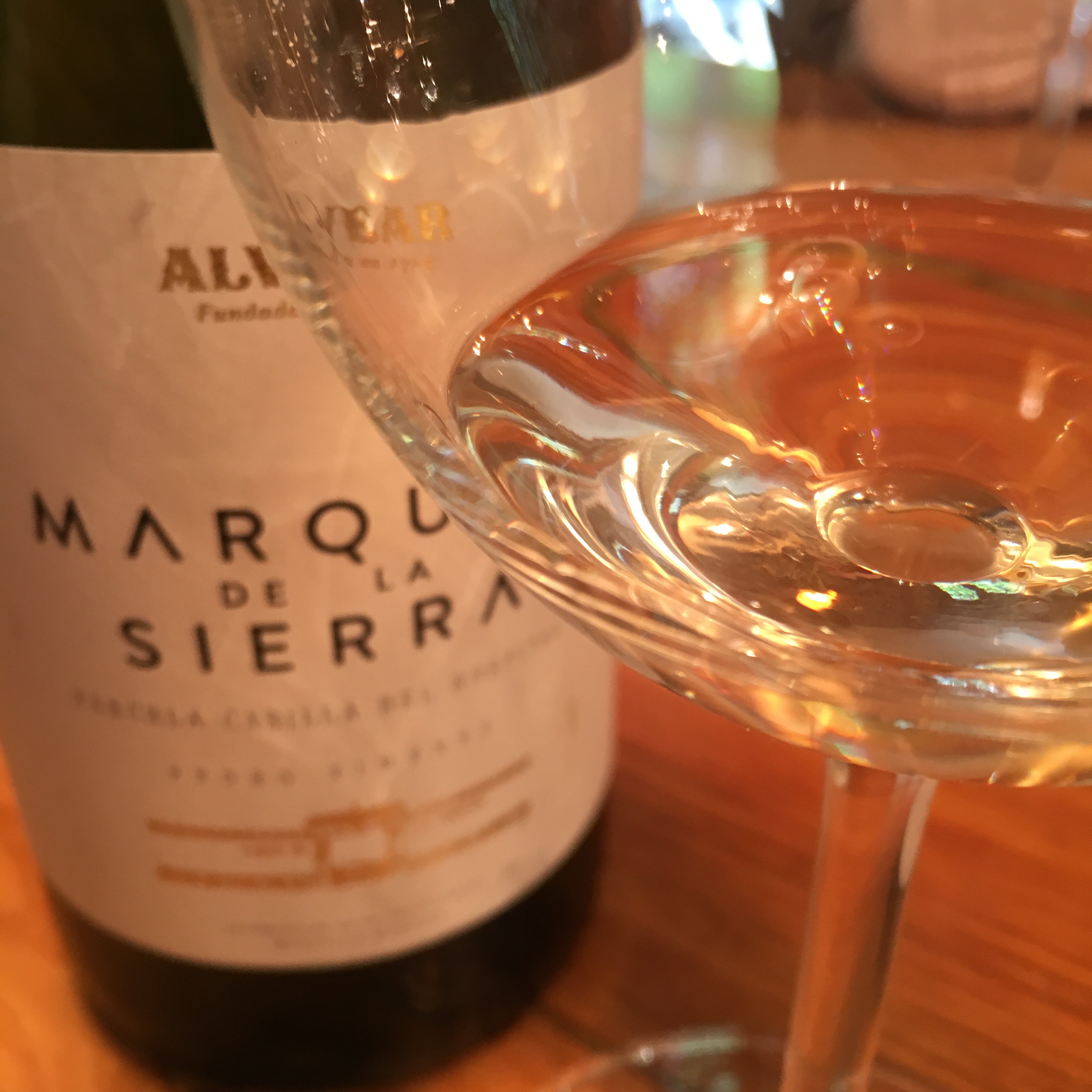
Not the first dry white pedro ximenez wine I have had but there have not been many. This was the first wine of a quite fantastic lunch with Javier Noval of Alvear and in the heat of Madrid was a top start.

I am convinced that, just like Jerez and its creams and mediums, the dry wines of Montilla Moriles are victims of the phenomenal success of their sweet pedro ximenez. In fact even more so, because the very name of the grape has become synonymous with the sweet wine. But so much more is possible with pedro ximenez and it strikes me that a straight dry table wine should be an important part of any bodega’s armoury.  Alvear are in fact leading the charge, and with the help of Alfonso Torrente of Envinate will soon be releasing some parcel specific wines under the name “Tres Miradas” – a cordobes homage to the Pitijopos. 

This is not one of those wines, but rather the reboot of a classic label and it is a fesh and enjoyable wine. Dry but has a citrus, floral sweetness of flavour and some nice minerals and green leaves and – a great shout by Javier – some fennel flavours. 

Very nice thirst quenching stuff – and as far from the popular image of a pedro ximenez as you can get. 

Fino Capataz Solera de la Casa 

Although slightly out of order, after yesterday’s terrific lunch in Lua and after looking back at the archive this morning I couldn’t resist writing up my note of this top, top wine. (Not that the notes were much good. Yesterday’s lunch was one of those occasions when the conversation flowed even more emphatically than the wines, and between gulps and mouthfuls we touched on everything from geography, climate, soil types and harvest to branding and positioning, often in the same sentence. Frankly, I had better things to do than take notes.)

So it was confirmed that this is the unshaven version of the Fino Capataz of back in the day – by which I mean it is unfiltered and unclarified (although I remember the original as being pretty dark in hue in any event), and with a total of around 10-12 years of biological ageing.

On the nose this bottle has clear oxidative notes – from whence the nutty nose that I have always associated this wine I suppose – in fact almost fruity but with haybales too, like old apples packed in straw. Aftter the sweet and inviting nose it it impressively dry and punchy on the palate, a really concentrated sapidity and intense flavours, which start solid, then give way to nuts and then minerals, with a bit of a saline sting to the tail.

A really top fino. In fact a top wine in general.

Fino que va para amontillado Criadera/A – 1/2017 

img_6648

I think we have now reached the limit in terms of length of wine name – this is getting to Riesling-like proportions. Was going to write this up as an amontillado fino but have gone with the manufacturer’s instructions.

It is the first saca of 2017 (or ever), one of the new releases by Alvear (you can try them all at Territorio Era), and as you can see is a pretty limited release – 1060 tiny bottles. 100% pedro ximenez with an age of around 10-12 years under flor and apparently from the criadera used to feed the solera of the amontillado VORS.

It has a bit more reddish brown than straw in colour and is pretty clear, if not quite cristaline. On the nose I find it much closer to an amontillado than a fino. I don’t get quite as much haybale biological action in the nose, just maybe a bit of sawdust whereas there is a piercing salty bitter almond aroma. On the palate too it wasn’t as fat or fatty as I expected. In fact I was surprised by just how dry and fine it is. An elegant palate, with a nice sharp acidity, a very piercing bitter almond flavour and a fresh, saline finish.

An elegant wine in a cheeky little bottle: get one if you can.


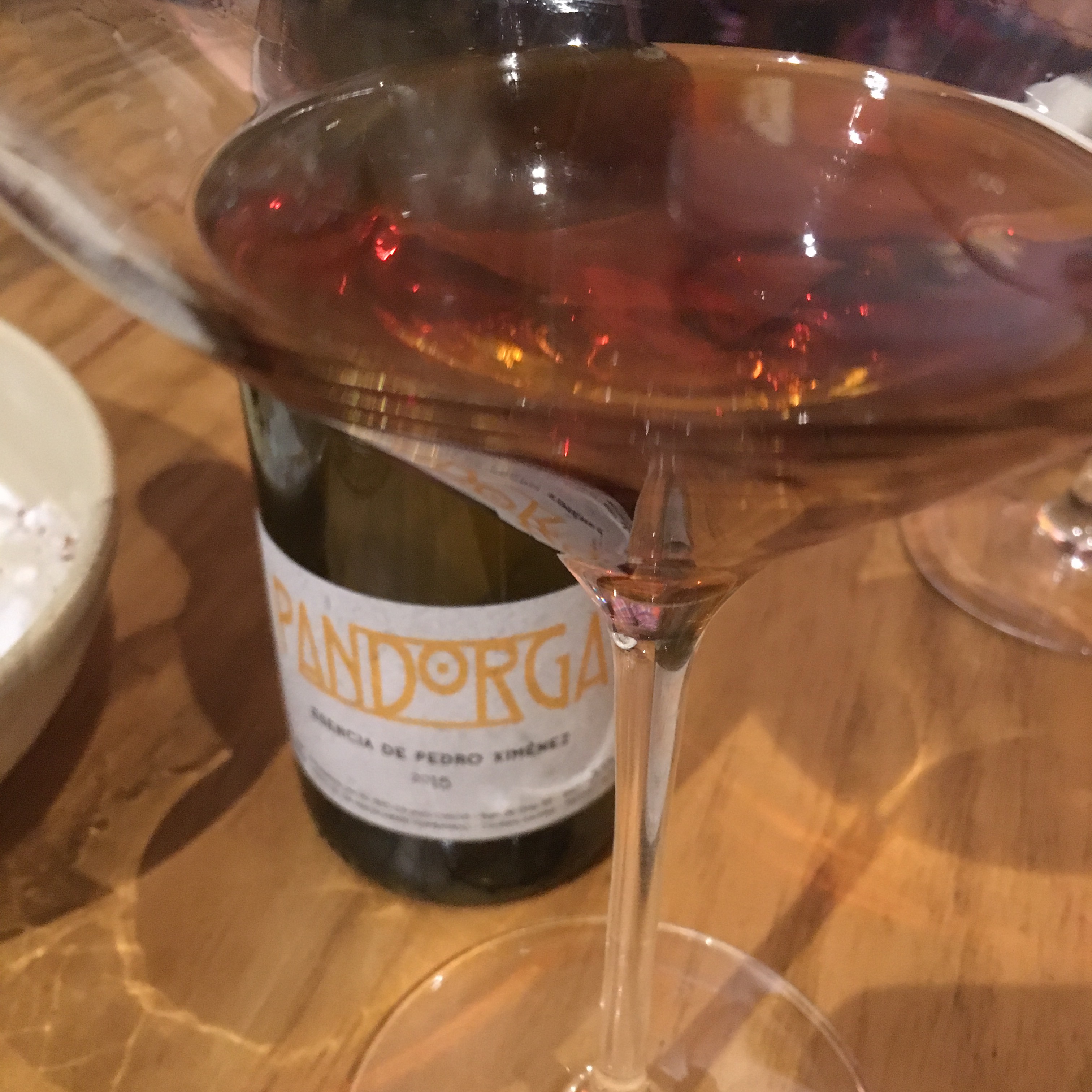
Pandorga 2015 – Essencia de Pedro Ximenez

Here is a wine you won’t see much of, if indeed it is a wine. 

It is the second edition of Ramiro Ibañez’s Pandorga pedro ximenez and, like the first, seeks to express the characteristics of the fruit and the añada – a young wine fermented in bota and no attempt to “correct” the effects of the growing season on the fruit. In most cases of industrial production a cool drying season might be corrected by more days of asoleo and fermentation at higher temperature, and a hot season with fewer days and more controlled temperatures. Ramiro’s approach is pro-cyclical: the effects of the cooler 2014 season given very little asoleo and accentuated by the naturally lower temperatures of fermentation. By comparison the hotter 2015 growing season meant more asoleo and a warmer fermentation. The result is an extraordinary, a tiny amount (and thus sold in tiny bottles) of nectar with 520g/l of sugar and only 5% alcohol – too little to allow it to be labelled wine. 

And if the 2014 was apricot jam this is fresh, ripe apricot juice. Just a touch of acidity to keep it honest, but the words that spring to mind are along the lines of ambrosia, nectar, sherbet and similar. 

Really an exceptional thing. I have my own tiny bottle at home, but we enjoyed this at the end of a sensational dinner at Angelita. (And what other restaurant can offer you wines as rare and unique as this?) 

Fino Capataz Solera de la Casa 

At lunch in Territorio Era I had just enjoyed a glass of the Tradición Fino and thought it would be a shame not to compare it to this big boned fino from Montilla Moriles. Two 10-12 year old finos from high quality bodegas, the big difference being the grape involved – here we have pedro ximenez compared to the palomino.

You have to say it is a fantastic wine – real intense roast almond aromas and flavour, and volume but elegance too, with a nice zingy start and a long mouthwatering finish. Doesn’t have the bitter notes of the Tradición fino (although this is a year younger in the bottle) and in fact has a nice little caramel effect as the nuts give way to the minerals that makes the contrast even greater.

One of the outstanding finos. .

Fino Lagar Blanco

A good friend of mine recently gave me a chunk of liquorice root – known here as “palulu” – because he maintained that it was important to my wine tasting education to understand this substance. We duly chopped the thing into kindling (using ever larger and sharper knives in defiance of all health and safety regulations and indeed common sense) and gave the splinters a good old suck and chew. The flavour was fascinating – a bitter, sappy aniseed – not to mention the sensation of chewing wood.

He was dead right about its importance in wine tasting terms. It is one of those flavours that you find deep in a lot of the wines from down South, and in particular, I find, in some of these pedro ximenez finos from Montilla Moriles.

This fino by Lagar Blanco – with which we kicked off an excellent lunch at La Malaje yesterday – is one that I have wanted to write about before. It is a seven year old fino that has developed nutty aromas and flavours but underneath there is just a hint of palulu bitterness, which I must admit I had found a little disconcerting in the past (before I embraced the chewing of the root itself). Punchy nose and a gentle, seawater salinity to it – not as sharp or sleek a profile as some and plenty of volume in the mouth, with a nutty character of raw almonds and that hint of rooty devilry.


Amontillado Gran Barquero


Heading to a tasting of Perez Barquero wines at Reserva y Cata in a few minutes and am getting the juices flowing by writing up my note of this from yesterday’s lunch at Territorio Era. (In fact the original plan was just to repost but to my disbelief I discovered just now that I had no post on the blog about it.)

Despite an average age of 25-30 years it has really nice flor effects to it – the nose has nice almonds and yeasty bread – which makes me think it spent a good number of the early years under flor. Then it has a fine, silky texture that you don’t necessarily expect from a pedro ximenez, lovely acidic and or saline bite and a nice elegant palate of roasted, dark roasted almost bitter almonds.

Really top class. Juices are now flowing and no mistake.