Blanquito, La Casilla and El Cerro

For me today’s Feria started and finished at the stand of Callejuela Vinos – but whereas I started with their newest, as yet unreleased project I had to finish with these old beauties.
I utterly failed to take note of saca dates and any other kind of technical detail but the wines were as class as I remembered: the sharp, roast apple and salt and pepper Blanquito; the sleek, bitter-dry caramel Casilla; and the most elegant of olorosos – fine at both ends and nutty and juicy in the middle – El Cerro.

Fantastic to try them again – and to try them together too.

Oloroso Mar 7

Rounding off a cracking lunch at Territorio Era with this Sanlucar oloroso from Mar 7. (In fact we had something after but this was the last sherry.) Not sure about the details of the wine but I would guess it has an average age of 15 years or so. 

It is a beautiful deep brown colour and has a saline, haybale, nutty nose. Nice and sharp on the palate but not excessively so, and attractive salty, nutty flavour to it. Not huge in profile or body either – a smooth, elegant, slightly smokey oloroso. 
Very tasty and very handy as a table wine.

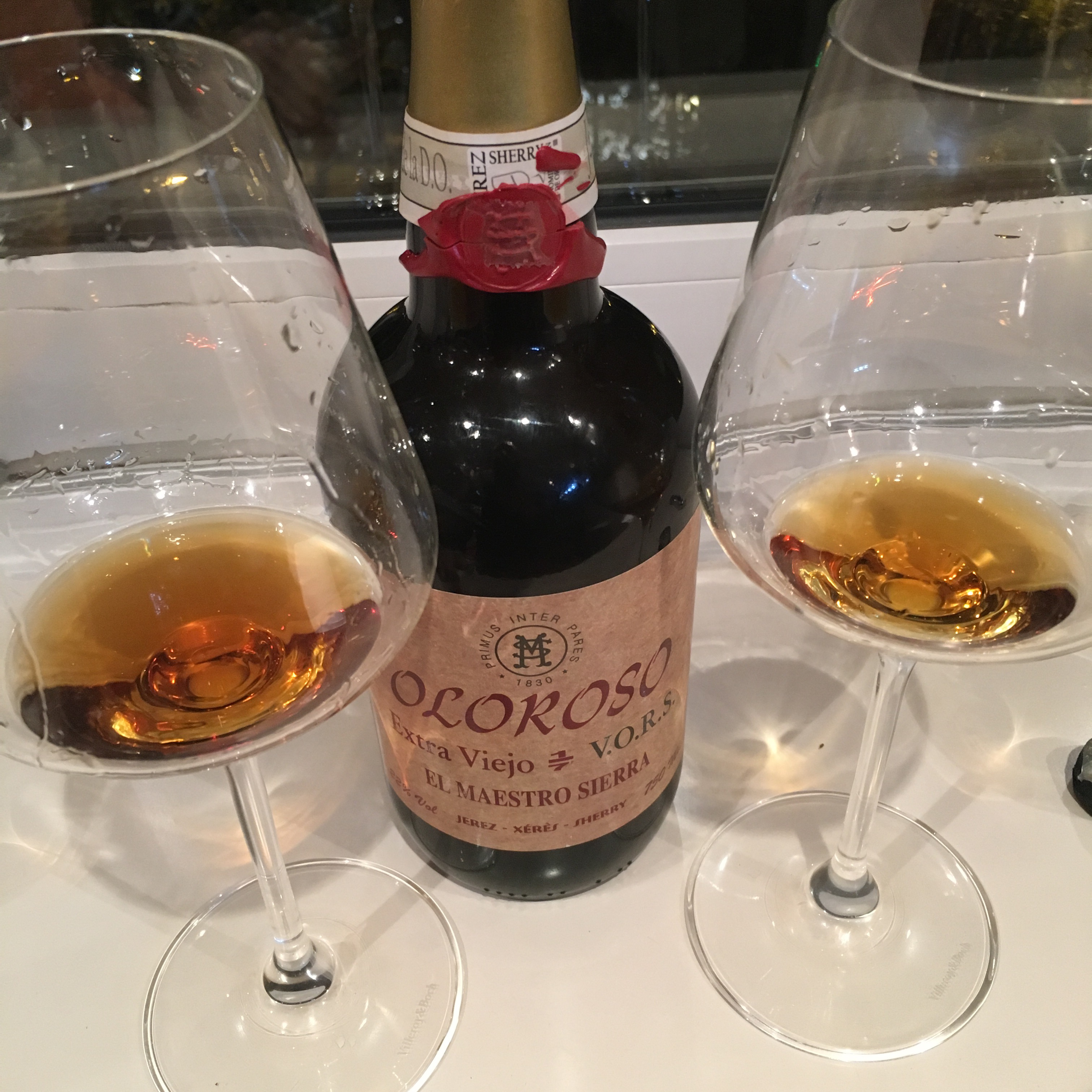
Oloroso Extra Viejo 1/7 Maestro Sierra 

After two quite magnificent Sanlucar wines (La Bota de Palo Cortado 41 – on the right in the picture above – and Amontillado Muy Viejo Don Paco) my week of sobriety’s horse has now bolted and rather than sit in an empty stable I am going to chase it downhill with this meaty old Jerez oloroso.

Even older than the others, with an average age north of 80 years, the contrast in styles is really fascinating. Compared to its old muckers from Sanlucar, here the nose has less salinity and ozone and far more polish and walnut. It is said to be a “fine” style of oloroso and it has tremendous elegance but it also has a much fuller palate of burnt caramel and spicey tobacco – with a dustier, tobacco finish.

Really excellent, maybe the best of the three, but time for something a little less potent or my evening will be over quickly!

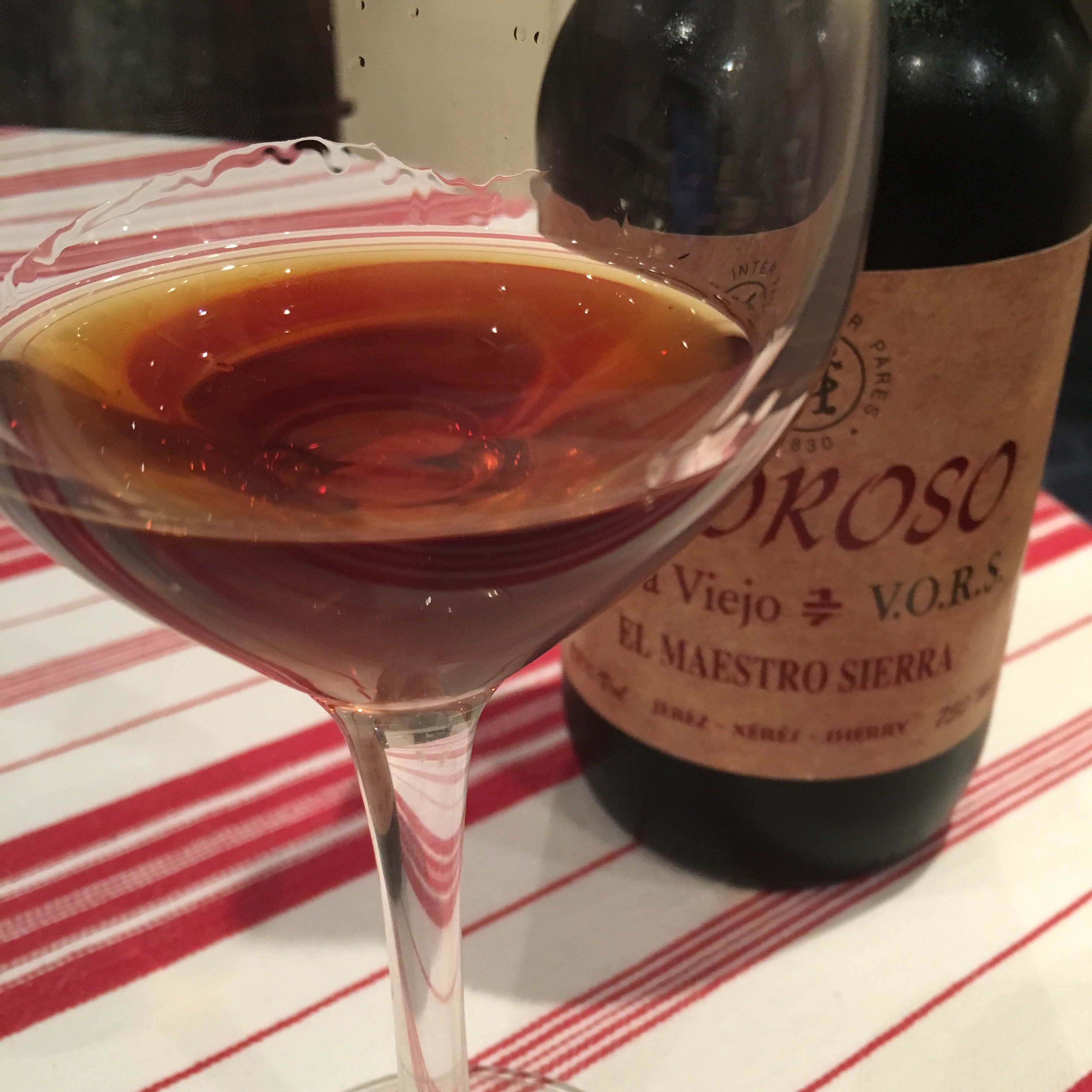
Oloroso Extra Viejo 1/7 El Maestro Sierra

If for any reason you are averse to late night liquids then look away now because this juice is fully nocturnal. It is absolutely a vampire-like, bitter brooding negative version of your day wines, with its furniture polish, sawdust and burnt caramel aroma, bitter bite and walnut wood and tobacco flavours.

I opened this and wrote about it way back in April and have been back to the well several times since. It is intense, and bitter, and there is no doubt you have to be in the right frame of mind (don’t try this lad as an aperitif), but for those moments of silence when everyone else is in bed and the only sound is the sporadic hammering of the laptop keyboard what a wine it is.

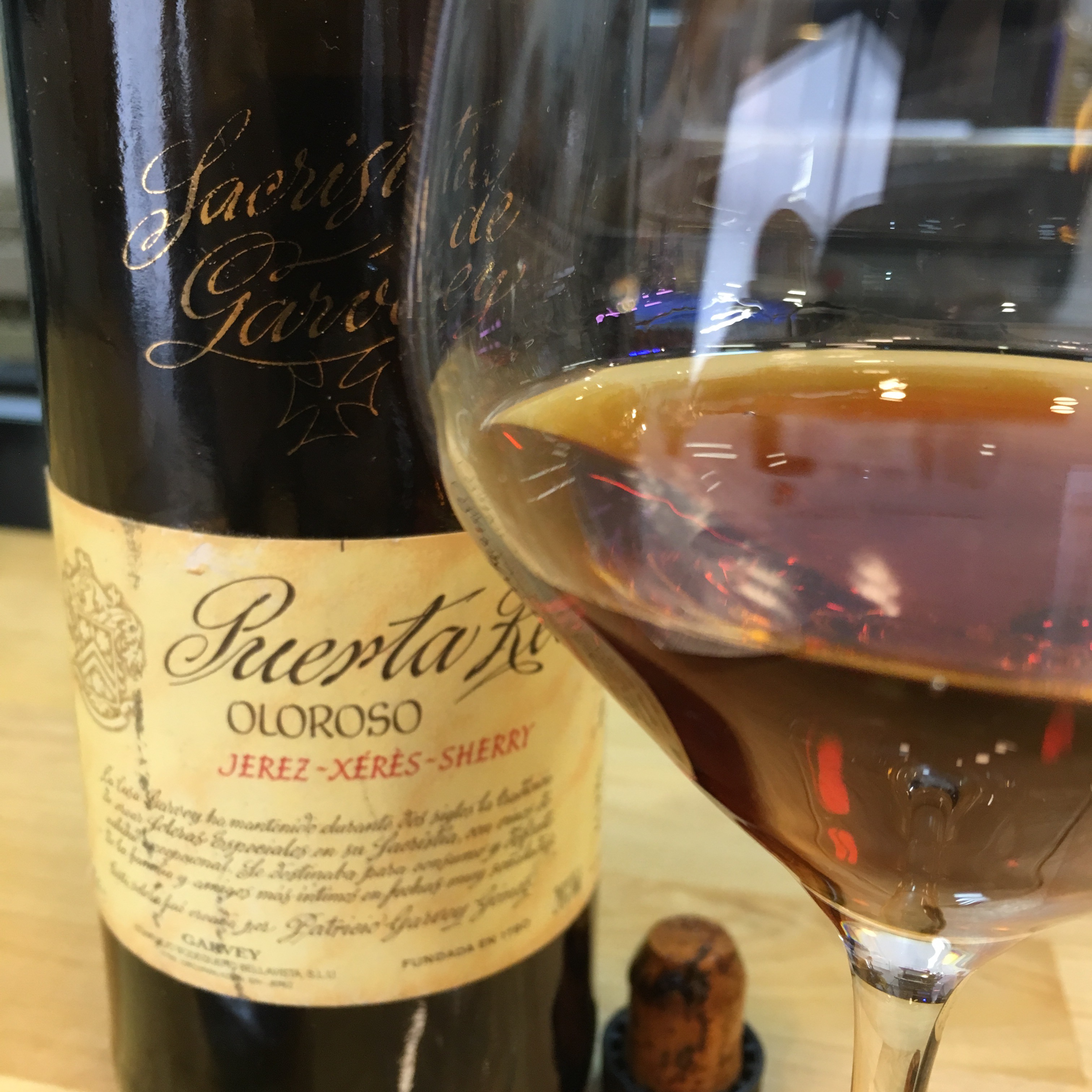
Oloroso Puerta Real 

All macharnudo and pretty old – no VORS or a VOS on the label but a reference to “many years”.  Fans of bottle ageing will note that this one had a few years in the bottle – a 2012 bottling.

As you can almost see it is a reddish, mahogany brown colour. Has a nice rich walnuty nose to, with a hint of sweet spice maybe, and then on the palate it is a big horizontal mouthfull – full flavoured but not sharp in attack or finish. In fact on the whole it comes across as so smooth as to be almost mellow.

Tasty and elegant.

Oloroso Muy Viejo Tradición

A second, even more majestic wine from a lunch with Bodegas Tradicion this week. This is the oloroso from the solera fundacional of the bodega. The bodega itself was founded in 1996 but the solera was older and would have been static for some time when this was bottled. 

It took a little time to open up. At first it was heavy and robust – reminded me of a very old almacenista style oloroso or one of these extreme releases that get a lot of praise, but as it started to stretch its legs it became more and more impressive. By the end it was, as I said at the top, majestic. 

Powerful and rich in aromas and flavours but dry and increasingly elegant in profile: nuts and polished hardwood rather than sawdust. Acid bite first up, a big palate of flavour and then stinging salinity that makes for just an immense, mouth watering finish. 

Really top class wine and an excellent foundation for any bodega.

Oloroso Tradicion, Trafalgar Bicentenary Edition, 2007

Enjoyed with a terrific lunch at Taberna Verdejo with Bodegas Tradicion and what Englishman could begrudge this – a beautiful label to start with, as Nelson’s ships traverse the hispano-french line prior to sharing them out (only for the storm to carry away the prizes).

A magnificent start – you can see the colour and the nose was as bright as brandy, a lovely fine nose. Then on the palate an acid, buzzy swell of distilled, brandy like caramel and bitter flavours and a long finish. The time in the bottle was evident a touch of bitterness on the nose and maybe half an ounce less of lift on the palate,  but a top class oloroso no doubt.

England expects that every man will do their duty.

The Acid Test

It is funny how the world works – last week there was a tasting at the UEC of natural wines marked by their volatile acid content and for a while all anyone tweeted or wassaped about here in Madrid was volatile – the new cool. Then the next thing I know I am at the bar of Angelita for a light and liquid lunch and by coincidence I hit a rich stream of the new cool.

Three extraordinary wines here – Irakere is a macabeo and garnacha wine made in the North by some guys from Valencia and, as you probably gathered from the introduction, the volatile is just extraordinary (makes the wine seem lighter than air, if a bit stingy). Then the Las Moradas Albillo Real “Bajo Velo” (not much velo, it was only six months in the barrel and velo of what, you might ask) and, while not as extreme as the Irakere, that also had a solventish edge to it – slight lift at the edges on the nose and palate.

And then finally the Santa Petronila oloroso.  Now the first time I tried this back in October I found it lighter and finer than your regular oloroso and to be honest even on that occasion there were mutterings about volatile, but today it really seemed to come across very clearly  – even compared to the Irakere. It was also pretty turbid and it was pretty interesting to see if from this natural wine angle.

Very interesting indeed. Fortunately the other thing that Angelita does exceptionally well is cheese, which helped take the razor edge off the liquid!

Oloroso Juan Piñero 

An oloroso from the same Sanlucar stable as the Camborio, the Maruja, and the Palo Cortado of recent days and another smooth, enjoyable wine.

Whereas the Palo Cortado traces its lineage from Pago de Hornillos and Maruja, this is, like Camborio, from Añina and Macharnudo, although presumably without any biological ageing. It has spent around 12-14 years in a solera with three criaderas and one saca a year.

As you can see the colour is lighter than for many olorosos, a lightish chestnut, and the nose too is relatively fine, with a little bit of strawdust. It is very refined on the palate too – an easy drinking wine with nice nutty flavours and very mellow salinity. A bit more laid back than the palo cortado but with just a touch more concentration.

Another lovely example of a Sanlucar oloroso – really like the style.

Tasting the Great Gran Barqueros 

As trailed in my last post, last night I was lucky enough to attend a tasting of Gran Barquero wines given by José Ruz of Perez Barquero at Reserva y Cata, with the added bonus of the presence of Paco del Castillo.

There were four wines, all from the Gran Barquero range: the Fino en rama (a saca from October 20, 2016); a wine taken from the second criadera of the Amontillado Gran Barquero; a 2016 saca of Amontillado Gran Barquero and a 1996 bottling of the same wine. It made for a really instructive tasting which demonstrated the effects of oxidative ageing over time and, interestingly, of bottle ageing.

We started, of course, with the Fino en rama, which is from unfortified, 100% pedro ximenez and has spent 8-10 years under flor in a solera with three criaderas. It is an excellent fino en rama – intensely yeasty, flavourful (slightly bitter almonds) and mineral, and one of the things that always strike me about these Gran Barquero wines is how very fine they are in texture – the sense of how the glycerine and body you might expect from the pedro ximenez has been reduced by the flor over those years. (Interestingly, I was able to sneak a glug of a second bottle of the same wine and it had a quite different green apple and popcorn nose.) It was bottled only 8 days earlier but seemed to have  stood up to the bottling – will have to try and get some to see how it tastes in a few weeks.

We then moved on to the wine taken from the second criadera of the amontillado solera, which is refreshed from the solera of the fino en rama and also has three criaderas. Again there has been no fortification (we were told they hadn’t fortified for ten years or more) and the finished wine bottled as Amontillado Gran Barquero will have had an average of 15-20 years oxidative ageing on top of the 8-10 of biological ageing of the fino. It wasn’t fully clear to me what the average age of this wine from the second criadera was but I guess we are talking 8-10 plus 8-10 or similar. I found it a very enjoyable amontillado indeed – lovely straw and hazelnut nose, and even a little bit of raw yeast and juicy hazelnuts on the palate. Not powerfully acidic but a nice bite to it and good, mouthwatering salinity. Elegant and compact but full of fun.

Next came the finished Gran Barquero amontillado (from a bottling in September 2016) and to me it was a little step up in class and refinement. On the nose the sweet touches of the second criadera had gone but there was a richer yeastiness to it. On that little bit of extra acidity and salinity give it an even sharper entry and finish and the hazelnut flavours of the second criadera have intensified into roasted – borderline burnt – nuts and lead to a long, umami rich finish. It it a classic wine.

Finally, we were able to try a Gran Barquero amontillado bottled in 1996, giving us the chance to appreciate the effects of those 20 years of bottle ageing. As a caveat, it would not have been quite the same wine in 1996 – with a total age of closer to 15-20 years than 25-30. Moreover, I gather that these specific bottles have not exactly had a restful 20 years either: they had been shipped to and from the Canary Islands, no less, and with no guarantees as to the storage conditions.

Nevertheless, these bottle aged wines are all the go now so I was intrigued to see the differences – and surprised by the differences that were there, to be honest. First, and maybe least surprisingly, it looked its age: much darker in colour, not quite crystalline and with crumbs of sediment (see above). The most striking difference was on the nose – whereas the previous wine was all yeast, straw and herbs, this had an aroma of dusty old leather bound books – but also on the palate for me it had lost a little bit of the spring in its step, getting a touch dryer and with more bitterness, and even in terms of definition, again with a slightly dusty sensation to it. Really interesting to have tasted because the differences I noticed were things that in other wines in the past I had attributed to the length of the time in the barrel, but not quite my cup of tea as you can probably guess.

Overall though four top quality wines and an excellent structure to the tasting. When you throw in the knowledgeable commentary and explanations of José and Paco before during and afterwards it was an excellent night all round during which I learned a great deal. My sincere thanks to Ezequiel at Reserva y Cata, José and his colleagues at Perez Barquero and Paco de Castillo – brilliant stuff.