Manzanilla en rama Micaela (again) 

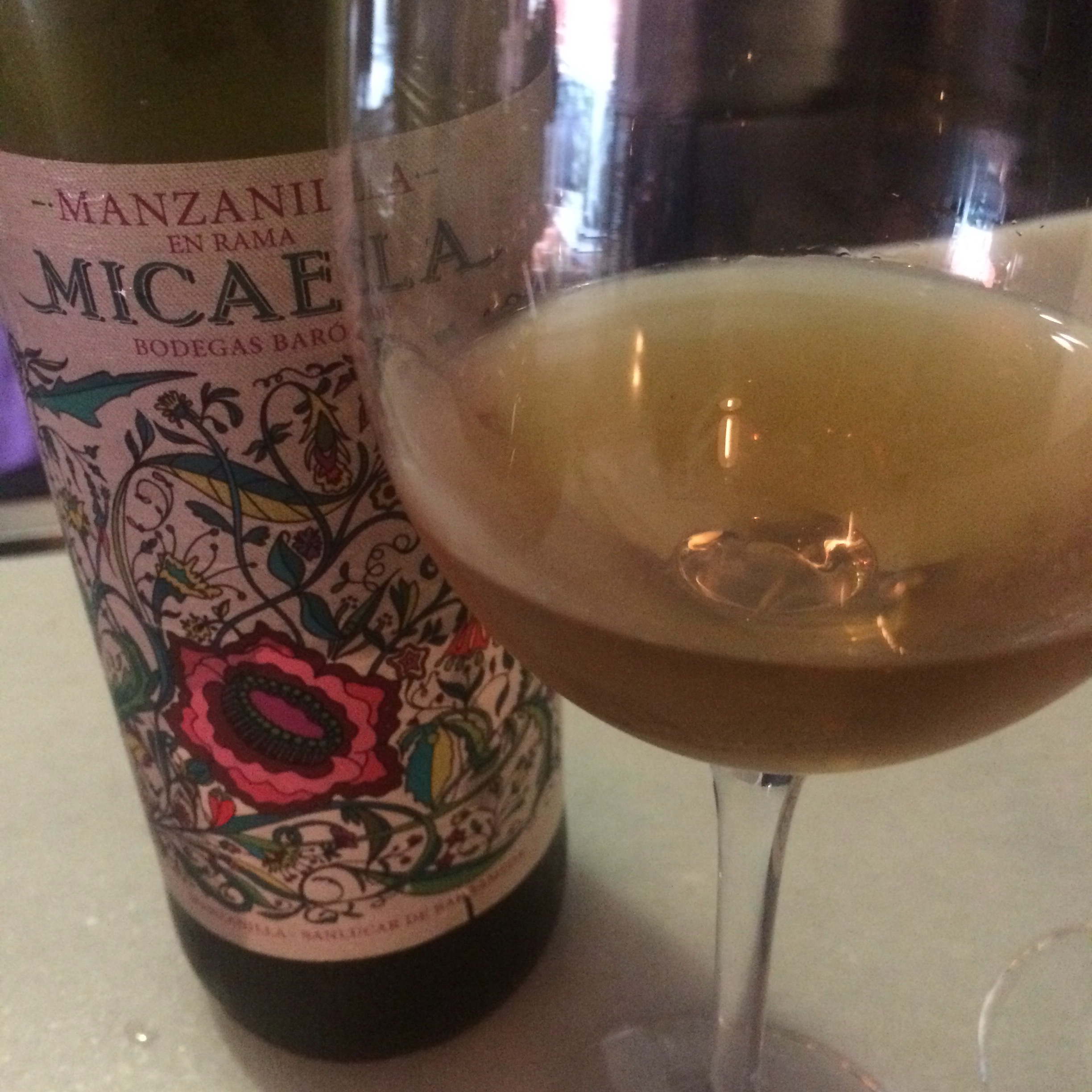
You have to say the labels are top class on these. Quality packaging won’t solve all the problems in the sherry triangle but it certainly doesn’t hurt. What I particularly like about this one is the floral, colourful greenery – dead right for a manzanilla (even if this one isn’t particularly floral or green).

As to the wine inside, according to the website we are looking at a manzanilla en rama with an average age of 4 years under flor from Jerez Superior fruit (according to another section of the web the family has two vineyards: El Poedo and El Hato, but it is not specified which fruit is in this Micaela).

Like a lot of en ramas it has a brownish, evolved looking colour as you can see above which gives it the appearance of a much older wine.  On the nose there are the big bales of hay you expect but also a sweet, coppery, stewed tomato aroma – a bit disconcerting at first but it improves with time in the glass. On the palate it has a smooth, slightly bitter citrus quality, with well integrated minerals and alcohol that don’t intrude. Lovely long, fresh finish.

Overall a tasty and well integrated wine.

(The penny has now dropped – I did of course review this just a couple of weeks ago. Glad to see that the impressions are similar, but the colour of this one is definitely more evolved.)

Manzanilla la Bailaora  

  
Yet another acquisition from the Grupo Estevez online store, this is a basic manzanilla and it does the job. 

A pale, watery straw colour and a mineral, almost metallic nose. On the palate it is salty lemons –  not as elegant as some but punchy and refreshing, full flavoured. 

Very swiggable. 

Manzanilla Gabriela 

What a week of manzanillas it has been – here is another, from renowned but not widely distributed Sanlucar maker Sanchez Ayala. The bodega has been a happy hunting ground in particular for the Equipo Navazos boys: the Number 1 release was a Sanchez Ayala and there have been no fewer than 12 in total (including some absolute crackers). However this is the first time I have tried one under their own label.

It is their classic manzanilla. Has an excellent ficha, which tells us that the palomino is sourced from the “Las Cañas” vine in Pago Balbaína. The wine has an average age under flor of five years, and has passed through no fewer than nine criaderas.

And the resulting wine is indeed a classic. Pale in colour, a nice fresh floral, almond and sea air nose and an equally fresh, delicate profile on the palate. Very elegant and fine – maybe not the biggest flavour profile but easy in and easy out – very nice quaffing as they say. Could imagine myself drinking bottles of this down at the beach.

Three Manzanillas

Had three cracking and very different manzanilla en rama this last week and the differences made me reflect. Here we have three 100% palomino wines, made into manzanilla in the same small town but utterly different. Without reproducing the notes all over again I think they could be summarised as follows:

  • First, the Manzanilla 3 en rama had a nose of ozone and sea air and a palate full of zingy minerals, with a smokey finish.
  • Second, the Solear Winter 2015 was aromatic and juicy – vegetable, herbal and nutty – with a solidity and meatiness to it.
  • Finally La Guita en rama october 2015 was again different, with a more delicate, floral nose, a finer texture and very pleasant sweet citrus notes on the palate.

Three lovely wines that I would highly recommend and interestingly three quite different styles within a style. Really shows what can be done and how far we have to travel still in understanding the wines of the region.

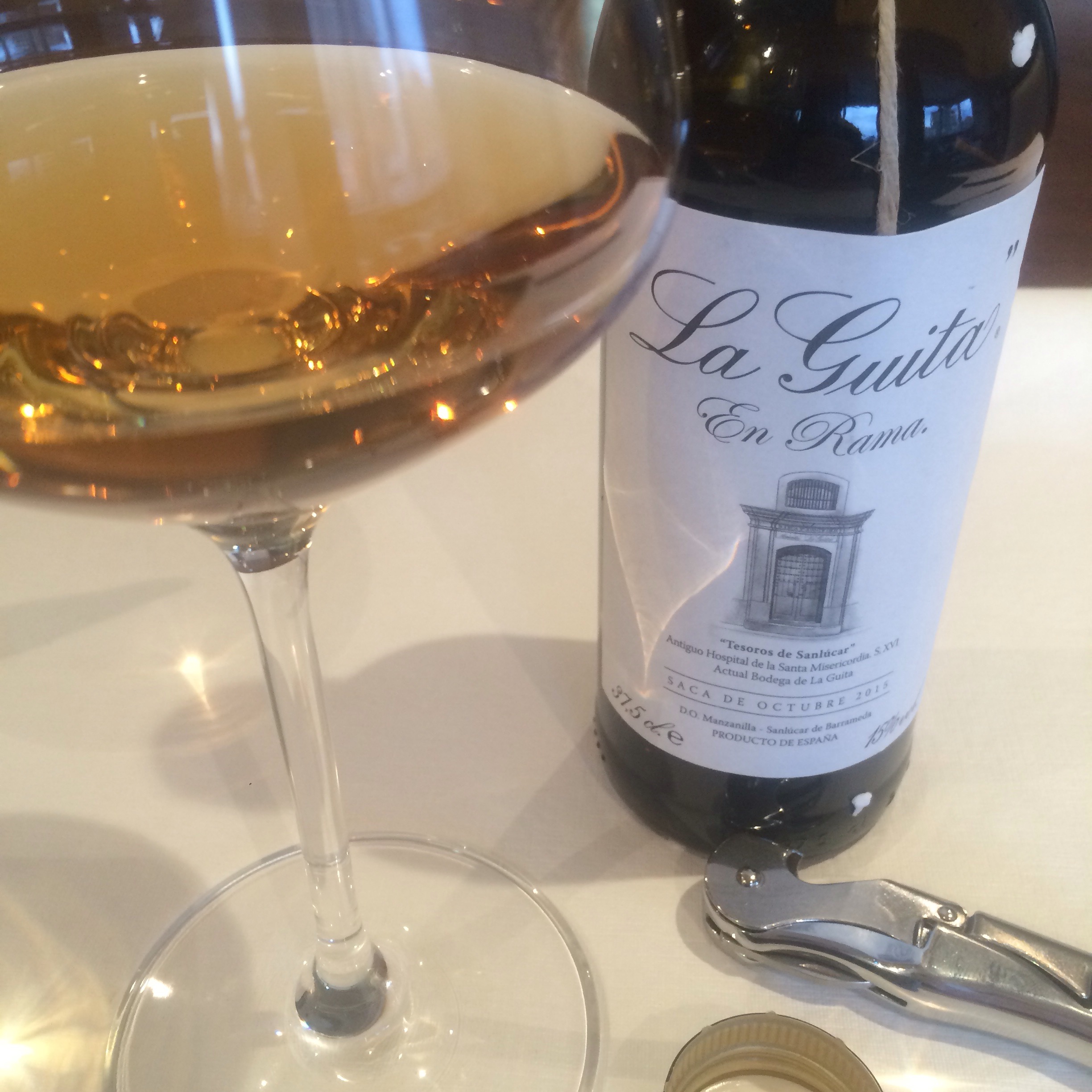
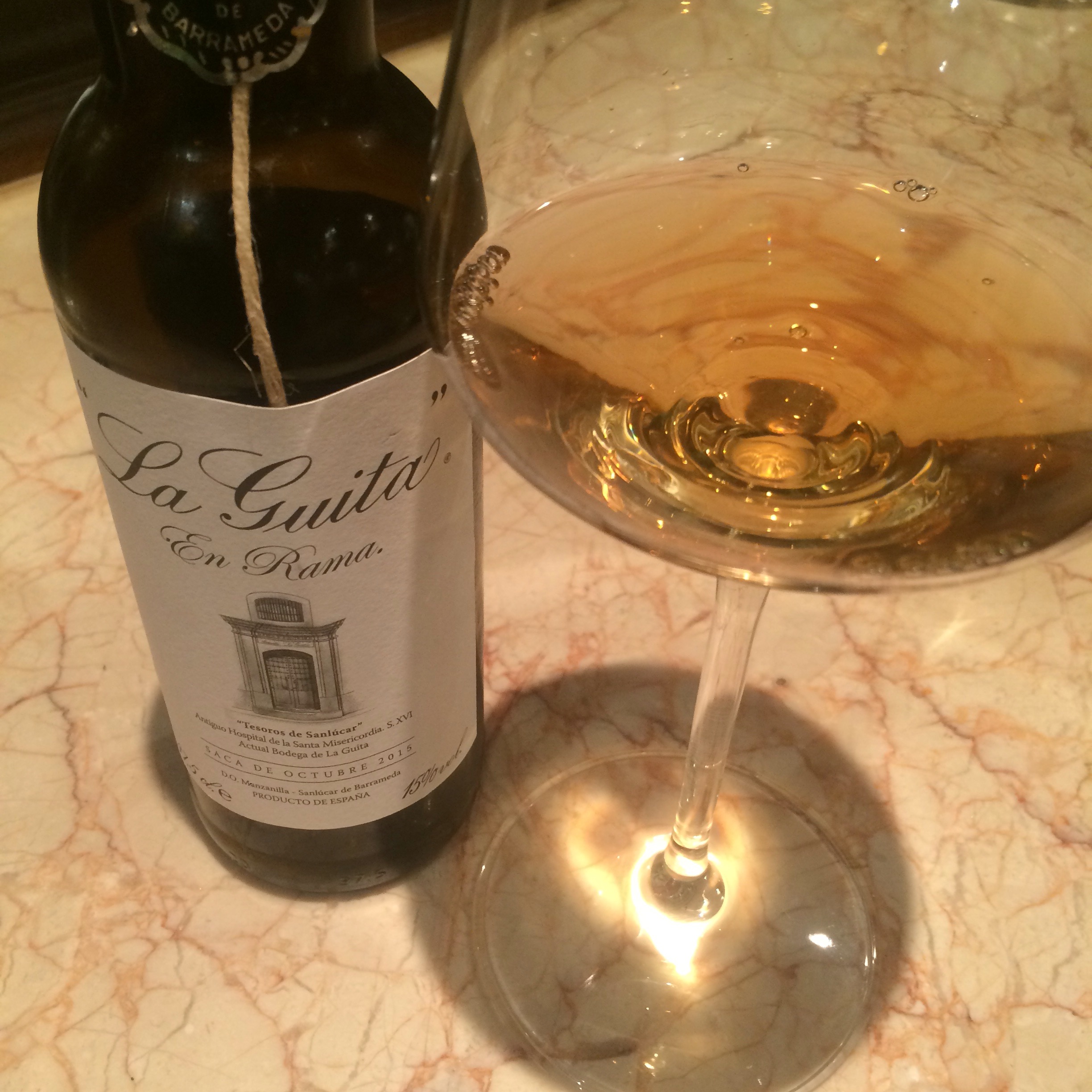
Manzanilla en rama La Guita octubre 2015 


Just look at the colour of this. Pretty amazing colour for a four and a half year old manzanilla bottled a mere three months ago. Bears no resemblance to the classic La Guita manzanilla I have had litres and litres of in the sunshine over the years and in fact really reminds me of one I had last year that had been in the bottle five years.

La Guita (an old Andalucian slang term for “cash”) is one of the classic manzanillas and the bodega from which it comes – Domingo Perez Marin – is owned by  Grupo Estevez.  This wine has been selected from one hundred year old soleras located in two different bodegas, the Misericordia (originally a 16th Century hospital and featured on the label) and Pago Sanlúcar Viejo. It is the first saca en rama from La Guita and as you can imagine there has been a lot of expectation.

It is beautifully presented and the official “La Guita” web has an excellent ficha with details of the vines (all Sanlucar, mainly Pago de Miraflores), the soil type (chalky/limestone rich clay), acidity and sugar content etc. A couple of datapoints that are missing are the number of criaderas, sacas etc but the ficha is well above average as it is (and much better than it was last year, from memory, so well done).

So anyway, getting back to the wine itself, the colour is tremendous – a real old gold, like old brass cuff links and collar studs. On the nose too it is mineral – tin, with sea air rather than salt and orangey citrus – reminded me almost of a Loire white in some ways.

On the palate I get those same characteristics, nice minerals – not aggressive salinity by any means, very smooth and integrated but enough bite to be interesting. Has a lovely suggestion of sweetness and citrus notes – again orange peel. Not the biggest volume (compared to the Solears it lacks juice) but nice flavours nevertheless. Also a really nice length and the citrus notes persist making it a very pleasant finish.

This is extremely drinkable, by which I mean I need a bigger bottle (or several). 

(And three days later the last glass is still intact: the colour, nose and flavours seem very similar. Still that tinny nose and flavour of citrussy yeast. Very good but I don’t see myself taking two attempts to drink future bottles.)


Lustau 3 en rama one week later


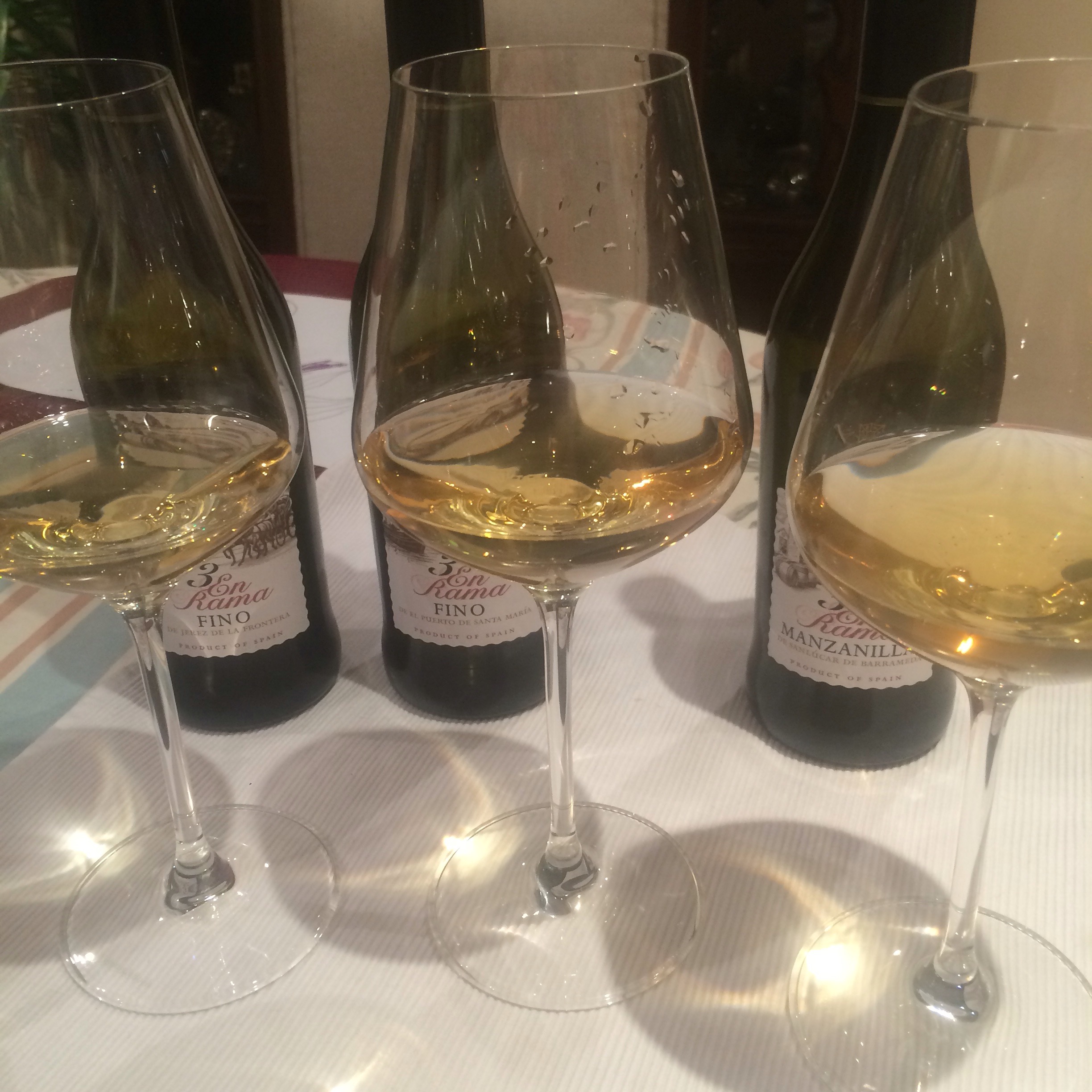
I thought it would be worth hanging on to see how these three wines reacted to a few days after opening and as you can even see from the photo above (with the Jerez de la Frontera left, Puerto de Santa Maria centre and the Manzanilla right) they have reacted in quite different ways to the experience.

First, the manzanilla which when fresh opened was crystal clear with a tinge of green is now cloudy and has taken on a shade of orange. I am not surprised it shows the most evolution – even after one day it had started to go – but it is quite a big difference. There is a definite tinny metalic aroma to it now and signs of age on the palate too. I actually had a glass on day 3 and think it might have been optimum then.

Next up the fino del Puerto de Santa Maria – originally my favourite and this has taken the week in its stride with comparative aplomb. It may be a shade darker but it is still crystal clear and the aromas seem to have gained in sweetness. Still really good.

Finally the fino de Jerez de la Frontera seems to be the least changed. Less discernible change in colour and it seems zesty and intense compared to the other two: a real zingy salinity to it and still that bitter citrus finish.

Nothing scientific about all this of course but I will make a mental note to not let manzanillas sit around too long – or maybe I will try and save a glass of the next couple to see if there is a pattern. As to the wines themselves, the fino del Puerto still seems to have a wider range of expression than the others, but all three are delicious.

The magnificent seven

Not that this is a magnificent selection by comparison to some you will see but the seasons roll by and we are getting there.

This really is a cracking little bottling – the just shout out collectors items. They are a homage to Doñana the natural reserve of marshes, shallow streams and sand dunes in the Guadalquivir delta. It is fantastically appropriate to the wines inside the bottles – they just seem bursting with life. It is also nice to see a celebration of life on the label in general – for me the old image of dusty barrels is a little over used (in this blog, for example …)

Manzanilla en rama Solear – saca de invierno 2015 

  
The razorbill has landed and this is another lovely manzanilla.

It is a lovely gold colour, aromatic on the nose and is wonderfully expressive on the palate – vegetable, herbal and nutty. These spend 7 years or so under flor (in fact I read somewhere that these are technically manzanilla pasadas) but the yeast is still there in force and they seem to pack more herbs and less minerals than many older Sanlucar wines. 

Looking at the note on the back label they also emphasize the flavours but whereas they talk about an “explosion of light and flavour” I find it a bit more solid and meaty, particular by comparison to the autumn edition. 

No doubt about it though: another juicy, flavourful little bottle. 

Manzanilla Viva la Pepa 


The “other” wine from yesterday’s visit to Taberna Palo Cortado was this very pleasant manzanilla from Sanchez Romate. I am a fan of the Fino Perdido and have been looking out for this – a stripling by comparison with only just over three years under flor – for a while.

As I think you can appreciate from the photo it is very pale in colour and very clear – has that crystaline quality that I have come to associate with finos and manzanillas. The nose is also delicate – a discreet aroma of herbs and meadow flowers, with sea air in the background. On the palate it is fresh, although the sensation gets a little saltier over time, and again the flavours are delicate – nothing big or overpowering about this.

Very pleasant and a great little aperitif.


3 en rama – day 2

all three.png

Always think it is interesting to see how these develop once open – if you don’t agree feel free to skate on, as they say.

One day on I would say all three wines have quietened down a little in terms of punch – they seem that little bit smoother – but they are still full of flavour.  The biggest change is in the manzanilla – today I am really struck by the smokey mineral finish to it, which I like very much. The fino del puerto – probably my favourite yesterday – hasn’t changed as much but has also come on a little. The fino de jerez is also a little more approachable (or am I just forewarned, expecting the big sensations of yesterday) but shows the same characteristics – a really nice fino with citrus edges.

Yet again, a great little collection – would love to know more about the source of the mosto, the age under flor, criaderas, sacas etc – will see what I can find out.