Lustau 3 en rama – Spring 2016

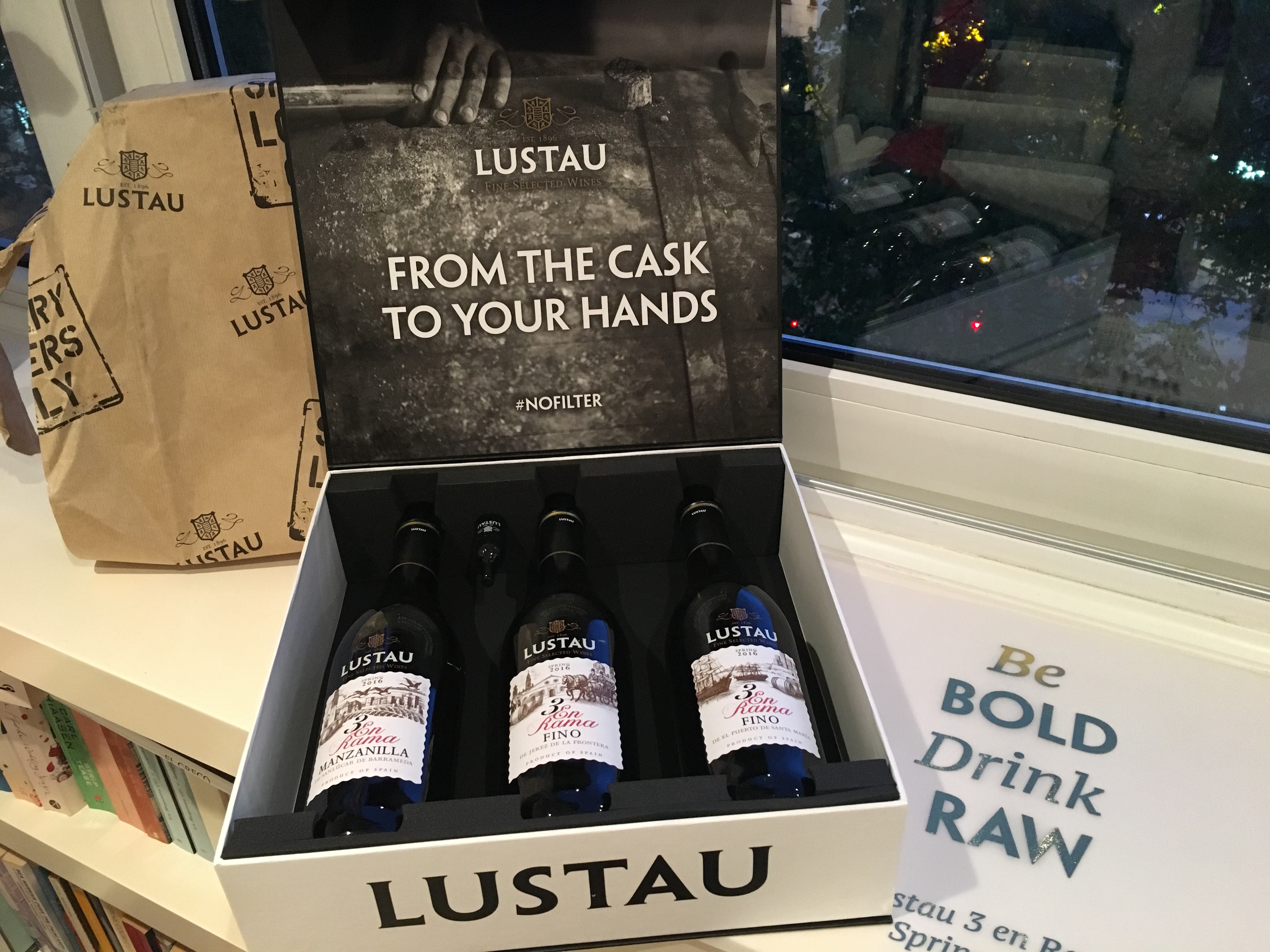
You have to say that is a fantastic presentation – and there is a little bottle shaped memory stick in there with promotional videos, tasting notes, press release, photos and pamphlet – a proper blogger could go to town with all this stuff. All I can try to do is express my gratitude to the chaps at Lustau who very generously sent this to me and congratulate them once again on three cracking wines.

The 3 en rama collection is, like the Almacenista collection, another great idea by Lustau and a concept with a lot of personality. They are selected en rama wines that have been aged in bodegas located in each of the three centres of el marco: Sanlucar (manzanilla), Jerez de la Frontera (Fino), and El Puerto de Santa Maria (Fino del Puerto). The wines are distinct and, in my limited experience, a good example of the characteristics of the three centres. As such they are a great introduction to the concept of the “other terroir”.

I couldn’t wait to get at them and they didn’t disappoint. All three are clean, fresh and defined. However good these wines may get with time in the bottle they certainly sing in these first few weeks (these were only bottled and released in April so we are a maximum of five weeks from the saca) and they all seem to have a brilliant curve of sweet notes to spicey saltiness.

  • The Manzanilla de Sanlucar de Barremeda starts highest and sweetest – the freshness of the green apples on the nose and at the beginning are really quite something, then there is a real zing and almost drying saltiness in the middle and at the end a fresh, tasty sweet finish with a residual tang of that green apple.
  • The Fino de Jerez de la Frontera has more of a vegetable, fresh celery semi-sweetness and a more intense, peppery zing. It seems to have more umami, more volume and a lower register, with an earthier nose and finish.
  • The Fino del Puerto de Santa Maria was my favourite of the three last year and yet again it stands out. It has a fascinating ozone, sea weed and sweet herb nose and is just as complex on the palate – with sweetness, herbal menace and a really salty bite at the end, but then the freshest finish. Really a top, top class fino.

In summary three cracking good wines – and covering all bases. A light approachable manzanilla, a heftier but still elegant fino and a really top class fino del puerto.

The wines are also a poignant testament to the great skill of the late, lamented Manuel Lozano. He was some winemaker and will be greatly missed.
The three last glasses

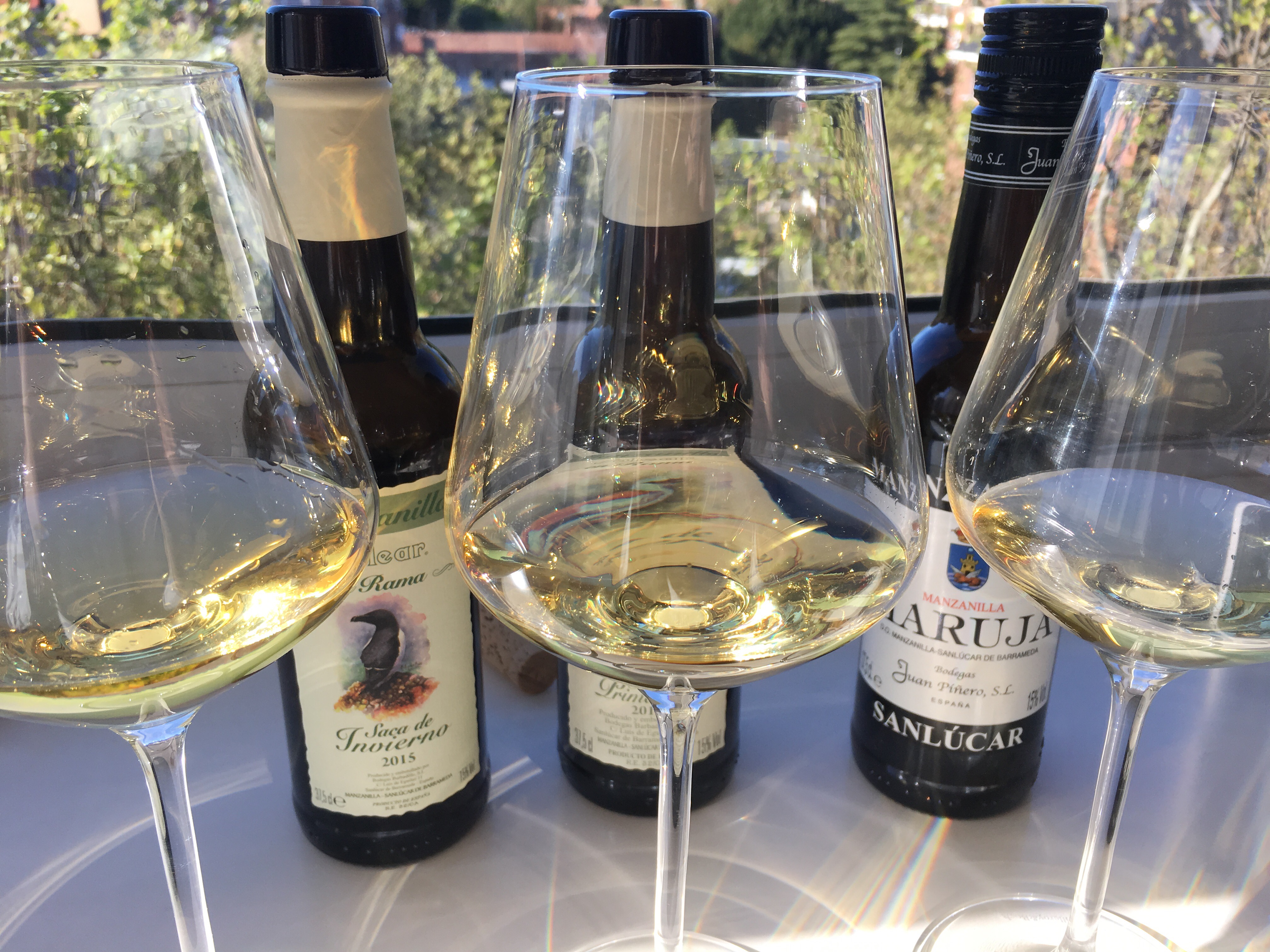
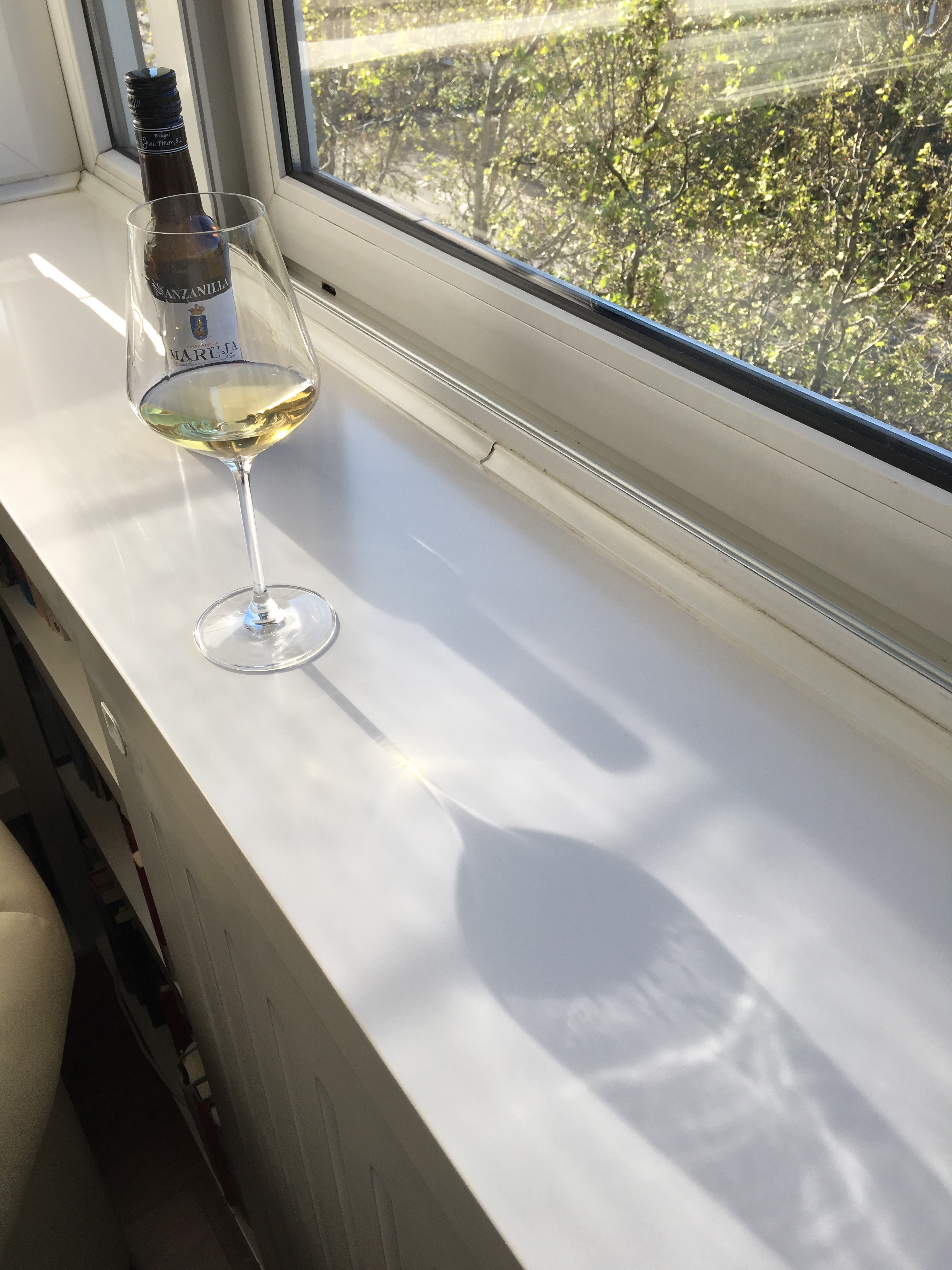
A moment of manzanilla nerdery here – had saved the last glass of these three (two from Monday and one from Yesterday) for a side by side and I am glad I did.

Clear contrast between the Maruja and Solear for a start – the Maruja has a sweeter fruit-like nose and palate while the Solear is much more herbal or vegetable – celery or spicey raddichio. Both have zingy minerals but the Maruja’s tend to creep up on you whereas the Solear’s are more in your face. Of these three I am actually tending towards the Maruja, to my slight surprise. 

As between the two sacas of Solear, questions may have been raised as to whether to taste different sacas but after nearly a week open the gap between these two seems to have opened – the Spring 2016 seems more zingy, saline to the point of acidity, compared to the merely feisty Winter 2015. The Winter, on the other hand, seems to show more of those vegetable flavours. Then right at the last the spring shows a bit more hay bales and becomes more diffuse while the Winter stays more compact. I actually like the haybales – wish I hadn’t finished the Maruja already but I can’t compare!

Or it could all be confirmation bias – anyway it is an excuse to have a glass of three lovely wines and call it science. 
 

Manzanilla Maruja


A sunny spring afternoon behind me, with the loafers and chinos on and it is time to refresh and replenish vital minerals with this classic manzanilla. (Not the first or even the second time I have reviewed it and I refer to those reviews for details etc.) 

What I will say is that when you drink an aromatic, mineral wine like this it becomes obvious why generations of Jerez winemakers may have wanted to emulate it. Light but savoury to the point of spicey – a bit of salty burn – and just enough aromatic juice to it. Really takes you to the seaside. 

Manzanilla Papirusa


The only manzanilla (or sherry) on the menu here at Pajarita but it is a favourite and since it comes from Lustau a modest, but heartfelt, tribute to the great Manuel Lozano. 

It is the most basic of the Lustau wines but is very well made (technical details here) with an average age under flor of 4-5 years. Has that very aromatic, green apple nose of a wine with less time under flor but with sea air and minerals in the background, then a similar palate – a dash of aromatic juice and a spike of minerals, with a long, tasty finish. 

Manzanilla Monday head to head

A chance to try a couple of these feathered friends one on one – bird vs bird, razorbill vs roller, winter v spring.

Wines from the same solera just a few months apart. It is unlikely they are from the same botas: more likely a different selection each time (there are 13,050 botas after all). I am pretty sure that they are of a similar overall age (around 10 years under flor) and have come through a similar number of classes – but would be happy to be corrected.

First impressions – nothing between them in colour terms. On the nose of the razorbill maybe slightly more of the hay bales/acetaldehide while the roller maybe has a touch more sea air but it is very marginal. They even out and get even closer as they warm in the glass.

Fresh pours now and impressions on the palate are similar – slightly more green apple on the razorbill, the roller just a little sharper, more mineral. It is really difficult to distinguish them though – such a distinctive, zingy and flavourful wine in each glass. (Looking now at the back labels and I seem to be in the majority opinion.)

What a wine this is. I love the zingy mineral spice of them both and it is so hard to choose between them. If I had to, that hair’s breadth more juice to the razorbill makes it my marginal favourite.


Solear en rama spring 2016

Another little cracker from this magic production line. Really intense and zingy and with a lot of greenery in it.

The colour is a greener yellow than appears above (no filter used – have no idea what happens to these photos), the nose is salty sea air and shrubs, and those salty shrubs are all over the palate too.

This really has bite – intensely zingy – leaves a burn on the tongue – and full of vitamins. Maybe a bit more mineral than previous editions and it even has a tingly aftertaste (I wonder where they source the palomino from that goes in this).

Really warms the passages as they say.

Solear en rama: the flock

img_7217

The Solear series was one of the pioneers of the “en rama” trend – with Barbadillo releasing for each of the four seasons every year since 1999 – and not only was it the first but it is a reliable favourite of mine.

I include above the now traditional family photo of my budding collection of these brilliant manzanillas. Had I known back in 2012 I was going to start this blog it would be bigger, but careless consumption intervened (although the guys at Barbadillo very generously found me a couple of back issues to complete the sequence (only one of each though so haven’t been able to crack them open)).

In any event, the flock currently includes:

These really are brilliant manzanillas: full bodied and tasty as they come, and although not precisely the same wine each time, they provide a great opportunity to contrast sacas from the different seasons (and against other manzanillas and other wines). They are also quite a distinct style of manzanilla en rama – I would call them a full bodied, full flavoured style.

I reckon my favourite of the above was the Dormouse – just a little more oxidation and a little less flor influence – but the Teal/Garganey has caused a very good impression first up. I wish I had a case (of magnums) of each and every one but my limited storage infrastructure will not allow. If anyone does organize a decent vertical I fervently wish to be invited!

Manzanilla la Kika

This was new to me when I tried it yesterday at the Feria de Vinos organized by Lavinia and is a very attractive manzanilla from Bodegas Yuste.

La Kika (pictured on the label) is or was the mother of the owner of bodega and the grandmother of the young lad who served it to me and the wine and everything about it is apparently a homage to her. In the circumstances, I feel a bit of a curmudgeon for complaining, but this is yet another case of a unique bottle shape that plays havoc with a fella’s storage arrangements (you can see why better on the ficha). In fact the bottle is an Italian olive oil bottle – even has a small lip – and just look at the cahoba stopper on that cork. As it happens I don’t have any bottles of this but if I did I don’t know where I would put them.

Anyway, the more important thing here is the wine in the bottle. This is a manzanilla (from palomino all sourced in Balbaina – or at least is now all sourced in Balbaina) that has passed through nine classes located in three different bodegas –  the first three in Miraflores, then three in Los Angeles, then the last three in Santa Ana. At the end the average age under flor is about 10 years. It is apparently unfiltered and bottled by hand – real artisanship.

The colour is a nice rich gold – a touch of brown gives a hint of its age. On the nose first up it is creamy and I detected Jura-like cheese aromas, seaside aromas like a puerto fino, yeasty green grass and unsalted almonds. Then similar richness on the palate – creamy texture and buttery flavour at first, then really punchy yeastiness and a long slightly bitter, nutty, mineral finish: really zingy and fresh, almost drying.

Really good, expressive and full of character. A fitting tribute to anyone’s grandmother.

Manzanilla fina Callejuela 

Here is a classic manzanilla from a newish, smallish producer that is a favourite of mine. I love the label, which in addition to a picture of the vineyard (big tick) also tells us that they have “10 “aranzadas” [a traditional unit of area like an acre – how much land a man can work in a day sort of thing] in Macharnudo, 19 in Añina, and 30 in Callejuela”. Am having this as an aperitif in the Taberna Palo Cortado – about which more later.

Although it claims to be very pale, I don’t find it pale for a manzanilla – quite a solid gold colour. On the nose it is punchy and slightly citric – more fruit than yeast for me – and again on the palate it is saline and punchy but like a fleshy fruit rather than almonds – very fruity, consistent texture. Then a nice mouthwatering, fresh finish.

Refreshing manzanilla, but with a pleasing fruity character.