Fino en rama Tio Pepe 2016


This really is a top quality fino. Not the first time I had it. I think it was bottled late April and I first had it at three weeks (too early) and then 7 weeks in the bottle (zesty) and this at 15 weeks may not have all that spark but has a bit more pizzazz – it is marginal though. 

Anyway, it is a greenish gold colour and has quite pronounced apple and yeasty aromas, haybales and salty air. Then you get those same flavours on the palate – green apples – quite a lot of fruit-, spices and salty zing, and a long mouthwatering finish. 

Delicious: aromatic, tasty and fresh. 

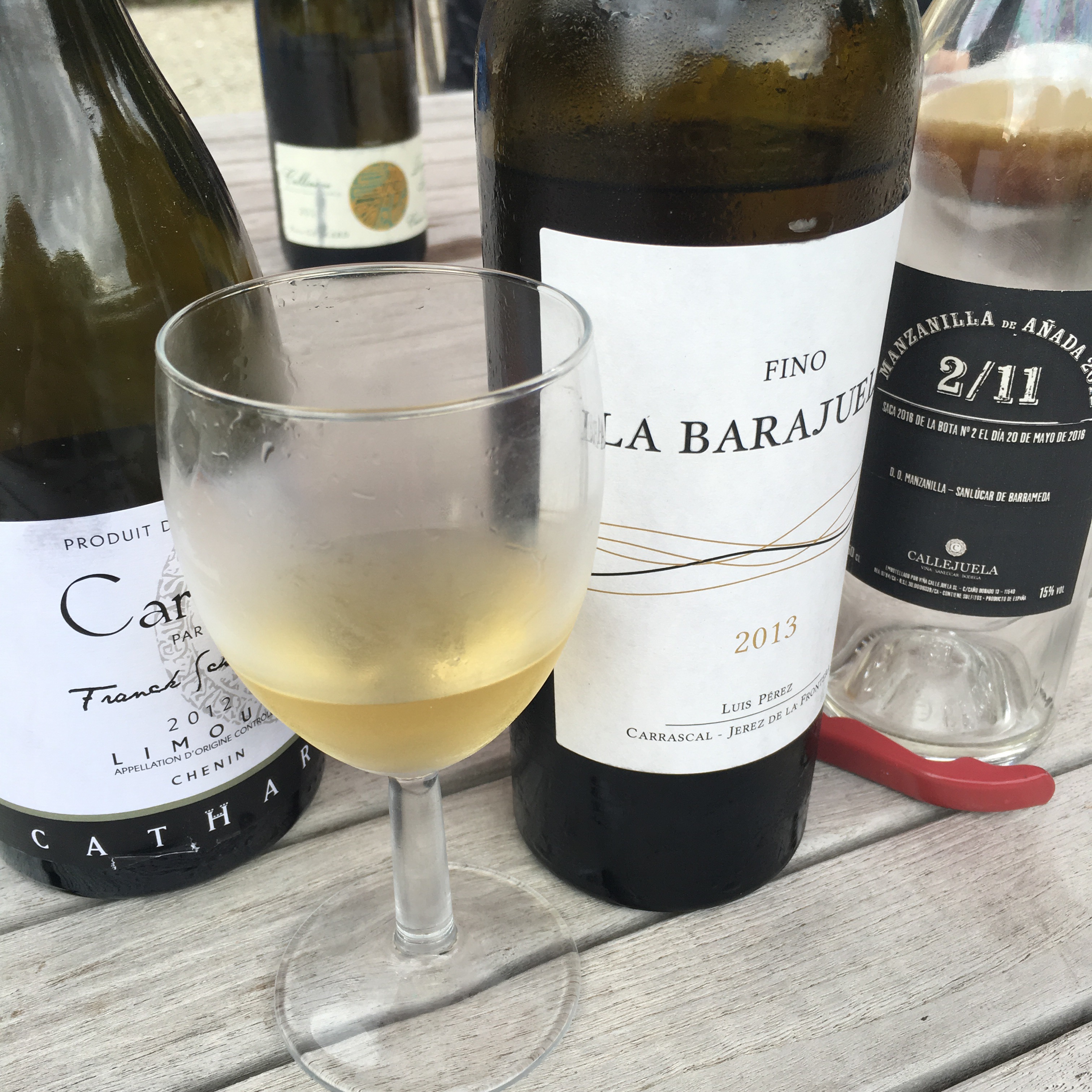
Tasting the Barajuela project

Wanted to jot down my thoughts and impressions of a fantastic tasting I did with Willy Perez last Friday in relation to a project I find fascinating (and a wine that I really love). 

As I have written about ad nauseam the Barajuela project is all about recovering the old school wines of Jerez that once ruled the world. This means big, concentrated wines with a clear identity quite distinct from the lighter “manzanilla” style of current wines. It means low yields, later harvests in several passes (first for brandy, then fino, then oloroso) a short period of asoleo or sun drying to further boost concentration and a focus in the cellar on the wine rather than the flor or barrel effects. (For example, unlike many modern finos with pronounced acetaldehide profiles here efforts were made to keep a balance with the wine’s other characteristics – a balance that is achieved despite a very high level of acetaldehide.) The wines are also terroir and vintage specific and, since single vintage wines age quite differently to their solera counterparts, the back label seeks to recover the old school “palmas” system of classification. 

The tasting could be broken down into three sections, each a nice illustration of what the project is all about. 

First up, we had a run at the mostos from 2015, exploring the effects of the maturity of the grapes in the different “passes” at harvesting. We tasted the mosto for brandy, the greenest, least developed fruit, harvested in early to mid August, the mosto from grapes harvested two or three weeks later, and the mosto for the fino, from fruit harvested a week later still. There was a clear progression in aroma, weight and flavour in the three wines: more and more honeyed on the nose (the mosto de fino in particular had a lovely nose that reminded me of the “cojonudo” pastries you get in the mountains North of Madrid) and, quite apart from the growing strength and weight, more and more (extremely ripe) melon on the palate. Obviously there was a big step from the first mosto to the second, but it was amazing to see the step from second to third – the difference that that selection and one week of sunshine had made. 

Next up was an exploration of the effects of the flor on those mostos (not that much flor – these botas were filled more than usual). The fourth wine was a 2014 mosto de fino, followed by a bottle of the 2013 Fino la Barajuela and a 2013 Palma (roughly speaking, the 2013 fino with six or so more months under flor). Again, the steps between the wines were as instructive as the wines themselves: the 2014 mosto was extraordinary compared to its 2015 equivalent with a noticeably full and mineral mouthfeel – real power and zing to it- the 2013 Fino had that brilliant balance of concentrated fruit and mineral grunt and the Palma was just a touch sharper in both salinity and in the fruit flavour. I would find it very hard to choose between the two 2013s – would love to have tasted them blind – but since I was asked I reckon the fino was dead right, with enough fleshy juice to it despite all that power. (There may also have been some effect from its time in the bottle.) As for the 2014, my mouth is literally watering at the prospect of when that is ready.

Then out came the lesser spotted 2013 Oloroso la Barajuela. This wine is from grapes harvested later still – important to remember this is a different wine from the same vines, not a continuation of the fino – and has another step up in concentration. Rather than under flor it has been “traditionally” aged (but not for very long, which I gather has been the source of some issues with the DO and the traditional classifications, hopefully soon to be resolved). The power and solidity of it is impressive – for now it just has an edge of burn and oxidation but you get a feeling that given time it will be capable of the most amazing full bodied, high register caramel flavours. No bones about it – it is an absolute beast.

We didn’t in fact finish there, we also tried a 2014 pedro ximenez, an excellent mineral and refreshing 2015 Tintilla de Rota rosé and the 2015, 2014 and 2013 Tintilla de Rota reds, but by then my mind was wandering (I even left my notes behind before remembering just in time and dashing back in). It was a brilliant tasting  in which I learned a lot, and even better with some really cracking wines and a few laughs thrown in. Blessed are the rulebreakers and long live the new old school.

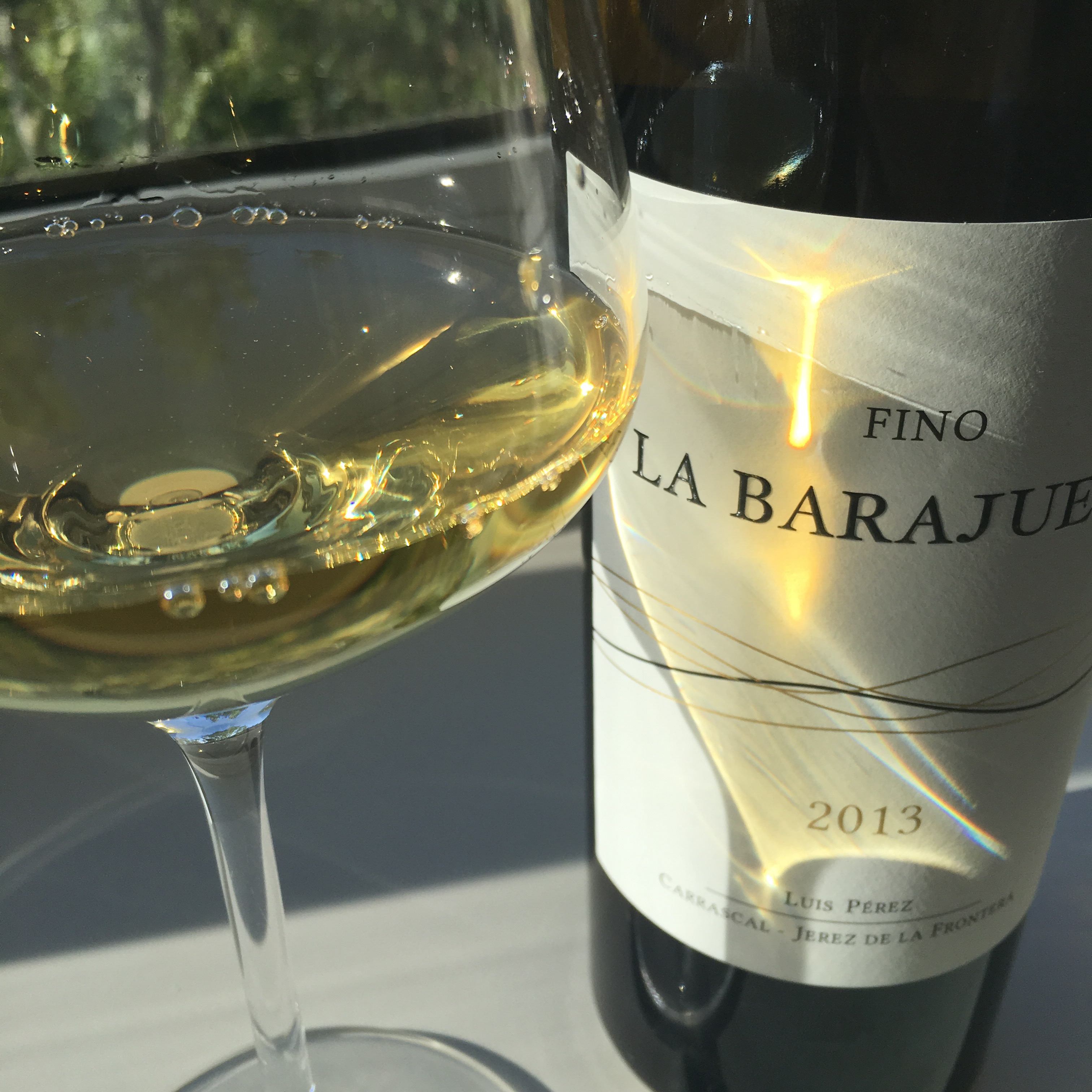
Fino la Barajuela 2013

In a week of brilliant wines from all over this was for me the best of them all. Enough mineral power to set it apart from the crowd but more fruit and expression than the crowd expected from a fino. Really excellent. It is fortunate that there isn’t too much more of it or this blog would become a fanpage. (I absolutely love this wine.)

Apparently a second “palma” is to be released a few years down the road with a few more years under flor and it is going to be fascinating to see what that flor action does to this wine. Would also be interesting to see what happens with time in bottle – but for that I would have to keep some long enough.

Ramiro Ibañez in Surtopia – Day 1 

I have a total of 25 pages of notes from the two days that Ramiro Ibañez was doing the butling at Surtopia. It was not just interesting, it was fascinating. Will take me a good while to write them all up but no time like the present etc.

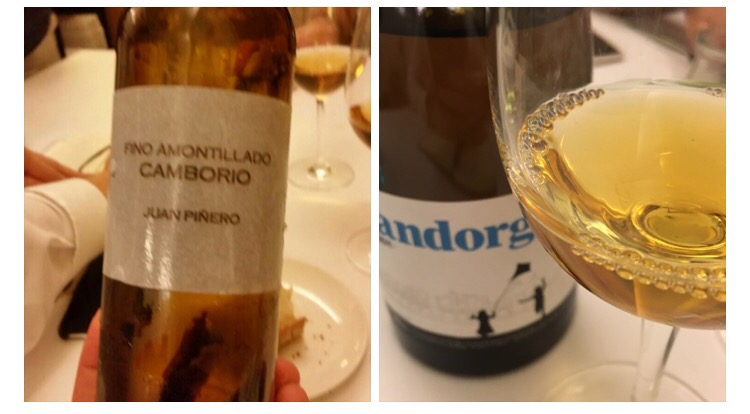
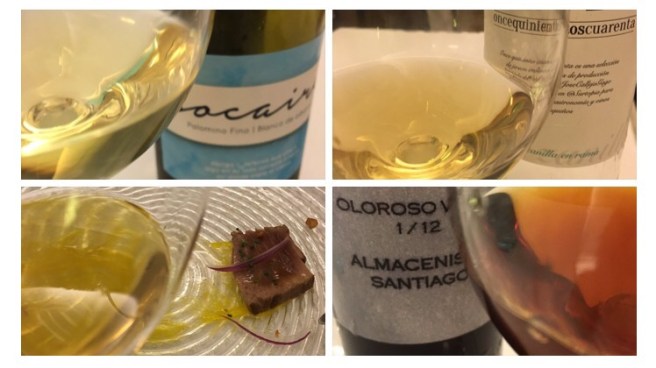
The first night involved five wines chosen to accompany some fatty, meaty tuna dishes (at this stage the so-called “blogger” realizes that none of the 25 pages of notes refer to the food and hopes noone will notice the lack of detail). In fact I only have three pictures even …
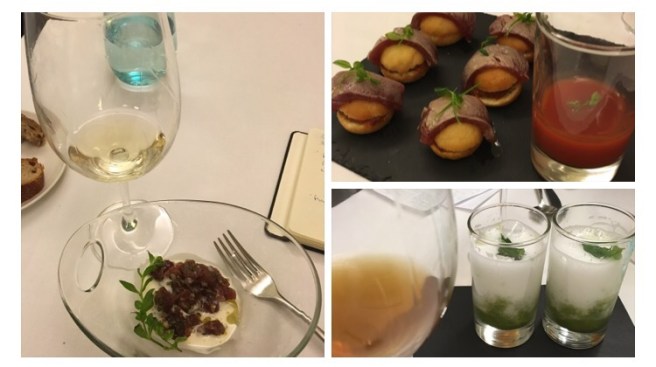

At least I have some notes of the wines:

Wine #1 was Socaire 2014, a 100% palomino by Primitivo Collantes that I have been after for a while (in fact my first bottles were delived the same afternoon I went to dinner). 100% palomino from Finca Matalian, it is unfortified and has not spent time under flor but was fermented and aged for two years in botas that had formerly held Fino Arroyuelo. They were two years very well spent. The result is a beautiful dark gold colour and has a fantastic, lush nose that is blanc des blancs champagne first up, and gets more and more herbal – sweet herbs like rosemary or oregano – as it opens up. On the palate it is chalky and slightly saline without being zingy – austere minerals like a chablis. Long rather than wide, but wider than its little brother the Viña Matalian and a really interesting wine.

Wine #2 was the new edition of the 11540 Manzanilla. Whereas previous editions were selected from Barbadillo’s Solear, this fella is from legendary Sanlucar bodega Sanchez Ayala – from  1/46 of the original Gabriela Oro solera to be precise. Sanchez Ayala has been a happy hunting ground for exclusive bottlings in the past and the wines have a high acetaldehide style that is extremely attractive (and fashionable). This one has an average age of about five years and has been through 7 classes. It is a shade darker than the Socaire, a dark straw colour, and has a massive nose of hay bales, salty brine, roasted apples and spices. On the palate it is zingy, salty, with a suggestion of that baked apple but then a long, nutty finish. Really excellent again.

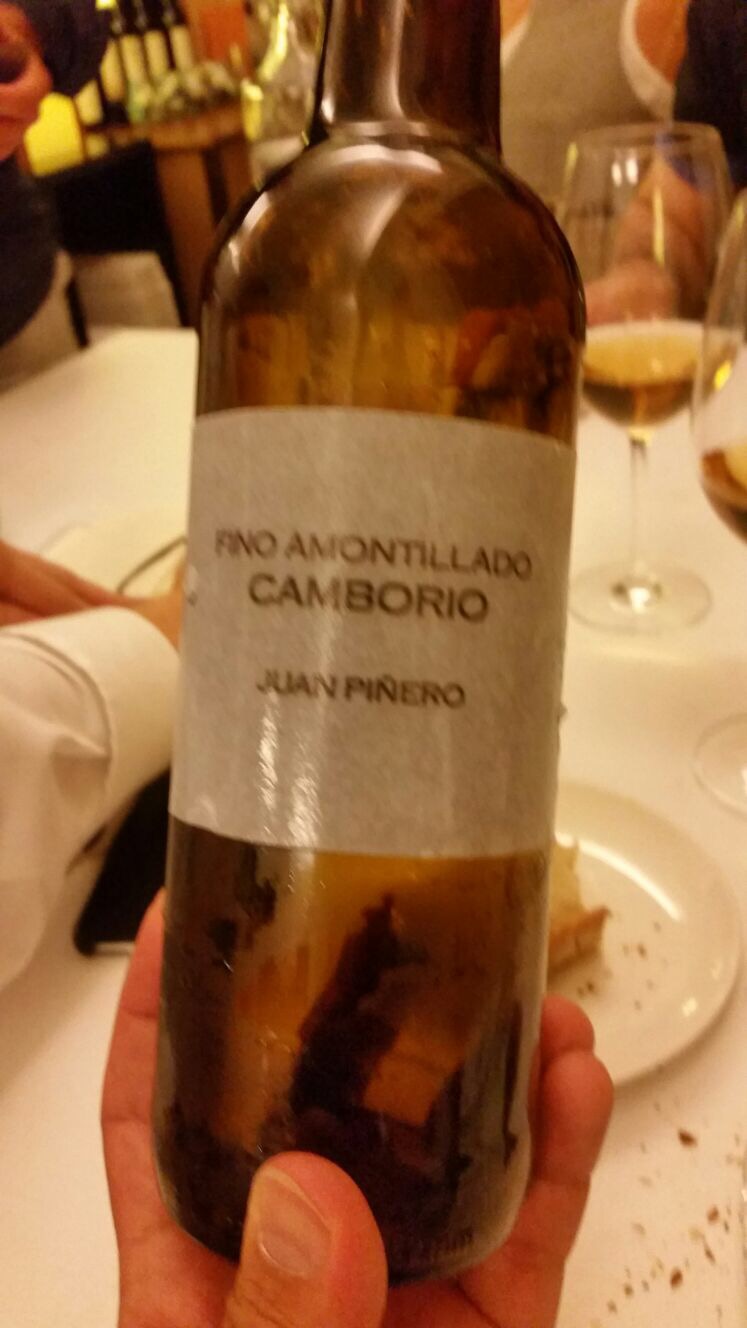
Wine #3 was the wine of the night for me: a Fino Amontillado Camborio. Fino from the legendary Camborio solera with those 10/11 years of biological ageing and that mineral structure that has been given a year of oxidation and has gained in character. Again a big acetaldehide profile of green apple over the sea air minerals of the fino but also touches of lemon on the nose. On the palate there is a suggestion of that green apple, then spices and herbs and a long, mouthwatering bitter almond finish. Really rich in feel and flavour but elegant too. Really superb.

Wine #4 was the only wine of the night that I had tried before – the Pandorga 2014, the stunning fruit bomb pedro ximenez  from la Panesa vineyard in Carrascal de Jerez. After a relatively cool growing season the grapes and 11 days of asoleo before fermentation in bota without any kind of temperature control. Fermentation lasted six weeks producing a wine that is 12º, has 270g of sugar, and more importantly has bags of fruit flavours and aromas including olives, apricots and orange marmalade. A delicious expression of year, terroir and fruit that has already become a classic.

Wine #5  was the “big dog” of the night, an old old Oloroso 1/12 from Almacenista Santiago. Really powerful, rustic, old school almacenista oloroso. It is a dark reddish brown in colour, with a cigar box woody nose and a really powerful, bitter palate. Real acidity and concentration and although it didn’t have any noticeable juicy sweetness neither was it astringent or dusty. Good salinity too but not over powering. No doubt about it: a fighting wine.
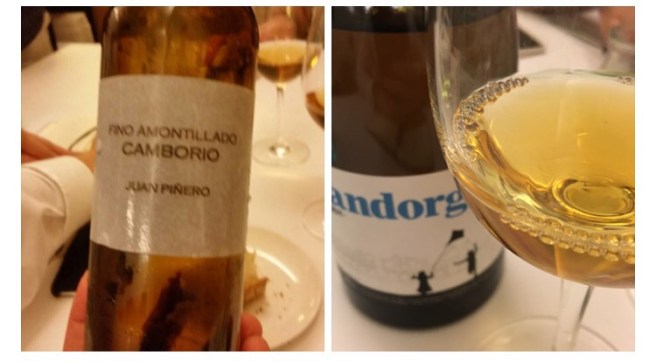

And that, as they say, was that for the first night (but not for my notes thereof – the remaining five pages of increasingly illiterate scrawl need much more work and reflection). Five really unique wines and a privilege to have been there.
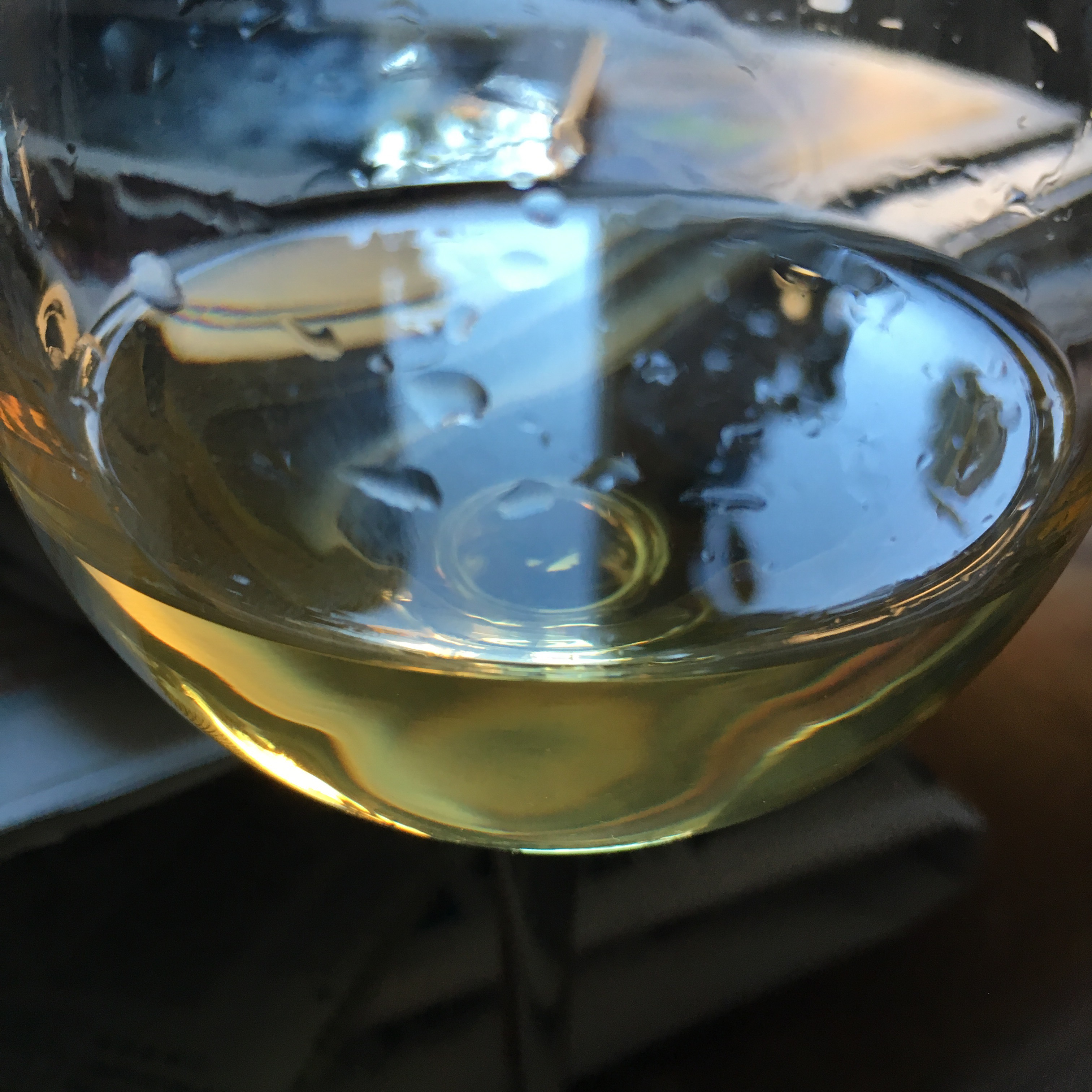
 

Fino y amontillado de la familia

At first I was alarmed that my team in the office had discovered my blog (will have to be careful about posting at lunchtime) but I was very touched when one of my colleagues brought me these from the family vault in Aguilar de la Frontera.

The “fino” is apparently a bota they have had for 30 years that gets refreshed with mosto year after year. It doesn’t seem to have developed flor but there is just a bit of oxidation and the result is a potent little wine – big farmyard and baked apple nose on it, no real acidity but big in profile on the palate, again with baked apples, and pretty long. Very tasty.

The amontillado – said to be from great grandad’s day – is even better. Very nice caramel and nuts on the nose and palate, again potent and dry but not too salty or astringent. A bit of alcoholic heat but the sort of wine you could drink a lot of.

Two cracking wines and a great way to start the weekend. Many thanks!

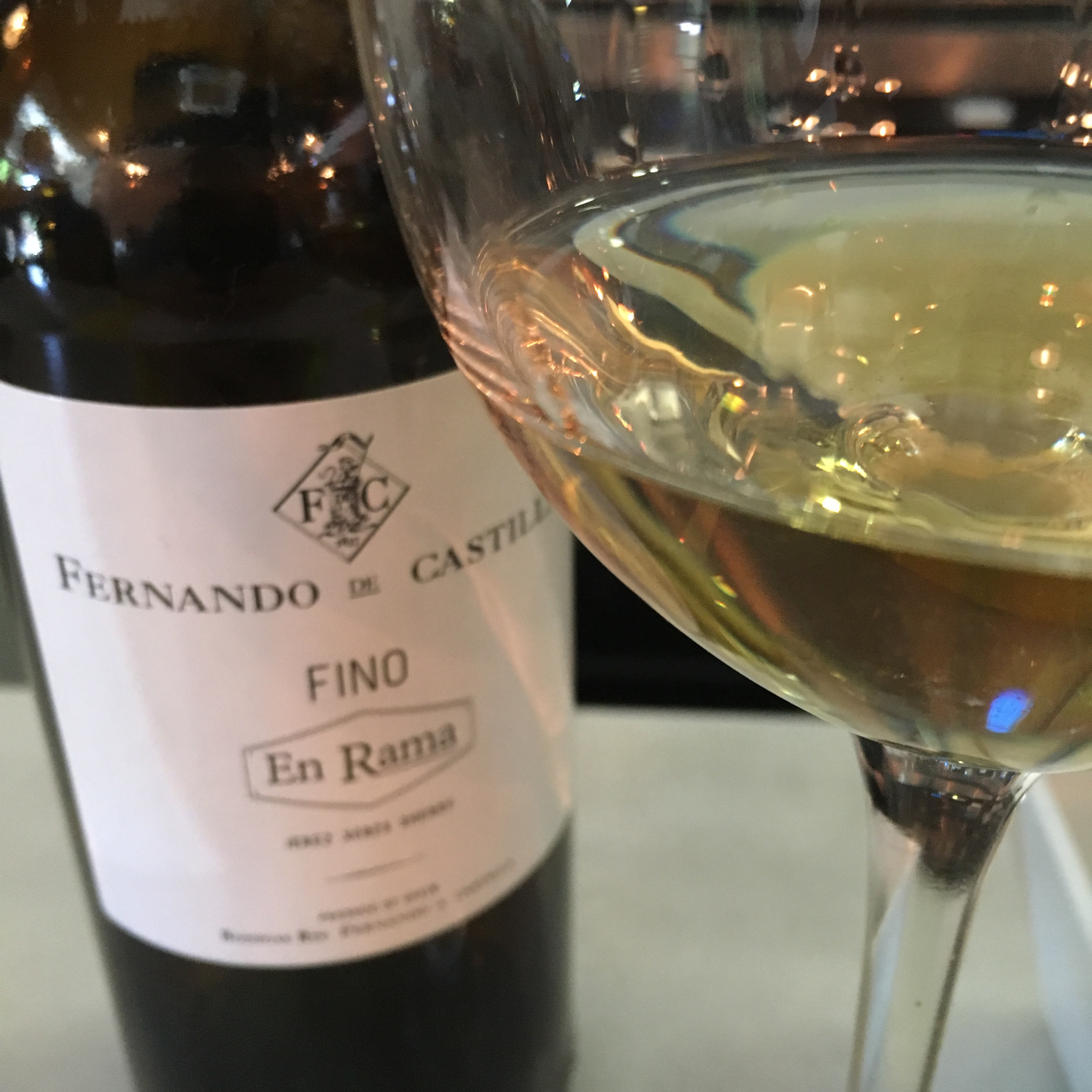
Fino en rama Fernando de Castilla – Diciembre 2015

Another edition of this top class en rama over lunch in the Chula de Chamberi.

A darkish gold in colour, and a lovely nose of salty air, nuts and just a little bit of hay bales. Nice body too it and salty and spicey at the finish – to be quite honest I have just looked back at the notes of the November 2014 and this is bang in that same profile.  A really nice little wine with lots of things in it.

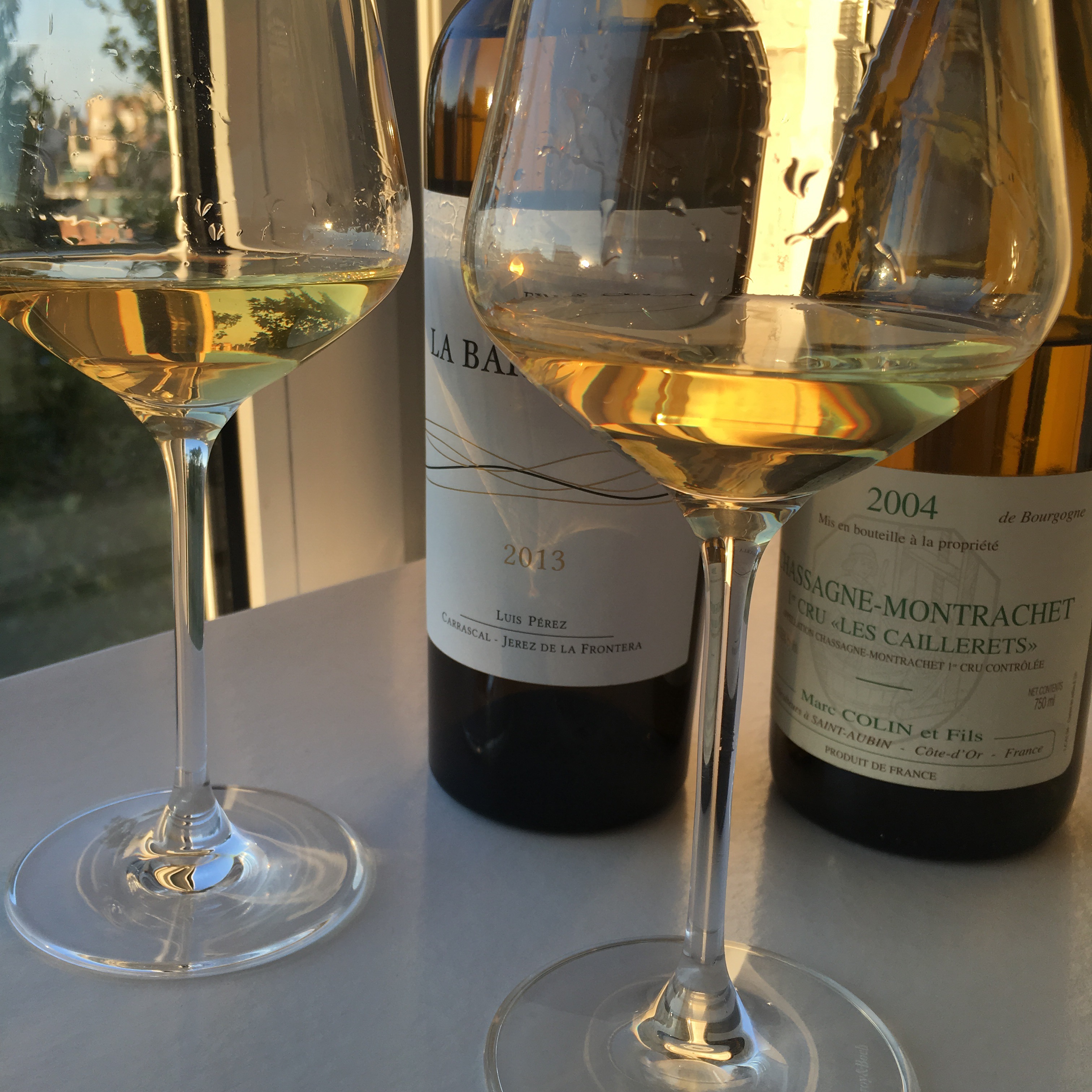
Fino la Barajuela 2013 (and a 1er cru controlée)

From the comments you read and hear the great wines from Jerez with a bit of personality are often likened to their cousins up in Burgundy, so I thought I would take advantage of having a nice Chassagne Montrachet open to have another look at the Fino la Barajuela.

The Burgundy was glorious, a beautiful bright gold colour, a nice flowery, lemon and limestone nose, then elegance, balance and precision with flavoura of nectar and pollen, pear or apple and citrus acidity. Absolutely top class (I may be over-egging it but it was even better than I expected.)

The Barajuela is the business too but goes about that business in a markedly different manner. The chardonnay is full of fruit and so is the Barajuela – in fact it has more fruit than many of its peers in the sherry triangle, but maybe what strikes you most is the salinity in nose and palate, and the way the salinity and zing takes the place of the acidity. Do they leave room for the full range of flavours that the burgundy has? Perhaps not, but on the other hand the Barajuela’s minerals and muscle give it a different dimension, a uniqueness that lifts it above the comparison.

I originally wrote this note in terms of a comparison but I realize now – thanks to a comment from Alvaro Giron – that that is unhelpful. These are very different kettles of fish and it is the differences that are illuminating. My  verdict: don’t buy the Barajuela if what you want is a chardonnay. It is something else.

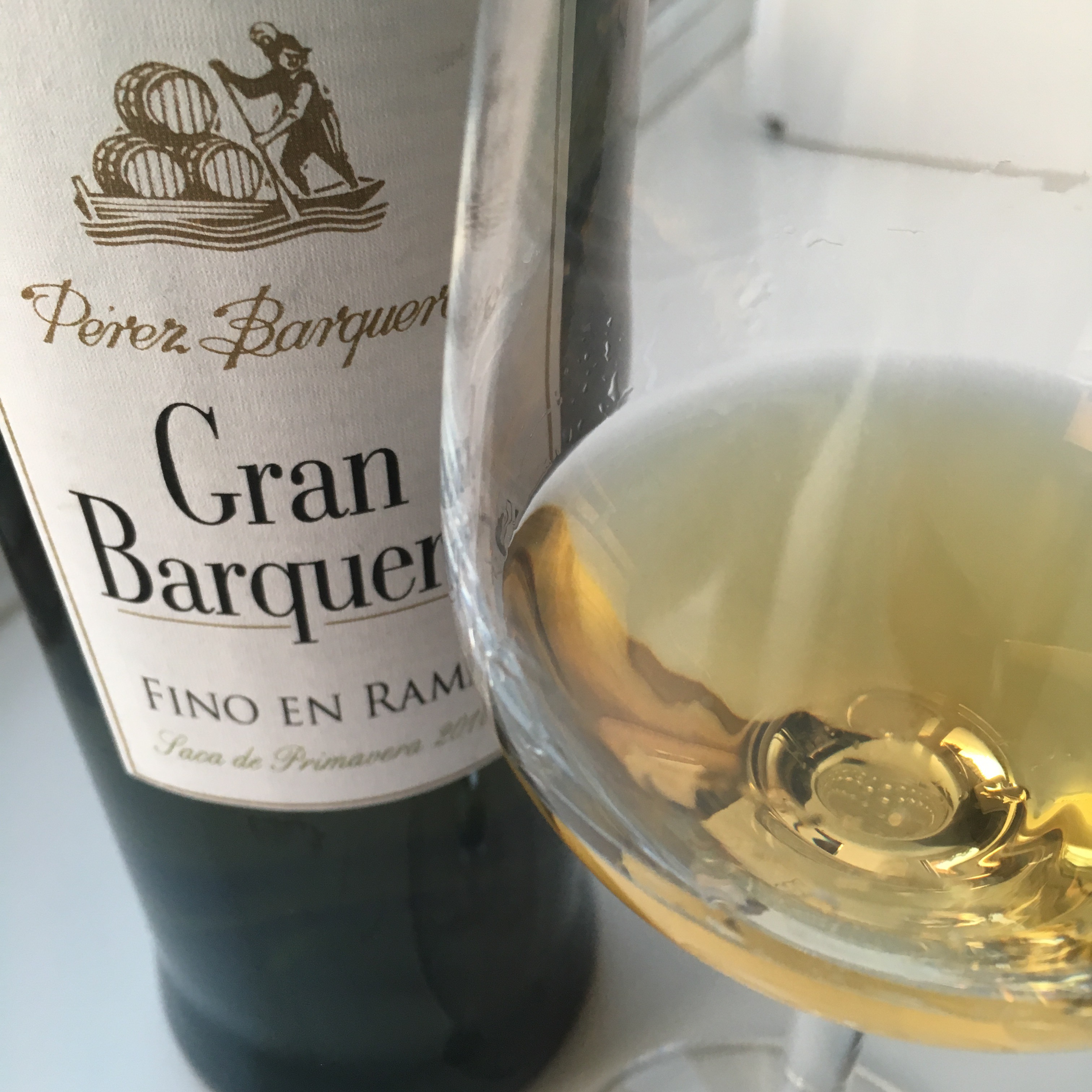
Fino en rama Gran Barquero

The en rama version of the classic 8-10 year old Montilla Moriles fino (TN here) by Perez Barquero and this is possibly even better.

Lovely old gold colour and big on aromas of haybales and yeast but also a bit of chamomile tea and some grapefruity citrus. Quite solid on the palate but not flabby at all, and the flavours are punchy, spicey and zingy. It really follows through on those hay bales with a salty, yeasty, intense palate.

A really top class fino.

Fino la Barajuela 2013

Happy Father’s Day to me. What a wine this is.

It is a famous wine and one that lives up to its reputation. I first heard about it many moons ago, tried it in March on an overwhelming day in many ways, and have since heard its praises sung from the rooftops. And rightly so.

It may not be what you expect from a fino but it is a very fine wine. In fact, it is the expression of terroir and fruit in Jerez, and of winemaking, that I and many others have been waiting for. I thought it was impressive in March but found it heavy – now it is light on its feet and has the presence and personality of a great wine. I just can’t believe how good it is. It is outrageous.

If anyone tells you palomino is a “neutral vessel” let them taste this (or its Sanlucar cousin, the UBE, when it comes to that). When I first opened it it had that meaty nose of fresh grilled tuna, with a little lemon and coriander. Then as it opened later the nose was all fruit and sweet herbs. On the palate it has those same flavours fruit, sweet herbs, and meatiness, and the profile is horizontal: a long, long flavour that persists. All the while there is spicey saltiness in the background, and the balance of salinity and fruit is perfect – tasty but not clingy, full but not heavy.

Just really delicious. A fantastic wine.

Fino Tradicion October 2014

Another classic fino from Bodegas Tradicion, and when I say another, I mean it follows in the tradition of the May 2013, October 2013, May 2015 and November 2015.

I love these – right up there with the very best finos on the market and this was a cracking “saca”. Nice rich gold in colour. On the nose it has a kind of mineral, haybale, citrus quality – like old lemon energy sweets – then it has a nice full body and just classic yeasty, nutty fino flavours, with mineral zing and a bready, salty finish – clinging but mouthwatering.

Just what a fellow needs.