A tale of two summers (and the winter in between) 

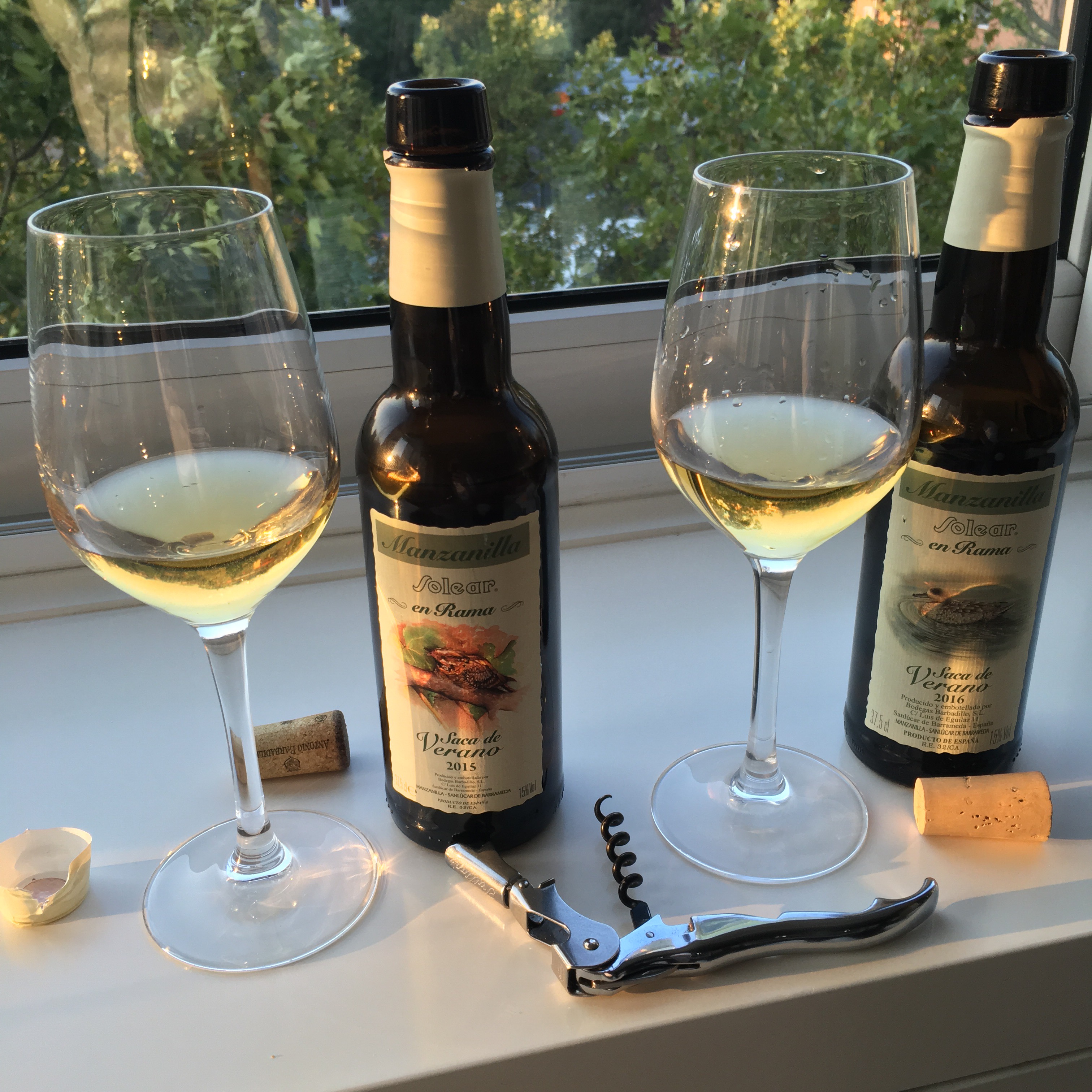
I will leap at any excuse to help myself to have a sup of these little beauties and fortunately just such an excuse presented itself recently. In a recent tasting, the guys at Elmundovino.com tasted both of these and came to the view that while the Solear en rama of Summer 2016 (teal or garganey) was more robust and full of life, it’s year in the bottle had given the Solear en rama of Summer 2015 (the red-necked nightjar) greater complexity. It inspired Victor de la Serna to write an editorial on the need to revise the traditional views on en rama sherries, and it has also inspired me to have a crack at the same comparison. (Credit where it is due, aa comparison made possible by the fact that Lavinia in Madrid still had some of the Summer 2015).

To give the exercise a hint of scientific rigour after the photos were taken I had the glasses shuffled so I could taste them blind (as the guys at elmundovino.com do) and I can certainly see where they are coming from. No doubt there was a difference and, not wanting to boast, I had no trouble identifying the 2015 (although I might have had more trouble had I not first read the other tasting notes). What I think of as the “bottle effect” (broadly speaking, fruit turning to herbs, herbs to spice) is definitely there in the 2015, and the 2016 was to me notably zingier, spicier, and longer. Personally, I reckon I prefer the 2016 but they are both right up my street.

On the basis that one might as well be hung for a sheep (or a razorbill), and since I had a spare bottle lying around, I thought it would be of interest to compare them both to the Solear en rama of Winter 2015.
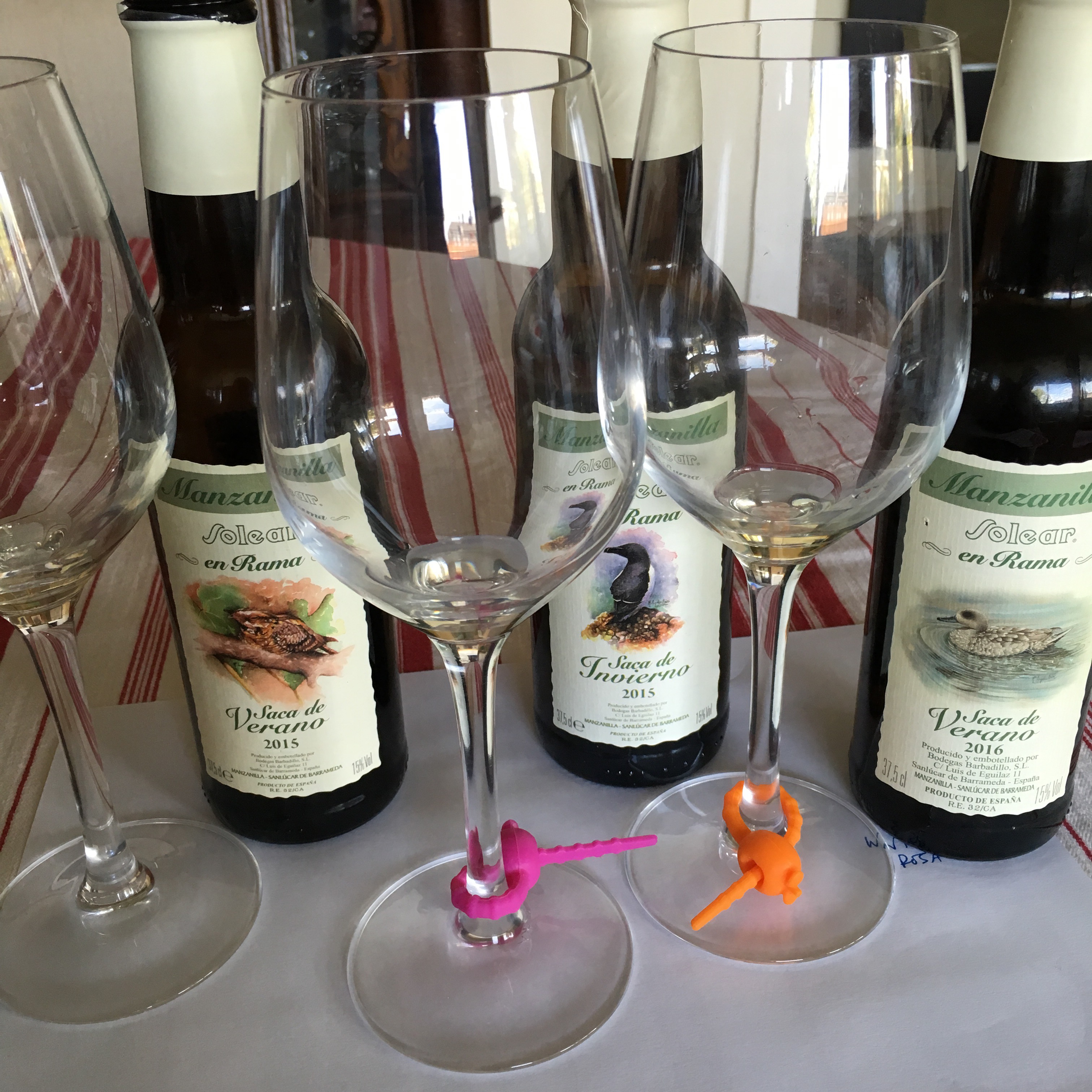
Back in the day I tasted the Winter 2015 (Razorbill) against the Spring 2016 (Roller) and looking back at the tasting then I found those two quite close together. Compared against the two summer editions, though, the Razorbill is less fragrant (although it hasn’t been open as long) and more saline, with more zingy buzz, than either. If pushed, I would say the seasonal difference is maybe even bigger than the year in the bottle. Again, this fits the theory (and I didn’t, it must be said, taste this one blind) since the summer sacas are from botas whose flor, in the heat, is said to be less vigorous and the wine as a result has just had a little less of the flor “action”, while the winter saca would have had a veil of flor in peak condition.

More evidence, then, of the great value of this series, the need to taste every season, and the possible value of keeping them for a while in the cellar. Not that I needed any persuading on any of those fronts!
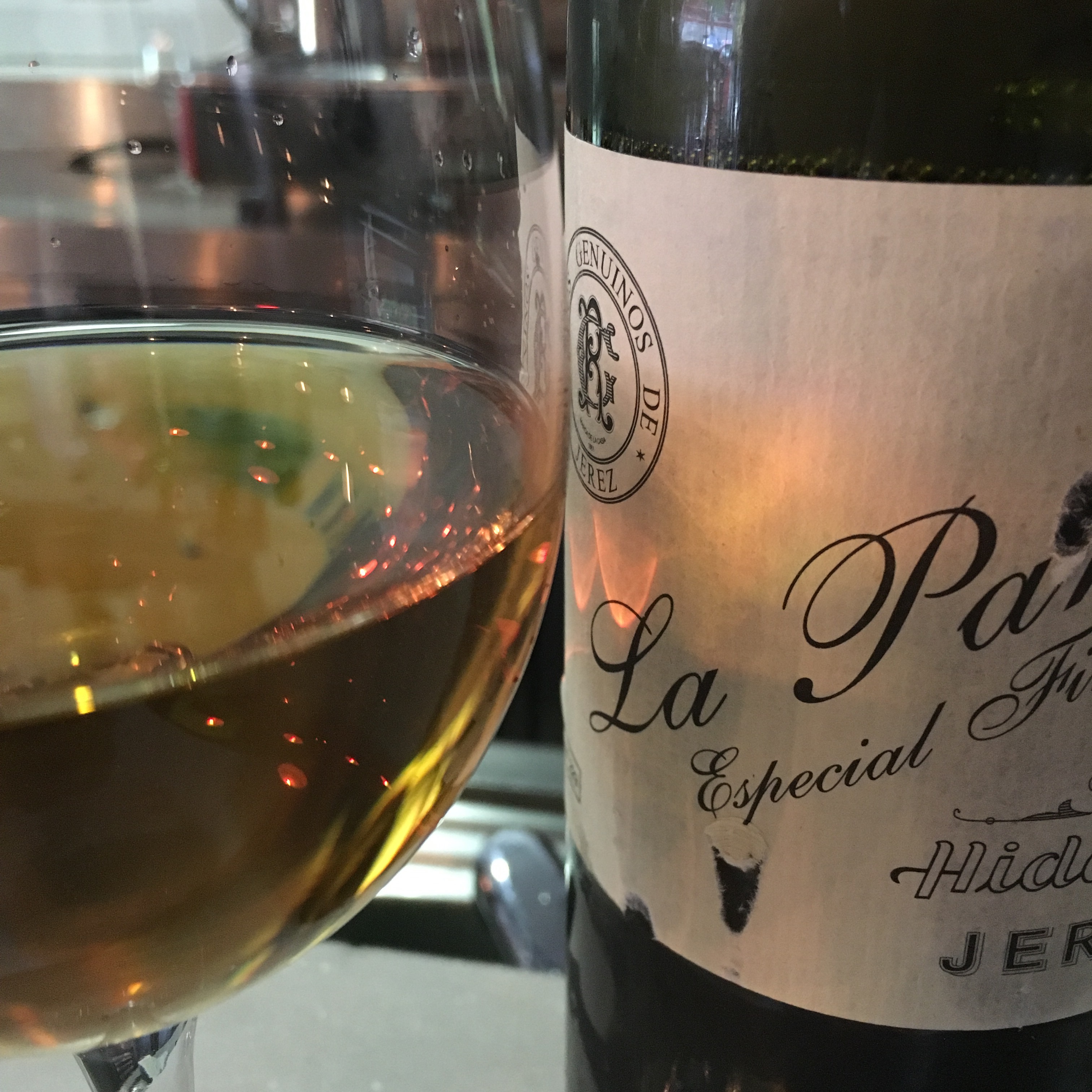
 

La Panesa 

It has been too long since I had a sup of this (I make it three months) so here I am at the bar of La Chula gathering rosebuds between meetings. Not easy to add much to the long string of tasting notes but still worth enjoying the moment.

This 0ne has a little bit of time in the bottle (if I am reading the Lot Code right I make it a 2014) and maybe a little time open, and just seems to have a little more spice. But what I love most are the classic features – the haybales, the over-roasted almond flavour and the intensity, density of that flavour, and the balance.

A classic, an all time favourite and a much needed reminder.

Fino en rama Santa Petronila – December 2015 

This was one of my puchases from Casa del Jerez -at their recommendation – and an excellent recommendation it was too. I couldn’t resist opening it after seeing it in a tweet by Criadera and I am very glad I did.

It is an “old” style fino en rama – haven’t seen a ficha as such but I bet it has a few years underflor. It is dark gold in colour and with big hay bales and yeasty aromas. Age and hay bales on the palate too: slightly sour bitter almonds first up, nice zingy salinity and then big smoky, bready flavours and the woolly texture of the acetaldehide. Long too.

The colour, the haybales and bread, and the impression of age remind me for all the world of the macharnudo alto finos by Equipo Navazos and its no surprise to find out that the Santa Petronila finca is indeed up there (and I assume the vines are too but who knows). The bodega was described to me as the smallest bodega in the region, producing only 800 half-litre bottles a year, and from what I can see on their website it is also a guest house. In fact it looks a cracking spot, and  they mention on their website an amontillado, an oloroso and a PX.

Must be worth a visit based on this fino!

Alba Brut Nature – and some superb champagnes 

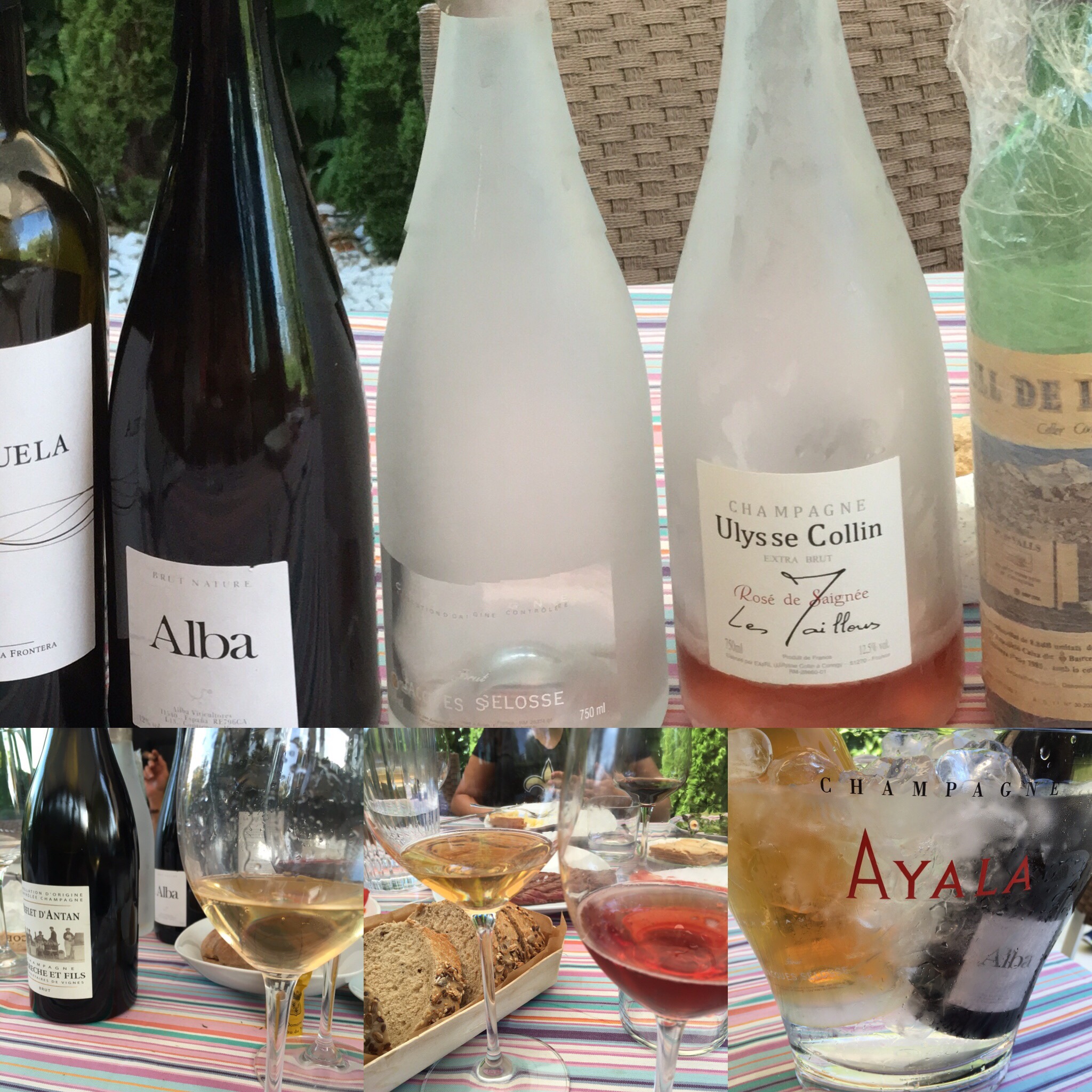
I wrote about a really fun tasting of the wines of Alba back in the spring and since then have picked off another couple of bottles individually – most recently at a champagne heavy barbecue this weekend. It wasn’t an occasion for much note taking but it was still a good opportunity to see how these palomino bubbles from Sanlucar fared alongside some more classic bottles from further North (and not just anything either, a Brut Rose by Jacques Selosse, a Rose de Saignée by Ulysse Collin and Reflet d’Antan by Bereche, no less).

The champagnes were absolutely sensational – particularly the Selosse and the Ulysse Collin – just superbly elegant, stylish bubble. They were wines from a different league altogether but even so the Alba didn’t fare too badly at all. As we said in April it came across as a proper sparkling wine – nice bite and  crispness – even a bit of class to it. A touch more herbal on the nose and lighter in profile than the other wines, and it didn’t have the same level of structure and definition, but it had a nice biscuity and herb body and a very fresh finish. Not bad at all.

Not strictly speaking comparable wines, another really unfair comparison, and to be honest not really a comparison as such, but the Alba came through a pretty high level lunch very nicely. Bravo!

Oloroso Galeon revisited

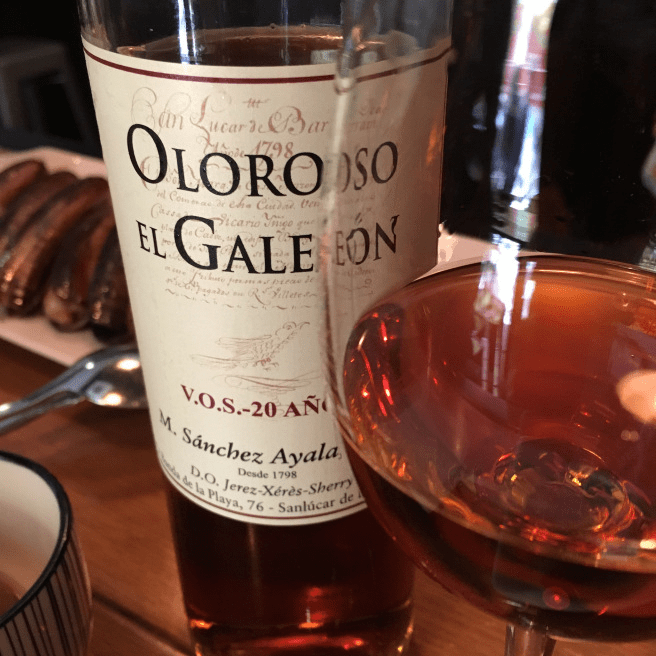
Oloroso Galeon

Came across this little gem of an oloroso by Sanchez Ayala in Sanlucar for the second time a few days ago at a very very boozy barbecue with friends. I failed to take a picture so the above is from the last time (and a cracking pairing in La Chula), but I can promise you it looked pretty much the same.

It made me realize that some of my recent musings on the differences between the traditional wines of Sanlucar and Jerez were a little off beam. I had made the mistake of writing Sanlucar down as the home only of austere amontillados like Quo Vadis and the epic amontillado viejo Don Paco. Tasting this on the other hand brought to mind a very different style of wine, with the salinity and zing of a Sanlucar wine but a lovely rich caramel to it as well and the result is as tasty as it is elegant and balanced. (It reminded me, in fact, of two other cracking olorosos from Sanlucar: El Cerro and the 1986 Vintage Oloroso by Hidalgo-La Gitana.)

Am I imagining the salinity? My very nebulous grip of how these wines age makes me think that I might be, but there is no doubting the mineral nature and elegance of this. Really delicious, excellent stuff (and just as good with barbecue).


Elmundovino on the dry wines of Jerez and Sanlucar

Elmundovino

This blog may appear to be turning into an elmundovino.com appreciation society but it is not the case. I have of course always held them up as an authority but this recent apparent burst of enthusiasm is a symptom of Murphy’s law of periodicity.  It is simply that, like buses in the London rain, you wait a long time for them to do a piece on sherries and then they come along again and again and again.

After a tasting of Equipo Navazos by Victor de la Serna last week they published the results of a tasting of finos, manzanillas and some bigger beasts by Victor de la Serna, Juancho Asenjo and Alberto Pérez Marín and then today they have published a further tasting by Victor de la Serna, Alberto Pérez Marín, and Jens Riis.

Really top class tastings all of them: in the first tasting all the latest Equipo Navazos releases; in the second tasting, the Palmas series by Gonzalez Byass and leading en ramas of the likes of Solear, Pastora, Fernando de Castilla, and la Guita (and a glimpse of the Callejuela Manzanilla de Añada 2012 2/11) and in the third some more of the latest releases by Equipo Navazos, some classics from Valdespino, a series of sacas of the great Tradición Fino, the wines of Juan Piñero and the Williams & Humbert añadas (which Victor de la Serna actually tasted with the author last week).

Overall the scoring is very high (which is no more than you would expect), and looking through both notes and scores I am proud to say these experts and I seem to be of a mind in most things. It was in particular an honour to taste the Williams & Humbert wines with Victor and I fully agree with his notes and scores – was in the process of writing up my own and will clearly have to work harder.

Only two differences that I can detect: they didn’t seem to have enjoyed the wines from el Puerto (other than the excellent 3 en Rama) as much as I do, while I may need to  revisit the Valdespino classics. (I also need to get my hands on more of the Piñero wines – while I love the Maruja the others have somehow evaded me to this point.)  Interestingly, in the second tasting they compared the Solear en Rama summer 2016 (aka the Teal) with its 2015 counterpart (the Rednecked Nightjar) and found that the year in bottle had given the 2015 an extra dimension. So much so that the tasting was accompanied by an op ed questioning the apparently still commonly held notion that en rama wines are for immediate consumption. I for one fully endorse that view (and the good news is that I have been able to get some more of the Nightjar). Then in the third tasting, on the other hand, they had at least one en rama manzanilla with a couple of years in the bottle that they didn’t rate as highly as I did when it was fresh. Clearly, time in the bottle giveth but also taketh away.

Overall, a really excellent trio of tastings, a good snapshot of some of the more important series of wines around and great to see that I am not alone in thinking these wines are all top quality.


Mirabras 2014 

I first tried this a while ago but fleetingly and, although a palomino purchasing moratorium is currently in place, I couldn’t resist picking up a bottle this week in Reserva y Cata.

Small production – just 2000 bottles, from a single vintage of a named vineyard  (Cerro de Leyes) – which the web describes as home to the oldest vines on the Santa Lucia pago. The grapes were left to dry in the sun a little, then the wine was fermented in an old sherry bota, was a few months on its lees, a few months in bota and then in inox.

It is a rich gold colour and on the nose has the distinctive sweet herb aromas of palomino. Then on the palate there is no mistaking where this comes from. It has nice acidity the sweetish fruit of the palomino but then there is zingy salinity and celery-like spices, salt and pepper. A real chip off the Solear en rama block.

Really distinctive and very tasty.

Las Añadas de Williams & Humbert in Taberna Verdejo

The author is suffering from a severe hangover this morning but one that was well earned after a great night drinking some brilliant wines (and, it must be said, a top brandy).

As always, it will take a while to fully digest the learnings – and indeed find my notes – from last night but I wanted to share some immediate general impressions.

  • First, the Coleccion Añadas is a brilliant concept well executed. Sincere congratulations and thanks to Williams & Humbert for putting together this boxed set which made for a fascinating tasting.
  • Most importantly, the wines are very attractive, approachable wines with a clear personality to them – elegant for the most part but with juicy hazelnut, and very attractive on the nose in particular.
  • In the spirit of the collection we tasted by añadas – the 2012s followed by the 2009s, the 2006 Vintage Fino and the 2003s – and although we were not comparing like with like it was curious to note that the wines from warmer years came across as finer, more elegant than we might have expected.
  • There was of course a very notable difference in character between the finos and the olorosos – even at the younger end of the scale – but the differences between the different years were just as marked and very interesting. In particular, the finos became richer and more oxidated as went back in time and definitely gained in complexity – the 2006 Vintage Fino in particular was superb and the 2003 Amontillado was almost as good.
  • Having said that, I also thought the 2012s were excellent and a great advertisement for the “less is more” theory of wine making. I really think these wines with limited biological or traditional ageing are a way forward for the region in terms of winning over wine enthusiasts in general.

So all in all some cracking wines and another great learning experience, which was enriched in particular thanks to the great Victor de la Serna, who joined us as a special guest and brought along, in addition to some quality insights, a Magnum of his excellent 2004 Finca Sandoval.

And finally, a word on the food, which was absolutely delicious – the pisto, the rabbit, the pigeon, really out of this world.  Yet another enormous thankyou to the crew at Taberna Verdejo for their outstanding hospitality. 


Ifs and butts

image.jpg

Have been boning up on technical issues for a tasting tonight and realized that despite an early post with biological and traditional ageing in a nutshell and a post on the velo de flor (with thanks to Enoarquia.com and Jamie Goode), I have never really got around to tracking down pieces on the other half of the equation – traditional ageing and the role of wood.

For starters I found a couple of guest articles on the Sherry.wine website – by Paula Maclean and Jamie Goode, respectively – really interesting stuff. But by far the best piece I have seen is this one by Ruben at SherryNotes.com (and Whiskynotes.com) – in turn inspired (or provoked) by the Jamie Goode piece.

A really brilliant piece and one I recommend reading.


Taberna Averias 

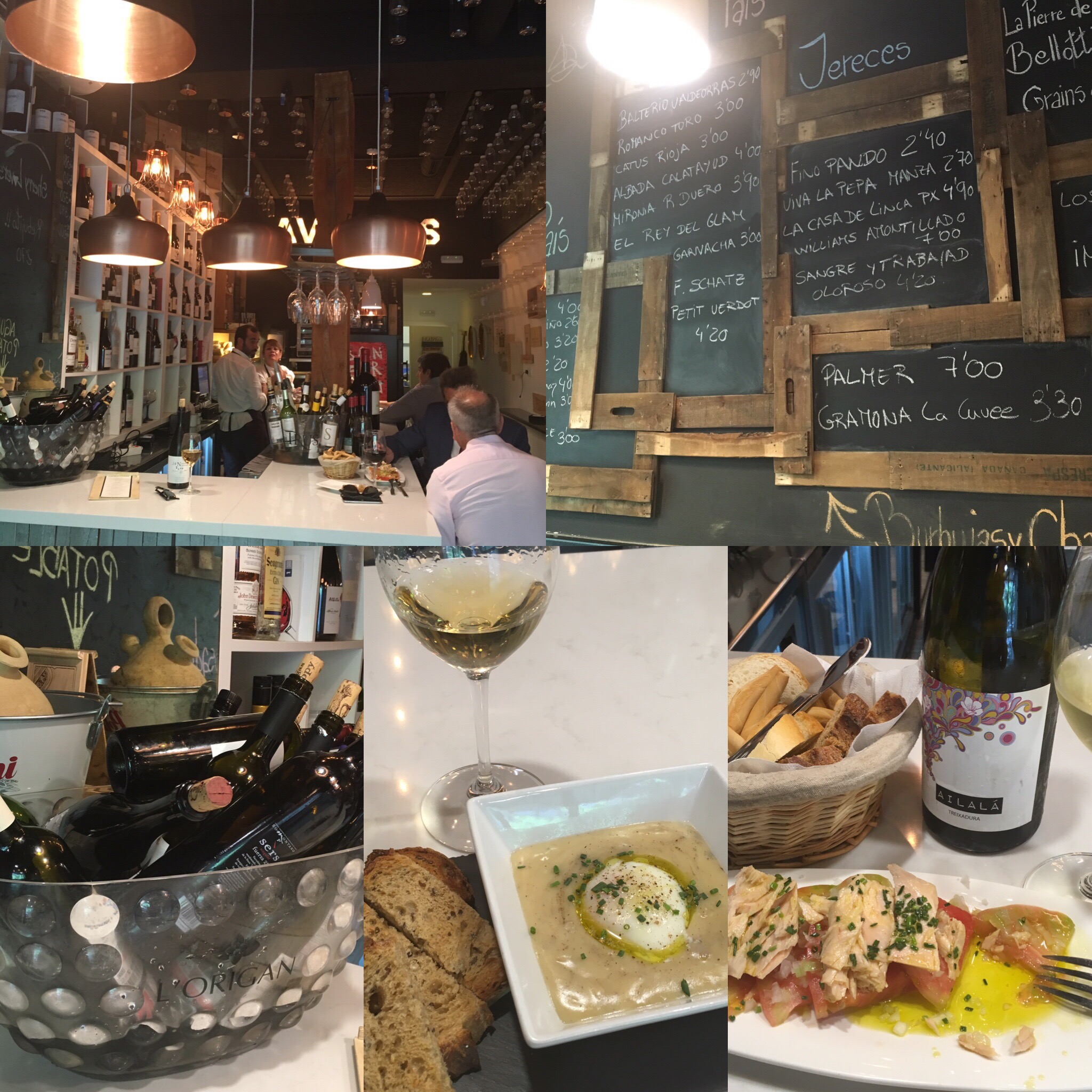
Had a brilliant light lunch in Taberna Averias today and can’t believe I haven’t been here before. It is a neat little place – cosy – but absolutely chock-full of wine, and most of it by the glass.

A top spot for a sherry fan – according to the winelist on their web they have 21 by the glass, but I can’t help noticing that none of the sherries I saw today are on that list, so they could have more, or less, who knows? Embrace the uncertainty: they have plenty, which is certain.

They also have plenty of other wines – I kicked off with a Navazos Niepoort 2014 but after that the friendly chap behind the bar served me a couple of interesting wines I had never tried, which is always, always welcome. They were nice too, so no complaints.

As for the solids: I had a poached egg in a puree of some kind with truffle, together with half a tomato salad, but on the list they have the mandatory callos, steak tartare, smoked sardines, anchovies, cheeses, cheesecakes. Frankly, whatever your sherry pleasure you can probably pair it here too.

So welcome to the first of probably many posts from Taberna Averias. I am only sorry they were open eight months before I found them.