Alba Sobre Tabla 2014

When looking around for a bottle to open tonight I read this fantastic interview (in Spanish) by the always excellent Spanish Wine Lover of Fernando Angulo, the guy behind Alba Viticultores.

I couldn’t agree more with the article – which talks about how not enough recognition is given to the growers in the region – except in one respect: it is unrealistic to expect the growers to get their just desserts until the winemakers, guys like Fernando who let the terroir express itself, get their recognition. So anyway I opened the only remaining bottle of his wine that I had and I am very glad I did.

These Sobre Tablas are fermented in stainless steel, then aged for 14 months in a 500 litre butt that had held manzanilla for over 50 years (they generally make two butts, bottled separately). They haven’t been under flor, although space is left for a little oxidation and concentration.

I love the salinity of it and the flavours on top, a little acidity and ripe apples –  a really nice acidic cider – with a tingling, saline and mineral finish. The last time I had it it was my wine of a big day and I am enjoying it once again. I can understand the comparisons with top white burgundies – that oxidation and salinity. Maybe the fruit isn’t quite as expressive in between but it does a herbal character, leafy character that its cousins to the North lack. Their loss!

So all power to Fernando and other winemakers like him!


Cotes du Jura Domaine Labette, Cuvee du Hasard

I took a picture of this an age ago in Territorio ERA and made a few half hearted notes before getting distracted by a lot of other even more impressive wines that came along, as they are wont to do, and utterly forgetting to write them up.

On the basis that late really is better than never and according to the afore-mentioned, half forgotten notes, I loved the undergrowth nose, buttery texture, the citrus juice and above all the salinity of this little wine. As the label indicates it has been under the flor but I am not sure for how long, and although it had a high register compared to the wines of el marco that salinity caught my attention – not big and heavy like an iceberg but deep and grooved. I have a note saying “soil?” which tells its own story.

Chardonnay you say? Sign me up.


Manzanilla de Añada 2012 Callejuela 2/11

I have been mulling in my head a post on the effects of bottle ageing for a while now and have even sneakily created a related category, but I am still not really sure what to talk about. And maybe because those thoughts were already in the old noggin over the last couple of days I have been struck by how different two wines have seemed thanks to, or at least so I imagine, the time they have had in the bottle.

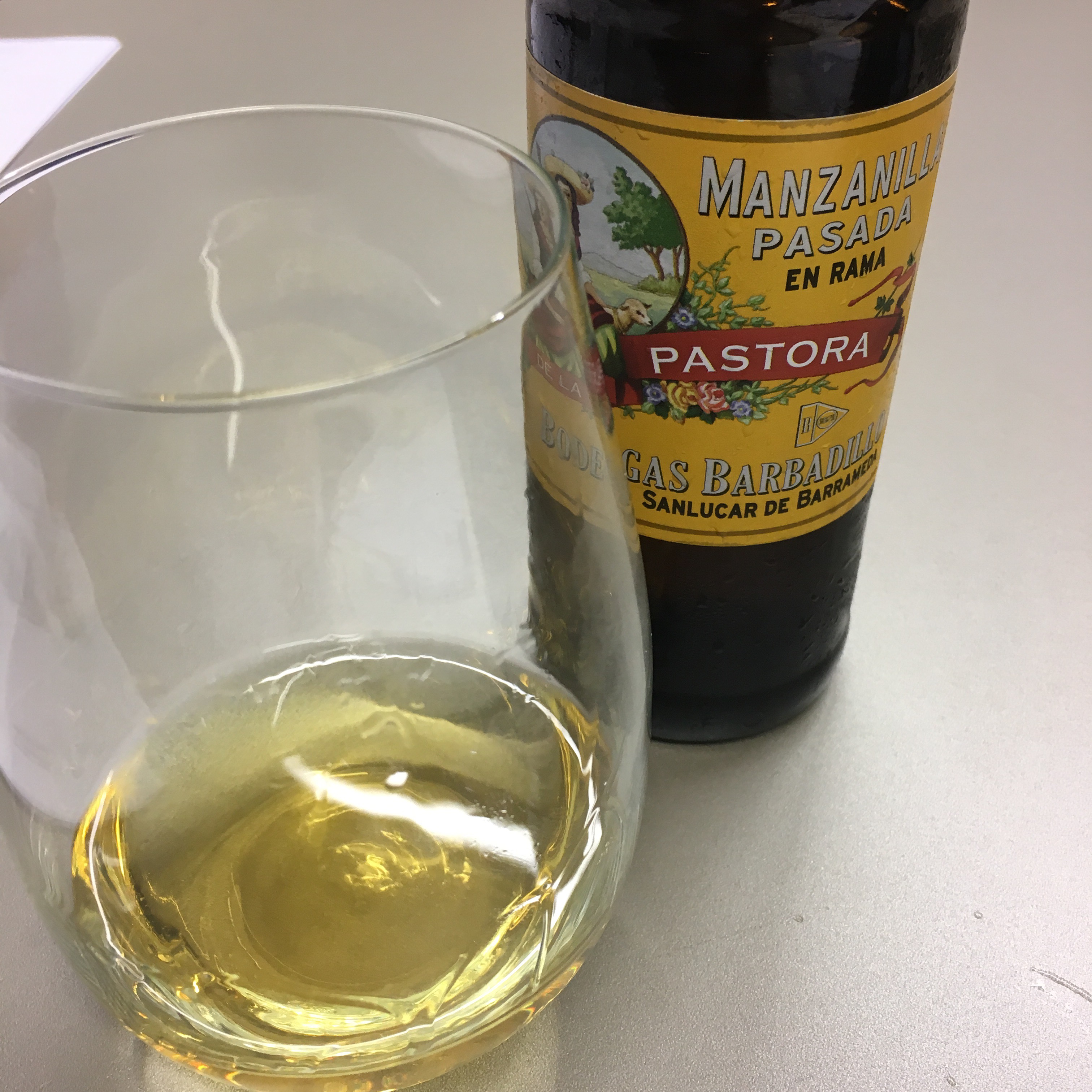
The first was a little bottle of Pastora that I opened on Friday – a little gem that seemed to have gone from green apple to golden apple and to have gained as a result (and indeed was gone in 60 seconds).

The second was this little bottle above – an absolute star of a wine that I thought was good before – as recently as a month ago – but seems way better now. More potent on the nose and palate, sharper, a little bit spicier.  I am looking back at my notes of other tastings (here and here) and I am convinced it has really come of age only now – just more of that awesome sapidity.


Sherry Week in Madrid (and beyond)

sherry-week-2

This coming week, November 7-13 is International Sherry Week, a fantastic week-long, worldwide celebration of the top class wines of Jerez, Sanlucar and el Puerto promoted by the Consejo Regulador and the team at sherry.wine.  They have an absolutely brilliant search tool to help you find local events, of which there appear to be no fewer than 71 planned in Madrid.

I am feeling a little bit sheepish about the whole thing since my other commitments have limited my availability a lot lately and I am not sure of being able to take part in many of the events over the next week. In fact doubly sheepish, since all the events are probably sold out and this post is thus probably too late to be of practical use for many people. Even so, I wanted to celebrate some of the outstanding events that are lined up (and you never know there may be the odd place available).

Monday, November 7 –

Tuesday, November 8 –

Wednesday, November 9  is a holiday in Madrid and there isn’t as much going on

Thursday, November 10 –

  • Taberna Palo Cortado has arranged a pairing menu matching the wines of Bodegas Tradicion and the salazones and conservas of Herpac
  • Although not on the official Sherryweek program – and sold out long ago – Taberna Verdejo will be hosting Paola Medina of Williams & Humbert and Juancho Asenjo for another tasting/paired menu based around the excellent Colección Añadas

Friday, November 11  –

But this list is really only scraping the surface – you can take a look at the 71 official events in Madrid, the 889 in Spain or the many hundreds or even thousands around the world on the official website.

And neither should we forget the other places where every week is Sherry Week. At Enoteca Barolo they will be hosting the 11th sessions (two groups) of their awesome course on the traditional wines of Andalucia and at Surtopia, Angelitala Fisna, Territorio ERA and elsewhere it will be sherry business as usual. I am looking forward to another great week and to getting my sherry on. Don’t be surprised if your twitter timelines take on a radically pro-sherry flavour in the coming days!


Manzanilla pasada Pastora 

This is really singing tonight – have declared wine o’clock in the office and am  enjoying it immensely. A lovely chamomile nose and golden, roasted apple, hay and spicey celery palate, with a mouth watering finish. Really top class and suddenly the office is a happier place. 

Dabbawala

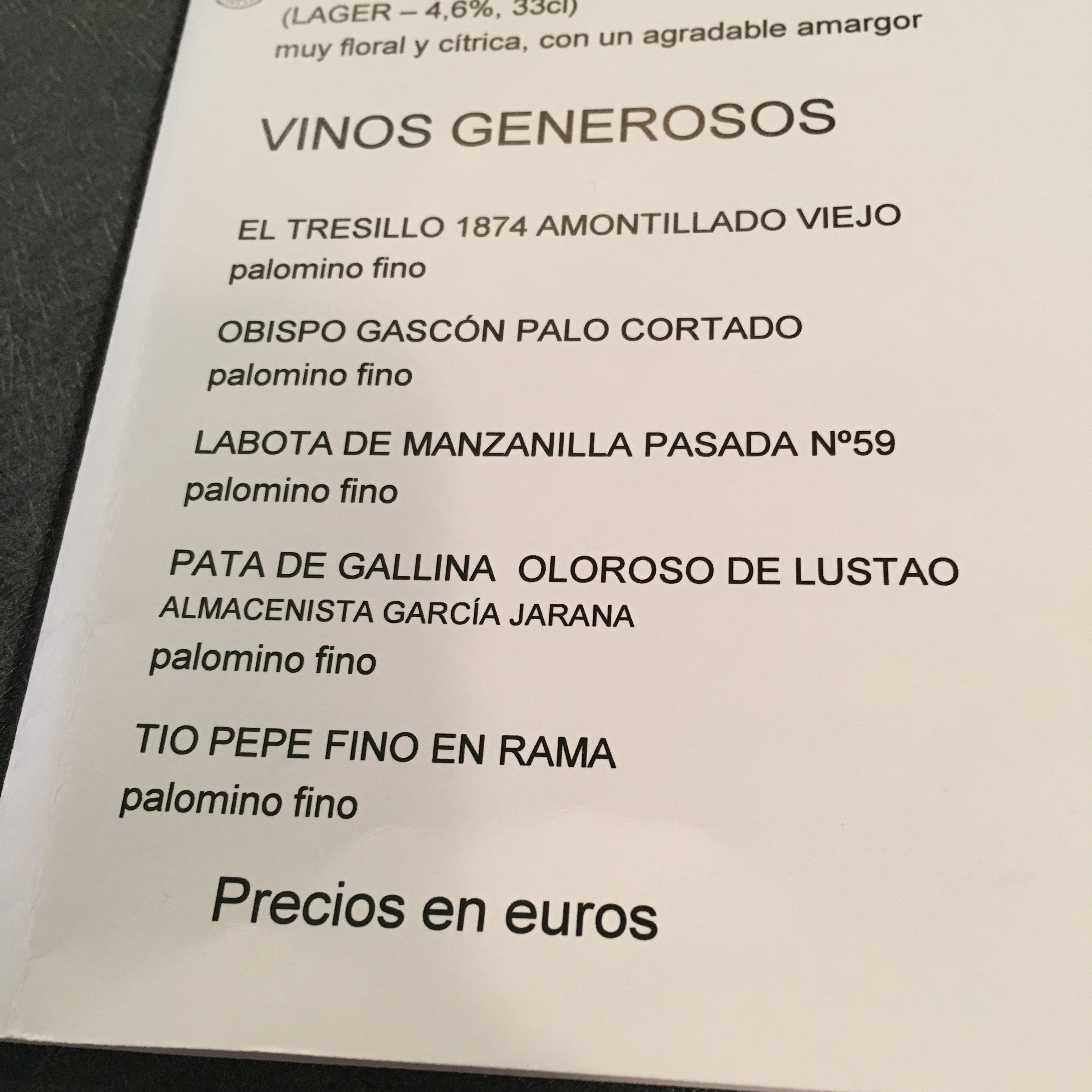
At lunch at Dabbawala in Calle Españoleto and one of those sherry lists that, while too short, actually delivers just about everything you need. Five really nice wines:  I wouldn’t mind having any of those – and more importantly a good mix covering the bases (there was also a PX, but on a different page). Prices exclusively by the glass. (The wine list in general is pretty good  in this sense – a bit of evertything and every base covered in general, including a really good list of craft beers.)

Would be nice to see a few more sherries, some prices by the bottle and if possible some prices by the half glass, but I feel a slight curmudgeon for criticising – until the boom of the last couple of years this would have been considered a relatively long sherry list!

Sherry shopping suggestions

what-to-look-for

My latest post for the sherry.wine site was published today: What to look for on a sherry bottle.

I bet you can guess what it is about. In fact it is a little bit less/more than your standard explainer – if you look really carefully you will detect some of my personal preferences hidden amongst the mass of cogent, well made points. There are some equally telling omissions, for which I will no doubt have to answer at some point. In any event, I hope it helps.

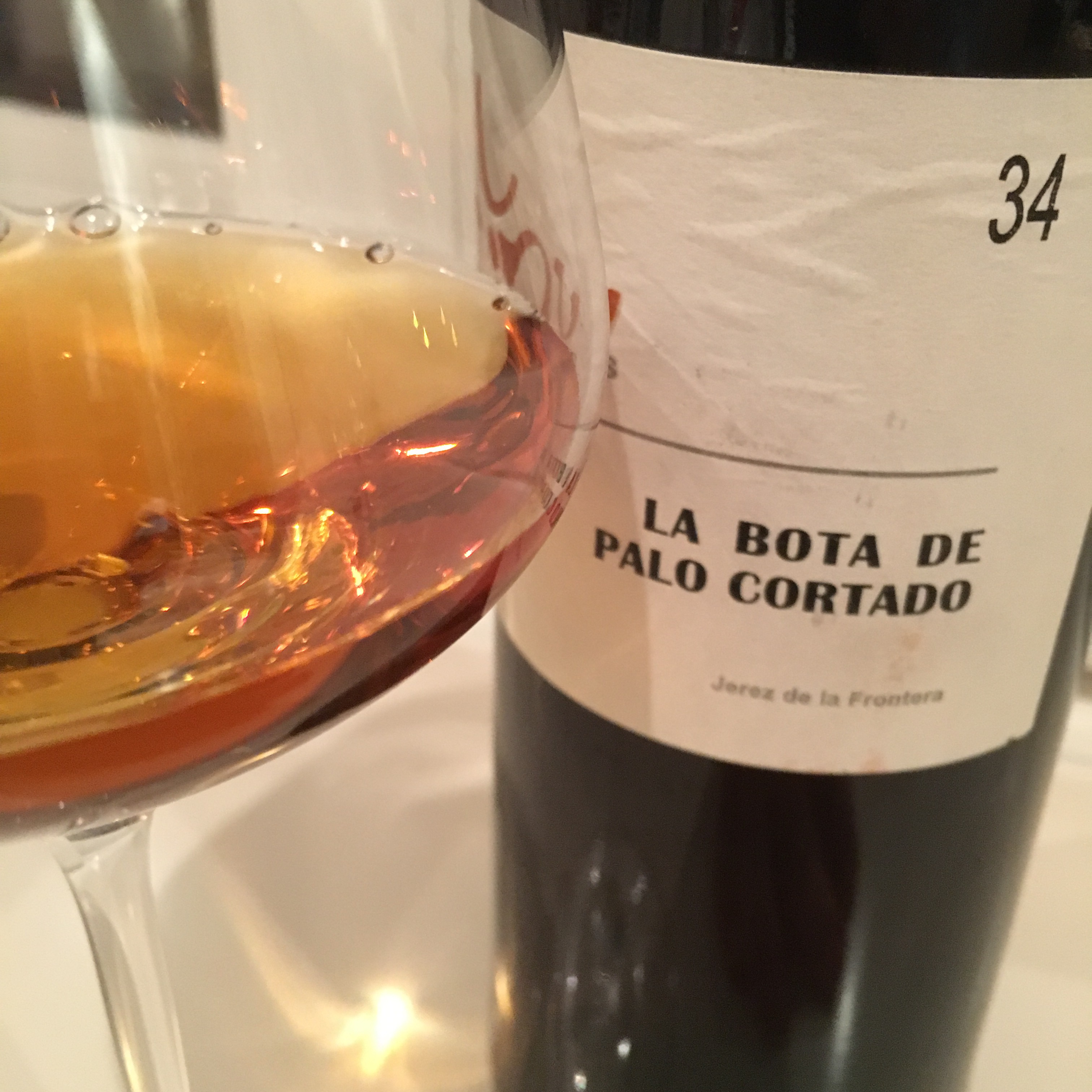
La Bota de Palo Cortado 34  

This was not the first sherry I ever had but it was the first to make me sit up and really take notice. I am spoiling myself after a few days of rustic holiday with the family, during which sherry was notable by its absence. Besides, I see from the blog that I last opened a bottle way back in February!

This wonderful palo cortado was released back in February 2012 and you will struggle to find any nowadays (I reimported a half case from the UK last year) although you can find wines from the same solera if you know where to look (there are clues on this blog).  It was sourced by Equipo Navazos from selected botas in a solera held by the almacenista Garcia Jarana and then finished in their instalation in Bodegas Fernando de Castilla before bottling. Since then it has had four and a half years in the bottle and half my excuse for opening it was to see what difference that time might have made. 

The colour is as lovely as I remember, and it has a fantastic nose of sweet brandy and nuts – maybe not quite as explosive a nose as I remember. Then a nice cool entry, zing and burn of salinity with nutty toffee and then some slightly more bitter,  tobacco and woody notes and that long, mouth watering finish. 

Maybe, maybe a touch less explosiveness and sweetness, a touch more tobacco, but a lovely wine in the prime of its life – terrific.

Tasting the Great Gran Barqueros 

As trailed in my last post, last night I was lucky enough to attend a tasting of Gran Barquero wines given by José Ruz of Perez Barquero at Reserva y Cata, with the added bonus of the presence of Paco del Castillo.

There were four wines, all from the Gran Barquero range: the Fino en rama (a saca from October 20, 2016); a wine taken from the second criadera of the Amontillado Gran Barquero; a 2016 saca of Amontillado Gran Barquero and a 1996 bottling of the same wine. It made for a really instructive tasting which demonstrated the effects of oxidative ageing over time and, interestingly, of bottle ageing.

We started, of course, with the Fino en rama, which is from unfortified, 100% pedro ximenez and has spent 8-10 years under flor in a solera with three criaderas. It is an excellent fino en rama – intensely yeasty, flavourful (slightly bitter almonds) and mineral, and one of the things that always strike me about these Gran Barquero wines is how very fine they are in texture – the sense of how the glycerine and body you might expect from the pedro ximenez has been reduced by the flor over those years. (Interestingly, I was able to sneak a glug of a second bottle of the same wine and it had a quite different green apple and popcorn nose.) It was bottled only 8 days earlier but seemed to have  stood up to the bottling – will have to try and get some to see how it tastes in a few weeks.

We then moved on to the wine taken from the second criadera of the amontillado solera, which is refreshed from the solera of the fino en rama and also has three criaderas. Again there has been no fortification (we were told they hadn’t fortified for ten years or more) and the finished wine bottled as Amontillado Gran Barquero will have had an average of 15-20 years oxidative ageing on top of the 8-10 of biological ageing of the fino. It wasn’t fully clear to me what the average age of this wine from the second criadera was but I guess we are talking 8-10 plus 8-10 or similar. I found it a very enjoyable amontillado indeed – lovely straw and hazelnut nose, and even a little bit of raw yeast and juicy hazelnuts on the palate. Not powerfully acidic but a nice bite to it and good, mouthwatering salinity. Elegant and compact but full of fun.

Next came the finished Gran Barquero amontillado (from a bottling in September 2016) and to me it was a little step up in class and refinement. On the nose the sweet touches of the second criadera had gone but there was a richer yeastiness to it. On that little bit of extra acidity and salinity give it an even sharper entry and finish and the hazelnut flavours of the second criadera have intensified into roasted – borderline burnt – nuts and lead to a long, umami rich finish. It it a classic wine.

Finally, we were able to try a Gran Barquero amontillado bottled in 1996, giving us the chance to appreciate the effects of those 20 years of bottle ageing. As a caveat, it would not have been quite the same wine in 1996 – with a total age of closer to 15-20 years than 25-30. Moreover, I gather that these specific bottles have not exactly had a restful 20 years either: they had been shipped to and from the Canary Islands, no less, and with no guarantees as to the storage conditions.

Nevertheless, these bottle aged wines are all the go now so I was intrigued to see the differences – and surprised by the differences that were there, to be honest. First, and maybe least surprisingly, it looked its age: much darker in colour, not quite crystalline and with crumbs of sediment (see above). The most striking difference was on the nose – whereas the previous wine was all yeast, straw and herbs, this had an aroma of dusty old leather bound books – but also on the palate for me it had lost a little bit of the spring in its step, getting a touch dryer and with more bitterness, and even in terms of definition, again with a slightly dusty sensation to it. Really interesting to have tasted because the differences I noticed were things that in other wines in the past I had attributed to the length of the time in the barrel, but not quite my cup of tea as you can probably guess.

Overall though four top quality wines and an excellent structure to the tasting. When you throw in the knowledgeable commentary and explanations of José and Paco before during and afterwards it was an excellent night all round during which I learned a great deal. My sincere thanks to Ezequiel at Reserva y Cata, José and his colleagues at Perez Barquero and Paco de Castillo – brilliant stuff.


Amontillado Gran Barquero


Heading to a tasting of Perez Barquero wines at Reserva y Cata in a few minutes and am getting the juices flowing by writing up my note of this from yesterday’s lunch at Territorio Era. (In fact the original plan was just to repost but to my disbelief I discovered just now that I had no post on the blog about it.)

Despite an average age of 25-30 years it has really nice flor effects to it – the nose has nice almonds and yeasty bread – which makes me think it spent a good number of the early years under flor. Then it has a fine, silky texture that you don’t necessarily expect from a pedro ximenez, lovely acidic and or saline bite and a nice elegant palate of roasted, dark roasted almost bitter almonds.

Really top class. Juices are now flowing and no mistake.