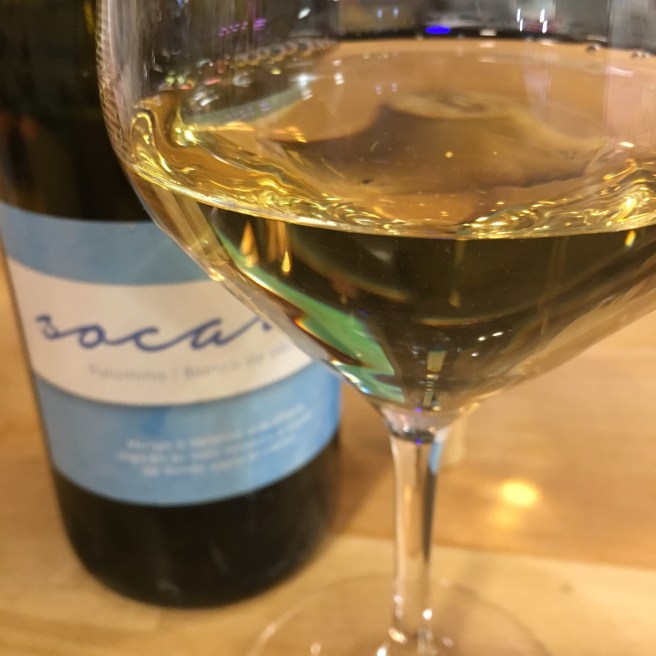
Socaire 2015 revisited

Good to come back to this and more grist to the mill of my palomino theories.

This is the Socaire, a wine named for the hiding spots from the wind that sweeps over the primest of albariza real estate in Chiclana, Finca Matalian. The Finca has a very high chalk content, is 100m up and right by the sea in the Southernmost limit of the “marco de Jerez”, making it a unique bit of terroir. And sure enough it is the source of a really fantastic line up of wines, of which this is one. In fact it wouldn’t be an exaggeration to say that this wine is a bit of a phenomenon: there are people out there who even define the movement towards making new wines in the region as “Socairismo”.

From memory (if you want precision you are reading the wrong blog) this wine was fermented and aged in butts that had previously been used to make the marvellous Arroyuelo fino, then given 20 months or so in the butt, without flor (at least the butt was full) before being released around Easter this year.

I first tried this back in September and I found it a little quiet compared to the first vintage, from 2014, although given my experience with other palomino white wines at the time I wondered if it would find its feet with some more time in the bottle and so it seems to have proved. Maybe it is just the memory of the 2014 wearing off but this certainly isn’t timid at all. Lovely big aromas of over-ripe plums and aromatic herbs and a packet of flavour on the palate. A really tasty and enjoyable wine with just enough of a fresh finish to wash it down.

Fantastic stuff and I am beginning to convince myself of this need to keep these in the bottle. It is not an easy thing to do though.

La Bota de Manzanilla Pasada 59 – Capataz Rivas

Just lately I seem to find Equipo Navazos wines everywhere I go but to be honest that is no bad thing – certainly not when they are as enjoyable as this one. This Number 59 is sourced from a special solera set aside at La Guita and has all the characteristics of a top manzanilla pasada: mellow, fresh, fruitful, saline, and elegant.

They are characteristics that make it a wonderful, versatile wine for the table and indeed a friend and I enjoyed a few glasses in Media Ración over lunch the other day. But it is also the kind of wine that is enough of itself – enjoyable but with plenty of complexity. This was bottled in June 2015 and looking back at my previous notes from October 2015 and February 2016  I would say it has held up very well – maybe a slight edge has been taken off it over time but it is still sharp and fresh.

Lovely stuff.

Amontillado Escuadrilla

A really mellow, drinkable amontillado this one from Lustau – a nice little tipple. It had only four years under flor (in the solera of Fino Jarana) and a further eight years of traditional aging.

It is crystal clear and a light hazelnut colour, with a nice nose of hazelnut toffee– tending to sawdust. Nice palate too, fine but rich with nutty and toffee flavour and a pleasant finish, with the flavour slipping away.

Very easy, very pleasant drinking.

Solear en rama summer 2017 – the Red-knobbed Coot

The real red-knobbed coot (focha cornuda) – so called due to a red knob on its forehead, as you can probably see, is in danger of extinction. The liquid version is facing a similar predicament. The population of bottles seems to be dwindling rapidly.

This one has a beautiful deep gold colour and a nose that is herbal and chamomile on top and yeasty and bread underneath. Then it has a zingy palate, that also has a bit of undercooked bread and even creaminess about it. Really gives it a nice shape – a punchy, intense start, lots of umami and vegetable richness and then a spicy, stinging finish.

Endangered they may be but it is hard to see a solution – they are just too appetizing.

Encrucijado 2015

Encrucijado is one of the projects of Ramiro Ibañez’s Cota 45 and touches on many of the threads of the history the guy is trying to recreate. A multivarietal, vintage specific wine that corresponds to what was once called palo cortado (before that term became synonymous with the more marketable olorosos).

This is the third vintage and the third variation: the first was the 2012, and was from six varieties (50% Palomino Fino and 10% each of Beba, Mantúo Pilas (aka “Uva Rey”), Perruno, Cañocazo and Mantúo Castellano); the second, the 2014, was 40% “Uva Rey”, 40% Perruno and only 20% Palomino. This third addition is 50% Perruno, 30% Uva Rey and 20% Palomino.

My first impression of the wine is that it is a chip off those previous blocks. Has that butterscotch aroma and flavour, maybe slightly sharper and with a bit more volume and heft this time, but still with a buttery saline finish. Very approachable and very fine, elegant wine (although I know for a fact that the author believes it will improve further with time in the bottle).

Palo Cortado Sacristia AB – Saca Única

Fantastic lunch yesterday at the wonderful Taberna Verdejo started with a nice surprise and a cheeky snifter after bumping into none other than Antonio Barbadillo and Dolores Sanchez at the bar. And snifters don’t come any cheekier than this: the long awaited Palo Cortado.

Antonio was cagey about its origins and would only tell me that it was extremely old – a hundred years were mentioned. And all I can tell you from my brief inspection is that it is another collector’s item. Rich and deep in colour and woody, tobacco aromas and a full, nicely integrated palate with mouth-watering salinity and walnut and tobacco flavours, turning sweet and then black coffee bitter.

Not many of these little bottles available and well worth looking out for – particularly if you can ambush the man himself with the bottle open.

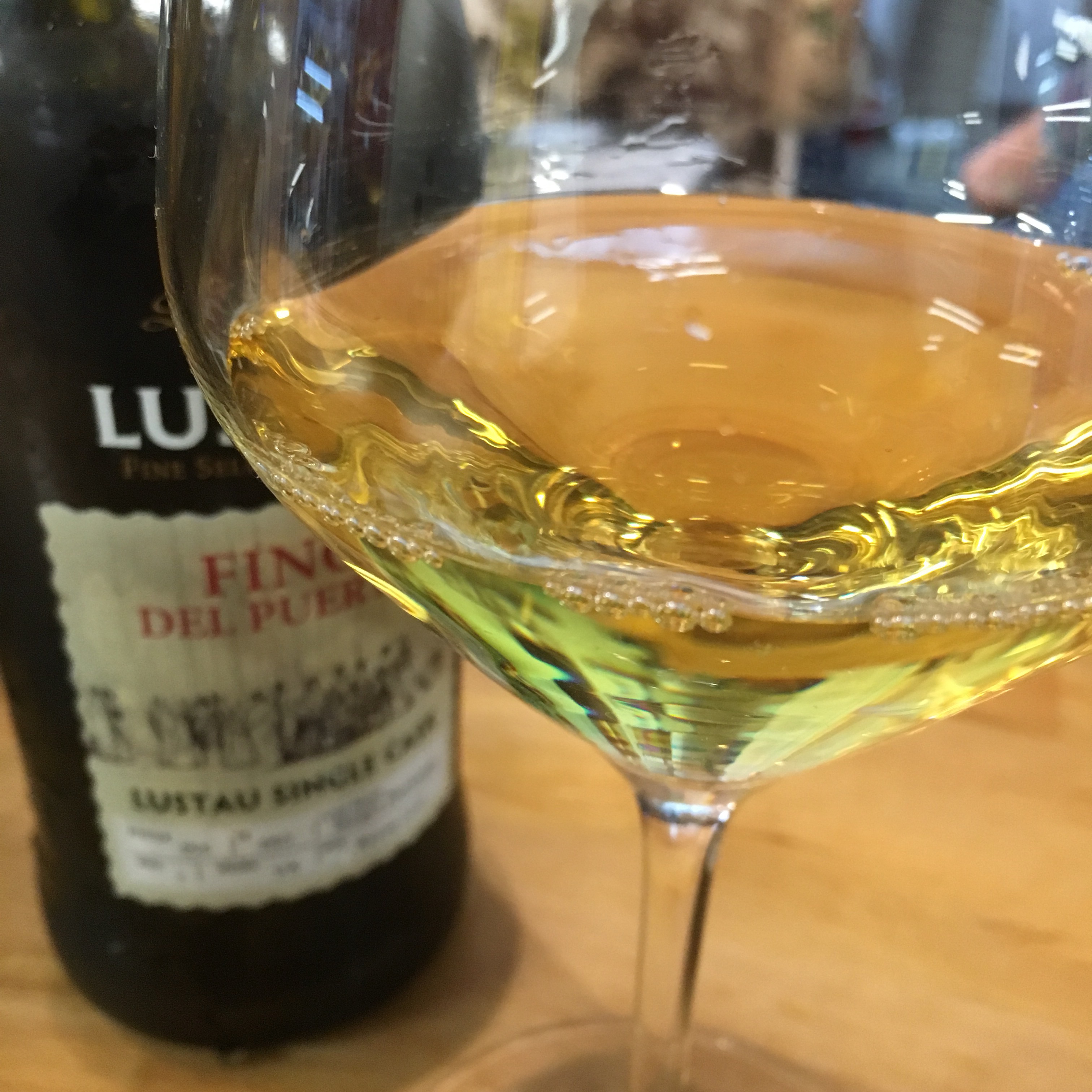
Fino del Puerto Lustau single cask, March 2017

Cask is a word that isn’t used enough in general. Has a nice ring to it and avoids the snigger potential of butt. Sounds particularly good in combination with the word “single” or “sherry”, although I will admit that the liquid that springs to mind is more Scottish than Spanish.

Be that as it may this liquid is Spanish and it is a little beauty. I have always been partial to the fino del puerto releases by Lustau – particularly the tres en rama – but this one, which is a special bottling for the chaps at Vila Viniteca, seems to be a step up in dimensions.

Beautifully clear and bright and a very slightly orange gold in colour. It has a wonderfully aromatic nose with really sharp sea air and seaweed/rockpool aromas. Then sharp salinity and a powerful, juicy, spicy spike of flavour, leaving a salty burn on the tongue and a long and lingering flavour of bitter, peppery salad. It has been a while but it seems tighter and more intense than the other examples I have had.

One of only 480 dinky bottles – which are well worth hunting out. (Or just get down to Territorio Era where they have it by the glass.)

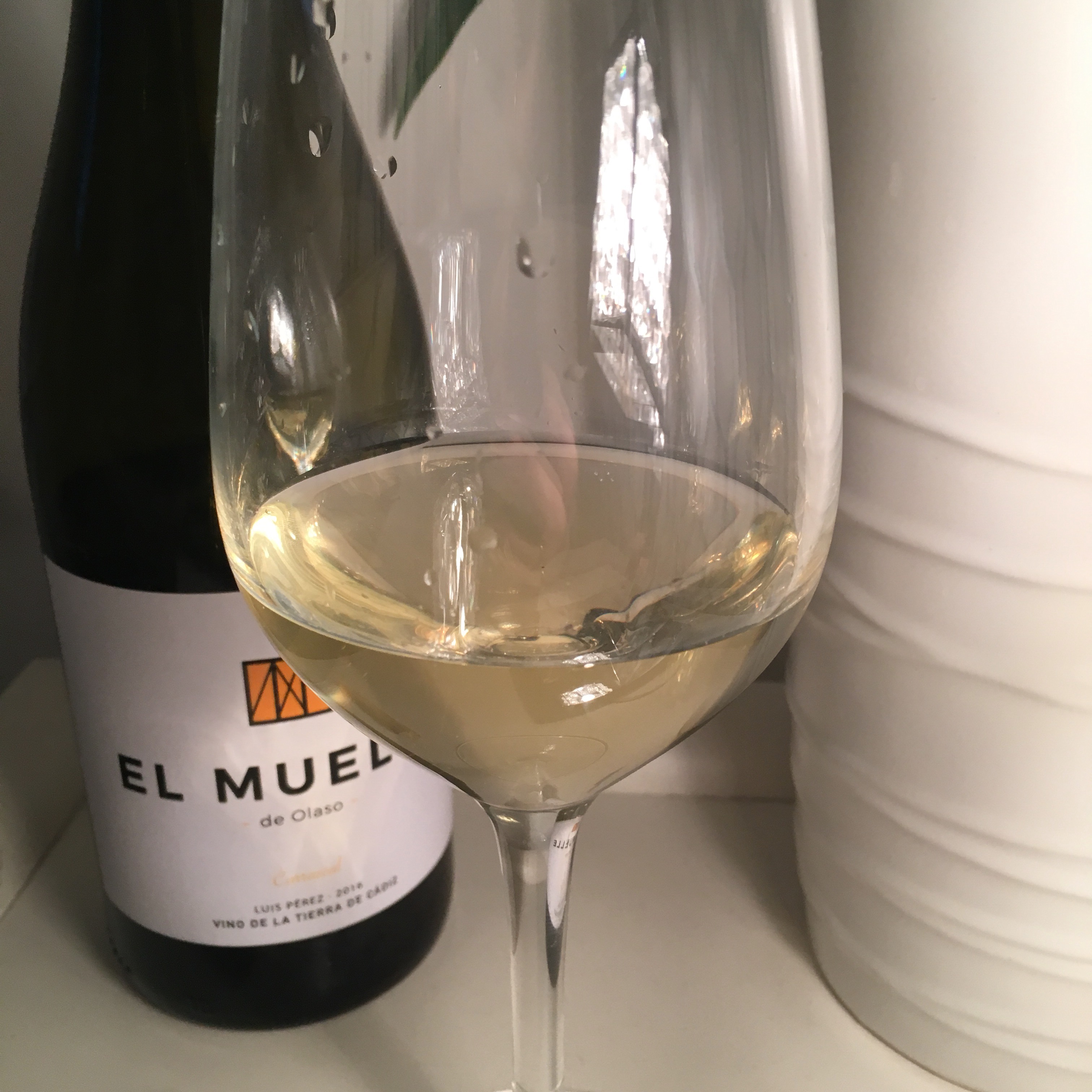
El Muelle de Olaso 2016

My last bottle of this, maybe the beefiest of the unfortified palomino white wines coming from the region at the moment.

The wine is by Willy Perez and the fruit is from the El Corregidor vineyard on Pago Carrascal that is the source of his fantastic Barajuela project. They harvest the grapes in several passes: (simplifying things) first for brandy, then for this, then for the fino and finally for the oloroso. In total 80% of the fruit comes from that early pass and 20% from a later pass that would otherwise go into the fino. The 80% then gets fermented in temperature controlled inox while the 20% gets some asoleo before fermentation in bota.

The resulting wine is a beefy 14.5% alcohol and is beefy in other respects too. It has a lot of concentrated fruit that gives it a floral, honeysuckle, pear and citrus nose, but give it time and you get a lot more herbal undergrowth. Then on the palate there is that fruitful, muscular body, a very broad profile that kinds of unfolds in the throat, backed up by savoury, stewy flavours and a fresh saline finish.

Seriously fruity and fresh.

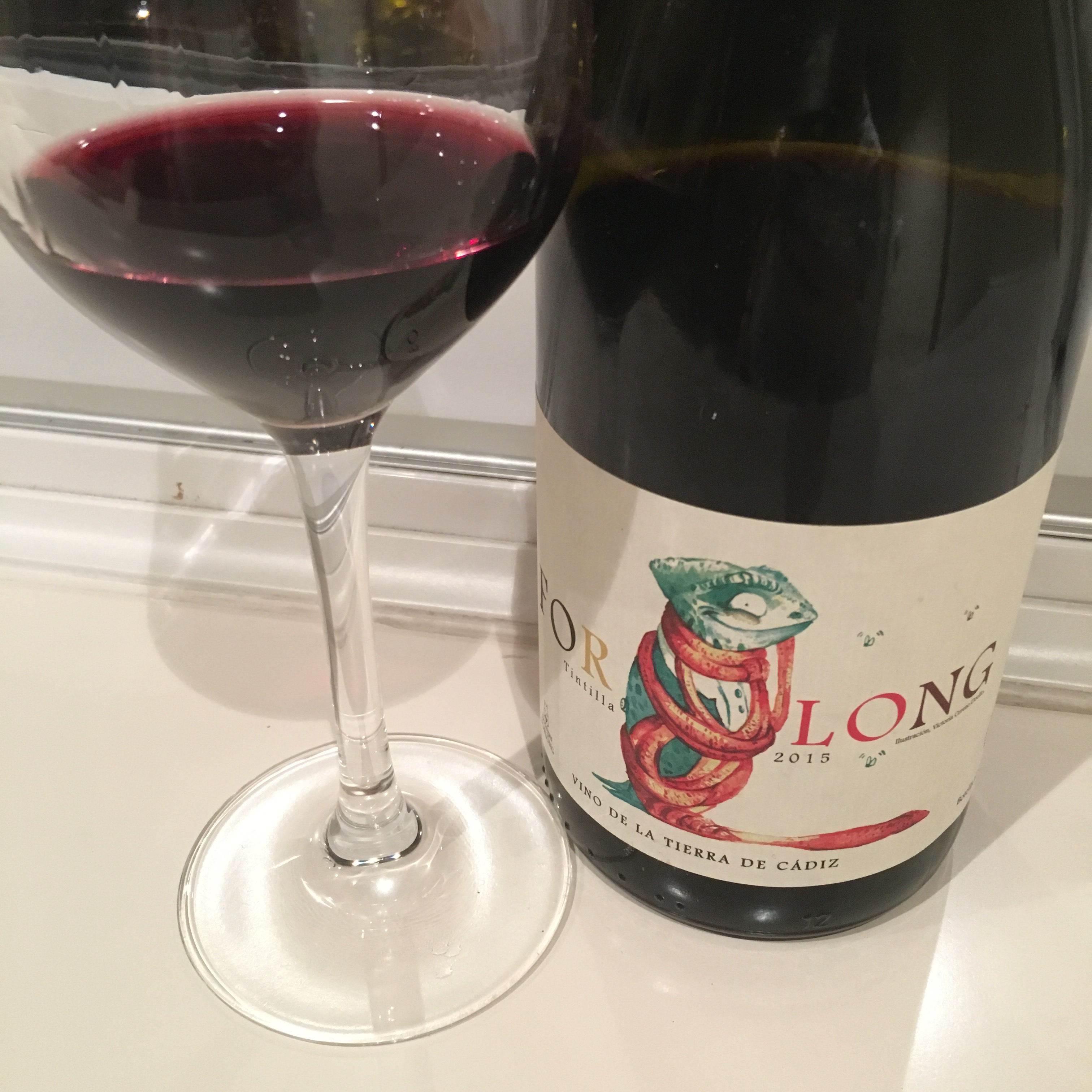
Tintilla 2015 Forlong

I must say I find these tintilla de rota wines very drinkable – not only do they pack a nice punch of fruit they also seem seem to generate nice spice for relatively little structure. I am told that the reason is due to the relative lack of pips by comparison to your varieties from more Northern climes.

This is by the chaps at Forlong and is an excellent example of the breed. As you can see it has that dark tone to it that must be behind the name, a really deep looking dark cherry. On the nose there is a similar dark cherry style of fruit and, as I may have mentioned, a nice bit of herb and spice about. Then on the palate you get all of the above again, a nice entry, then quite a big, concentrated dollop of fruit, those herbs and spices and even a bit of mouthwatering salinity.

Very nice stuff with no edges. Only drawback is that it appears to evaporate quickly.

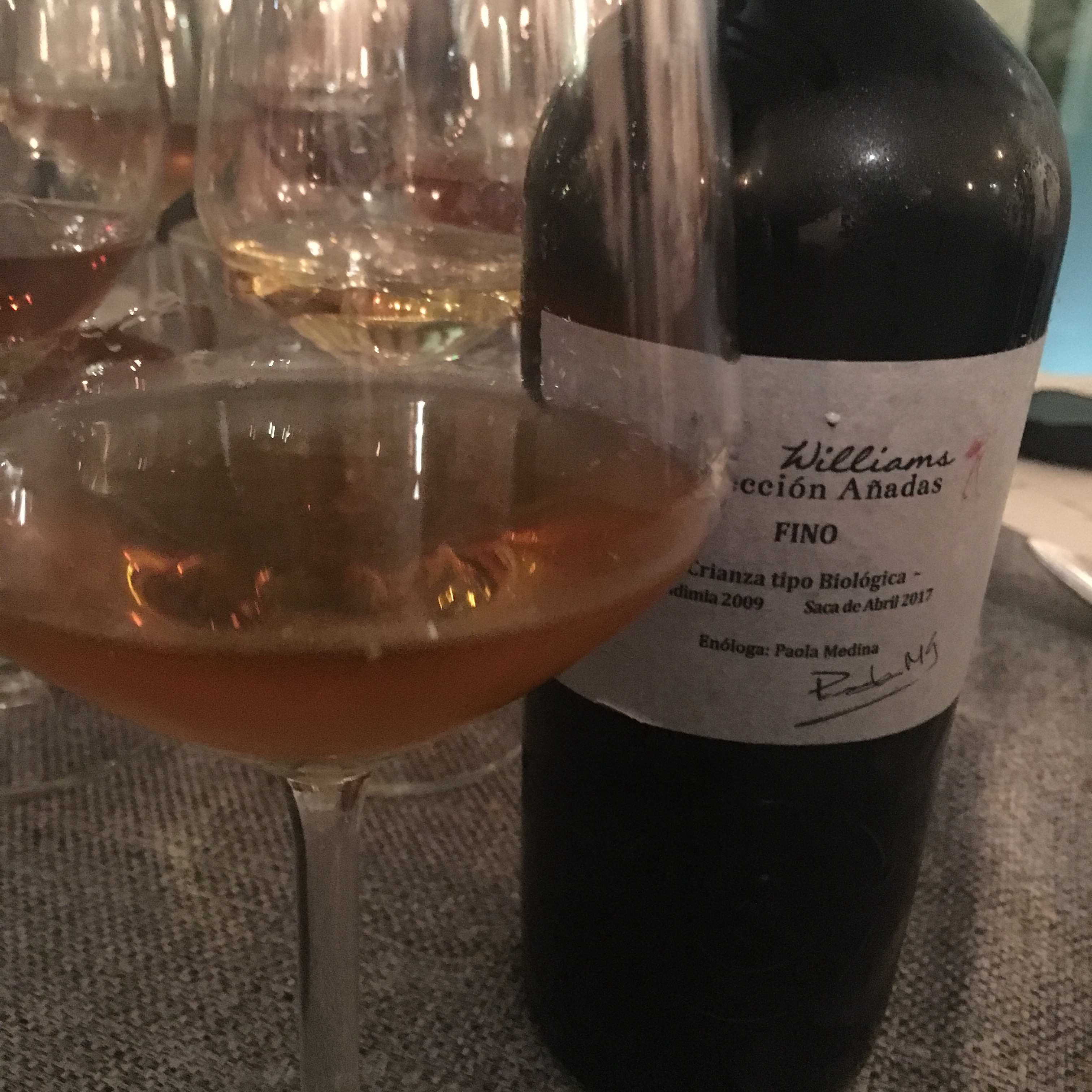
Fino Coleccion Añadas 2009, saca de abril 2017

The standout wine of a terrific and interesting dinner at La Malaje this week with Carmen Fandino of Williams & Humbert was this new saca of an old favourite.

Part of the outstanding Williams Colección Añadas, it has been a lot of fun to follow the progress of this wine in particular. You would say the first saca, in February 2016, was already on the cusp of amontillado and certainly a lot more hazelnut richness than your average fino, while the February 2017 saca was a step closer to the precipice (and maybe even nicer). This one seems to have just stepped over the other side, and Paola Medina apparently agrees: we were told this would be the last bottling of this wine as a fino.

But, as someone once said, what’s in a name? I certainly hope it isn’t the last we will see of the wine itself because it really has a lovely hazelnut sweetness to it – on the nose in particular – which makes it extremely approachable. In general I find that añada wines sometimes have less turbopower than their solera brethren, and this one is certainly a shade less punchy and mineral than a solera fino with eight years under flor would be. But it has a nice balance with that hazelnut and none of the bitterness you can get with the more powerful finos.

One of the great joys of añada wines is this kind of variety. Wines of different añadas start with different characteristics, and then develop differently. As a result they are always worth trying (and buying). Like Forrest Gump’s chocolates you never know what you are going to get.

¡Vive la différence!