The Williams 2009s

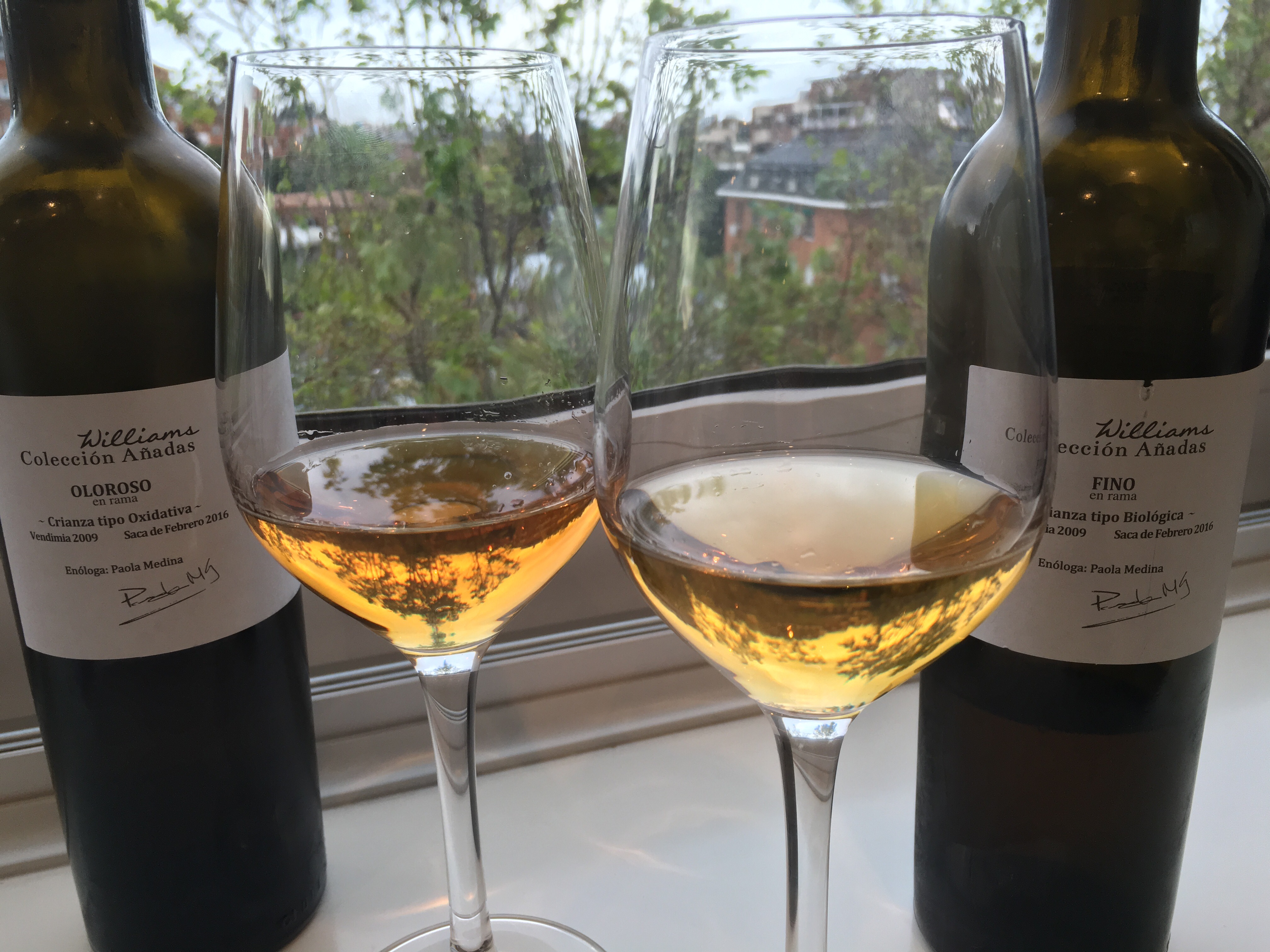
To the left the 2009 oloroso de añada, to the right the 2009 fino de añada, both from the brilliant Williams Coleccion Añadas.

These side by side comparisons are marvellous ways to find out about these wines. Here we have two wines from from the same old vine palomino in the same albariza vineyards in Añina and Carrascal (Jerez) that have both been ageing for the same seven years in botas of american oak of 500 and 600L before the saca in the same month – february of this year. The difference is that the fino was fortified to 15º after fermentation, allowing it to develop flor, whereas the oloroso was fortified to 18º and allowed to age “traditionally”. It all makes for a rare opportunity to observe the results of the action and protection of the flor on the wine.

Starting with the fino, I would hazard a guess that the flor wasn’t the most robust: the difference isn’t as dramatic as it might have been with, say, a seven year solera fino vs a seven year oloroso. (I don’t necessarily attribute that to the 7 years – the 2006 Vintage Fino was under flor for eight and from memory was yeastier and finer, more mineral.) Rather, as I have mentioned before, the fino seems to have retained some glycerin and, while the minerals and nuts are there, it also seems to have seen some oxidation giving it a sweet creamy character. There is what I often describe the illusion of fruit: although it is a dry, punchy wine, with minerals and zing, it has more body and juiciness than you would expect in a seven year old fino.

Despite that oxidation in the fino the contrast with the oloroso is fascinating. The oloroso has just a touch more orange colouring to it but maybe the biggest contrast is in the nose. While the fino has refined profile and is relatively quiet on the nozzle, the oloroso jumps out at you with sweetness and alcohol – like rum and raisins or a pina colada. On the palate the oloroso has an evolved version of the buttery, rice pudding mellowness of the fino – like the burnt skin of milk on a rice pudding – and has just a touch of a spikier, more acidic edge to it. It is fully dry but the flavour is rich sweet hazelnut, although alcoholic. I get the sense it prefers the cold – I am finding the four additional degrees of alcohol even more jarring as it warms up from 12 degrees or so.

I do love these Sunday evening science projects!
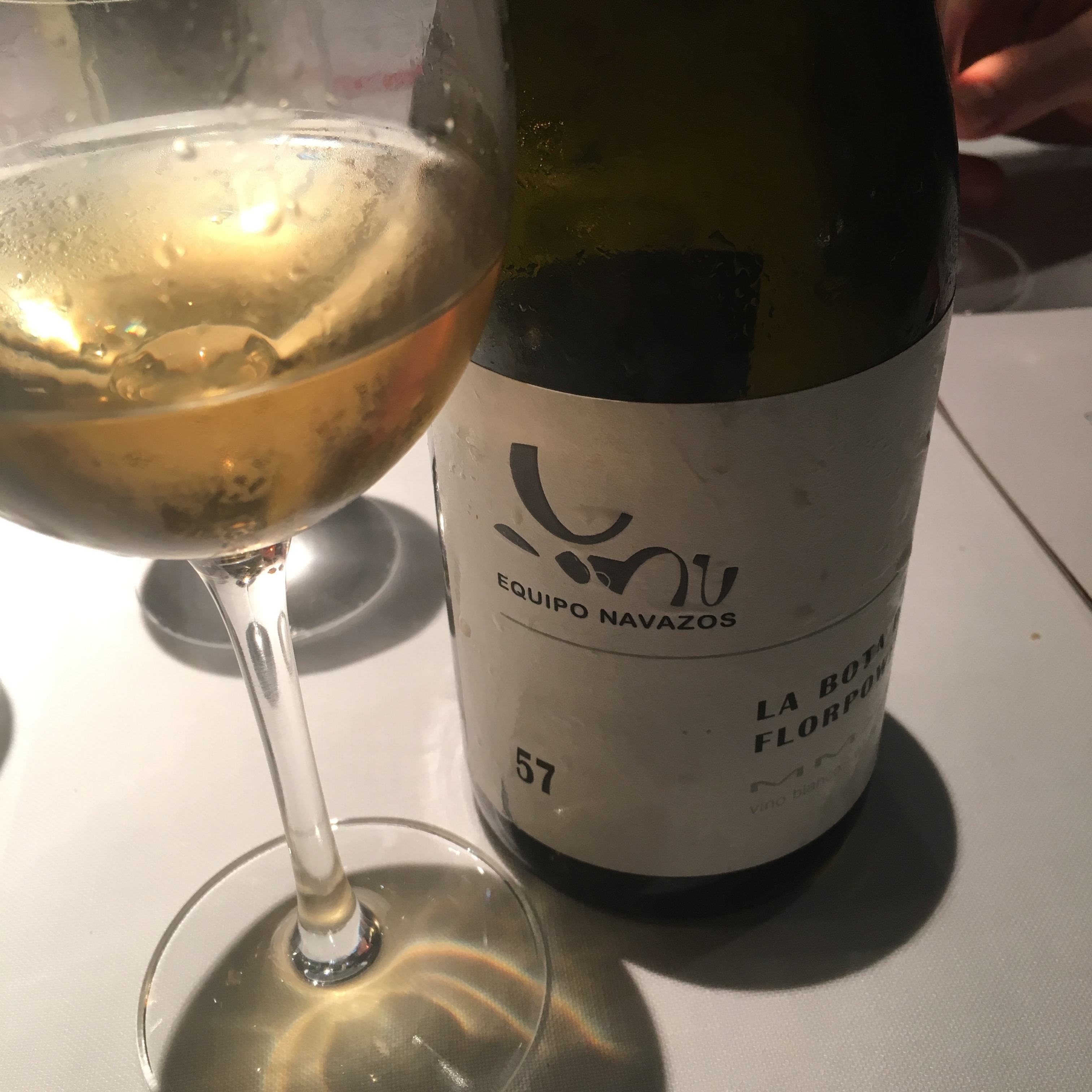


La Bota de Florpower 57 MMXII

This is another of the wines that has been languishing amongst the drafts since I had it – a good few weeks ago now. As you can see from the photo we had this at dinner and as such I don’t have very clear notes. Nevertheless, I have a pretty strong recollection of the basic facts.

Picture the scene. We are four enthusiasts in a place with an excellent wine list, but the sommelier is on holiday. We have had the waiters in all sorts of difficulty with our wine orders all dinner, and with a pretty meaty dish coming and none other than the Bota de Palo Cortado Nº34 listed – a perfect accompaniment you would say –  it was duly ordered. The unfortunate waiter then disappeared for a good few minutes and, having presumably searched fruitlessly high and low in the cellar, reappeared with a wine that, while it may be many things, is certainly not a palo cortado. In his defense, he did a great job of appearing unconcerned and giving the impression that all “Equipo Navazos” wines are more or less interchangeable.  Frankly it could have gone either way – you keep these lads waiting 10 minutes for a glass of wine at your peril, and bringing the wrong one after a wait like that is a risky strategy – but fortunately we were just consumed with mirth and had it anyway.

I am glad we did because it proved to be excellent. It was a little difficult at first: maybe it was a little cold and the profile came across as overbalanced with minerals or even oxidated. But even in the time it took us to finish (and there were four thirsty travellers involved so not long) it seemed to grow in stature and flavour, and by the end I finally began to see the comparison that gets made with the white burgundies – crisp, defined, solid flavours and a lovely finish . (This is in fact something I have noticed a couple of times with these palomino wines – they may just need a bit of time to breathe first up.)

One of the best palomino white wines I have had and these are definitely growing on me.


Fino de añada 2009, Williams Colección Añadas

These Williams Colección Añadas are really fascinating. These are “vintage” sherries that have been statically aged – the year’s mostos put in botas and left to get on with it rather than forming part of a solera. As a result there is a bigger scope for variation in the resulting wine due to the different characteristics of the fruit and mosto used and the formation and development of the flor in the botas, meaning a bigger variation in what comes out of the barrel compared to the solera wines. This is a case in point: it is so utterly different to the 2006 Vintage Fino and the Pando it is remarkable.

This one is from palomino from old vines (between 60 and 20 years of age) in albariza vineyards in Añina and Carrascal (Jerez) and has been statically ageing for seven years in botas of american oak of 500 and 600L before the saca in february of this year, classification as a fino and en rama bottling.

The first time I had this I didn’t really have the time to study it in detail but I am quite pleased with the tasting note I came up with. The colour is indeed evolved, it has a fruitful, sweet and oxidized or “sherryfied” nose. On the palate it is rich and full bodied – a sensation of glycerin- and a resulting impression of fruity sweetness. It is as if the flor hasn’t really got to work on this. Having said that you can still taste the minerals in the background – a sensation almost like a mineral red. Finally there is also a touch of age in the finish – as if it was already heading down the woody path.

(Due to agenda issues I am still working on the horizontal/vertical/diagonal of the full set that I picked up weeks ago from Coalla Gourmet – in the meantime I have picked up a few bottles from  Reserva y Cata in Madrid so at least have some bottles to keep me going. Kudos to both for stocking these fascinating wines.)


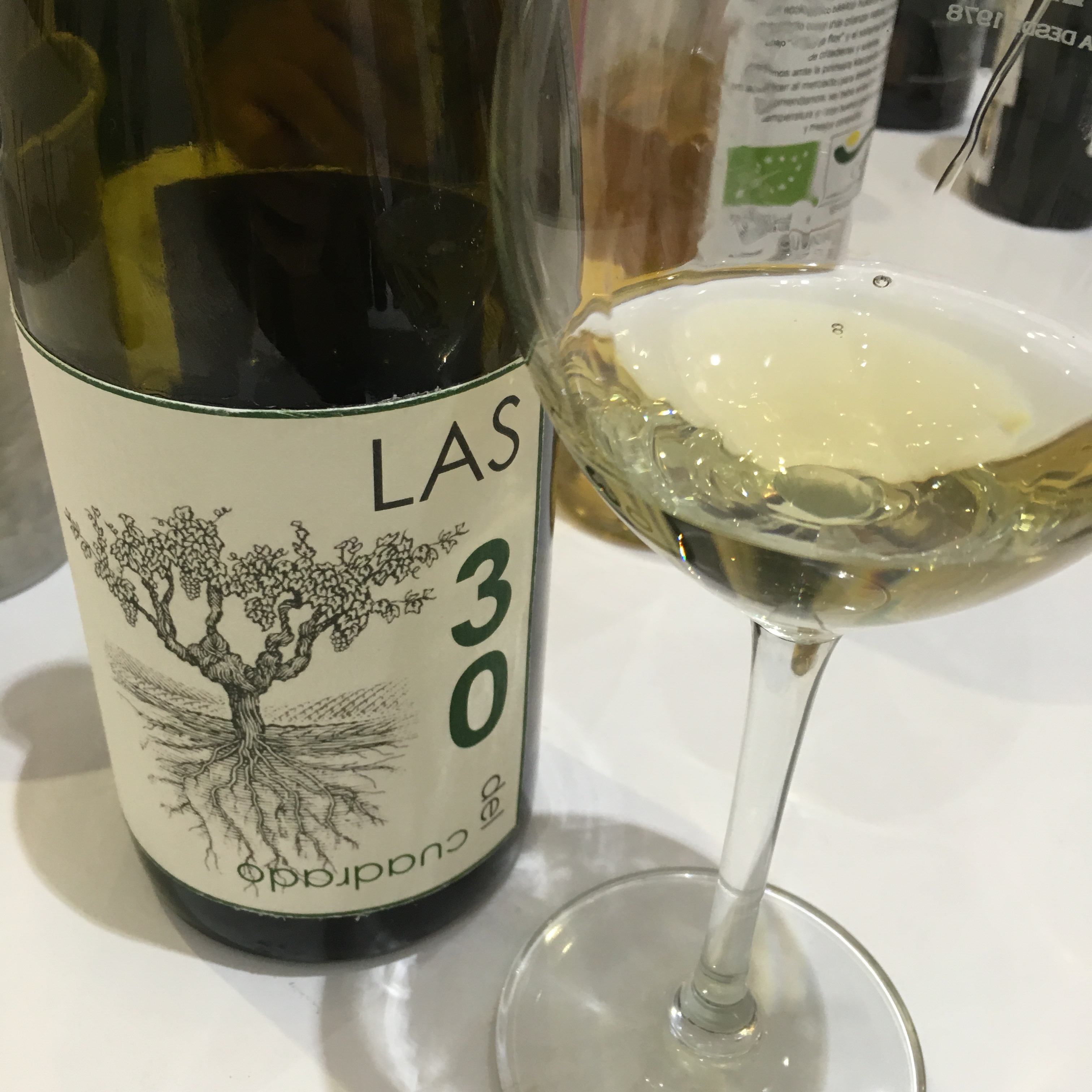
Las 30 del Cuadrado 2015

This morning I added a #palomino tag to the blog to make it easier to find the palomino table wines and in the process discovered that this note was still amongst the “drafts” (with a couple of other lost notes that will surface shortly).

It is a 100% palomino by Bodegas Hidalgo la Gitana and, to judge by the name, from a very special pago: el Cuadrado, which is either a pago by itself or at the Sanlucar end of the Pago de Balbaina, depending on your definition. Whatever it’s status, it is a famous and highly regarded plot of land: one of those names that make the guys down there, and the real experts in these wines, go slightly misty eyed. It is also one of the pagos that I have visited in person and had a chance to judge the lie of the land. (And incidentally, the pago responsible for one of the best wines I have come across so far.)

On the nose this has almonds and tropical fruit and, according to my notes, a hint of pizza herbs like oregano (I must have really liked it). On the palate it is fresh, easy to drink but with a nice body to it: those nuts and fruit again and just a little bit of herbal and calcium bite.

Nice structure and balance and a really promising wine.


Williams Coleccion Añadas


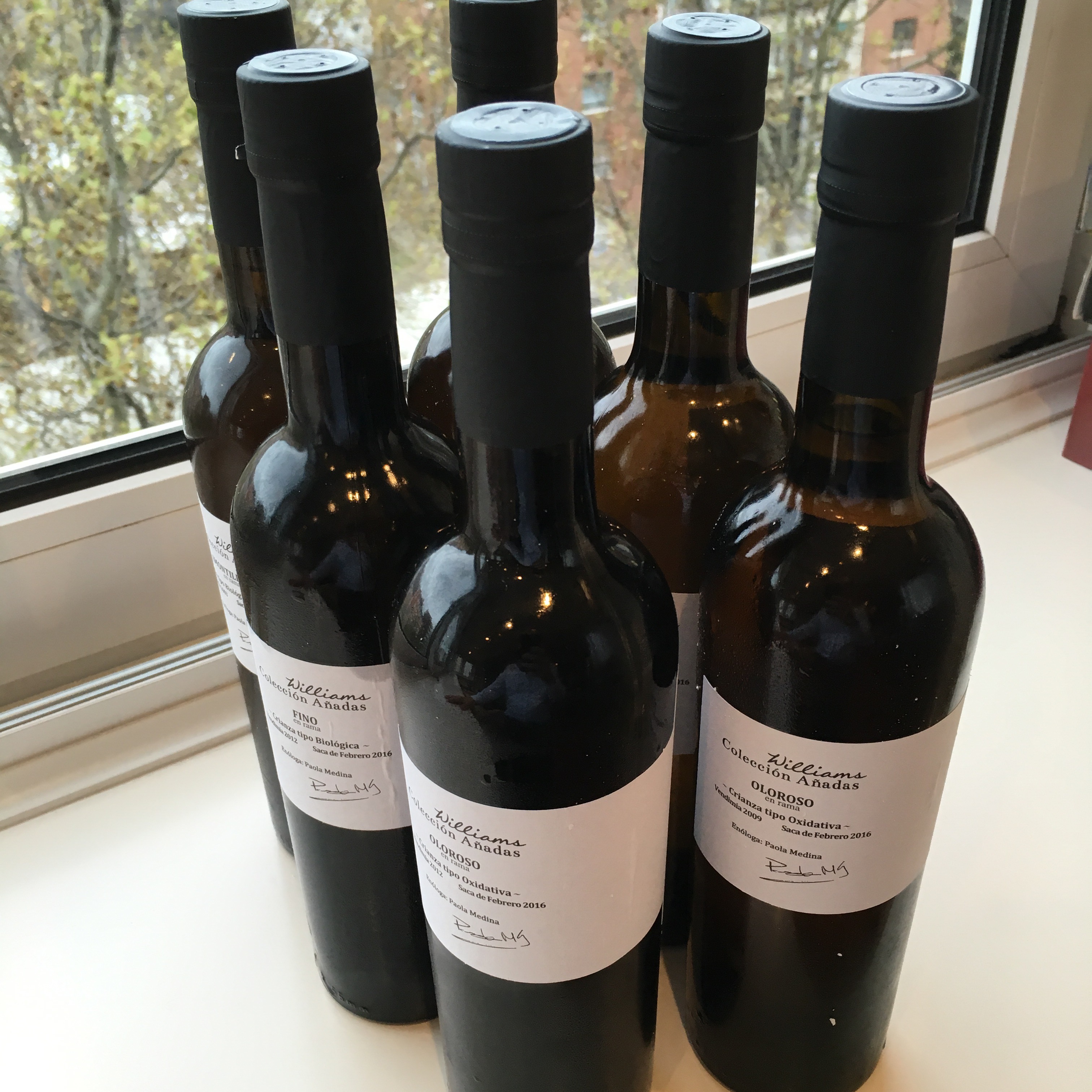
This is a fantastic project by Williams & Humbert featuring six añadas wines from the 2003, 2009 and 2012 vintages – finos and olorosos for 2009 and 2012 but for 2003 an oloroso and an amontillado. I was able to get my hands on one of a small number of cases through Coalla Gourmet a little while ago now but haven’t yet had an opportunity to taste them all together.

Really looking forward to doing so however. So far I have come across the 2009 Fino and the 2009 Oloroso in the wild and they have been really impressive. Before that, of course, Williams was responsible for the brilliant 2006 Vintage Fino (tasted not once, or twice, but three times – the third against a really high quality solera fino) and is also the home of the redoubtable 9 year old el Pando, amongst others.

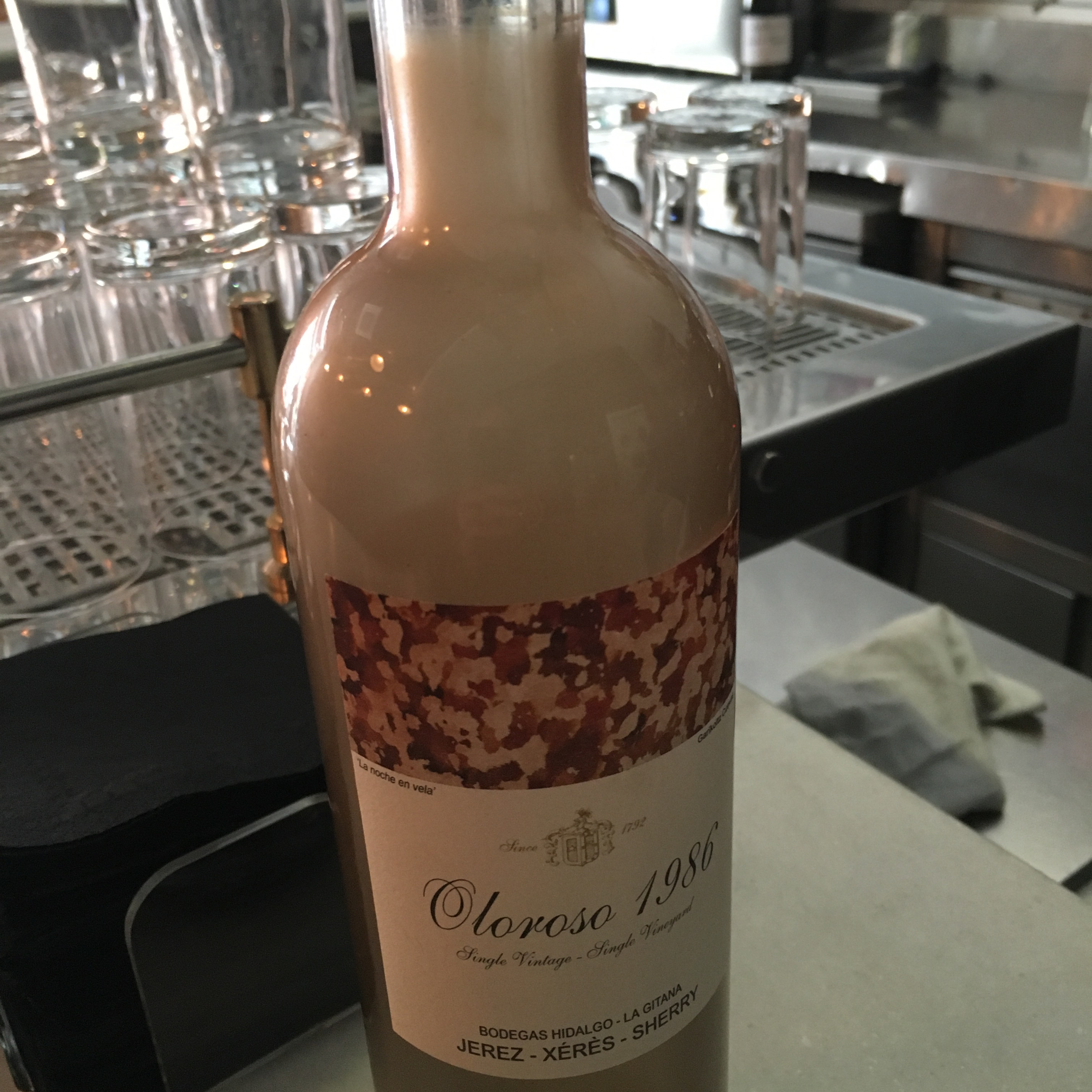
Oloroso 1986, Bodegas Hidalgo – La Gitana

Ana in the Chula de Chamberi very kindly saved the last glass of this for me and I am extremely grateful. It is a beautiful wine.

This is a single vineyard, vintage wine from the legendary Jerez pago “El Cuadrado” (see here for an idea of its location – at the West end of the Barbaina pago, the most sea-influenced of the Jerez pagos). It is by Hidalgo la Gitana and has been twenty years in botas in the San Francisco bodega in the centre of Sanlucar: according to the label 12 botas to start with, but a barely believable 3 by the end. If my maths serve me right it has since spent 10 years in its bottle.

The time has been well spent because it is epic.

First, it has a curious look to it – very black, smokey and murky. Not all that much sediment in the glass – could be a result of having been shaken up but just look at what it has done to the bottle (easiest to see looking at the neck). It really looks like it has been through some sort of trauma (but it still really excellent) – if anyone knows what might have caused this I would be most interested.

On the nose there are relatively muted aromas of old barrels and gingerish spices, black treacle, and Christmas cake. Really none of those polish or solvent, volatile type aromas and maybe that was why it seemed muted (it was also a little cold). Nonetheless a very appetising nose.

Then on the palate it is downright lovely – has the elegance of a Sanlucar wine but a beautifully rich, Christmas-cake body to it. Concentrated but class – a wine where you only need a merest sip and sip after tiny sip give you black treacle flavours fading to toffee, coffee/black chocolate like bitterness and then cloves and woody spices. It is savoury rather than saline – maybe a tingle on the tip and top of the tongue – not at all astringent and just that little bit of acidic bite. Really unbelievably rich, flavourful and smooth and the spices at the end are perfect.

Wonderful. More please!

Palo Cortado Añada 1975, Bodegas Tradicion 

Another vintage specific wine, again during a terrific lunch at Restaurante Vinoteca Garcia de la Navarra (you can just see the great Luis in the background there), but this time a 41 year old Palo Cortado (although only 39 years oxidative ageing, from a saca in 2014) – number 39 of the 50 magnums produced. Intriguingly it says Bota Nº1 – wonder how many more of these they have waiting for release?

Again the photo strikes me as deceptive (I didn’t notice dim lighting at the time but it may be the light behind). Nevertheless, it was a deep reddish brown – maybe a touch darker than usual – then on the nose the overwhelming memory is of elegance, a nice salty caramel, fresh citrus, and maybe just a hint of polish.

The palate is even more refined and elegant – a really clean, fresh and delicately structured mouthful. Nice caramel flavours with a delicate citrus flavour, then a pleasingly integrated salinity and acidity, then a slightly more burnt caramel and bitter citrus aftertaste – and a pleasant finish that fades out. What is most notable is that cleanliness and definition. It doesn’t have any of the astringency or old barrel flavours I associate with a 40 year old palo cortado (not having been in a solera it doesn’t have that famous teaspoon of “infinitely old” wine), although perhaps if you were being very critical (and maybe for the same reason) neither does it perhaps reach the very heights of intensity either.

I am often bemused when people call the real brutally intense dinosaurs of the cellar “delights”, but for this extremely youthful forty one year old, that description is absolutely spot on – a delightfully elegant wine.


Fino en rama 2009, saca de febrero 2016, Williams Coleccion Añadas

This is the second of these vinos de añada that I have tried “in the wild” (as opposed to the box I have captive at home) and another very interesting experience. (In fact in addition to being of interest due to its static ageing it also from an interesting spot of terroir: although it doesn’t have any indication on the bottle, a knowledgeable source tells me it is made with fruit from the oldest vines in Añina and Carrascal (Jerez).)

Anyway, whereas the previous example I had tried was an oloroso that had been statically aged – i.e., not included in a solera, but in a butt on its own – this is a fino and thus has been under its very own veil of flor for seven years (which is pretty good going without being refreshed). As such it would be comparable to other statically aged biological wines like the Williams Fiño de Añada, in particular, but also the Callejuela Añada, the Barajuela, and the Encrucijado on this blog (although they have had much less time under flor), or like a vin jaune, if you want to look further afield.

Had this at lunch in Restaurante Vinoteca Garcia de la Navarra with a good mate and the speed of conversation didn’t leave much room for note taking. However, as you can see it is a dark, evolved colour (although I think my pictures exaggerate the share a little) but then has a fruitful, sweet but “sherryfied” nose. On the palate it is rich and full bodied in texture – I had the sense that there was more glycerine than you would expect for a wine with seven years under flor (certainly more than I remember from the 2006 Vintage)- and again gave an impression of fruity sweetness, like the flesh of the grape, while the minerals were very refined.

Quite a delicate structure to it overall and in addition to being fascinating extremely easy to drink.


Oloroso en rama 2009, saca de febrero 2016, Williams Colección Añadas


This is a vintage, en rama oloroso from the 2009 harvest which I was lucky enough to try at lunch yesterday in Verdejo Taberna Artesana. It is from a fantastic release by Williams & Humbert – the Williams Colleción Añadas – a case of six different añada wines including finos, olorosos and an amontillado. (I actually have one of these boxes – acquired via Coalla Gourmet – but am hoping to find an opportunity to open all six.) I haven’t seen a ficha for this but am told by a reliable source that the wine is from the pago Añina, on tosca cerrada.

As you can see it is a dark gold in fino terms but a light honey colour for an oloroso – six and a half years of oxidative ageing. It really looks good in fact. The nose is equally promising:  dry but has aromas of fruit, alcohol, cake and maybe just a bit of seaair – I even felt like there was a burnt, campfire edge to it. 

On the palate it is fully dry but has a plump, rounded profile and is full of flavour – delicious in fact. Rich, acidic, alcoholic, fruity and with an edge of minerals before a long almost sweet finish. 

A really top class wine – looking forward to opening the box!

Oloroso La Barajuela 2013

  
An oloroso you would not pick out of a lineup. Look at that beautiful gold colour. This is the twin of the Fino la Barajuela 2013 but these are the even heavier grapes, harvested later and creating what must have been an almighty mosto. 

No flor here, and if two years is young for a fino it is remarkably young for an oloroso. Maybe as a result it isn’t very aromatic and certainly not very caramelized – but intriguingly I thought it had a suggestion of the burnt edge of an oloroso. Almonds and slightly jammy fruit on the nose. Then on the palate extremely meaty and more almonds and jam. Then the burnt edge at the end. Or am I imagining it? I would really like to taste this one blind one of these days.

 In any event, another wine with personality and a pretty nice one too.