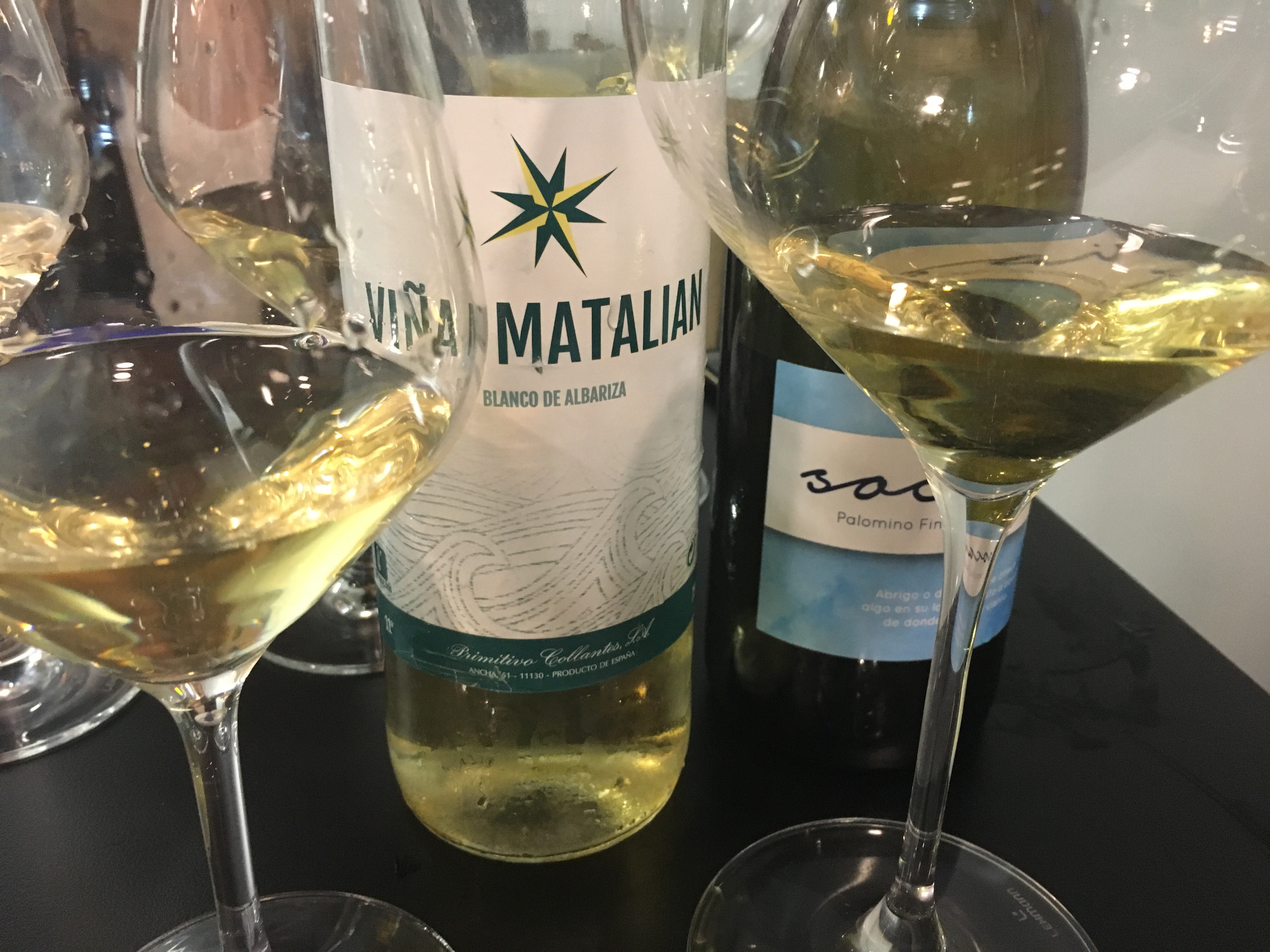
Viña Matalian vs Socaire, 2014 

A nice little demonstration of what wine making choices are all about. The same fruit (palomino fino), parcel of land (Finca Matalian, near Chiclana), vintage (2014) and producer (Primitivo Collantes) but two utterly distinct wines.

The Viña Matalian was fermented in temperature controlled inox and as far as I know hasn’t had any barrel and what you get is a very quiet, refined and refreshing little wine. Very pale in colour it has a sweet almond and herb (rosemary) nose, and then a dryer, more mineral almond palate with just a hint of chalky texture. What really stood out about it for me (although to be honest I went looking for it) is how soft and smooth it was – no edges at all. Nothing spectacular but a very pleasant tipple.

By comparison the Socaire comes across as a bit of a beast. Unlike the Viña Matalian it has been barrel fermented without any temperature control, and has then spent two years in a bota – and not just any bota, but a bota that had previously held fino. The result has a more pronounced gold colour and a pungent nose that is lush by comparison, with over-ripe fruit on top of the almonds and herbs. It also has a chalky touch but there is a more pronounced bite to the minerals, and in comparison to its more refined twin it has a big personality on the palate too – far tastier for that time in the barrel.

Fascinating stuff – and brilliant with the superb tomato salad at Territorio ERA.


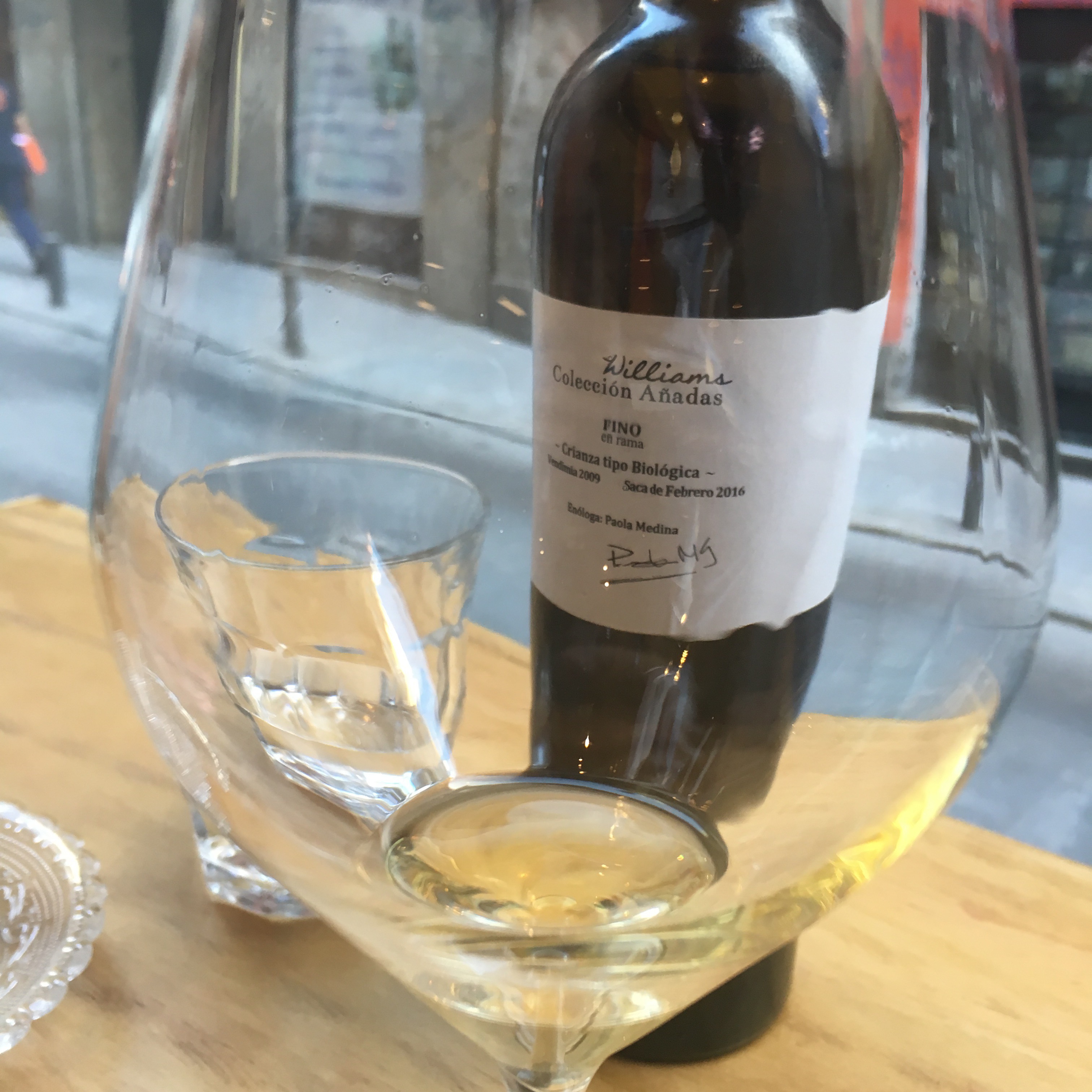
Fino de añada 2009, Williams Colección Añadas 

These wines were pretty rare and I almost feel guilty for drinking so many of them. In my defense, I was given this in Territorio Era and had the chance to explain it to some friends for whom the concept of vintage finos was new. 

It is a fino from palomino grown in the Añina and Carrascal (de Jerez) pagos and harvested in 2009. Rather than being fed into a solera it has been statically aged as a vintage wine, with populations of flor living and dying in the one barrel. It was released by Williams & Humbert as part of a fantastic boxed set

As I have opined beforw, this fino seems to have retained some glycerin and, while the minerals and nuts are there, it also seems to have seen some oxidation, giving it a sweet creamy character. It has a zingy buzz up front and a fresh finish but in between it is full bodied and there is a sensation of juicy, fleshy fruit.

A really fun wine all round. 

Precede Miraflores 2013 

This is a collaboration between Cota 45 and Taberna Der Guerrita. For a few years now Cota 45 has supplied unfortified mosto from pago Miraflores to Der Guerrita but for this wine these guys have taken one of the butts and stored it away “tocadedos” style with no flor for three years before its release. It is the kind of wine that would have been common in Sanlucar going back a couple of centuries before the process of biological ageing and the solera system were widespread. As the label shows, it was harvested in 2013 and a total of 700 bottles were produced when it was bottled in October 2016. I tried it first in Territorio Era, but picked up this bottle for further study in Reserva y Cata.

You would guess it was a pretty old bota because despite those three years you wouldn’t say there was a lot of “wood effect”. On the other hand, you would also guess that it wasn’t a bota that had been used for fino or oloroso because neither is there “bota effect” (you don’t get the same character you might find in Socaire, for example).

Rather, what you get is a dark gold wine with a citrus and slightly ripe pineapple nose, not much acidity but a nice freshness and pineapple on the front of the tongue and then a lasting aftertaste of nicely concentrated, almost jammy citrus fruit – strong and sticky but at the end but not bitter either. There is no noticeable sharpness or zing but the mouth waters as the minerals freshen the wine up around the edges, letting that jammy aftertaste linger a good while.

This is a proper wine, and very enjoyable too. More please!

Alba Brut Nature Rosado 2014

I have written before about these fascinating (and really rather good) sparkling palomino wines from Alba Viticultores and so, taking advantage of the more permissive domestic stance on the consumption of bubbles during the Christmas period I picked this up (and the information below) from Coalla Gourmet.

It is a sparkling rosé. The base wine (about 93% of the volume) is palomino fino from albariza vineyards in Sanlúcar (unusually for these guys they don’t specify the pago – they have vines both inland and in Miraflores so would be interesting to know). It was fermented and spent a few months in inox, then five months or so in demijons under flor before bottling for the second fermentation in August 2015 and disgorging in October 2016 with no filtering, clarifying  or addition of sulphur. The rosé is achieved by adding tintilla de rota – which makes up 7% of the volume -and although the wine is labelled “brut nature” I wonder if it might not be one of the sweeter versions.

The packaging is edgy – the crown cap as if it was yet to be disgorged – but this time the bottle is frosted rather than dark or clear (although to be fair I guess it is to show off the rosé). Not the most bubbly bubbles, but a nice fizz and a deep almost reddish pink colour. Natural wine nose of countryside, undergrowth and fruit, and even chocolatey aromas. On the palate again a nice fizz and effervescence and a rustic feel to it – lots of carbonic and those fruity undergrowth flavours. Serious aftertaste with a touch of diesel and, dare I say, palulu.

Not really my cup of tea to be quite honest: a bit too natural and rustic and lacking that liftoff and elegance of the pure palomino Brut Natures. Having said that, the group I opened it with liked it and it disappeared pretty quickly!

Encrucijado 2014 

Here it is, the second edition of the most unique wine being made in el marco.

It is by Ramiro Ibañez‘s Cota 45 label and is an evolution of the Encrucijado 2012: whereas that was 50% palomino and had six varietals in total (10% each of Beba, Cañocazo, Mantuo Pilas (aka “Uva Rey”), Mantuo Castellana and Perruno) this is 40% “Uva Rey”, 40% Perruno and only 20% Palomino. The fruit was dried in the sun for two days to bring up concentration, fermented in bota, given a couple of months on the lees and then two more years in bota – including four months or so under flor. I am not sure of the historic back story but the back label has a reference to the old classifications of rayas, palmas and cortados, of which this would presumably be a cortado.

Dark gold in colour and has a spirity, honeysuckle, overripe melon nose. It is fat in texture for a two year old wine and on the palate it has an initial dash of that overripe melon but quickly turns to a grapefruity citrus. It seems more potent than my memory of its predecessor with less butterscotch, more grapefruit bitterness, and more obvious alcohol. However it is sharper in its features and has a more defined, elegant structure to it: there is just a little bit of acidity (some esparto grass from the empty glass at the end?) and a nicely integrated salinity  leaving a mouth watering, fresh finish.

Overall this is different, even exciting, enjoyable and feels like it might get better with time. Only just 1,000 bottles made though so get it if you can. (I am having a glass at the bar of Territorio Era, since you ask.)

Manzanilla de Añada 2012 Callejuela 2/11

I have been mulling in my head a post on the effects of bottle ageing for a while now and have even sneakily created a related category, but I am still not really sure what to talk about. And maybe because those thoughts were already in the old noggin over the last couple of days I have been struck by how different two wines have seemed thanks to, or at least so I imagine, the time they have had in the bottle.

The first was a little bottle of Pastora that I opened on Friday – a little gem that seemed to have gone from green apple to golden apple and to have gained as a result (and indeed was gone in 60 seconds).

The second was this little bottle above – an absolute star of a wine that I thought was good before – as recently as a month ago – but seems way better now. More potent on the nose and palate, sharper, a little bit spicier.  I am looking back at my notes of other tastings (here and here) and I am convinced it has really come of age only now – just more of that awesome sapidity.


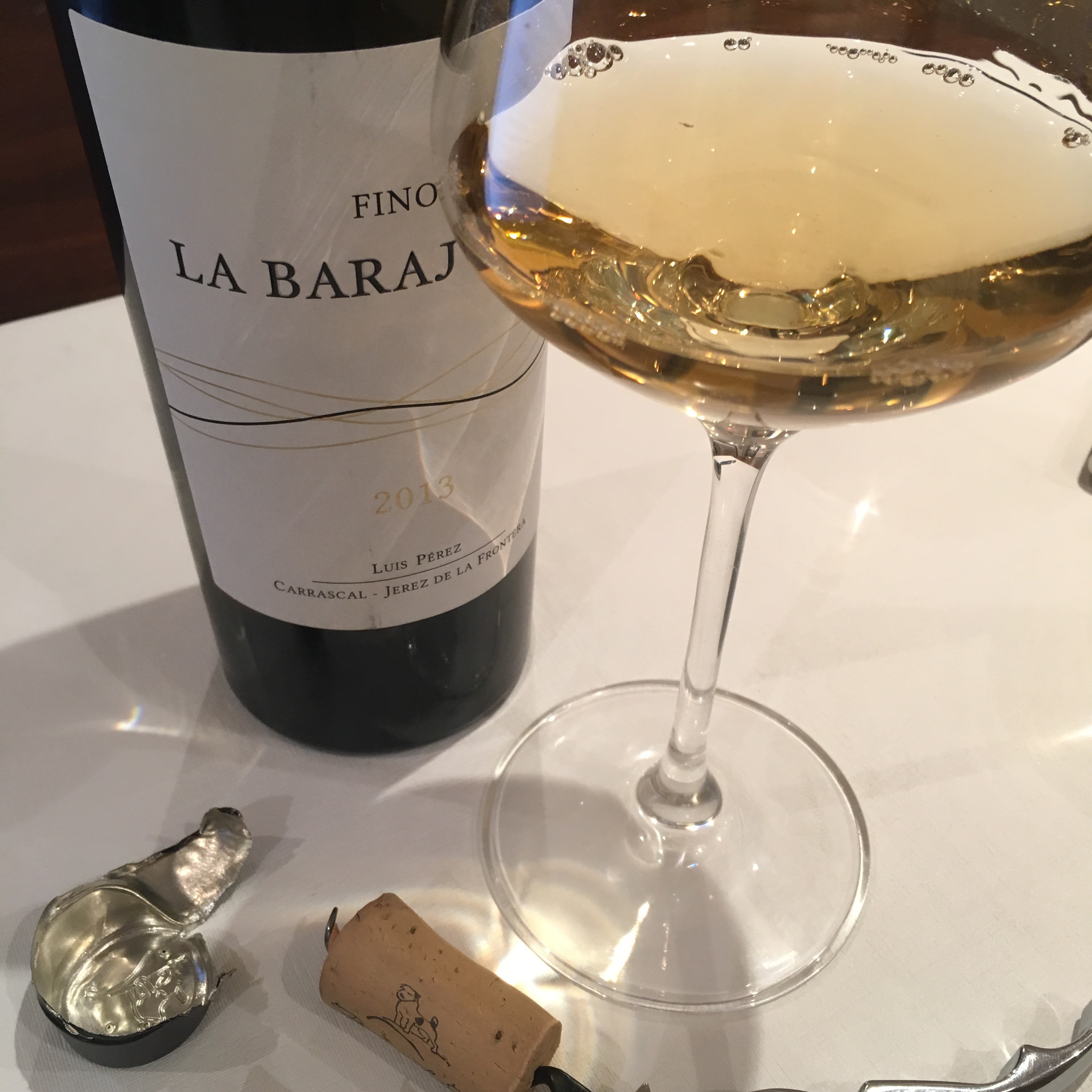
Fino La Barajuela 2013 again

Have been writing a piece on what to look for on a sherry label, which is just another way of saying what to look for in a sherry bottle and apart from working up a thirst it dawned on me that what I am looking for is this. A vintage, terroir specific fino built to express both dimensions, and more importantly, a cracking wine.

I have written about it several times already – the first time I really tried it in June it was superb, so much so that I felt the need to taste it against a Chassagne Montrachet, and then in August I was lucky enough to take part in a fantastic tasting with the maker himself.

This time what strikes me is the potency of the fruit – a kind of super intense melon flavour, and how it complements the zingy salinity and crisp minerals to make a potent wine that is piercing, sleek and elegant at the same time.

Really top class.


Socaire 2014

You guessed it, I forgot to take a picture of this one while still live so have had to edit the skyline shot (not for the first time). Anyway, it is another wine I have tried before – the Socaire 2014 – a 100% palomino fino from my favourite corner of Chiclana that has spent a full 24 months in an old bota that had been used for the Fino Arroyuelo. Apparently the name Socaire means a shelter from the wind, and refers to the breezy conditions up on Finca Matalian, which is near to the sea but a good 100 metres above sea level.

This one was brought to dinner at Territorio ERA by the maker himself and it was a rare chance to try it alongside a couple of other palominos (including its sibling, the Viña Matalian), as well as some wines from Jura, Arbois and the like.

And it must be said it stood up pretty well against all comers on the night, with loads of fino like character on the nose, the fruit/herb of the palomino added to a bit of almond and a more pronounced minerality on the palate and a nice fresh finish.

A really nice wine by any standards.


Callejuela Manzanilla de Añada 2012 – the Story so Far

Wanted to write something about one of the more interesting projects to have come out of the sherry triangle in recent years – something that was apparently almost accidental in its conception but I believe may prove to be historically important for the sector.

The Callejuela manzanilla de “añada”, or vintage manzanilla, comes from old vine palomino fino in a vineyard called “El Hornillo”. The soil is albariza of the “tosca cerrada” variety – the classic and most widely found soil type and the pago is to the North of Sanlucar along the Guadalquivir, on Pago “Callejuela”, from which the bodega takes its name, and as such you would say it has a “continental” influence. It is not one of the most highly rated pagos historically – I think in the classifications from the 19th Century they would have had it a notch or two below the top pagos – but recently the wines from this unthought of corner of the world have been raising eyebrows.

This 2012 vintage was top class and the harvest was even better. As such, the Blanco brothers, the genial owners of Callejuela, and Ramiro Ibañez, the genius who works as technical director, decided that 11 butts were good enough to be bottled as vintage manzanillas. Those 11 butts have been set aside and are being “statically aged” – ie under flor but not in a solera, which is why we can talk about a “vintage” in the true sense. Also, there is no mixing, even between these 11 butts (unlike, for example, the vintage wines from Montilla Moriles).

What is really fun about the project is that each year Ramiro and the Blanco brothers select one of the butts for bottling: the first bottling, in 2015, was Butt 1/11 of 2012, a manzanilla with three years under flor, while 2/11, bottled in 2016 had four years under flor and future years will clearly be different, with more biological ageing in the first few years and the effects of the death of the flor and resulting oxidation later (although time will tell). The last butt will be bottled, if all goes well, in 2025. There isn’t a lot of it on the market as you can guess – less than 800 bottles each year.

Most importantly, the first two wines have been absolutely cracking. The first time I tried Bota 1/11 I loved it, and even accounting for my enthusiasm going in there is a lot to love about this wine. In general I really like biological wines with a little less time under flor – there is more influence from the fruit and a little more body to the wine – I found the same with the vintage Williams Fino from 2012 and the vintage Barajuela Fino 2013 (although there is even more to like about that one). The second time I opened a bottle it came across even better and even got a spontaneous round of applause from the guys I shared it with. Really a special wine and I am having to resist hard to preserve the couple of bottles I have left.

A year later the second wine (the 2/11) seemed to have taken a clear step forward in terms of biological ageing – it seemed that bit sharper and more saline, more vertical and direct. Absolutely brilliant though (and as I drank it it even seemed to make the golf better, as Mickelson and Stenson slugged it out in the most amazing final round at the Open). Then coming to another bottle a little while ago I got more fruit again, in fact it really came across as a brilliant little wine in its own right.

I realize even as I write this that by giving airtime to the joy of these tiny releases I may be shooting myself in the foot in terms of acquiring later releases but this is one of those projects that, to my mind, deserves to be rewarded, and I would encourage anyone interested in learning more about what is possible for the wines of Sanlucar to get interested. I know of three places where it can be acquired – from Federico of the Cuatrogatos Wine Club, from Armando Guerra at Der Guerrita, and from Ezequiel of Reserva y Cata in Madrid. Hopefully they will save me a couple of bottles!
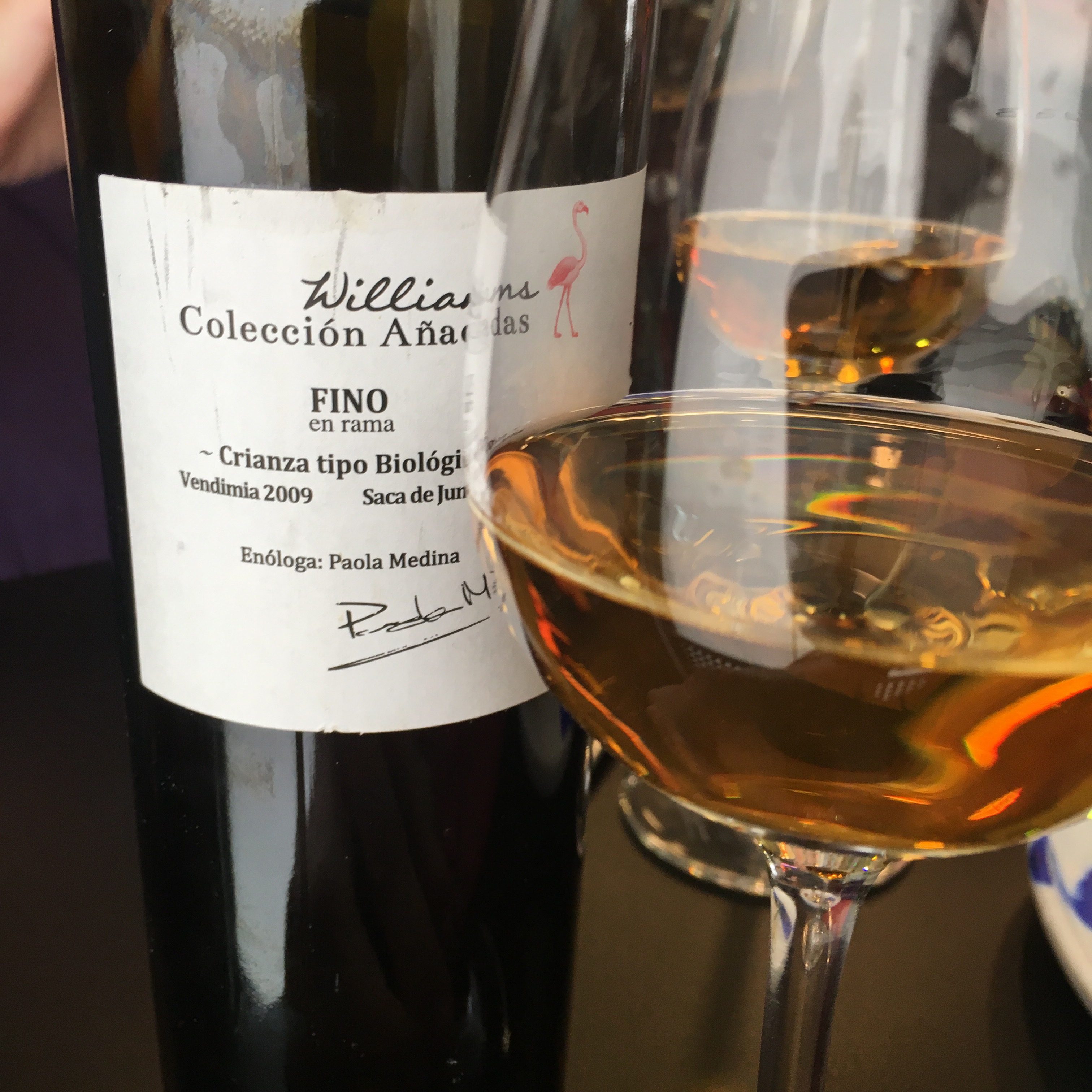
Fino de añada 2009, Williams Colección Añadas 

This was a nice surprise today in Angelita Madrid – one of the Colección Añadas and a rare wine by most standards, but here you seem to be able to get anything at any time.

Not the most scientific of tastings – was having a very pleasant lunch with friends – but my impression was of a juicy, full flavoured wine that hangs together well even if it is not quite compact as such. Zingy salinity up front, then salty hazelnut flavours, maybe a bit spirity/alcoholic. It was paired with a fantastic roast sucking pig with a touch of orange and star anis and the wine stood up to those flavours admirably, although for me the anis and orange may have taken away some of the impression of hazelnut from the wine.

Nevertheless, an interesting, flavourful vintage wine with a bit of character to it.