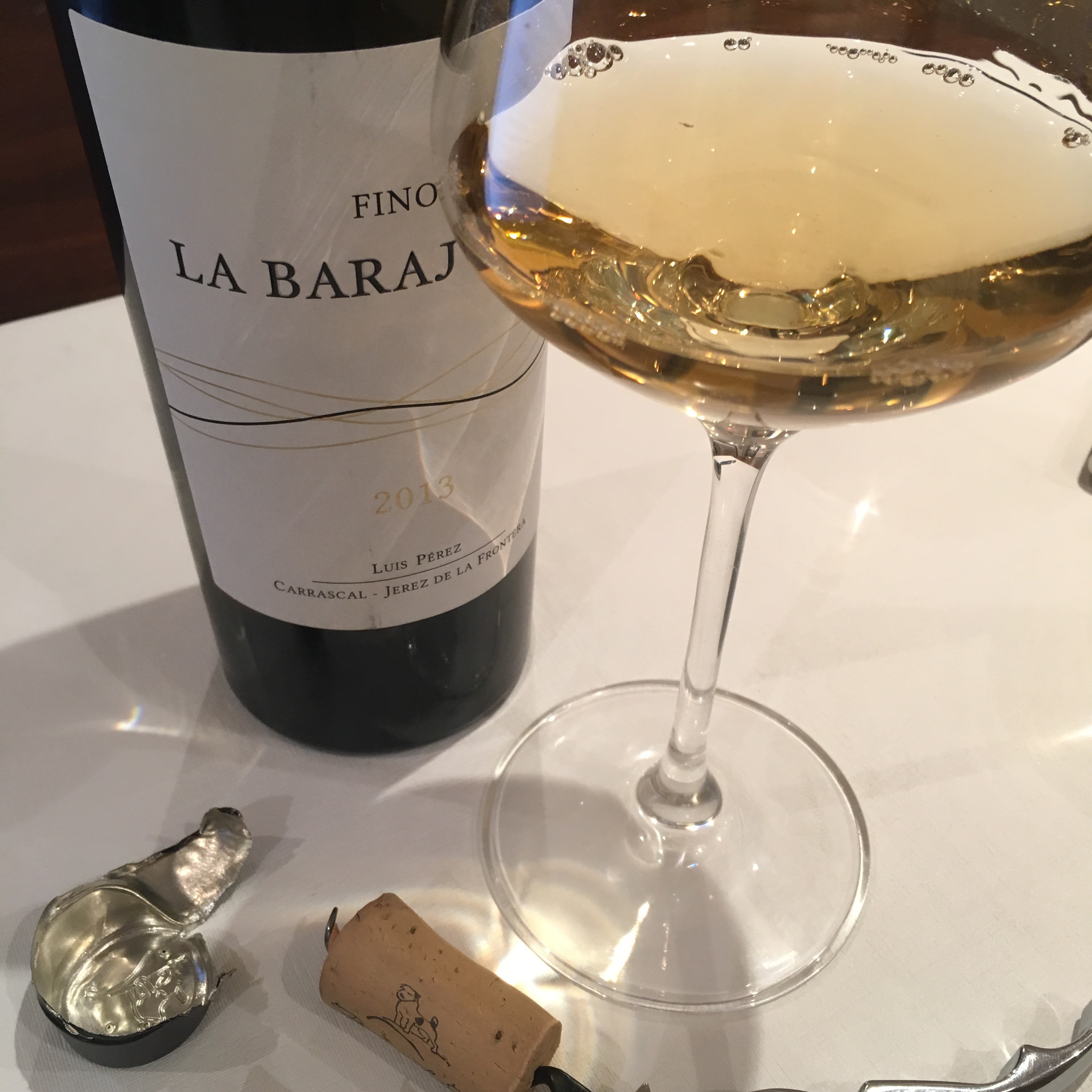
Fino La Barajuela 2013 again

Have been writing a piece on what to look for on a sherry label, which is just another way of saying what to look for in a sherry bottle and apart from working up a thirst it dawned on me that what I am looking for is this. A vintage, terroir specific fino built to express both dimensions, and more importantly, a cracking wine.

I have written about it several times already – the first time I really tried it in June it was superb, so much so that I felt the need to taste it against a Chassagne Montrachet, and then in August I was lucky enough to take part in a fantastic tasting with the maker himself.

This time what strikes me is the potency of the fruit – a kind of super intense melon flavour, and how it complements the zingy salinity and crisp minerals to make a potent wine that is piercing, sleek and elegant at the same time.

Really top class.


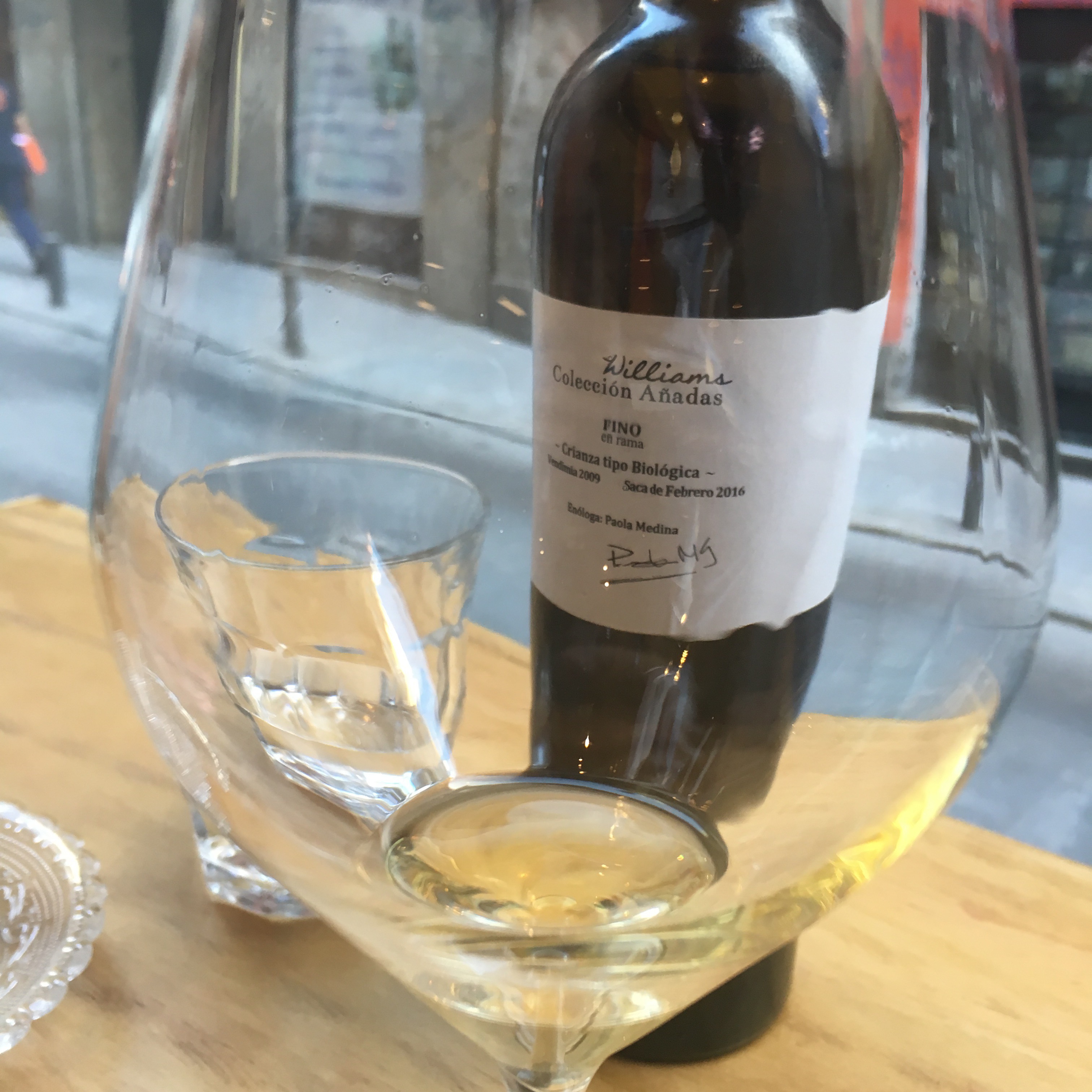
Fino de añada 2009, Williams Colección Añadas 

This was a nice surprise today in Angelita Madrid – one of the Colección Añadas and a rare wine by most standards, but here you seem to be able to get anything at any time.

Not the most scientific of tastings – was having a very pleasant lunch with friends – but my impression was of a juicy, full flavoured wine that hangs together well even if it is not quite compact as such. Zingy salinity up front, then salty hazelnut flavours, maybe a bit spirity/alcoholic. It was paired with a fantastic roast sucking pig with a touch of orange and star anis and the wine stood up to those flavours admirably, although for me the anis and orange may have taken away some of the impression of hazelnut from the wine.

Nevertheless, an interesting, flavourful vintage wine with a bit of character to it.


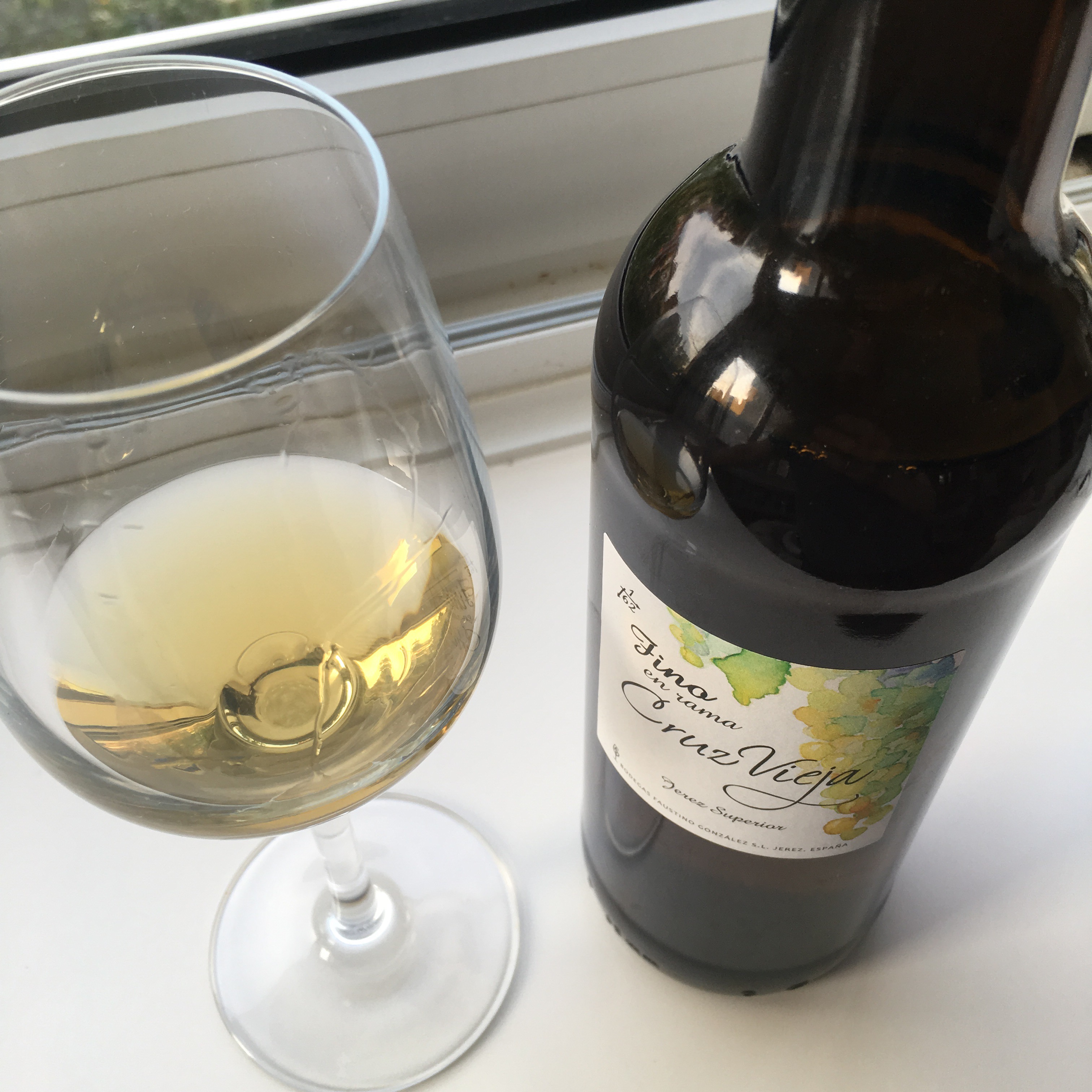
Fino en rama Cruz Vieja – May 2016

Second time around for this meaty fino – and I say meaty because fresh opened it really has a solidity about it.

This saca is from the end of May this year – not sure when that other bottle was from – and I picked it up from the maker himself at Casa del Jerez this summer.

A dark colour, not a big nose but yeasty (at the bready end) and some bitter citrus, then a powerful mouthful – again on the yeasty, vegetable side, with that citrus bitterness. Salinity that takes over at the end, tingles the tongue and makes your mouth water.

Grapefruit, yeast and minerals: a real mouthful of flavours here.

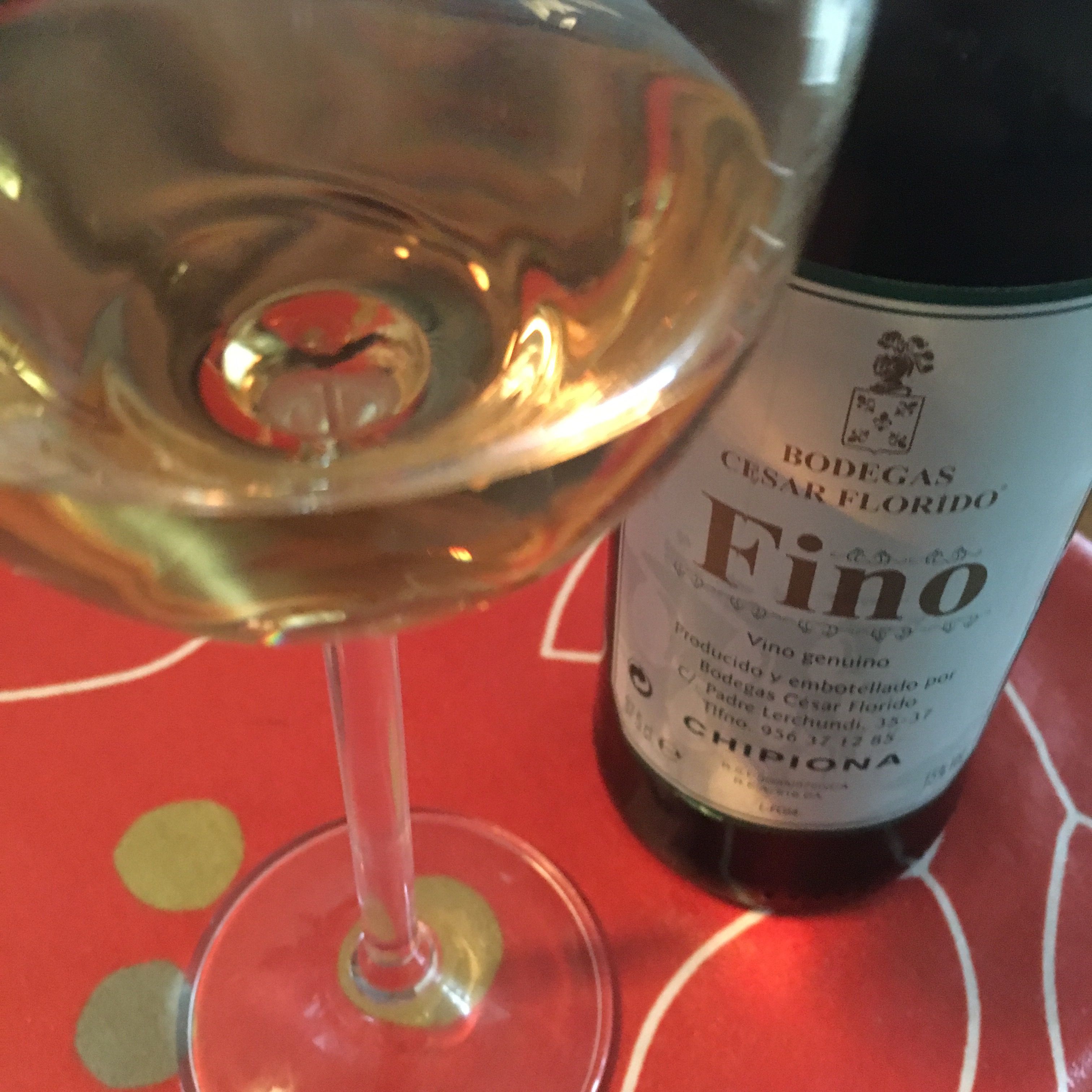
Fino Cesar Florido

A brief sojourn in Detroit in the company of at least one wine lover and although I hadn’t brought any sherry with me I was taken to a cracking market. Once there I picked up a few bottles – one of which is the above referenced. 

By Cesar Florido in Chipiona this is not a sherry and does not have the DO’s official seal. Nevertheless, it is 100% palomino aged for three years under flor and in a solera in a seaside town on the coast a few miles down from Sanlucar so it is not that far away. This had also spent a fair bit of time in the bottle – I reckon it was bottled in 2010 (so trade may have been sluggish).

It has an old look to it – the straw gold just a little tarnished-, and on the nose it has that pungency of bitter almonds and salty water. On the palate too it has a seawater like salinity – voluminous and warm but not zingy really. First up the flavours are of those bitter almonds but then the bitterness seems to fade and it has a nice chewy, soft almond finish. 

Not strictly speaking a sherry but not a bad little bottle at all. 

Las Añadas de Williams & Humbert

5e9b9cb3-ae40-4d2b-8a32-7f3c5ed34a0cHas been an intense start to the new academic year with a lot of work and, for some reason, a lot of hangovers, so apologies for the delay in getting around to writing up these notes of what was an absolutely fantastic tasting nearly two weeks ago (gulp).

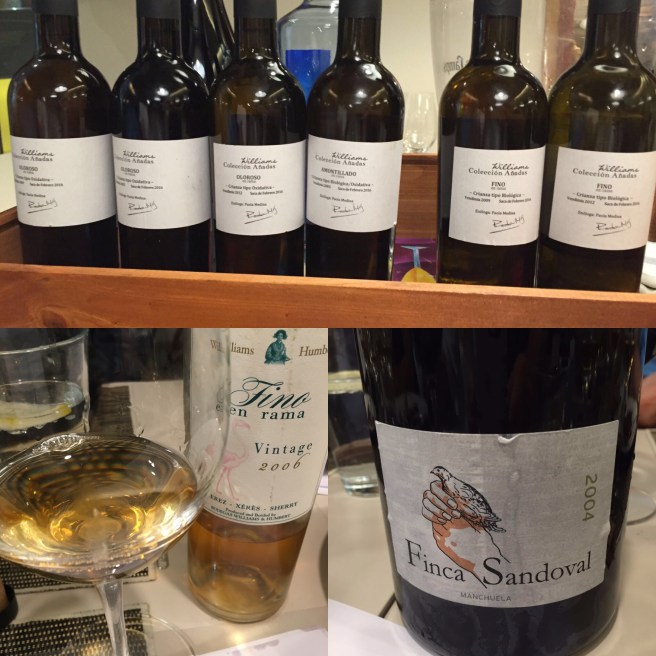
I have written before about the genius concept of this Colección Añadas, about a few of the individual wines and also about an interloper in this tasting: the Vintage Fino from 2006. What made this tasting so interesting, though, was the chance to taste them all in close succession and the resulting comparisons were revealing.

Since the Collection is known as the “añadas” (or “vintages”) collection we felt we should go vintage by vintage (although it would also have been good to go biological first etc – if only we had had two sets, and time) so here we go in order.

  • 2012 Fino- I really liked it. Very clean nose of almonds, fresh, compact and elegant, nice sensation of acidity gives it an incisive entry and then it has decent salinity, stretching out the finish. Really good and to my mind another great advert for this style of younger finos.
  • 2012 Oloroso – again very good. The almonds are still there on the nose and on the palate but they are toasted on the palate and there is a clear oloroso imprint to it. Bit heavier, slightly spicier flavour but not as much acidity up front and a touch less salinity. Less elegant in profile and a bit more boisterous, you would say.
  • 2009 Fino – if anything the impression I had was that there was more fruit in the 2009 than the 2012 fino but this could be because it was slightly less compact. The saline zing up front and the fresh finish are more marked and the hazelnut/juiciness also seems more pronounced – gives it balance if not quite elegance.
  • 2009 Oloroso – again big on flavour and this is for me the best of the olorosos. Again heavier bodied than the fino but now the sweet hazelnut flavours are much more pronounced making it a really juicy wine.
  • 2006 Fino – probably my favourite wine on the night, this really had a bit of everything. Not a straight comparison with the other since this was bottled in 2014, so really had 8 years under the flor compared to 7 for the 2009, and has had two years in the bottle. Whatever the case you have to say it was bottled bang in its prime – a lovely combination of salinity and almonds that almost gives you dairy aromas, zingy minerals, a creamy texture, those flavours, a long fresh finish. Absolutely brilliant.
  • 2003 Amontillado – ran it pretty close however. This would be the smoothest, most elegant and drinkable 20% alcohol wine I can remember, with sweet hazelnut beginning to mix in with the bitter almond flavours and a touch of acidity to go with the minerals. Difficult not to enjoy this.
  • 2003 Oloroso – had a tough task following those last two wines and was noticeably less refined and compact – the fino/oloroso gap opening over the years. Hazelnut flavours beginning to taste toasted, nice acidic spiciness and more obvious alcoholic heat.

I feel like the tasting gave me an insight into the curve that these wines follow as they age under flor or in the open air. On the other hand, despite an identifiable common personality, given the different amounts of ageing I found it hard to get a feeling for the different vintages as such, and as I look back I have almost more questions than answers. In particular I would love to be able to taste the mostos that were used and know a bit more about them.

As I say, at the end I wished I could start again (but as it happened a magnum of an excellent 2004 Finca Sandoval took my mind off it – thanks Victor!).
No doubt about it though, seven excellent, enjoyable wines and educational too – well done to Williams & Humbert on a fantastic collection.


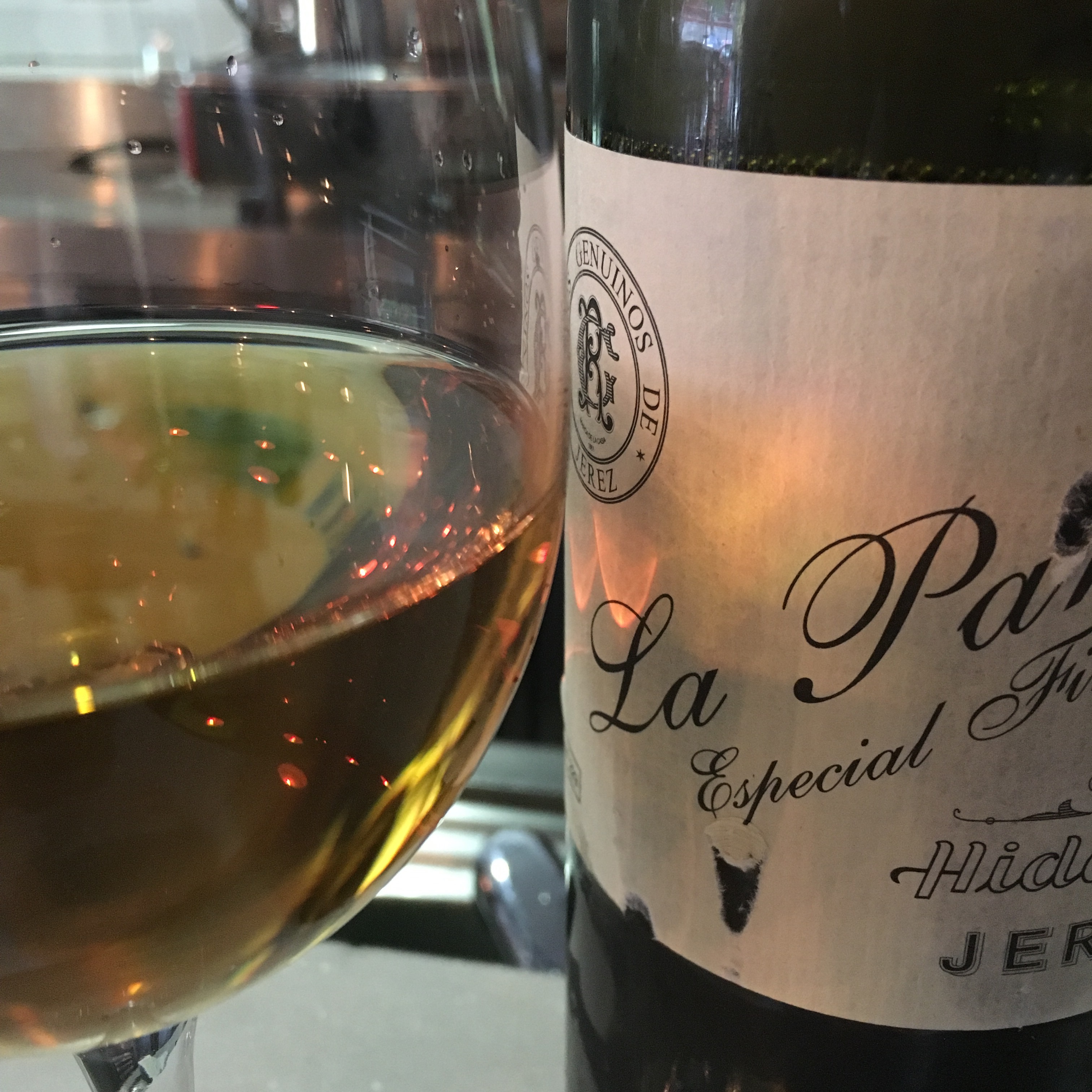
La Panesa 

It has been too long since I had a sup of this (I make it three months) so here I am at the bar of La Chula gathering rosebuds between meetings. Not easy to add much to the long string of tasting notes but still worth enjoying the moment.

This 0ne has a little bit of time in the bottle (if I am reading the Lot Code right I make it a 2014) and maybe a little time open, and just seems to have a little more spice. But what I love most are the classic features – the haybales, the over-roasted almond flavour and the intensity, density of that flavour, and the balance.

A classic, an all time favourite and a much needed reminder.

Fino en rama Santa Petronila – December 2015 

This was one of my puchases from Casa del Jerez -at their recommendation – and an excellent recommendation it was too. I couldn’t resist opening it after seeing it in a tweet by Criadera and I am very glad I did.

It is an “old” style fino en rama – haven’t seen a ficha as such but I bet it has a few years underflor. It is dark gold in colour and with big hay bales and yeasty aromas. Age and hay bales on the palate too: slightly sour bitter almonds first up, nice zingy salinity and then big smoky, bready flavours and the woolly texture of the acetaldehide. Long too.

The colour, the haybales and bread, and the impression of age remind me for all the world of the macharnudo alto finos by Equipo Navazos and its no surprise to find out that the Santa Petronila finca is indeed up there (and I assume the vines are too but who knows). The bodega was described to me as the smallest bodega in the region, producing only 800 half-litre bottles a year, and from what I can see on their website it is also a guest house. In fact it looks a cracking spot, and  they mention on their website an amontillado, an oloroso and a PX.

Must be worth a visit based on this fino!

Las Añadas de Williams & Humbert in Taberna Verdejo

The author is suffering from a severe hangover this morning but one that was well earned after a great night drinking some brilliant wines (and, it must be said, a top brandy).

As always, it will take a while to fully digest the learnings – and indeed find my notes – from last night but I wanted to share some immediate general impressions.

  • First, the Coleccion Añadas is a brilliant concept well executed. Sincere congratulations and thanks to Williams & Humbert for putting together this boxed set which made for a fascinating tasting.
  • Most importantly, the wines are very attractive, approachable wines with a clear personality to them – elegant for the most part but with juicy hazelnut, and very attractive on the nose in particular.
  • In the spirit of the collection we tasted by añadas – the 2012s followed by the 2009s, the 2006 Vintage Fino and the 2003s – and although we were not comparing like with like it was curious to note that the wines from warmer years came across as finer, more elegant than we might have expected.
  • There was of course a very notable difference in character between the finos and the olorosos – even at the younger end of the scale – but the differences between the different years were just as marked and very interesting. In particular, the finos became richer and more oxidated as went back in time and definitely gained in complexity – the 2006 Vintage Fino in particular was superb and the 2003 Amontillado was almost as good.
  • Having said that, I also thought the 2012s were excellent and a great advertisement for the “less is more” theory of wine making. I really think these wines with limited biological or traditional ageing are a way forward for the region in terms of winning over wine enthusiasts in general.

So all in all some cracking wines and another great learning experience, which was enriched in particular thanks to the great Victor de la Serna, who joined us as a special guest and brought along, in addition to some quality insights, a Magnum of his excellent 2004 Finca Sandoval.

And finally, a word on the food, which was absolutely delicious – the pisto, the rabbit, the pigeon, really out of this world.  Yet another enormous thankyou to the crew at Taberna Verdejo for their outstanding hospitality. 


Bombilla Fino Eléctrico 

This is the standard fino (not to be confused with the en rama) from Toro Albala in Montilla Moriles – where they make some of the very finest old pedro ximenez wines I have ever tasted – and is in the shape of a lightbulb in homage to the fact that the bodega occupies a building that was once a power station. In fact, the locals refer to this wines as a “calambrazo” (which translates to electric shock but is a much more vivid word).

I had this at lunch today at Taberna Verdejo – one of my favourite watering holes here in Madrid and note that the above photo has been through an instagram filter thingy. It is not absolutely true to life, but I thought it was appropriate given the wine and packaging involved (and don’t get me started on the packaging again).

As luck would have it the Toro Albala web appears to be down as I write this but in any event this will be 100% pedro ximenez and I believe it has had around five years under flor. It is a very pale lemony gold in colour and as always with a pedro ximenez fino it has soft almonds and a bit of lemony citrus on the nose and then those same flavours on the palate, with a bit more juicy volume/slightly less bite than its palomino cousins – both reasons why I reckon these Montilla Moriles wines to be pretty accessible even if not always as elegant or defined as the palomino finos.

Almonds, citrus and juicy volume – very pleasant in fact and not at all the shock you might be expecting.