Ovni Palomino Fino 2015 

This was a very pleasant surprise I must say – the generous chaps at Coalla Gourmet threw this (and its twin) in with the last case of sherries I bought from their brilliant online store and, although it took me a while to realize what had happened (said case was stored while I was not around to supervise) it was a doubly pleasant surprise to find it in the cabinet when the time came.

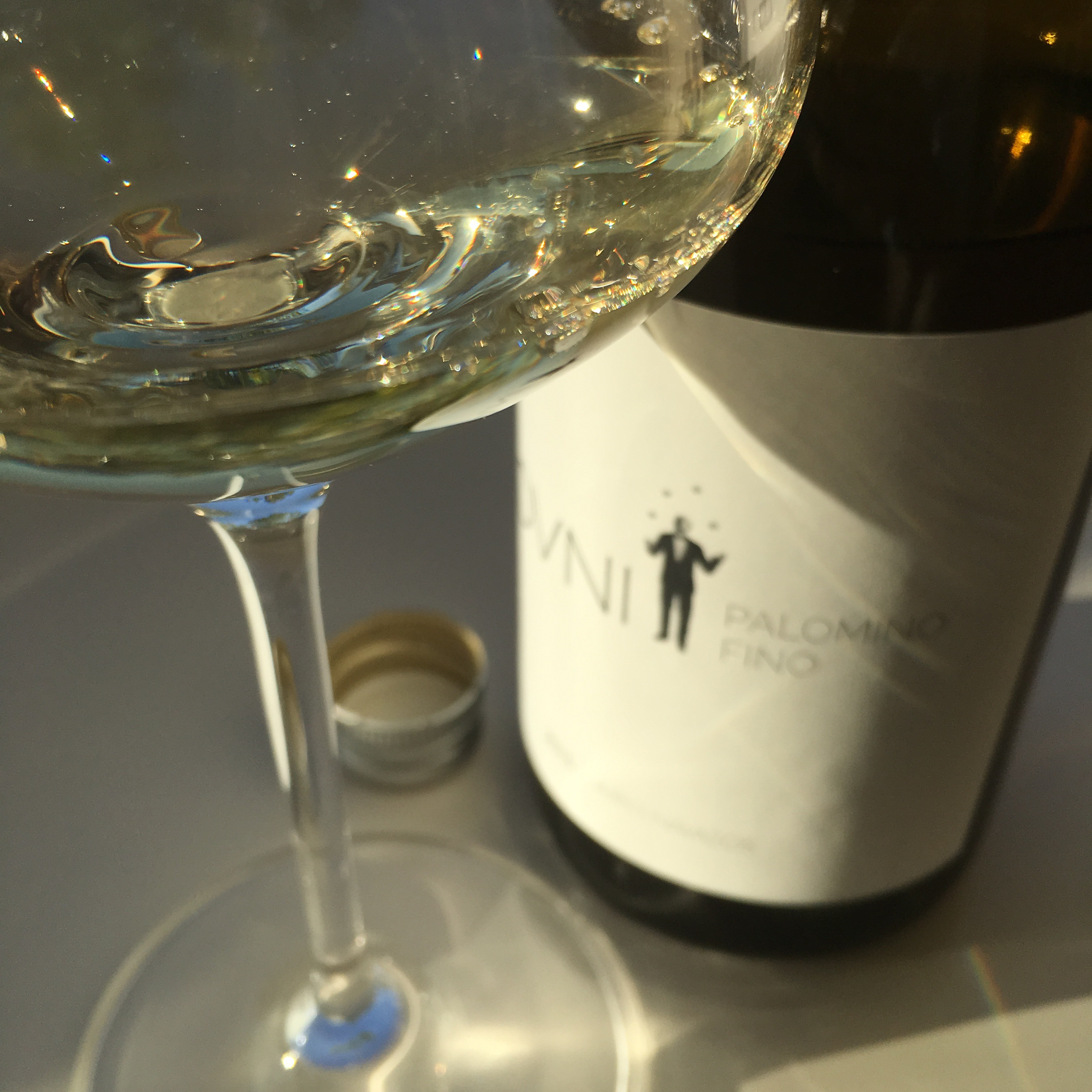
Not the first time I have tried it and I refer to that first review for the background. It is a sobretabla with six months under flor – so an example of a palomino white wine with just a little biological ageing. Very pale as you can see, it has a lot of the aromas of a “mosto” in the nose (think farmyard!), as you would imagine, but has a little bit of mineral bite to it.

I think it could do with being a little cooler than the 12 degrees of my wine cabinet so it has gone into the fridge, but that is no bad thing as the summer starts to warm up.

Many thanks guys and don’t mind if I do!

Palomino Fino OVNI 2015


Another fascinating wine, this time by Equipo Navazos (in association with Coalla Gourmet) which I had during a great night at Angelita Madrid. The name is a play on the Spanish term for unidentified flying objects (objetos voladores no identificados) – although this one is a winelike object (objeto vinicola). 

The ficha is great (as is the new website) and as it points out, this is a “sobretabla”, with six months under flor – they mention “added” flor – in a vat.  The wine is very pale in colour and has the punchy, yeasty, cidery nose of a mosto. On the palate it is dry and refreshing, slightly mineral and quite punchy. 

Nice refreshing little wine.

Fino de Huelva Espinapura 


Had this last night at Angelita and it wasn’t too bad. It is a palomino fino aged under flor but not a sherry. Rather it is from Condado de Huelva – outside el Marco (away to the North of Sanlucar and West of Seville – about an hour and a half from Jerez by car). 

According to the ficha this has had four years under flor in a solera. It has a nice almond vibe to it – quite pale in colour, nice nutty nose, good and smoothand not too saline. Very decent.

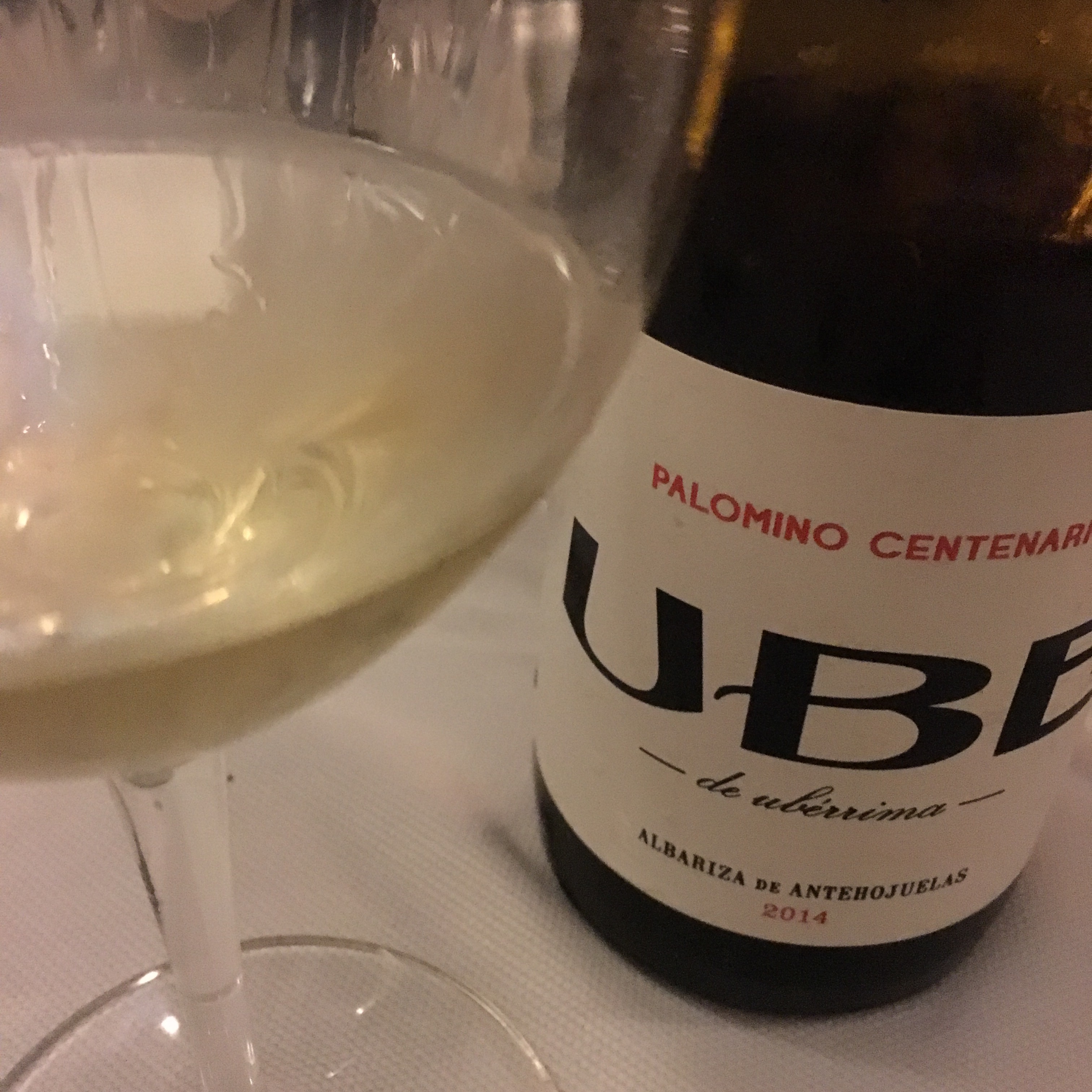
UBE 2014

Rumour has it that there were a hundred fewer of these produced (out of not many to start with) so if you see one jump on it. (You never know, this could be the “Pingus” moment for this little gem of a wine.) I didn’t get my hands on Ube 2013 (not just once but twice in quick succession) until January this year but I have been waiting for this one ever since, picked it up last week and managed to wait nearly a full week before opening it.

It is by Ramiro Ibañez of Cota 45 and the full name is “Ube de uberrina” (uberrina meaning “utmost”), it is an unfortified white wine labelled “Palomino Centenario” (100 year old palomino) and its label references the kind of albariza soil involved (albariza de antehojuelas), the vineyard (a small finca called Las Vegas), and the cepage (100% palomino but 73% palomino fino, 16% palomino jerezano and 11% palomino peluson). It was fermented and aged for fourteen months in a manzanilla bota – without flor but with a little air – in the tiny microwinery on Bajo de Guia in Sanlucar.

The picture above doesn’t really show the wine off well – in the flesh and with more light it is a lively, crystalline gold with some green tinges, a very appetising sight indeed. The nose was very interesting – at the start it was a little timid and had a little reduction – something I found with the 2013 too-, so I would definitely recommend opening this 30 minutes or so before drinking. Once it got going it had a very interesting nose of  baked apples (one of the guys called toffee apples), chamomile and, as it opened up, more powerful herbal aromas, even savoury and meaty.

On the palate it has a chalky texture and some salinity – not the full zing of a manzanilla but a tingle, mouthwatering and warming on the tongue. In flavour terms it has a quiet, elegant entry but then it is a little flavour bomb. If sapid is the antithesis of insipid then this was sapid squared – in part due to its salinity, but also to the baked apple and then herbal flavours – a mix of chamomile, rosemary and oregano. Not the longest finish in the world but a nice defined, ball of flavour – I must admit I didn’t remember the 2013 being as flavourful.

This really is good – probably the best unfortified palomino I have had yet. I just wish he would make more of it (and I am not referring just to the 100 missing bottles).


The wines of Alba Viticultores, Spring 2016

It has been a really tough week but what a great way to head into the weekend – a really cracking lunch with some fascinating, delicious wines from Alba Viticultores, a group of young  winemakers that are pushing the boundaries in every direction down in Sanlucar.

They are all (with a couple of noted exceptions) palomino fino from vines on albariza soils in Sanlucar and all impeccably “natural” – no additives, the bare minimum of SO2 (if that), indigenous yeasts, little or no filtering or clarification – and some of the wines I have tried in the past have come across as slightly experimental in character. However this latest crop are the best I have tried yet – really good on any level.

We kicked off with the Alba Rojo Pago Miraflores 2015 (without so2, 10.8º) A red wine from tempranillo (which they describe as a type of Listán – I am assuming we are not talking the same tempranillo of Rioja and Ribera del Duero fame but I may be wrong) from 15 year old vines in the Confitero and Coronado vineyards on Pago Miraflores. The wine goes through “semicarbonic” fermentation in stainless steel tanks and then spent another seven months in deposit before being bottled in April, 2016 without filtering, clarifying or any addition of sulphur. The result is aromatic, delicate, light and refreshing – some reduction at first but then tiny strawberries, then the tingle and lightness of the semi-carbonic fermentation. A really good start.

Second we teed up the first of the sparkling wines –  Alba Ancestral 2015 – 11º. Sparkling wine made with palomino fino using the ancestral method. Fermented in plastic containers for 12 days, bottled before the fermentation completed so as to allow the formation of bubbles from the yeasts and sugars that remain. Racked for five months, disgorged by hand and dosed with the same wine (ie no added dosage). This again was delicious  – really light, very nice creamy aromatics and just a hint of sweetness. No  big structure or acidity but a nice, simple and enjoyable wine. You could drink litres and litres of this no bother.

We then accidentally went very large – we had intended to stick with the sparkling and hit the Ancestral Alegrías del Carrascal 2015 but by mistake we were served the (admittedly similar sounding) Alba Pago Carrascal Las Alegrías 2014 (no SO2, 13,3º) which was a fish of an altogether different kidney. From 50 year old vines of “listán sanluqueña” on the “las Alegrías” vineyard in Pago Carrascal (de Sanlucar), this was fermented and aged in a 650 litre chestnut bocoy that had held oloroso for over 80 years. In total 18 months of ageing, of which four  months were under flor. The guys at Alba describe this as a “natural and direct palo cortado” and it is a fascinating, complex wine. The notes of the barrel, and those 80 years of oloroso, were really something.

After the palo cortado we thought it was time for the Alba sobre tabla 2014 (bota 1, 12º). Not the first time I have had one of these Sobre Tabla wines  – fermented in stainless steel, then aged for 14 months in a 500 litre butt that had held manzanilla for over 50 years (they generally make two butts, bottled separately). Flor had not formed, although space was left for oxygen allowing for a “noble” oxidation and the wine gained half a degree of alcohol as a result of the concentration. It was quite magnificent – full of aroma and flavour, with salinity and structure, notes of cheese and herbs in amongst the ripe apples. World class and my wine of the day.

Alba Pago Miraflores Confitero 2015 (no SO2, 11,7º) is a still palomino wine from 35 year old listán vines in the El Confitero vineyard in Pago Miraflores (right next to the legendary Armijo de Gaspar Florido). This fermented in a 5000 litre fibre glass tank and was aged in stainless steel for four months. Indigenous yeasts, no sulphur or other additives, no filtering or clarification. This had a lot of raw yeast on the nose and was hard to get into at first but when it opened up there was a creaminess to it that grew on you. Not a great deal of structure but a nice bit of salinity that kept it fresh and balanced. (Frankly it was a big ask following the Sobre Tabla.)

Then we intended to go back to the bubbles with the Ancestral Alegrías del Carrascal 2015 (sin so2) another ancestral method wine from the Las Alegrías vineyard mentioned above. Fermented in a 1000 litre tank for two weeks before bottling with some residual yeasts and sugars, they disgorge these by hand to order – this one has around 8 months on the rack before disgorging. When it came to writing this account I was surprised not to have any notes or clear recollection until the restaurant called me to tell me we had left if behind (full). A new blogging low? (Have since tasted it – the TN is here if you are interested).

The bubbles we did have started with the Brut Nature 2013, a “traditional method” sparkling wine from a selection of albariza pagos in Sanlúcar. Fermented in temperature controlled stainless steel tanks, aged in the tank with some flor (which disappears little by little) for around five months. Then it is put in 16 litre demijons in which each develops different veils of flor for around 6 months (the makers say that each demijon tasted different when they came to putting together the assemblage). They were bottled in August 2014 and spent 15 months on the rack. Now this was a really class bottle of sparkling wine – thecomparisons  mentioned were with classic blancs de blancs – had just a bit more bite to it, crisper and more compact.

Finally, another traditional method sparkling wine but one with added devilment, the Brut Nature Sobre Tabla NV. Here they fermented the wine in the butt itself, it was aged for fifteen months of which some were under flor, then into the demijons for a further 8 months, again under flor. After that 20 months on the rack before disgorging by hand, dosage with the same wine. very, very little of this was made and it is a real pity because it is a really class, characterful, impressive sparkling wine: bite, fruit, cheese, herbs, salinity – really brilliant and right up there with the Sobre Tabla as one of my wines of the day.

Different pagos, vintages, different methods, techniques – lots of imagination and attention to detail and, most importantly, some really brilliant wines. The only problem is that there are so few of them – lots of 400 or 500 bottles or even fewer in some cases. A really uplifting day, no doubt about it – I really feel like I have a better handle on what these guys are doing and I can’t wait to see what comes out next.

A word for our fantastic hosts – Carlos and Elisa at La Buena Vida. They took cracking care of us through a long lunch and the eating was, as always here, exceptional: habitas con morcilla, patatas a la importancia con congrio, (outstanding) colmenillas and raya a la mantequilla negra con alcaparras fritas – really superb stuff – which we finished off with an intriguing little bottle of sweet, sparkling Rioja.
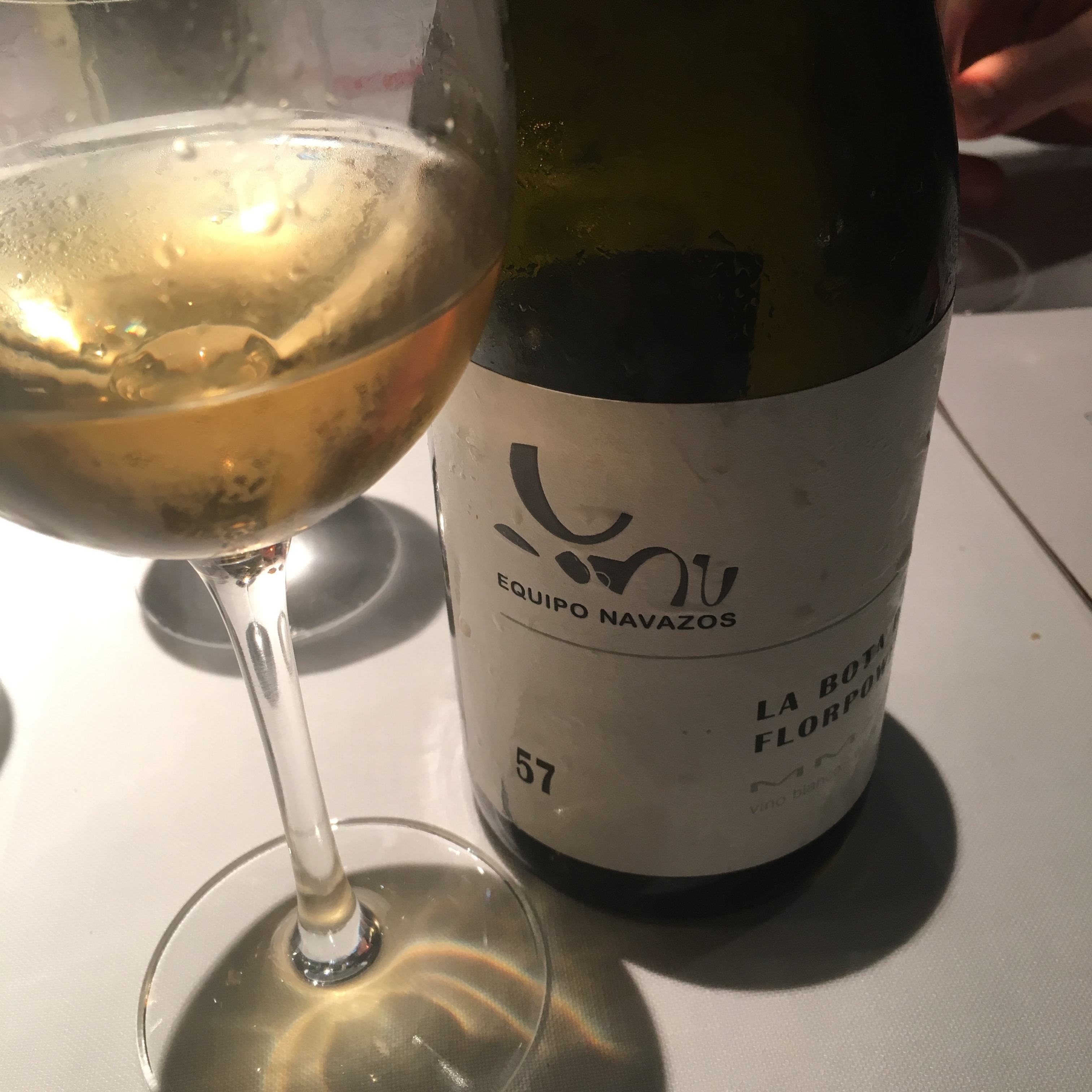
La Bota de Florpower 57 MMXII

This is another of the wines that has been languishing amongst the drafts since I had it – a good few weeks ago now. As you can see from the photo we had this at dinner and as such I don’t have very clear notes. Nevertheless, I have a pretty strong recollection of the basic facts.

Picture the scene. We are four enthusiasts in a place with an excellent wine list, but the sommelier is on holiday. We have had the waiters in all sorts of difficulty with our wine orders all dinner, and with a pretty meaty dish coming and none other than the Bota de Palo Cortado Nº34 listed – a perfect accompaniment you would say –  it was duly ordered. The unfortunate waiter then disappeared for a good few minutes and, having presumably searched fruitlessly high and low in the cellar, reappeared with a wine that, while it may be many things, is certainly not a palo cortado. In his defense, he did a great job of appearing unconcerned and giving the impression that all “Equipo Navazos” wines are more or less interchangeable.  Frankly it could have gone either way – you keep these lads waiting 10 minutes for a glass of wine at your peril, and bringing the wrong one after a wait like that is a risky strategy – but fortunately we were just consumed with mirth and had it anyway.

I am glad we did because it proved to be excellent. It was a little difficult at first: maybe it was a little cold and the profile came across as overbalanced with minerals or even oxidated. But even in the time it took us to finish (and there were four thirsty travellers involved so not long) it seemed to grow in stature and flavour, and by the end I finally began to see the comparison that gets made with the white burgundies – crisp, defined, solid flavours and a lovely finish . (This is in fact something I have noticed a couple of times with these palomino wines – they may just need a bit of time to breathe first up.)

One of the best palomino white wines I have had and these are definitely growing on me.


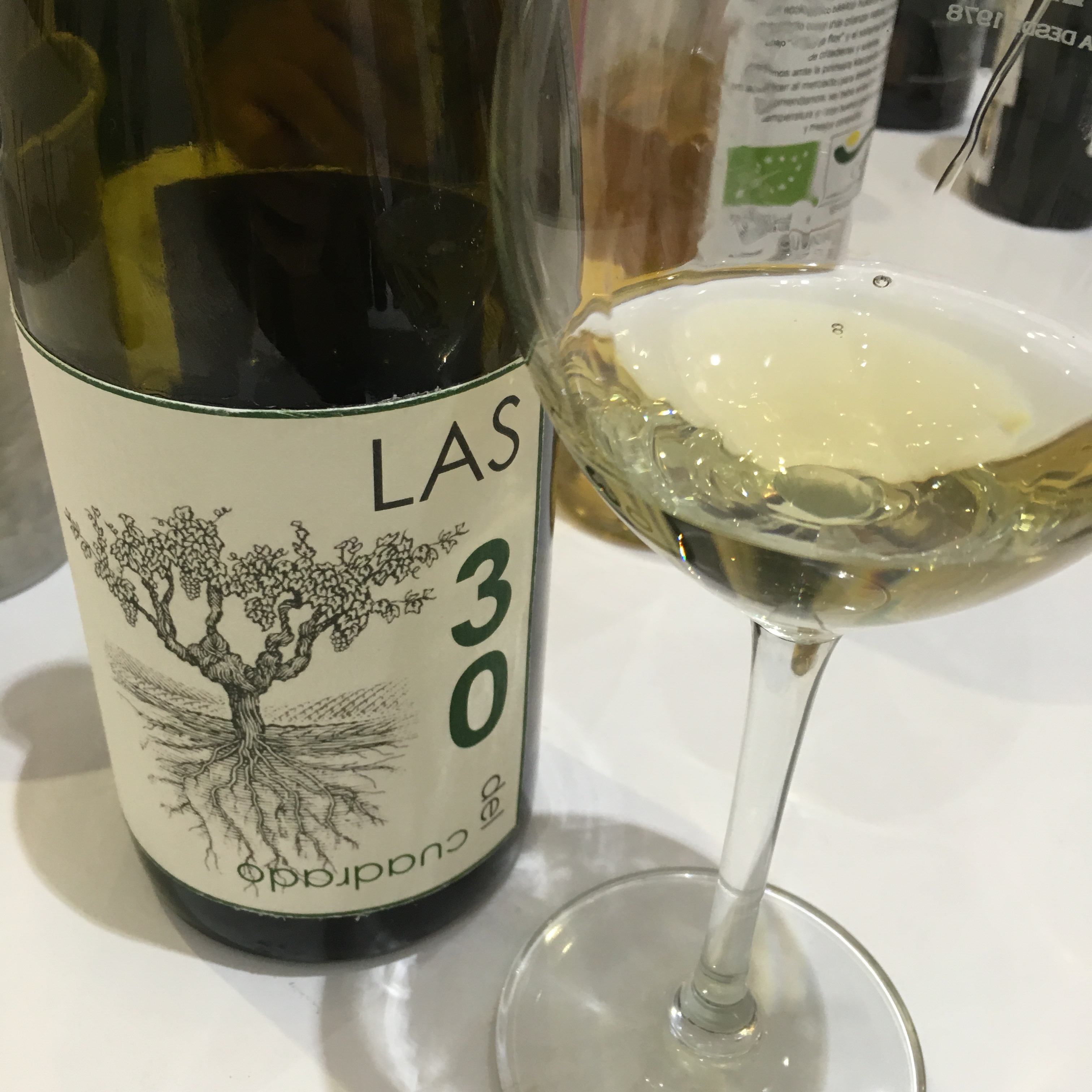
Las 30 del Cuadrado 2015

This morning I added a #palomino tag to the blog to make it easier to find the palomino table wines and in the process discovered that this note was still amongst the “drafts” (with a couple of other lost notes that will surface shortly).

It is a 100% palomino by Bodegas Hidalgo la Gitana and, to judge by the name, from a very special pago: el Cuadrado, which is either a pago by itself or at the Sanlucar end of the Pago de Balbaina, depending on your definition. Whatever it’s status, it is a famous and highly regarded plot of land: one of those names that make the guys down there, and the real experts in these wines, go slightly misty eyed. It is also one of the pagos that I have visited in person and had a chance to judge the lie of the land. (And incidentally, the pago responsible for one of the best wines I have come across so far.)

On the nose this has almonds and tropical fruit and, according to my notes, a hint of pizza herbs like oregano (I must have really liked it). On the palate it is fresh, easy to drink but with a nice body to it: those nuts and fruit again and just a little bit of herbal and calcium bite.

Nice structure and balance and a really promising wine.


Palomino fino en rama Tosca Cerrada

Was in Taberna Verdejo for a quick bite of lunch (some fantastic migas and an even better panna cotta) and bumped into a nice chap from the business who happened to be supping on this. I have actually had it before – the first time I had it blind in Surtopia – but I must admit that my curiosity was piqued by a recent review I had read and wanted to give it another look.

It is of course named after one of the major types of albariza and is “by” Delgado Zuleta and “for” Mario Rovira – an experimental catalan winemaker who is said to be experimenting with biological ageing of his own palomino at his bodega in el Bierzo in Northwest Spain (Akilia). This one is from Cadiz, however, and is an unfortified 100% palomino fino with seven months in manzanilla botas – of which three or four months are under flor. (As an aside, it strikes me that the label “palomino fino en rama”, containing as it does the words “fino en rama” could be considered a bit misleading.)

A shade darker than I remembered it – whereas I expected a more radiant green gold this seemed slightly darker. As with the first time I found it had plenty of fruit, calcium and herbs on the nose – if anything this time it seemed even more herbal-  but on the palante the fruit and herbs took over a little. Really meaty texture to it and maybe could do with just a touch more acidity.

Overall I found it a little bit heavy and lacking in structure, but no doubt that is tasty stuff.


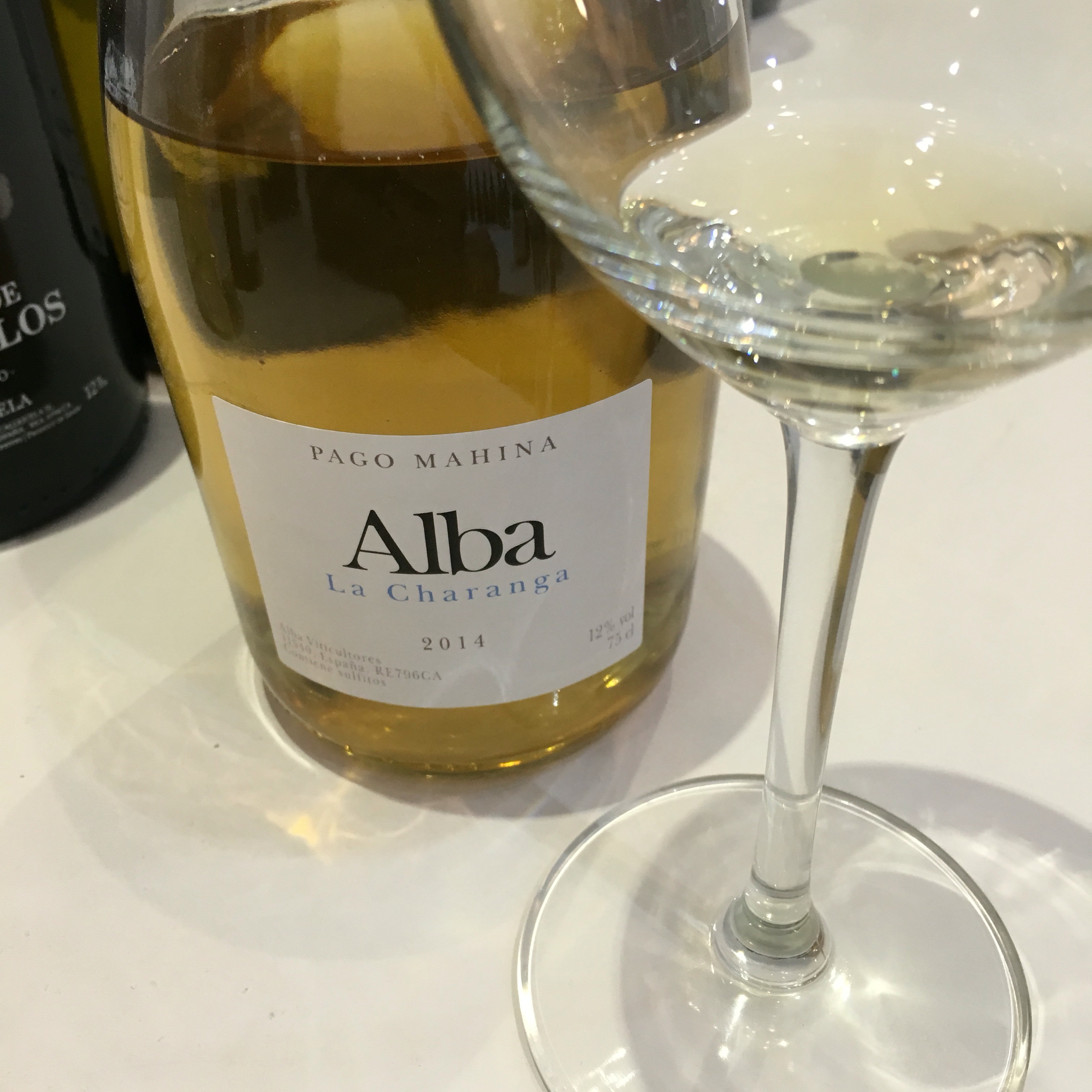
La Charanga 2014

I didn’t have the chance to study this because I was in a little bit of a daze at the time I came across it but am glad I at least tried it and it impressed me quite a bit.

This is not fortified but is 100% palomino from Pago Mahina, by all accounts a legendary corner of a legendary pago of very pure albariza in the zone to the North of Sanlucar on the heights and inland, said to be under the influence of the river as opposed to the Atlantic. (I said in the original note that I couldn’t get much information and have since been innundated.)

Whereas other wines I have had from Alba (the Sobretabla 2013 Lots I and II and the Confitero 2014) were from Miraflores, and this wine seemed to have a bit more spark. I am not sure how much of this is narrative of the day – I had been talking about this wine earlier (standing on the driving range that was Martin Miguel, la Charanga was pointed out to me) and was keen to try it, – but even accounting for my predisposition, this is an interesting wine alright.

Like the other wines I had tried it had an alcoholic nose (although to be fair it was at room temperature) but whereas the Sobre Tabla reminded me of pineapples this is more herbal or floral. Then on the palate not quite muscle in the Macharnudo sense (this was the day I discovered La Barajuela, after all), but structure and a little bit of power, those nice slightly sweet floral/herb flavours and a long finish, but not clingy – compact and elegant.

Very good. Maybe these guys are onto something!

Viña Matalian 2015

I have really enjoyed the 2013 and 2014 and now here is the 2015 with an even more evocative label of seashore and birdlife (the finca that this comes from – Finca Matalian – is only 7km from the sea in the far South of the marco).

I only had a chance to taste this in passing (and late in the day) but no doubt that the same characteristics are there. I actually tasted this on the same night as the Las 30 de Cuadrado and the La Charanga and, although I am conscious of the risk of lazy rationalization, it seemed to have less structure than either – an almond profile compared to a spearhead/leafhead. Very pleasant though – that floral, herbal, only slightly mineral freshness. A fresh, elegant sup.

(I have a 2013 in the fridge here and am wondering whether to stick or twist. Will see if I can get all three – and maybe the version that has had some later oak – together.