Cata de Lustau in Taberna Palo Cortado

It has been a big week in sherry terms and this was yet another interesting tasting of Lustau wines at Taberna Palo Cortado.

A selection of wines – with a fino and amontillados of different ages and types and a sobretabla and a first criadera of the amontillado thrown in. Made it very instructive indeed to see the progression from that sobretabla through fino to first criadera, then the amontillados of different ages (which I mentally filed as cherry tomato, hazelnut and sawdust).

A bit of a rowdy crowd including none other than Colectivo Decantado – but Carlos did his best to educate the masses and once the wines had been explained we all piled into an excellent dinner – tataki the ternera was brilliant and an excellent match for the wine – finishing with a luscious bottle of East India Solera.

I will need to find time to write up my notes properly but wanted to mark the occasion at least and express my thanks to Carlos from Lustau and Paqui for a great evening (and to Abel Valdenebro who brought along a special treat for afterwards: a Lustau amontillado from the 196os no less).

Thanks also to the wellwisher who said hello at the end and said such nice things about the blog. I am sorry I didn’t catch your name but many thanks indeed – really means a lot and hope to catch up again soon.

Amontillado Viña AB

Talk about classics – one I haven’t had in a long time but this is cracking. It is one of the wines that was always around back in the bad old days but it isn’t seen nearly as much in Madrid lately: funnily enough the lads I was having dinner with had never heard of it. 

The entry level amontillado by Gonzalez Byass with an average age of 12 years, of which 4 under the flor. It is a punchy, vertical wine with a sharp, dry, slightly salty/nutty nose and a fresh, bitter saline nutty palate. Longish finish despite its youth. 

Not bad at all and a top pairing with the (thai style) callos at Territorio ERA: old classic meets new funk.

Bodegas Tradición in Reserva y Cata 

Viva Sherry Week. What an outstanding tasting this was. Bottle ageing, seasonality of sacas, wine making, static and dynamic effects. Tasting a line up of brilliantly made finos, with a clear family thread but fascinating individual personalities, and with the information to make sense of some of it. And the Tradicion Amontillado to finish – absolutely epic.

I will write this all up – 8 1/2 pages of notes – as soon as I make sense of it all. For now, just sincere thanks to Reserva y Cata and Bodegas Tradicion for a really top class event.

Tasting the Great Gran Barqueros 

As trailed in my last post, last night I was lucky enough to attend a tasting of Gran Barquero wines given by José Ruz of Perez Barquero at Reserva y Cata, with the added bonus of the presence of Paco del Castillo.

There were four wines, all from the Gran Barquero range: the Fino en rama (a saca from October 20, 2016); a wine taken from the second criadera of the Amontillado Gran Barquero; a 2016 saca of Amontillado Gran Barquero and a 1996 bottling of the same wine. It made for a really instructive tasting which demonstrated the effects of oxidative ageing over time and, interestingly, of bottle ageing.

We started, of course, with the Fino en rama, which is from unfortified, 100% pedro ximenez and has spent 8-10 years under flor in a solera with three criaderas. It is an excellent fino en rama – intensely yeasty, flavourful (slightly bitter almonds) and mineral, and one of the things that always strike me about these Gran Barquero wines is how very fine they are in texture – the sense of how the glycerine and body you might expect from the pedro ximenez has been reduced by the flor over those years. (Interestingly, I was able to sneak a glug of a second bottle of the same wine and it had a quite different green apple and popcorn nose.) It was bottled only 8 days earlier but seemed to have  stood up to the bottling – will have to try and get some to see how it tastes in a few weeks.

We then moved on to the wine taken from the second criadera of the amontillado solera, which is refreshed from the solera of the fino en rama and also has three criaderas. Again there has been no fortification (we were told they hadn’t fortified for ten years or more) and the finished wine bottled as Amontillado Gran Barquero will have had an average of 15-20 years oxidative ageing on top of the 8-10 of biological ageing of the fino. It wasn’t fully clear to me what the average age of this wine from the second criadera was but I guess we are talking 8-10 plus 8-10 or similar. I found it a very enjoyable amontillado indeed – lovely straw and hazelnut nose, and even a little bit of raw yeast and juicy hazelnuts on the palate. Not powerfully acidic but a nice bite to it and good, mouthwatering salinity. Elegant and compact but full of fun.

Next came the finished Gran Barquero amontillado (from a bottling in September 2016) and to me it was a little step up in class and refinement. On the nose the sweet touches of the second criadera had gone but there was a richer yeastiness to it. On that little bit of extra acidity and salinity give it an even sharper entry and finish and the hazelnut flavours of the second criadera have intensified into roasted – borderline burnt – nuts and lead to a long, umami rich finish. It it a classic wine.

Finally, we were able to try a Gran Barquero amontillado bottled in 1996, giving us the chance to appreciate the effects of those 20 years of bottle ageing. As a caveat, it would not have been quite the same wine in 1996 – with a total age of closer to 15-20 years than 25-30. Moreover, I gather that these specific bottles have not exactly had a restful 20 years either: they had been shipped to and from the Canary Islands, no less, and with no guarantees as to the storage conditions.

Nevertheless, these bottle aged wines are all the go now so I was intrigued to see the differences – and surprised by the differences that were there, to be honest. First, and maybe least surprisingly, it looked its age: much darker in colour, not quite crystalline and with crumbs of sediment (see above). The most striking difference was on the nose – whereas the previous wine was all yeast, straw and herbs, this had an aroma of dusty old leather bound books – but also on the palate for me it had lost a little bit of the spring in its step, getting a touch dryer and with more bitterness, and even in terms of definition, again with a slightly dusty sensation to it. Really interesting to have tasted because the differences I noticed were things that in other wines in the past I had attributed to the length of the time in the barrel, but not quite my cup of tea as you can probably guess.

Overall though four top quality wines and an excellent structure to the tasting. When you throw in the knowledgeable commentary and explanations of José and Paco before during and afterwards it was an excellent night all round during which I learned a great deal. My sincere thanks to Ezequiel at Reserva y Cata, José and his colleagues at Perez Barquero and Paco de Castillo – brilliant stuff.


Amontillado Gran Barquero


Heading to a tasting of Perez Barquero wines at Reserva y Cata in a few minutes and am getting the juices flowing by writing up my note of this from yesterday’s lunch at Territorio Era. (In fact the original plan was just to repost but to my disbelief I discovered just now that I had no post on the blog about it.)

Despite an average age of 25-30 years it has really nice flor effects to it – the nose has nice almonds and yeasty bread – which makes me think it spent a good number of the early years under flor. Then it has a fine, silky texture that you don’t necessarily expect from a pedro ximenez, lovely acidic and or saline bite and a nice elegant palate of roasted, dark roasted almost bitter almonds.

Really top class. Juices are now flowing and no mistake.


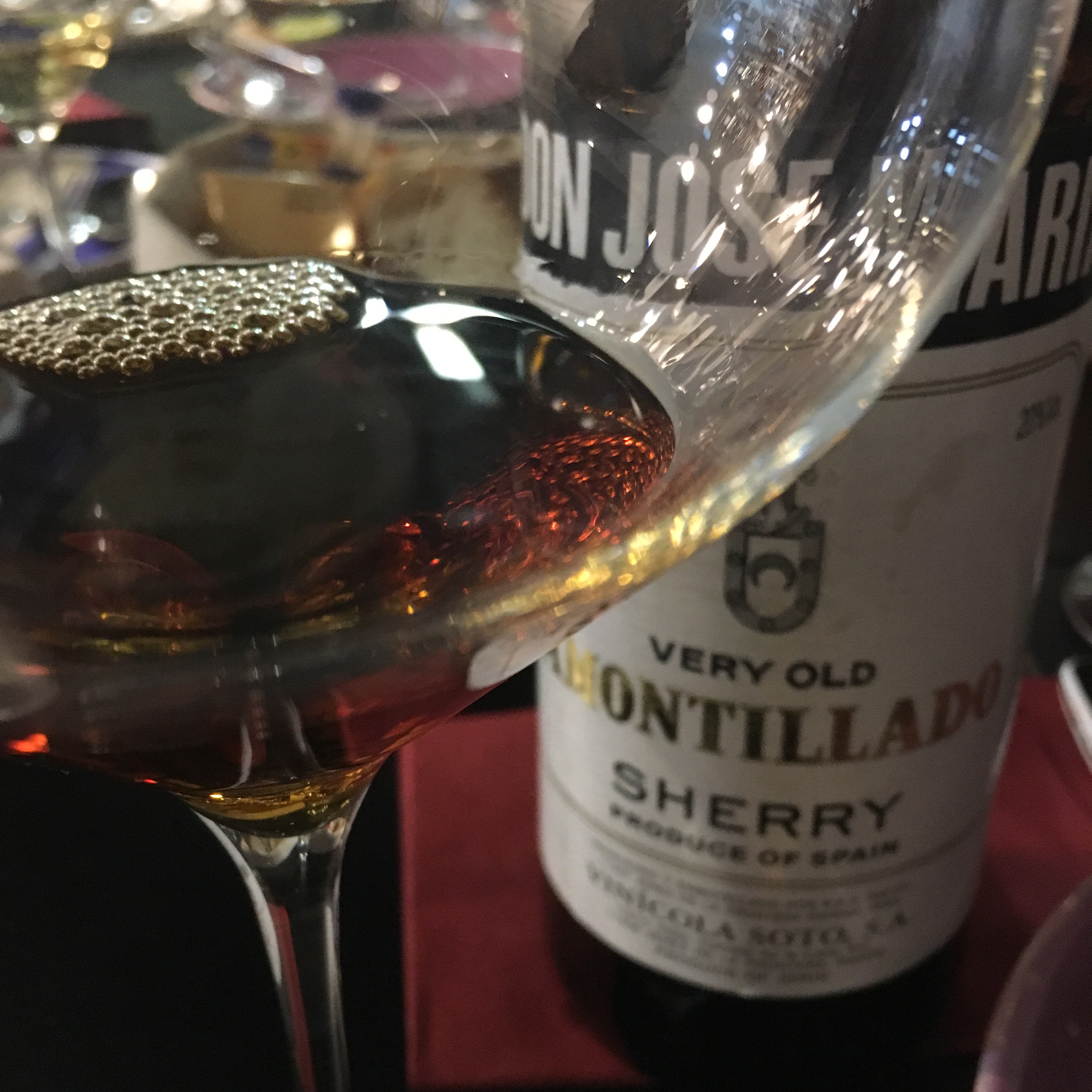
Amontillado Don Jose Maria

The last of the wines I wanted to write about from a memorable dinner last week at Territorio ERA

This one is a decidedly strange fish – I would swear that it wasn’t that old, and if it didn’t say it on the bottle I would say it wasn’t an amontillado either. In fact I am pretty sure it had had a little sweet stuff added to it. (Not encouraging to be told that the  Jose Maria in question was Jose Maria Ruiz Mateos either – not exactly a heroic figure.)

On the other hand it isn’t bad – nice hazelnut nose and juicy hazelnut flavour on the palate. Not piercing or zingy but saline all the same, then for me a slightly ashy finish. Not unpleasant, just a little bit of a mishmash. 

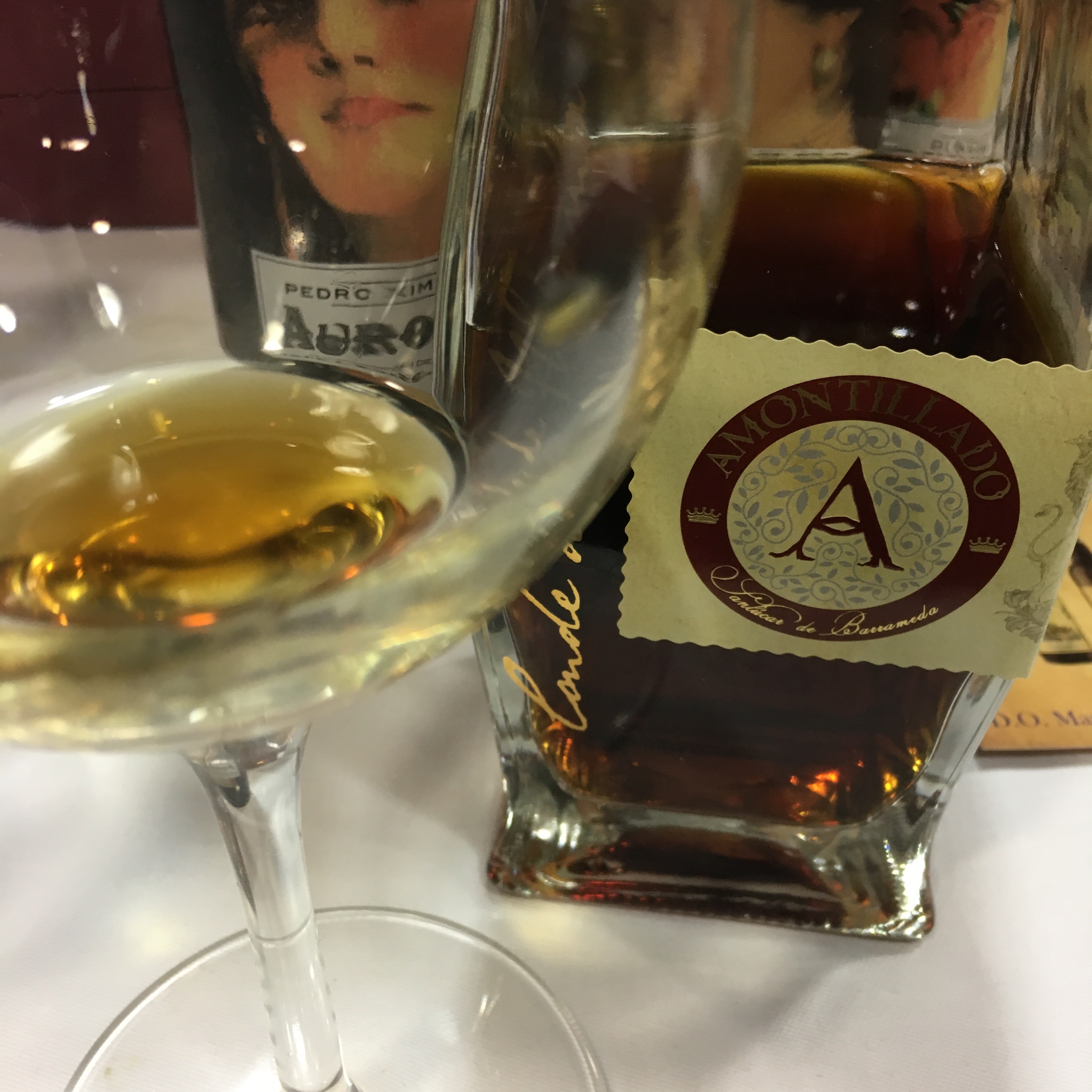
Amontillado viejisimo Conde de Aldama

The star wine of my brief visit to the Salon de Vinos de Terruño yesterday was this very special old Sanlucar amontillado. It is by Bodegas Yuste and we were told that it comes from a solera based around four botas that were untouched for a full 120 years before being put back into action relatively recently.

I had nearly finished before I remembered to take a photo but as you can see it is a chestnut brown in colour and was ice water clear. Had a fantasticly expressive nose of brandy, nuts, cigar box and sawdust. On the palate too it had all the qualities of a majestic old Sanlucar amontillado, with a piercing saline freshness to it despite the intense nuts and cigar box flavours. The word here is dry and then some.

The only problem was that it seemed to disappear all too quickly: will have to get myself a bottle for further study.


Las Botas 60 and 61 

Two attempts at the 60 and like it more and more – this third time I am really loving it. Same story with the 61 in fact – I liked it the first time but even better this second time.

Two classic Sanlucar wines that come from the same bodega and share so much: intense and rich in flavour, with mineral sharpness, elegance and freshness. But while the older amontillado is bitter, fierce and acidic, with flavours of tobacco and wood, the manzanilla pasada is smooth, has that illusion of fruit and and big yeasty, haybales and bread.

If you want to appreciate that difference in styles these two magnificent wines are a great place to look for it.

Las Añadas de Williams & Humbert

5e9b9cb3-ae40-4d2b-8a32-7f3c5ed34a0cHas been an intense start to the new academic year with a lot of work and, for some reason, a lot of hangovers, so apologies for the delay in getting around to writing up these notes of what was an absolutely fantastic tasting nearly two weeks ago (gulp).
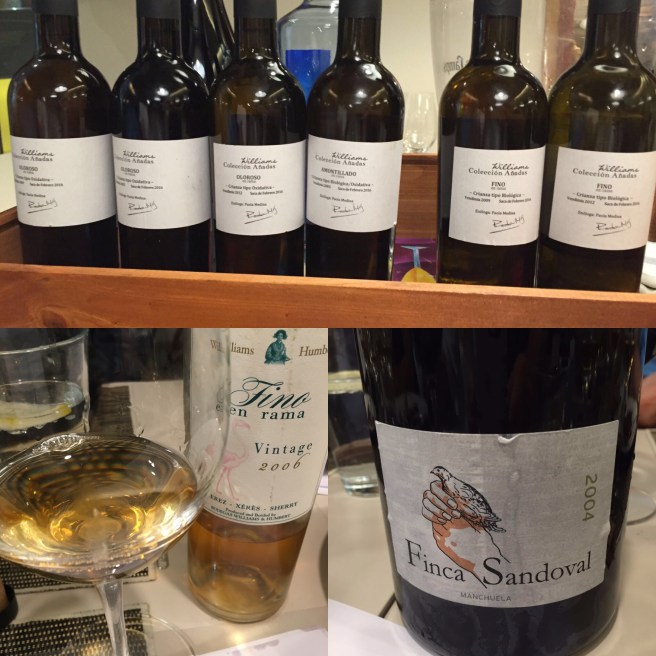
I have written before about the genius concept of this Colección Añadas, about a few of the individual wines and also about an interloper in this tasting: the Vintage Fino from 2006. What made this tasting so interesting, though, was the chance to taste them all in close succession and the resulting comparisons were revealing.

Since the Collection is known as the “añadas” (or “vintages”) collection we felt we should go vintage by vintage (although it would also have been good to go biological first etc – if only we had had two sets, and time) so here we go in order.

  • 2012 Fino- I really liked it. Very clean nose of almonds, fresh, compact and elegant, nice sensation of acidity gives it an incisive entry and then it has decent salinity, stretching out the finish. Really good and to my mind another great advert for this style of younger finos.
  • 2012 Oloroso – again very good. The almonds are still there on the nose and on the palate but they are toasted on the palate and there is a clear oloroso imprint to it. Bit heavier, slightly spicier flavour but not as much acidity up front and a touch less salinity. Less elegant in profile and a bit more boisterous, you would say.
  • 2009 Fino – if anything the impression I had was that there was more fruit in the 2009 than the 2012 fino but this could be because it was slightly less compact. The saline zing up front and the fresh finish are more marked and the hazelnut/juiciness also seems more pronounced – gives it balance if not quite elegance.
  • 2009 Oloroso – again big on flavour and this is for me the best of the olorosos. Again heavier bodied than the fino but now the sweet hazelnut flavours are much more pronounced making it a really juicy wine.
  • 2006 Fino – probably my favourite wine on the night, this really had a bit of everything. Not a straight comparison with the other since this was bottled in 2014, so really had 8 years under the flor compared to 7 for the 2009, and has had two years in the bottle. Whatever the case you have to say it was bottled bang in its prime – a lovely combination of salinity and almonds that almost gives you dairy aromas, zingy minerals, a creamy texture, those flavours, a long fresh finish. Absolutely brilliant.
  • 2003 Amontillado – ran it pretty close however. This would be the smoothest, most elegant and drinkable 20% alcohol wine I can remember, with sweet hazelnut beginning to mix in with the bitter almond flavours and a touch of acidity to go with the minerals. Difficult not to enjoy this.
  • 2003 Oloroso – had a tough task following those last two wines and was noticeably less refined and compact – the fino/oloroso gap opening over the years. Hazelnut flavours beginning to taste toasted, nice acidic spiciness and more obvious alcoholic heat.

I feel like the tasting gave me an insight into the curve that these wines follow as they age under flor or in the open air. On the other hand, despite an identifiable common personality, given the different amounts of ageing I found it hard to get a feeling for the different vintages as such, and as I look back I have almost more questions than answers. In particular I would love to be able to taste the mostos that were used and know a bit more about them.

As I say, at the end I wished I could start again (but as it happened a magnum of an excellent 2004 Finca Sandoval took my mind off it – thanks Victor!).
No doubt about it though, seven excellent, enjoyable wines and educational too – well done to Williams & Humbert on a fantastic collection.


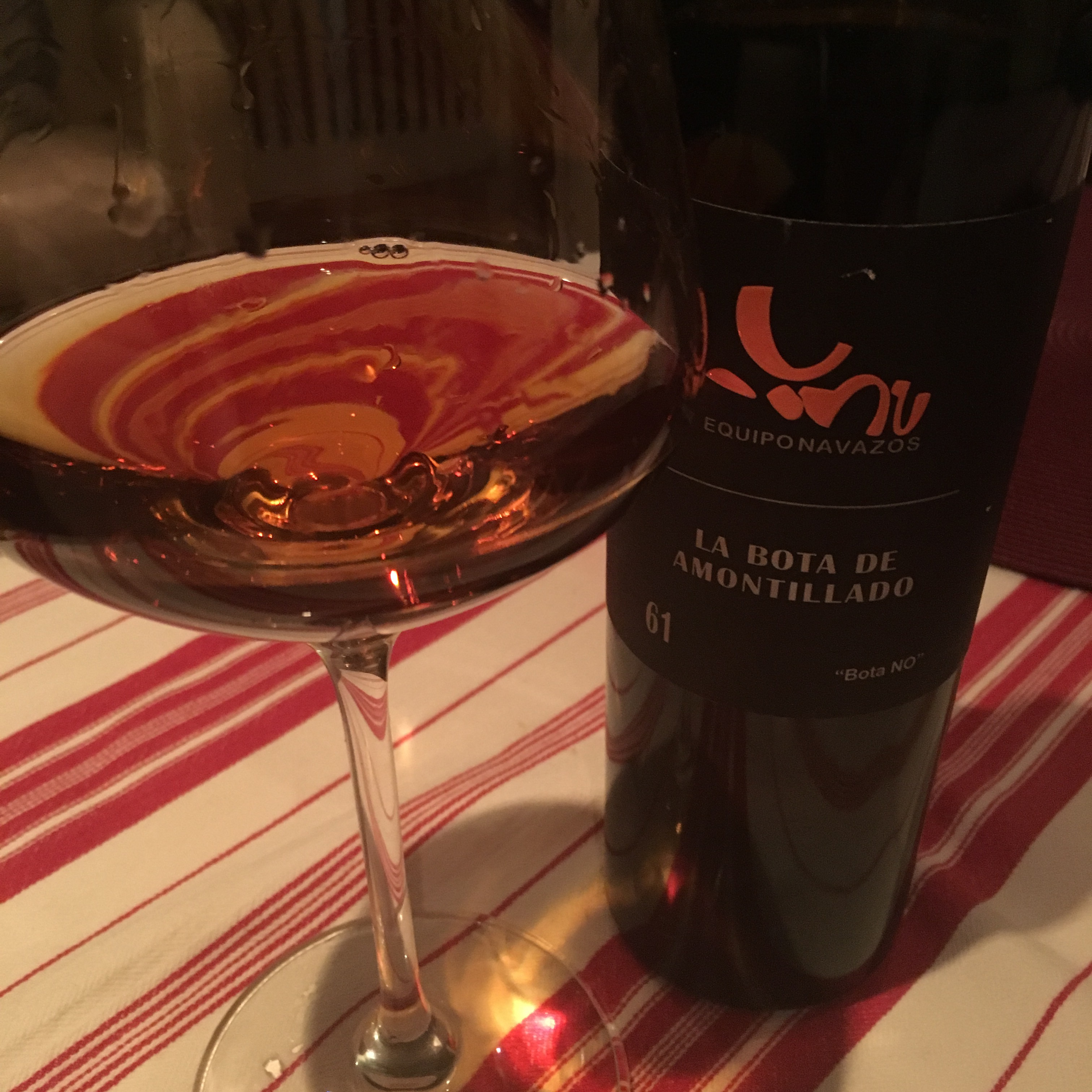
La Bota de Amontillado 61 – Bota No 

Another exceptional wine by Equipo Navazos and a beautiful old Sanlucar amontillado by anyone’s standards. The second time I have had this one and I can see why I bought another (from the guys at Coalla Gourmet). I was inspired to taste it again – in part by my recent brushes with Sanlucar amontillados and olorosos, and in part because my kiwi mucker Erik Burgess has apparently been at dinner tonight with the great JB, but what put the thought in my head was really a brilliant solo tasting session by Victor de la Serna.

A gorgeous colour of old crystaline old amber, a polished wood nose and then a massive palate. Saline not excessively so and slightly more juice and tobacco than in some of the classics (still not a lot by way of sweet notes but a flavour like jammy wood nevertheless). A quite unbelievably long finish to it. I have written all this since my first sip – with my thumbs on an iphone – and the flavours are still there. In fact it seems like my head is full of spicey gas – wine with the cigar incorporated.

Serious wine, flavourful but elegant too.