Lustau 3 en rama one week later


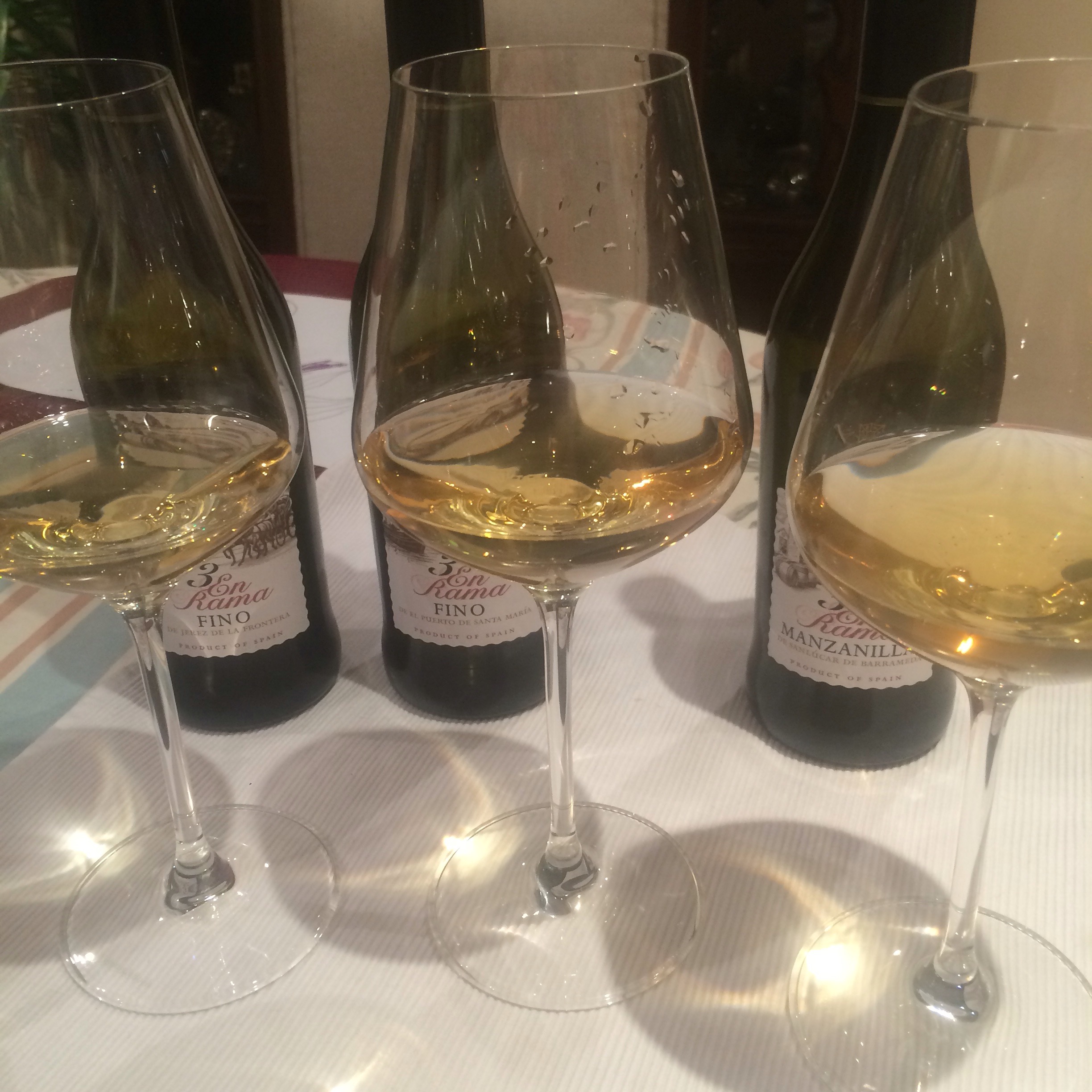
I thought it would be worth hanging on to see how these three wines reacted to a few days after opening and as you can even see from the photo above (with the Jerez de la Frontera left, Puerto de Santa Maria centre and the Manzanilla right) they have reacted in quite different ways to the experience.

First, the manzanilla which when fresh opened was crystal clear with a tinge of green is now cloudy and has taken on a shade of orange. I am not surprised it shows the most evolution – even after one day it had started to go – but it is quite a big difference. There is a definite tinny metalic aroma to it now and signs of age on the palate too. I actually had a glass on day 3 and think it might have been optimum then.

Next up the fino del Puerto de Santa Maria – originally my favourite and this has taken the week in its stride with comparative aplomb. It may be a shade darker but it is still crystal clear and the aromas seem to have gained in sweetness. Still really good.

Finally the fino de Jerez de la Frontera seems to be the least changed. Less discernible change in colour and it seems zesty and intense compared to the other two: a real zingy salinity to it and still that bitter citrus finish.

Nothing scientific about all this of course but I will make a mental note to not let manzanillas sit around too long – or maybe I will try and save a glass of the next couple to see if there is a pattern. As to the wines themselves, the fino del Puerto still seems to have a wider range of expression than the others, but all three are delicious.

The magnificent seven

Not that this is a magnificent selection by comparison to some you will see but the seasons roll by and we are getting there.

This really is a cracking little bottling – the just shout out collectors items. They are a homage to Doñana the natural reserve of marshes, shallow streams and sand dunes in the Guadalquivir delta. It is fantastically appropriate to the wines inside the bottles – they just seem bursting with life. It is also nice to see a celebration of life on the label in general – for me the old image of dusty barrels is a little over used (in this blog, for example …)

Manzanilla en rama Solear – saca de invierno 2015 

  
The razorbill has landed and this is another lovely manzanilla.

It is a lovely gold colour, aromatic on the nose and is wonderfully expressive on the palate – vegetable, herbal and nutty. These spend 7 years or so under flor (in fact I read somewhere that these are technically manzanilla pasadas) but the yeast is still there in force and they seem to pack more herbs and less minerals than many older Sanlucar wines. 

Looking at the note on the back label they also emphasize the flavours but whereas they talk about an “explosion of light and flavour” I find it a bit more solid and meaty, particular by comparison to the autumn edition. 

No doubt about it though: another juicy, flavourful little bottle. 

Arzábal

Arzábal is one of the classic tabernas around Madrid and since I happened to be in the neighbourhood thought I would stick my head in.

No doubting the quality of the wines on this list, not at all. If one was going to be critical one would say you could add something at the very light end (a fresher, less juicy fino maybe) and something in the middle (an amontillado fino or similar). There are also two excellent PXs with the desert wines.

No doubting either the quality of the feedbag – everything was great today, some delicious garbanzos con callos, excellent bread and delicious butter (really good butter, and you should see the butter as it comes – a huge old pail of the stuff – at least 5kgs and probably more). Worth stopping in!

Palo cortado Tradicion 

  
Bumped into the chap from Bodegas Tradicion just the other day and had a nice chat. They have done as much as anyone to reinvent the sherry business around premium wines and this is a high quality wine indeed. As you will see – a bottle with the “old labels” and indeed it is the second saca of 2013. 

I like the dating of the sacas but I like the wine more. It is a beautiful chestnut reddish brown and has a fine sweet, caramel, maybe slightly citrus or resiny nose – some hay bales there. On the palate there is a nice acidic buzz, caramel flavours, maybe burnt orange peel and a little bit of cedar wood at the end. Nice fresh finish but not all that long. 

Quality stuff. 

Manzanilla Viva la Pepa 


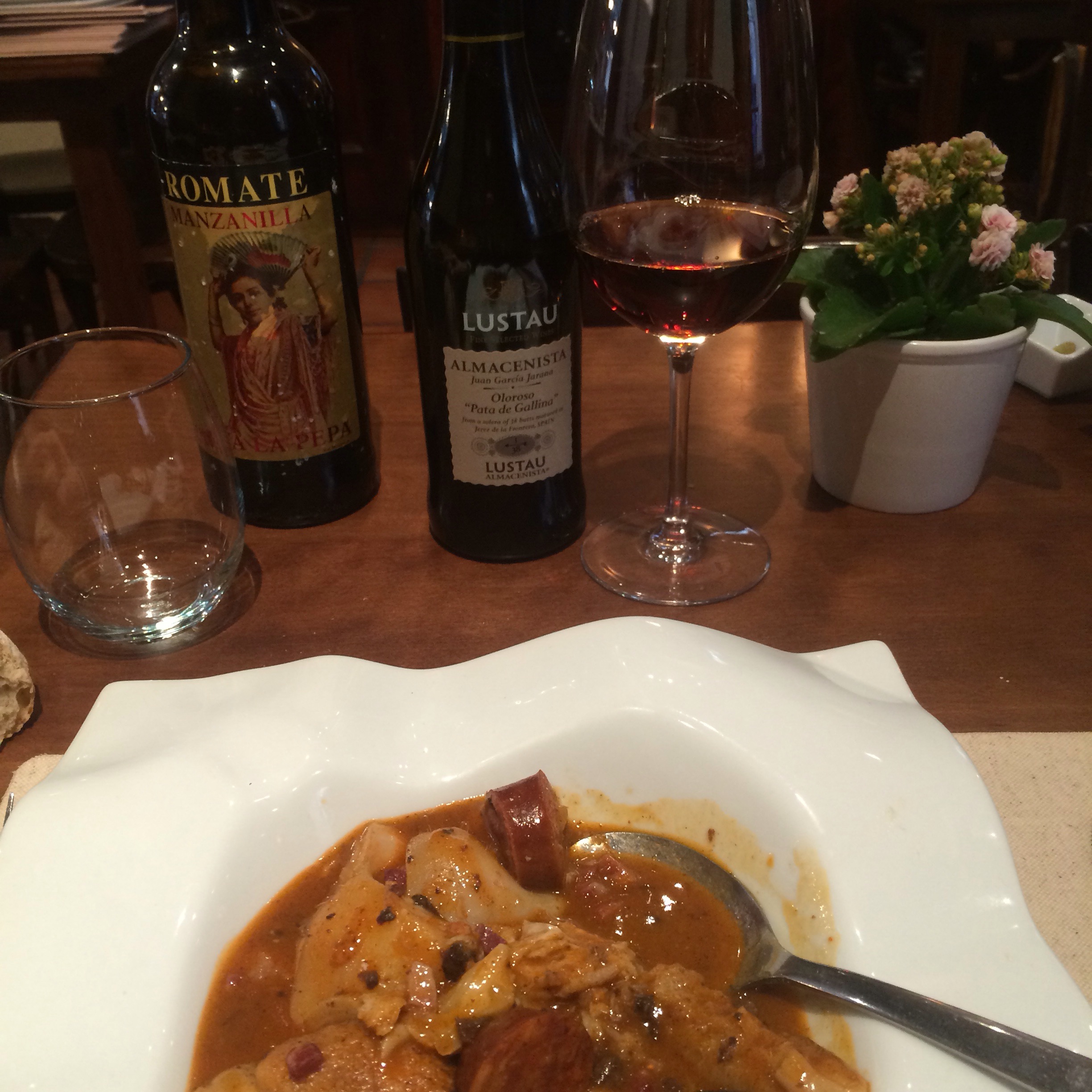
The “other” wine from yesterday’s visit to Taberna Palo Cortado was this very pleasant manzanilla from Sanchez Romate. I am a fan of the Fino Perdido and have been looking out for this – a stripling by comparison with only just over three years under flor – for a while.

As I think you can appreciate from the photo it is very pale in colour and very clear – has that crystaline quality that I have come to associate with finos and manzanillas. The nose is also delicate – a discreet aroma of herbs and meadow flowers, with sea air in the background. On the palate it is fresh, although the sensation gets a little saltier over time, and again the flavours are delicate – nothing big or overpowering about this.

Very pleasant and a great little aperitif.


Oloroso “Pata de Gallina” 

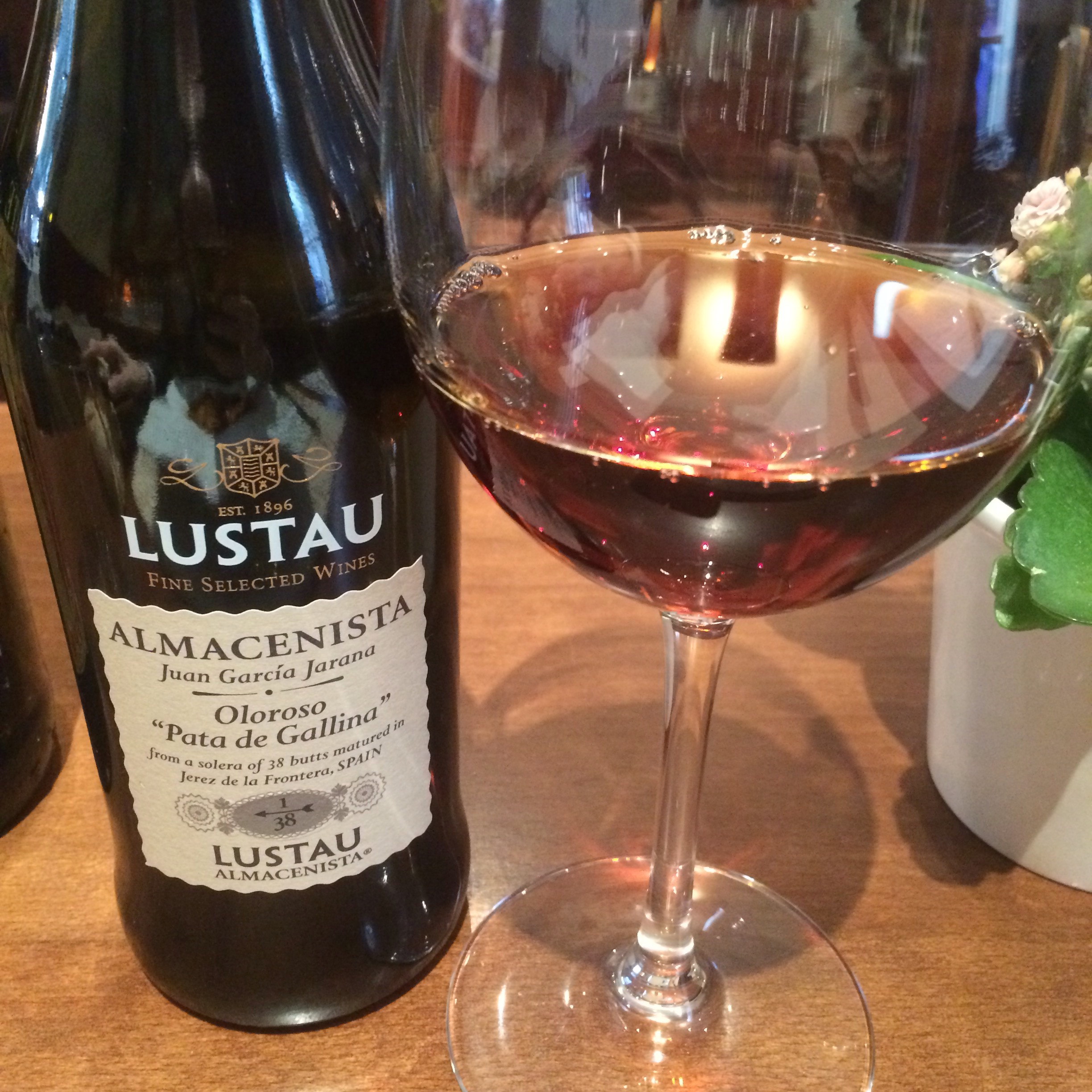
One of Lustau’s “Almacenista” bottlings, this one Juan García Jarana. As you may have seen, I tasted this in the presence of callos, and some really good callos too (the smokey chorizo gives them a really meaty flavour) so you would say this tasting didn’t exactly take place in “laboratory style”conditions.

The superb palo cortado I love best by Equipo Navazos is also called  Pata de Gallina and was also sourced from botas at this same almacenista – in fact I wonder if it was sourced from the same botas. Hard to compare at a distance but this has a lot of the same characteristics.

For a start, it has a lovely dark chestnut colour – maybe slightly darker than the Equipo Navazos bottling – and a very nutty, deep caramel nose, with that come hither smell of sweetness. On the palate it has an intense but pleasant acid buzz (here in particular the callos may have helped) and then it is very tastey and concentrated, with a deep caramel flavour, no stickiness (all the stickiness came from the callos) and no astringency. Very elegant in fact.

Really an excellent oloroso.

Taberna Palo Cortado 


One of my new year’s resolutions is to spend a lot more time in this fantastic sherry-lovers paradise. Unforgiveably, and frankly unexplainably, I haven’t been since last July.  The loss is mine.

No photo of the list of sherries because (a) I am not that good at this blogging lark and (b) it would need several pictures anyway. It is certainly the best such list in Madrid – at lunch today I had a choice of at least five olorosos I had never tried before by the glass, and Paqui gave me a manzanilla I had not tried without even asking.

And as you can see from the above, the solids also have substance. The callos can be described in two words – im presionantes. Again, I didn’t study the menu in detail (once I heard the word callos … ) but rest assured, there will be further reports.

Will write up the two wines anon but for the moment ¡Viva la Taberna! ¡Viva Paqui!

Cobijado 2013


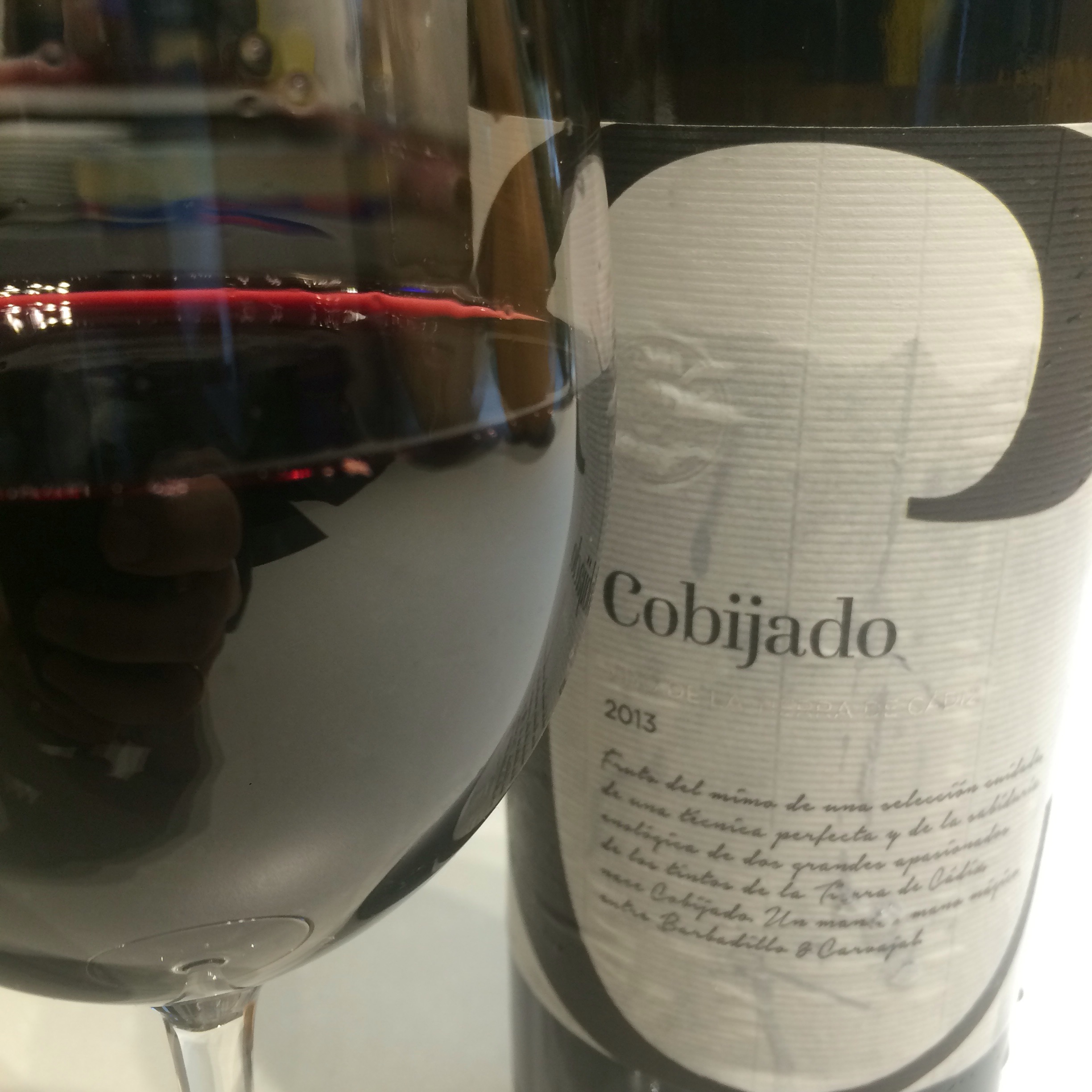
Lunch in La Taberna de Pedro to start the week off properly and one of the wines of the week is this from the province of Cadiz. According to the blackboard it is a blend of Cabernet Sauvignon, Syrah, Merlot and Tintilla de Rota – the autoctonous red grape from Rota that is back in vogue – and according to the label it is a creation of Jaime Carvajal in partnership with Barbadillo. 

It is very good. It is a purplish burgundy in colour and slightly turbid. It has a nice blackberry jam nose with maybe a bit of undergrowth and spices. On the palate too there is more rich, jammy dark fruit, maybe a little bit of dryness in contact but a sticky, fruity sweetness that lasts a good long while – maybe even a bit of chocolate or something (have now run out so cannot go further).

And with it, a stewed wild partridge – not normally my bag (work to meat ratio) but tasty stuff.