Jerez and terroir by Jefford and others

Plano parcelario

A really nice piece by Andrew Jefford on the Decanter site in relation to this subject which is so very close to my heart, and especially, the “region’s youngsters” (including you know who, but also the guys at Alba).

In fact I thought this would be a good moment to compile some of the recent writings I have seen on this topic (by no means comprehensive I am sure, but if you want comprehensive this is not the blog for you).

In the meantime, two of the “region’s youngsters” have themselves started to write down the history of not just the terroir but also the vintages. Part I of their book (in Spanish) is required reading.

But the interest in this subject is not at all recent and within minutes of posting the above list I have been given the following reading assignments (thanks again Alvaro):

  • ¿Terruño en Jerez?  by Alvaro Giron Sierra in Elmundovino in February 2009 and the ensuing debate
  • Terruño Jerezano, Testaruda Realidad by Jesus Barquin, again in Elmundovino (and apparently just one of many contributions through the years on said essential website), in August 2009
  • Terroir in two senses and none by Jesus Barquin (although the article doesn’t seem to be available – if anyone does have a lead on it let me know)
  • This piece The notion of Terroir and noble wines on the Jerez-Xeres-Sherry blog summarizes and translates the contribution of Victor de la Serna in a symposium before the AIV in June 2012
  • Brooklynwineguy made a nice post about a dinner organized by the great Peter Liem back in July 2012
  • And a cracking post and ensuing debate in 2013 Salinidad en las Manzanillas by Giron, Angulo and Perez – will report back next week when I have finished reading it!

Most importantly though, this message is clearly getting across – anecdotally one of the Sherry Women was telling me about a fantastic tasting of sherries lead by Juanjo Asencho focussing on terroirs late last year – and let us hope that the trend continues.

Oloroso Rio Viejo (with callos)(in the sunshine)


Didn’t take many notes but when I asked for an oloroso to accompany my callos it was a nice surprise to see the Rio Viejo coming out and, just as I expected, it was a delicious combination. 

Can’t find a ficha for this one but it doesn’t seem a particularly old wine – dry, nice touch of acidity, nutty caramel aromas and flavours, nicely integrated alcohol. A very drinkable wine indeed. 

Fino en rama Gutierrez Colosia 

This morning at the station I bumped into not just one but two brilliant sommeliers – Guillermo Cruz of Mugaritz and Silvia Garcia of Kabuki Wellington. It was a real pleasure – brought back great memories and was fantastic to hear what they have been up to so I have opened this in their honour. The last time I had it was with Guillermo at the start of probably the best set of pairings I have ever had (including this highlight). (My only regret is that I don’t have any of the superb Riesling Silvia once gave us to follow it).

It is by Gutierrez Colosia, one of the big names in el Puerto de Santamaria. They have a pretty good site there but no ficha for this one – no data on age, criaderas etc.

Anyway, whereas the one I had back in July was from the May saca this was from October – I don’t really remember enough to compare them but I remember that one being full of life and this is just as good as I remembered.  Dark straw colouring, lush mouthfeel, zingy minerals and juicy, yeasty flavours.

Really attractive, flavourful fino. This one is dedicated to Spain’s brilliant sommeliers – your good health!

Manifesto 119

Manifiesto-119

Been meaning to post a link to this excellent article (in Spanish) by Pepe Monforte on his blog http://www.cosasdecome.es concerning an interesting movement called Manifiesto 119.

There are a lot of manifestos floating around at the moment in the world of Spanish wine (some in favour of unique vineyards, some in favour of bag in box), but I think this one is particularly interesting. It is now several months since it was reported (and live tweeted by some of the protagonists ) but I was reminded of it recently in an exchange on a forum with a fellow enthusiast .

The “119” is a reference to the large number of varieties of grape that were recorded by the eminent 19th Century botanist Simon Rojas Clemente as autoctonous to Andalucia, of which 40 or so were found in the region of Cadiz. 200 years on, a passionate group of winemakers are setting out to bring some of these varieties back, replanting the varieties and making some interesting stuff with them.

I have taken the liberty of borrowing the above picture from the blog post – because it is a cracking round up of the usual suspects (who also happen to be among my favourite wine makers):  Ramiro Ibañez, Willy Perez, Armando Guerra, Primitivo Collantes, the guys from Forlong and the guys from Callejuela.

To be honest I haven’t really had a chance to try many of the actual wines: off the top of my head the Encrucijado (which has a coupage of palomino and five others), tintilla de rota in various forms and maybe at a pinch the three strains of palomino in the UBE (although they may only count as 1 of the 40, not sure).

The article though talks about a few interesting projects: 1700 vines of “uva Rey” or mantúo planted by Primitivo Collantes; wines from gateta made by a bodega in Chiclana called el Sanatorio; a bodega called Ambrosio de Olvera working with perruno; and an outfit called Mostolé with plans to plant mantua castellana and alarije dorada.

I certainly hope to try some before I get too much older. For the time being, all power to the 119.

Fino Pando


I got this for a song from Vila Viniteca (it really is a crime how cheap these wines are) with one of the few remaining 2006 Vintage finos and it is no slouch at all.

This is an 8 year old, 9 criadera fino from fruit (100% palomino fino, of course) from Pago Balbaina (Jerez Superior) by Williams & Humbert and has a cracking ficha (although the translation is a bit tricky and the Spanish version is a bit clearer).

It has a very pale gold colour, a punchy nose with plenty of aromas of citrus and acetaldehydes. It is full bodied and full flavoured too, a real mouthful. The salinity is very mellow, but it is long and lingering and there are ash-like minerals towards the end.

A big, bold fino, in the classic Jerez style.


Double barrel


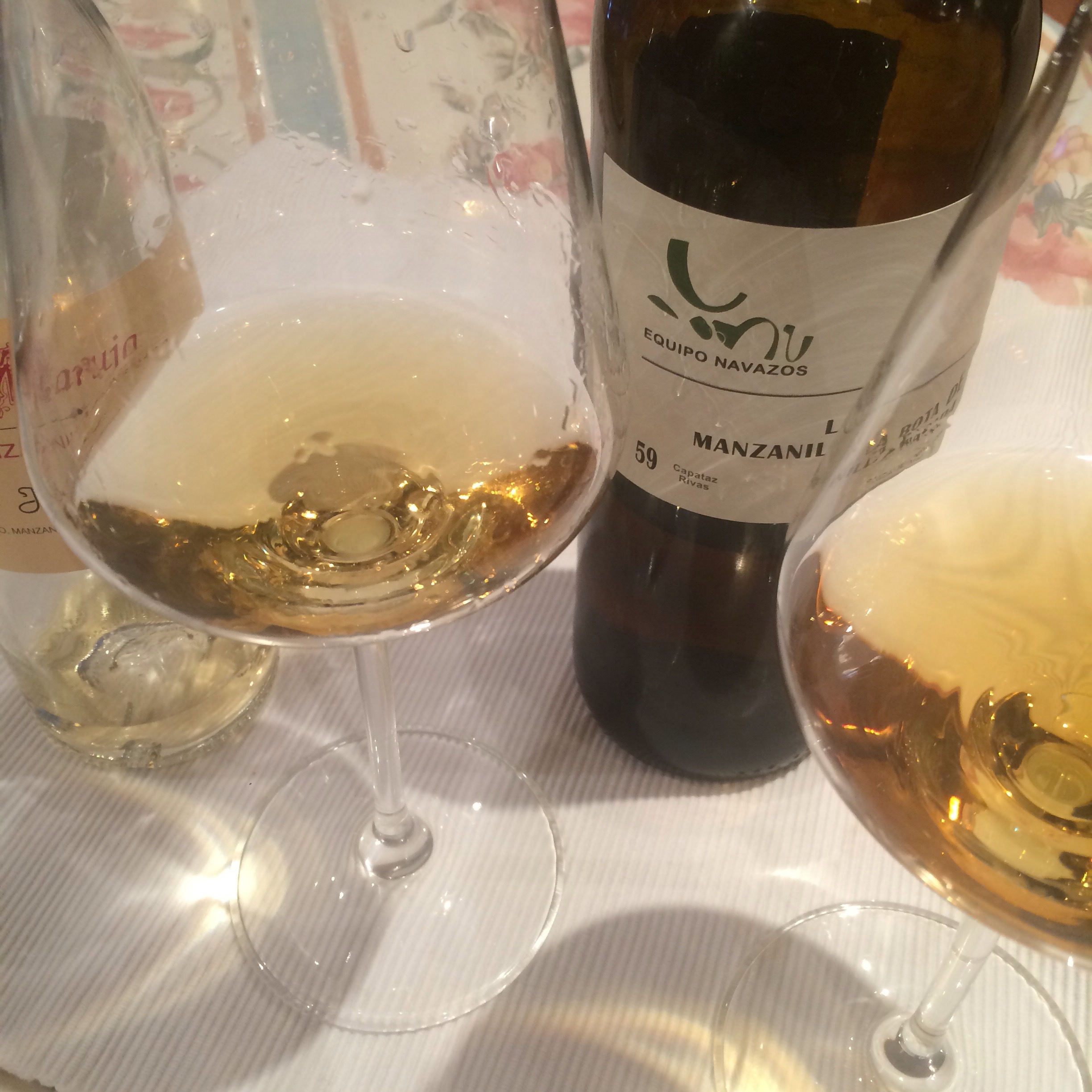
The Maruja on the left, the Equipo Navazos 59 on the right and a really interesting side by side comparison.

Both delicious wines, but big differences. The 59 is much heavier – by comparison the Maruja is green grass against dark straw. The 59 also has more honey, more of the burnt toffee of an amontillado. No mistaking the flor and the floral on the Maruja, but the 59 seems like an amontillado fino – the fine flor touches but more body. There is another aroma too that escapes me.

More importantly for me, a really interesting week where I have learned a lot about manzanilla pasadas – maybe this is what real experts go through every week.

La Bota de Manzanilla Pasada 59 – Capataz Rivas 

I continue to follow the river manzanilla pasada hoping to find the source. My third bottle in as many nights, this is a classic by Equipo Navazos that I picked up from Coalla Gourmet (as a wine of the week, no less). Had a first bottle of it back in October but after the excellent Blanquito and Maruja from this week was intrigued to try it again.

This has a lovely gold colour and again a fruity nose: in these manzanilla pasadas I am beginning to expect  fruit rather than the caramel of a palo cortado or amontillado. This has a nose of old apples and ozone. On the palate it has a nice structure, a soft beginning, then mineral zing, then a salty fruit aftertaste – the most mineral of the three this week, but it has a nice balance.

Really excellent. I am going to dream about waterfalls of this stuff …


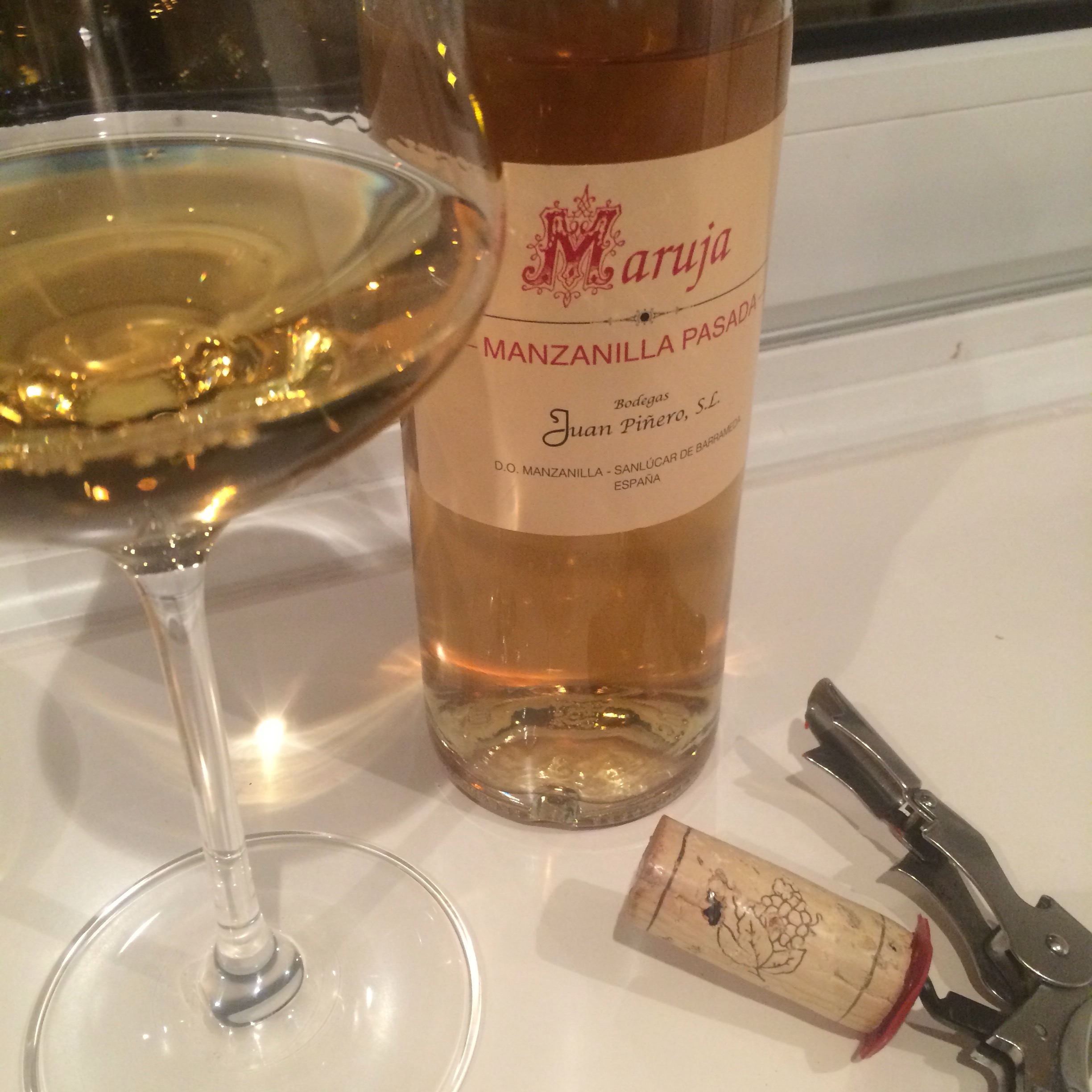
Manzanilla pasada Maruja


After the Blanquito yesterday I thought I would try this again because I had a memory of it being quite a contrast (a more organized blogger would, of course, have opened them together, but there we go, you get what you pay for, etc.).

The memory didn’t fail me though: this is a fish of a different kidney. Slightly darker in tone and fuller in flavours, and while the Blanquito made me think of apples and blossoms, this is all herbs, minerals and hay bales on the nose, and really suggests (a dry version of) jammy fruit on the palate. Quite full bodied feel to it too.

This wine also reminds me of one of the most bizarre and controversial tasting notes I have read. I still think it was harshly treated on that day – I love the fruity profile of this and would (and do) recommend it to anyone.


La Bota de Palo Cortado 34 – Pata de Gallina 

This was the wine that gave rise to my current obsession with the wines of Jerez and Sanlucar and it is still one of my favourites – I have a dwindling stash put away but am treating myself after a tough weekend of slings and arrows of every variety (my last bottles were in May and August).

I am satisfied that the value is not just sentimental – it is attractive looking (no filters above – just look at that honey coloured nectar), enticing on the nose (nutty, sweetness and hay bales), delicious, complex, balanced and elegant.

Really an exceptional wine.

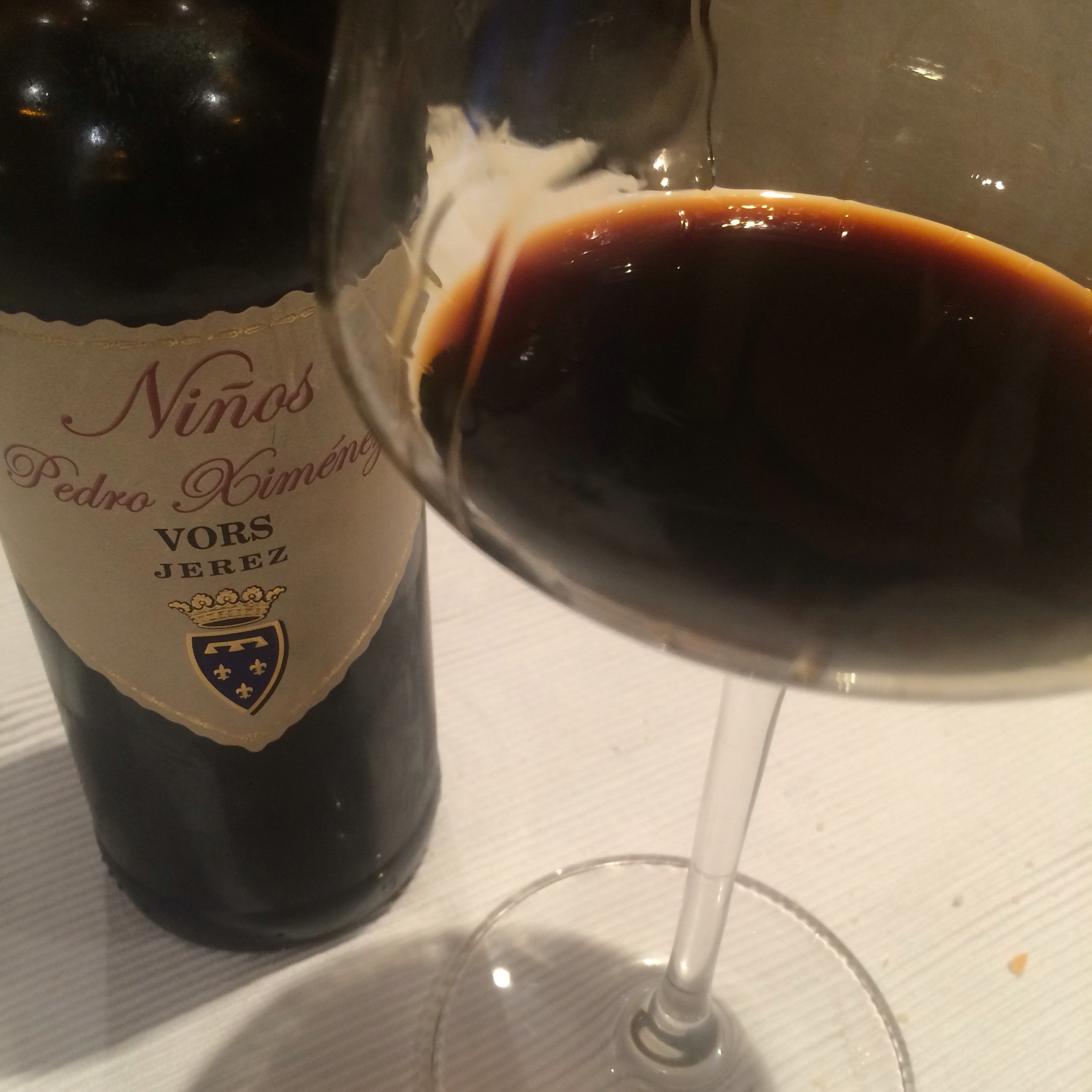
Pedro Ximenez Niños 

What an absolute beast of a wine this is. Magnificent stuff.

And how poor a blogger am I? I was convinced I had written a long post about all the spicey herbs and menthol aromas at the back end of this wine but when I come to update it nowhere to be seen.

So here I am to try again. The scents have that eucalyptus tree freshness over a heavy, sugary, black treacle burntness, then white pepper. The initial taste is sweetness, then black treacle, which lingers a good long while, really long, and at the end those woody, cedar, menthol notes. It is an amazing combination of the viscous sweetness of the PX and the bitter severity of barrel ageing – it is an incredibly piercing nose then a sticky mouthfull that burns where it lingers.

This is awesome.