Oloroso Mar 7

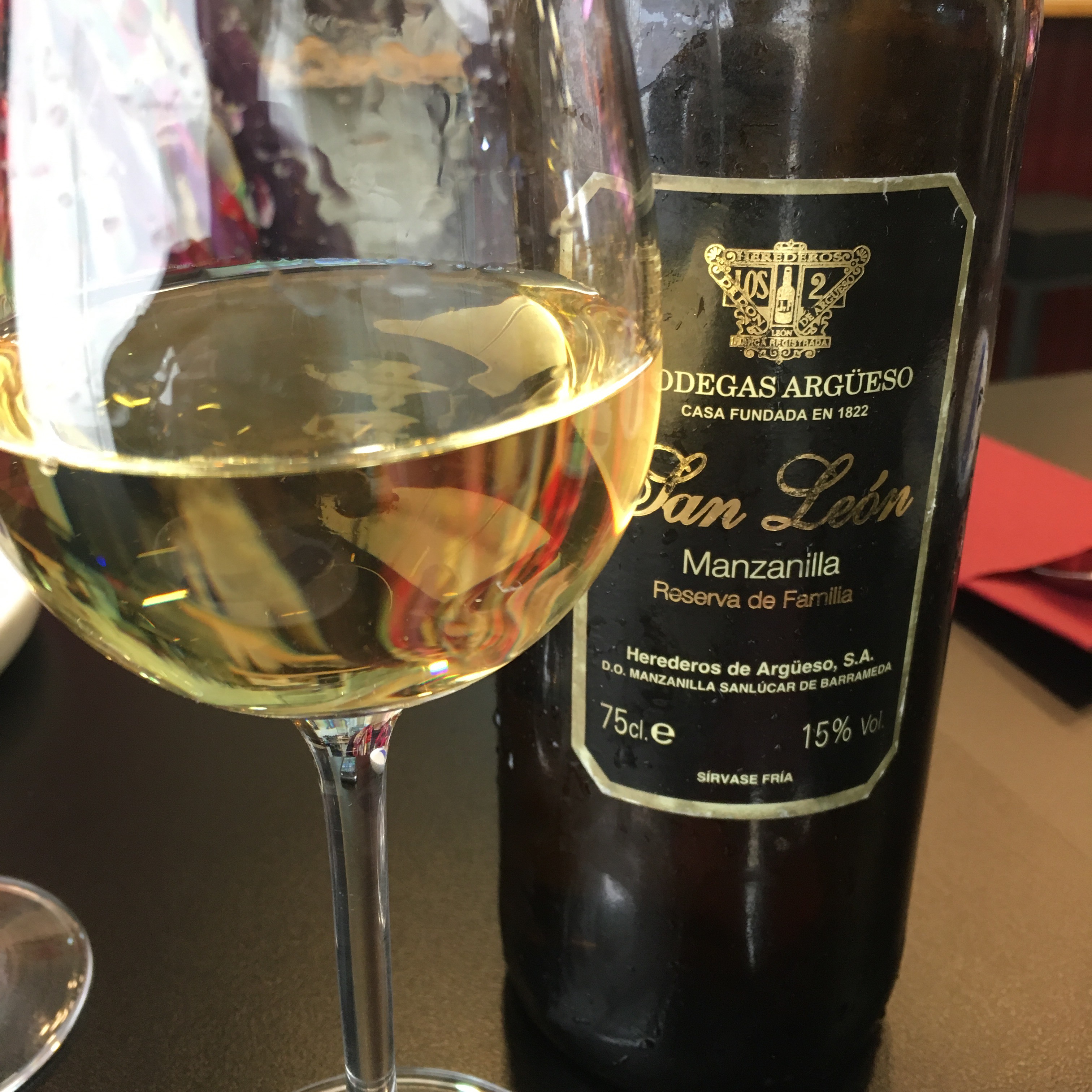
Rounding off a cracking lunch at Territorio Era with this Sanlucar oloroso from Mar 7. (In fact we had something after but this was the last sherry.) Not sure about the details of the wine but I would guess it has an average age of 15 years or so. 

It is a beautiful deep brown colour and has a saline, haybale, nutty nose. Nice and sharp on the palate but not excessively so, and attractive salty, nutty flavour to it. Not huge in profile or body either – a smooth, elegant, slightly smokey oloroso. 
Very tasty and very handy as a table wine.

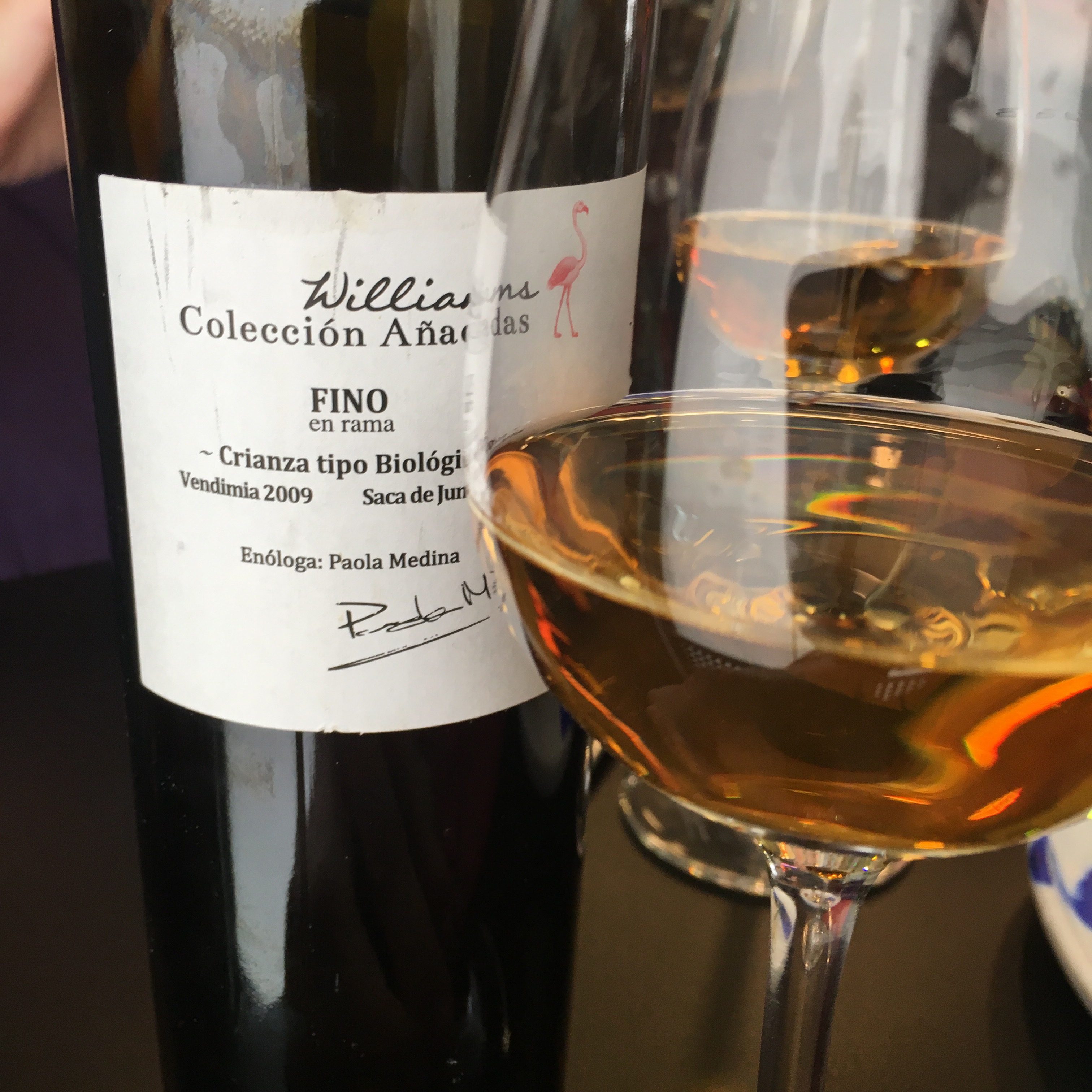
Fino de añada 2009, Williams Colección Añadas 

These wines were pretty rare and I almost feel guilty for drinking so many of them. In my defense, I was given this in Territorio Era and had the chance to explain it to some friends for whom the concept of vintage finos was new. 

It is a fino from palomino grown in the Añina and Carrascal (de Jerez) pagos and harvested in 2009. Rather than being fed into a solera it has been statically aged as a vintage wine, with populations of flor living and dying in the one barrel. It was released by Williams & Humbert as part of a fantastic boxed set

As I have opined beforw, this fino seems to have retained some glycerin and, while the minerals and nuts are there, it also seems to have seen some oxidation, giving it a sweet creamy character. It has a zingy buzz up front and a fresh finish but in between it is full bodied and there is a sensation of juicy, fleshy fruit.

A really fun wine all round. 

Amontillado Tradición 

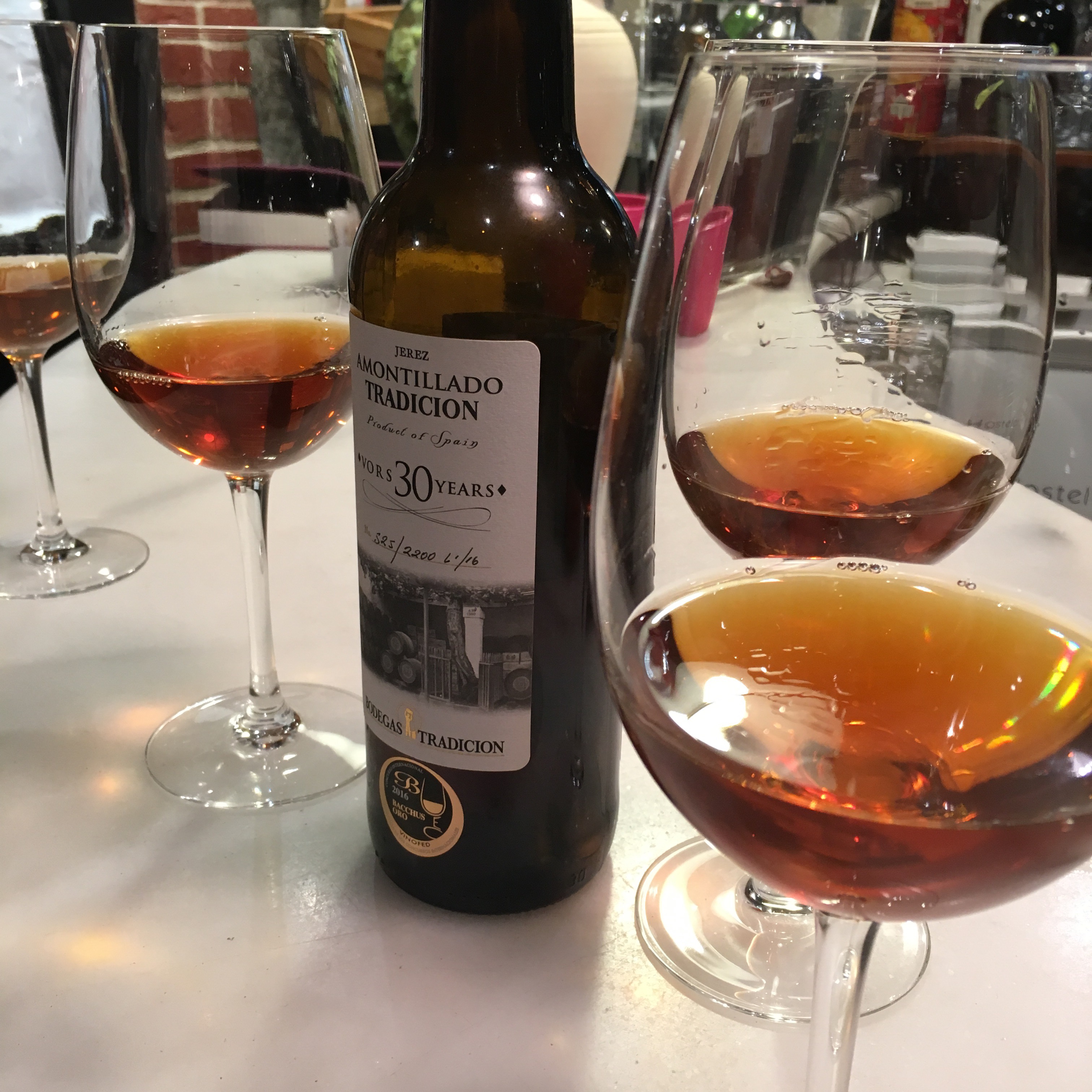
No more than a quick snifter last night at Taberna Palo Cortado but there is always time for a classic wine like this. Potent but one of the most beautifully elegant wines around. A quick search reveals that I have not posted about this wine before, which is shockingly remiss of me. I can assure you there have been a few glasses over the last year or so –

Said to be of much more than 30 years old, it nevertheless has a finesse and balance that escapes many of the dinosaurs you find around. The nose is piercing but refined and brandy-like, and on the palate it is dry rather than bitter, sharp and crisp and with a zingy salinity that is integrated into the lovely nutty and fruity/figgy and spicey flavours. Above all there is none of the astringency or old barrel flavours you so often come across.

A thing of beauty and everything an old amontillado should be.

La Panesa 

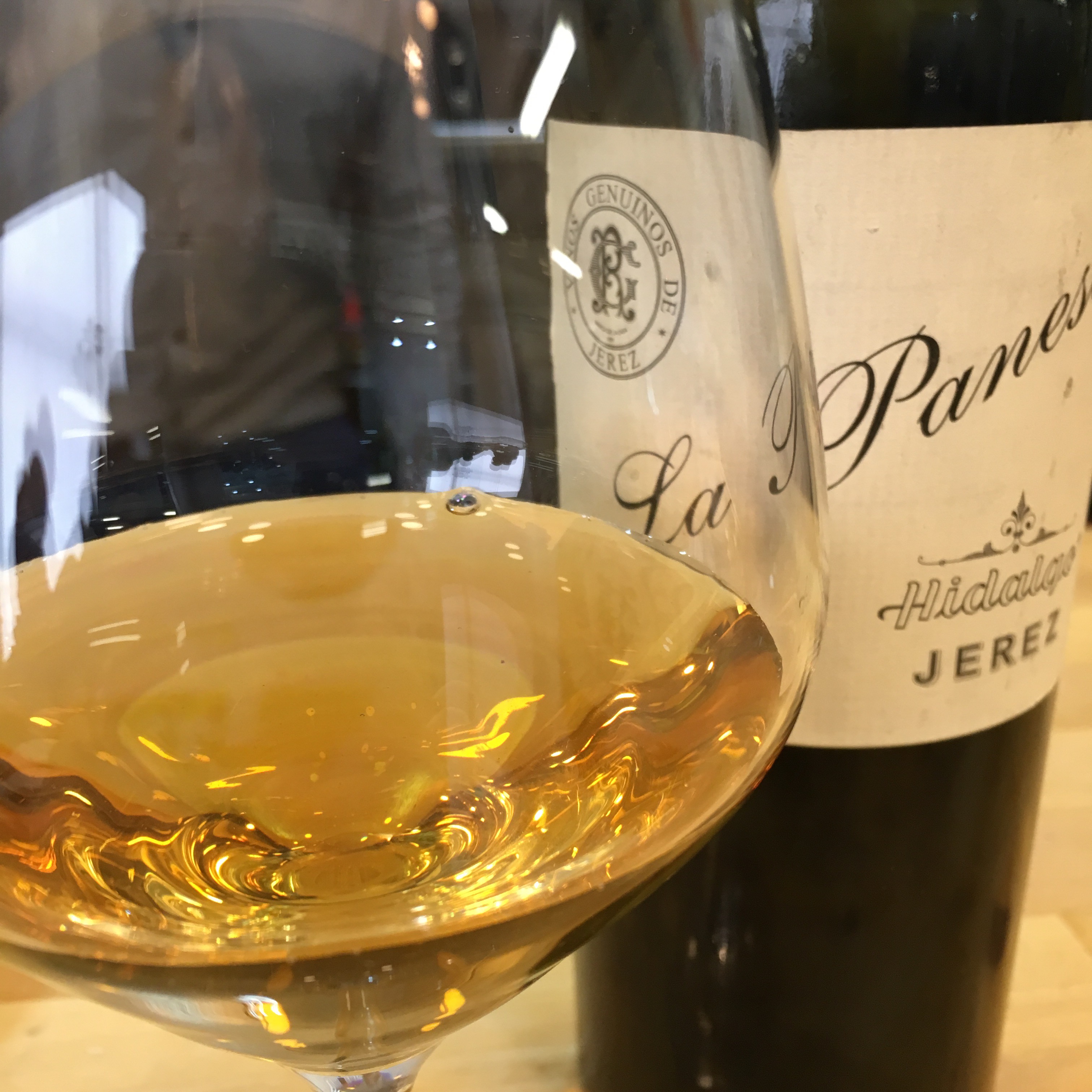
I literally never get tired of this wine – it is just spectacular. Sometimes I can get into a state of chasing my tail, always after the newest thing or something that hasn’t been on the blog, and as a result I occasionally bite my own arse, when what  I could be doing is having some of this masterpiece.

I have tasted it numerous times already and refer you to those notes. But this wine is one of those that makes you realize that writing about wine is like tap dancing about architecture. Words just can’t convey the perfection of elegance and balance in it. It is superb.

And they have it by the glass in Territorio Era, which is no more than a stone’s throw from my place of work. Almost makes you believe in a higher power. 

Pitijopos: Lessons in the terroir of Jerez and Sanlucar


This week I finally got around to tasting Volume II of the “Pitijopos”.

Pitijopos is literally the Jerez/Sanlucar word for mayflies but here it is the name given to a boxed set of six “mostos”, or palomino wines (even if, confusingly it is also a term given to unfermented grape juice elsewhere in Spain ) from different vineyards in the Jerez region.

The vines are all tended and harvested, by hand, by Ramiro Ibañez of Cota 45. Then each of the six wines is fermented at ambient temperature in wooden “butts”, where they stay for a good few months (unless I am mistaken 9 or 10) before being released as part of a set of six. The whole exercise is designed to show the influence that the terroir can have on the wines, and in doing so also demonstrate that far from being “neutral” as many suppose, palomino can be as expressive as any other great white grape.

It really is a fantastic project and just a small part of the work that Ramiro Ibañez is doing on behalf of winemaking in Jerez and, his hometown, Sanlucar (amongst other things, he is writing a winemakers history of the wines of Jerez and Sanlucar, which looks like being a fascinating retake on the traditional, bodega centric vision).

The first Volume of the Pitijopos, “From North to South”, was produced in 2015 and involved mostos from six different locations right across the Jerez region, from Northwest to Southeast: Trebujena, Sanlúcar, Rota, Jerez (Añina and Macharnudo) and Chiclana. The wines were strikingly different and fascinatingly so (you can see my reports on the initial tasting in this note – and then on the same wines after further study in this one).

In fact, even without the chance to taste six at a time there is a clear benefit to tasting these mostos, since it can give you a look at characteristics of the base wines that the biological and other ageing processes obscure – the difference between Añina and Macharnudo, two pagos (vineyard clusters) that face each other across the Sanlucar road – is memorable.

So I was really looking forward to Volume II. “Atlantico vs Guadalquivir”, and it didn’t disappoint. This time all six wines are from pagos around Sanlucar. As a result there was a more evident unifying style to the wines, and if I had to choose I would say Volume II had the edge on Volume I in overall quality, but again the differences, even between wines from only a few kilometres apart, were striking. I posted a full note of this week’s tasting (from my heavily hungover state) on Thursday (although I still have a little bit left and don’t rule out writing a bit more at a later date).

Overall it really is a fantastic effort by the winemaker (and the word here is effort, just think of the work involved in making six different wines like this) and two of the most educational, instructive tastings of my life (can you imagine having the opportunity to taste something similar from Pomerol or the Còte D’Or?).

I am told that Volume III is in the works (in the botas even), and I can’t wait to see what Ramiro has in store, but for me the key argument has already been settled conclusively. Namely, if Jerez and Sanlucar are to regain the prominence they had, the historic soleras will not be enough on their own: the traditional virtues of terroir and winemaking have an important role to play. And if and when it does happen, we will all owe a big debt to Ramiro Ibañez.

El Celler del Tossal 

A day in Valencia is never a bad thing, escape from the big smoke to a gentler climate and a slightly different pace in what is a really pretty city. Today the sun shone and was added to enormously by the prospect of lunch at El Celler del Tossal, a restaurant recommended to me by Sabas Joosten, sommelier at De Librije,  a fella who knows his onions.

And it was a really cracking lunch. A beautiful oyster, sardines on some kind of toast, roast pork belly and turnips, rice with black pudding and ribs, rhubarb and turron. Really excellent – am going to have to walk back to Madrid – and that was just the solids.

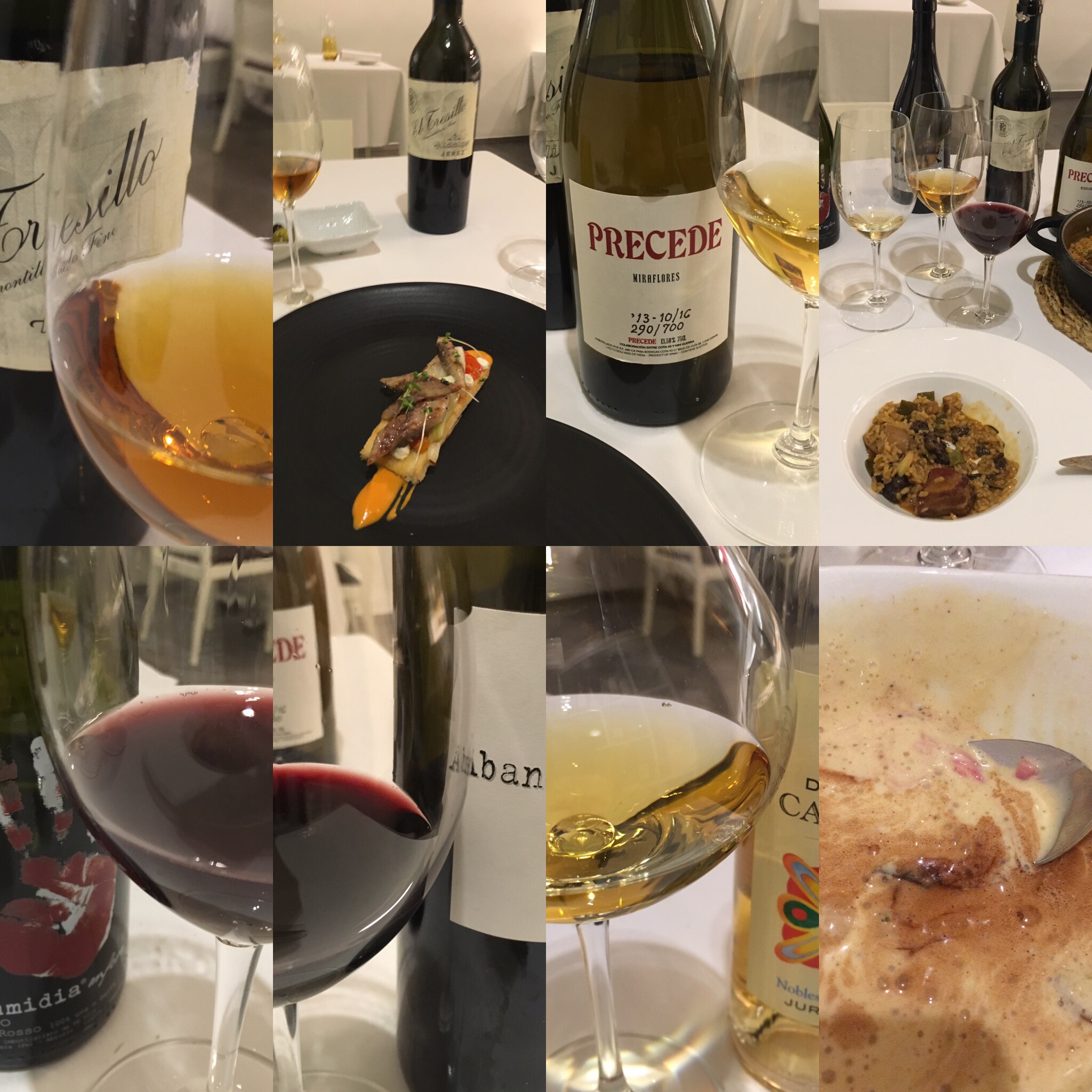
Luca, the sommelier, is a top man and a bit of a sherry hero. Anyone who gives you El Tresillo to start is someone to be reckoned with. He followed with Precede Miraflores 2013, and also has wines by Callejuela, Juan Piñero and others. In fact he didn’t even have a full list of his sherries on the massive carta de vinos – which he descibes as the tip of the iceberg – because he prefers to work with small production wines (the Precede is 700 bottles after all). I convinced him to go off the sherry track and tried some fascinating natural wines from Austria (Weisser Schieffer 2011) and Italy (Lammidia Anfora), a ripe Douro from Portugal (Abandonado 2009), not to mention a beautifully balanced Jurancon and even a tingly-bitter moscatel based vermouth. All really interesting small production wines that worked perfectly. Whatever you need, Luca can almost certainly pair it.

No doubt about it – absolutely top drawer.

The Night of the Pitijopos – Volume II

It has taken a little while to organize but, at long last, here it is, a chance to open the second Volume of the Pitijopos. Whereas Volume I covered the entire Jerez region, from Trebujena in the North to Chiclana in the South (via Sanlucar, Rota, and Añina and Macharnudo), Volume II is all about Sanlucar and sets up a contrast between the vineyards near the Atlantic and those inland, influenced by the Guadalquivir river.

Yet again, it is a quite fantastic piece of work: a case of six “mostos” from 100% palomino grown in six specific sites in Sanlucar, fermented without temperature controls in bota at Cota 45, and released as a boxed set together with the above fact sheet. (Just behold that magnificent diagram indicating the relative distances from the sea and altitudes of the different sites.)

  1. El Carrascal (“the austerity of the Atlantic extreme”) – not to be confused with Carrascal de Jerez, this is the closest pago to the atlantic (7,4 km) billed as having the “purest and most homogeneous” area of “antehojuela” albariza, said to produce the freshest, most vertical wines. And it certainly was fresh – had a metallic, mineral and almost smokey and lemon juice nose, and a really sharp, fine profile, with metallic flavours and what seemed like a fair whack of volatile acid upfront (lacquer) and behind (esparto grass).
  2. Miraflores Alta (“balance and precision”), further inland (7,9 km) where the antehojuelas give way to the tosca cerrada, making for wines with more structure but maintaining some of that Atlantic freshness – considered amongst the finest pagos and associated with some historic names. This was frankly superb, with a lovely elegant profile, juicy, jammy citrus flavours and saline zing. Powerful but silky/slippy. Again the volatile was evident but much better integrated.
  3. Cuadradillos/Charruado (“structured but fluid”), the furthest of the three from the Atlantic (9,45 km) characterized by tosca cerrada in the higher areas and albariza of lesser purity lower down. That distance from the sea, its orientation and the types of soils are said to make for wines of greater weight and fruit. Again, it certainly lived up to its billing. Had the most extraordinary fruity, doughy nose- for all the world like a chardonnay that had been under the veil – and a big fat fruitiness to it first up, but then it disappeared a little on the palate and didn’t hold together with the same finesse as the Miraflores Alta.
  4. La Atalaya (“diagnosos bipolar”), said to be a fascinating “hybrid” pago halfway between the river and atlantic pagos, 10,75km from the sea and characterized by albariza antehojuela which makes for direct, fresh wines, albeit tempered by the inland location and climate. Again top class, with a very aromatic nose of lemon and seaside air, a fresh start, nice juicy volume and a long, mouthwatering saline, seafood shell finish. A little bit more potent than 2 and elegant but maybe not quite as silky.
  5. Maína (“the sapid empire”), or “Mahína” is found on the flood plains of the Guadalquivir, 12,75km from the sea and in an area said to be characterized by albariza de barajuela and the largest quantity of silicate fossils anywhere in the Jerez region, the famous “diatoms” said in turn to produce wines of incredible sapidity (the “diatom bombs”). It did indeed have a big stewy, rockpool nose and lots of concentrated, slightly more vegetable and peppery flavour, with a metallic, almost rusty finish. The tastiest of the six but maybe not as balanced as two and four.
  6. Cabeza Gordo (the gates of hell),  the Sanlucar pago that is furthest from the sea (14,25 km) and closest to the Guadalquivir. It is characterized by tosca cerrada with lower levels of diatoms that offers wines that are structured but more “docile” and “unctious”. Another big bodied wine, with a nose of ripe apples, almost pineapples, but only just a hint of shape – and like three a little diffuse at the back end (where the volatile is noticeable again).

Overall the wines were cracking good – in particular Miraflores Alta and the Atalaya – and the general level was excellent. More importantly, yet again a fantastic demonstration of the kind of expression of terroir that is possible in these wines. Bravo!

And really a brilliant night, thanks in no small part to our hosts for the evening, David and Diego at Territorio Era, which quite apart from the absolutely top class cuisine on offer, has in a short time come to be almost a second home to this blogger and a sort of day care centre for those passionate about the wines of the Jerez region. 102 wines by the glass of which 72 are fortified wines, including some of the most sought after wines you will ever read about. If you haven’t been yet, you really ought to.