Moscatel Oro Los Cuartillos

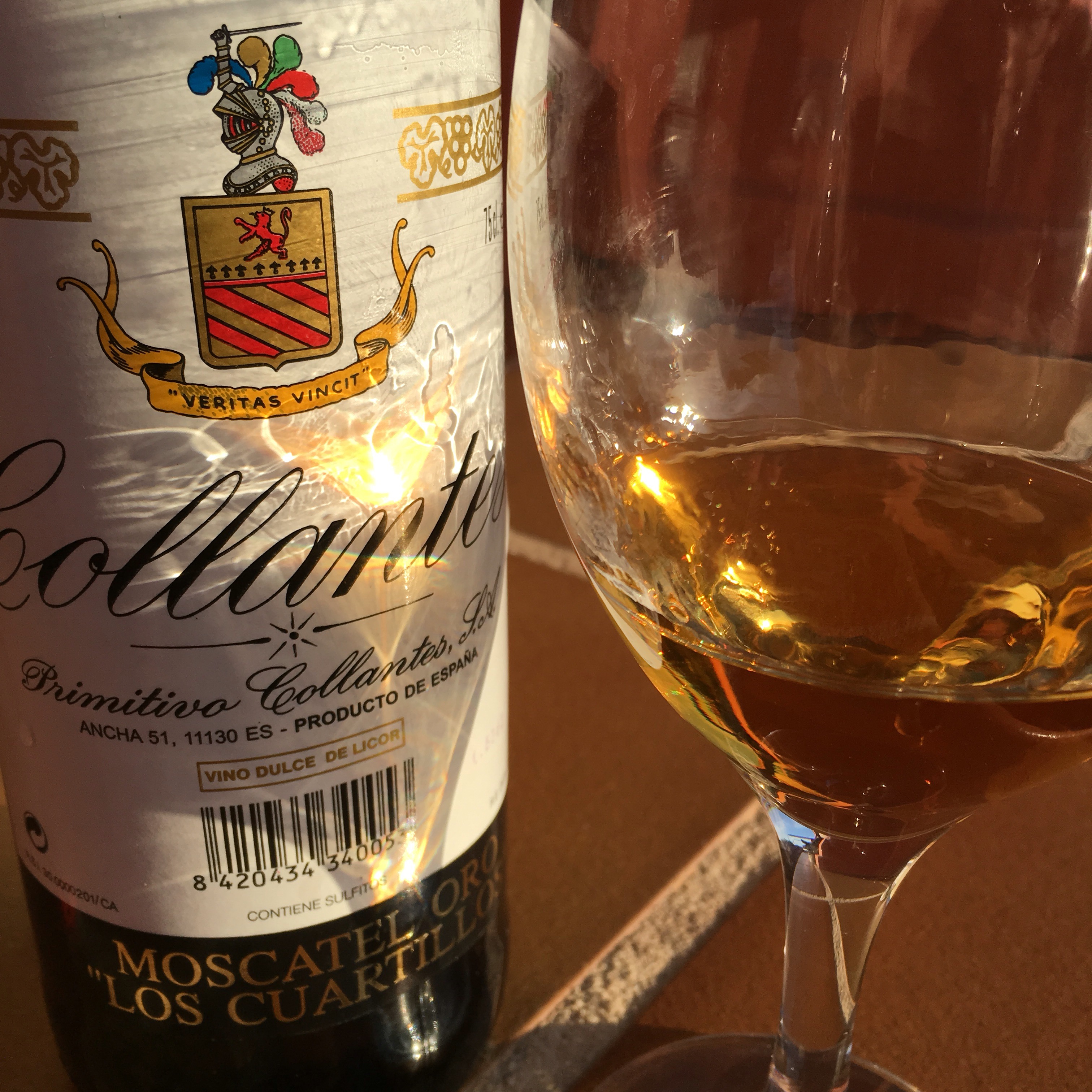
My mother in law enjoys her moscatel so I thought I would treat her to a good one for a change. This is by Primitivo Collantes, one of my favourite makers, and it is really highly rated by the guys on my tweet stream so I was intrigued to taste it too. They are the owners of Finca Matalian and this is yet another wine from that little corner of rich earth. 

It really is good. Rich and lush but has a bit of mineral bite, muscle. Citric sweet and savoury aromas on the nose then a nice citrus freshness, followed by the syrupy sugary moscatel but real minerals underneath. To be honest these sweet wines are not really my bag but this has a nice bit of acidity and minerals – and maybe a bit of alcohol heat – which give it a real character.

And more importantly my mother in law seems to like it too: result.  

Fino la Janda


This is fino La Janda by Bodegas Alvaro Domecq. I tried their very pleasant manzanilla La Jaca a while ago and the equally decent 1730 Amontillado too – seem to be a pretty solid little producer.

Not much detail on the ficha although they do make a point of mentioning that they harvest in September (one of the issues that comes up in learned debates is the issue of the Jerez harvest taking place in August in search of less mature, less concentrated fruit).

I like it. Nice gold colour (this was served in a chilled glass, would you believe, but you still get the drift) and quite a fragrant, almond and mineral nose. Then on the palate it is fresh and saline but with a bit of bite and a nice bitter almond flavour. Quite a character and not bad at all.

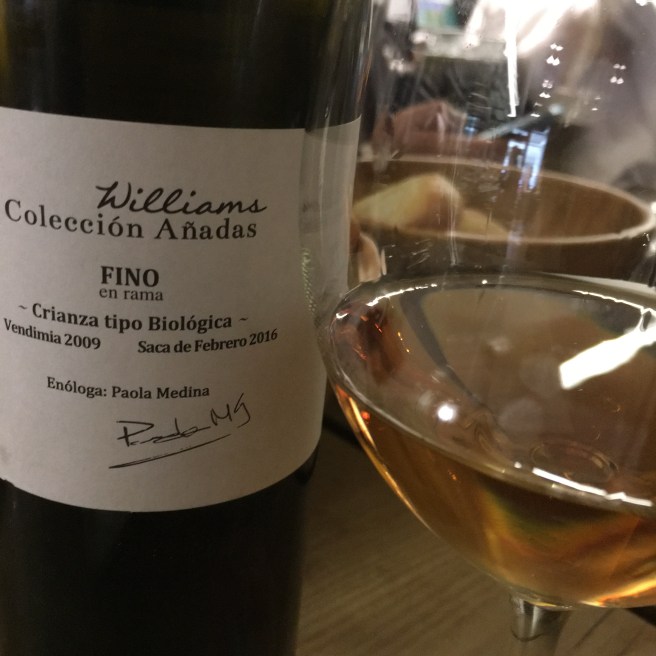
Fino en rama 2009, saca de febrero 2016, Williams Coleccion Añadas

This is the second of these vinos de añada that I have tried “in the wild” (as opposed to the box I have captive at home) and another very interesting experience. (In fact in addition to being of interest due to its static ageing it also from an interesting spot of terroir: although it doesn’t have any indication on the bottle, a knowledgeable source tells me it is made with fruit from the oldest vines in Añina and Carrascal (Jerez).)

Anyway, whereas the previous example I had tried was an oloroso that had been statically aged – i.e., not included in a solera, but in a butt on its own – this is a fino and thus has been under its very own veil of flor for seven years (which is pretty good going without being refreshed). As such it would be comparable to other statically aged biological wines like the Williams Fiño de Añada, in particular, but also the Callejuela Añada, the Barajuela, and the Encrucijado on this blog (although they have had much less time under flor), or like a vin jaune, if you want to look further afield.

Had this at lunch in Restaurante Vinoteca Garcia de la Navarra with a good mate and the speed of conversation didn’t leave much room for note taking. However, as you can see it is a dark, evolved colour (although I think my pictures exaggerate the share a little) but then has a fruitful, sweet but “sherryfied” nose. On the palate it is rich and full bodied in texture – I had the sense that there was more glycerine than you would expect for a wine with seven years under flor (certainly more than I remember from the 2006 Vintage)- and again gave an impression of fruity sweetness, like the flesh of the grape, while the minerals were very refined.

Quite a delicate structure to it overall and in addition to being fascinating extremely easy to drink.


Manzanilla fina Callejuela 

Here is a classic manzanilla from a newish, smallish producer that is a favourite of mine. I love the label, which in addition to a picture of the vineyard (big tick) also tells us that they have “10 “aranzadas” [a traditional unit of area like an acre – how much land a man can work in a day sort of thing] in Macharnudo, 19 in Añina, and 30 in Callejuela”. Am having this as an aperitif in the Taberna Palo Cortado – about which more later.

Although it claims to be very pale, I don’t find it pale for a manzanilla – quite a solid gold colour. On the nose it is punchy and slightly citric – more fruit than yeast for me – and again on the palate it is saline and punchy but like a fleshy fruit rather than almonds – very fruity, consistent texture. Then a nice mouthwatering, fresh finish.

Refreshing manzanilla, but with a pleasing fruity character.

Manzanilla Pasada Maruja


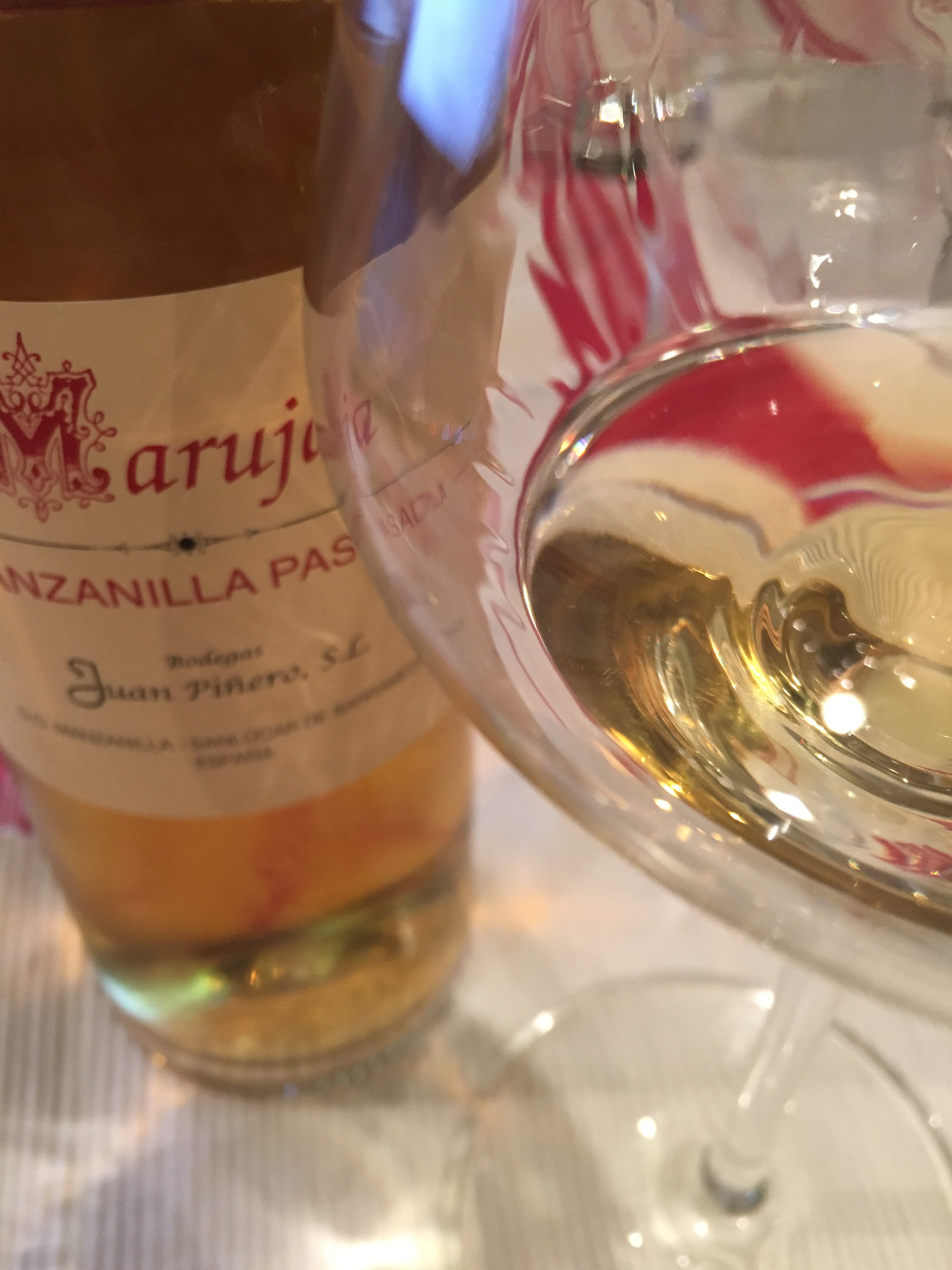
Celebrating yesterday’s EPS article with a little drop of this lovely manzanilla pasada. I remember it as herbs, minerals and hay bales but with a bit of apricot or something.

The colour is no different of course but the nose and palate are quite different. The key words here are salt and pepper. Really zingy minerals and spicey –  white pepper – and not as much fruit (or haybale) as I remember. I am intrigued by the difference actually – both the previous bottles I remember had this jammy fruit sensation to them and this seems much more spice than fruit (and much more in keeping with the Maruja Manzanilla).


Manzanilla La Cigarrera

  
This is a classic manzanilla by the homonymous Bodegas Cigarrera. There is an excellent profile of the bodega – a former almacenista for Lustau – on Sherrynotes.  I picked this up from Reserva y Cata for little more than a song.

The wine has an average age under flor or around four or five years, having passed through 7 “classes” on its way to the solera. Unfortunately no information on the pagos involved – fruit is acquired from the cooperative. 

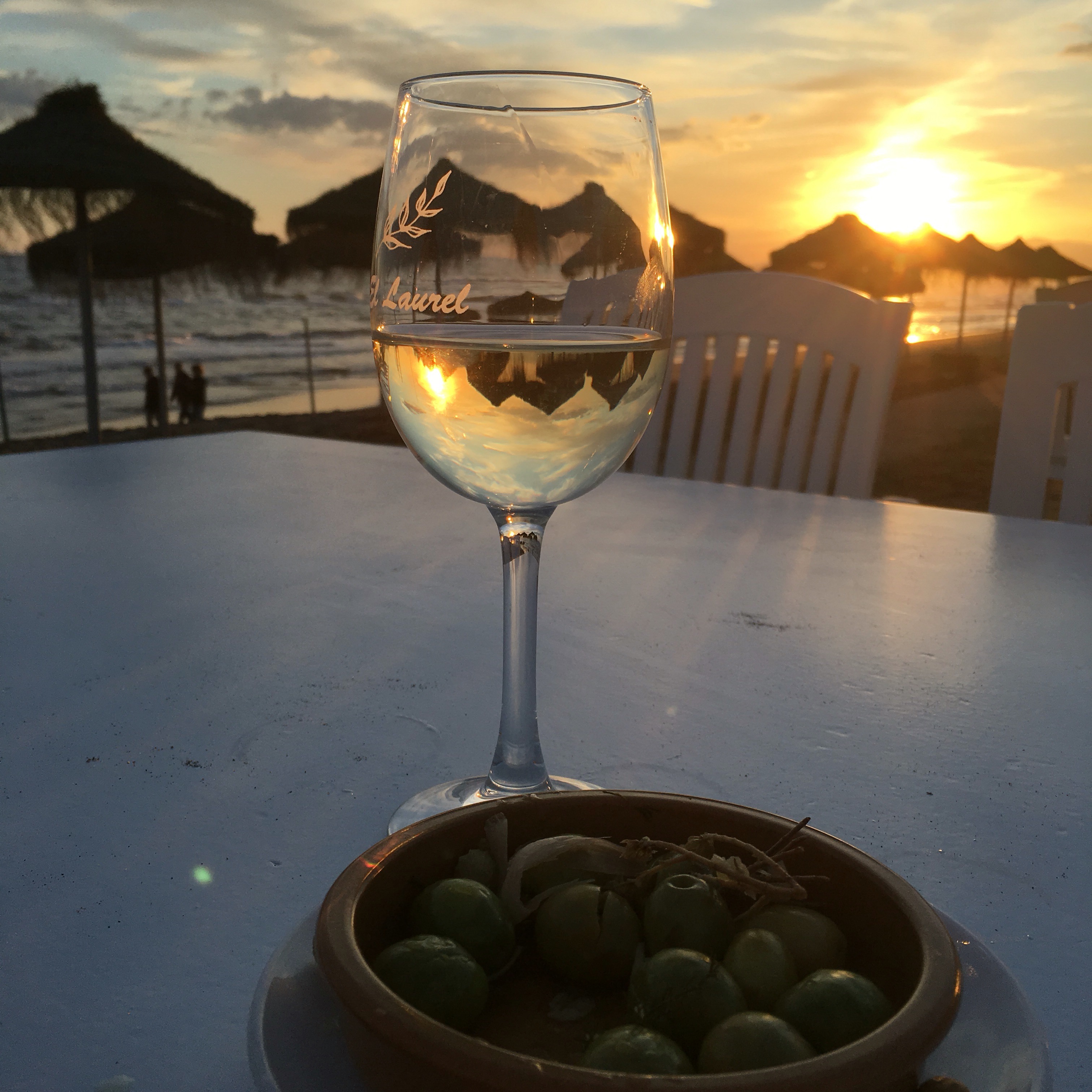
In colour it is the classic gold straw – the sunset on the picture above makes it look a bit more orange than it really is. On the nose there is sea air and citrus – quite a pungent nose – and if not quite hay bales or flowers then at least dried grasses on sand dunes. 

If you like the nose you will enjoy the palate because it is as you would expect – salty, zingy, a touch of citrus and then the mouthwatering, fresh and more herbal finish. In fact more than herbs it is  like spinach or bitter lettuce. 

Refreshing, bracing stuff. 

Fino Inocente 

Macharnudo power in Surtopia today. I have had this many times in the past (here is one) but I really look at this in a different way after my day on the pagos. Not looking for acetaldehide here – the haybales don’t come out even when the glass is empty – but rather the muscle of the albariza and the sapidity and those two qualities are certainly there. It is incredibly compact and austere, elegant/horizontal in profile and leaves a mouthwatering tingle that lasts and lasts (I am reliably informed that this is the effect of the caliza), giving it an incredibly fresh and refreshing finish.

I see that back in the day I was ahead of my time and compared this one with the Bota de Fino 54 “Macharnudo Alto” (which does after all come from the same neighbourhood). Reassuring to see that those notes and those of the day before correspond roughly to my thoughts now, so I am not imagining these qualities. More interestingly, a clear demonstration of the different profiles of fino that can be produced from the same grape and on the same pago (and by the same chap now I think about it) using different techniques in the solera: this stark, compact, sapid style or the big, expansive, almost fruity 54.

Delicious, classic, and illuminating. I have since been told by none other than Alvaro Giron that this (and other macharnudos) is a prime candidate for cellar ageing – “at least” five years. See you in 2021 for that one!


La Guita 

  
Not a bad spot – sure beats the office. And not a bad wine at all. Very pallid straw colour, citric, slightly herbal nose, again a meaty almond/citrus start, salinity that is just short of zingy and then a long, long finish with that nutty/lemon feel to it. 

Perfick. The wine was gone before the sun was. 

Oloroso La Barajuela 2013

  
An oloroso you would not pick out of a lineup. Look at that beautiful gold colour. This is the twin of the Fino la Barajuela 2013 but these are the even heavier grapes, harvested later and creating what must have been an almighty mosto. 

No flor here, and if two years is young for a fino it is remarkably young for an oloroso. Maybe as a result it isn’t very aromatic and certainly not very caramelized – but intriguingly I thought it had a suggestion of the burnt edge of an oloroso. Almonds and slightly jammy fruit on the nose. Then on the palate extremely meaty and more almonds and jam. Then the burnt edge at the end. Or am I imagining it? I would really like to taste this one blind one of these days.

 In any event, another wine with personality and a pretty nice one too.