Barajuela Finos again

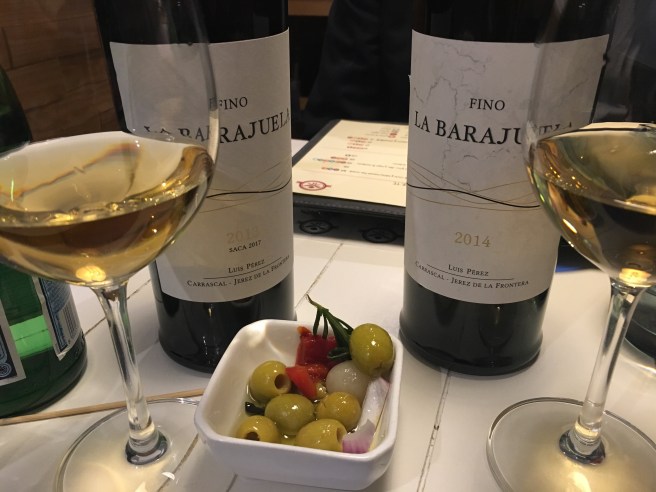
The boys down in Jerez tease me for the amount of these Barajuela wines I am able to find but to be honest most of the time they seem to find me. I am honestly trying to hold back, and now only order it if I can share it with at least one newcomer to the breed. This was one of those occasions – a lunch at Bache with an old colleague-, and yet again I can confirm that the people love it.

What I love about these wines is how much fruit is there, how the fruit seems to reach down the savoury registers into salinity making a massive iceberg of a wine: as much or more below the surface as above it. On that score, the 2014 Fino has the same white blossom and white fruit nose and top end of the palate as the 2013 Fino (saca of February 2017), but more of the savoury, sapid mountain. It also has less time under flor – isn’t quite as sharp or mineral – but has an even bigger, fuller frame. On the other had, while it is not strongly biological on the nose the 2013 – particularly this second saca – has, if not quite haybales, then at least a little bit more dry herb in the nose and again that sharper profile.

More importantly, both are brilliant white wines for sherry lovers, sherries for wine lovers, just brilliant wines.
Jerez Unfortified: Julia Harding and the new Jerez

Am really pleased to read this excellent piece (behind the paywall) on Jancis Robinson this week. The excellent Julia Harding MW writes a really great piece about three great guys and great winemakers: Willy Perez, Fernando Angulo and Ramiro Ibañez.

I really recommend it. Subscribe to Jancis now!

UBE Maina 2015

Like the other UBE wines this is a 100% unfortified Sanlúcar palomino by Ramiro Ibañez at Cota 45, but whereas the first two in the series were from Carrascal (de Sanlúcar) and Miraflores, this is from Finca la Charanga, a vineyard on Pago Maína that is a byword for producing the most corpulent, flavourful wines in Sanlúcar. The reason may be partly climate, since it is tucked inland a little way from the coast, but is probably more strongly linked to the soil involved, since the albariza here is of the barajuela variety (layered like the deck of cards for which it is named) and in addition the pago is said to be very high in marine fossils – the famous diatoms.

For whatever the reason, it is the most “horizontal” of the Sanlucar wines and I enjoyed this bottle immensely. On the nose this time I really noticed leaves, herbal tea in there but real green foliage as well, and dried apricots underneath. Then on the palate it has that savoury quality, like bouquet garni and coating the sides of the throat. It is a really meaty white wine, and although I once described this wine as broader than it is tall it is, in fact, really long. There is salinity there but it doesn’t cut through and there is fruit on top, again reminiscent of dried apricots.

Once again I feel obliged to point out that these palomino white wines need time in the bottle and you get the most out of them when you have time to enjoy them in relaxed fashion over the course of an evening. If I was organizing a cata I would treat them like a chablis – big decanter, on ice if you like but not too cold, and let them breathe for a goodish while before showtime. (Or maybe I am reading this all wrong. Maybe the truth is that they are great from the beginning but it takes my little mind time to adapt to them.)

Absolutely top drawer. .

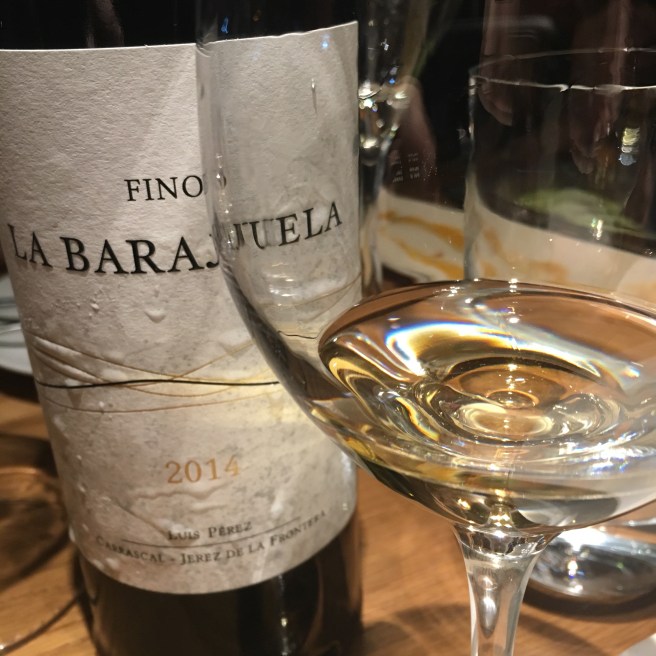
Fino la Barajuela 2014

I was dining at Lakasa last Friday night (and it was absolutely heaving – great to see) with a group of friends from outside my wine nerd bubble but nevertheless was allowed to choose the wine, and even (somewhat controversially) given free reign. I picked two wines that to me seemed blindingly obvious – the Cuvee Saint Anne by the brilliant Alexandre Chartogne and the Fino la Barajuela.

What I didn’t know was that they had run out of the 2013 and had just received the 2014 (in fact I didn’t know the 2014 had even been released) and suddenly a wine I had been waiting for for 18 months (give or take half a glass in a tasting with the man) was on the table in front of me.

This is the second vintage of Willy Perez’s outrageously good fino, and although the 2013 will always have a special place in my heart you have to say that this is even better. It has the same nose or honey-suckle to honey with golden yellow apple underneath, the same bite and palate of fruit but even more mineral sapidity and throat filling savoury flavours. It is frankly epic and totally delicious.

And as always happens with these Barajuela wines, my friends from outside the sherry bubble loved it. It is a tremendous source of frustration to me that when I read the views about this wine from sherry experts and tastings there are grumblings about whether it is really a “fino” yadda yadda yadda. Surely what is important is that it is an outstanding white wine, and one that paired with almost everything we proceeded to eat.

Now begins a heartbreaking period in which I am allowed to purchase a shockingly small allocation of bottles and then feel obliged to hold back when I see it in stores so that a wider public can try these wines. Please, don’t let my sacrifice be for nothing.

Las Viñas de Callejuela – the 2014 editions

The genial Blanco brothers from Callejuela were in Madrid for a few days just when I was away in the countryside, but despite missing each other in the capital they were kind enough to leave me a little present at my preferred fuelling post of the time Territorio Era.

You may have read about the vineyard specific wines that these guys first released. Those were the 2015 and were terrific enough, but these little fellas are the 2014s and have even more personality.  Once again, there are three wines from three vineyards/pagos (two of which you can locate on this cracking gigapan posted by Paco Zuleta):

  • Hacienda de Doña Francisca, a vineyard at an altitude of 62m on pago Callejuela (Sanlucar) (which must be one of the higher altitude Sanlucar vineyards);
  • Las Mercedes, a vineyard at 83m on Pago Añina (Jerez), one of the more Atlantic-influenced Jerez pagos;  and
  • La Choza, a vineyard at 74m on the famous inland pago Macharnudo (Jerez).

One of the noticeable things about the 2015 wines was their exuberance – tasting the macharnudo wine against other unfortified wines from the same pago recently it was noticeable how much power the La Choza had – and these wines, having been longer in the bota, seemed to have even more punch.

As a rule I would usually taste them in that same order – from sea to inland, low to high altitude, but in this 2014 edition the Añina is visibly more evolved so instead I go Callejuela, Macharnudo and then Añina, and it is quite a trip. The Callejuela has a nose that is all stables, mulchy, musty hay, a dark color and then is really potent, intense and buzzy. The Macharnudo – probably just about my favourite of the 2015s – is absolute class, with a typically aromatic nose with suggestions of sweetness and juice and then an elegant, compact solidity on the palate. Then the Añina does indeed have a more evolved, oxidated nose and colour. On the palate it is maybe just a notch less punchy than the two others, is smoother, softer (I actually have the word “fluffy” written in my notebook) and very likeable indeed.

These will be released soon and they will be worth not just seeking out but fighting over if necessary. Top bombing fellas and thanks for leaving them for me to try!

Corta y Raspa “La Charanga” 2016 in Angelita

In just over a week have had two absolutely cracking dinners in Angelita. Absolutely delighted to see the place full to the rafters on both occasions (standing room only downstairs the other night) because if anywhere deserves to be full this place does. Can’t speak highly enough of their approach to sharing wines – a fun list of interesting stuff that always has me trying new things and almost always enjoying them.

There were a few of those this week but this wine I knew alright, and it is a cracker.

This wine is by Antonio Bernal Ortega, one of the mayetos that make up Ramiro Ibañez’s Mayetería Sanluqueña. I refer to that earlier post for details of the project – as so often with Ramiro the idea is in itself fantastic – because this wine deserves a post all to itself. It is 100% palomino from the vineyard “La Charanga” on Pago Maína near Sanlúcar, a “river influence” pago famed for an albariza rich in diatoms.

The wine came out at first with a touch of reduction, but nothing that a big glass and a swirl couldn’t cope with and once it settled down it was a gem. It has an attractive sea-air and apple tart nose and on tasting shows a lovely salinity and shape. Fresh at the beginning and mouthwatering at the end, not heavy by any means but a nice splash of almond, apple, and herbs, fading to that salinity and a touch of peppery spice.

A lovely little wine all told, and it was a big hit with my sister in law – who despite being a newcomer to my little world of palomino white wines took to it like a born winelover, calling the salinity and flavours perfectly. A wine for all seasons and all publics. If only there were more of it …

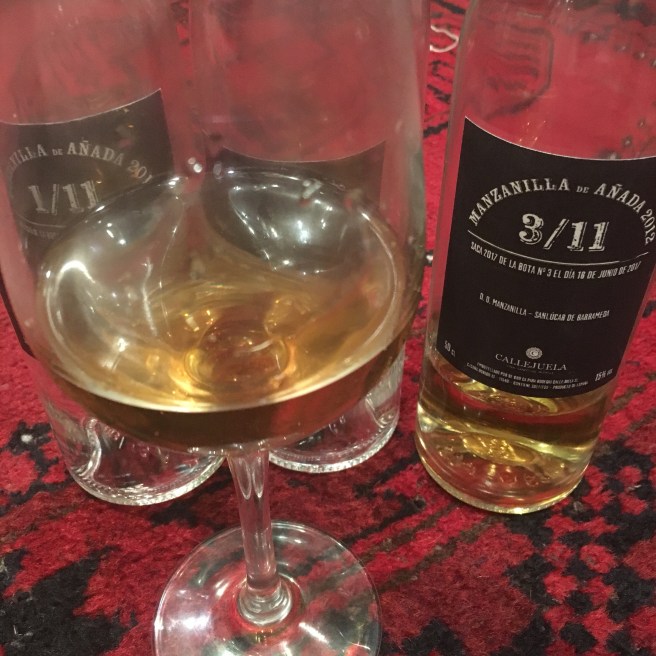
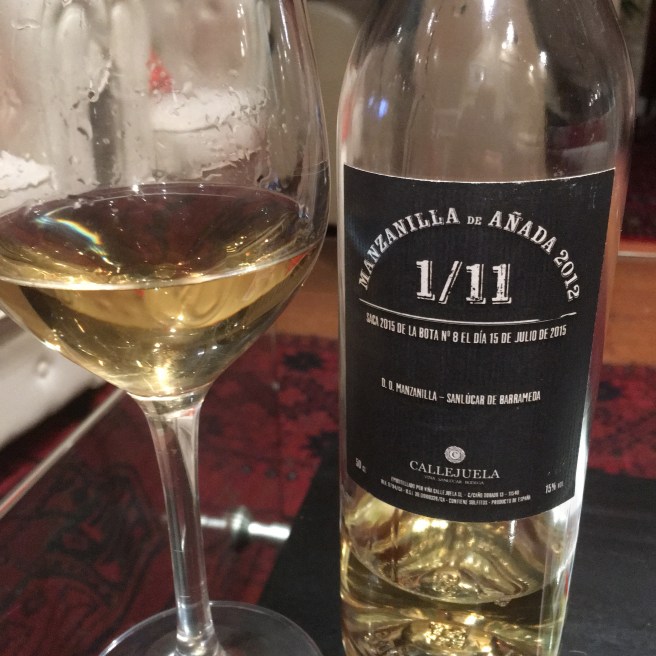
Manzanilla de Añada 2012 – 1/11

Been musing about authenticity this week and you can’t get more authentic than this – single vintage, single vineyard, old school.

But in other respects it was and is a mould breaker, and more importantly it is enjoyable stuff – tonight I am noticing a leafy nose then raw, unbaked bread on the palate, full in body, then salty, slightly bitter herbs and a hot finish.

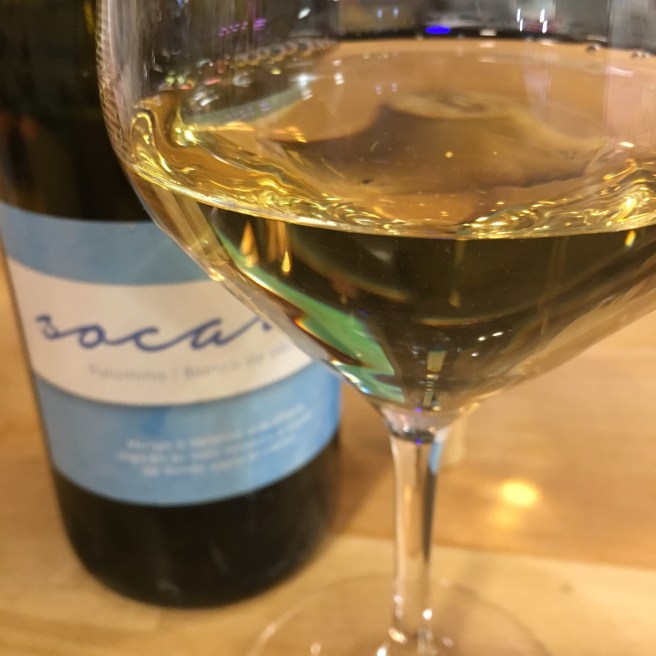
Socaire 2015 revisited

Good to come back to this and more grist to the mill of my palomino theories.

This is the Socaire, a wine named for the hiding spots from the wind that sweeps over the primest of albariza real estate in Chiclana, Finca Matalian. The Finca has a very high chalk content, is 100m up and right by the sea in the Southernmost limit of the “marco de Jerez”, making it a unique bit of terroir. And sure enough it is the source of a really fantastic line up of wines, of which this is one. In fact it wouldn’t be an exaggeration to say that this wine is a bit of a phenomenon: there are people out there who even define the movement towards making new wines in the region as “Socairismo”.

From memory (if you want precision you are reading the wrong blog) this wine was fermented and aged in butts that had previously been used to make the marvellous Arroyuelo fino, then given 20 months or so in the butt, without flor (at least the butt was full) before being released around Easter this year.

I first tried this back in September and I found it a little quiet compared to the first vintage, from 2014, although given my experience with other palomino white wines at the time I wondered if it would find its feet with some more time in the bottle and so it seems to have proved. Maybe it is just the memory of the 2014 wearing off but this certainly isn’t timid at all. Lovely big aromas of over-ripe plums and aromatic herbs and a packet of flavour on the palate. A really tasty and enjoyable wine with just enough of a fresh finish to wash it down.

Fantastic stuff and I am beginning to convince myself of this need to keep these in the bottle. It is not an easy thing to do though.