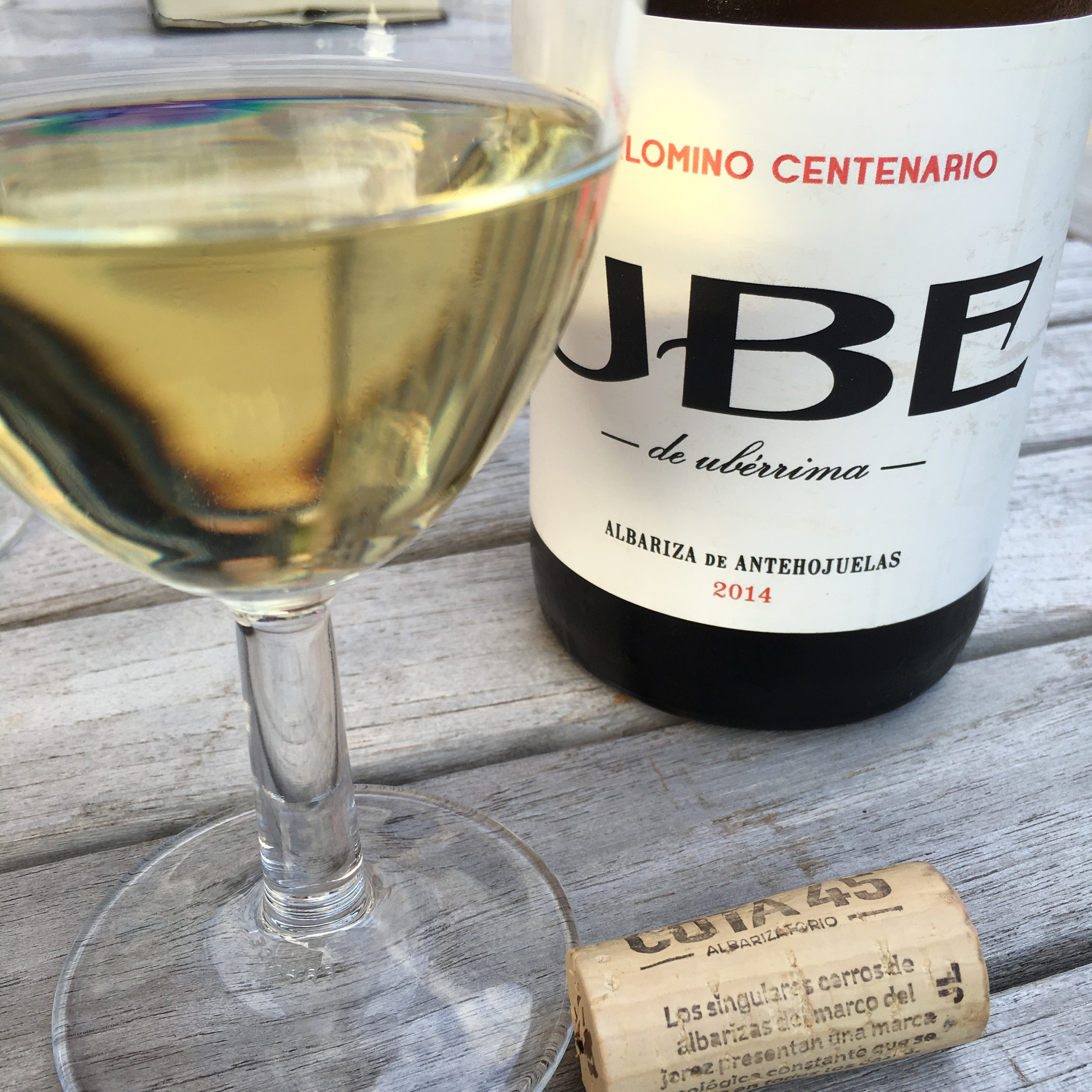
UBE 2014

The epitome of a Sanlucar palomino. I have written all about this wine (and its 2013 predecessor) on numerous occasions – for background look here and also here on the 2013 and here and here for the 2014. Nevertheless, I had another chance to drink it this weekend at a dinner in Territorio Era (formerly known as Era Espacio Gastronomico) and couldn’t resist sharing my thoughts.

Compared to other unfortified palominos this has a different profile and it seems like a couple of additional dimensions. First, it has a rich gold colour – on other occasions I remember more of a green tinge but here not. Then it has a tremendous nose of herbs tending to stewed herbs as it opens – like a stockpot bubbling away in the corner of the kitchen. Finally, on the palate it is tightly flavoured, vertical and direct (or, to use the maker’s own word, “fluid”), with salinity and acidity in line giving it a clean, fine feel, and an effervescent, fresh finish.

It is a fascinating wine (and I mean that in a good way).

Callejuela Manzanilla de Añada 2012 – the Story so Far

Wanted to write something about one of the more interesting projects to have come out of the sherry triangle in recent years – something that was apparently almost accidental in its conception but I believe may prove to be historically important for the sector.

The Callejuela manzanilla de “añada”, or vintage manzanilla, comes from old vine palomino fino in a vineyard called “El Hornillo”. The soil is albariza of the “tosca cerrada” variety – the classic and most widely found soil type and the pago is to the North of Sanlucar along the Guadalquivir, on Pago “Callejuela”, from which the bodega takes its name, and as such you would say it has a “continental” influence. It is not one of the most highly rated pagos historically – I think in the classifications from the 19th Century they would have had it a notch or two below the top pagos – but recently the wines from this unthought of corner of the world have been raising eyebrows.

This 2012 vintage was top class and the harvest was even better. As such, the Blanco brothers, the genial owners of Callejuela, and Ramiro Ibañez, the genius who works as technical director, decided that 11 butts were good enough to be bottled as vintage manzanillas. Those 11 butts have been set aside and are being “statically aged” – ie under flor but not in a solera, which is why we can talk about a “vintage” in the true sense. Also, there is no mixing, even between these 11 butts (unlike, for example, the vintage wines from Montilla Moriles).

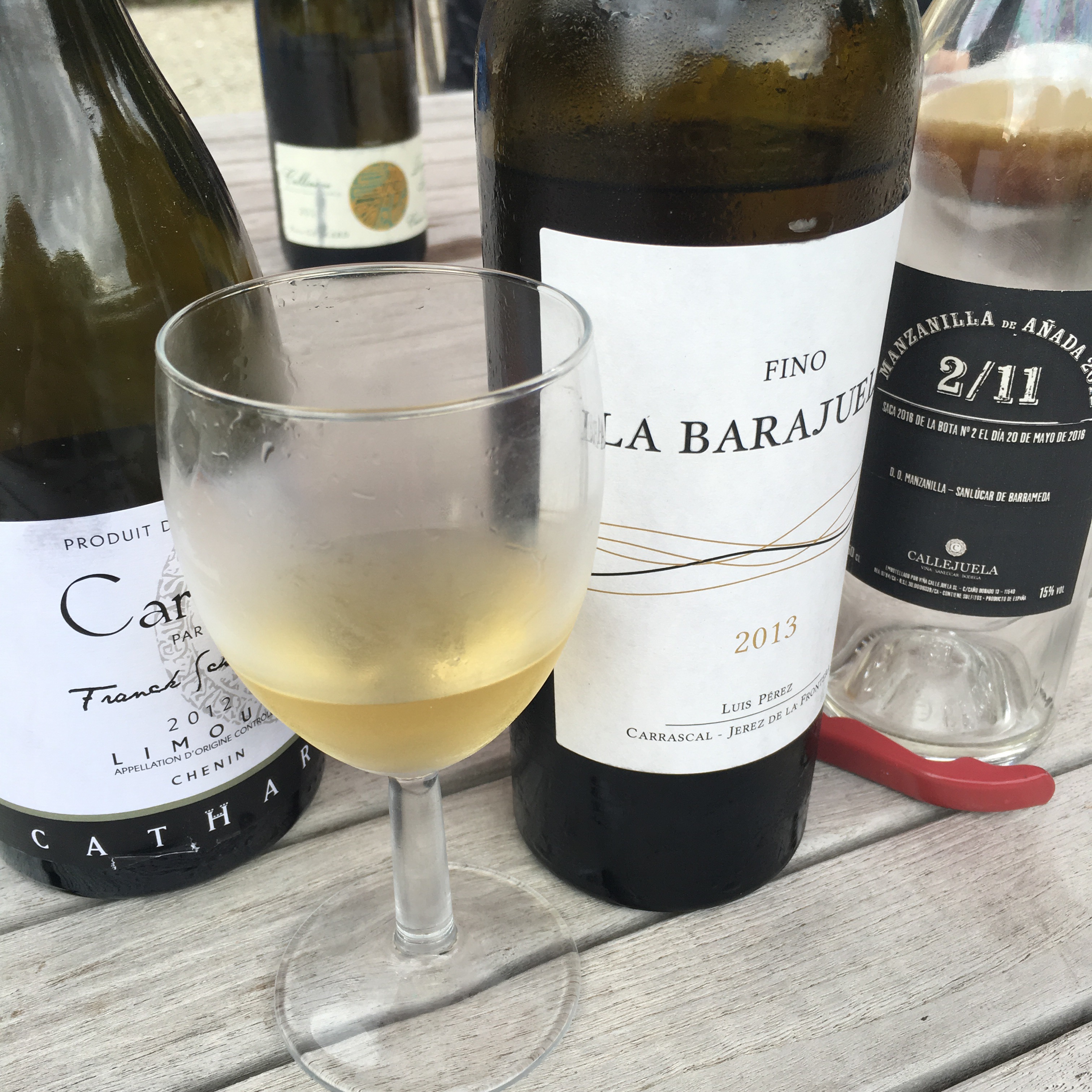
What is really fun about the project is that each year Ramiro and the Blanco brothers select one of the butts for bottling: the first bottling, in 2015, was Butt 1/11 of 2012, a manzanilla with three years under flor, while 2/11, bottled in 2016 had four years under flor and future years will clearly be different, with more biological ageing in the first few years and the effects of the death of the flor and resulting oxidation later (although time will tell). The last butt will be bottled, if all goes well, in 2025. There isn’t a lot of it on the market as you can guess – less than 800 bottles each year.

Most importantly, the first two wines have been absolutely cracking. The first time I tried Bota 1/11 I loved it, and even accounting for my enthusiasm going in there is a lot to love about this wine. In general I really like biological wines with a little less time under flor – there is more influence from the fruit and a little more body to the wine – I found the same with the vintage Williams Fino from 2012 and the vintage Barajuela Fino 2013 (although there is even more to like about that one). The second time I opened a bottle it came across even better and even got a spontaneous round of applause from the guys I shared it with. Really a special wine and I am having to resist hard to preserve the couple of bottles I have left.

A year later the second wine (the 2/11) seemed to have taken a clear step forward in terms of biological ageing – it seemed that bit sharper and more saline, more vertical and direct. Absolutely brilliant though (and as I drank it it even seemed to make the golf better, as Mickelson and Stenson slugged it out in the most amazing final round at the Open). Then coming to another bottle a little while ago I got more fruit again, in fact it really came across as a brilliant little wine in its own right.

I realize even as I write this that by giving airtime to the joy of these tiny releases I may be shooting myself in the foot in terms of acquiring later releases but this is one of those projects that, to my mind, deserves to be rewarded, and I would encourage anyone interested in learning more about what is possible for the wines of Sanlucar to get interested. I know of three places where it can be acquired – from Federico of the Cuatrogatos Wine Club, from Armando Guerra at Der Guerrita, and from Ezequiel of Reserva y Cata in Madrid. Hopefully they will save me a couple of bottles!

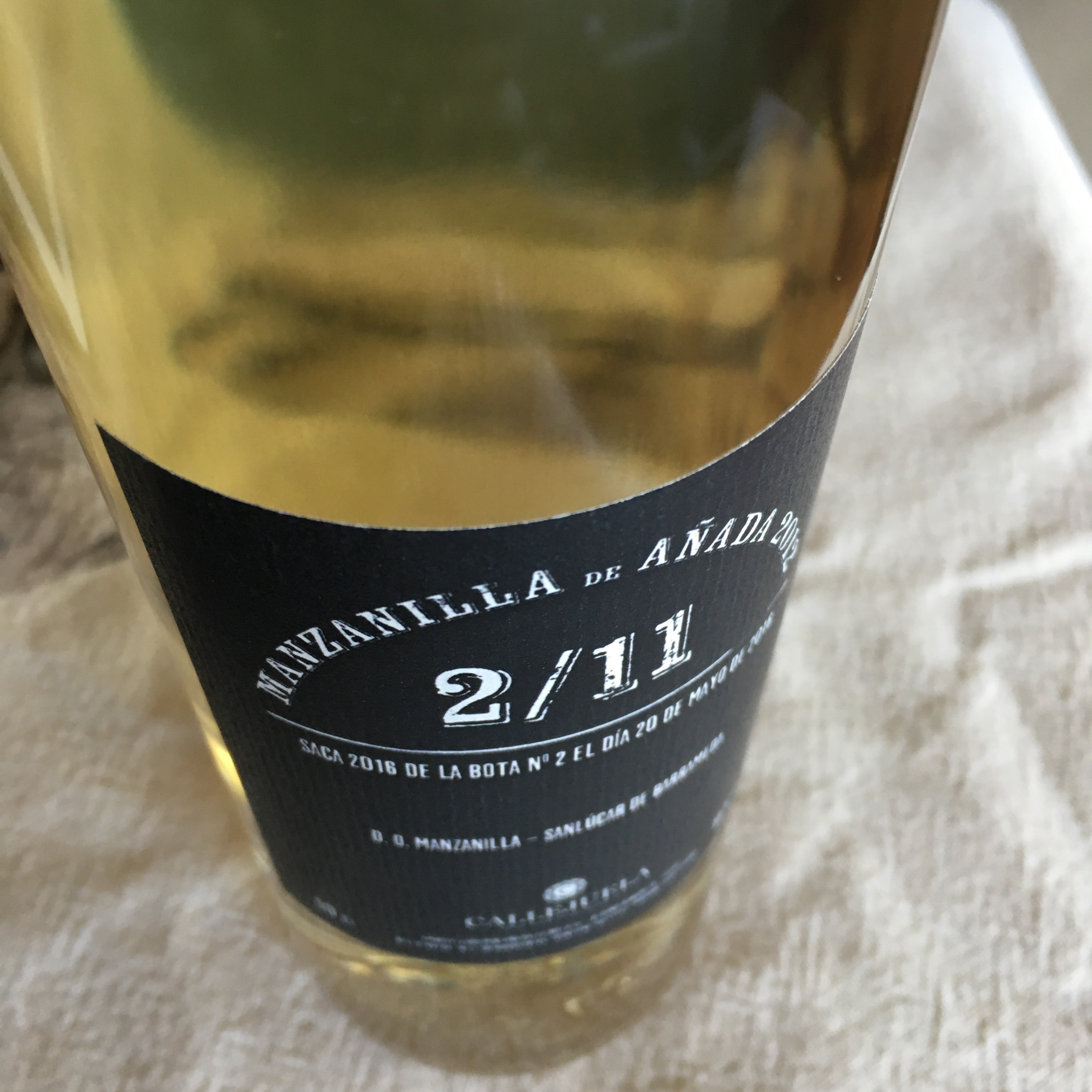
Manzanilla de añada Callejuela 2012, 2/11 

During the latest of many brilliant lunches yesterday at Madrid Angelita we were served this little beauty. It is not the first time I have had it – and it is not the first one of these wines I have had – but it surprised me in a number of ways.

I remembered this second volume of the series as a proper manzanilla with an edge of zingy salinity, but this had more green apple fruit and mountainside herbs – oregano and rosemary – than I remembered, adding up to a really lovely, characteristic chamomile tea nose. Then on the palate it packs a little punch of fresh almonds and juicy herbs – really flavourful and tasty – and compared to the añada finos that I have had recently it had a noticeable elegance and silky fine quality to it. I found it a little warm at the end with the salinity but a pleasant finish nevertheless.

A bit more than just a proper manzanilla – a very good one – and of course much more even than that.


Mirabras 2014 

I first tried this a while ago but fleetingly and, although a palomino purchasing moratorium is currently in place, I couldn’t resist picking up a bottle this week in Reserva y Cata.

Small production – just 2000 bottles, from a single vintage of a named vineyard  (Cerro de Leyes) – which the web describes as home to the oldest vines on the Santa Lucia pago. The grapes were left to dry in the sun a little, then the wine was fermented in an old sherry bota, was a few months on its lees, a few months in bota and then in inox.

It is a rich gold colour and on the nose has the distinctive sweet herb aromas of palomino. Then on the palate there is no mistaking where this comes from. It has nice acidity the sweetish fruit of the palomino but then there is zingy salinity and celery-like spices, salt and pepper. A real chip off the Solear en rama block.

Really distinctive and very tasty.

Pride in your roots

Plano parcelario

Yesterday I had a nice little manzanilla Orleans Borbon and was delighted to see a reference on the label to Pago Balbaina. There has recently been something of a reawakening in interest in terroir in el Marco de Jerez, but it is still relatively rare to see the Pagos (and even less the vineyards) identified on the labels of the wines.

With one exception: Macharnudo and, particularly, Macharnudo Alto. That particular Pago has built a mystique and brand to the point where I have seen it referred to as the “DRC” of Jerez. It owes that mystique in large part to the wines: Inocente, Coliseo and the other Valdespino wines, the Macharnudo Alto finos from Equipo Navazos, and at the other end of the scale, Pitijopo Number 5. And those are just the recent wines: the fame of the pago is not a recent phenomenon. It owes a lot to historic brands like Agustin Blazquez and de la Riva and, most of all, the legendary Domecq.

Neither is it a coincidence that some of the finest wine makers in the history of the region chose to acquire vineyards in Macharnudo Alto. Indeed, Macharnudo looks absolutely splendid from a distance – hills of pure white albariza – and in fact if you go and spend time in Jerez with the guys that are keen on terroir and ask them where they would like to have a vineyard there is a good chance they will tell you Macharnudo. There is every indication that it really is top class real estate and an ideal place to make wine.

But there is another issue at play here, which is that Macharnudo has become famous not just because the finest winemakers had vineyards there, or because they made very famous wines there, but because they also put the name of the pago on the labels of those very fine wines. Nothing controversial about that: because the wines from the pago were good, the name of the pago was used to market the wines. What strikes me, though, is the number of great wines from Jerez that don’t make any attempt to capitalize in the same way.

The Solear en rama series are an example that springs to mind: these outstanding wines come from Santa Lucia and Gibalbin, but it doesn’t say so on the label. Those particular vineyards are not in a fashionable neighbourhood – they are far inland – indeed they are not even on the map of the famous pagos (like the champagnes of Cote de l’Aube  or the burgundies from up around Auxerre) but they are the source of some of the most distinctive wines in the region, with perhaps the spikey Mirabras as the clearest exponent of the qualities of the terroir. They are also, I am told, interesting properties due to the location and their positioning between hills and marshland.

There are of course a number of issues related to the structure and recent history of the region, the fact that many bodegas do not own their own vineyards or have changed hands, and the compounding difficulty of the solera system (with many soleras having been refreshed, over the years, with wines from a number of sources) that mean many bodegas cannot guarantee that their wines are sourced from a single pago. (On the other hand, even if a bodegas has always sourced from a particular pago, if they don’t own that land they may be wary of becoming hostage to the names on their labels.)

Nevertheless, where it is possible to do so, as in the case of Solear and some others, it strikes me as a great shame – and a missed opportunity – not to give the vineyards the recognition they deserve.


Manzanilla fina Orleans Borbon 


I can be grumpy at times about packaging but there is a lot to like about this little bottle. It is a regular size, the label is a thing of beauty, the colours seem lively and appropriate and the magic words “Pago Balbaina” are proudly displayed. I couldn’t resist picking this up on my last visit to Der Guerrita.

I am very pleased to have done so too because there is also a lot to like about the contents. It is quite a pale lemony yellow and has aromas of straw and sea air, maybe some lemon and almonds. Then on the palate it has a nice punchy, zingy salinity, nice yeastiness and bitter almonds. 

Very nice little wine: nicely presented, zingy and tasty.

Tasting the Barajuela project

Wanted to jot down my thoughts and impressions of a fantastic tasting I did with Willy Perez last Friday in relation to a project I find fascinating (and a wine that I really love). 

As I have written about ad nauseam the Barajuela project is all about recovering the old school wines of Jerez that once ruled the world. This means big, concentrated wines with a clear identity quite distinct from the lighter “manzanilla” style of current wines. It means low yields, later harvests in several passes (first for brandy, then fino, then oloroso) a short period of asoleo or sun drying to further boost concentration and a focus in the cellar on the wine rather than the flor or barrel effects. (For example, unlike many modern finos with pronounced acetaldehide profiles here efforts were made to keep a balance with the wine’s other characteristics – a balance that is achieved despite a very high level of acetaldehide.) The wines are also terroir and vintage specific and, since single vintage wines age quite differently to their solera counterparts, the back label seeks to recover the old school “palmas” system of classification. 

The tasting could be broken down into three sections, each a nice illustration of what the project is all about. 

First up, we had a run at the mostos from 2015, exploring the effects of the maturity of the grapes in the different “passes” at harvesting. We tasted the mosto for brandy, the greenest, least developed fruit, harvested in early to mid August, the mosto from grapes harvested two or three weeks later, and the mosto for the fino, from fruit harvested a week later still. There was a clear progression in aroma, weight and flavour in the three wines: more and more honeyed on the nose (the mosto de fino in particular had a lovely nose that reminded me of the “cojonudo” pastries you get in the mountains North of Madrid) and, quite apart from the growing strength and weight, more and more (extremely ripe) melon on the palate. Obviously there was a big step from the first mosto to the second, but it was amazing to see the step from second to third – the difference that that selection and one week of sunshine had made. 

Next up was an exploration of the effects of the flor on those mostos (not that much flor – these botas were filled more than usual). The fourth wine was a 2014 mosto de fino, followed by a bottle of the 2013 Fino la Barajuela and a 2013 Palma (roughly speaking, the 2013 fino with six or so more months under flor). Again, the steps between the wines were as instructive as the wines themselves: the 2014 mosto was extraordinary compared to its 2015 equivalent with a noticeably full and mineral mouthfeel – real power and zing to it- the 2013 Fino had that brilliant balance of concentrated fruit and mineral grunt and the Palma was just a touch sharper in both salinity and in the fruit flavour. I would find it very hard to choose between the two 2013s – would love to have tasted them blind – but since I was asked I reckon the fino was dead right, with enough fleshy juice to it despite all that power. (There may also have been some effect from its time in the bottle.) As for the 2014, my mouth is literally watering at the prospect of when that is ready.

Then out came the lesser spotted 2013 Oloroso la Barajuela. This wine is from grapes harvested later still – important to remember this is a different wine from the same vines, not a continuation of the fino – and has another step up in concentration. Rather than under flor it has been “traditionally” aged (but not for very long, which I gather has been the source of some issues with the DO and the traditional classifications, hopefully soon to be resolved). The power and solidity of it is impressive – for now it just has an edge of burn and oxidation but you get a feeling that given time it will be capable of the most amazing full bodied, high register caramel flavours. No bones about it – it is an absolute beast.

We didn’t in fact finish there, we also tried a 2014 pedro ximenez, an excellent mineral and refreshing 2015 Tintilla de Rota rosé and the 2015, 2014 and 2013 Tintilla de Rota reds, but by then my mind was wandering (I even left my notes behind before remembering just in time and dashing back in). It was a brilliant tasting  in which I learned a lot, and even better with some really cracking wines and a few laughs thrown in. Blessed are the rulebreakers and long live the new old school.
Pagos, soils, flor and wines with Willy Perez (and many, many, thanks)

Today was another great day by any standards but for this blogger it was monumental. The great Luis “Willy” Perez took a few hours out of his permanent state of rolling harvest to show us some historic pagos and their soils, his fantastic hilltop bodega and, most importantly of all, the wines they produce.

It was not my first visit to the pagos of Jerez – in fact a couple of times today I stood in a spot near identical to five months ago (or at least I think so, we will never know for sure since the maps used on that occasion appear to have slipped over the edge of the world). But although the viewpoints may have been the same the emphasis and lessons were different to those I remembered. We observed the natural borders between soils of different types and the way the physical borders matched them, the way the different plantlife behaved on the different soils, the relationship between altitude, slope and soil type, and the way that the landscape had changed in other ways, with fincas abandoned by their winemaking owners.  Seemingly small stuff but just as in March it is easy to see that the implications of each detail are significant.

Then we visited the beautiful Finca Vistahermosa bodega. It is frankly spectacular and a must visit for anyone visiting the area. In fact it struck me as potentially enormously positive for image of the region as a whole to have a bodega like this – clearly and elegantly part of the landscape and as modern as anything you would find anywhere. It had absolutely every necessity – tanks of every material, barrels of every size and age – but Luis clearly placed a good deal more importance in the dusty dirt of the vineyards than the shiney and oaky gear indoors. Then we had a short visit to the room storing the Barajuela wines where Willy outlined the thought processes behind their making and, in doing so, turned quite a bit of my mental furniture upside down.

Finally we sat down with Luis, the genial Federico Ferrer of Cuatrogatos Wine Club and some of the young winemakers working with Luis – to taste the wines. It was a cracking tasting. We tasted the excellent 2013 Tintilla de Rota with its 2014 and 2015 siblings and an amazingly mineral rosé. More importantly, I will never forget tasting a full spectrum of Barajuela wines. I think it is the single most promising project in the region (just see here, here,  here, here and here) and tasting the wines at different stages of development and hearing the comments and thoughts of Luis as we tasted them was invaluable. While I am nowhere near understanding what these wines are, what makes them how they are and how they evolve – under flor and in the bottle – I felt for a moment as if I was getting somewhere. And what wines they are – these are the massive wines that Jerez used to produce, enormously muscular and flavourful. You have the sense that there is nothing that cannot be achieved with them.

And all too soon (but nearly an hour later than planned) it was over. It was a fantastic, unforgettable experience that I will never be able to repay, so all I can do is express my thanks for the extreme generosity of our host.


Fino la Barajuela 2013

In a week of brilliant wines from all over this was for me the best of them all. Enough mineral power to set it apart from the crowd but more fruit and expression than the crowd expected from a fino. Really excellent. It is fortunate that there isn’t too much more of it or this blog would become a fanpage. (I absolutely love this wine.)

Apparently a second “palma” is to be released a few years down the road with a few more years under flor and it is going to be fascinating to see what that flor action does to this wine. Would also be interesting to see what happens with time in bottle – but for that I would have to keep some long enough.

UBE 2014 

A really fine bottle of wine from Cota 45 – this is a little ball of flavour. One of a number of cracking bottles of wine opened on a sunny terrace what stood out about this was the savoury, herbal quality of the flavours. Not acidic but a nice freshness to it. A class wine.