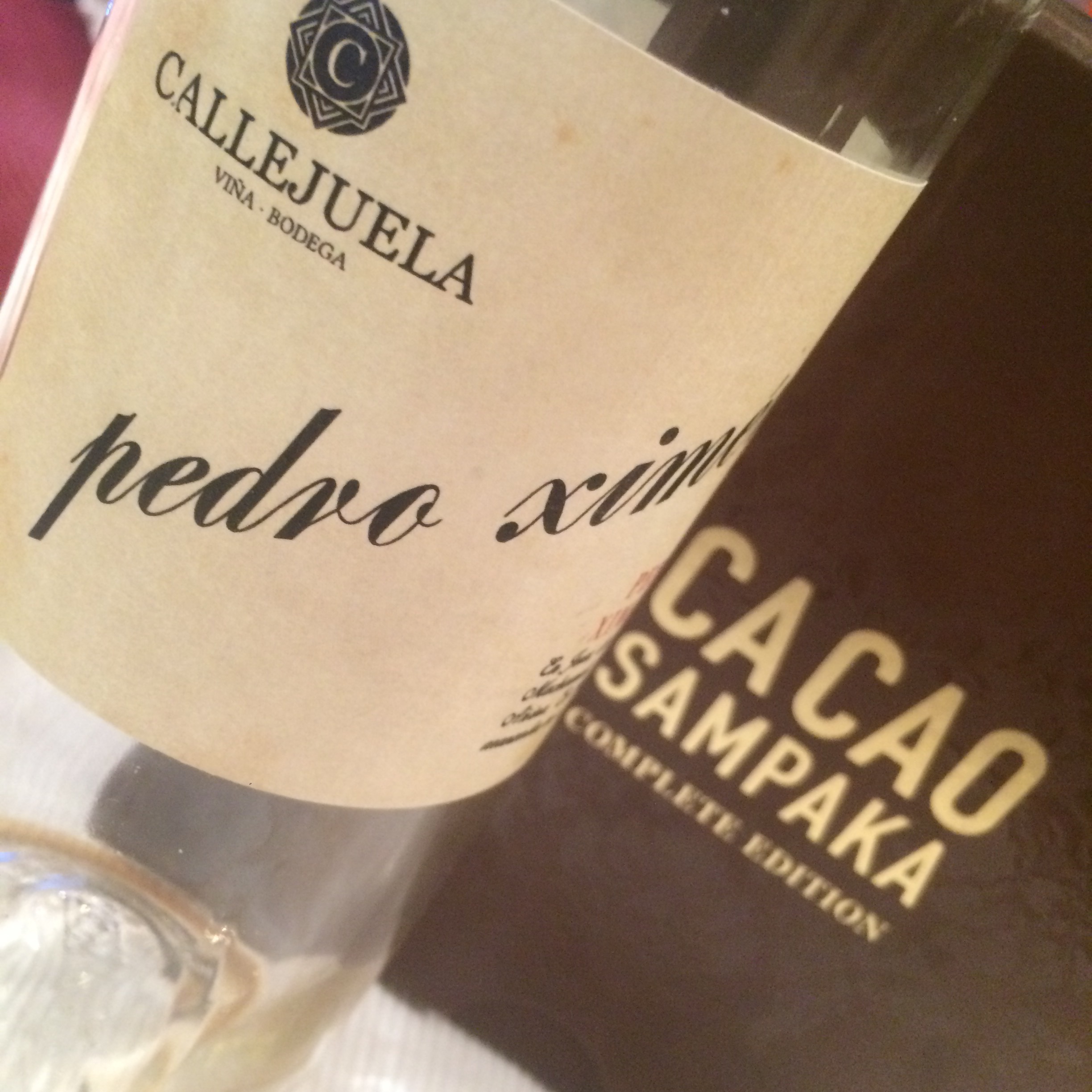
Pedro Ximenez Callejuela  

Well this is a sad sight – I can’t believe this bottle is over.

The last week or so we have had a glass of this with a chocolate from the Cacao Sampaka complete edition – a collection of 64 different pieces of high-end high-cocoa chocolate from one of my favourite stores in Madrid. The chocolates are great, the wine is really great and together just another level altogether.

It is a dark, not black brown, has a thick, syrupy consistency and a raisin and yeast, uncooked Christmas pudding aroma. It is sweet and sticky with lots of raisin flavour then burnt sugar and sweet, black coffee bitterness. Lovely, serious flavour to it.

Really superb wine by any standards.

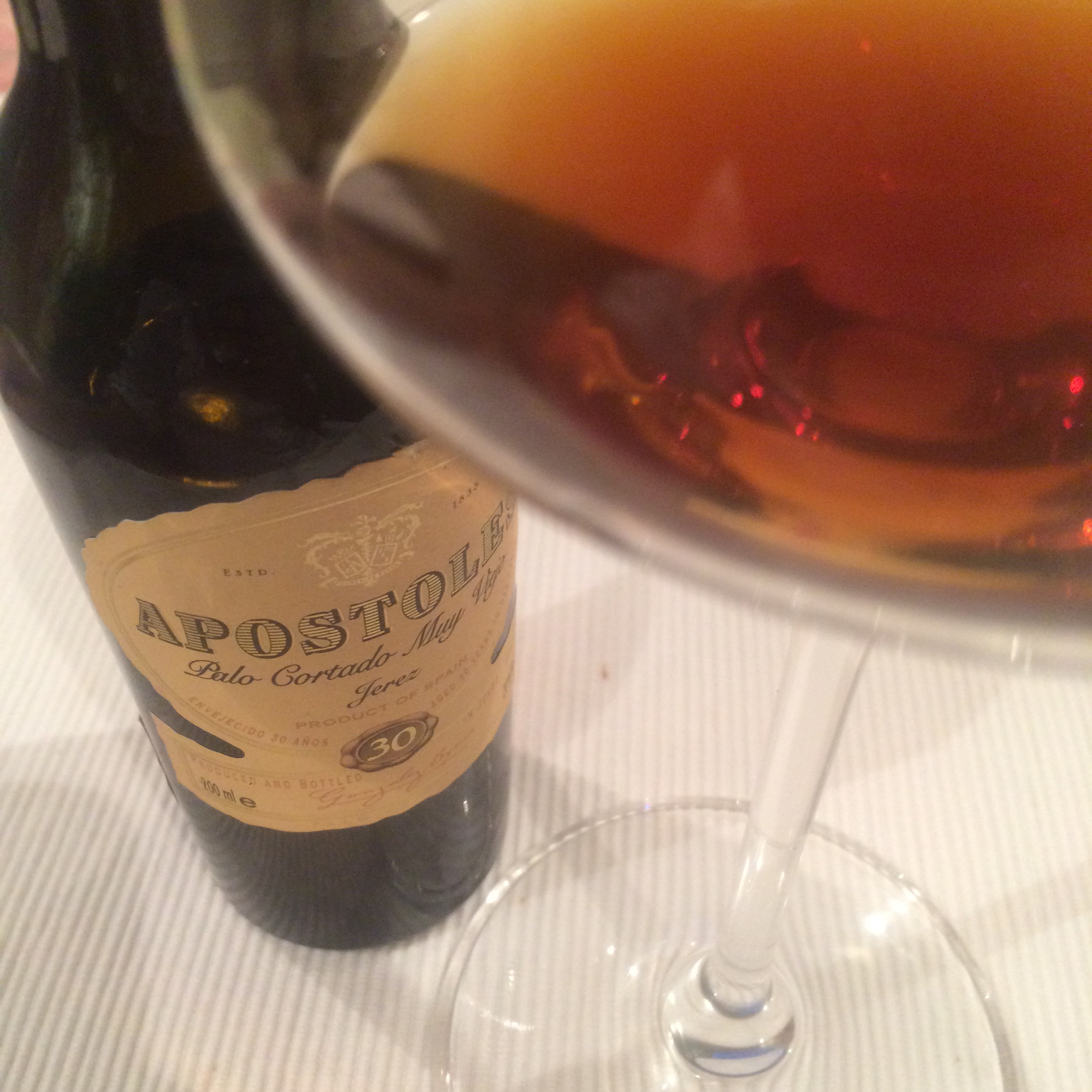
Apostoles palo cortado muy viejo 

I tasted this in last week’s sherryTT and wanted to give it another go in more neutral territory. On that occasion I tasted this slightly sweet wine (it has about 13% old pedro ximenez mixed with an old palo cortado) against four deadly dry palo cortados and I wondered if my appreciation was skewed by the comparison. Judging by this second, lab conditions attempt, I don’t think so: this still seems pretty epic.

It really does have the baked nutty fruitiness of a christmas cake (not including marzipan and icing, evidently) and once the initial acidity passes it is tremendously rich with lots of flavours – coffee, walnuts, raisins, cedar and even liquorice. The sweetness is also well balanced with the concentration and bitterness of the rest of the wine – really sweet and sticky but also bitter and intense.

Really excellent stuff, no doubt. Maybe I slightly prefer the Noe overall but this is very good.

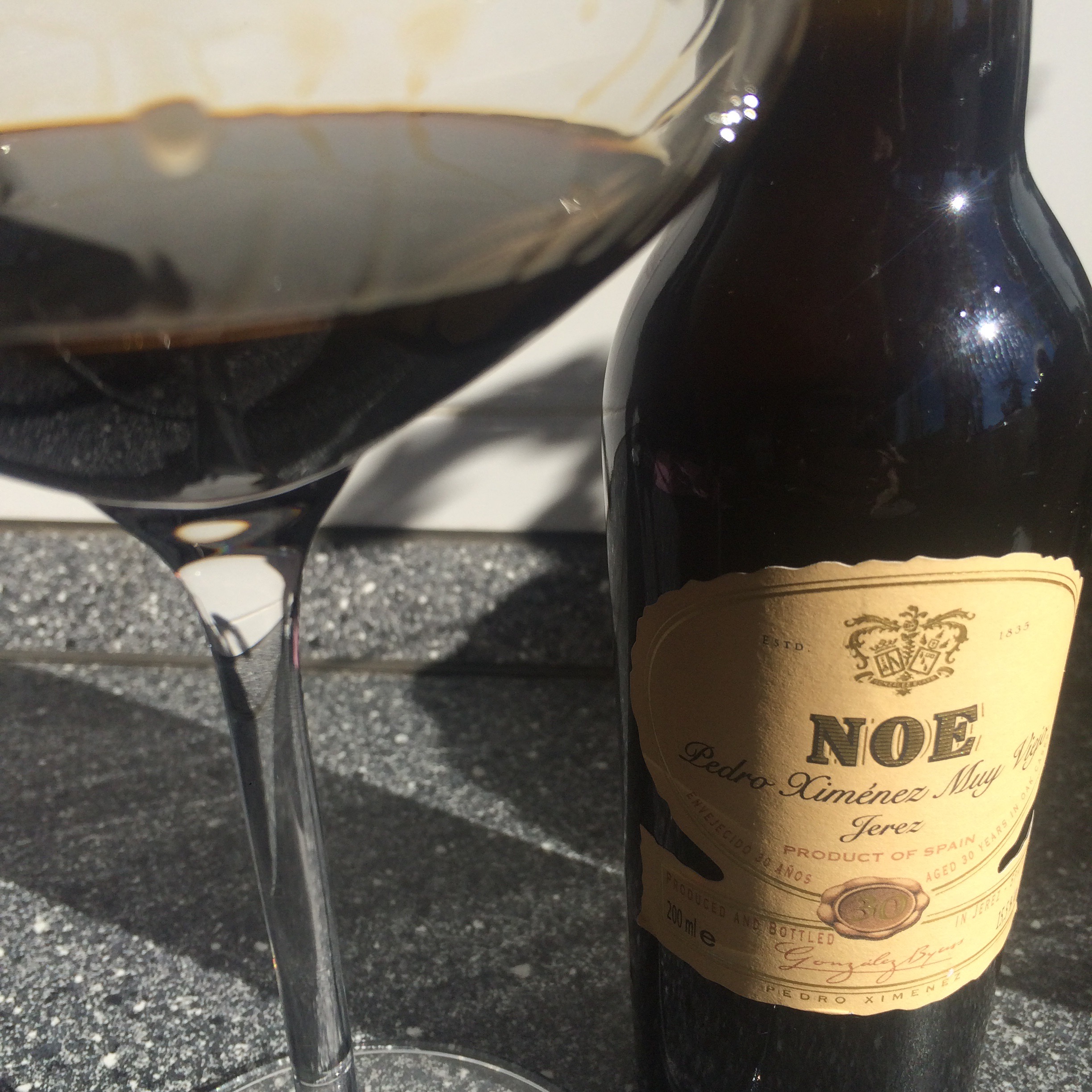
Noe Pedro Ximenez Muy Viejo

I have now tried all of these very impressive VORS bottlings by Gonzalez Byass in the last couple of weeks (after the Del Duque, the Matusalem, and the Apostoles (as part of the sherryTT) and this is probably my favourite. As its name indicates, it is a very old px – 30 years according to the label – from Jerez and it really is extraordinary.

A deep black brown colour, even in strong winter sunshine and it dirties up the glass as you swirl it around. It just has a look of black treacle about it. On the nose too it has a strong black treacle vibe – there are grapes and sugary buns but also a suggestion of burnt sugar bitterness and sweet cedar wood.

On the palate it has a big, syrupy, treacly feel and although it must have a huge amount of sugar in it but it doesn’t half carry itself lightly. There are enough bittersweet flavours (dark woody herb spices, coffee, black chocolate and black treacle) to balance the sweetness and it is just beautifully integrated.

A really sensational wine – I am going to need a much bigger bottle of this.

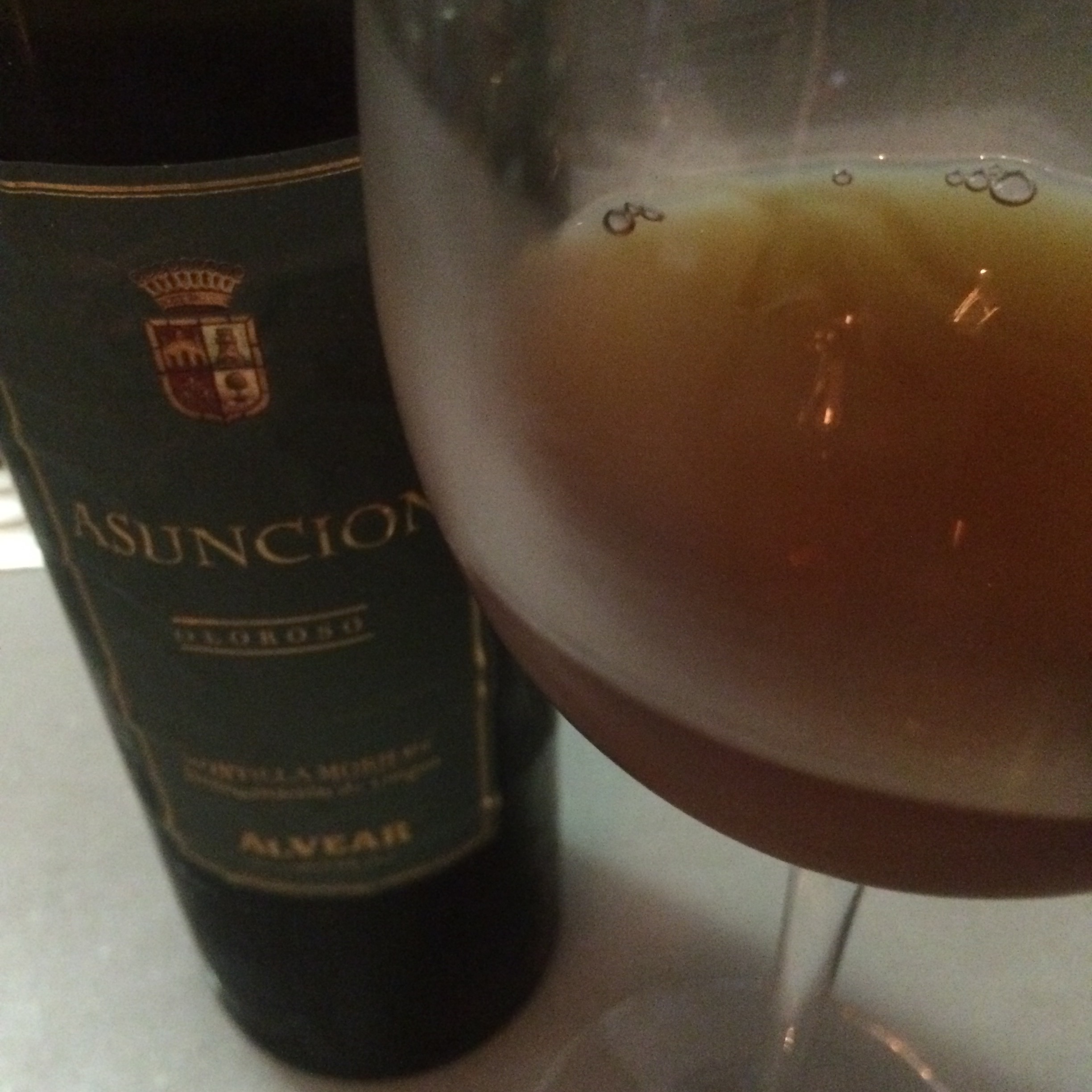
Oloroso Asuncion

  
Little cold as it came and not great light in here but it seems a slightly dull, cloudy brown. For an oloroso it is not excessively fragrant. 

On the palate it is lovely and full bodied – I really think the PX works well as an oloroso. It is just a touch sweet but balanced with the bitter nutty, burnt caramel flavours – and it stays balanced during a nice long finish. 

A nice oloroso. Maybe just lacks a little oomph for my taste. 

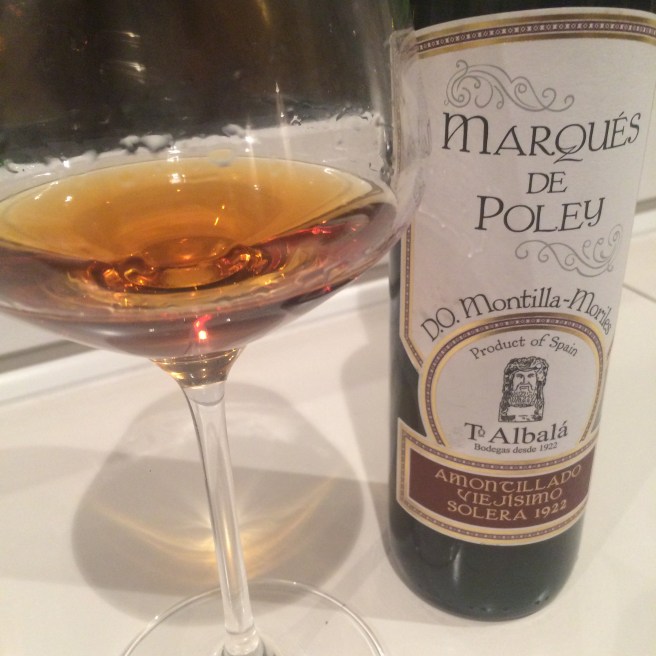
Marques de Poley Amontillado Viejisimo Solera 1922


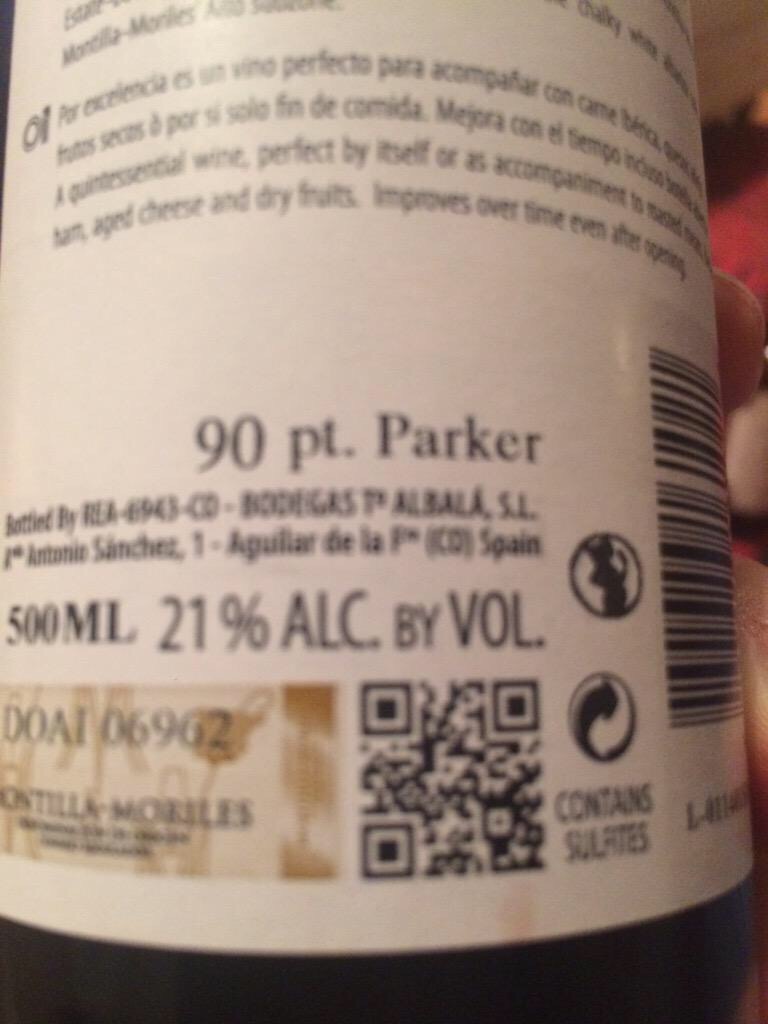
This is called “very old amontillado solera 1922” from which I deduce it is a very old amontillado – probably from a solera founded in 1922. It is by Toro Albala, one of the big houses in Montilla Moriles and is 100% pedro ximenez. 

One thing that caught my attention is on the back label – where the words “90 Parker points” sit proudly alongside the alcohol content. I found it odd for three reasons:

  • First, I have seen references to Parker points on bottles before of course but usually as a sticker (since most wines are, logically, bottled before they are rated). 
  • Second, it was odd to see it with the objective information on sulfites, alcohol, etc, rather than in the text box of subjective descriptions. 
  • Third, it was odd to see a reference to 90 points – not a very high score by modern standards. Again, though, I quickly realized that Toro Albala have a 100 point wine in their cellars, a fact that (understandably) influences the importance they attach to such things. 
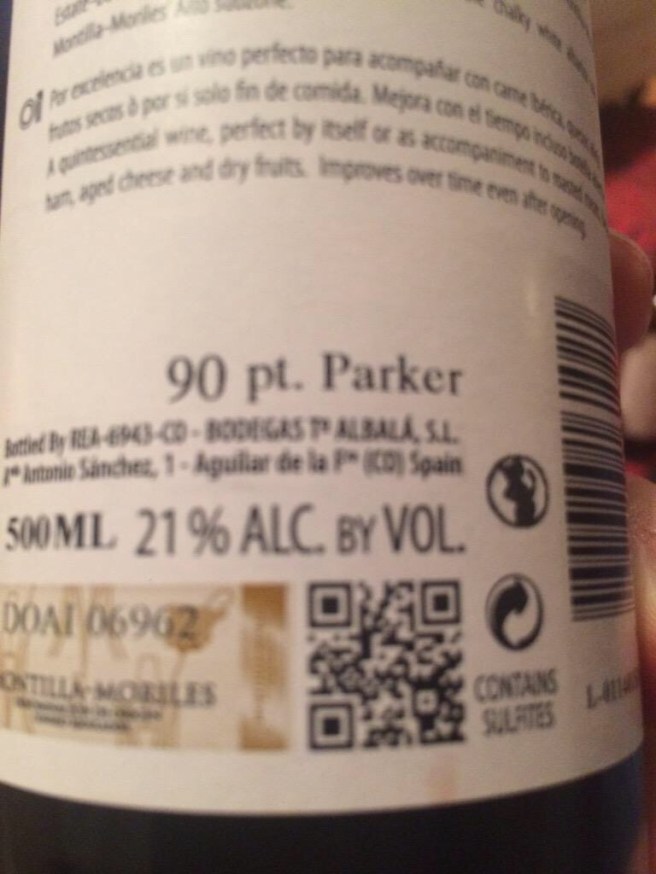
  

In any event, I found it odd (and questionable aesthetically speaking).

The wine itself is a characteristic chestnut colour (I must get a taster of chestnut colour options so that I can distinguish) and, as I think you can see in the picture, sticks to the side of the glass a little. On the nose it is sugary sweet, maybe honey with quite a lot of alcohol. 

In the mouth you immediately notice the syrup-like texture from the high glycerol content. It has a nice zing but is not quite dry – not clear to me if it has been encabezado or just not quite dried out (given the name I assume the former). Overall the flavours are of honey and oaky red wine, with maybe a bit of raisin underneath. Nice smoky finish, but a bit sticky. 

Overall I like it ok although, once again, I feel that you get more nuances from a fully dry wine (and I reckon Luis got the score bang on, by the way).  
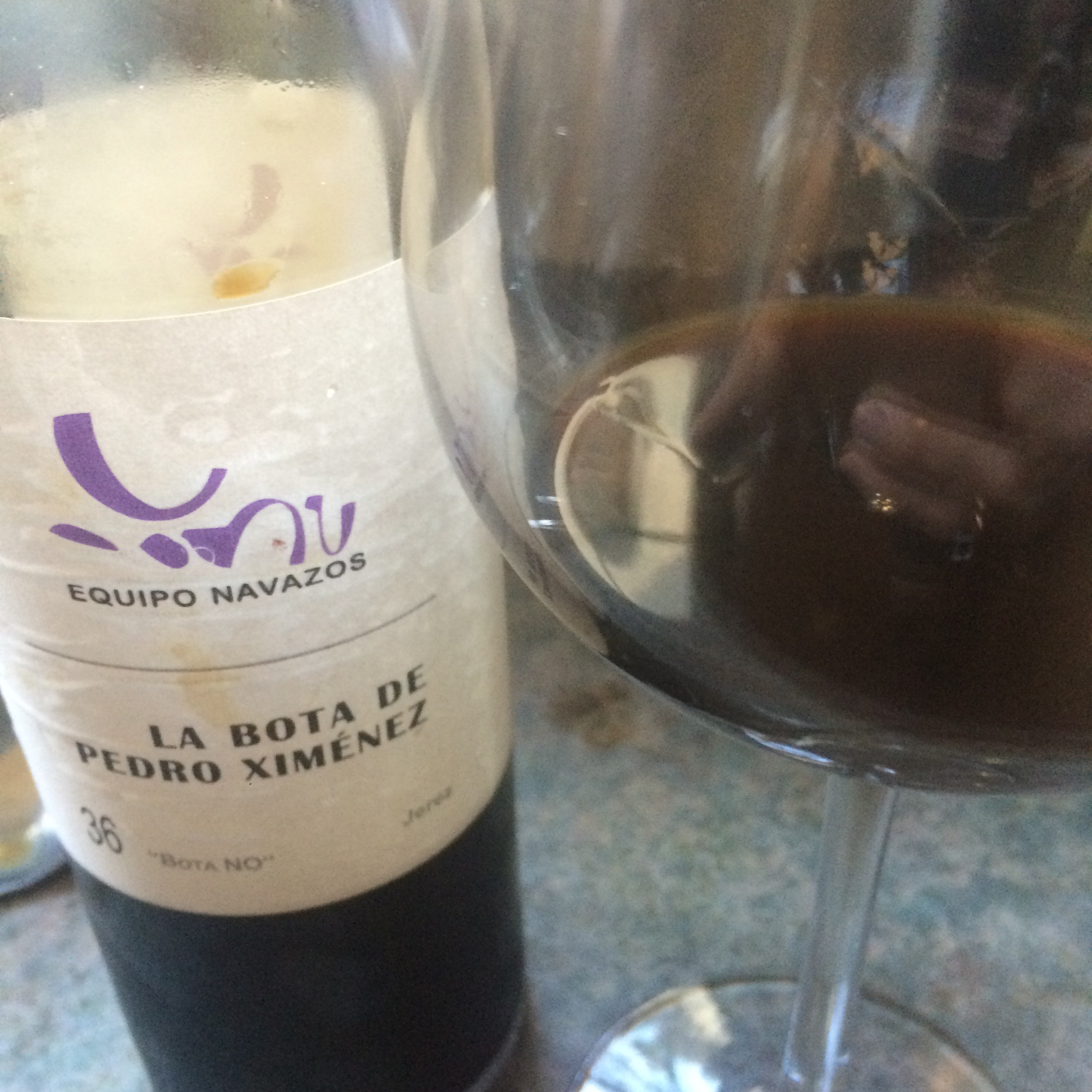
La Bota de Pedro Ximenez 36


I find sweet sherries a lot harder to appreciate than dry – although I can see that the sugar and high glycerol levels may make these wines a good vessel for expressive wines, for me the sugar seems to mask many of the qualities on offer, and makes supping heavy going in general.  On the other hand, it is fair to say that one of the few genuinely perfect wines I have tasted was a moscatel:  Toneles. (In fact maybe the real problem is that my expectations have been raised unrealistically high by that awesome little wine.)

This effort by Equipo Navazos was selected from some Fernando de Castilla wines of an average age of over 30 years. It is one I had had in Madrid for a while, but brought home to taste in England since there seem to be more takers for sweet wine over here.

It is deeply black and treacly in appearance, dirtying up the glass and leaving a brownish residue. On the nose it is all sugar and raisins. 

On the palate there is more candied fruit, baked and fresh raisins, a slightly menthol edge and a nice fresh finish. However I don’t find it that expressive – not a lot of the nuts, figs and spices that I was expecting.

A juicy pedro ximenez with a fresh finish – but not the big puddingy wine I was hoping for. 

Fino Capataz: awesome with steak tartare


Loving this capataz fino – so nutty. Not a great combination with these garlicy grilled razorclams but good enough.

With the steak tartare (with chopped hazelnuts) though the combination is remarkable – the sherry spices up the palate and makes the tartare seem much livelier in every sense. It makes it spicier and brings out a lot of flavours – the tartare seems saltier, nuttier, meatier, and you really notice the savoury spring onion. On top of all that enhancement, you also get a mushroom/truffle flavour from the combination.

Interestingly you also get more alcohol from the fino – almost as if it loses its other flavours to the meat. A really superb pairing though. To try the original get down to La Chula.

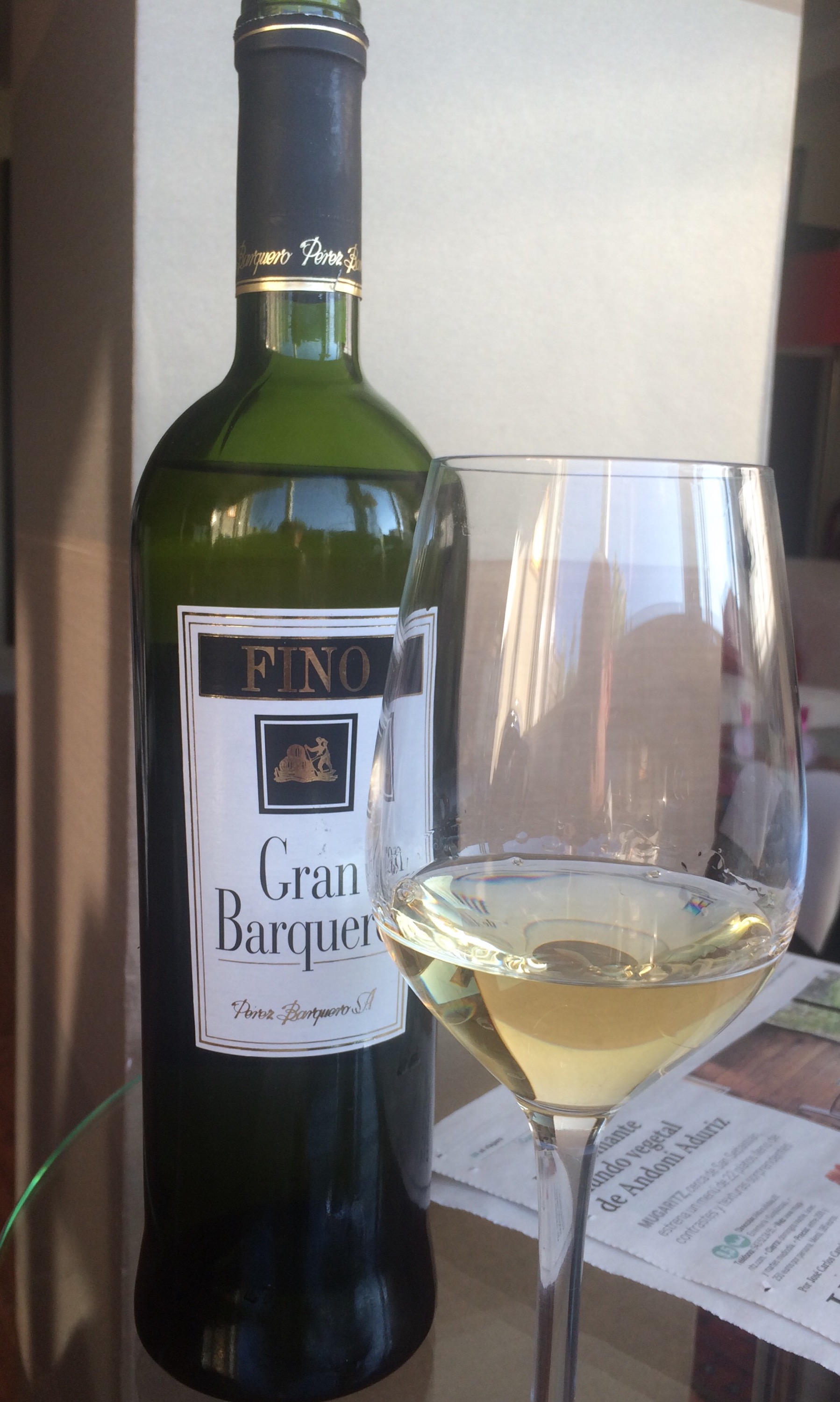
Gran Barquero Fino


As a friend pointed out this week, I am on a bit of a pedro ximenez spree at the moment. After enjoying the Oloroso and the Capataz I couldn’t resist opening this fino. Like the Capataz it is Montilla Moriles and 100% pedro ximenez, has been under the flor a good while (8-10 years I have read) but it is quite a different wine. 

It is paler, clearer in colour and, as always, clear as a bell. On the nose it is quite grapey with some nuts and herbs – thyme and so on. It is full bodied and solid in the mouth but the glycerol of the px is not that noticeable. The flavours are tremendous – salty dry grass, yeasty bread, dying away to unsalted almonds – just a hint of edge to it but a lovely soft finish – hardly a trace of bitterness. A really nice, drinkable fino.

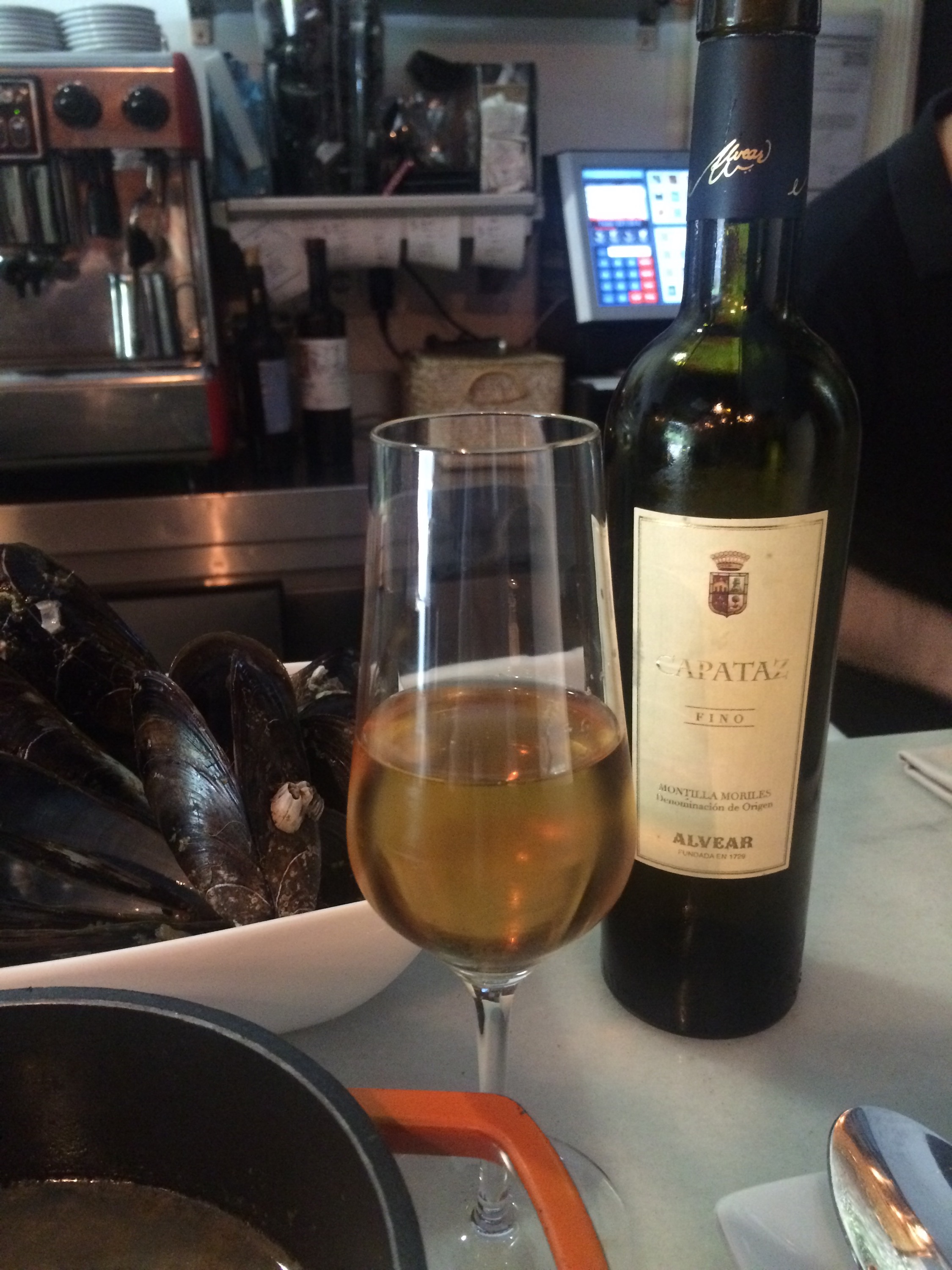
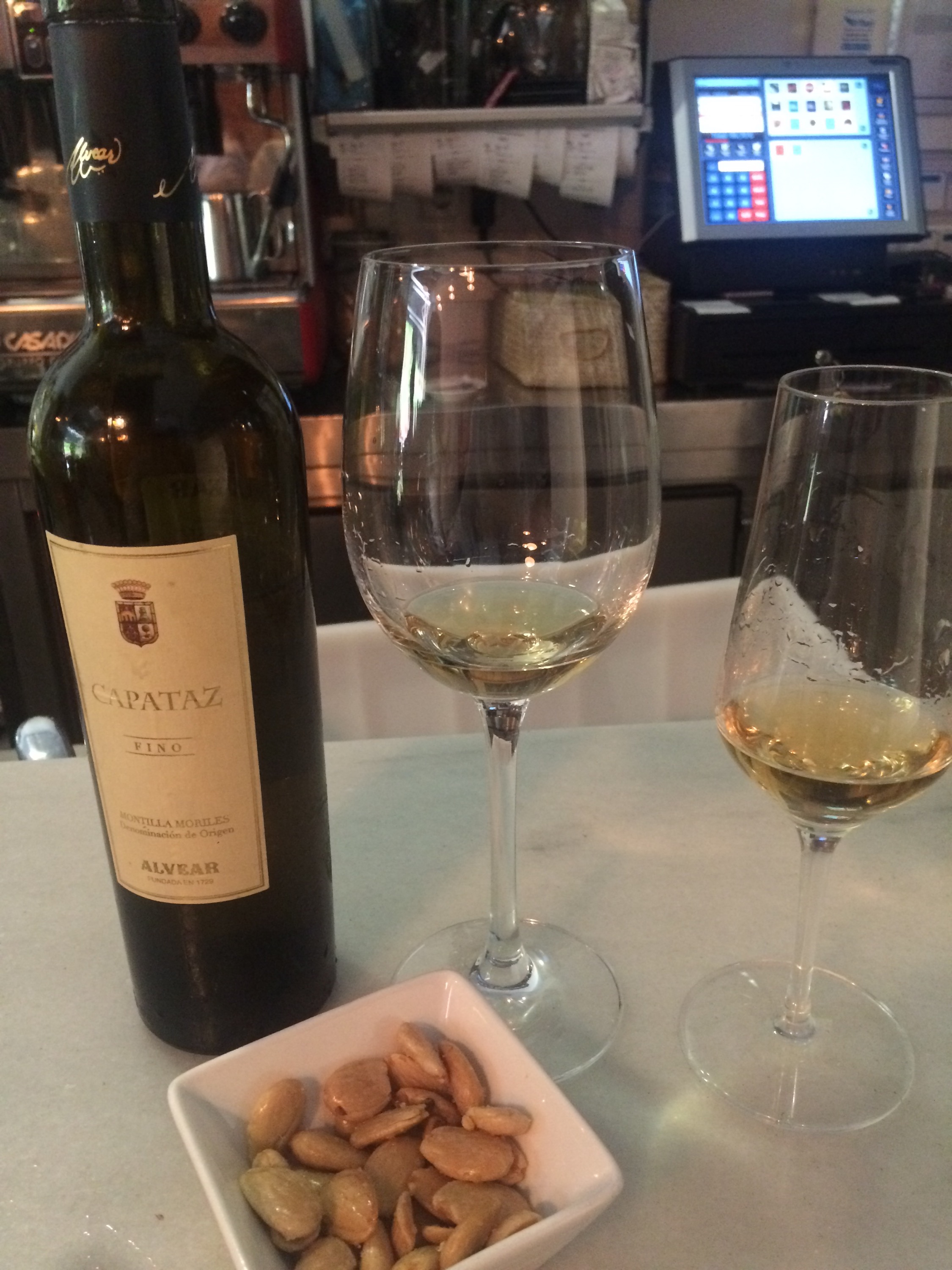
Fino Capataz

A native of Montilla Moriles and made from 100% pedro ximenez this is not strictly speaking a sherry. However, with upwards of 6 years under the proverbial flor it is a classic, dry, nutty fino (seen here with the remnants of some very fine mussels in my watering hole of choice – La Chula).

It is a dark, old gold colour and seems a bit quiet on the nose – even when switched to a more conducive vessel (and the bigger glass is better – just a better swirl, more surface for the wine to cling to I suppose).

It is surprisingly fine and salty in the mouth – not as full in texture as many px finos. In fact the first time I had it blind I thought it was a manzanilla. Flavourwise too there is very little fruit – all nuts, salt and olives. In the finish there is a lovely, fleeting sensation of creamy butter (or maybe olive oil mayonnaise or something).

I really love it – this is a top drawer drop.

Gran Barquero Oloroso

This is a highly drinkable abocado (almost dry – just a hint of sweet)  pedro ximenez oloroso by Perez Barquero of Montila Moriles.

As you can see it is a beautiful orangey chestnut in colour. On the nose it is sweet, rum and raisin icecream. Then in the mouth a lovely mellow structure of aged, roasted caramel. I really find that PX works well in an oloroso – its glycerol richness in the mouth really complements the flavours. Conversely, of the PX wines olorosos or amontillados work better, imho, than finos due to their structure – the PX just doesn’t seem able to carry off the subtleties of fino like palomino can.

If I were to criticize (and I might as well while we are here) it would be that PX oloroso’s don’t quite develop as much acidic zing as their palomino cousins from Jerez (in fact there is probably a little leas intensity in general). This wine has a nice buzz to it and is a fine accompaniment to lamb chops but might not handle a really mature steak or spicey callos.

The only other criticism is that it is absurdly easy to drink – which in a 19 proof beverage is a recipe for a hangover!