Fino el Pato Especial

One for fans of Montilla Moriles here: the “Special Duck” from Bodegas Luque. As the label says, it is a fino en rama without clarification or filtration. (Since the explanation is redundant I assume they must be trying to make a point.)

The wine certainly comes across as rough and ready – incredibly pungent and meaty, with a big heavy texture and flavours like chewing a ham bone and a stick of bitter liquorice. There is salinity too but not a lot of zing or definition. To be honest not really my cup of tea but you can’t deny it has character.

The other place

After a really intense week I am only now getting around to reading this fascinating piece by Paco del Castillo on what he calls Spain’s hidden gem: Montilla Moriles. It follows on from an absolutely stratospheric tasting a week ago where the panel at elmundovino.com gave no fewer than three wines 19/20 and a further five 18.5/20 – and that in a tasting with no Don PX

For my part, I can only agree with the scores of the wines I have tried – the Toro Albala 1951 Amontillado in particular is an absolute delight and, while I only tried them on the fly, the 1955 Solera Cincuentenaria range by Perez Barquero and Abuelo Diego by Alvear also struck me as absolutely excellent. 

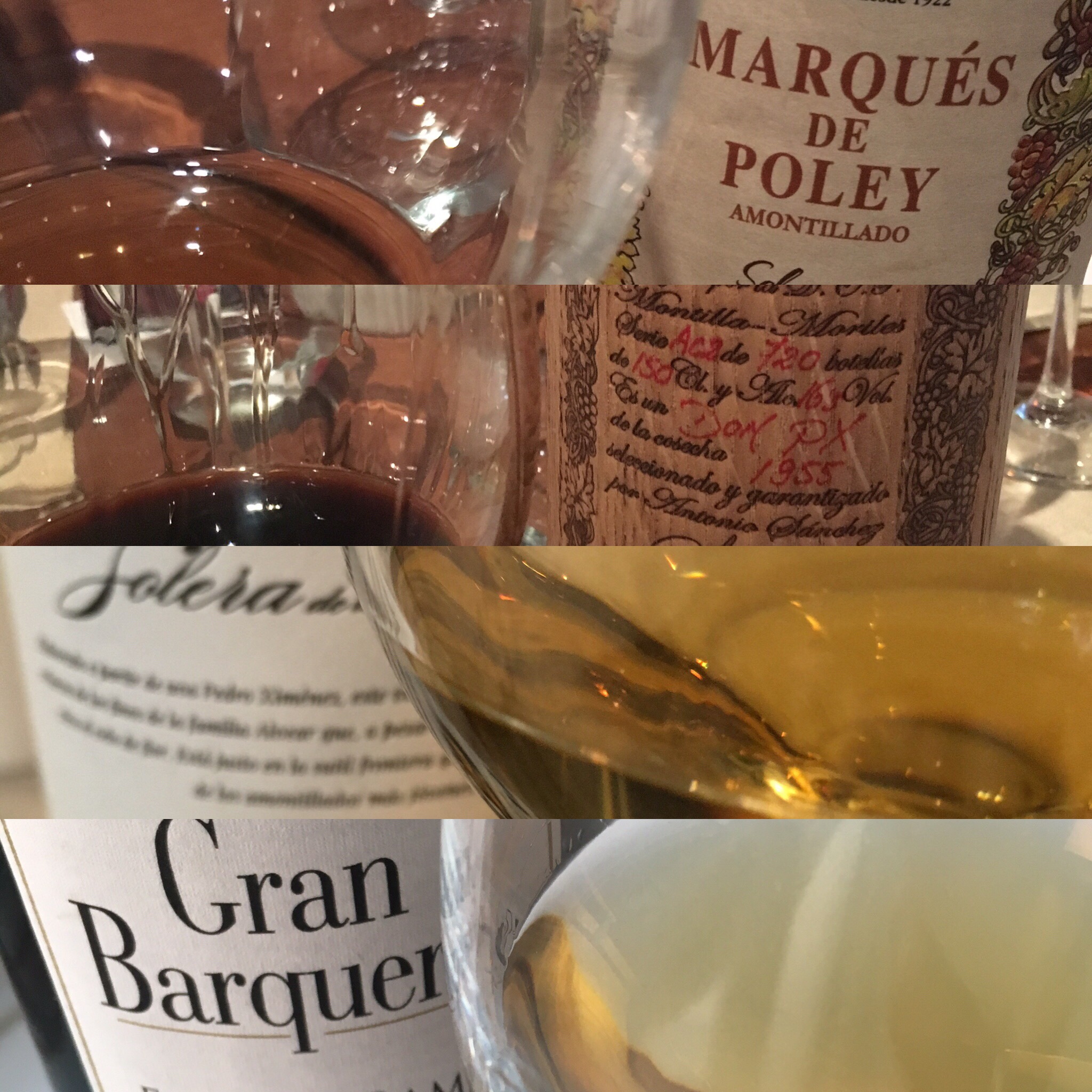
In general, I have a feeling that while not quite as expressive as young wines, these px tend to age even more gracefully than their palomino counterparts – maybe it is the higher glycerine content – and really benefit from a bit of additional time. The same applies to the finos even – the Capataz and the Gran Barquero en rama really gain from more solera. That glycerine also mitigates the extreme dryness and acidity that can be there in the real dinosaurs so they win every way up. 

So well done again Elmundovino.com – they may not be the only distinguished critics to pick this up (Don Luis was very keen earlier this year) and indeed none of the top wines in this tasting are being given away, but it is a timely recognition of another corner of excellent Spanish wines. 

Bombilla Fino Eléctrico 

This is the standard fino (not to be confused with the en rama) from Toro Albala in Montilla Moriles – where they make some of the very finest old pedro ximenez wines I have ever tasted – and is in the shape of a lightbulb in homage to the fact that the bodega occupies a building that was once a power station. In fact, the locals refer to this wines as a “calambrazo” (which translates to electric shock but is a much more vivid word).

I had this at lunch today at Taberna Verdejo – one of my favourite watering holes here in Madrid and note that the above photo has been through an instagram filter thingy. It is not absolutely true to life, but I thought it was appropriate given the wine and packaging involved (and don’t get me started on the packaging again).

As luck would have it the Toro Albala web appears to be down as I write this but in any event this will be 100% pedro ximenez and I believe it has had around five years under flor. It is a very pale lemony gold in colour and as always with a pedro ximenez fino it has soft almonds and a bit of lemony citrus on the nose and then those same flavours on the palate, with a bit more juicy volume/slightly less bite than its palomino cousins – both reasons why I reckon these Montilla Moriles wines to be pretty accessible even if not always as elegant or defined as the palomino finos.

Almonds, citrus and juicy volume – very pleasant in fact and not at all the shock you might be expecting.


Santa Ana Pedro Ximenez 1861

This was the second time I have tried this very special wine: the first was at a tasting years ago that persuaded me that Sherry was no passing fancy. Since then I have learned a lot and tasted/drunk even more and it was fascinating to come back to this with that perspective and context.

It is from Emilio Hidalgo, the family owned bodega responsible for some of my favourite wines and with a stunning range. Of all the sherries I have tried their epic old fino La Panesa would probably be the wine I couldn’t live without, while El Tresillo and El Tresillo 1874 are both absolutely outstanding. I am not even going to mention the 1860 Palo Cortado Privilegio due to shortage of superlatives. 

So this was one I have been looking forward to. It is a 100% pedro ximenez from fruit grown on Pago Añina. More importantly (in this case) it is from one of the foundational soleras – dating from 1861-and is a very very limited production wine that is bottled by hand in old school fashion. Needless to say it is, on average, many decades old (and, in sherry terms, quite costly, although I got this thanks to an offer at Vila Viniteca).

It is nearly black in colour and very dense – coats the glass with black brown – but despite that great age and serious appearance it is remarkably fresh and youthful. As one of the (very good) friends I shared it with pointed out, it is complex – figs, nuts and caramel (someone said black treacle but I would say more caramel) – and it is immensely smooth and long. For the second time in a week I was surprised by the lack of concentration and acidity in such an old wine – I even hankered for the peppery spices of some very old PX – but this is wine from the soft fleshy inside of the raisin without the rind. 

Old and fresh, smooth and full of fruit, sweet but not syrupy – elegant class. 

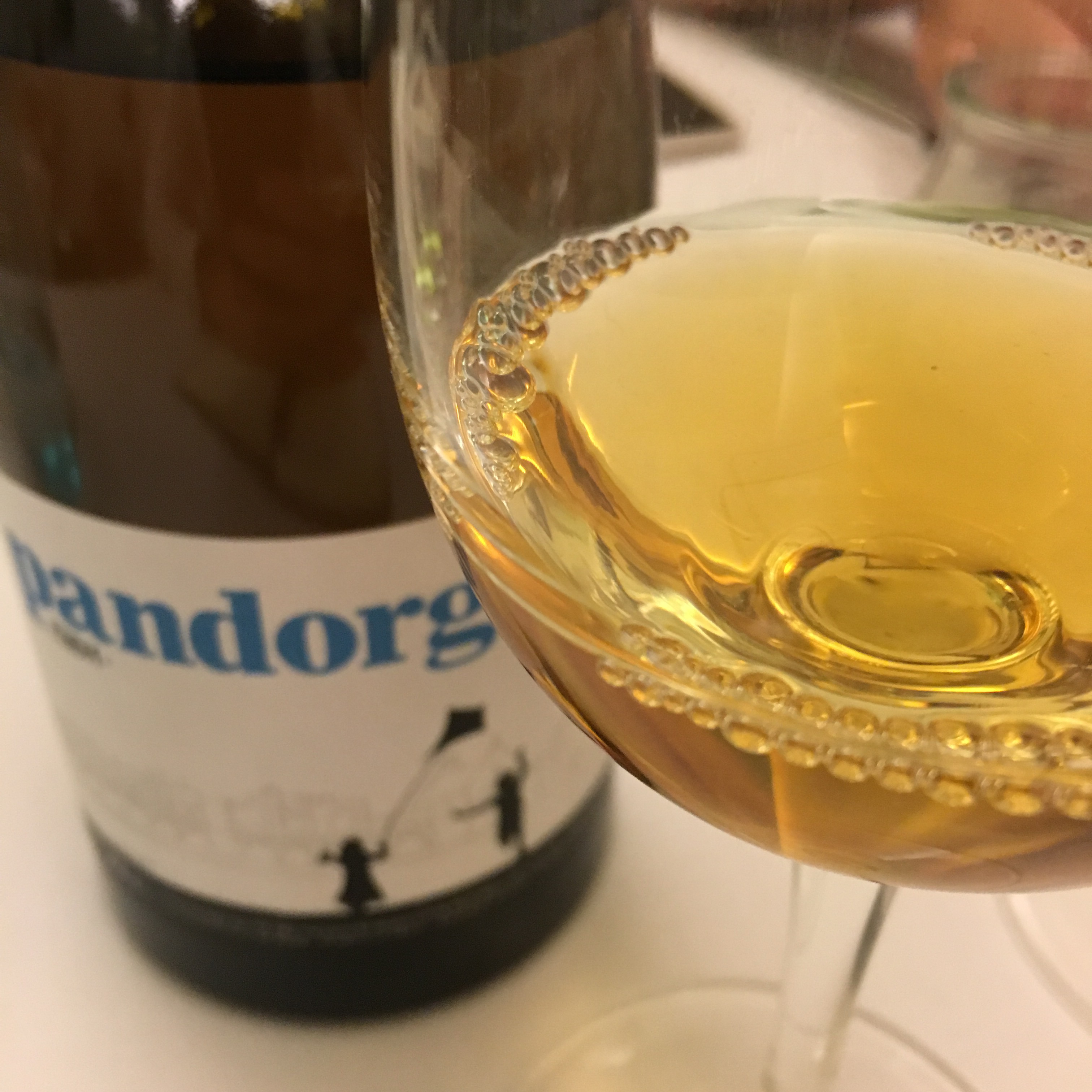
Pandorga 2014

We had this last night at the end of a cracking dinner with a really good little creme brulee (I took no photo of course so I am recyling one).  I also have one of these 100 year old PX beauties down here with me and was nearly tempted to open it but managed to rein myself in in time.

It really is an excellent little wine. A little apricot gem, sweet but mineral, tasty but fresh. Comparisons were made with late harvest rieslings but to me this has a bit more apricot and orange richness than you would find there. But it is a lot more than that: it is terroir specific (the Panesa vineyard, in Carrascal de Jerez), it is a pure expression of the fruit, and it has a specific vintage (2014, obvs). In fact it not only has a vintage, but by choosing to vary the asoleo (less asoleo for a cool season like this one, slightly more for a warm season like 2015), and fermentation without temperature control it almost exaggerates the qualities of that vintage.

But most importantly, a little gem of a wine.


Fino y amontillado de la familia

At first I was alarmed that my team in the office had discovered my blog (will have to be careful about posting at lunchtime) but I was very touched when one of my colleagues brought me these from the family vault in Aguilar de la Frontera.

The “fino” is apparently a bota they have had for 30 years that gets refreshed with mosto year after year. It doesn’t seem to have developed flor but there is just a bit of oxidation and the result is a potent little wine – big farmyard and baked apple nose on it, no real acidity but big in profile on the palate, again with baked apples, and pretty long. Very tasty.

The amontillado – said to be from great grandad’s day – is even better. Very nice caramel and nuts on the nose and palate, again potent and dry but not too salty or astringent. A bit of alcoholic heat but the sort of wine you could drink a lot of.

Two cracking wines and a great way to start the weekend. Many thanks!

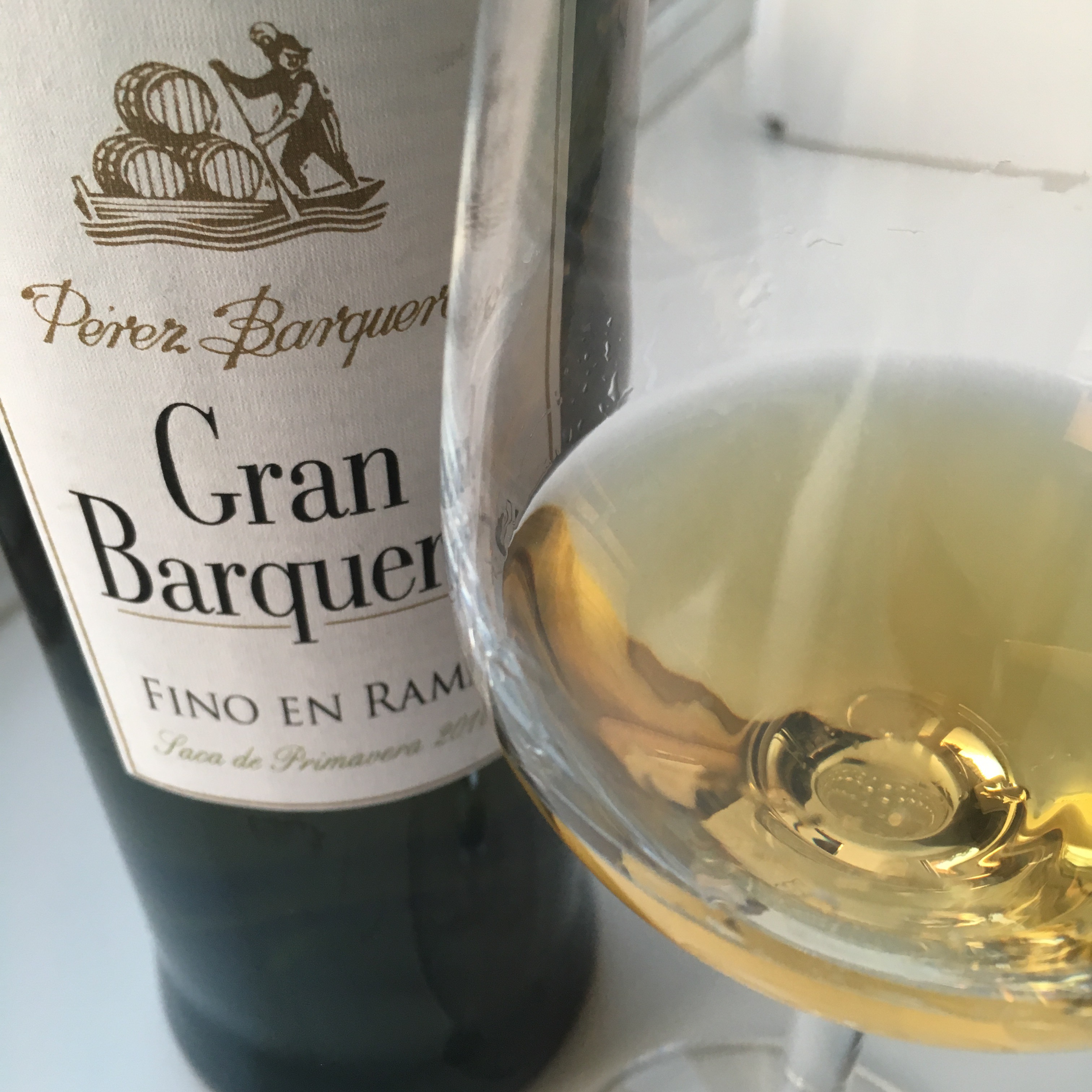
Fino en rama Gran Barquero

The en rama version of the classic 8-10 year old Montilla Moriles fino (TN here) by Perez Barquero and this is possibly even better.

Lovely old gold colour and big on aromas of haybales and yeast but also a bit of chamomile tea and some grapefruity citrus. Quite solid on the palate but not flabby at all, and the flavours are punchy, spicey and zingy. It really follows through on those hay bales with a salty, yeasty, intense palate.

A really top class fino.

Mons Urium in Taberna Palo Cortado

Another great night yesterday in Taberna Palo Cortado, this time to taste the wines of Bodegas Urium, a small, family run bodega that is one of the newest faces in Jerez but to judge from last night one of the most passionate.

The bodega has been around for “centuries”, formerly, as an almacenista (one of the “faceless”  winemakers of Jerez, as one of the guys put it last night) and is located on Calle Muro, aka “Wall Street”. The bodega is run by Alonso and Rocio Ruiz, a father and daughter team from a family from the town of Moguer, in Huelva (known to the Romans as “Mons Urium”, from whence the name). Alonso fulfilled a lifelong dream – learnt in turn from his own father – when they acquired the bodega in 2009, acquiring not only a historic bodega but, more importantly, its contents. In total around 500 botas of wines, many of them very old and, to judge by last night, very fine.

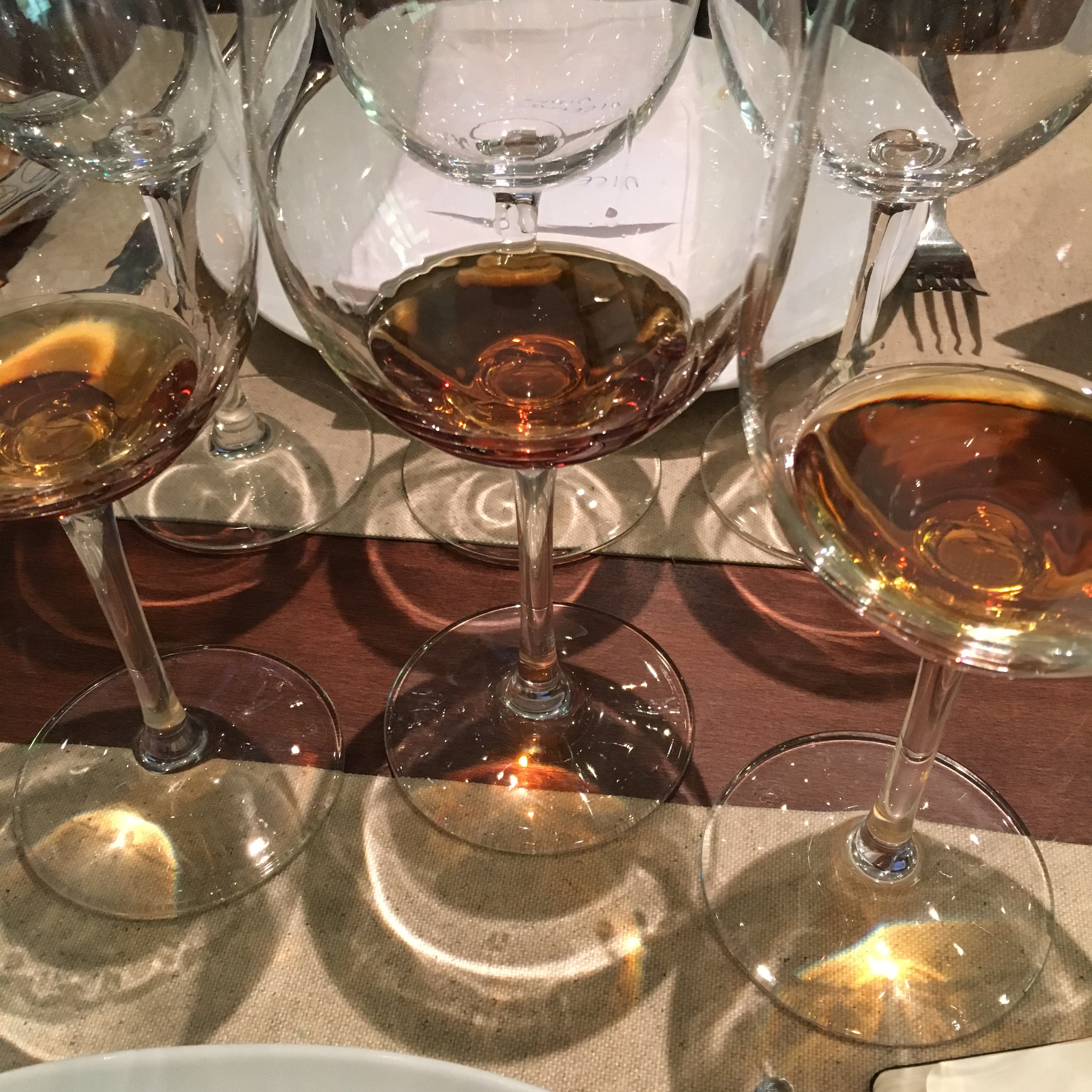
Last night we had five wines: a very nice fino en rama – fruitful, yeasty and juicy – with around eight years under flor, and four VORS wines with an average age of 45 years – the amontillado, oloroso and palo cortado, pictured above, and a very youthful tasting 45 year old Pedro Ximenez.  Five excellent wines – I particularly liked the fino and the punchy, saline oloroso, but the amontillado was elegant and smokey and the palo cortado had a bit of spirit to it.

More importantly, we also had the chance to meet Rocio and one got a clear impression of a project that was moving in the right direction. Having trained with none other than Luis Perez she has a very uncluttered, balanced approach to winemaking that was as free from blarney as it was from unnecessary formalism: wine making with wine at its center, with the goal of making wine that people can drink. It was fascinating to hear her talk about the gradual progress in tasting, assessing and classifying mostos and wines, and the efforts to imprint their own style on the old “jewels” they had inherited. It all sounded like hard work, but despite that there was a lot of laughter and enthusiasm that was captivating.

All in all, another terrific evening in Taberna Palo Cortado and a real pleasure to meet one of the young winemakers pushing the region forward.

 

Fino Capataz Solera de la Casa 

Once again at the bar of Angelita and these guys never fail with their wines by the glass. It really is fun coming here.

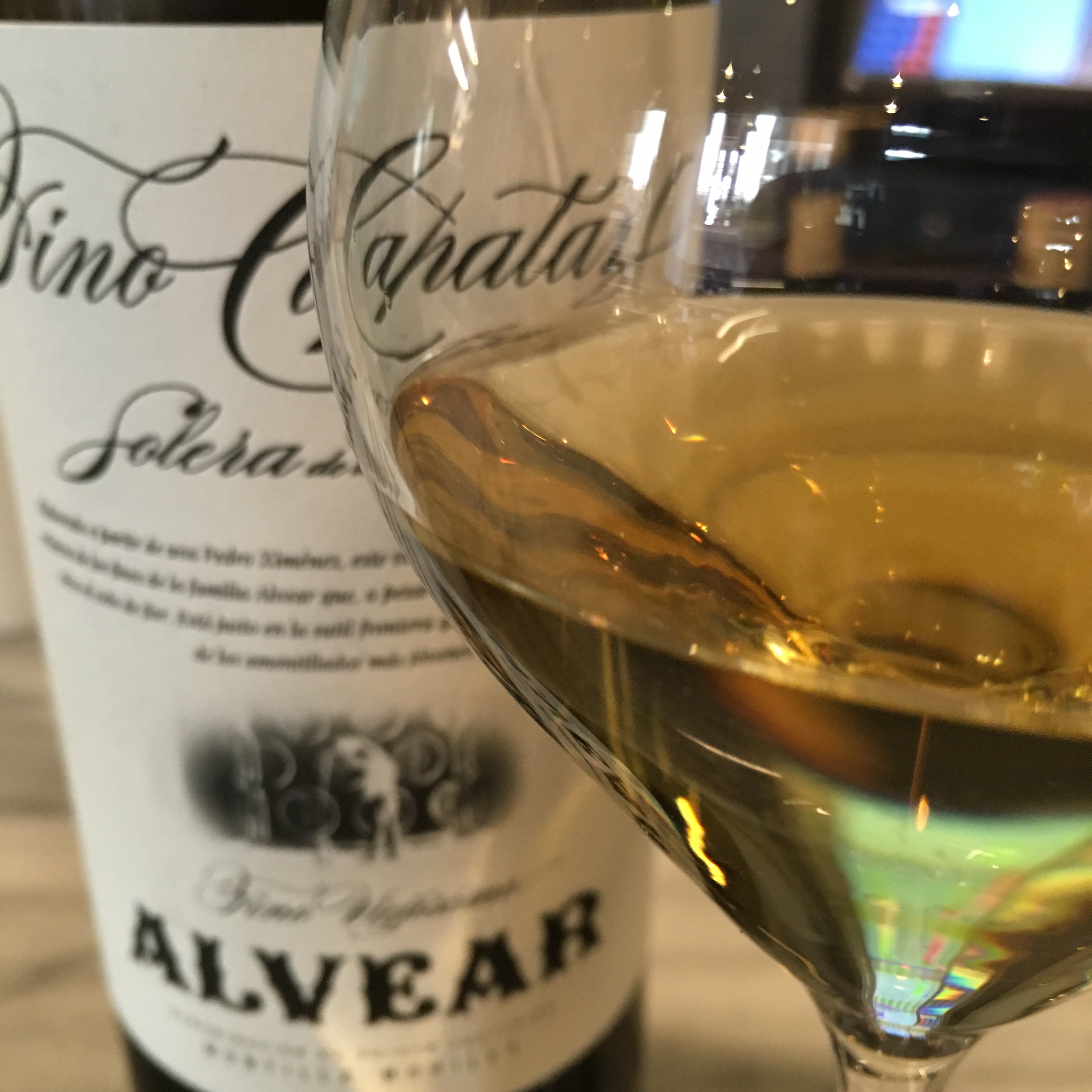
This is a fino by Alvear, in Montilla Moriles, that is 100% pedro ximenez and has had a long long time under flor – if the original Capataz had over 6 years this has had at least a couple more. (I was told once but I had already had a few at the time.) I am predisposed to like this wine since I learned I shared a surname with the great great grandmother of the current owners, but even without that whiff of nepotism it is a cracker.

The colour is not quite as dark as the picture suggests – it is a straw-coloured gold with a suggestion of black to it. On the nose it is punchy, nutty with hay bales and sweet and herbal tea touches – very nice nose with plenty in it. On the palate it is an intense old liquid: very saline and a real burn on the edges of the tongue, full bodied and oily, and with bitter almond intensity. Long, long salty and bitter finish to it.

Intense but balanced and with plenty in it – a really top class fino worthy of Great Great Grandma Ward.

(And followed with a 2002 late harvest Trimbach – absolutely brilliant contrast, see comment above re coming here.)

Pedro Ximenez OVNI 2015

The second of a pair of fascinating sobre tablas by Equipo Navazos (in association with Coalla Gourmet) which I had during a great night at Angelita Madrid the other night. The name is a play on the Spanish term for unidentified flying objects (objetos voladores no identificados) – although this one is a winelike object (objeto vinicola). 

The ficha is again great (as is the new website) and this has “a few months” of ageing – some in stainless steel and some in cement tanks under flor. The resulting juice is pale in colour and has a nose that promises sweet, ripe fruit. On the palate though it is dry and slightly heavy, fruit flavours with soft minerals. 

No doubt about it, a very interesting little wine.