Ramiro Ibañez and the History of Palo Cortados 

3682b0b9-b89a-4940-a2b4-608eae56c654-1

A quite outstanding masterclass, by the Master himself, appropriately enough in Taberna Palo Cortado. Many of the points were not new, but it was an excellent presentation bringing some much needed factual clarity to an area too often given to folklore while at the same time deftly comparing the industrial present to a past that was more respectful of the vines and the wines. My own retelling is going to be painfully inadequate by comparison, but I feel compelled to try.

History, not mystery

I particularly like the asymmetry in the title: “History” contrasting with the “Mystery” you get told about in 9 out of 10 tastings of palo cortados. With Ramiro the story usually begins back in the mists of time with the formation of the continents – or at least the Iberian peninsular – but here we pick up the story a mere 250 years ago at the back end of the 18th Century.

Until then the guilds in Jerez had prohibited the ageing of wines in el marco and the wines produced were young wines differentiated by style. The wines were not monovarietal: although palomino fino was largely dominant in Sanlucar, in Jerez less than fifty percent of vines were palomino, and many of them later ripening varieties that gave heavier wines. In practice, the growers would ferment the wine in botas fed with all the varieties in their vineyards, harvesting in several passes to account for the differing maturities of the distinct varieties, but the varieties were not kept separate. The wines produced in this way were then classified according to their characteristics – palma for the finest wines, and palo and raya for the heavier wines.

Ageing and classification

As the Century drew to a close the great Juan Haurie brought and won a historic lawsuit against the prohibition of storage and ageing, making possible the development of all manner of cellaring. Bodegas that previously had classified young wines by style also started selling wines that were a year, two years and three or more years old using classifications, adapted to reflect how the wines had developed in bota with “cortados” (palma cortado and palo cortado). (Confusingly, at first there were in fact different classifications corresponding to different stages of the wines: raya, raya/dot and two rayas at fermentation and then as the wine developed palma and cortado (for the finest wines, destined for biological ageing) and raya.)

Plurivarietal, vintage specific, and unfortified

But the wines of Jerez would have been fundamentally different to those we know today. First, they were vintage specific “añada” wines. Second, there was no fortification. Third, the wines were not monovarietal.

We were treated to three examples of wines from this “pre-industrial” age: a Palma from palomino fino on Miraflores Alta, and a Raya, also from palomino fino on Miraflores Baja, that had been harvested later, and a plurivarietal wine, the Encrucijado 2014, 40% uva rey, 40% perruno and 20% palomino fino. There was a notable difference in weight, girth and punch between the palma and the raya – an excellent illustration – and a massive difference between the palomino finos and the other varieties. And the Encrucijado was excellent on the night, with its overripe melon start, delicate structure, sharpness and zip.

The plurivarietal vineyards met their end thanks to the gradual adoption of palomino fino in Jerez and, in particular, tiny little sap suckers: the phylloxera crisis laid waste to the many indigenous varieties of the region. As a result, vineyards that had previously been plurivarietal or of varieties other than palomino were not replaced, and one of the key variations between the wines was lost.

However, wines continued to be statically aged as “añadas” in many cases, and even those wines that were used to refresh soleras were generally only introduced to the solera after three or four (or in some cases even six) years of static ageing. As a result, only a limited percentage of such wines went on to be finos, since nothing but the finest, first press mosto would survive four years of static ageing under flor (finos that incidentally being used to refresh the soleras of the most highly valued wines of them all, the amontillados).

Monovarietal, but still vintage specific

We were once again treated to wines that would have corresponded to those of this early-industrial age (end of the 19th to early 20th Century), specifically the Oloroso la Barajuela 2013 and the Williams & Humbert Oloroso de Añada 2001.

The Oloroso la Barajuela was fantastic. Probably my favourite wine of the night, it had bright acidity and potent fruit with just a hint of nuts and caramel. The Williams & Humbert also had a bright acidity to it, fruity nuts like hazelnuts and a velvety texture (there was a mention of residual sugar), but a lot more concentration as you would expect – a revealing comparison in that respect.

But what was really interesting about these two wines became more obvious as we moved on to the “modern” palo cortados: the Williams & Humbert “Dos Cortados” and the Barbadillo “Obispo Gascon“.

Monovarietal, solera and fortified 

These wines from the modern age of soleras are monovarietal palomino finos subjected to the bare minimum of static ageing: selected and fortified at the sobretablas stage after only a few months, rather than the several years of earlier times. This is one of the less well known but really important changes in the development of dynamic ageing over the years: whereas once wines were classified after several years of static ageing, they are now classified young.

They also offered examples of the two dominant styles of modern palo cortado. Palo Cortados are famously defined by the Consejo Regulador organoleptically  – wines that are as fine as an amontillado in aroma and as structured as an oloroso on the palate. And since there is no definition stipulating how it should be made producers tend to play up the “mystery” of how they make it (is it made, or is it born, etc?)

But with all due respect to the hype, it is all a load of bunk. As figures as illustrious as Jesus Barquin, Alvaro Giron and others have already pointed out, in the modern winemaking of single varieties and temperature controlled inox mystery is in short supply. While the name may derive from wines that once truly were accidental, today’s palo cortados are made by simply producing a slightly lighter oloroso – either selecting a lighter mosto than used for the oloroso (if the house oloroso is made from the second press, the palo cortado would be primera yema), or by subjecting the mosto to a little biological ageing.

Of these methods, the Dos Cortados would be an example of the former, and the Obispo Gascon the latter. They both showed the solidity and power of solera bred wines:  although the añada olorosos were potent and flavourful in their own way, they were noticeably finer and more elegant. The solera wines were impressive though, no doubt (and maybe the Obispo Gascon had a touch more salinity).

And there a great evening came to an end, but not before some delicious tapas and a cheeky glass of Encrucijado – in many ways the star of the evening and a delicious throwback to the time when these wines really were a mystery. I for one hope that it isn’t the last of its kind, and that the history of palo cortados has not yet been fully written.
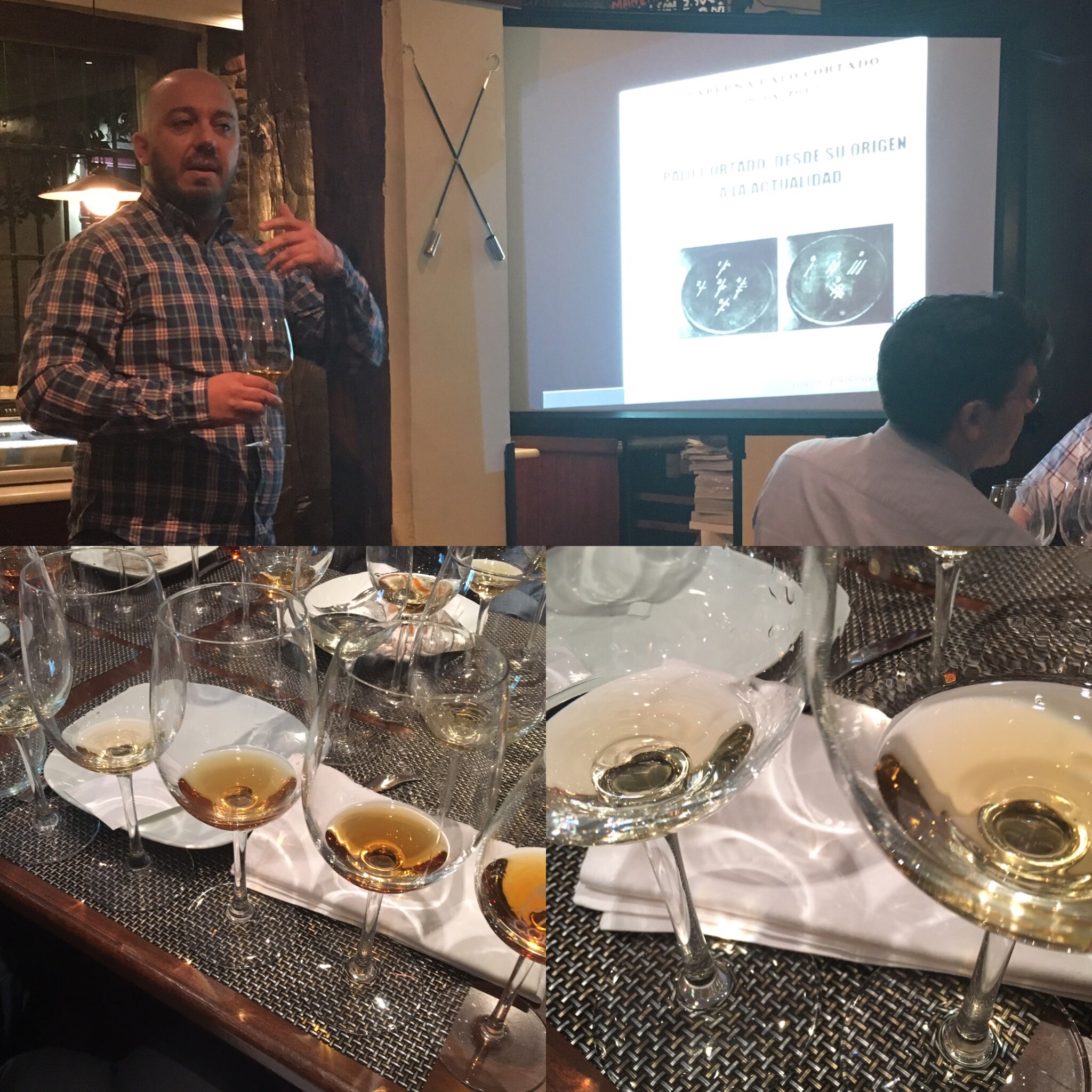
Ramiro Ibañez and the History of Palo Cortados in Taberna Palo Cortado

Fantastic tasting/masterclass by the man tonight at Taberna Palo Cortado, lifted by an excellent Encrucijado 2014 and an absolutely stratospheric Barajuela oloroso (tonight posing as a palo cortado). 

This fella drops knowledge from a surprising height, and let’s be honest this subject is crying out for a bit more knowledge and a bit less blarney. Above all for me the presentation made sense of and brought together a few strands I had picked up along the way. 

I hope I can remember some of it tomorrow.

CGWF17: Part 2 – Zerej Volume II 

There is a lot to like about Armando Guerra’s Zerej releases, of which this is the second.

The first volume would be a few years ago now and was something of a pioneer: a boxed set of four magnums of wines for with different amounts of biological ageing, accompanied by an explanatory booklet. The idea is for a group of friends to hammer their way through the four magnums and the booklet and by so doing learn about the miracle of the flor. I never tried it but would have loved it – and the format (in particular the magnums) is dead right.

The second volume is the oxidative ageing version and now Armando Guerra has the full might of Barbadillo behind him, so your box includes magnums of a white wine (in the style of Mirabras), an amontillado (think Principe de Barbadillo), an oloroso (the classic Cuco) and a stately old palo cortado (Obispo Gascon). This time around I did get the chance to try them, although not without some difficulty: on the day the man was absolutely mobbed as the locals piled in.

They are classic wines, full of the spikey character I associate with Barbadillo. Really interesting too to be able to taste the spicey, vegetable white wine and see the evolution in that character. They also undoubtedly serve their educational purpose – particularly if you had the discipline to wade through the accompanying literature – although for my money more an illustration of classic styles than the effects purely of oxidative ageing (I wouldn’t mind seeing the same wine with six, twelve and eighteen years of oxidation, say).

Not sure how many of these sets there are, but given Barbadillo’s distribution muscle there must be a chance of this being available internationally. I certainly hope so – there are too few opportunities to sit down with four magnums of sherry and a few mates!

Palo Cortado Cruz Vieja 

After a frankly demoralizing salad at my desk I have escaped my bonds for a quick refreshment in my local hostelry of choice and in the form of this sharp, racy version of a palo cortado by Faustino Gonzalez.

These guys label everything as en rama – which strikes me as odd for these older wines – but for whatever reason it does come across as a smidgen dull and cloudy to begin with. It is defined on the nose alright. Has a piercing, sawdust and tomatoey vinegar nose – really sharp. Then sharp again to start with on the palate, followed by dry, woody caramel flavours (notes of amontillado, as the back label says) and a bitter, zingy, mouthwatering finish.

Sizzling, acidic stuff but maybe lacks the depth of flavour to balance that sharpness.

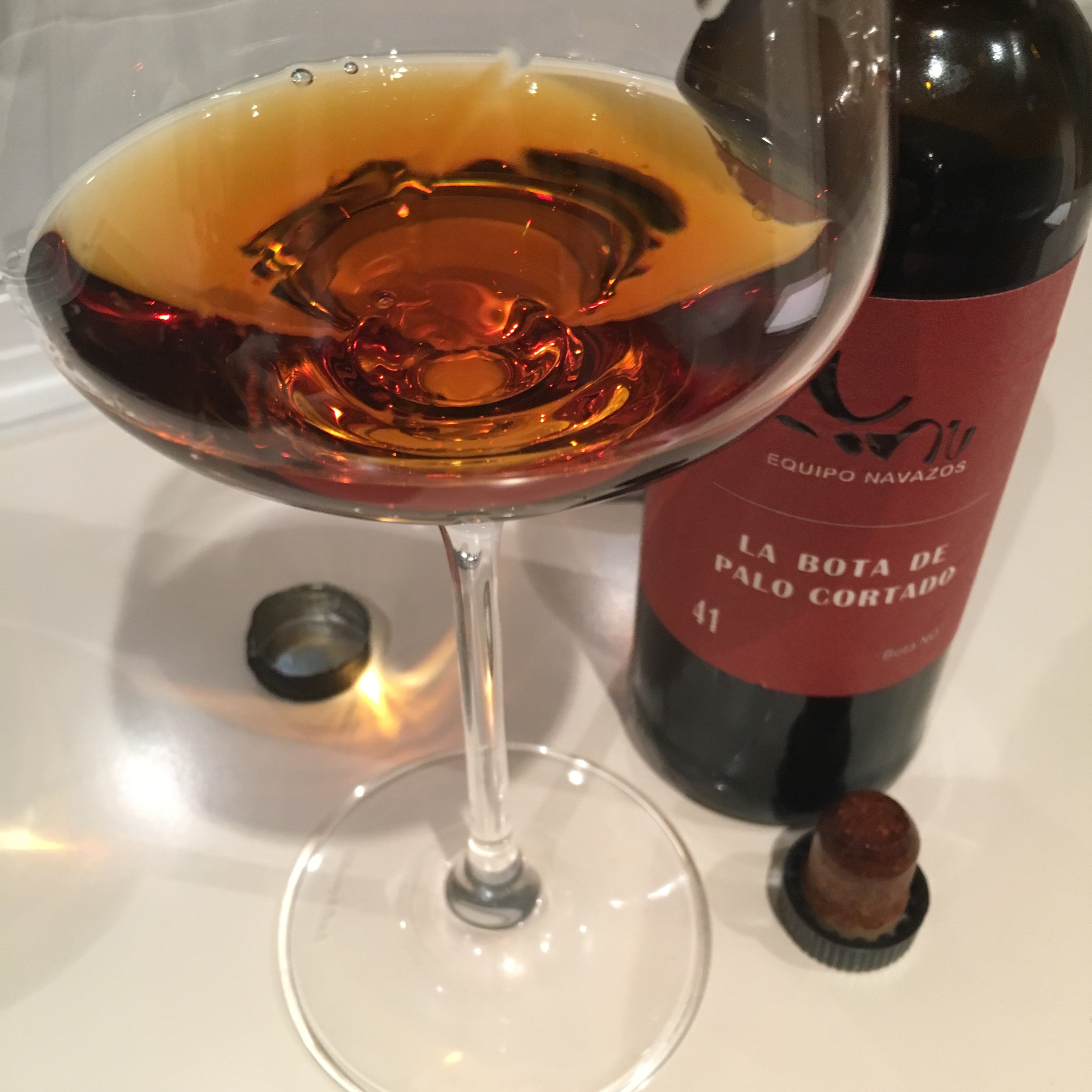
La Bota de Palo Cortado 41 – Bota NO

First sherry in a week so I thought I deserved something a little bit special and this is special.

It is a Sanlucar palo cortado from the now extinct bodega of Gaspar Florido – initially acquired by Pedro Romero before Pedro Romero itself collapsed in tragic circumstances in 2014. This was bottled in February 2013 and I refer you to the excellent Equipo Navazos website for an account of that and their explanation of what it is all about.

In colour it is a gorgeous crystal clear, sparkling, rich chestnut. (Whatever else may be true I find it hard to believe there are more visually appealing wines than these.) On the nose it starts with the dry salty, woody air of the cellar, but maybe not the full ozone of a Sanlucar amontillado. Then give it a swirl and there are rich nutty, spicey and slightly black treacle flavours underneath.

Then on the palate it is stickier and broader than the sleek nose leads you to expect. The same saline power but heavier, black treacle and bitter burnt wood flavours take over, a suggestion of smoked meats on the aftertaste and then flavours fading to a tails of burnt black treacle, with a moody bitterness but also a higher register sweetness. The salinity of these wines gives them incredible length and those the flavours stay with you right to the end.

A really exceptional wine.

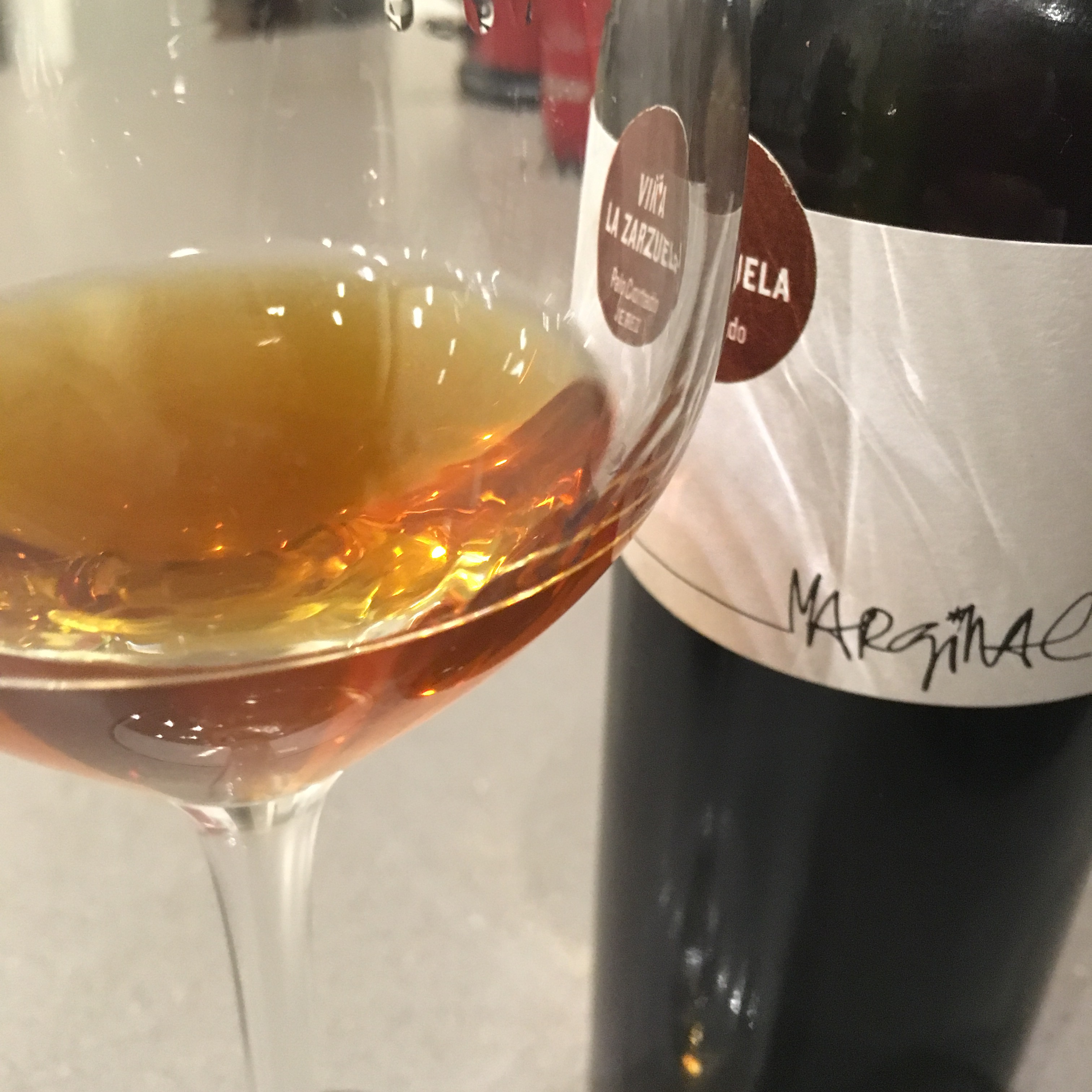
Palo Cortado Viña Zarzuela (el Marginal 2016)

The “Marginal” is a special bottling by the guys at La Tintoreria of a small quantity of a different wine each year, distributed to a few very select restaurants. I was able to try this one thanks to Lakasa, who have it on their top class wine list by the glass even. As yet I don’t know much about it (except how it looks, smells and tastes) although there was talk of it being a non-fortified, old school palo cortado with some old school varietals.

As you can see it looks great, crystal clear and a slightly chestnut amber colour. The nose has a very nice sweetness – ginger and amaretti, a little bit of sawdust.  Then on the palate it is very pleasant, has a nice bite and while dry has gingery/sweet-spice flavours, a bit of bitter almond, but not excessively bitter or astringent – a nice balance and a long, sweet-spice finish. (I would swear, in fact, that it has some sugar, residual or otherwise, but I might be wrong.)

Very nice little bottle – worth trying if you get the chance. 

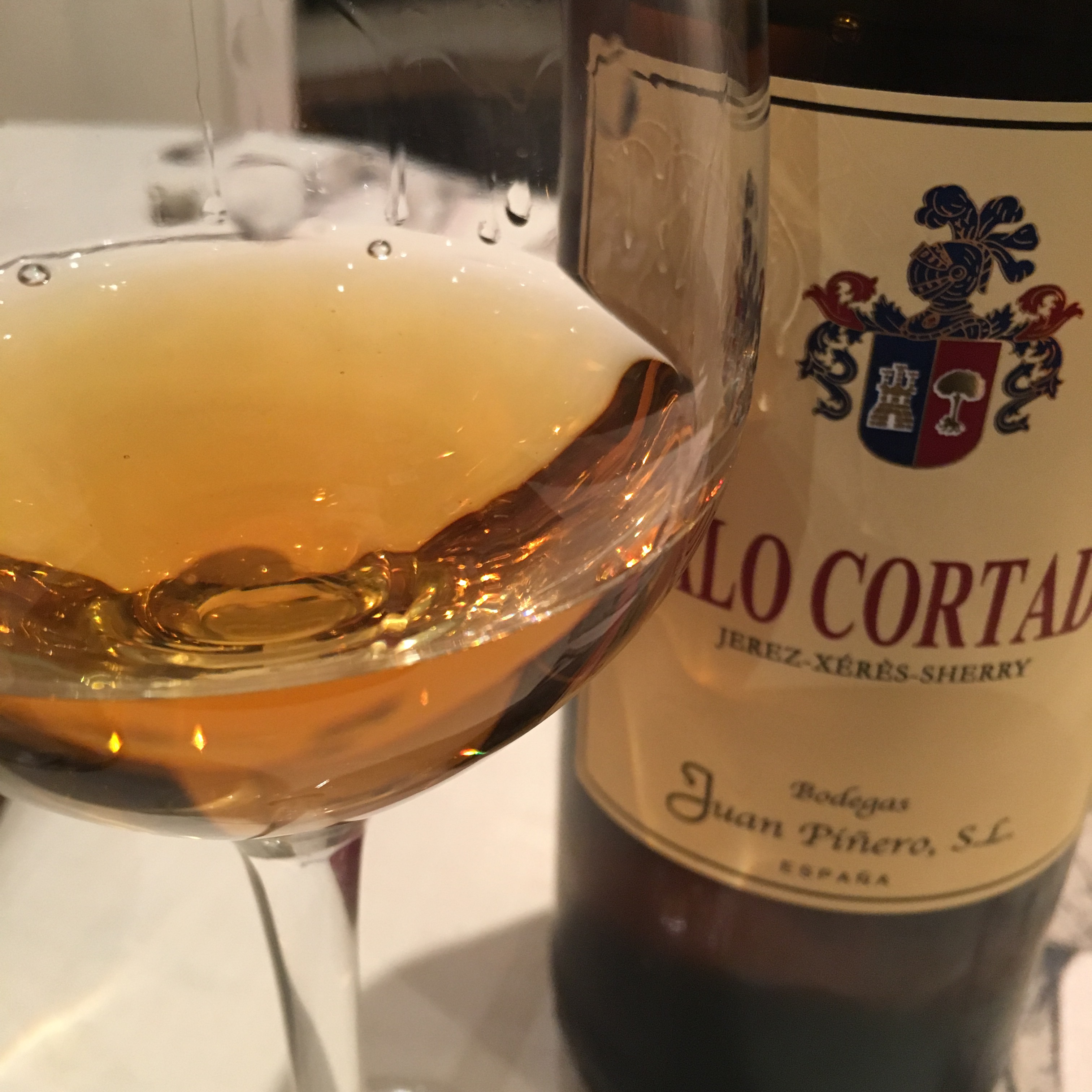
Palo Cortado Juan Piñero

A palo cortado that started life as a manzanilla but showed signs of rebellion, was plucked from the criaderas early and set to rust in the salty Sanlucar sunshine. The naughty nephew of the Maruja, if you will.

This is an extremely fine palo cortado in the Sanlucar mould – one of the easiest wines to drink and enjoy you could come across. I keep pouring a glass with the intention of savouring and getting to grips and then I look up and find an empty glass. It is the kind of wine any restaurant should have on its wine list, easy drinking, good with anything, thirst inducing and, most of all, mood improving.

OK forcing myself to concentrate: lighter, yellow of orange amber colour, sweet and enticing, slightly alcoholic nose, then salty and tasty palate. One of these salty caramel numbers that are all the go. Not over complex but long and, as I said before, thirst inducing and mood improving.

What an absolute beauty of a wine.

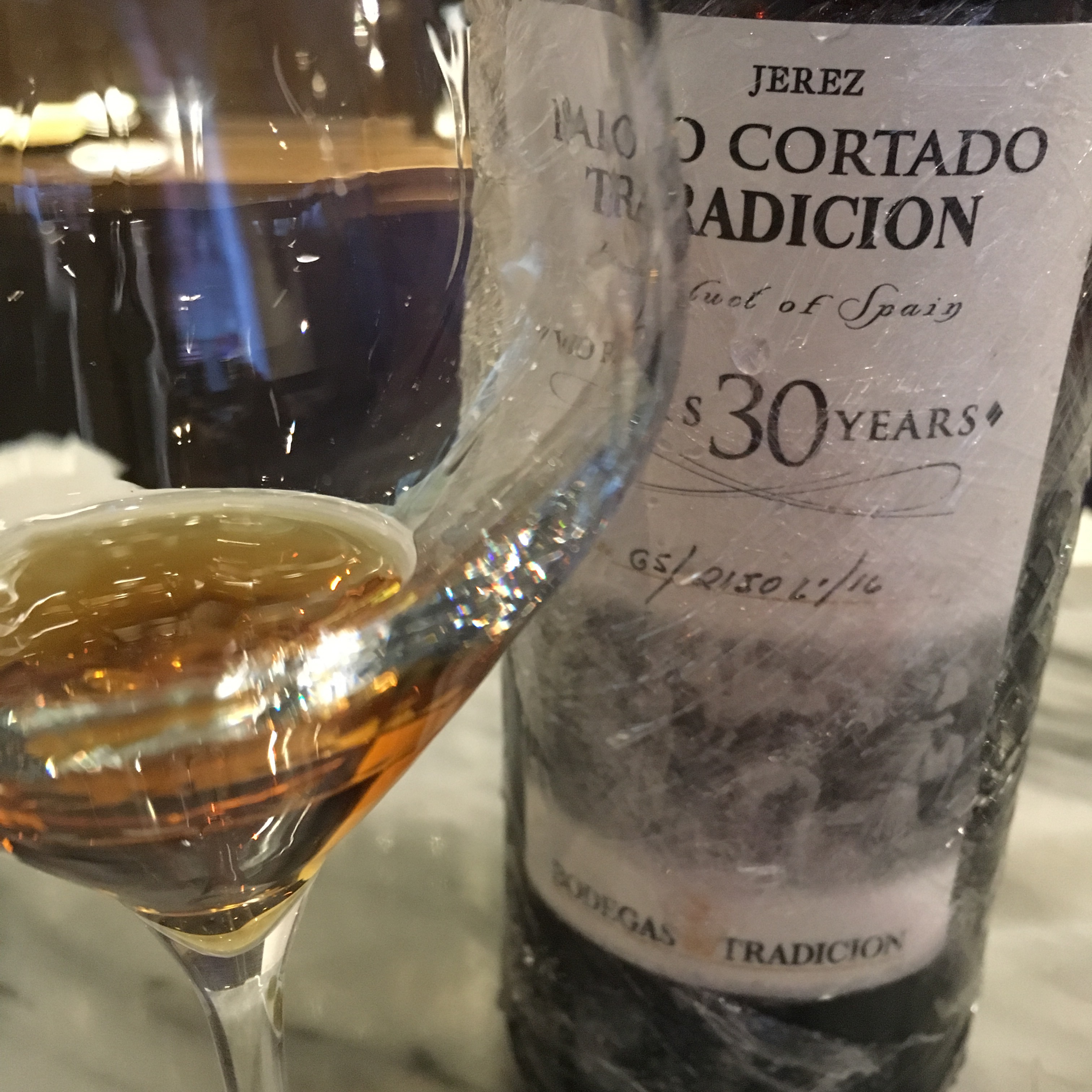
Palo Cortado Tradicion 

After a great night in the company of Tradicion on Monday this is a glass of what they do best – a brilliantly edgy VORS palo cortado (slightly fuller note available of a much older bottle in January).

Beautiful, drink me colour to it. Nose has a touch of diesel with burnt citrus and roasted nuts, on the palate it has acidity and zingy salinity and an almost fruity but dry hazelnut, then a slightly more bitter, warm, buzzy and superlong finish.

Wow the acidity though – a wine that goes down fighting.

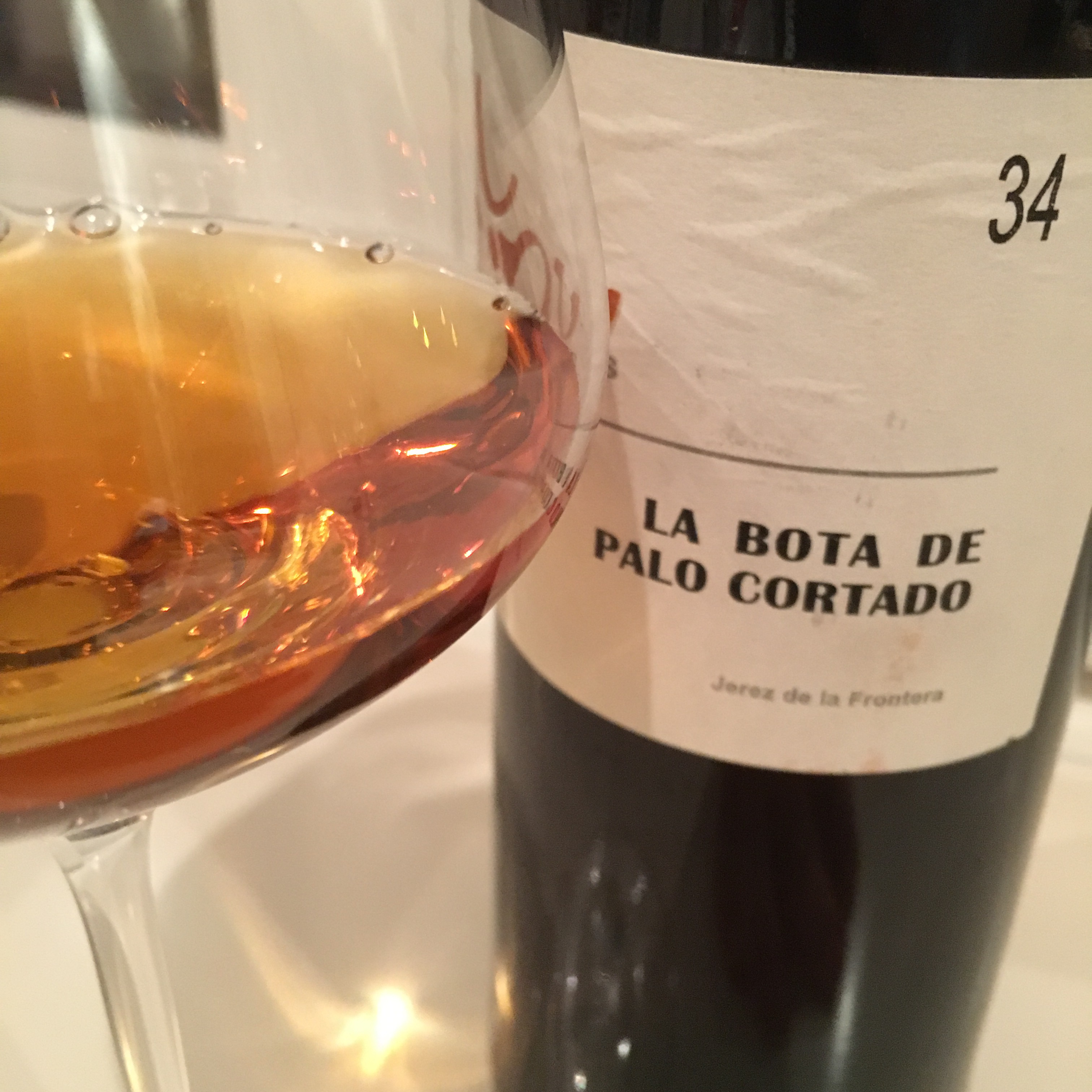
La Bota de Palo Cortado 34  

This was not the first sherry I ever had but it was the first to make me sit up and really take notice. I am spoiling myself after a few days of rustic holiday with the family, during which sherry was notable by its absence. Besides, I see from the blog that I last opened a bottle way back in February!

This wonderful palo cortado was released back in February 2012 and you will struggle to find any nowadays (I reimported a half case from the UK last year) although you can find wines from the same solera if you know where to look (there are clues on this blog).  It was sourced by Equipo Navazos from selected botas in a solera held by the almacenista Garcia Jarana and then finished in their instalation in Bodegas Fernando de Castilla before bottling. Since then it has had four and a half years in the bottle and half my excuse for opening it was to see what difference that time might have made. 

The colour is as lovely as I remember, and it has a fantastic nose of sweet brandy and nuts – maybe not quite as explosive a nose as I remember. Then a nice cool entry, zing and burn of salinity with nutty toffee and then some slightly more bitter,  tobacco and woody notes and that long, mouth watering finish. 

Maybe, maybe a touch less explosiveness and sweetness, a touch more tobacco, but a lovely wine in the prime of its life – terrific.

Palo Cortado Cayetano del Pino – revisited 

So here goes the last of this very nice little bottle of palo cortado first opened two weeks ago

Been a couple of days without sherry and the first thing I notice is the salinity and the sting of the alcohol and acidity on the lips and palate. Really a potent start and a saliver summoning, mouthwatering finish. In between I would put this at the gingery, bitter orange end of Jerez palo cortados – juicy but at the same time spicey, with a lot more than just caramel or hazelnut flavours. 

Packs a little punch, I can tell you. Lovely stuff.