CGWF17: Part 7 – The winemakers

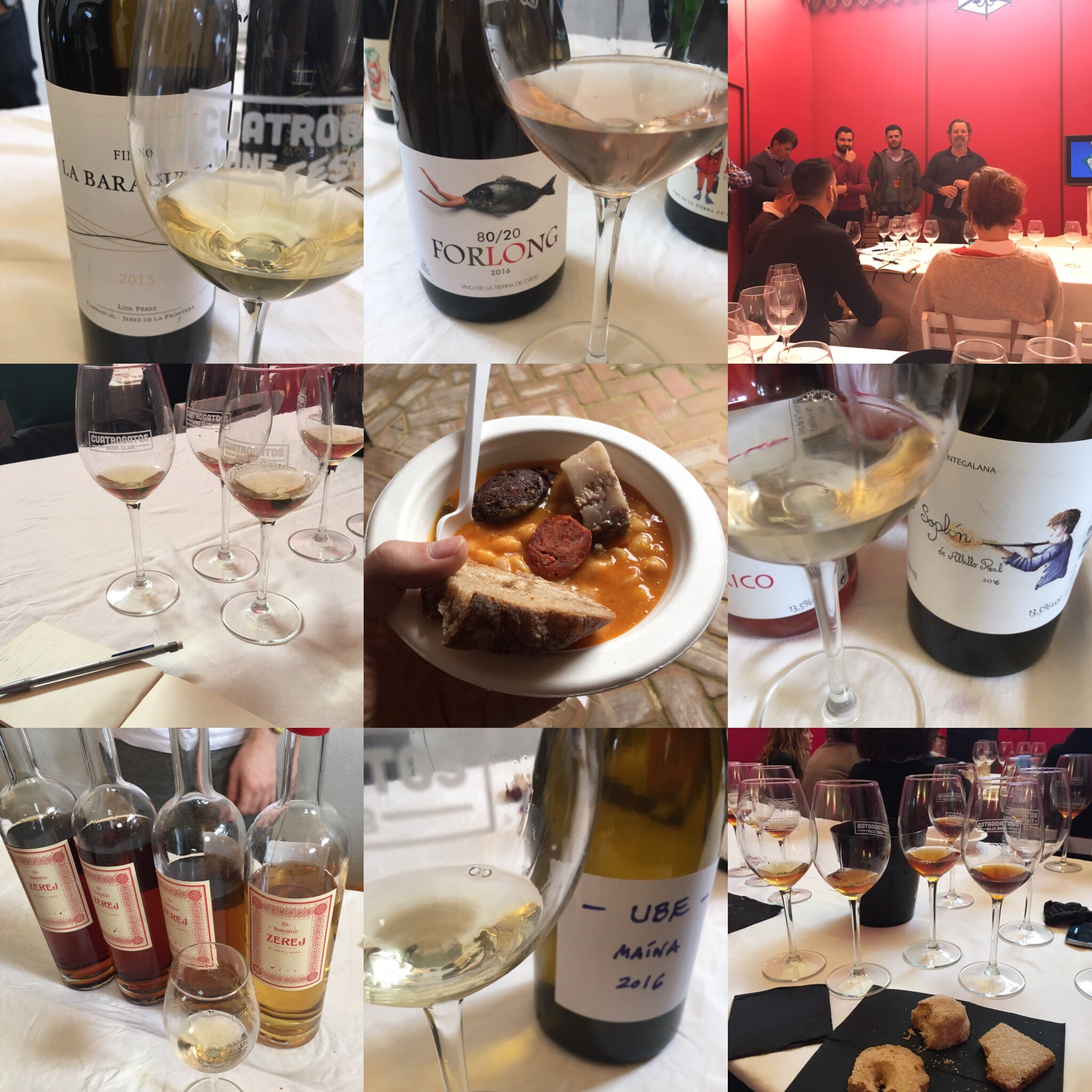
Some final great memories from the Cuatrogatos Wine Fest in Puerto de Santa Maria. Hard to believe that it is already a couple of weeks ago (a fine testament to the velocity with which I write up my posts). It was billed as wine and laughter and vice versa and delivered on both promises.

For a start, some absolutely cracking wines you can drink by the gallon from makers like:

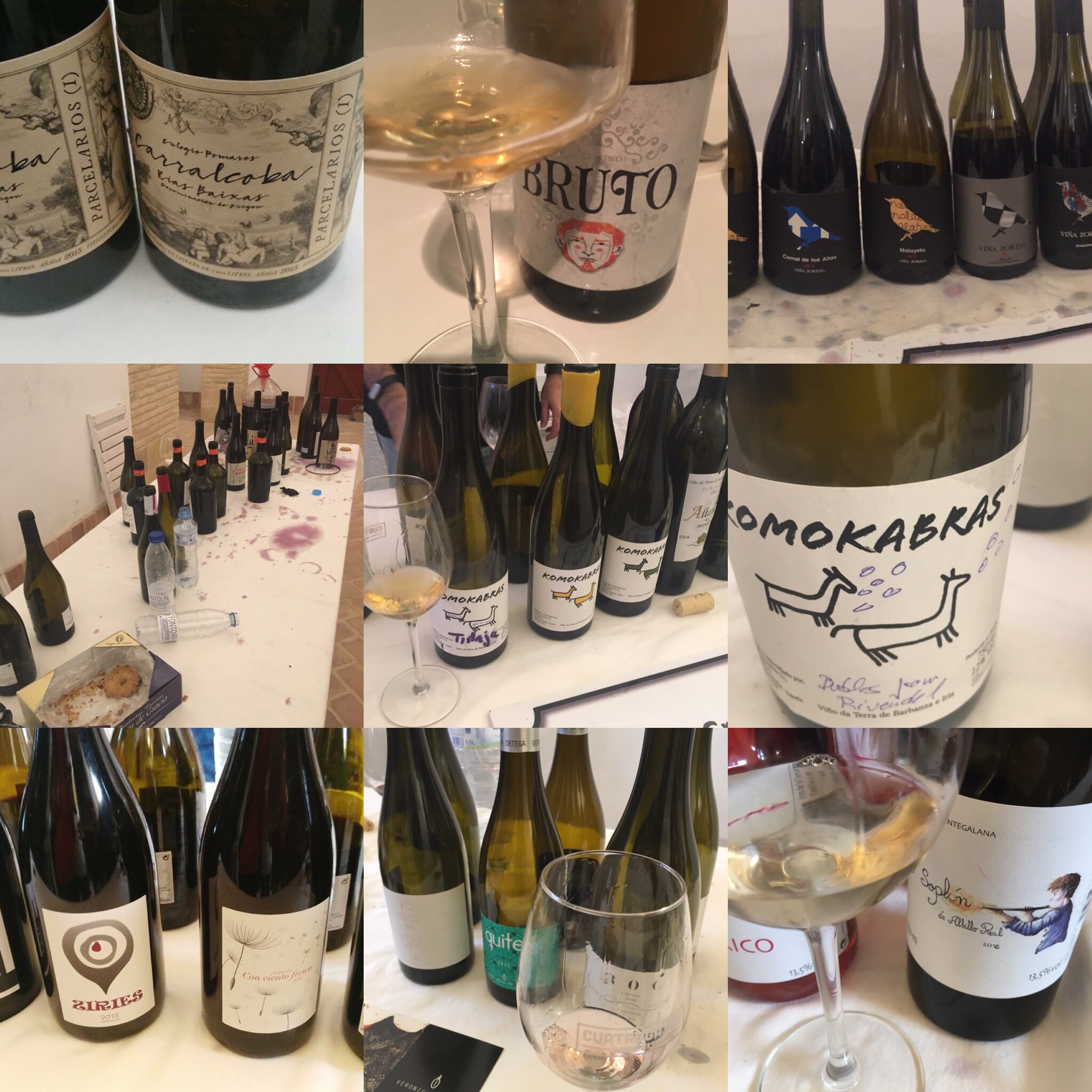
  • Jose Crusat (Entre os Ríos) and his fantastic range of wild and woolly whites including the leesy and buzzy Altares de Postmarcos, the super sharp Vulpes Vulpes, his two wild albariños Komokabras Yellow and Green, an even wilder one with time in a tinaja and a funky ancestral called “Bubbles from Rivendell” (which I missed out on on the day);
  • German R. Blanco and his range of reds from across the North, including juicy fresh Quinta Milú and La Cometa, increasingly refined mencias from Altos de San Esteban the fascinating range of parcel specific wines from Casa Aurora, and his new Rioja, La Bicicleta Voladora (which I again missed out on on the day – you snooze, you looze);
  • Javier Castro and Sonia López (Bodega Ziríes) and their garnachas from Toledo – four wines that were in turns mineral, fresh, aromatic, concentrated and expressive;
  • Beatriz Herranz, the “Verdejusticiera” (Verdejo law maker) from Barco del Corneta with what are probably the best wines being made in Rueda, mineral and rich, serious stuff, and also a really interesting palomino (Bruto);
  • Cristina Carrillo (Bodega Finca Fuentegalana), whose stand seemed to be mobbed every time I stepped near it (to the point where I could only try one wine at a time) had a really interesting stuff range of wines from albillo to shiraz; and
  • many other cracking bodegas (I would write them all up if I was a half decent blogger/had time), including Xabier Sanz and his fantastic feathered friends from Navarra (Viña Zorzal), Eulogio Pomares and Rebeca Montero, Miguel Montoto and Inma Pazos (Vinos de Miguel: Coto de Gomariz, Ailalá y Vinos de Encostas); Xurxo Alba (Albamar); Charlotte Allen (Almaroja); Verónica Ortega (Verónica Ortega); Cuatro Ojos Wines, Clos Lentiscus, Casa Castillo – the list could go on and on.

There was plenty of laughter too. Shouldn’t really have been a surprise given that we were all there thanks to the genial Federico but in addition to it was genuinely a fun place to spend the day.

And for me it was a fascinating and inspiring day. When you think about it wine making is miraculous – and I refer to all winemaking, not just the water into wine at wedding stuff – and to me there is something not quite canny about winemakers – people that can look at a vine and consider how to prune it, how many leaves and bunches it can support, when to harvest the fruit etc,  let alone all the decisions and judgments needed thereafter in terms of cepage, batonnage, barrel age, and other words ending in age. It requires a lot of knowledge, skill and, frankly, hard work and I find it extraordinarily inspiring to chat to really good winemakers and let the technical knowledge wave over me. When they are as friendly and generous as this bunch were it makes for a really uplifting and educational experience.
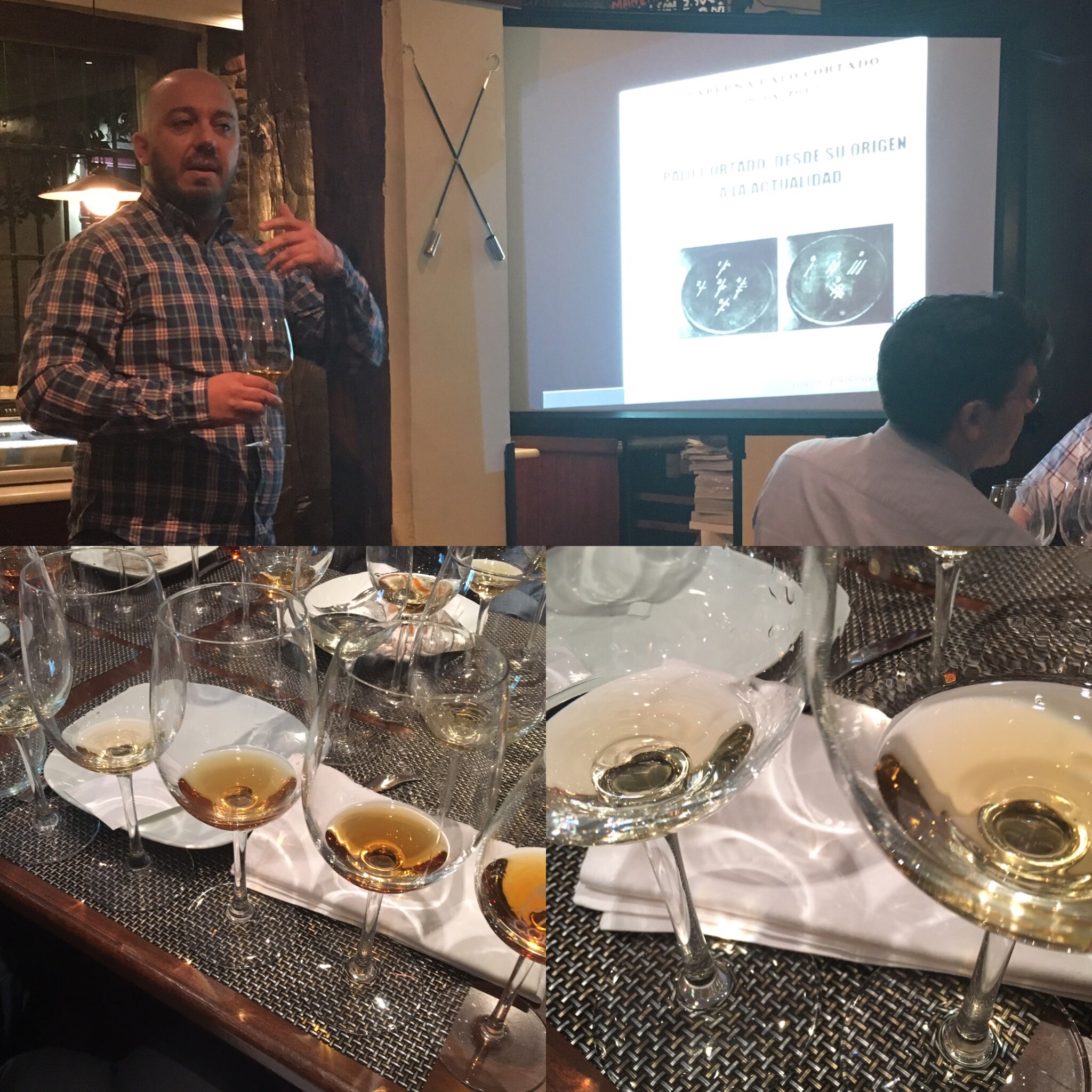
Ramiro Ibañez and the History of Palo Cortados in Taberna Palo Cortado

Fantastic tasting/masterclass by the man tonight at Taberna Palo Cortado, lifted by an excellent Encrucijado 2014 and an absolutely stratospheric Barajuela oloroso (tonight posing as a palo cortado). 

This fella drops knowledge from a surprising height, and let’s be honest this subject is crying out for a bit more knowledge and a bit less blarney. Above all for me the presentation made sense of and brought together a few strands I had picked up along the way. 

I hope I can remember some of it tomorrow.

CGWF17: Part 5 – Cota 45

Pretty shambolic blogging effort here – note how I cut one of the four bottles out of the picture. The Pandorga 2015, no less.

To be honest though I was most interested in the new UBE Maína 2016. The original UBE, the exceptional unfortified 100% palomino (the 2014 pictured in the centre above)  is from Miraflores, probably the most reknowned of the pagos influenced by the Atlantic. This wine, which will only have had a few months in the barrel and has a good way to go yet, is from Maína, probably the most reknowned of the river influenced Sanlucar pagos. Really interesting to try them together.

Although the Miraflores is vertical and fresh for me one of its strengths is how aromatic it is – particularly after a little while open – and the potent little bomb of sapidity. Compact and refined but full of almost savoury flavour.

By comparison the Maína seems heavier (but has only had a few months in the barrel after all) and has a lot more structure and upfront power – whereas the Miraflores slips in this seems to kick the door down. Bags of flavour there too – this has the potential to be a quality wine alright.

And after that it would have been rude not to try the Encrucijado 14 that was available, and if I thought it was elegant and defined before, after the young Maina it was positively silky (to be fair it has had a few months under flor).

Fantastic stuff – going to be a long wait for the UBE Maína 2016 but looks like being worth it.

CGWF17: Part 3 – Cakes and cream in the afternoon 

The second cata at the Cuatrogatos Wine Fest, lead by the man himself, Federico Ferrer, was short and sweet. At least it was for me: short because I overdid the siesta and rocked up an hour late, and sweet because, well, the wines were sweet, as were the little crumbly pastries we swigged them down with.

The sweet stuff isn’t really my bag but these were not your bog standard sweet sherries by any measure.

  • Moscatel Oro “Los Cuartillos” (Primitivo Collantes) was a really cracking start – citrus rich and lush but with nice acidity and a bit of mineral bite, muscle. Nice bit of freshness to it too.
  • Pandorga 2014 (Cota 45) is another favourite – a 100% pedro ximenez that is not as other PXs: sweet, tasty with apricot richness but with nice acidity, like a late harvest riesling.  Top class.
  • Golpe Maestro (Federico Ferrer) – the only wine of the lineup I hadn’t tried and a fascinating beast. A late harvest, sun dried palomino that has been two years in half full barrels. Unlike anything I have tried before – has a curious, herbal sweetness and a funky green bitterness (like bitter salad) to it. Really reminds me of the spicey peppery edge to some manzanillas, but more concentrated and with residual sugar. Need more time alone with this if I can get a bottle.
  • Piñero Cream (Juan Piñero) is a 20 year old 75% oloroso, 25% old pedro ximenez blend, with a nutty, woody, slightly bitter, acidic oloroso to balance the raisins of the PX. A tough ask in this company: next to the younger varietals it comes across as slightly less fruitful, elegant and natural
  • Pandorga 2015 (Cota 45) is something else altogether. Ramiro Ibañez at Cota 45 believes in expressing the vintage so in a hot year he harvested even later and left the grapes longer in the sun. Added to the fermentation at high ambient temperatures what you get is a nectar with a staggering amount of sugar and only five degrees of alcohol (so low he can’t call it “wine”). All that sugar is balanced with a lovely acidity and intense apricot flavour and the stuff is far, far too easy to drink. No spitting this  one!

(This is where I think I am obliged to make some kind of witty remark about the kind of sherry your grandma drinks or something but I can’t be bothered.)

Cuatrogatos Wine Fest 2017

I didn’t expect any less but it has still been a fantastic day by any standards – brilliant wines, including some really exciting new projects, a lot of old friends, some new friends, and a lot of laughs.

Would be hard pressed to pick out a single highlight and it is going to take a while to get my thoughts in order (notes have been taken and spitting discipline was good) but for now my sincere congratulations to Federico Ferrer, his crack team and all the bodegas – really top drawer and will live long in the memory. 

II Feria Montenegro 

Was lucky enough to be invited to an absolutely cracking event today by the guys at Montenegro. 

A select group of top quality bodegas were represented:

Boal de Arousa; Fil.Loxera; Adega Entre os Ríos; Gatzara; Vins Cia. de Vinos del Atlántico; Finca Teira; Callejuela; Sílice Viticultores; Fredi Torres Viticultor; Antoine Touton & Fredi Torres; Bigardo; Suertes del Marqués (con Medianías); Gregorio Martínez; Zorzal Wines; Lorea; Bruma del Estrecho; Las Bacantes; Valsangiacomo; Bodega Vidas; Carlos Valero; Los Loros/Juan Fco. Fariña; Charles de Cazanove; Europvin (negociant); Bodegas La Tapada (Guitián); and of course Cvne, Imperial, Viña Real and Contino.

And unusually for me I was able to maintain a semblance of spitting discipline throughout my (all too brief) stay, so am in a position to even opine about some of the wines – and some absolutely cracking stuff. 

Most exciting find of the day for this blogger was the preview of the pago (even vineyard) specific wines to be released by Callejuela, but the overall standard was excellent and there were some real gems.

Wines that stand out in the memory in particular were: the Komokabras albariños – in yellow and green – and their raposo cousin Vulpes Vulpes; the “toro hecho a mano” by Bigardo; a marvellous Montbourgeau Trousseau; the Charles Cazanove Millesime 2009; a really intriguing Mazuelo by Gregorio Martinez; a bevvy of distinct vineyard specific monestrells by Brumas del Estrecho; and some quite magnificent old classics from Cvne and Contino – the 2009 and 2008 Gran Reserva, no less.

But there were many more – some fascinating stuff and I just wish I had had more time to try them all. 

Vinos de España, Una Pasión – Seville, March 30, 2017

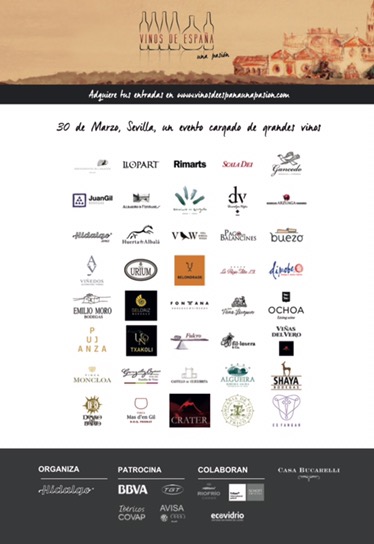
Yet another absolutely top drawer event on the horizon – this year’s edition of Vinos de España, Una Pasion – at which to meet winemakers and drink their wines to your heart’s content. (For details of last year check out this post.)

Once again an excellent line up of bodegas, including Emilio Hidalgo, Bodegas Urium, Gonzalez Byass, Perez Barquero from within my bailiwick, but there are many more as you can see from the above.

Full details are on the official web and more bodegas are due to be announced – will report further as details emerge, but it would be wise to save the date and maybe even get booking your travel (no decent wine on the train so BYO).

Primitivo Collantes in Enoteca Barolo

Primitivo Collantes is one of the true unsung heroes of the so called sherry revolution. He and his wines are from the Southernmost tip of el marco in Chiclana – outside the traditional centres of Jerez, Sanlucar and el Puerto – but the wines are as good as any that you will find from El Marco and on Monday Primitivo himself gave a masterclass on the new wine making in the region to a packed house in Enoteca Barolo.

A really excellent tasting in fact. As you can see above, we had explanations of the geography and climate, sobretablas from different soils, samples of the soils themselves (including from the famous Finca Matalian), wines of different styles and at different stages of ageing, explanations of the major choices made in making the wines and some really neat nuggets of technical wisdom.

Most importantly, the wines were cracking – Socaire, the Arroyuelo Fino en Rama and Amontillado Fossi you may have already heard of, but we also had the chance to try a Socaire with a touch of oxidation from an additional 8 months ageing and a frankly beautiful, elegant, light and spritely fifty year old moscatel.

As always, will take me sometime to write up my notes – for the time being my congratulations to Enoteca Barolo and the man himself. Bravo!


Cuatrogatos Wine Fest 

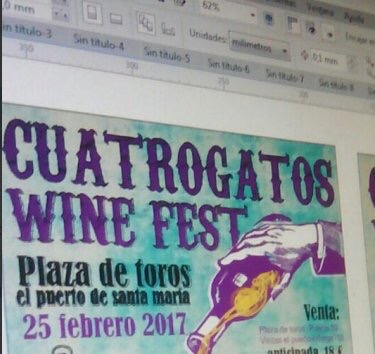
Have been waiting to plug this event for ages but have not managed to get any kind of publicity material out of the promoter (Federico Ferrer of the Cuatrogatos Wine Club, beloved of this parish) so I was very grateful to come across the above photo, which I have blagged from Lorena Costas’ twitter time line. (Since I first posted this the official website is now available – and here it is.)

Wine and laughter, or vice versa

As you can see it is on February 25, 2017, is to be held at the Plaza de Toros in Puerto de Santa Maria and will be a “wine fest”: in return for a modest entry fee participants will be given a wine glass and license to roam around a bullring packed with top class, independent wine makers. You will be able to meet and chat to the afore-mentioned and, who knows, maybe even drink the occasional glass of wine.

In fact the list of winemakers that will be on the premises is pretty cracking:

German R. Blanco (Quinta Milú, Casa Aurora, Altos de San Esteban and his new project in La Rioja “La Bicicleta Voladora”); Eulogio Pomares and Rebeca Montero (Zárate y Fento Wines); Miguel Montoto and Inma Pazos (Vinos de Miguel: Coto de Gomariz, Ailalá y Vinos de Encostas); Jose Crusat (Entre os Ríos); Xurxo Alba (Albamar); Beatriz Herranz (Barco del Corneta); Charlotte Allen (Almaroja); Verónica Ortega (Verónica Ortega); Javier Castro and Sonia López (Bodega Ziríes); Armando Guerra (Zerej!); Cristina Carrillo (Bodega Finca Fuentegalana); Primitivo Collantes (and his eponymous wines); Ramiro Ibañez (Cota45), Willy Perez (Bodegas Luis Pérez); Alejandro Narvaez and Rocío Aspera (Bodega de Forlong); Lucía, Olga and Desirée (Cuatro Ojos Wines); Paco and Pepe Blanco (Viña La Callejuela); Ramon Parera (Celler Pardas); Mayetería Sanluqueña; and Xabier Sanz (Viña Zorzal)

And that is not all, there will also be additional wines available including:

Casa Castillo; Suertes del Marques, Clos Lentiscus and Fil’Oxera & Cía

There will be cooking by Eduardo Perez of Awita Taberna Ambulante, tastings throughout the day and an official store from whence to acquire the goods.

All in all, the wines are top class, the people involved are a good laugh and the first edition was a real blast, by all accounts. I have no doubt that this one will be too. I will do everything I can to get down there and I encourage anyone with the chance to do likewise.

The Night of the Pitijopos – Volume II

It has taken a little while to organize but, at long last, here it is, a chance to open the second Volume of the Pitijopos. Whereas Volume I covered the entire Jerez region, from Trebujena in the North to Chiclana in the South (via Sanlucar, Rota, and Añina and Macharnudo), Volume II is all about Sanlucar and sets up a contrast between the vineyards near the Atlantic and those inland, influenced by the Guadalquivir river.

Yet again, it is a quite fantastic piece of work: a case of six “mostos” from 100% palomino grown in six specific sites in Sanlucar, fermented without temperature controls in bota at Cota 45, and released as a boxed set together with the above fact sheet. (Just behold that magnificent diagram indicating the relative distances from the sea and altitudes of the different sites.)

  1. El Carrascal (“the austerity of the Atlantic extreme”) – not to be confused with Carrascal de Jerez, this is the closest pago to the atlantic (7,4 km) billed as having the “purest and most homogeneous” area of “antehojuela” albariza, said to produce the freshest, most vertical wines. And it certainly was fresh – had a metallic, mineral and almost smokey and lemon juice nose, and a really sharp, fine profile, with metallic flavours and what seemed like a fair whack of volatile acid upfront (lacquer) and behind (esparto grass).
  2. Miraflores Alta (“balance and precision”), further inland (7,9 km) where the antehojuelas give way to the tosca cerrada, making for wines with more structure but maintaining some of that Atlantic freshness – considered amongst the finest pagos and associated with some historic names. This was frankly superb, with a lovely elegant profile, juicy, jammy citrus flavours and saline zing. Powerful but silky/slippy. Again the volatile was evident but much better integrated.
  3. Cuadradillos/Charruado (“structured but fluid”), the furthest of the three from the Atlantic (9,45 km) characterized by tosca cerrada in the higher areas and albariza of lesser purity lower down. That distance from the sea, its orientation and the types of soils are said to make for wines of greater weight and fruit. Again, it certainly lived up to its billing. Had the most extraordinary fruity, doughy nose- for all the world like a chardonnay that had been under the veil – and a big fat fruitiness to it first up, but then it disappeared a little on the palate and didn’t hold together with the same finesse as the Miraflores Alta.
  4. La Atalaya (“diagnosos bipolar”), said to be a fascinating “hybrid” pago halfway between the river and atlantic pagos, 10,75km from the sea and characterized by albariza antehojuela which makes for direct, fresh wines, albeit tempered by the inland location and climate. Again top class, with a very aromatic nose of lemon and seaside air, a fresh start, nice juicy volume and a long, mouthwatering saline, seafood shell finish. A little bit more potent than 2 and elegant but maybe not quite as silky.
  5. Maína (“the sapid empire”), or “Mahína” is found on the flood plains of the Guadalquivir, 12,75km from the sea and in an area said to be characterized by albariza de barajuela and the largest quantity of silicate fossils anywhere in the Jerez region, the famous “diatoms” said in turn to produce wines of incredible sapidity (the “diatom bombs”). It did indeed have a big stewy, rockpool nose and lots of concentrated, slightly more vegetable and peppery flavour, with a metallic, almost rusty finish. The tastiest of the six but maybe not as balanced as two and four.
  6. Cabeza Gordo (the gates of hell),  the Sanlucar pago that is furthest from the sea (14,25 km) and closest to the Guadalquivir. It is characterized by tosca cerrada with lower levels of diatoms that offers wines that are structured but more “docile” and “unctious”. Another big bodied wine, with a nose of ripe apples, almost pineapples, but only just a hint of shape – and like three a little diffuse at the back end (where the volatile is noticeable again).

Overall the wines were cracking good – in particular Miraflores Alta and the Atalaya – and the general level was excellent. More importantly, yet again a fantastic demonstration of the kind of expression of terroir that is possible in these wines. Bravo!

And really a brilliant night, thanks in no small part to our hosts for the evening, David and Diego at Territorio Era, which quite apart from the absolutely top class cuisine on offer, has in a short time come to be almost a second home to this blogger and a sort of day care centre for those passionate about the wines of the Jerez region. 102 wines by the glass of which 72 are fortified wines, including some of the most sought after wines you will ever read about. If you haven’t been yet, you really ought to.