Viña Matalian 2014

I have found this wine fascinating since I came across the mosto from Finca Matalian in the Pitijopos and tasted the 2013 last year. (In fact I hunted down all the wines from Finca Matalian – a really interesting set too.)

First, props to the label – Finca Matalian is apparently albariza and only 7km from the sea and the white/green/waves motif is perfect. Having said that, the 2015 has a new label again, which is also cracking, and at least helps us identify the añada (since the label cannot, I understand, indicate the year).

As for the wine iself, it has a very refined mineral, almond, and herb (rosemary) character to it, and just a hint of chalky texture. And boy is it a pleasant thing to drink – a refreshing 11% and while it doesn’t come across as acidic it doesn’t seem to have any edges either.

UBE 2013 – Take 2 

Like a bus in the rain, you wait ages for your first bottle of UBE and then three come along at once. Having had my first bottle on Friday here we are, not a week later, on bottle number 2, this time in the marvellous  Taberna Verdejo.

Not a lot to report against last week’s tasting, this came out with a little bit of an aroma/first impression of oxidation but it improved a lot after the first glass or so. Still those same sweet herbal (ie herbs that suggest sweetness) flavours. My lunch companion made an excellent point about the acidity – or maybe intensity – of the wine giving it a nice balance. I certainly noticed the fruit more this time.

Actually speaking about that intensity a couple of funny things happened pairing wise. We had an excellent lunch, with a couple of navajas each, half a menestra, half a callos, a wild boar escabeche and a pato azulon: so good indeed that I completely forgot about the oloroso desert I wanted to try. Anyway, we started with a manzanilla pasada, then opened the UBE, planning to move onto an amontillado, but before we knew it we had eaten the callos (which are meaty, smokey and very tasty here) with the UBE  and, you know, it wasn’t at all bad as a pairing. Evidently we are talking contrasts but the freshness of the wine cut through the rich flavours and it stood its own ground in flavour terms quite comfortably.

No doubt about it, this is serious wine (and it was a serious lunch).

UBE 2013

There are many reasons to come to Surtopia (as discussed ad nauseam here, here and here) and not the least of them is the chance to drink singular wines like this one.

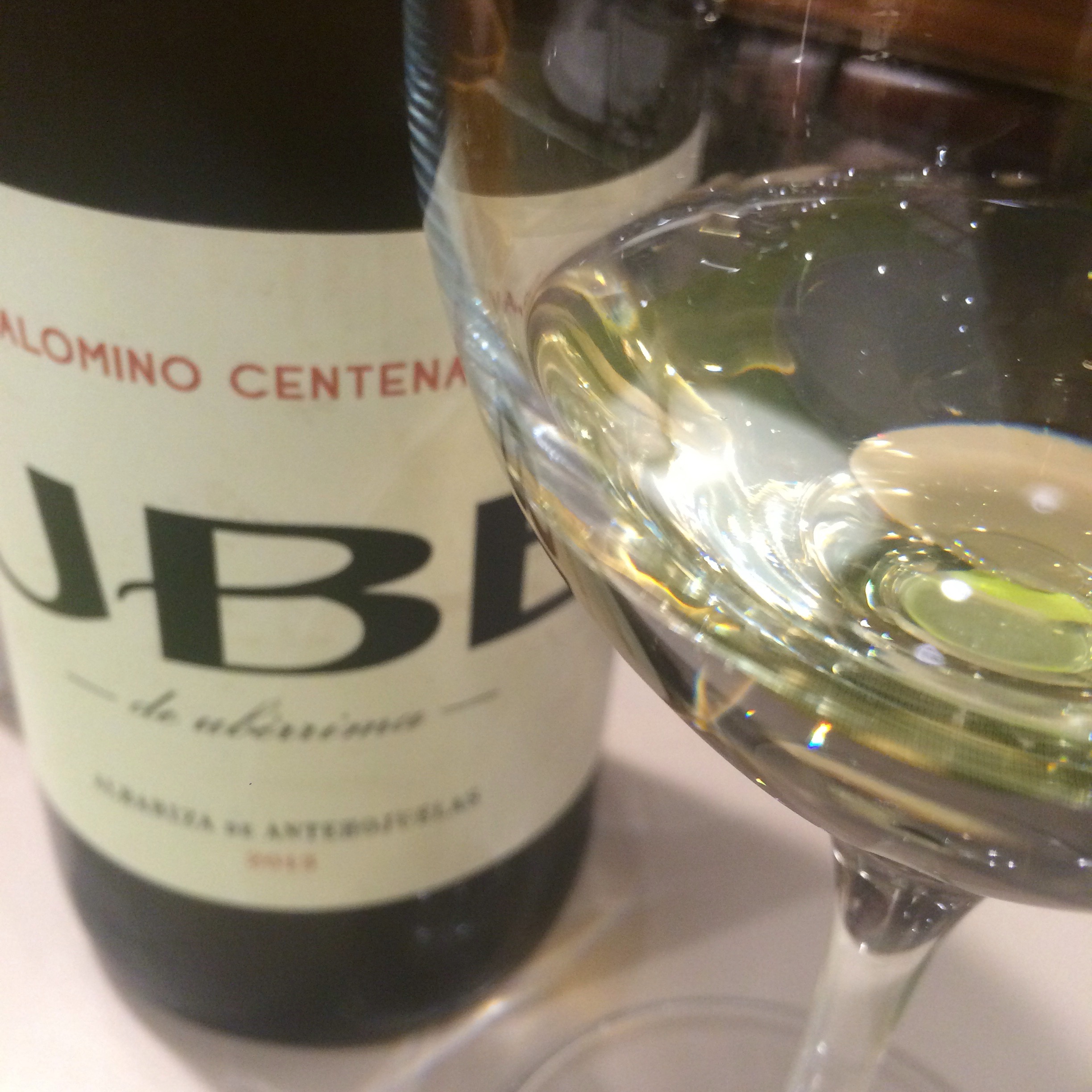
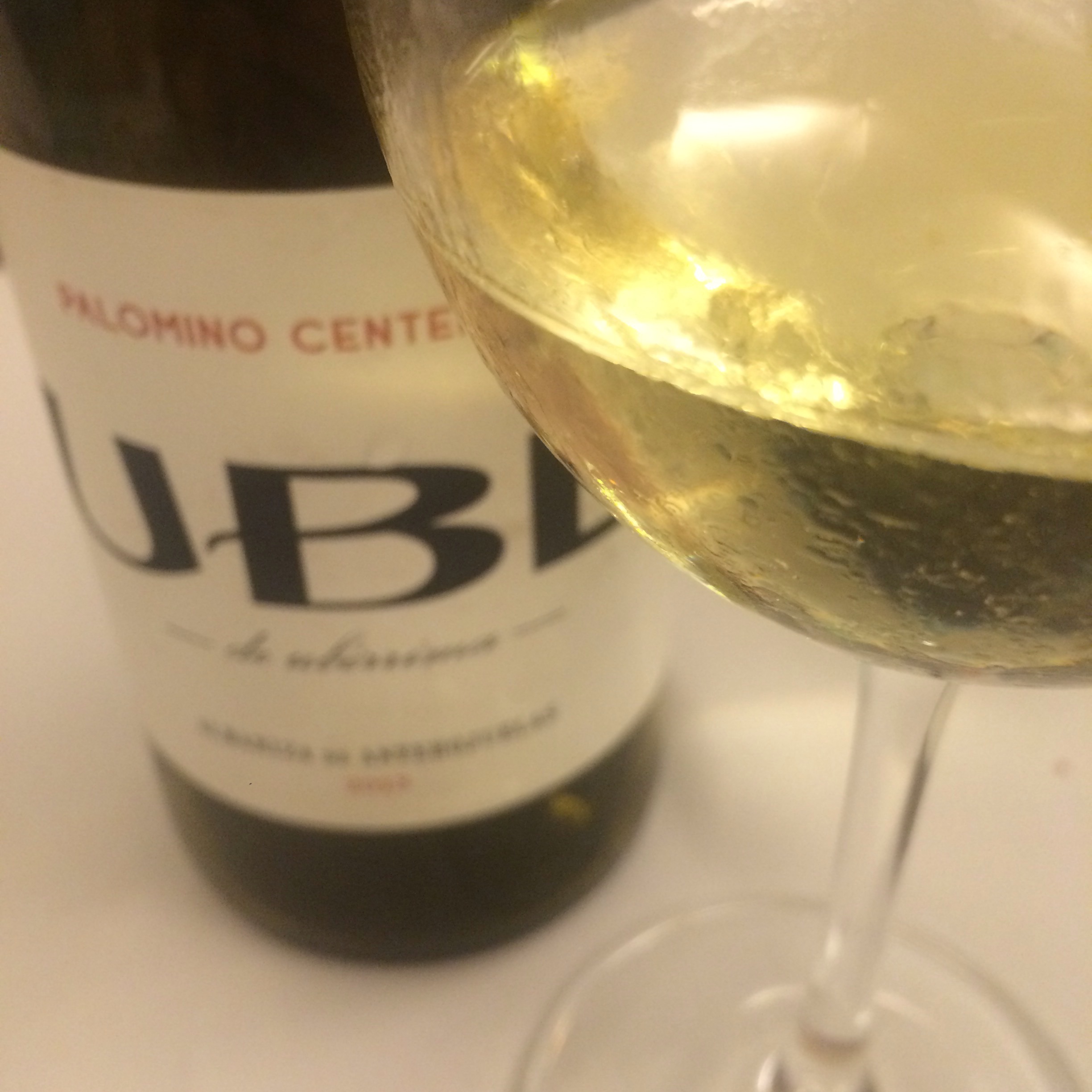
This is yet another of the fascinating projects of Ramiro Ibañez and, since the artistic photo is a bit blurry I need to fill in some blanks. This is the 2013, the full name is “Ube de uberrina” (uberrina meaning “utmost”) it is labelled “Palomino Centenario” (100 year old palomino) and it also references the kind of albariza soil involved – albariza de antehojuelas (new to me – will see what I can find out). The back label has yet more intriguing information, showing that the fruit is from a small finca called Las Vegas and the cepage is 73% palomino fino (the now dominant strain of palomino, originally from Sanlucar), 16% palomino jerezano (which I believe is aka palomino de jerez or palomino basto – originally the dominant grape but now much less common) and 11% palomino peluson (new to me). It says on the label that these are the original “roots” (by which I assume we are talking pre-phylloxera).

So a fascinating CV, no doubt about it, and the resulting wine is very fine stuff indeed. As you can see it is a pale but solid gold colour with green notes – crystal clear and appetising. It has an elegant nose with very subtle notes that are floral/herbal (honeysuckle and rosemary) and mineral (limestone rather than seasalt).

On the palate it is dry but has flavours that suggest sweetness – sweet herbs and almonds – and just enough mineral bite. Brilliant balance to it too: it is really fresh, clean and elegant. Brilliant stuff – maybe not the huge flavour profile of some white wines but classy and utterly enjoyable.

Pitijopos – 6 days later 


Don’t want to bore on this but some of these remarkable wines were saved (thanks again to Ana at La Chula – noone else was in a state to conserve anything on the night in question) and, six days later, having been kept with their own corks at a steady 12 degrees, they are, remarkably, still alive.

Still, enough is enough, so to make room for some more Christmassy sherries here go some final impressions.

  • #1 – Trebujena – northwest face of the pago del Duque on Tosca Cerrada. It is remarkably intact – the nose has understandably lost some of its piercing quality but is still citric and mineral, it has maintained that slightly bitter citrus and mineral palate and the notes of reduction are even more pronounced.
  • #2 – Sanlúcar – north face of the Pago de la Callejuela (pago de rio) again on Tosca Cerrada. Again it is amazingly whole – still has that (somewhat less vigorous) farmyard smell, but the palate is much gentler, softer and lots of undergrowth – noticeably coppery notes of oxidation on this but not at all unpleasant.
  • #3 – Rota – south face of the pago Barragan on Albariza Parda. Was interested to see what happened here. Some of that floral, fruity nose is still there, but now the fruit is a little more jammy rather than fresh. Again, a touch of oxidation – and it in fact helps it hold its shape better. On balance this has improved.
  • #4 – Jerez 1 – northeast face of the pago de Añina on Barajuela. This has improved too – there is now definite fruit coming through in the nose, although the citrus on the palate is a touch heavier, not as fresh. Again the slightest hint of oxidation and no worse for it.
  • #5 – Jerez 2 – north face of the pago de Macharnudo again on Barajuela. I haven’t noted the changes of colour because they haven’t been that dramatic but this one has definitely gone a shade. The nose has quietened down and is quite low key – earthy (with “barnyard” notes) but the palate is still spicy and saline – really nice intensity to it – and it is a solid mouthful. Very good.
  • #6 – Chiclana – west face of the pago de Matalian on Albariza Tajon. This still has a lively, fresh fruit nose – maybe slightly more honeyed even. I find the minerals less noticeable – more herbal now – almost menthol. On the palate it is not quite as big but it is still fruity, seems less fresh and more clingy – after taste is a little jammy.

Remarkable box of wines and a really good chance to see how these develop. If I had to rank them tonight it would probably be 5, 6, 4 closely followed by the rest.

Ok stuff it I am going to keep them another week and see how they do.

Night of the Pitijopos – Part II

At the time  I thought it would take me a good while to write this one up and so it has proved. In fact it has taken even longer than expected since the quality of Pitijopo #6 set me off on a multi-day spree of wines from the same Finca Matalian (as you may have noticed).

I have already reported on, for me, the stars of the show – the Pitijopos themselves and the Callejuela Manzanilla de Añada, and by this stage my own direct memories of the other wines of the cata (which would always have been blurred) have faded away somewhat. To be honest, rather than “tastings” it would probably be more accurate to call these occasions “drinkings”, but then again I never claimed to be any good at this.

Nevertheless, there were some little beauties there. On the sherry side, there was :

  • a bottle of Alba Sobre Tabla – again from 2013 but this time Lot II, which showed a nice cidery nose, champagne like yeasty notes and balanced acidity but to be quite honest struggled to live up to its billing (and the unenviable task of following the Pitijopos);
  • (two bottles of) an excellent Sacristia AB Manzanilla en Rama – this time the first saca of 2015 – which can be irregular but this was still potent and full of life (alhough dusty next to the “Añada”);
  • an even better bottle of the Maruja manzanilla pasada which I just think is superb – jammy, saline, herbal – a beautiful wine;
  • a really interesting old bottle of “Jerez Oro” by Parra Guerrero , which seemed to be a fino or at most a fino amontillado that had had a long time in the bottle -had mellowed into a fluffy, slightly dusty nutty nougat; and, last of all
  • a bottle of Piñero Cream, about which unsurprisingly I can remember almost nothing at all!

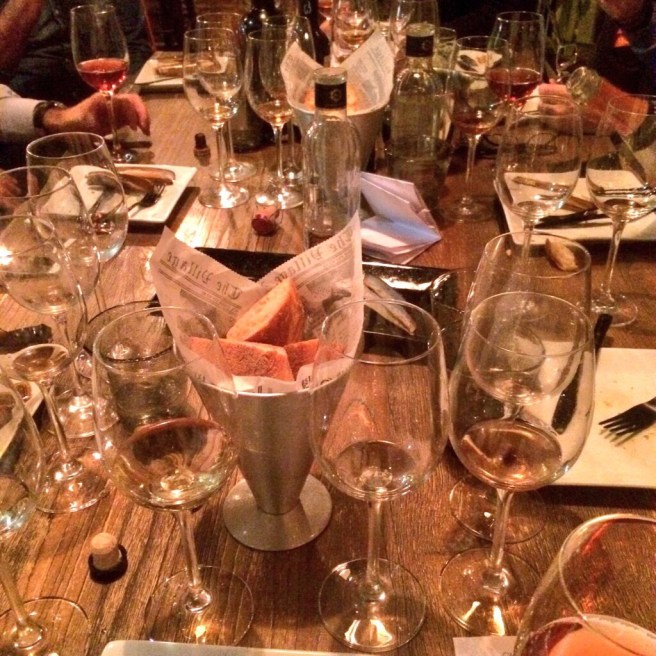
As you can also see from the picture above, the sherries didn’t have it their own way either. There was a fantastic old Vinho Verde – pure honey and cream in a bottle -, a spectacular old 1964 white Rioja, two excellent champagnes, of which one was a fascinating 100% petit meunier rosado, a terrific Rasteau syrah/grenache and a lovely, elegant Real de Asua.

And all of this with the absolutely top drawer cooking of the Chula de Chamberi (all of the above notwithstanding the foie with nisperos and apricot toast was memorable (and repeated)) as we took over the big table in the corner in a fashion that could best be described as a well mannered riot. A really excellent night all round and one I am really looking forward to repeating once Volume II is available.

Viña Matalian 2013

This dry 100% palomino young white wine is excellent, really good.

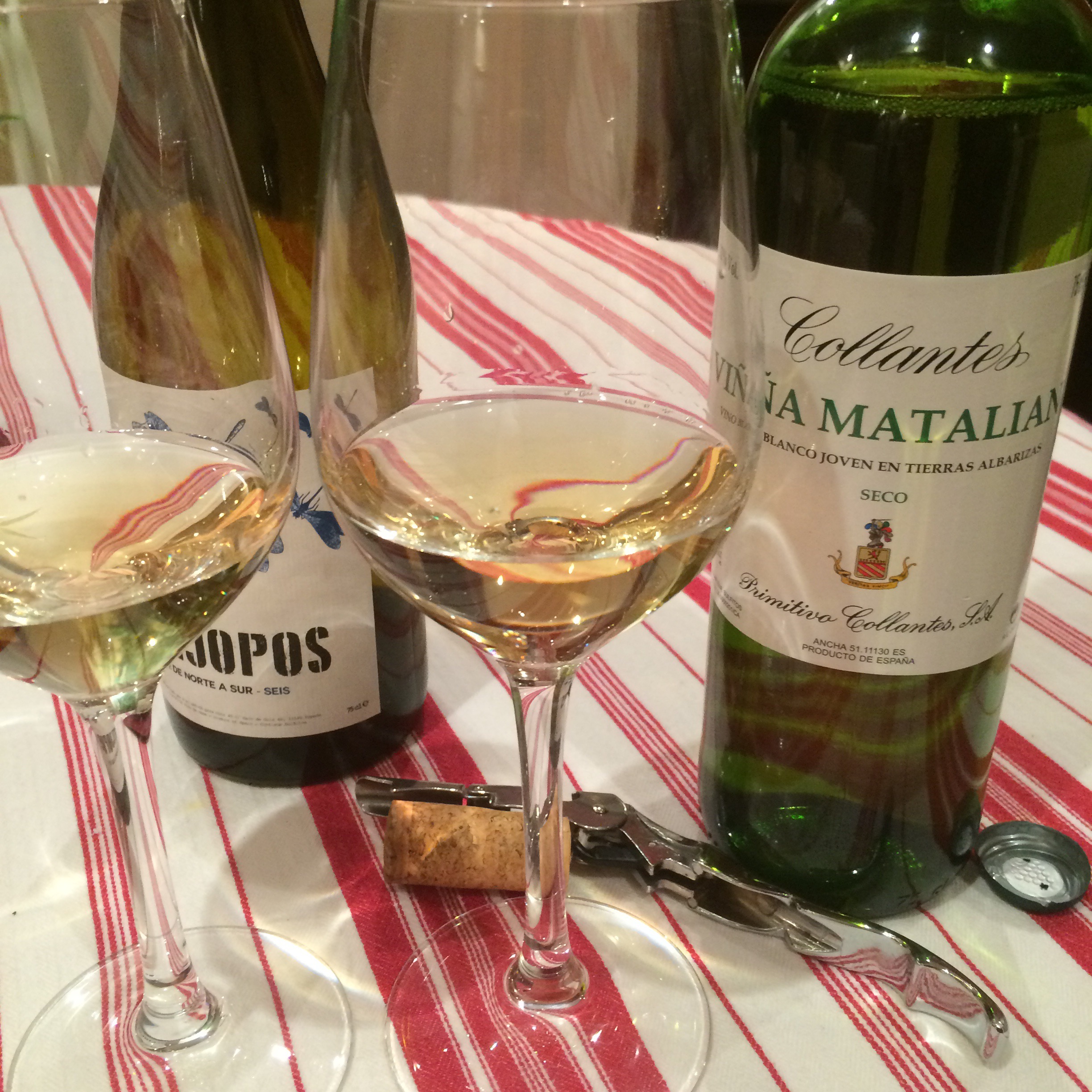
Here it is pictured next to its wood-reared little brother, Pitijopo #6. They are both from palomino grown by Primitivo Collantes on Finca Matalian, but whereas the Viña was fermented in temperature controlled inox (and has been a while in the bottle) the Pitijopo was fermented (by Ramiro Ibañez) in bota without any temperature control. The Pitijopo was excellent (so much so that I have spent the last few days hunting out examples of wines from the same fruit) and it turns out the Viña Matalian is a twin (not an identical twin but close enough).

As you can see above, it has a touch less green colour – it is a lovely clear gold. The nose is aromatic and fruity, full of sweet herbs and mature grapes.

On the palate it isn’t quite as lush as its brother – a little more mineral and refined, but fresh and tasty, full of fruit and maybe more character.

Really cracking wine. Apparently they are looking more seriously at making a white wine and when they do I would really recommend snapping it up.

Night of the Pitijopos – Part I

Big night last night with lots of sherry to report on, but first the main event: the “Pitijopos, Volume I: from North to South” by Cota 45.

It really is a fascinating project – six “mostos” – the base palomino wines used as the key material in sherry and manzanilla (and, increasingly, a lot of other stuff) from six different pagos on four different types of albariza soil. All from the sherry area (the “marco” in the lingo) in a band 50km North to South and 25 km West to East. It gives us a great opportunity to explore two really interesting questions: how these different soils and areas translate into wines; and, almost as important, the potential of these mostos to become the top table wines that the boys down in Cadiz seem to think.

We were guests at one of Madrid’s shrines to good wine and good living – the Chula de Chamberi – who looked after us fantastically, and we did it properly, tasting our Pitijopos at about 10-12 degrees with empty stomachs (before dining with a cracking lineup of other wines, about which more later).

Frankly my notes are not everything they could be and my recollection is blurred due to a possibly over enthusiastic consumption but, for what they are worth, here are my thoughts on the wines themselves.

  • #1 – Trebujena – northwest face of the pago del Duque on Tosca Cerrada – piercing citric, mineral nose which quitened down, slightly bitter citrus and mineral flavours on the palate, hints of reduction;
  • #2 – Sanlúcar – north face of the pago de la Callejuela (pago de rio) again on Tosca Cerrada – big farmyard, ferrous metal nose that mellowed to undergrowth and nuts, solid and serious on the palate holding its shape better;
  • #3 – Rota – south face of the pago Barragan on Albariza Parda – incredibly floral, fruity and sweet nose and fresh, floral taste first up, but less intense and seemed to die away rather than opening up;
  • #4 – Jerez 1 – northeast face of the pago de Añina on Barajuela – earthy, metallic nose maybe even damp undergrowth, more elegant on the palate with a nice citrus fresh finish
  • #5 – Jerez 2 – north face of the pago de Macharnudo again on Barajuela – even more serious wine, earthy, citrus and mineral nose and seems more intense, saline on the palate
  • #6 – Chiclana – west face of the pago de Matalian on Albariza Tajon – really lively, fruity nose, with lychee, mandarin and minerals, and elegant on the palate with more minerals and honey notes

Overall, I reckon my favourites were 6, 2, and 5 in that order, but not with much conviction: 3 started beautifully but faded away, 4 was probably the most elegant of them all and 1 had some really interesting, more complex flavours and aromas.

More generally, and most importantly, the differences between these wines – even between wines from the same neighbourhoods/soil types – were notable and very interesting: some were floral, fruity and aromatic, some were serious and metallic, some piercing.  If the object of the exercise was to demonstrate the potential of terroir then noone last night was left in any doubt.

Also, while clearly not the finished article, the potential of the wines was equally clear. There was a really nice freshness and life to them and some really attractive noses, flavours and features. It is easy to see why their makers are excited about them.

And the final verdict?  Absolutely fantastic. A great idea well executed and an argument conclusively won in the most elegant way possible. Long life to Cota 45 and  can’t wait for Volume II.
 

Alba Confitero Metodo Ancestral 2014

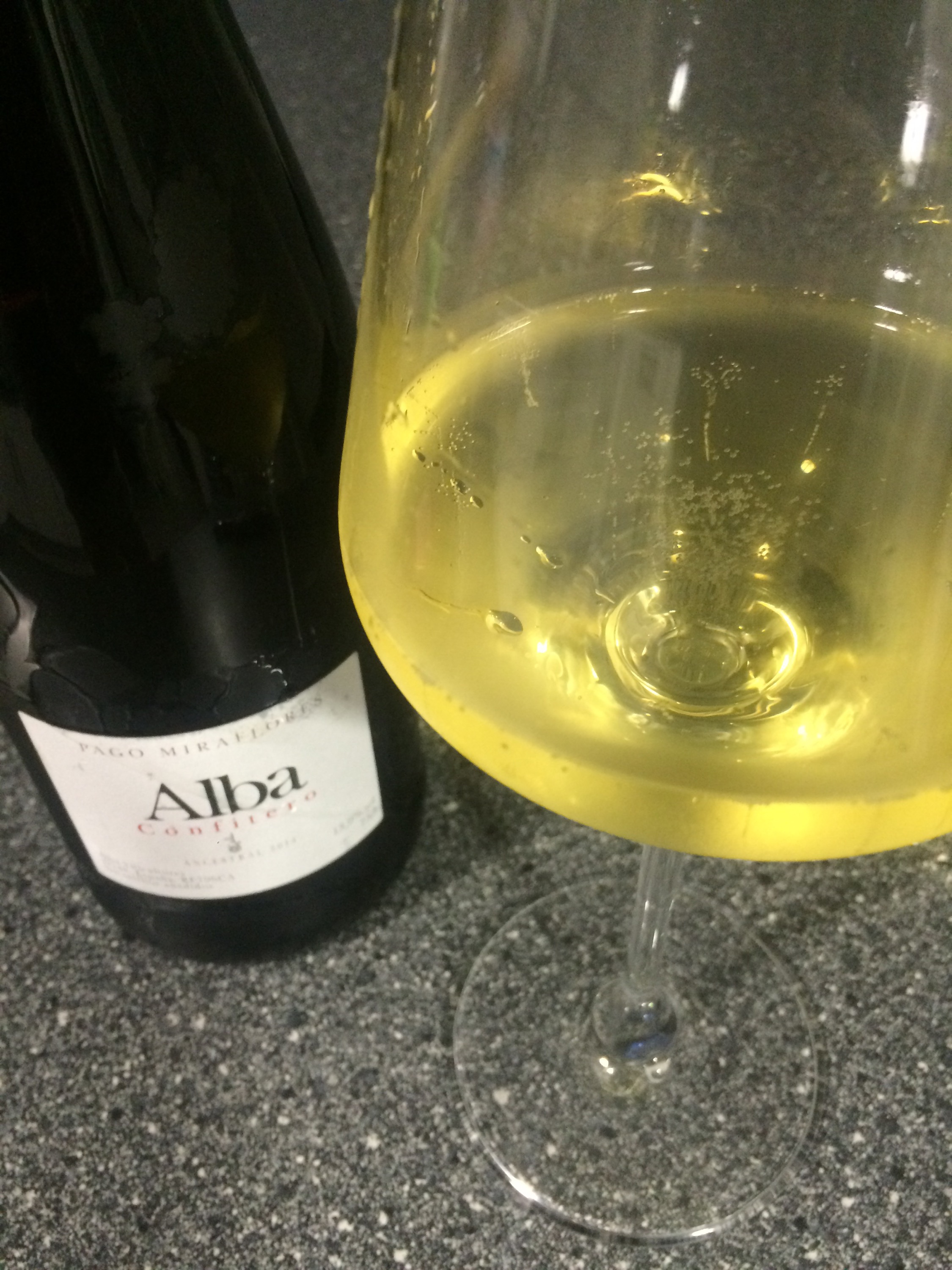
This is quite something – a 100% palomino from the “Confitero” vines in Pago Miraflores that has been made into sparkling wine by the “ancestral method” (essentially, fermentation in the bottle using its own sugars and yeast).

It is a lively gold in colour – a hint of green. A nice nose of cider apples, citrus and minerals, cheese, even.

Not the longest lasting stream of bubbles – second glass has come out foamy more than anything. (Another mini bottle rant here – this bottle came with a beer cap which made it impossible to open without losing some – not sure if these last two issues are related.)

On the palate it is dry but there are the same fruit flavours of other palomino creations – apple verging on pineapple, turning to a bitter tonic flavour at the finish.

Alba Confitero 2014

A white wine from a single vineyard of palomino in Pago Miraflores this has apparently been fermented in a tank and spent 7 months in a bota, no sulphites added and presumably no filtering.

The colour of it is remarkable – it is semi opaque and looks a bit like a very light style of honey. It also looks like a syrup when you pour it – a really gloopy type pour.

First opened (Saturday) I am finding it very restrained on the nose but it may be a little too cool. What there is is like the nose of a cider – very restrained appley notes. On the palate well, it has acidity no doubt, but it is carrying a lot of jammy apple fruit and seems like some residual sugar. Very like cider.

Coming back to this a day later (Sunday) the nose is in fact more like pineapple juice – it probably was yesterday to be honest. I am finding it much more similar to the Sobre Tabla that I tasted a while back from these guys. Also on the palate, a note somewhere between pineapple and grapefruit. Seems much sweeter than I remembered from yesterday.

I still struggle to understand the concept of this wine – I don’t really see what the makers are trying to achieve here. Having said that, it is another interesting experience in getting to know palomino and its characteristics – maybe there are enough crazy people like me for this to be a profitable exercise (hope so).

Pitijopos Volume 1 – 2014 


Yet another cracking project from Ramiro Ibañez (he of Encrucijado, the Manzanilla de Añada and other projects) and something I am really looking forward to getting to grips with.

Called “Pitijopos” it consists of a case of six examples of “mosto de pago”. Mosto is the name given to the unfortified palomino wines that are used to make sherry (confusingly, it is also a term given to unfermented grape juice elsewhere in Spain and the english word, “must”, clearly refers to a sort of intermediate stage). “Pago” on the other hand is a term given to specific vineyards/terroirs. Normally you would hear the term “vino de pago” as meaning single vineyard wine, or a wine might be called “Pago …”.

So here we have examples of mostos, from a single vintage, 2014, and a single grape, palomino, but from specific pagos from around the jerez region. Specifically, from six different locations ranging from Northwest to Southeast: Trebujena, Sanlúcar, Rota, Jerez (2) and Chiclana. Tasting them all together (which I intend to do as soon as I have a chance to really appreciate six bottles of white wine at once) is probably a unique opportunity to compare the differences in character that result from those differences in terroir.

Even if you can’t get six of them (I am told there were only around 100 cases of this available) I would recommend any sherry enthusiast to try mosto if you can.  The very best tasting I ever experienced (at Emilio Hidalgo) started with tasting some mosto and then following it up through the chain as sobretabla, fino of different ages, amontillado, oloroso – it was frankly the most formative lesson of my brief education in these things, and the mosto was a key part. It has a very distinctive aroma, structure and flavour which is worth getting a handle on since it will really help you appreciate the same dimensions of the fruit in the fine wines that have been undertheflor (once you have smelt mosto you will recognize it in a lot of finos and manzanillas, in particular).

As always, these have been on the road and I need to give them time to settle in, but I will report back when they are ready.