Sherry and even further beyond

Back in September I wrote a post in relation to a controversial tasting by elmundovino in which I wondered whether they had been unlucky with some of the bottles they had tasted.

As it turns out, according to a second tasting  published more recently it seems they did indeed, at least in relation to some of the wines of Primitivo Collantes, which I have been tasting recently: the slightly different panel explain that those bottles had been “cooked” on their travels to Madrid in the summer heat and in the new tasting (which is in general rather more upbeat), Fossi and the Arroyuelo Fino en Rama get bumped up from “ok wine” to “good wine”.

To my mind there are still some questions about the September tasting – I would rate those too another notch up and, in particular, the tasting of the Maruja manzanilla pasada seems to me to be out of whack. Nevertheless, for now at least some justice has been done. More generally, it is great to see some new wine names in this new tasting. I am particularly keen to get my hands on some of the Barajela wines by Willy Perez so if anyone sees any around Madrid please give me a shout.
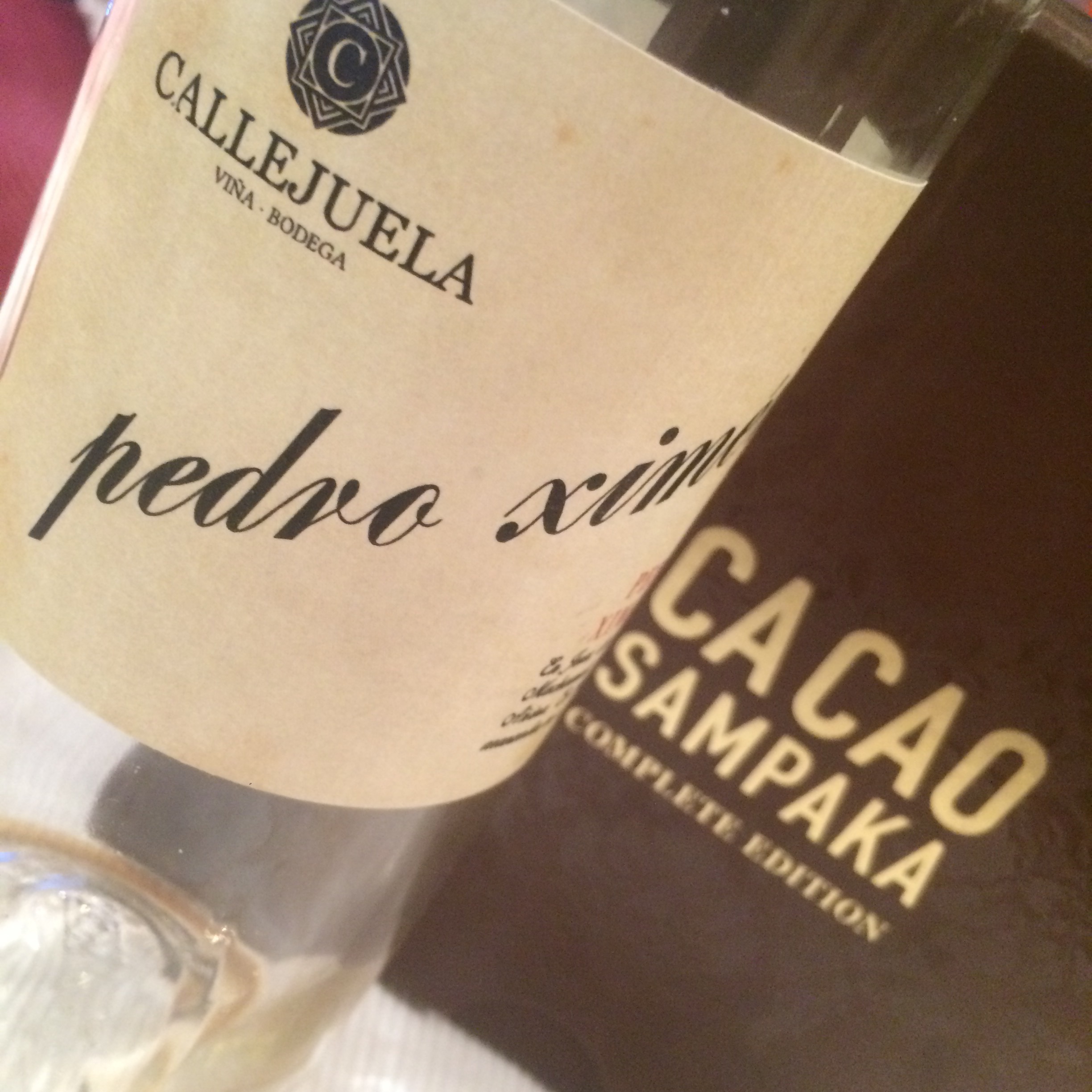
Pedro Ximenez Callejuela  

Well this is a sad sight – I can’t believe this bottle is over.

The last week or so we have had a glass of this with a chocolate from the Cacao Sampaka complete edition – a collection of 64 different pieces of high-end high-cocoa chocolate from one of my favourite stores in Madrid. The chocolates are great, the wine is really great and together just another level altogether.

It is a dark, not black brown, has a thick, syrupy consistency and a raisin and yeast, uncooked Christmas pudding aroma. It is sweet and sticky with lots of raisin flavour then burnt sugar and sweet, black coffee bitterness. Lovely, serious flavour to it.

Really superb wine by any standards.

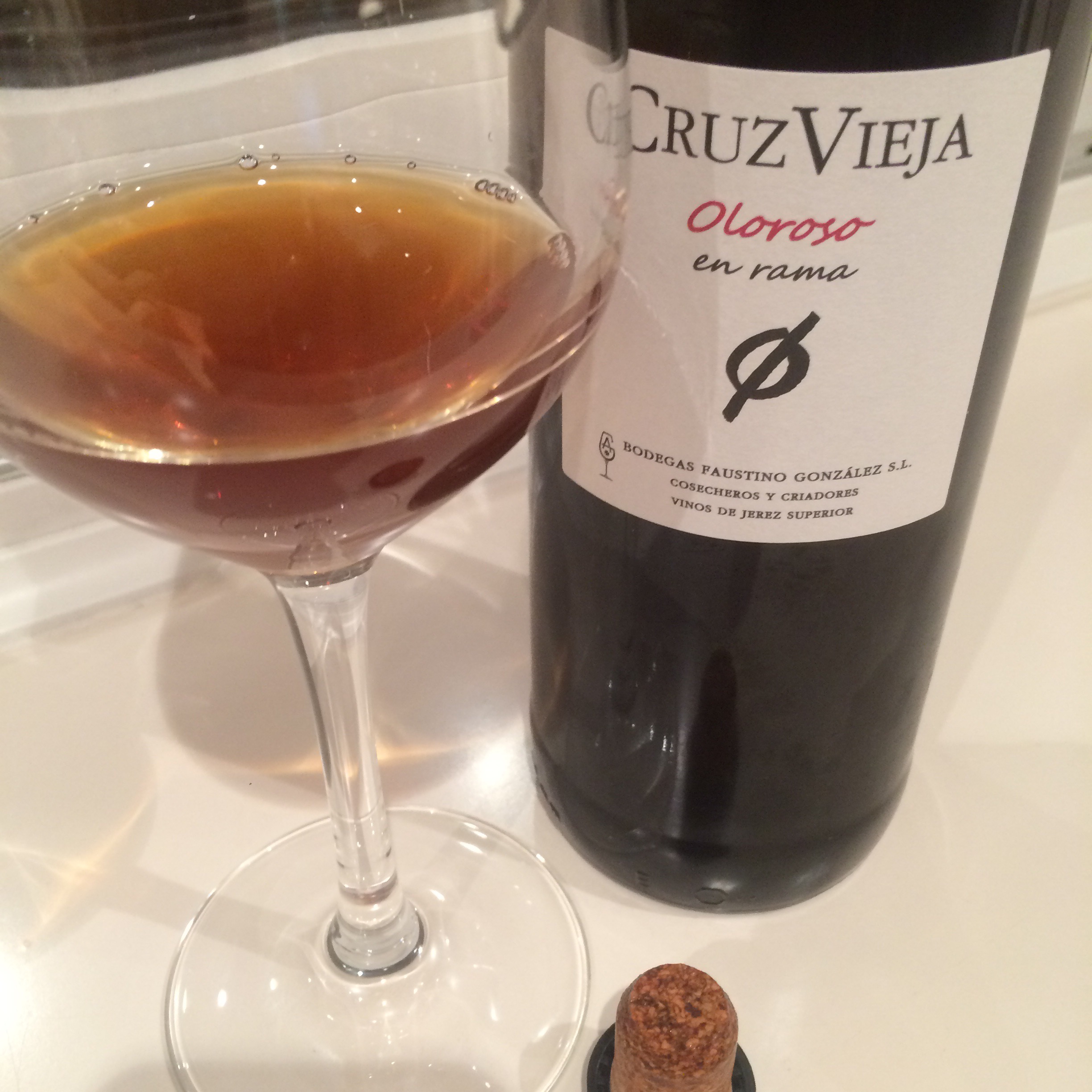
Cruz Vieja Oloroso en rama 

This is an “en rama” oloroso by Bodegas Faustino Gonzalez. According to the ficha it has an average age of 10 years in a solera that dates back to 1900. (You can get some excellent background from Criadera‘s posts on them.)

They call it an “en rama”, by which I assume they mean that they have not filtered it but the expression seems odd in relation to an oloroso. En rama literally means “still on the branch” like a fresh fruit or tomato – seems odd for an oxidated wine but maybe it is just me.

As you can see it is a yellowy orange brown in colour and just a touch cloudy – probably the lack of filtering. Not the biggest nose for an oloroso – little bit meek – but a pleasant one, sweetness, hints of ginger, cedar and reduction/old barrel.

On the palate it has a little bit of acidic, salty buzz, sugar burnt black. Not much power, to be honest, and although it has some heat and nice flavours it comes across as slightly hollow and lacking in center. Nice finish – buzzy burnt caramel – but again not overly long.

A nice enough wine – maybe just a little soft centered.

Restaurante Vinoteca Garcia de la Navarra 

I should declare a lack of objectivity here – I have known these guys for years and this feels a bit like writing a review of my own second home. Nevertheless, this blog was always going to be incomplete without a shout out to one of Madrid’s best places: Restaurante Vinoteca Garcia de la Navarra (and the Taberna de Pedro next door).

It has a quite superb wine list, reputedly 7,000 wines long (I have not counted them) and you can not only find almost anything, you will probably find it at a good price too. As for sherries, just check out the list of wines by the glass above. A really great selection, covering all bases (manzanilla, fino, oloroso, palo cortado, and amontillado) and price points and some absolute gems: how many restaurants offer 100 point Parker wines by the glass? But it is not just the wine list, Luis Garcia de la Navarra, maitre de, sommelier and all around master of ceremonies was for a long time the President of the Madrid Sommeliers Association, he knows just about everything and everybody, is a great sommelier and a great bloke. You can leave him to choose the wines and be entertained, delighted and occasionally intrigued by the results.

Quite apart from the wine, though, the food is magnificent. The big boss – Pedro Garcia de la Navarra – is another great bloke and, more importantly, a genius who could convert anything you have in the cupboard into something you would (should) cross the city for, and with the first class product he has well (often on display), I am not nearly qualified to describe it. Really cracking old school cooking: menestra de verduras, callos, pisto (with a fried egg or two), guisantes, borrajas, pollo en pepitoria, and my personal favourite, the lengua (stewed veal tongue – you will not believe how good it is). Classic old dishes that are beautifully cooked – and again, you can often just leave yourself at Pedro’s mercy.

Finally, the service is first class and at the same time really professional and genuinely friendly (I have known some of the staff for going on 10 years and they nevertheless still seem glad to see me).

All in all, really a great place, and particularly for (sherry) wine-lovers.

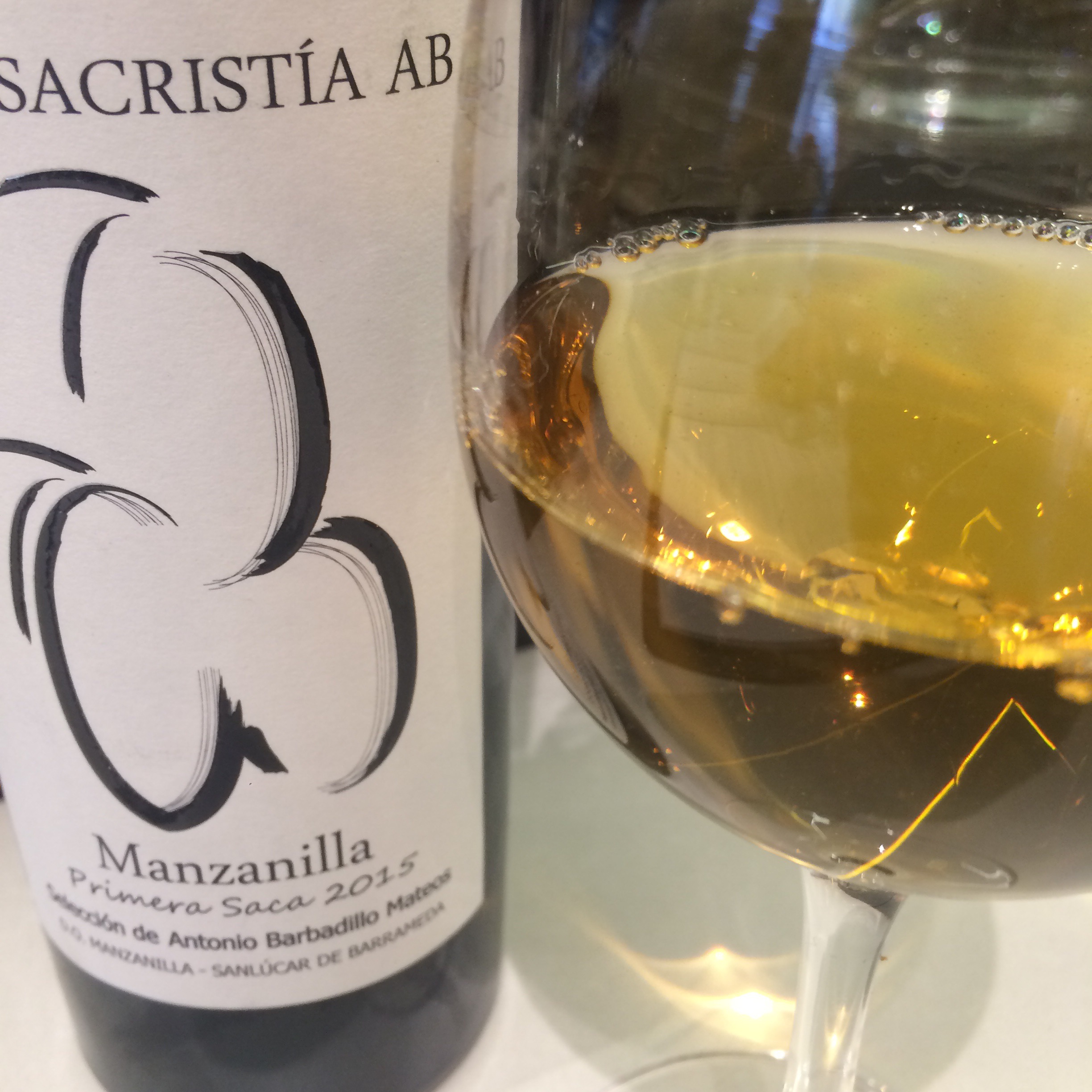
Manzanilla Sacristia AB – primera saca 2015 

  
Conscience brings me back to this having failed to pay due care and attention to it during a long and riotous night last week. This is one of the wines of the week at the superb Restaurante Vinoteca Garcia de la Navarra.

Darkish in colour and just a little dull rather than crystalline. On the nose it is also relatively meek – haybales and maybe just a bit of ozone, but not a big aromatic manzanilla by any means.

On the palate it has a nice fresh entry and then an intense, zingy salinity, with maybe just a little yeastiness and a herbal/vegetable flavour. It is very, very long indeed, but has quite a lot of alcoholic heat. 

A potent, almost fierce manzanilla but quiet in aromas and flavours. I may have got hold of this too soon/too late – hard to say. 

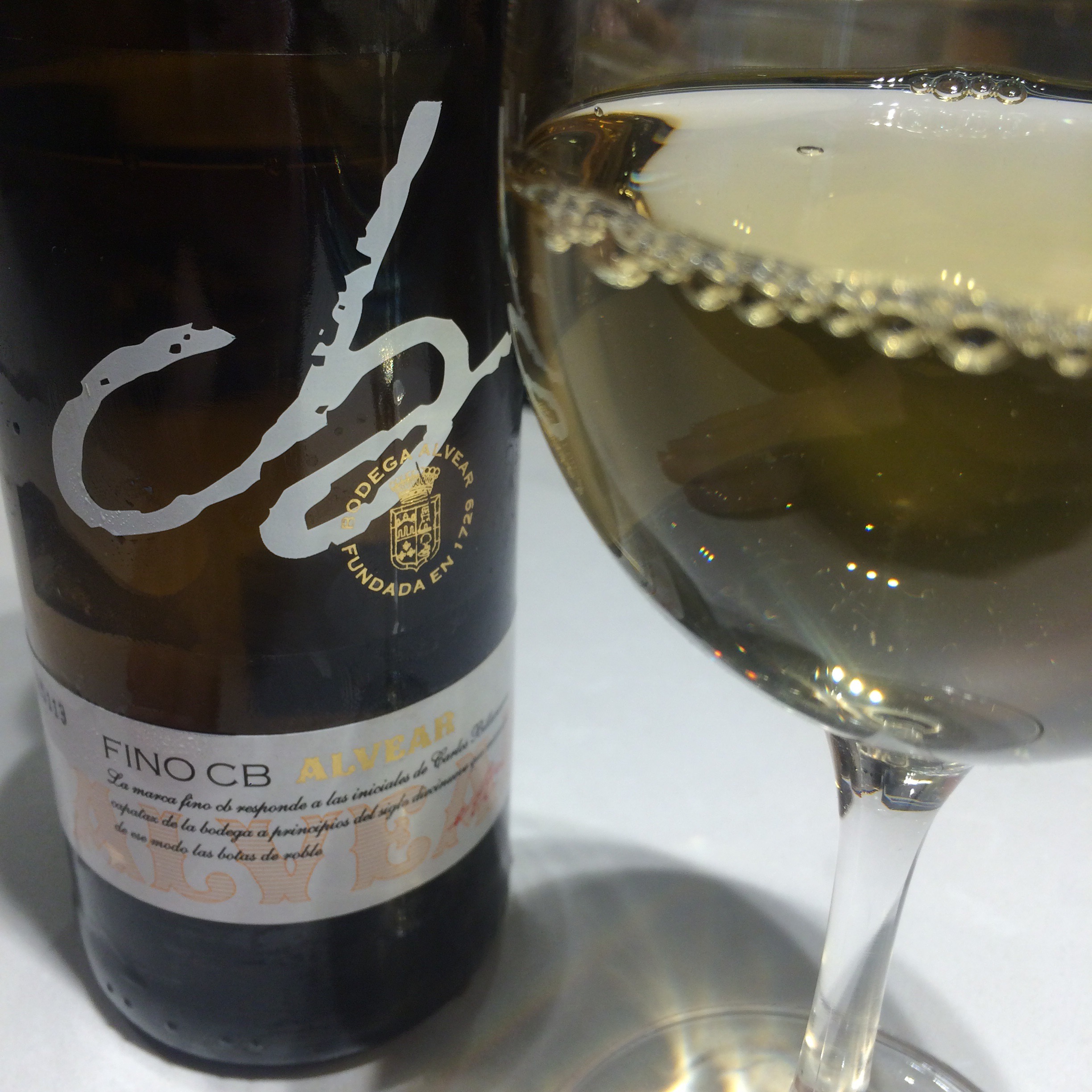
Fino CB 

  
This is a 100% pedro ximenez fino from Alvear in Montilla Moriles.

Pale and clear in colour and not the liveliest nose – faint hay bales, maybe some unsalted nuts. 

Smooth and salty. Very “fine” in texture for a 100% px and again not overly expressive. Nice punch to it but not zing or real intensity in sherry terms. For flavours: salty with a bit of nut you would say.

Another very elegant fino – this one a bit meek for my tastes. 

Pitijopos – 6 days later 


Don’t want to bore on this but some of these remarkable wines were saved (thanks again to Ana at La Chula – noone else was in a state to conserve anything on the night in question) and, six days later, having been kept with their own corks at a steady 12 degrees, they are, remarkably, still alive.

Still, enough is enough, so to make room for some more Christmassy sherries here go some final impressions.

  • #1 – Trebujena – northwest face of the pago del Duque on Tosca Cerrada. It is remarkably intact – the nose has understandably lost some of its piercing quality but is still citric and mineral, it has maintained that slightly bitter citrus and mineral palate and the notes of reduction are even more pronounced.
  • #2 – Sanlúcar – north face of the Pago de la Callejuela (pago de rio) again on Tosca Cerrada. Again it is amazingly whole – still has that (somewhat less vigorous) farmyard smell, but the palate is much gentler, softer and lots of undergrowth – noticeably coppery notes of oxidation on this but not at all unpleasant.
  • #3 – Rota – south face of the pago Barragan on Albariza Parda. Was interested to see what happened here. Some of that floral, fruity nose is still there, but now the fruit is a little more jammy rather than fresh. Again, a touch of oxidation – and it in fact helps it hold its shape better. On balance this has improved.
  • #4 – Jerez 1 – northeast face of the pago de Añina on Barajuela. This has improved too – there is now definite fruit coming through in the nose, although the citrus on the palate is a touch heavier, not as fresh. Again the slightest hint of oxidation and no worse for it.
  • #5 – Jerez 2 – north face of the pago de Macharnudo again on Barajuela. I haven’t noted the changes of colour because they haven’t been that dramatic but this one has definitely gone a shade. The nose has quietened down and is quite low key – earthy (with “barnyard” notes) but the palate is still spicy and saline – really nice intensity to it – and it is a solid mouthful. Very good.
  • #6 – Chiclana – west face of the pago de Matalian on Albariza Tajon. This still has a lively, fresh fruit nose – maybe slightly more honeyed even. I find the minerals less noticeable – more herbal now – almost menthol. On the palate it is not quite as big but it is still fruity, seems less fresh and more clingy – after taste is a little jammy.

Remarkable box of wines and a really good chance to see how these develop. If I had to rank them tonight it would probably be 5, 6, 4 closely followed by the rest.

Ok stuff it I am going to keep them another week and see how they do.

Fino Maestro Sierra 

A light, elegant fino from Maestro Sierra for a bright, sunny end of November Sunday in Madrid. To start with the bottle is elegant and has this new-traditional shtick.

It is light in colour – an extremely clear, pale straw colour, and has a nice delicate nose of haybales, almonds, baked bread or even fried breadcrumbs.

It is also yeasty in the mouth –  not too saline but punchy in flavour and greasy in texture, with almonds and sweet herbs. Not overlong by sherry standards but dry, fresh and tasty.

Really nice all around – this is why they call these “fine” wines.

Night of the Pitijopos – Part II

At the time  I thought it would take me a good while to write this one up and so it has proved. In fact it has taken even longer than expected since the quality of Pitijopo #6 set me off on a multi-day spree of wines from the same Finca Matalian (as you may have noticed).

I have already reported on, for me, the stars of the show – the Pitijopos themselves and the Callejuela Manzanilla de Añada, and by this stage my own direct memories of the other wines of the cata (which would always have been blurred) have faded away somewhat. To be honest, rather than “tastings” it would probably be more accurate to call these occasions “drinkings”, but then again I never claimed to be any good at this.

Nevertheless, there were some little beauties there. On the sherry side, there was :

  • a bottle of Alba Sobre Tabla – again from 2013 but this time Lot II, which showed a nice cidery nose, champagne like yeasty notes and balanced acidity but to be quite honest struggled to live up to its billing (and the unenviable task of following the Pitijopos);
  • (two bottles of) an excellent Sacristia AB Manzanilla en Rama – this time the first saca of 2015 – which can be irregular but this was still potent and full of life (alhough dusty next to the “Añada”);
  • an even better bottle of the Maruja manzanilla pasada which I just think is superb – jammy, saline, herbal – a beautiful wine;
  • a really interesting old bottle of “Jerez Oro” by Parra Guerrero , which seemed to be a fino or at most a fino amontillado that had had a long time in the bottle -had mellowed into a fluffy, slightly dusty nutty nougat; and, last of all
  • a bottle of Piñero Cream, about which unsurprisingly I can remember almost nothing at all!

As you can also see from the picture above, the sherries didn’t have it their own way either. There was a fantastic old Vinho Verde – pure honey and cream in a bottle -, a spectacular old 1964 white Rioja, two excellent champagnes, of which one was a fascinating 100% petit meunier rosado, a terrific Rasteau syrah/grenache and a lovely, elegant Real de Asua.

And all of this with the absolutely top drawer cooking of the Chula de Chamberi (all of the above notwithstanding the foie with nisperos and apricot toast was memorable (and repeated)) as we took over the big table in the corner in a fashion that could best be described as a well mannered riot. A really excellent night all round and one I am really looking forward to repeating once Volume II is available.

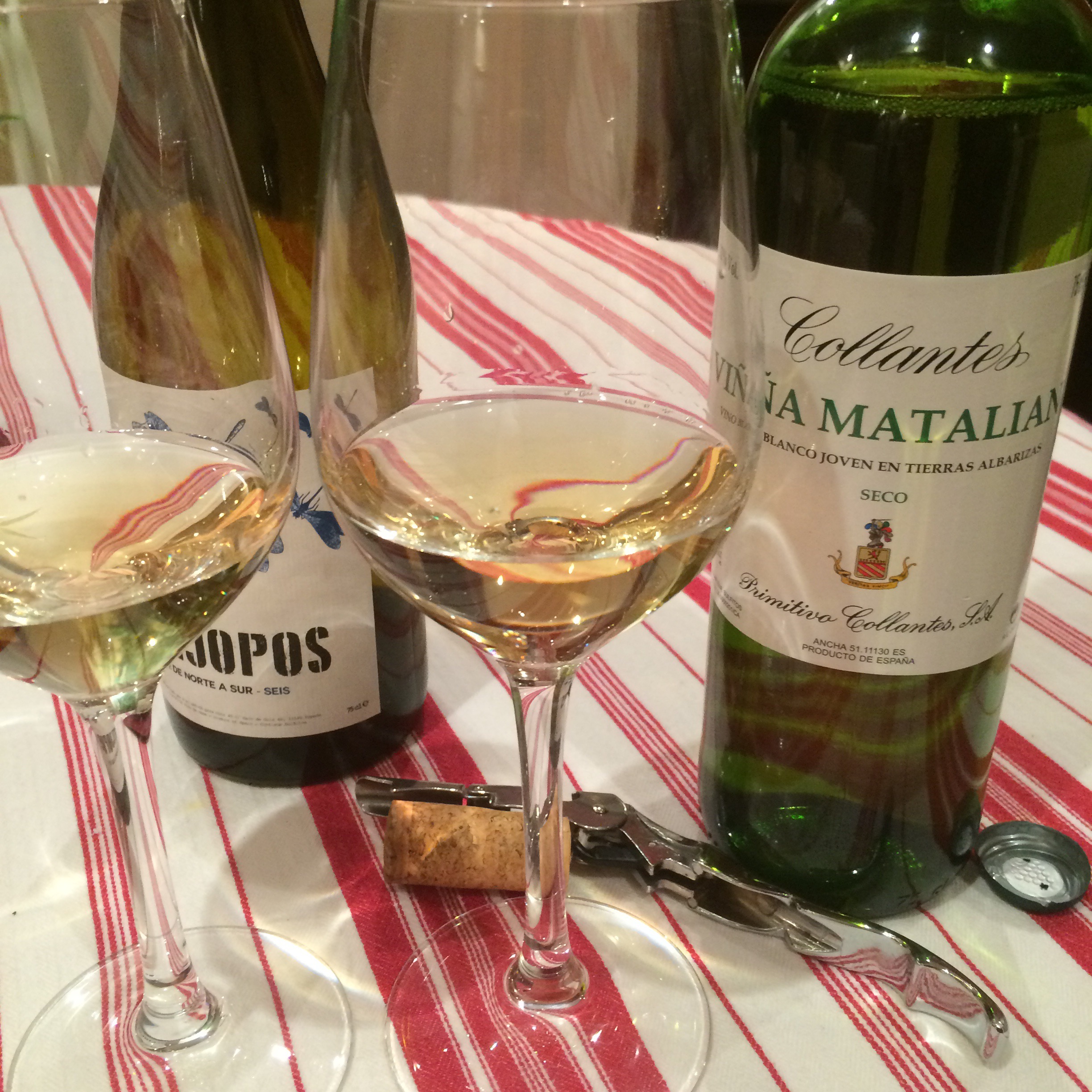
Viña Matalian 2013

This dry 100% palomino young white wine is excellent, really good.

Here it is pictured next to its wood-reared little brother, Pitijopo #6. They are both from palomino grown by Primitivo Collantes on Finca Matalian, but whereas the Viña was fermented in temperature controlled inox (and has been a while in the bottle) the Pitijopo was fermented (by Ramiro Ibañez) in bota without any temperature control. The Pitijopo was excellent (so much so that I have spent the last few days hunting out examples of wines from the same fruit) and it turns out the Viña Matalian is a twin (not an identical twin but close enough).

As you can see above, it has a touch less green colour – it is a lovely clear gold. The nose is aromatic and fruity, full of sweet herbs and mature grapes.

On the palate it isn’t quite as lush as its brother – a little more mineral and refined, but fresh and tasty, full of fruit and maybe more character.

Really cracking wine. Apparently they are looking more seriously at making a white wine and when they do I would really recommend snapping it up.