In der sherrygarten

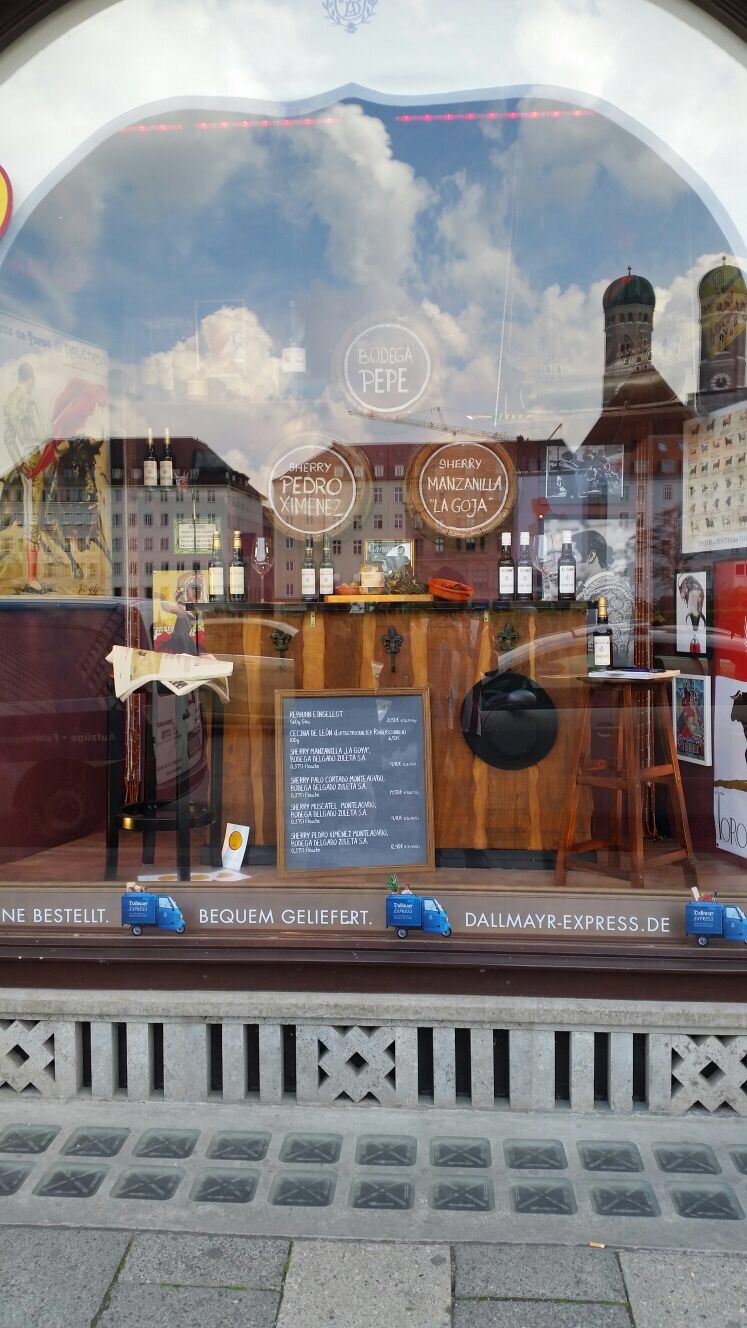
One of the lads was in Munich for the semifinal yesterday and sent this cracking picture of one of the windows in the historic Dallmayr store (est 1700) in the main square. Bit of cecina and manzanilla la Goya  – lovely.

If this was an attempt to sell sherries to the Atletico fans in town it was probably a little optimistic (but I am pretty sure it wasn’t).

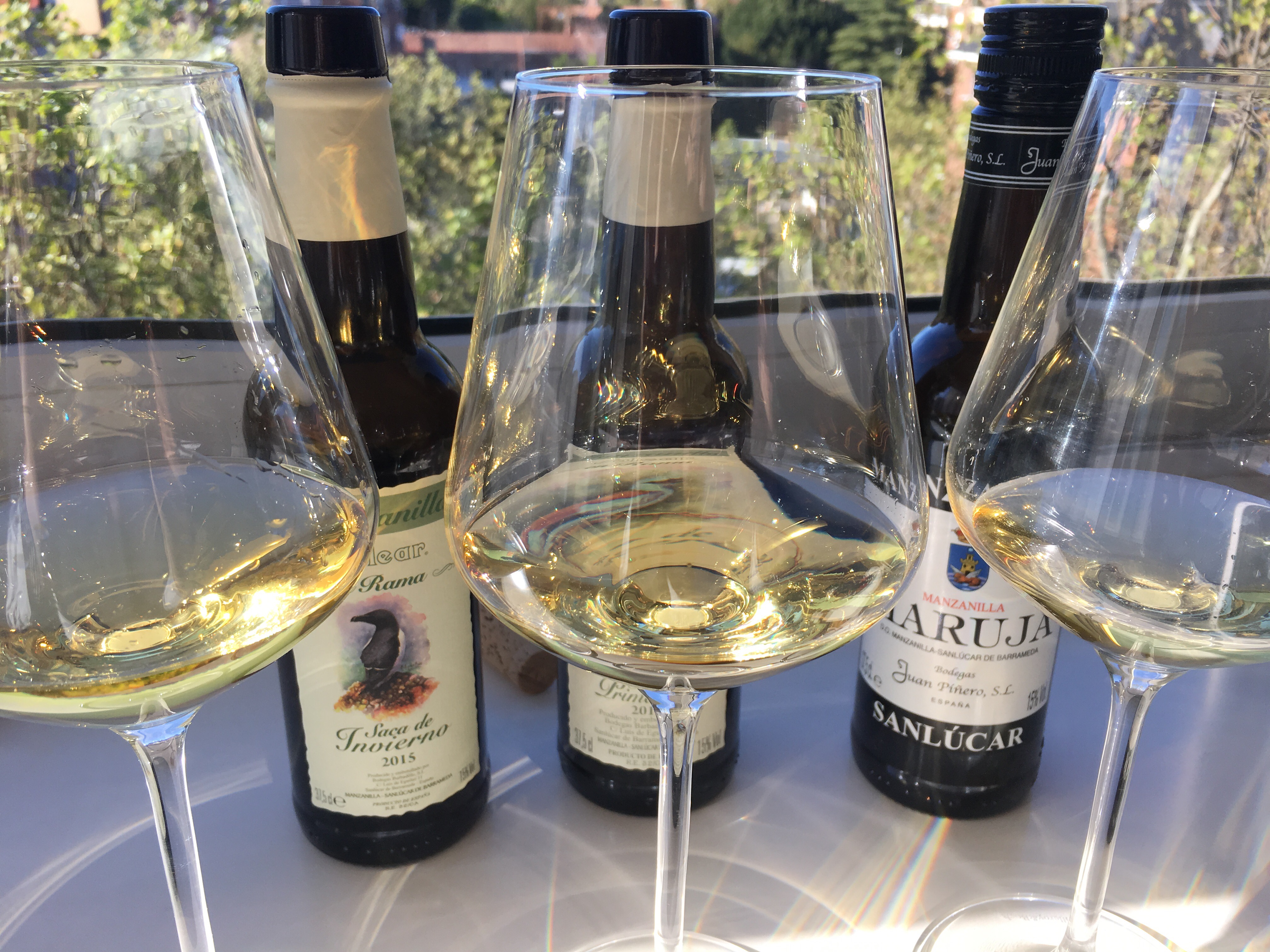
The three last glasses

A moment of manzanilla nerdery here – had saved the last glass of these three (two from Monday and one from Yesterday) for a side by side and I am glad I did.

Clear contrast between the Maruja and Solear for a start – the Maruja has a sweeter fruit-like nose and palate while the Solear is much more herbal or vegetable – celery or spicey raddichio. Both have zingy minerals but the Maruja’s tend to creep up on you whereas the Solear’s are more in your face. Of these three I am actually tending towards the Maruja, to my slight surprise. 

As between the two sacas of Solear, questions may have been raised as to whether to taste different sacas but after nearly a week open the gap between these two seems to have opened – the Spring 2016 seems more zingy, saline to the point of acidity, compared to the merely feisty Winter 2015. The Winter, on the other hand, seems to show more of those vegetable flavours. Then right at the last the spring shows a bit more hay bales and becomes more diffuse while the Winter stays more compact. I actually like the haybales – wish I hadn’t finished the Maruja already but I can’t compare!

Or it could all be confirmation bias – anyway it is an excuse to have a glass of three lovely wines and call it science. 
 

Visions of Jerez and Sanlucar: L Gutierrez and A Mindundi

El Corregidor

As he did in 2013 and 2014, Luis Gutierrez has written an important article on Jerez and Sanlucar for this latest edition of the Wine Advocate. I think they are three of the best things written in English on the wines of the Marco – I don’t link to them because I guess the majority do not subscribe, but if you do you should go and take a look (August 2013 – which also has a fantastic backgrounder – and December 2014).

The latest edition is once again, excellent. In it Luis covers a lot of ground: the terroir of the bodega; the opportunities presented by escaping from the established categories of fino, manzanilla etc; the success (and importance) of white wines like those released by Navazos Niepoort and Equipo Navazos; that bottle ageing is no worse for sherries than any other wine; the growth in interest for biologically aged wines from Jerez and other areas; the red wines of the region; the revitalization of creams and mediums as styles; the bag-in-box issue (and underlying problem with excess production); most hopefully, the work of Ramiro Ibañez and Willy Perez and others and the rebirth of interest in terroir; and the excellent work of Equipo Navazos. He also dedicates time to Montilla Moriles and the action there, explaining the differences and relationship between the two zones and talking about two major producers in particular: Toro Albalá and Perez Barquero. (He then gets on to the local food and flamenco.)

img_0311-1

There are some provocative thoughts in the article (and the notes of the wines that underpin it) and I agree with the vast majority of them, with really only two or three “philosophical” exceptions.

One minor question is that Luis doubts whether it is worth him tasting multiple sacas of the same wine from the same year (he doesn’t seem to think so). He makes a valid point about this being inconvenient from the point of view of databases (i.e., the way the industry does business) and, to be fair, he doesn’t really conclude that he shouldn´t. In fact he also mentions the possibility of treating sacas as you would do vintages of wines for other regions: I think most would settle for that. Nevertheless, I am convinced there are differences between sacas, in particular for those wines where the sacas do not necessarily come from the same botas and I personally vote for more reviews, not less.

The second, and more important, is really a feeling that comes across – from both the article and the tasting notes and scores – rather than a point that he makes expressly. One of the things I particularly like about the article and the way Luis tastes these wines is that he sees them in the wider context of other wines (and not just the other biologically and oxidatively aged wines he references). However what also comes across is that what Luis looks for in these wines is what sets them apart from the wines of other regions: the extreme age, concentration, complexity, the flavours of the bota, the odd colours of the fossils, the different aromas and flavours.

In this latter regard, it seems to me that we may have a different vision (which may of course just be the vision of an authentic expert versus that of an uncertified mindundi and self declared fanboy). Specifically, it seems to me that Luis looks to these wines for something different, something unique and extreme that will thrill the “niche”, the enthusiasts that aren’t looking for “trendy” wines. On the other hand, I really believe that the best wines are those that can go toe to toe with wines from other regions on the dinner table and be accessible to wine lovers of all tastes. I even hope that one day, maybe these wines can be trendy.

To do that, though, the focus cannot be on 80 year old monsters (which could not possibly be sustainable) it has to be on terroir and its expression in the fruit and biological ageing. And there I think an opportunity has been missed.

img_0340

Of course I am intrigued by a lot of the scores, agree with some and disagree with others. I have written before about how staggeringly difficult tasting all the wines of this region must be. Just look at the variety of wines in this tasting: red, white, still, sparkling, fortified, unfortified, biologically and oxidatively aged, 11 degrees and 22 degrees, young, old, very old, even older than that. (Equipo Navazos alone submitted 20 odd different wines.) It just doesn’t seem possible to compare two and three year old wines with 90 year old, 22 degree monsters.

Anyway, I haven’t tried as many of the wines at the top of the leaderboard as I would like: there are a lot of very rare, expensive wines up there (and five of the top ten come from Montilla Moriles). However of the wines that are very highly rated that I have tried some are gems while for others I don’t see the same quality: a lot of barrel and astringency in some, not a lot of definition or expression in some. I was also surprised by the outcome head to head of some of the wines I have tried together: the sample size may be anecdotal but I kind of get the impression that Luis is keen on what I think of as the barrel effects whereas I tend to the umami, fruit (or illusion thereof) and delicacy. Overall though the tasting notes are excellent and ring true and it is great to see recognition for some of the smaller producers.

Most importantly, it is great news that a guy like Luis is sharing his enthusiasm for these wines in such detail, in such numbers, and with such regularity in a publication as influential as the Wine Advocate. It is all too easy to underestimate the importance of things like his unveiling of a new 100 pointer in this category (even if it is from the other place on this occasion). If one message needs to get out there it is this one: these are great wines, and if you want to call yourself a wine enthusiast, you should be drinking them.


(Photos are of El Corregidor courtesy of Willy Perez, Ramiro Ibañez’s cracking little winery Cota 45, and Der Guerrita, where Luis tasted a lot of the wines (and, thankfully, left quite a bit behind).)


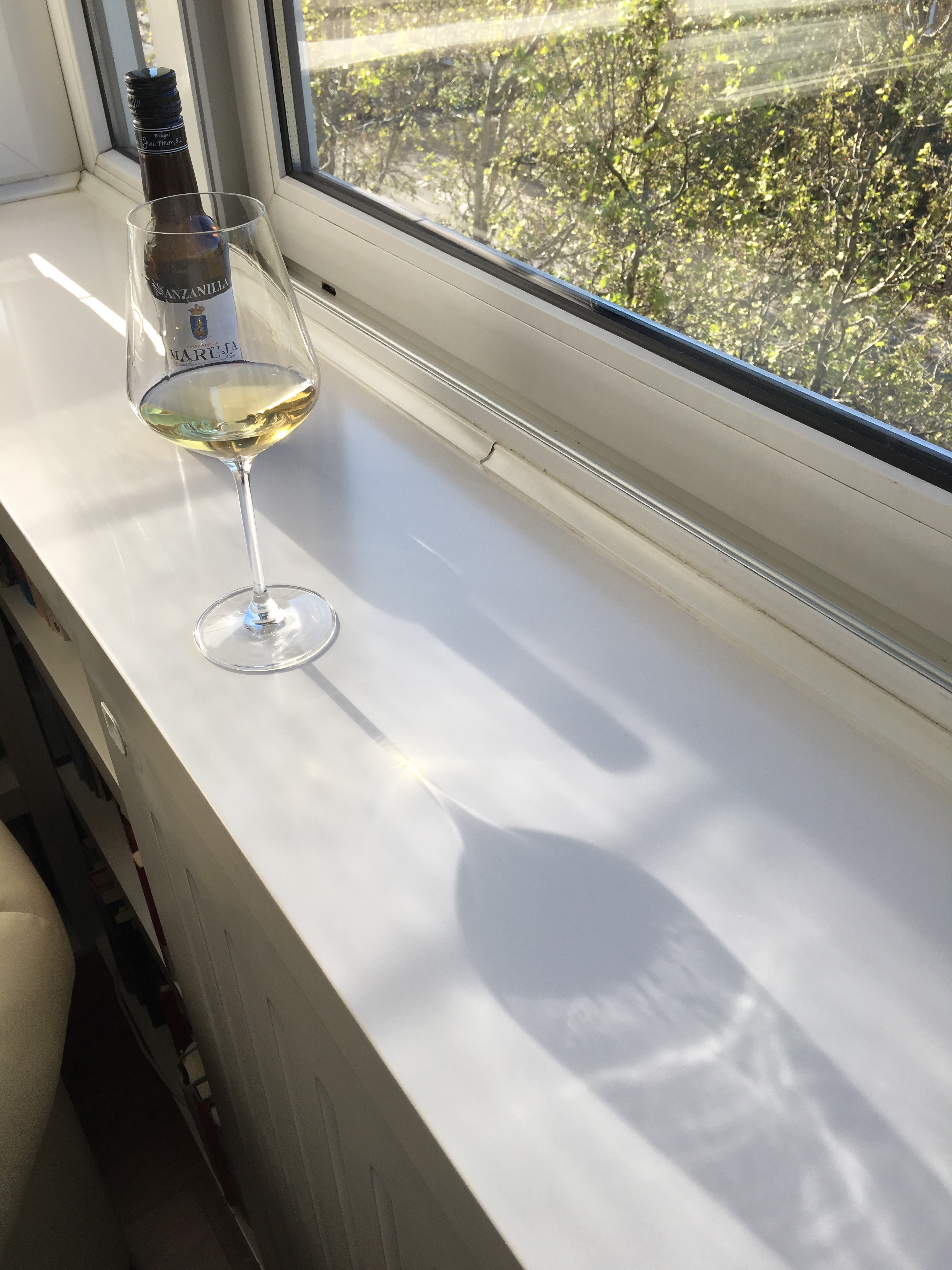
Manzanilla Maruja


A sunny spring afternoon behind me, with the loafers and chinos on and it is time to refresh and replenish vital minerals with this classic manzanilla. (Not the first or even the second time I have reviewed it and I refer to those reviews for details etc.) 

What I will say is that when you drink an aromatic, mineral wine like this it becomes obvious why generations of Jerez winemakers may have wanted to emulate it. Light but savoury to the point of spicey – a bit of salty burn – and just enough aromatic juice to it. Really takes you to the seaside. 

Fino Arroyuelo en rama – saca de septiembre 2015 


Bite of lunch at Angelita Madrid and at the risk of repetition wanted to have another glass of this – the fino en rama from Finca Matalian – I had it at dinner here a week ago and it really sang. Today’s is from a freshly opened bottle and is also in great form.

I always think of the minerals with this wine – really zingy – and this is no exception on that score but this also seems to have more green apple aromas and apple juice up front on the palate. Maybe a difference due to the September saca? Will have try the March 15 I have at home to check.

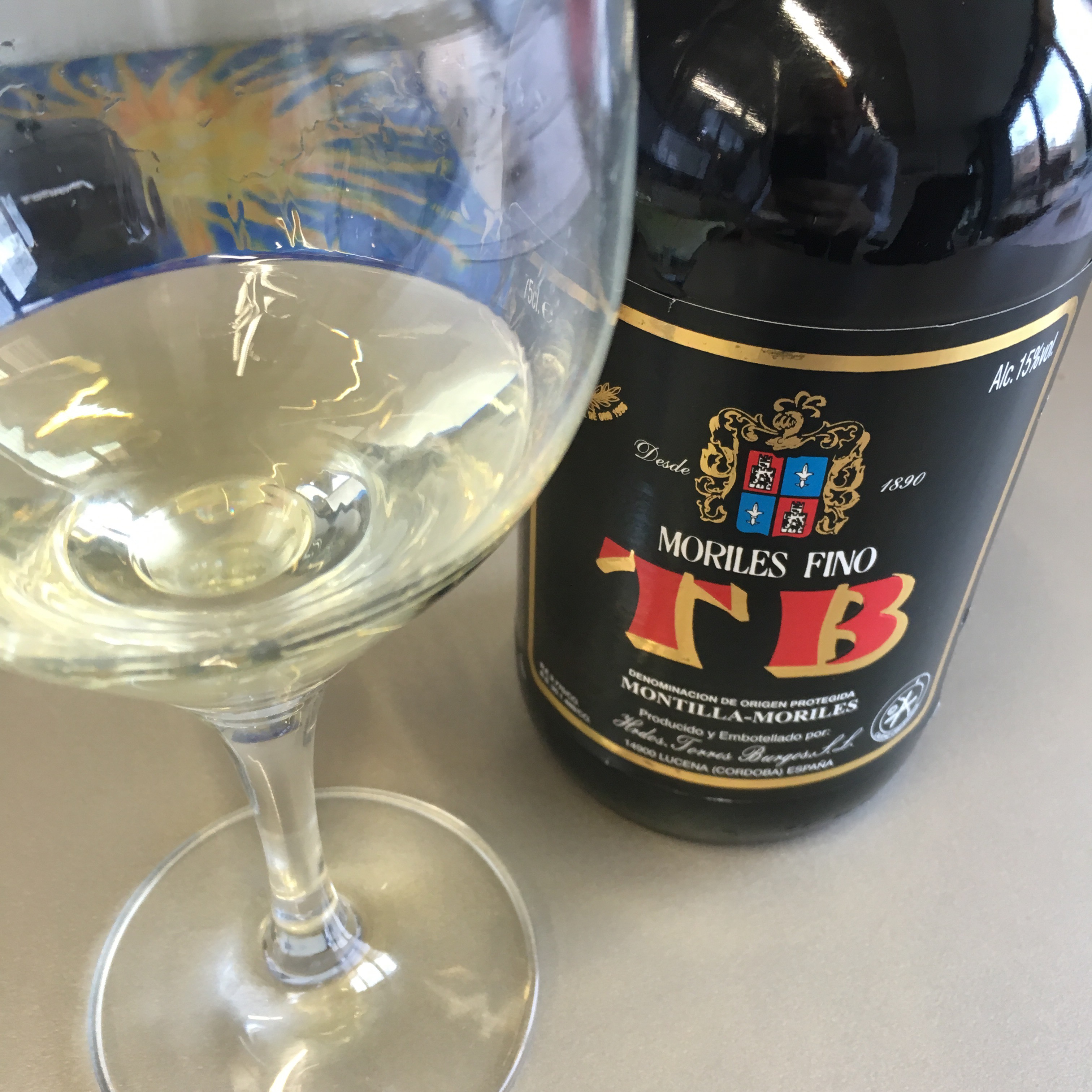
Moriles Fino TB 

Montilla Moriles has some fantastic producers – Perez Barquero, Alvear and Toro Albala – and in addition to the top class sweet wines some of the dry wines can be really good too (like this Fino Capataz and this Amontillado Marques de Poley – among many others, as This blog  will tell you). However more often than not I tend to find them a bit heavy in texture (like this Fino los Amigos) although that is not always a bad thing – I remember the texture working really well in an oloroso release by Equipo Navazos.

This is definitely in the heavy going category – it was a gift and a nice surprise but even the giver told me they used it to cook with. The colour is very very pale and the nose is very pungent with ozone and nutty and yeasty aromas (I will say that for them – they tend to be good on the nose). Then on the palate it is a bit of a brute – the heavy texture, pronounced bitterness and alcohol – a bit disjointed.

I wonder what one cooks with this … 

Swedish press roundup

svenska dagbladet

Highlight of this week’s Swedish Press roundup is this cracking article by Bengt-Goran Kronstam, one of Sweden’s foremost wine men, in the Svenska Dagbladet, one of the leading newspapers.

Great stuff – was sent to me by a friend in Sweden and even in swedish you can see they are on the right track: Inocente, Dos Cortados and Noe are pictured and Tio Pepe and La Ina are mentioned too.

For those interested I have now received a summary (in Spanish):

The article emphasizes above all the choice of sherry wines as the perfect accompaniment to sushi; the japanese cuisine that is very fashionable in scandinavian countries; picking out a glass of fino or manzanilla as the perfect ally for sushi, if you want to be in touch with the latest trend, as they are in  London and New York. Then it explains that the traditional accompaniments for these wines are without doubt tapas of all shapes and sizes. From salted almonds, to the magic spanish ham, a slice of hard cheese or the more sophisticated cuisine that can be served cold or hot – in that order. 

It briefly explains the production methods and characteristics of fino, oloroso, amontillado and palo cortado, highlighting manzanilla as a very special fino from the area of Sanlúcar de Barrameda. It mentions the palomino fino, pedro ximénez and moscatel grapes used in the area,and the delicate production process of the wines. Fino it describes as one of the most sensitive wines in terms of storage and as a result it recommends that the reader buy small bottles, serve the wine quite cold and moreover to finish it at one sitting, since the next day the fino will have already lost its spark.

Mr Bengt-Göran Kronstam then describes the three wines that have been tasted (Fino Inocente, Dos Cortados Palo Cortado 20 años and Noe Pedro Ximénez) underlining their properties and flavours and recommending pairings. 

In general a concise article dedicated exclusively to the wines of Jerez, depicting it as a trendy, very fashionable wine and the perfect pair for a variety of different cuisines.

Overall must be good news, despite the old chestnut in there – not at all true – that fino is difficult to store and needs to be drunk in one sitting (not that you need to space it out either). More importantly, the main thrust of the article is about pairing these wines with food, which is exactly the right idea.

I wish I could think of a signoff that didn’t involve the Swedish chef from Sesame Street.

Manzanilla Papirusa


The only manzanilla (or sherry) on the menu here at Pajarita but it is a favourite and since it comes from Lustau a modest, but heartfelt, tribute to the great Manuel Lozano. 

It is the most basic of the Lustau wines but is very well made (technical details here) with an average age under flor of 4-5 years. Has that very aromatic, green apple nose of a wine with less time under flor but with sea air and minerals in the background, then a similar palate – a dash of aromatic juice and a spike of minerals, with a long, tasty finish. 

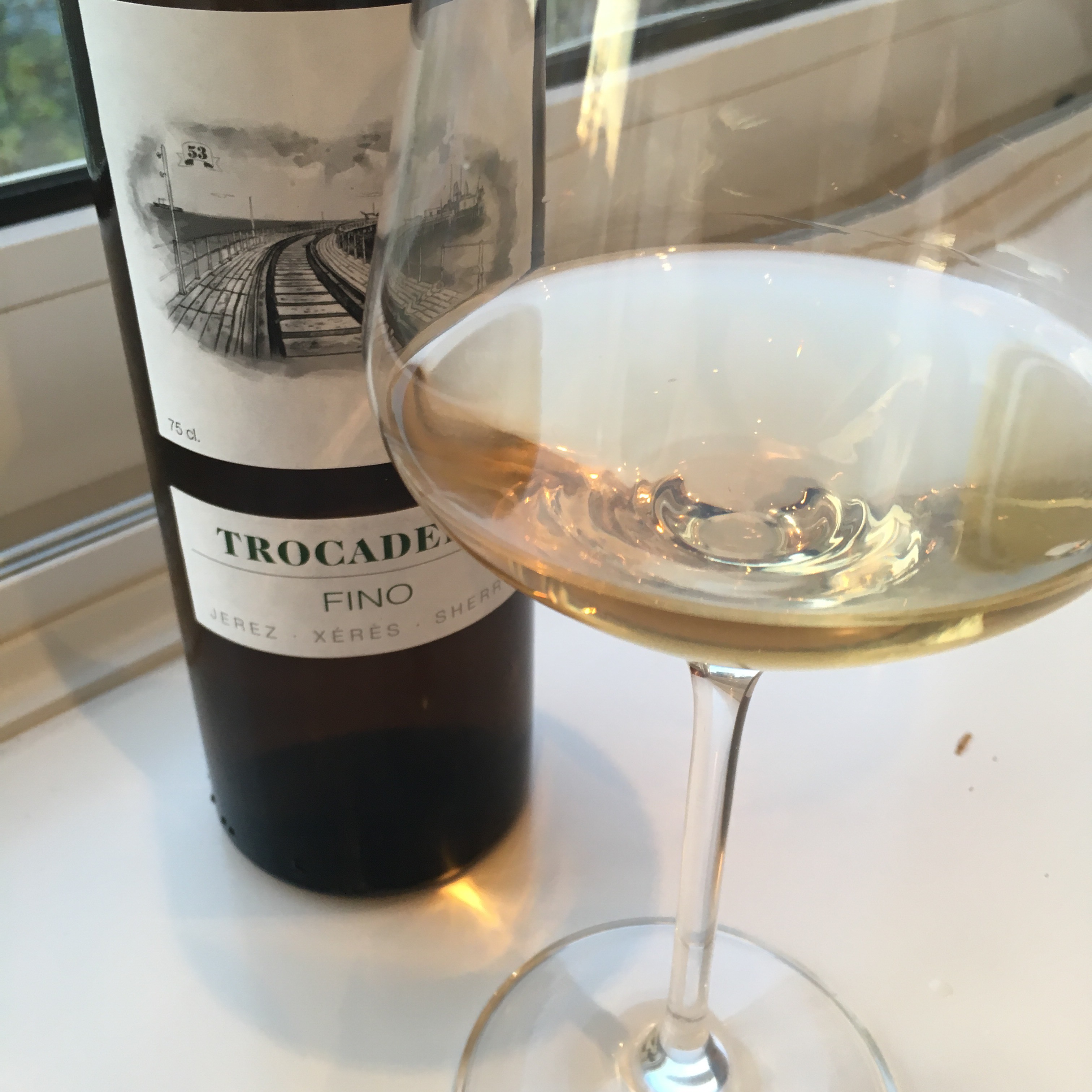
Fino Trocadero

Picked this up at Reserva y Cata a couple of weeks ago out of curiosity. It is a fino named after the Trocadero railway station (not the Paris “rien arrive” terminus, but the one in Puerto Real, to the South of Jerez on the Bay of Cadiz (where you can also find the fort which the Paris one is named after, the French having taken it off the Spanish at some point)) at the end of the Jerez- El Puerto-Trocadero line and was once one of the key routes for wine exports from the region.

It is an original label, no doubt – industrial engineering and infrastructure don’t tend to feature that heavily on wine bottles in my experience. Diligent research on the web reveals that this comes from an outfit called uno53 but I haven’t been able to work out much more.

The wine is a fino with seven years under flor and is pretty good stuff. Has a pretty nice colour to it and an aroma of seaside docks – piercing and bracing. It shows its age on the palate – a big spike of almost peppery minerals, then bitter, wet salty seaweed, maybe just a hint of bready flavours and nuts. Pretty good, railway style fino.

El velo de flor

sherrywines-jerez-flor

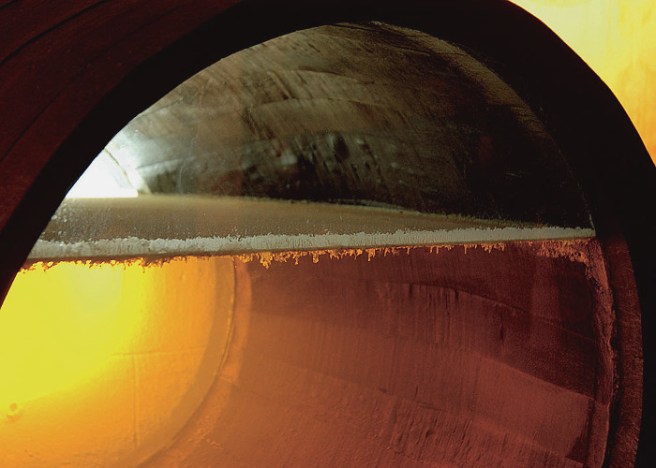
This blog takes its title from the “veil of flor”, the formation of yeast on the surface of (some of) the wines of Jerez and Sanlucar that is central to the process of biological ageing. It is a fascinating phenomenon and one I have been trying to get to grips with for a while.

Now, and by the miracle of twitter, this morning I came across this superb post, on Enoarquía.com (whose site more than repays a visit, as I have said before). The original is actually from November last year in Spanish, but it has now been translated into English. In whatever language, it is the clearest description and explanation I have read to date and I highly recommend having a read (also gives me an excuse to use the fantastic picture above, which they credit to sherry.org).

In fact since then I have come across a second excellent piece on flor by Jamie Goode, the Wine Anorak himself in a guest post for Sherry.wine. Amusingly he also uses the above stock picture, which appears to be de rigueur (it is certainly a cracking shot), but if you are into seeing pictures of flor (and albariza, and winemaking in general) the place to go is this man’s tweet stream.