Precede Miraflores 2013 

This is a collaboration between Cota 45 and Taberna Der Guerrita. For a few years now Cota 45 has supplied unfortified mosto from pago Miraflores to Der Guerrita but for this wine these guys have taken one of the butts and stored it away “tocadedos” style with no flor for three years before its release. It is the kind of wine that would have been common in Sanlucar going back a couple of centuries before the process of biological ageing and the solera system were widespread. As the label shows, it was harvested in 2013 and a total of 700 bottles were produced when it was bottled in October 2016. I tried it first in Territorio Era, but picked up this bottle for further study in Reserva y Cata.

You would guess it was a pretty old bota because despite those three years you wouldn’t say there was a lot of “wood effect”. On the other hand, you would also guess that it wasn’t a bota that had been used for fino or oloroso because neither is there “bota effect” (you don’t get the same character you might find in Socaire, for example).

Rather, what you get is a dark gold wine with a citrus and slightly ripe pineapple nose, not much acidity but a nice freshness and pineapple on the front of the tongue and then a lasting aftertaste of nicely concentrated, almost jammy citrus fruit – strong and sticky but at the end but not bitter either. There is no noticeable sharpness or zing but the mouth waters as the minerals freshen the wine up around the edges, letting that jammy aftertaste linger a good while.

This is a proper wine, and very enjoyable too. More please!
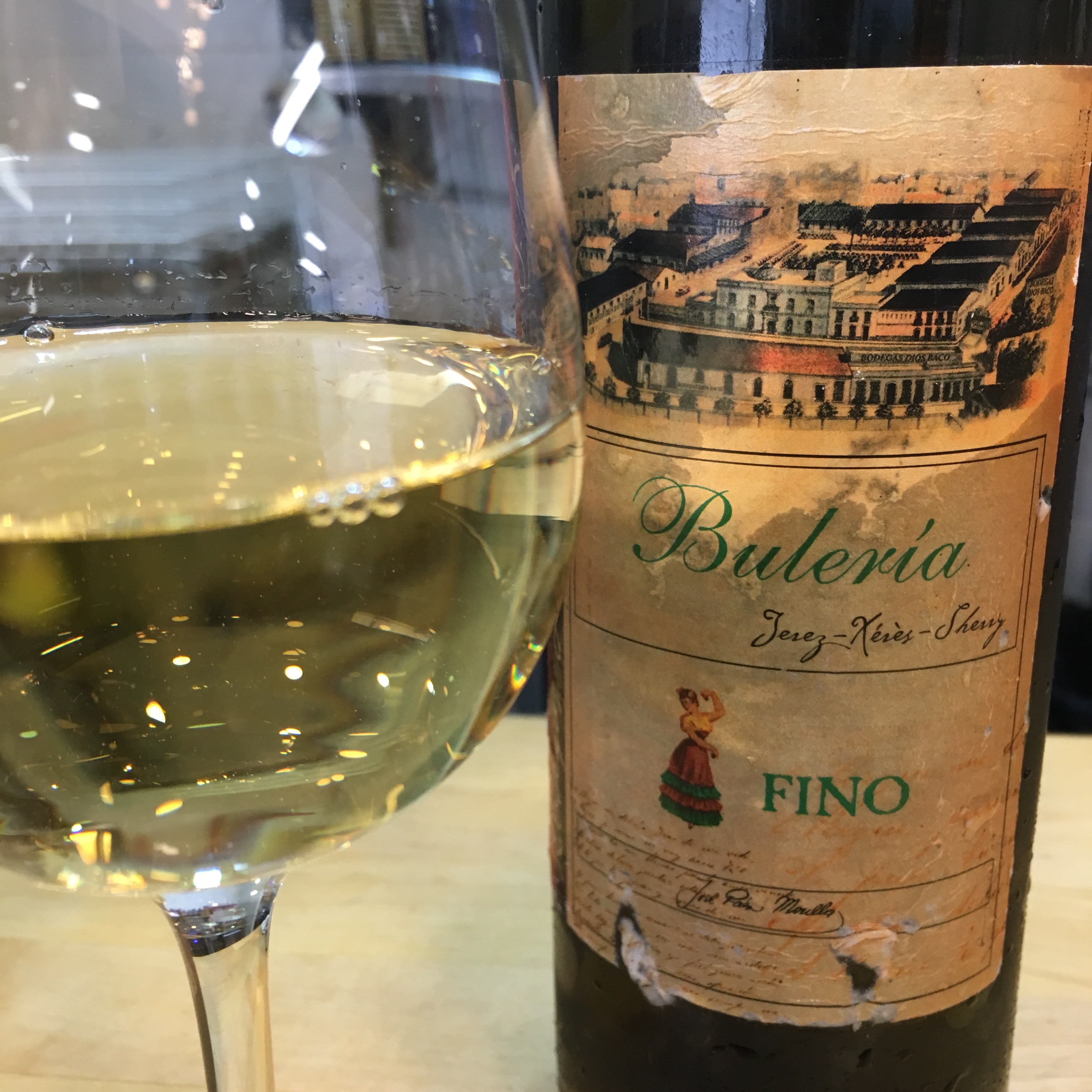
Fino Buleria 

One of the standards on offer at the bar of Territorio Era and an old school fino. As you can see it has the typical rich straw colour with a slight green tinge. On the nose it has a touch of green apple and then nutty and bakery aromas. On the tongue it is big in volume and again has a flash of green apple and then bitter, almost burnt almond yeastiness. A good no-nonsense refresher though.

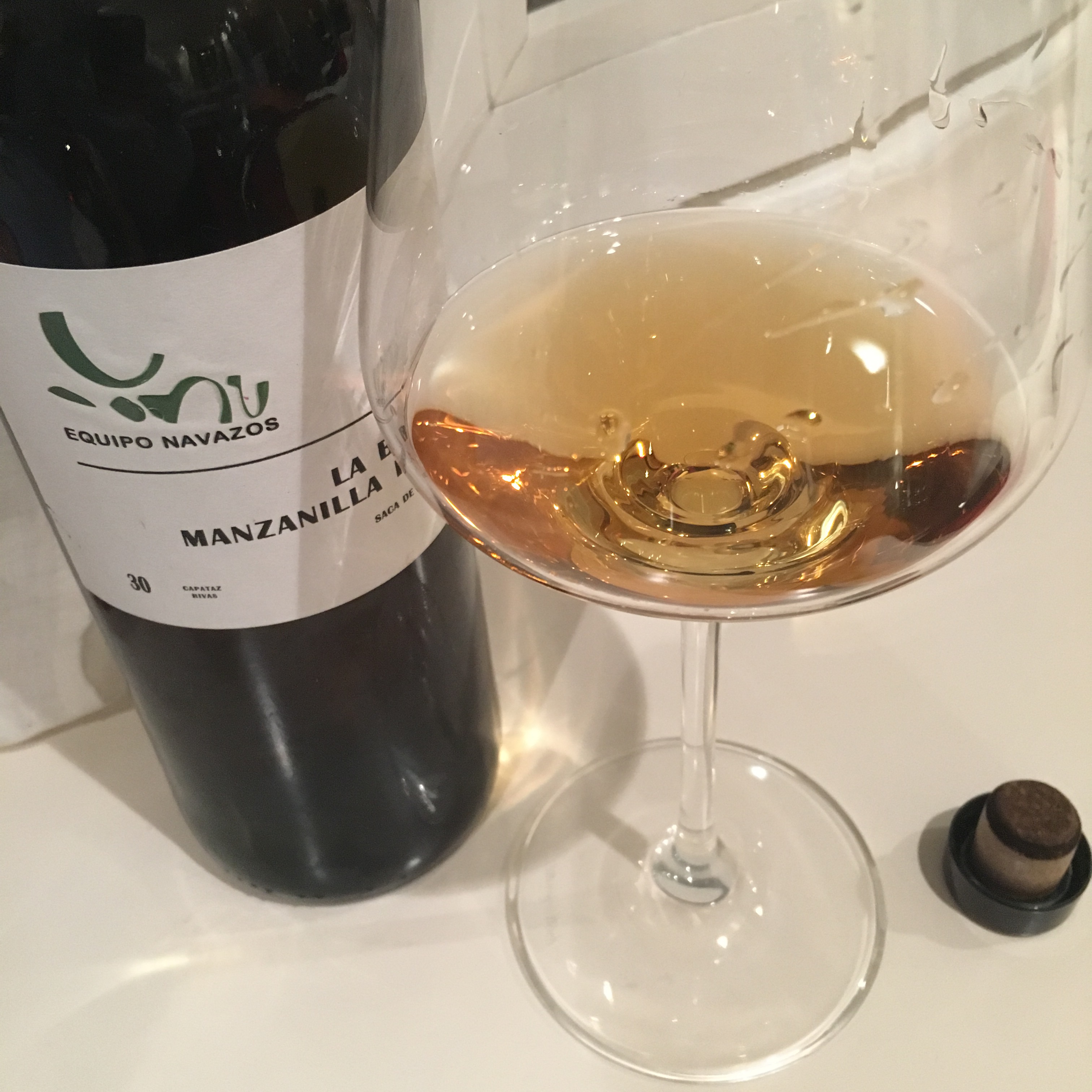
La Bota de Manzanilla Pasada 30 – after five years (and five days open) 

Just the other day I was commenting that this has survived the passage of five years without much damage – and is a very enjoyable wine.

After five days open that last part is true but it is curious how the wine has changed. It was already an evolved colour a few days ago but it is at least half a shade darker and a tad cloudier – certainly not crystalline. The nose too seems a bit more diffuse – more haybales and acetaldehide presence and slightly less sharp sea air. Same story on the palate – comes across as softer, less sharp.

Who knows, all of this might be my over-active imagination but thought I would share. Am I imagining it? Whatever the differences, it is still a lovely wine.

Alba Brut Nature Rosado 2014

I have written before about these fascinating (and really rather good) sparkling palomino wines from Alba Viticultores and so, taking advantage of the more permissive domestic stance on the consumption of bubbles during the Christmas period I picked this up (and the information below) from Coalla Gourmet.

It is a sparkling rosé. The base wine (about 93% of the volume) is palomino fino from albariza vineyards in Sanlúcar (unusually for these guys they don’t specify the pago – they have vines both inland and in Miraflores so would be interesting to know). It was fermented and spent a few months in inox, then five months or so in demijons under flor before bottling for the second fermentation in August 2015 and disgorging in October 2016 with no filtering, clarifying  or addition of sulphur. The rosé is achieved by adding tintilla de rota – which makes up 7% of the volume -and although the wine is labelled “brut nature” I wonder if it might not be one of the sweeter versions.

The packaging is edgy – the crown cap as if it was yet to be disgorged – but this time the bottle is frosted rather than dark or clear (although to be fair I guess it is to show off the rosé). Not the most bubbly bubbles, but a nice fizz and a deep almost reddish pink colour. Natural wine nose of countryside, undergrowth and fruit, and even chocolatey aromas. On the palate again a nice fizz and effervescence and a rustic feel to it – lots of carbonic and those fruity undergrowth flavours. Serious aftertaste with a touch of diesel and, dare I say, palulu.

Not really my cup of tea to be quite honest: a bit too natural and rustic and lacking that liftoff and elegance of the pure palomino Brut Natures. Having said that, the group I opened it with liked it and it disappeared pretty quickly!

Encrucijado 2014 

Here it is, the second edition of the most unique wine being made in el marco.

It is by Ramiro Ibañez‘s Cota 45 label and is an evolution of the Encrucijado 2012: whereas that was 50% palomino and had six varietals in total (10% each of Beba, Cañocazo, Mantuo Pilas (aka “Uva Rey”), Mantuo Castellana and Perruno) this is 40% “Uva Rey”, 40% Perruno and only 20% Palomino. The fruit was dried in the sun for two days to bring up concentration, fermented in bota, given a couple of months on the lees and then two more years in bota – including four months or so under flor. I am not sure of the historic back story but the back label has a reference to the old classifications of rayas, palmas and cortados, of which this would presumably be a cortado.

Dark gold in colour and has a spirity, honeysuckle, overripe melon nose. It is fat in texture for a two year old wine and on the palate it has an initial dash of that overripe melon but quickly turns to a grapefruity citrus. It seems more potent than my memory of its predecessor with less butterscotch, more grapefruit bitterness, and more obvious alcohol. However it is sharper in its features and has a more defined, elegant structure to it: there is just a little bit of acidity (some esparto grass from the empty glass at the end?) and a nicely integrated salinity  leaving a mouth watering, fresh finish.

Overall this is different, even exciting, enjoyable and feels like it might get better with time. Only just 1,000 bottles made though so get it if you can. (I am having a glass at the bar of Territorio Era, since you ask.)

Vila Viniteca

Behold the magnificent cover of the Vila Viniteca catalogue for 2017 – fantastic stuff.

The contents are even more heartening for devotees of the traditional wines of Andalucia  – 200 top end wines from Jerez and Sanlucar and another 55 from Montilla Moriles. It is a superb and growing selection (in 2015 I count a total of 183) and there are some unique and expensive wines there (and here I refer to the three pages of sherries, not the rest of the tome).

Kudos to Vila Viniteca, which although based in Barcelona has a fantastic tasting room here in Madrid and has played a nice little role in the sherry “revolution”. Their blog has been a forum for some really top class posts (this one by Armando Guerra and this one by Alvaro Giron stand out), they have organized some first class tastings down the years and sherry also gets a look in at their Cata por parejas and La Musica del Vi – two of the standout events on the Spanish wine-tasting scene. Most importantly they have this cracking selection of wines – some interesting stuff and, as I mentioned, a really strong selection at the top end.

Great to see and I look forward to going through this catalogue in detail.


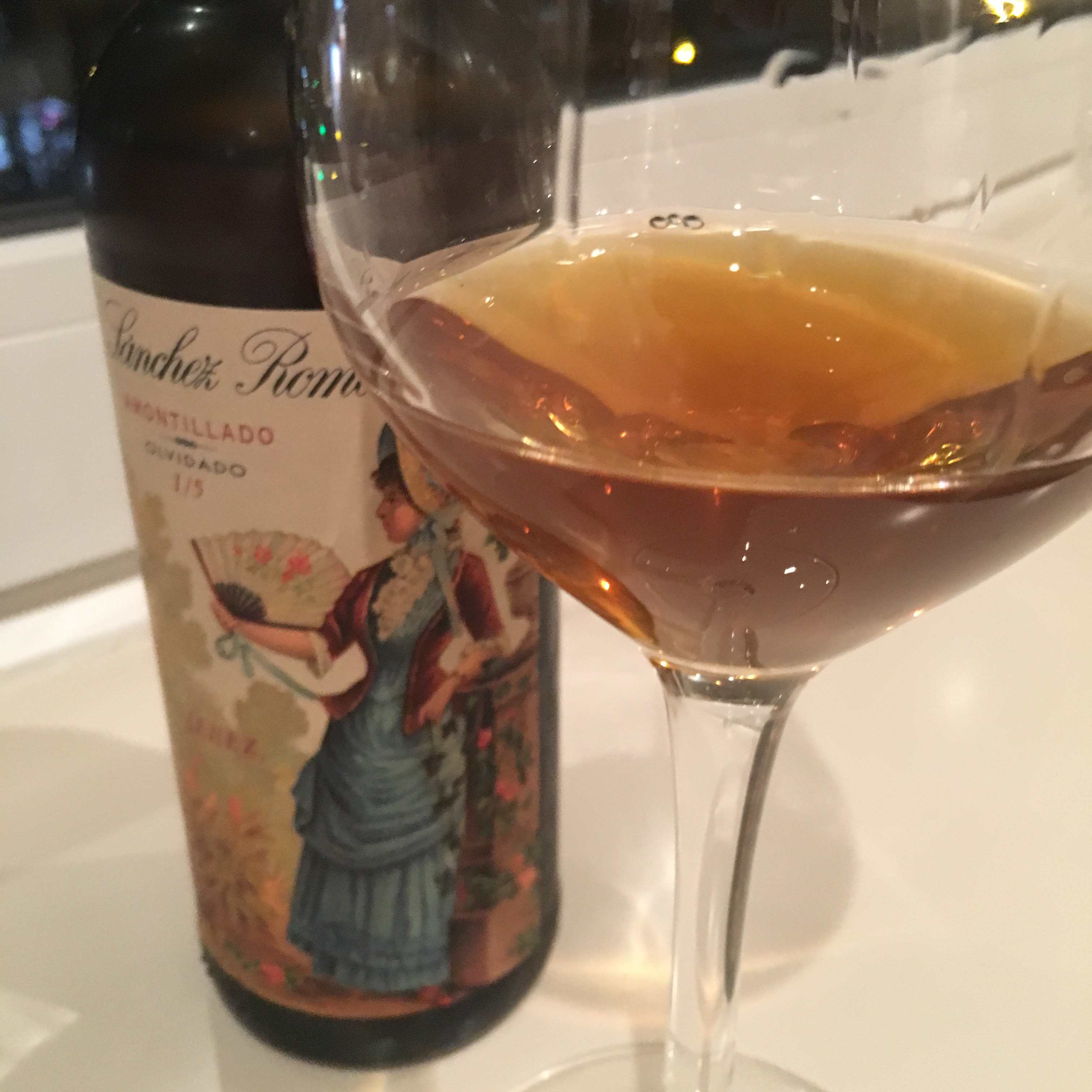
El Amontillado Olvidado 1/5

Have been curious about this wine for a while. By Sanchez Romate, the name is evocative – the “forgotten amontillado” – and I am a big fan of its nephew the “Fino Perdido“. I have also seen it on the Coalla Gourmet website a few times but nearly always sold out – more luck this time.

As the name indicates this was until recently “forgotten” in the cellars, reportedly for 25 years in 1000 litre toneles, and there is no doubt that despite its lightish brown shade it is a wine of real age and concentration. It has a pronounced, piercing nutty wood polish nose, then one of those sizzling mouthfuls – an entry of baked apple flavours then acidic bite and then mouthwatering salinity – a bitter wood and burnt walnut finish. But a lot of sizzle  – the tongue is cooking away for ages after it is gone. 

Worth the wait – quite a little handful and another top class wine. 

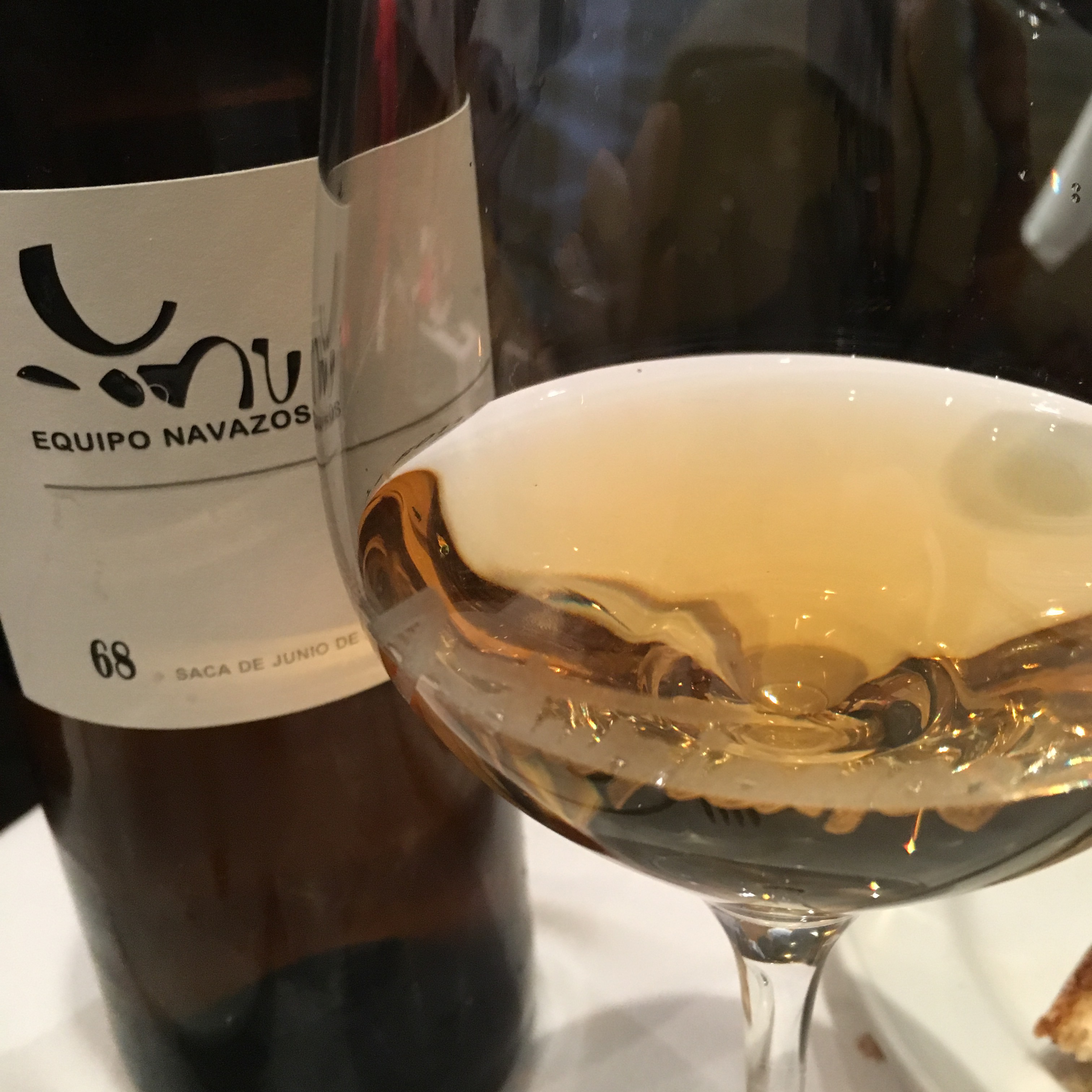
La Bota de Fino 68 – Macharnudo Alto 

Lunch with an old friend in Asturianosthe new saca of the fantastic macharnudo alto fino by Equipo Navazos. They have produced no fewer than seven of these but I don’t remember a better edition than this. 

Absolutely spectacular, classy with a huge  atomatic nose and flavour profile. A cider vat in a hay barn on the nose. Zingy to the point of stingy, with a lush feel on the palate and big, spicey roast almonds to roast apple flavours. The salinity is beautifully integrated and the finish is long and savoury. 

World class fino – a real belter. 

La Bota de Manzanilla Pasada 30 – Capataz Rivas 

I first came across Equipo Navazos back in 2012 when they were in their early 30s. The first wine I tried was the terrific La Bota de Palo Cortado 34 and I immediately bought up everything I could find from them and have been attempting – with limited success – to keep them for posteriy. However after trying “La Bota de Manzanilla 32 – 5 Years Later” the other day my curiosity was piqued to try this manzanilla pasada bottled in June 2011.

It is the “Capataz Rivas” (like La Bota de Manzanilla Pasada 59) and is a direct relation of la Guita as the excellent ficha points out and there is a clear family resemblance in every respect. Like the Guita en Rama it has an evolved, dark copper colour and a salty sweet nose. Then on the palate it has the smooth silky, slightly fatty texture of an old wine, and a really elegant shape with salty zing, rich, sweet, slightly metallic apricot and orange fruit and a bittersweet finish.

And the effects of those five years of bottle ageing? I must admit I am not finding as big an effect as there was in the manzanilla the other day – which is logical since this would never have been as “fresh” as the manzanilla was on release. Rather, it would have had a little bit of oxidation before bottling and as such you would expect it to be a little more stable in profile. Maybe there is a hint more marmalade bitterness to the fruit and the finish than there was when I tried it the first time – or when I tried the 59 – and maybe the metallic notes stand out a little more. Nevertheless, this is very very drinkable.

An elegant, fruitful and characterful wine: lovely stuff.


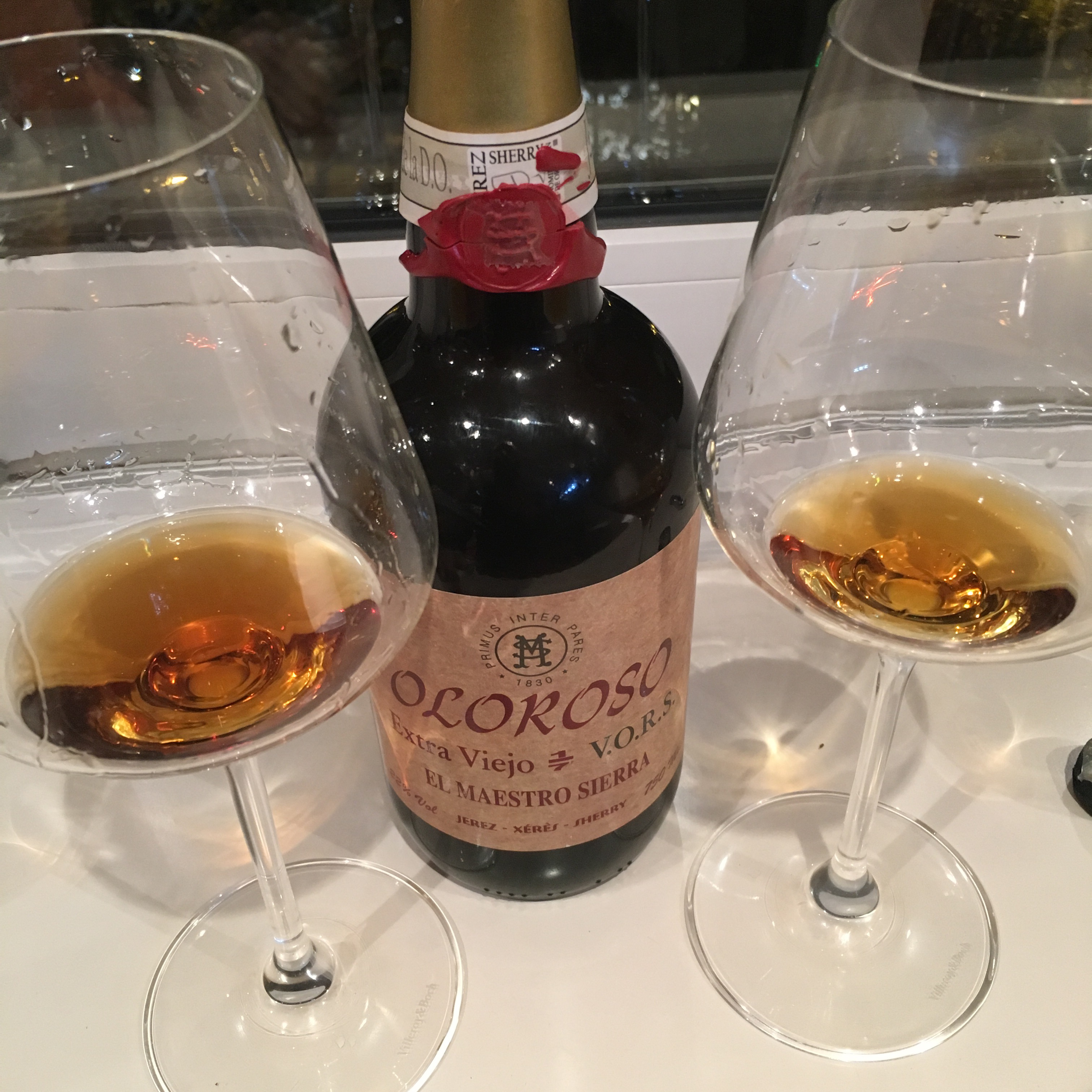
Oloroso Extra Viejo 1/7 Maestro Sierra 

After two quite magnificent Sanlucar wines (La Bota de Palo Cortado 41 – on the right in the picture above – and Amontillado Muy Viejo Don Paco) my week of sobriety’s horse has now bolted and rather than sit in an empty stable I am going to chase it downhill with this meaty old Jerez oloroso.

Even older than the others, with an average age north of 80 years, the contrast in styles is really fascinating. Compared to its old muckers from Sanlucar, here the nose has less salinity and ozone and far more polish and walnut. It is said to be a “fine” style of oloroso and it has tremendous elegance but it also has a much fuller palate of burnt caramel and spicey tobacco – with a dustier, tobacco finish.

Really excellent, maybe the best of the three, but time for something a little less potent or my evening will be over quickly!