Manzanilla de añada 2012 – 2/11 – May 2016

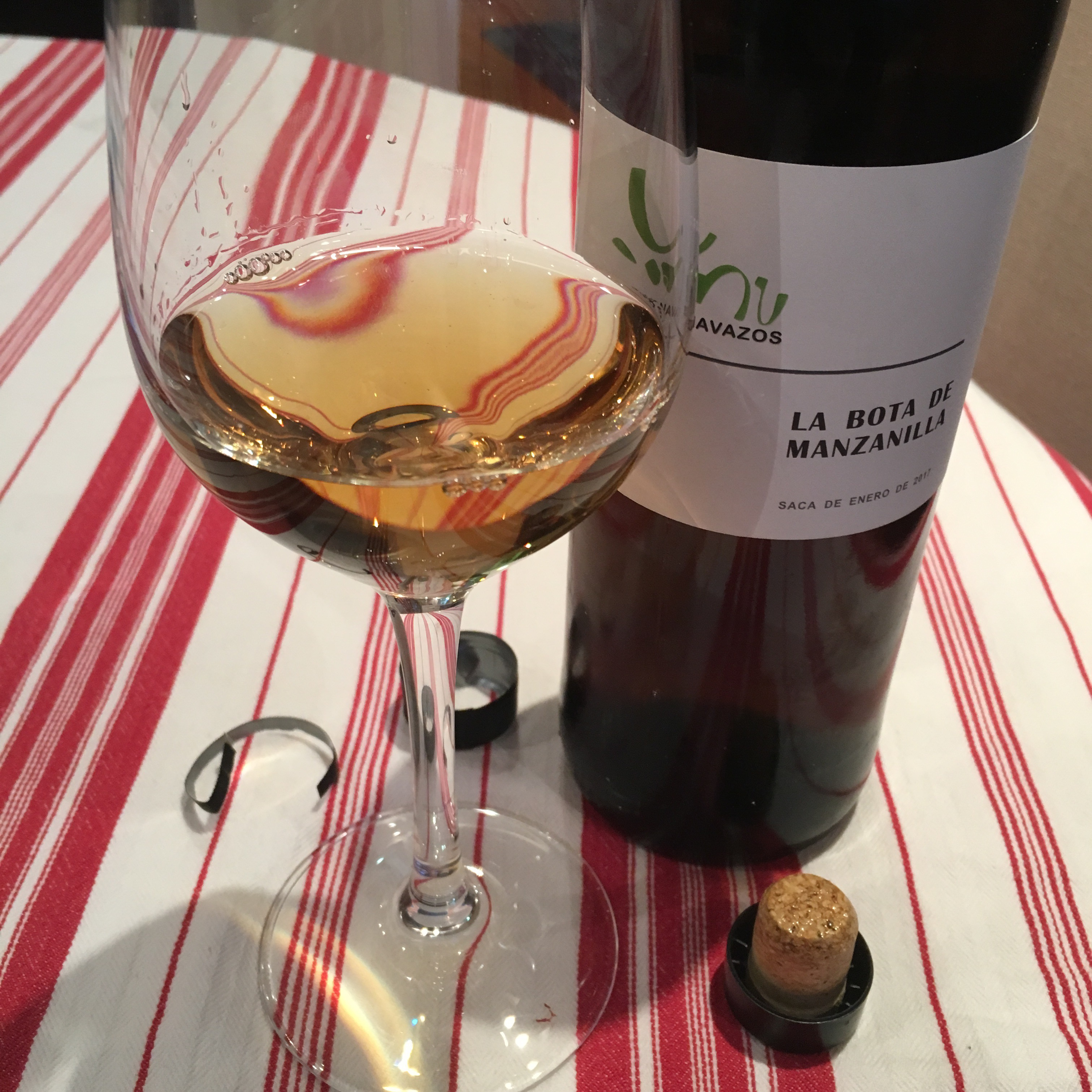
The visit of some good friends gave me an excuse to open this special manzanilla and see how it was getting on in the bottle after nearly a year. It is a vintage or “de añada” manzanilla from palomino fino harvested in 2012, fermented and fortified to around 15% and set aside for “static ageing” in individual botas instead of in a solera. There were 11 botas in total and this is the second bota to be bottled (hence the 2/11), on this occasion with around three and a half years under flor.

It is a lovely crystal clear gold colour with just a hint of green to it – exuding fresh green apple, and it did indeed have a sweetness to the nose and at the beginning of the palate, but more like the slight sweetness of fresh almonds, but then some spicey and bitter grapefruit notes that I associate with the time in the bottle (at least I don’t remember it quite as bitter). An exuberantly zingy mouthful and also quite full bodied, maybe even a touch heavy at the back end.

My feeling, looking back at my notes from July, October and November last year is that I enjoyed it a little more back then, particularly in November, and that this may be a touch quieter even only four months later. Unfortunately only two bottles left and one is being saved for the great vertical of 2026, but if I happen upon a stash in the next few months I may need to have another dip.


Ancestral Las Alegrias del Carrascal 2015  

Was on a mission for fish and chips at La Berenjena de Chamberi (thanks to Victor de la Serna, my personal fish and chip consultant) and observed that they had a few nice wines on the winelist – Fino Arroyuelo, el Fossi and a couple of other goodies, and most eye-catchingly this. On another day I would have put to the test my theory about manzanilla and fish and chips but couldn’t resist some Sanlúcar bubbles.

By Alba Viticultores, it is a 100% palomino fino from a vineyard by the name of Las Alegrias on the Pago Carrascal in Sanlucar. Harvested and fermented in 2015 and this one was disgorged in October 2016.

I was having too much fun to take notes but from memory it had a little bit of reduction first up but then a very pleasant nose of herbal apple sweetness and fresh grass. On the palate it was dry, with muted appley fruit, salinity, maybe a suggestion of creaminess and a slightly bitter, carbonic finish.

Very pleasant all around – will have to come back to try the manzanilla and chips another day.

Forlong Rosado 2016 

I am pretty sure this is the first Cabernet Sauvignon on this blog and it is another of the fresh and inventive wines from the guys at Forlong in Cadiz. I first tried it at the Cuatrogatos Wine Fest a while ago and had another chance to have a closer look this week.

As you can see it is  a clear pink/orange or orange/pink – maybe pink/gold. The nose is floral and summery fruit but also has some nice dairy and bakery notes. On the palate it is fresh on entry, maybe even has a bit of zingy salinity, a nice buttery texture, some summery red fruit and a bit of undergrowth. Again a fresh, slightly mineral finish with notes of baked fruit. 

One of the top cabernet sauvignon wines I have tried from Cadiz, no doubt. 

La Bota de Manzanilla 71 

The latest manzanilla from Equipo Navazos (see their ficha here) and once again from the solera of Hijos de Rainera Pérez Marín. 

At least to my mind it seems a shade darker than the last release, but with the same aromatic nose of esparto grass and salty sea air. Then silky in the mouth – light when compared to the manzanilla of course –  very elegant salinity and tasty herb flavours. 

Crying out for some fish and chips! (Or is that me?)

Blanco de Hornillos 2015 

Enjoyed this very much at lunch today at Surtopia and was surprised to find that I had not posted about it before. It is by Callejuela, one of the most active bodegas in Sanlucar and fast becoming a new big name.

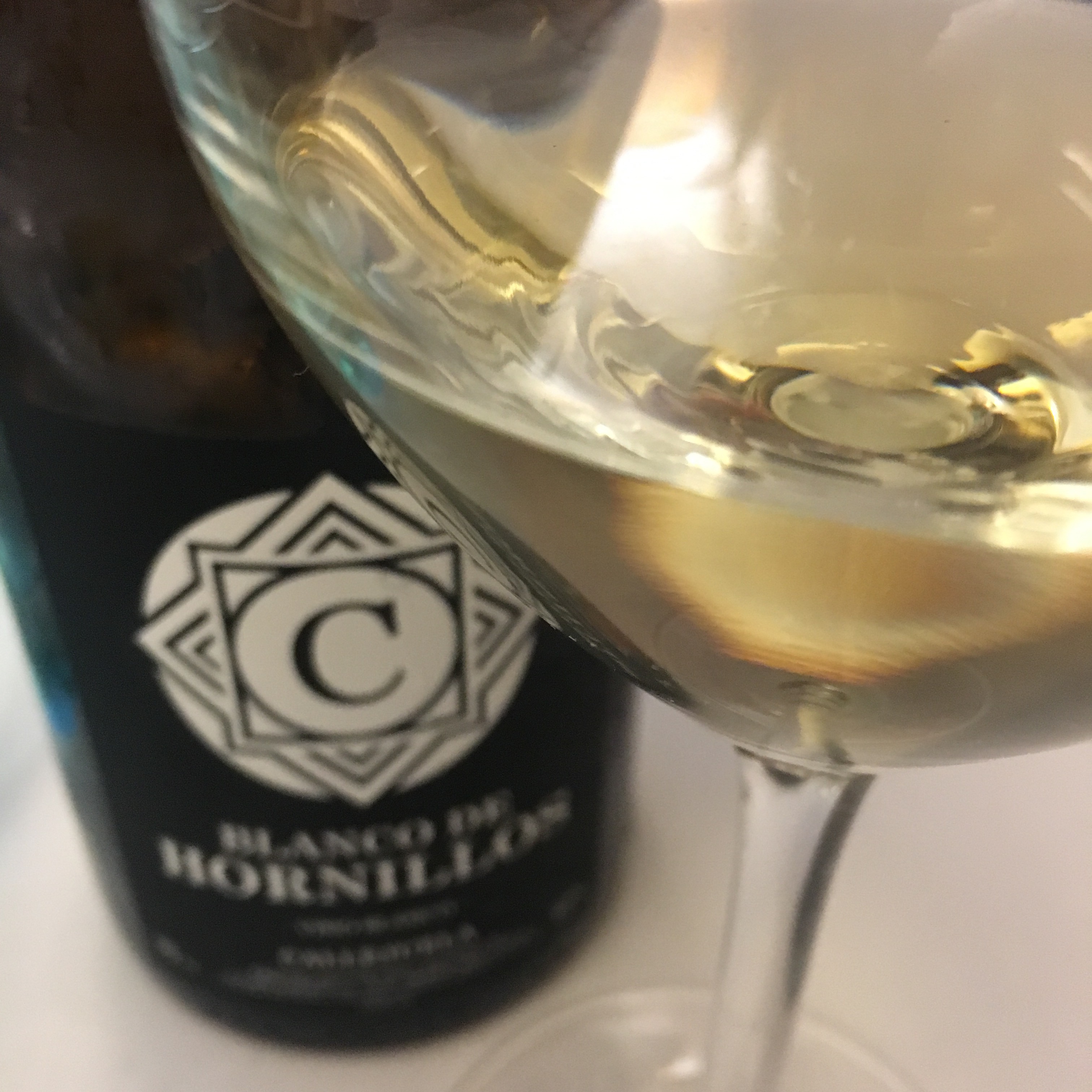
It is a fatty, citrussy, raw almond mouthful of unfortified palomino. Very mellow vibe to it, very low acidity and none of the palulu (liquorice root) bitterness of the manzanilla en rama. Neither is there a big mineral edge – just a big, mellow, refreshing mouthful with a dry finish. Very easy to drink.

Las 30 del Cuadrado 2015

This is not an easy wine to get hold of by any means, so it was a small thrill to see it on the wine list at Surtopia, still for me Madrid’s supreme temple to all things Sanlucar.

The only other time I had tried it before it was still a prototype just over a year ago, and that time in the bottle has really helped it come along.  Almonds and sweet herbs on the nose and the dry/sweet flavours of almond and herbs on the palate too. Mineral and saline with those tasty mountain herbs and a fresh finish. After a little while open the aromatics and flavours grow a little more intense and become almost stewy.

A really nice balance of subtle fruit and savoury. I can’t help seeing these wines as evidence in the argument about the qualities of palomino and its ability to make quality white wine. This one certainly shows that it can.


Fino en rama Santa Petronila, December 2016

Two successive posts in relation to this, the smallest bodega in Jerez. On Thursday night a glass of cream, and on Friday night a glass of what to me seems their best wine – the fino en rama – this time in Taberna Verdejo.

The first time I had this wine I had the Saca of December 2015, with a good 10 months in the bottle and I was impressed by how expressive it was. This time it is is the saca from December 2016 with only three months in the bottle and by comparison this one is a shade lighter in colour and seemed a little more restrained and, if anything, fresh and fruity. Hints of green apples and fresh almonds on the nose – the haybales and bakery aromas and flavours are there but only in the background. On the palate again it is fresher – that suggestion of apple and fresh almonds – I didn’t detect the bitter almonds that I remembered – and a nice savoury, zingy edge and fresh finish.

A tasty wine and none the worse for that fruit – even Mrs Undertheflor enjoyed it.


Cream Santa Petronila 

The latest wine from Jerez’s smallest bodega nestled in Pago Macharnudo is this cream – a blend of oloroso and pedro ximenez – sampled by the glass in Territorio Era after dinner.

The photo isn’t great but it is a dark and appetising brown colour – dark raisins with a gold lining – and for a cream it has a striking nose with a lot of volatile acidity (something I also noticed in the oloroso). Not overlong or structured but it has an elegant feel to it – not at all heavy or sticky – and a very nice flavour profile of nuts and raisins, with just a little bit of edge from that acidity.

A very nice tipple once again.

La Panesa – 1a saca de 2010

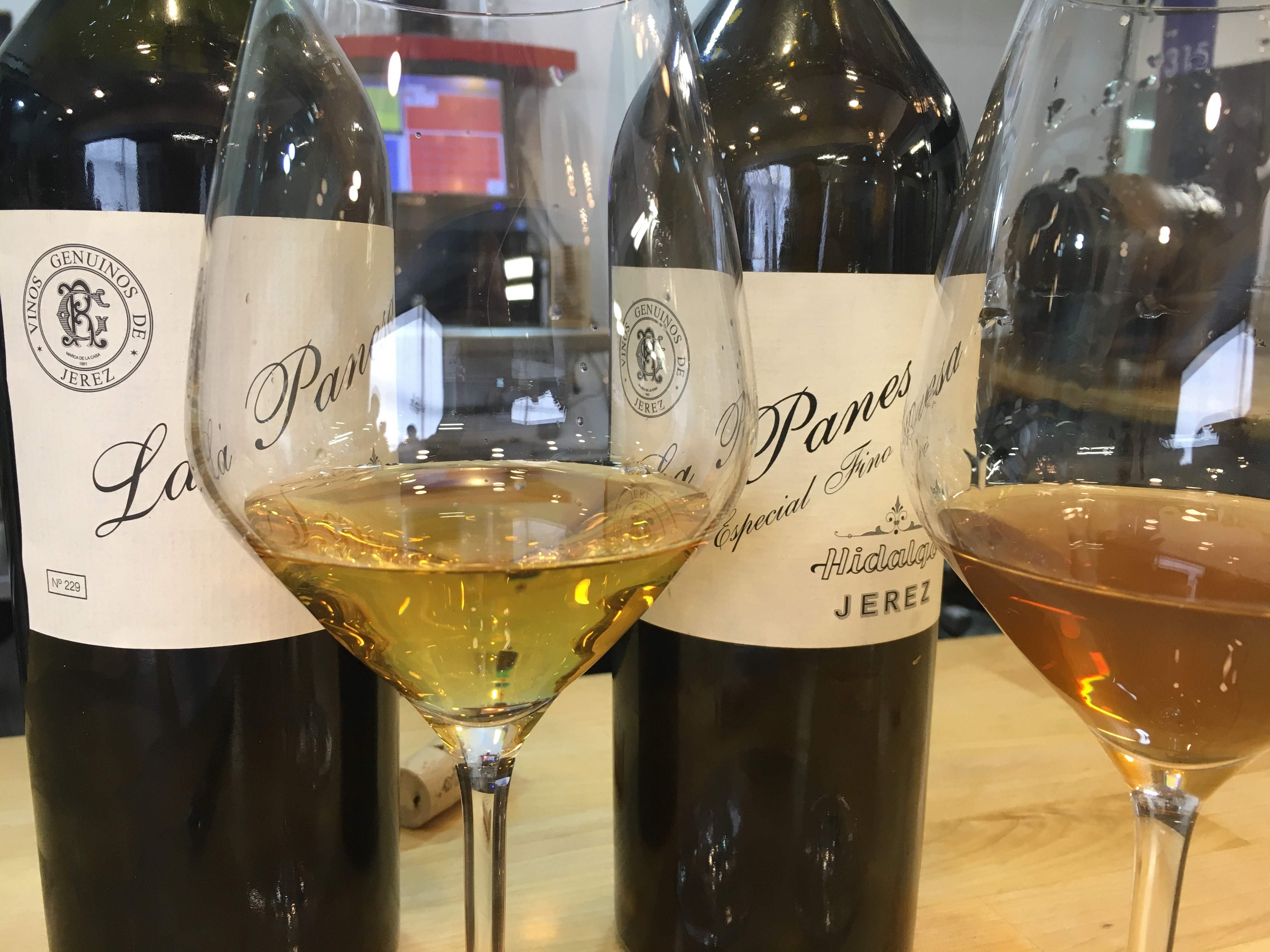
An interesting couple of days for evolved finos alright. The Panesa is, for me, the special fino, and this is an example from what the bodega considers was a special saca. It is a fascinating wine any day of the week and this one, with its fifteen years in the bota and seven years in the bottle, is extraordinary. It was donated and opened in Territorio Era on Saturday by Juancho Asenjo, who very kindly asked them to keep me a glass – and to be fair to the wine I have kept it waiting a little.

There is no mistaking the age. Several shades darker in colour, and loads of haybales and almost sawdust on the nose – almond dust in the background, almost like marzipan (great shout from my man David), but also that sulphurish bitterness of a sherry with time in the bottle. On the palate it is a similar story – gentle start, soft and integrated sensations and toasted bakery notes, long finish with almonds that are just a touch gingery and bitter. Still spicey and zingy, but a touch more restrained.

We take our “work” seriously on this blog so I paired this regal old Panesa with a 2016 version – and just look at the visual comparison below. 


There is no doubt about the evolution and complexity of the old’un – it has developed characteristics of its own, and there is greater integration. On the other hand for me (and again, this may be my fault since it was open several days) it lacks the spring and spark of its younger colleague – and maybe has a shade more bitterness than I am looking for.

And the verdict? I am boringly predictable in this respect, so you won’t be surprised to learn that I preferred the 2016 – I am not saying that the bottle ageing doesn’t bring something (I have had crackers that were two or three years old) but maybe this one was just a little long in the tooth. Nevertheless, a fantastic opportunity for a close look at bottle ageing for which I am very grateful. 

La Bota de Fino 2 – Jerez de la Frontera 

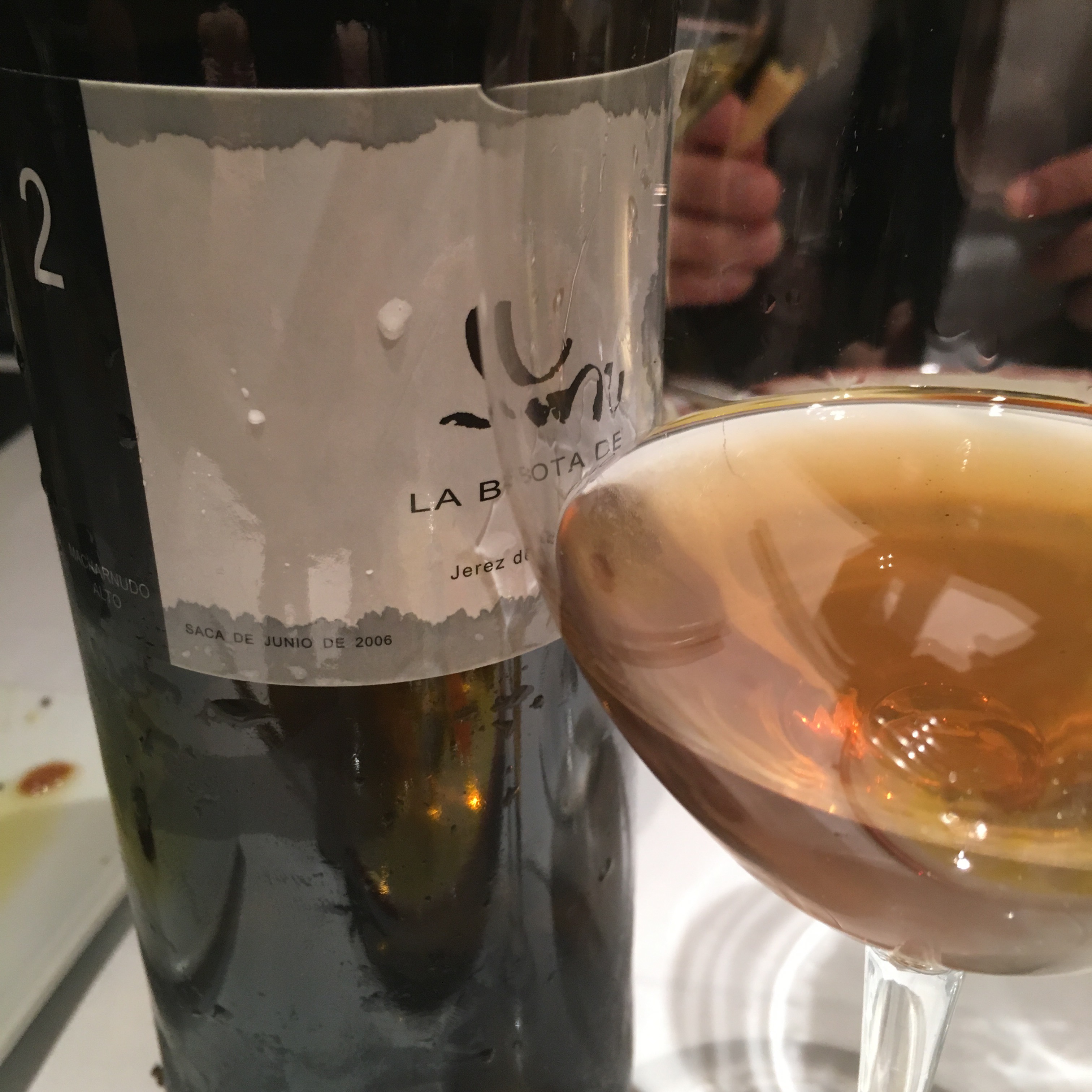
The first of the epic series of finos released by the guys at Equipo Navazos, of which I have had the good fortune to taste several (including the Nº35, the Nº54 and, my favourite so far, the Nº 68). This was bottled way back in June 2006 and as you can see from the ficha even back then the makers were thinking in terms of its evolution in the bottle.

As you can see, ten years later it is no longer gold with a greenish hue: a lovely rich amber instead. The nose is all hay bales and crusty bread – a real rustic bakery nose -, it has a nice profile of zingy/salinity and mouth watering finish and the flavours in between are savoury and rich in umami. A really class fino, even ten years later.

And yet there is a but here, because I can’t help comparing this refined, elegant old wine with the swashbuckling, punchy Nº68 that I enjoyed a few weeks ago. I may be in the minority, but not for the first time I find this glory (and there is no doubt it is delicious wine) to be a little faded. (Of course it may be confirmation bias: the excuse I am looking for to stop worrying about cellaring and drink up these cracking wines as soon as I can.)

I look forward to the debate on that. In the meantime, I want to take a moment to show my appreciation to Fernando at Cuenllas, who made it possible for me to try this and some other special wines during what was an absolutely phenomenal meal yesterday. Absolutely top drawer.