Fino arroyuelo en rama – strikes back


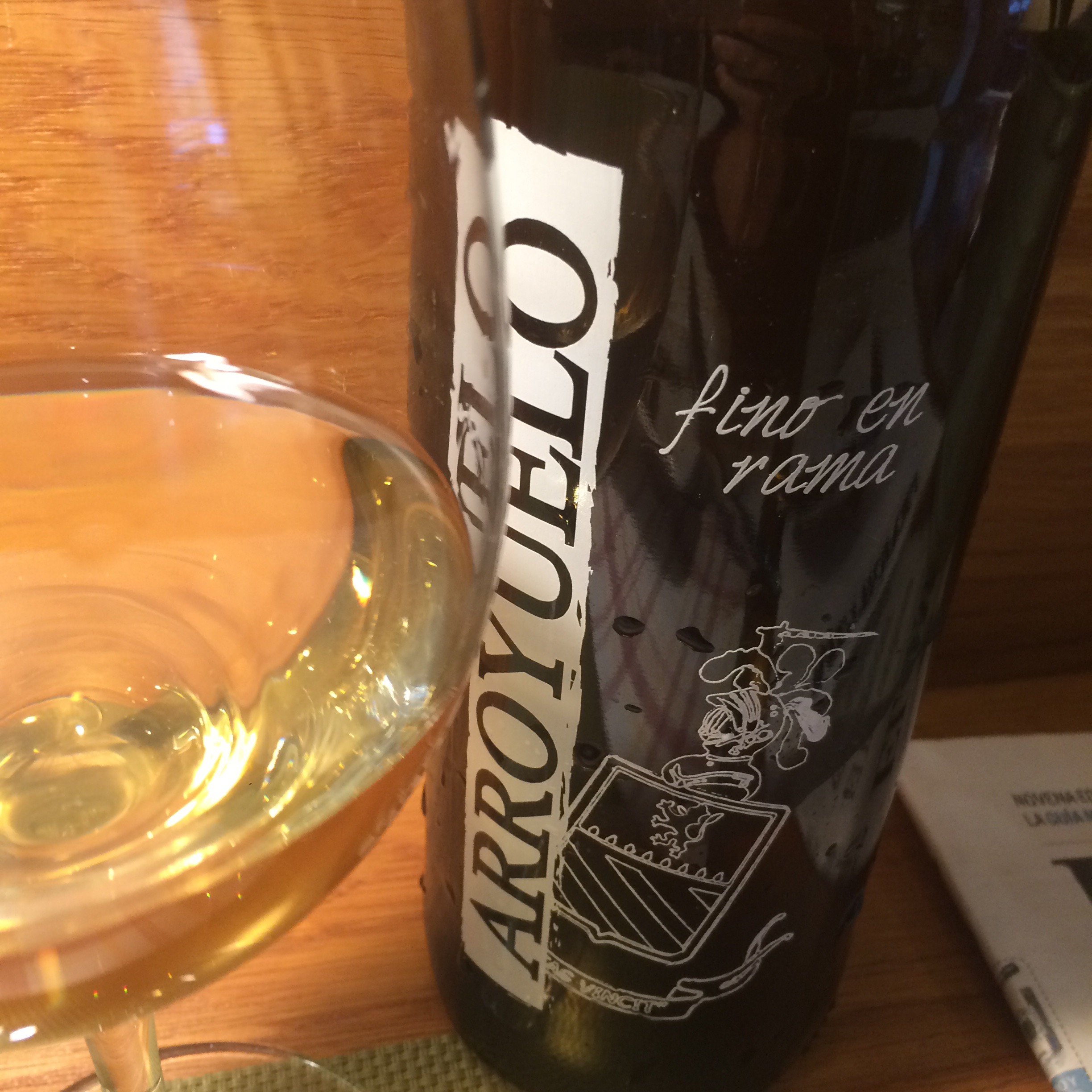
Here we go again with more of the descendants of the magnificent mosto from Primitivo Collantes’ Finca Matalian – raising the stakes on last night’s Fino with the Fino en Rama. First time I had this I found it too vigorous – and then was stupified when I saw it described in one professional tasting as “flat”. Really wanted to try again so have come for a sneaky Friday cata/lunch at Taberna Verdejo, one of the best places for sherry (and, sweetbreads, and indeed eating) in Madrid.

Second time around is interesting. Frankly I am better prepared mentally – this is an intense, mineral fino, and the first time it took me by surprise. After the learnings of recent days the elephant of surprise has vanished.

So, the colour is indeed darker than the fino, has greenish brown notes. The nose is also still massively mineral with ozone/sea air, but again there are some green herbs in the background.

In the mouth too there are similarities: more minerals, zing on the tongue and a salty water texture. However those herbs crop up again – dry herbs like thyme or rosemary, slightly bitter in the finish. Still no sign of that big fruit but a slightly fuller flavoured wine.

I like it more than the first time – maybe I am better placed to appreciate it – but is still vigourous and maybe a bit front-heavy. (Flat though? Really?)

Fino Arroyuelo

After all these mostos and manzanillas I really felt like a fino tonight and I had a particular reason to choose this one by Primitivo Collantes.

The reason? Well, when I tried the  Fino en rama I found it if anything too lively, bulky and vigorous. However, the mosto from this same vineyard was for me (and many others) the standout wine of the Pitijopos, big and juicy but compact and elegant fruitful mouthfull with real personality.

This is a fino from fruit grown on that same Finca Matalian vineyard. The vines are only 8km from the sea and the harvest in this area is the latest of anywhere in the sherry triangle, starting in around the first week of september. These grapes have been manually harvested and separated, and while the pitijopo was fermented in wood this was fermented in inox then raised under the flor in criaderas/soleras for 5 years.

It is a lovely light, clear gold colour – less of a yellow green than the en rama, certainly – and the nose is immense. It has real sea air/ozone saltiness, yeast and nuttiness behind, and although you wouldn’t compare it to the mosto in terms of fruit there may be just a trace of apricot jam at the back.

It is big in the mouth too, but while the mosto was syrupy this has massive salinity and minerals. The salinity gives it both intensity and zing on the tongue and the bulky volume of seawater. Maybe if anything it is a little too intense and overwhelming – a little too much minerality and volume and not enough fruit.

Overall, it would be really difficult to join the dots between this fino and the mosto blind. Although they are both big on the palate and there is clearly salinity under all that fruit of the mosto, the massive minerals and intensity of the fino transform it into something else entirely. In fact it really makes me wonder what this wine would be like with a shorter period under flor – say 18 months or two years. Would be fascinated to find out …

(In other news. fans of Pitijopo 6 will be pleased to hear that these guys are brewing something up. It would be wise to follow Primitivo Collantes’ releases closely in coming months.)

La Gitana en rama 

  
An en rama with no indication of the date of the saca (should have brought my bar code reader).

Deep dark colour on this one and a piercing salty mineral, old apple nose. Has a smooth entry but a very intense back end, again lots of minerals, lemony citrus, and a long lingering dry finish. The intense flavour reminds me more of the manzanilla pasada than the straight up manzanilla, but it is a bit more rough around the edges. 

Not quite as juicy/fruity as some but it is a mouthful alright.

Amontillado La Casilla

After a couple of days without sherry it is a pleasure to tuck into this, a small production wine from La Callejuela (obtained from the Cuatrogatos wine club).

It is an orange-brown colour and has a very powerful nose of  alcoholic caramel and vanilla and maybe some marmalade, baked citrus in the background.

On the palate there is pronounced salinity, real power and zing. For such a lightly coloured wine there is more astringency than expected too, then woodiness to it, including in the long finish – maybe notes of vanilla caramel but very very dry – almost dusty dry. Maybe a little on the woody/dusty side for my taste if anything.

Big nose, concentration and dryness – a classy, grown up amontillado.

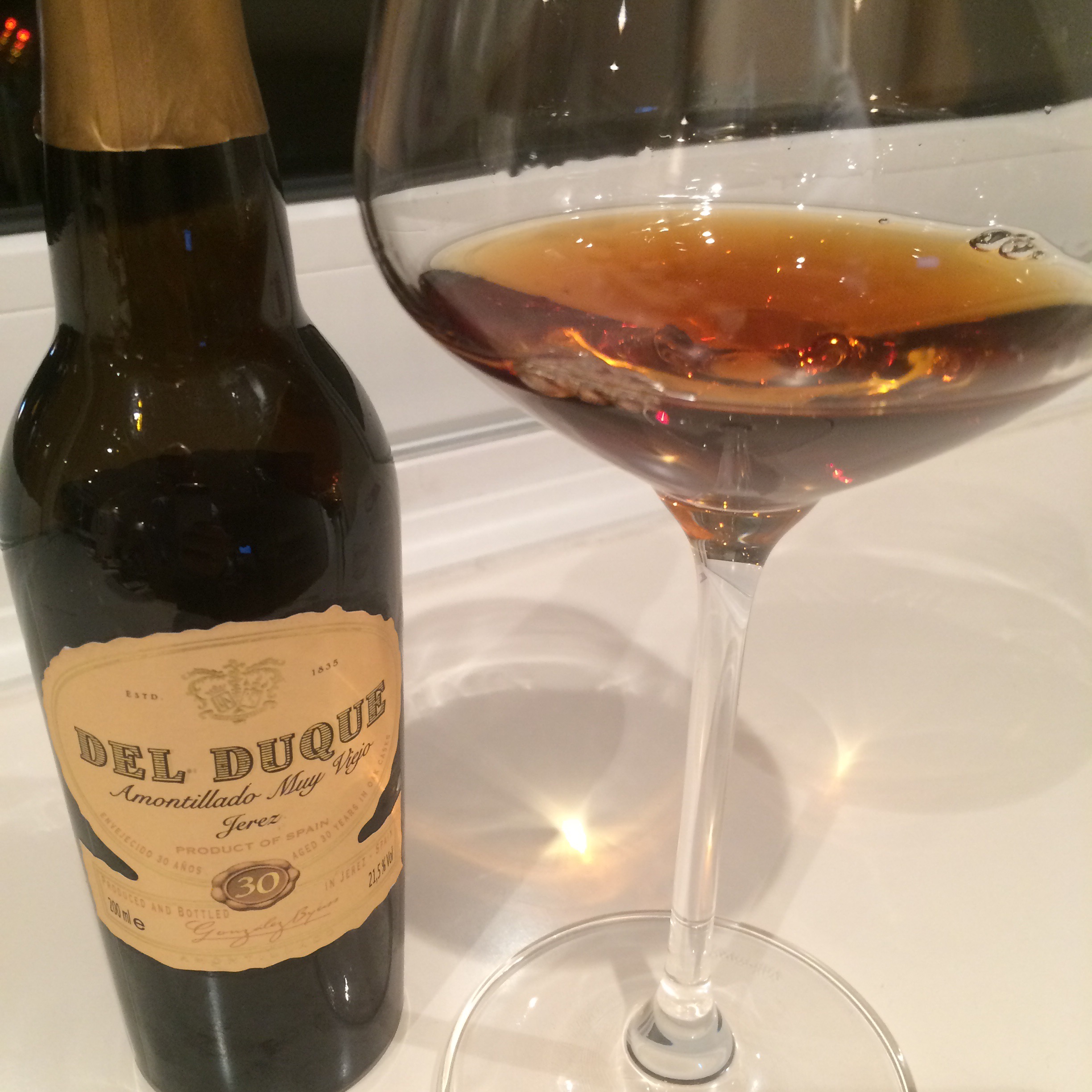
Del Duque Amontillado Muy Viejo


The second of my mini bottles of these old old Gonzalez Byass gems.

According to the GB website this solera dates from 1835 and the wine has spent an average of more than 30 years in oak butts (I assume this means 30 years of traditional ageing, in addition to whatever time spent under flor at the outset, but it is not 100% clear). Unlike the other wines in this rare old solera range, this is 100% palomino with no Pedro Ximenez whatsoever.

It is a deep but slightly yellow brown in colour – not as much red as in the wines of the last few evenings. For its age it has a relatively youthful (by which I mean not dusty or leathery) aroma, it is really nutty and, well, very powerful.

On the palate it is concentrated – a really powerful salty zing to it over the tongue – and incredibly dry. It has a lack of astringency compared to a really old oloroso or palo cortado, a characteristic that I love about amontillados, but the flavours are dry and woody – roasted and burnt nuts rather than toffee.

Another really serious wine. Excellent.

Romate NPU amontillado


Second of this range of reserve wines by Romate that I am tasting – after the Regente Palo Cortado a couple of weeks ago. As noted previously, the nice old school bottles are interesting but inconvenient. 

It is darkish amber in colour – not as much red/orange as in the palo cortado and it has nice nutty, umami aromas. Also a nice nuttiness to it on the palate – not too much salinity or astringency, and nice caramel flavours that stay in balance. 

A very nice, elegant wine – maybe lacking a bit of spark but a solid effort. 

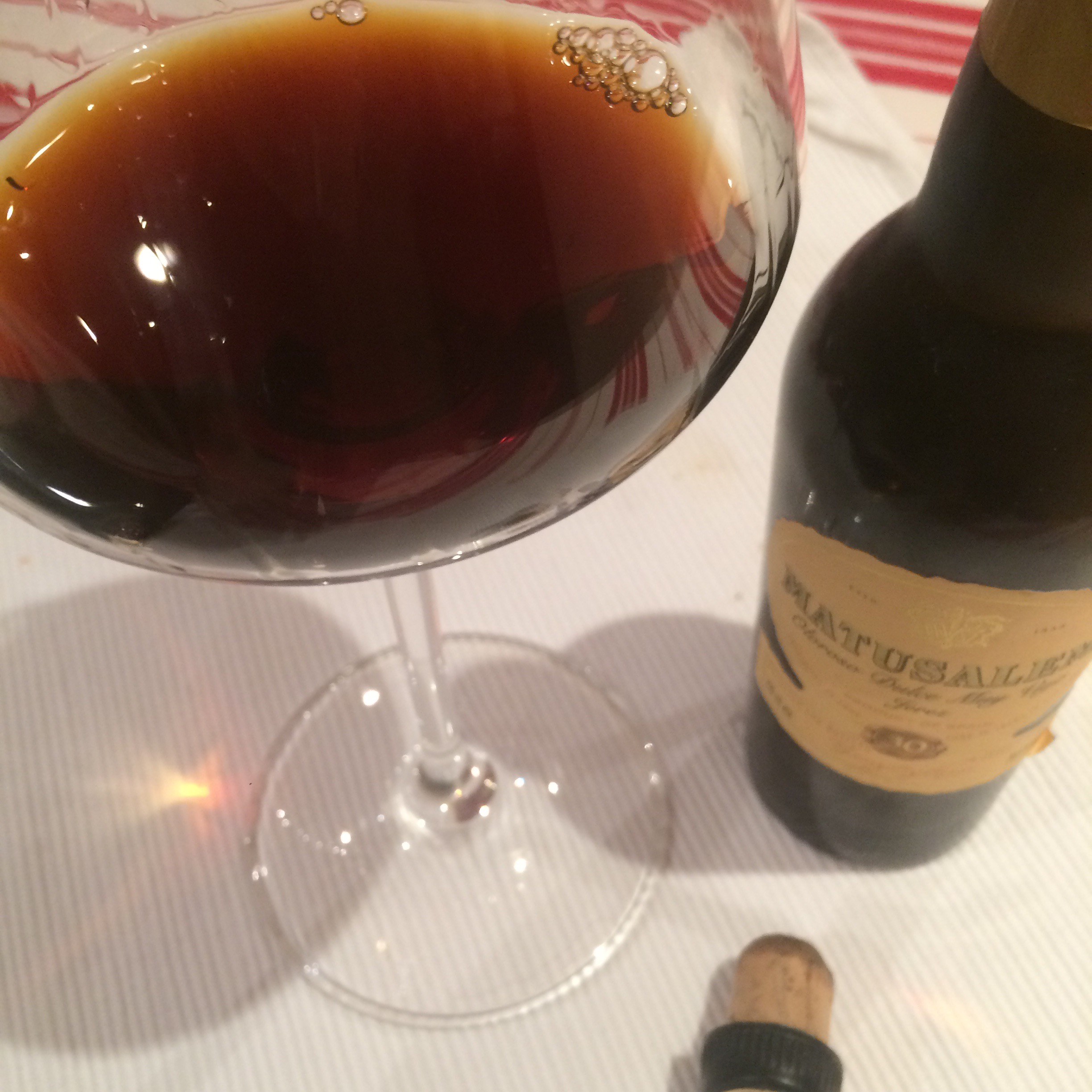
Matusalem Oloroso Dulce Muy Viejo

Photo is to scale – I have a nice set of these VORS GB wines in dinky little bottles for tasting.

Super dark in colour – real old wood polish brown, and the same kind of vibe from the nose. I was at a tasting where a colleague compared it to cathedral furniture and he wasn’t far from the money. A really reductive, astringent nose.

On the palate too you have that walnut skin astringency, a really acidic feel, albeit balanced by the sweetness which becomes a deep burnt caramel toffee – a really dark, savoury flavour. I have documented my skepticism with the sweetened wines and this is not fully convincing me either – the sweetness helps balance the bitter, astringent flavours but still seems slightly out of place.

A deep, serious wine with a touch of sweetness: a real wolf in sheep’s clothing.

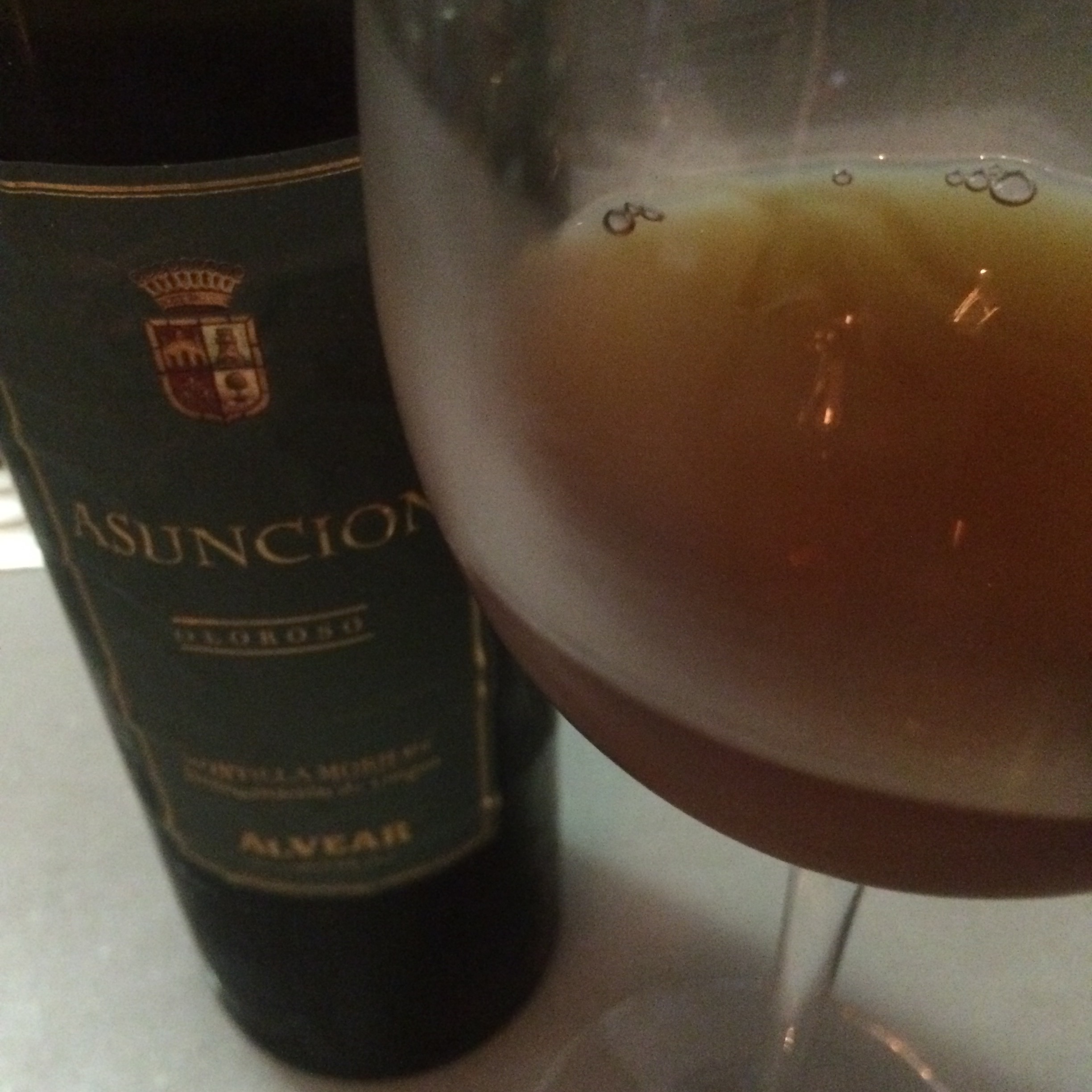
Oloroso Asuncion

  
Little cold as it came and not great light in here but it seems a slightly dull, cloudy brown. For an oloroso it is not excessively fragrant. 

On the palate it is lovely and full bodied – I really think the PX works well as an oloroso. It is just a touch sweet but balanced with the bitter nutty, burnt caramel flavours – and it stays balanced during a nice long finish. 

A nice oloroso. Maybe just lacks a little oomph for my taste. 

Sacristia AB Manzanilla – segunda saca 2013

It is the colour of regal old gold. Fresh open it is not as aromatic as I expected – haybales but a little muted. Also a little muted on the palate – not at all the intense herbal flavours I remember.

Not sure what to make of this. Has it tired out or merely gone to sleep? Am going to stick it back in the cabinet and try again tomorrow.

Day 2: Still the same colour (obvs). Still not very fragrant – hay bales but in the distance. On the palate it is a little livelier – not intense as such but flavourful, with yeast, saltiness and maybe a hint of cider apples.

In fact as the evening is going on it seems to be opening up more and is an elegant sup overall – not a blockbuster but nice enough.