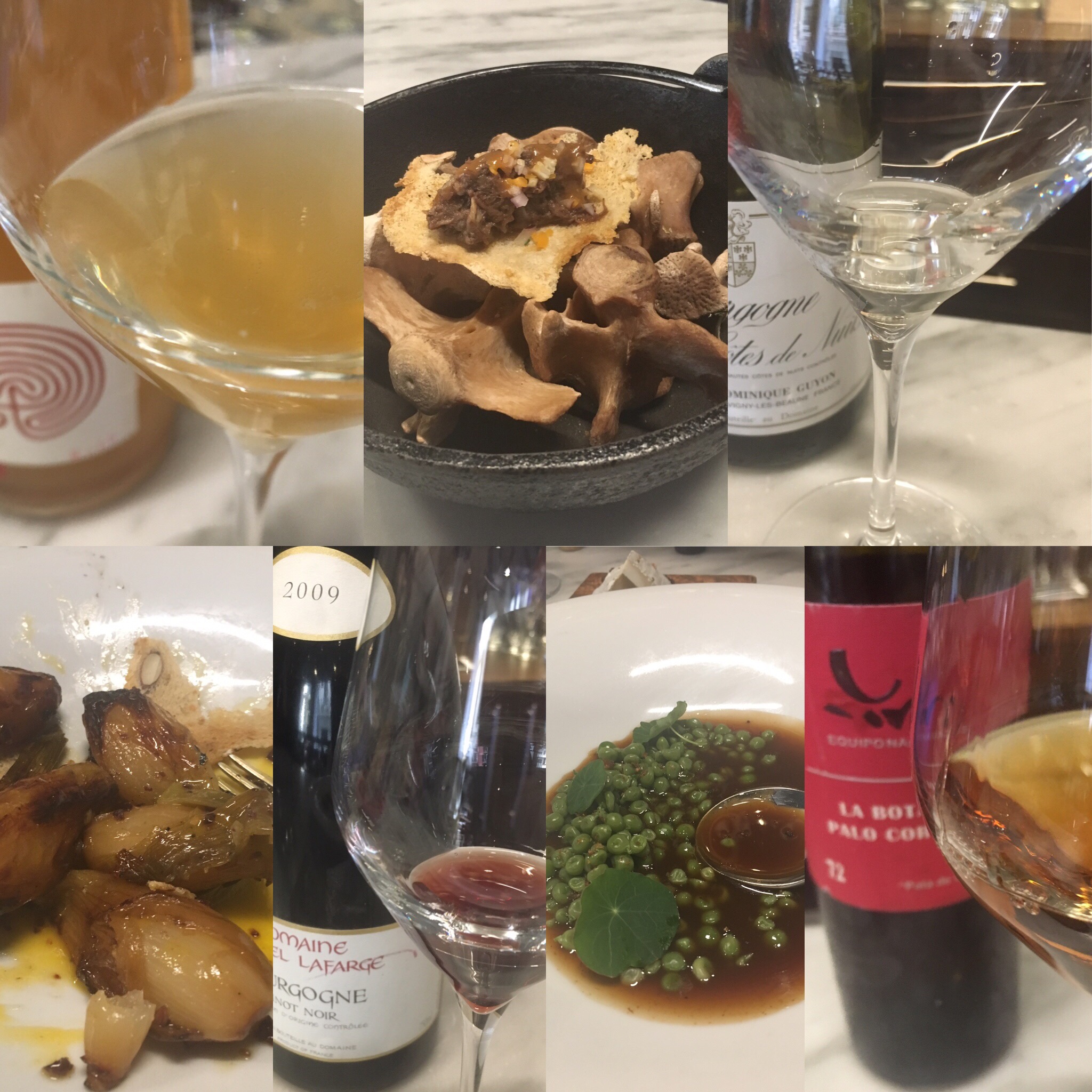
Allow me to insist: if you love wine you will love Angelita. If you enjoy eating, the same is true. And they have a new chef, and a new list of wines by the glass, which to me seem like perfect reasons to go there if you haven’t been for a while. But suit yourselves. It is a free country etc.
Tio Pepe en rama, 2017

Other bodegas may have started earlier but noone puts more marketing heft into en ramas than the giant Gonzalez Byass. This was launched in an extravaganza here in Madrid a couple/few weeks ago (your correspondent was not invited) and no doubt around the globe. You have to give them their due. No one can match their distribution and they make full use of it, which must be for the greater good.
Even better, the subject is worth the attention. A very nicely made fino this one. Nice rich colour, green to slightly stewed apples and some haybales and salt on the nose, then a nice fresh almond/apple entry and spicey, salty finish on the palate.
A top fino and a worthy ambassador. God speed!
Manzanilla and Fino Las Botas
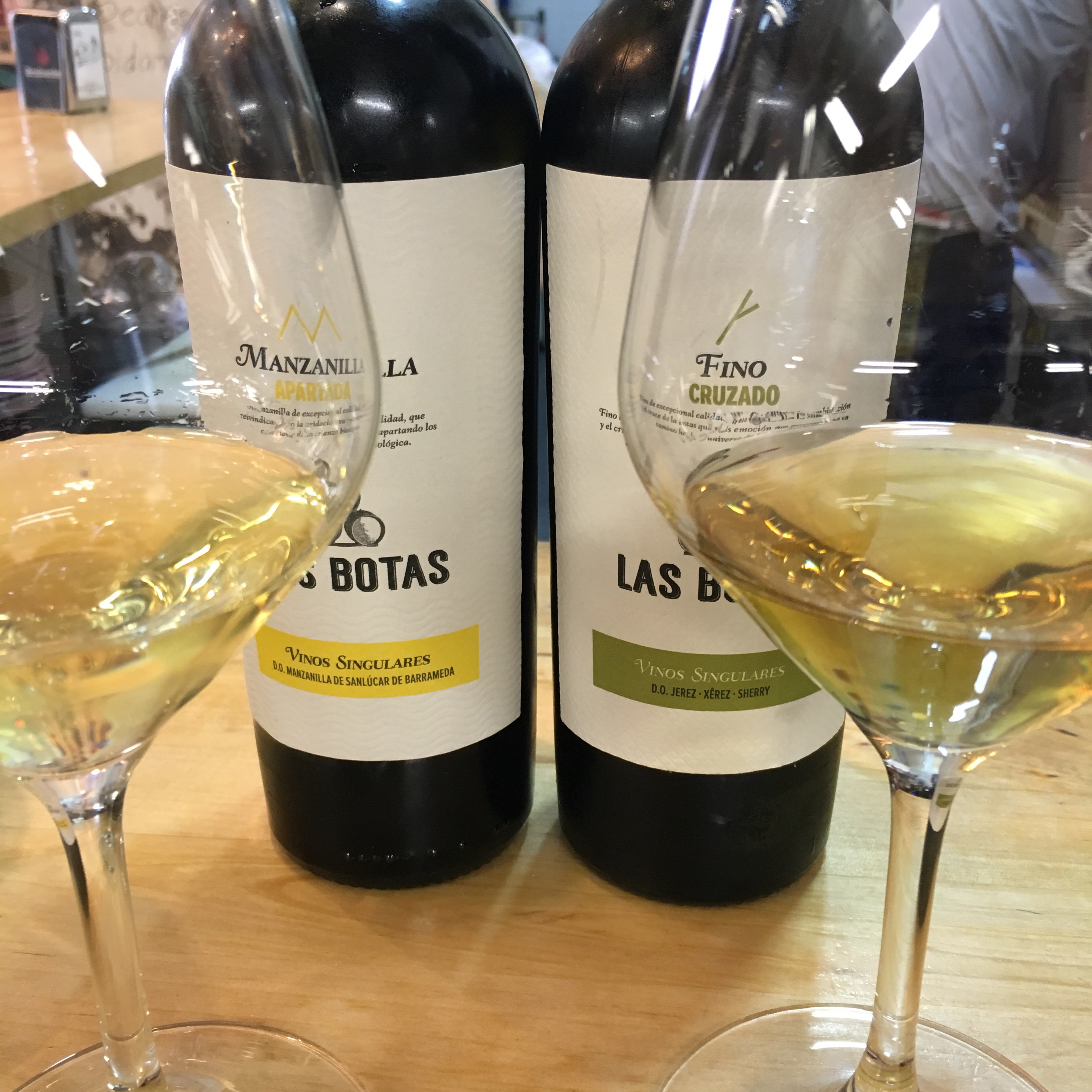 Once again in Territorio Era, where else, and trying yet more new wines. This time the wines labelled as “Las Botas”. A barrel selected manzanilla and fino chosen from two distinguished soleras – San Leon Reserva Familiar and Camborio – and bottled en rama by Raul Villabrille, sommelier at the legendary El Campero in Barbate.
Two excellent wines, no doubt. The manzanilla has the benefit of a good age in solera, is aromatic with haybales and herbs but not over the top, then full bodied and full flavoured on the palate but fresh and elegant, with a nice compact profile overall. The fino too is a cracker. Maybe not quite as aromatic as the manzanilla but has a sharper salinity and that horizontal muscle. Again a full bodied and full flavoured wine with a nice shape to it – a sharp entry, sharp fresh finish and a nice package in between.
A great example of the value of barrel selections – and en rama bottlings of familiar wines.
Nerua

I am discovering that Bilbao had a fair few attractions for a wine fan and one of them, if you love the wines of el marco, is Nerua.
A temple to good taste, with a Michelin Star and a star chef, it also has a fantastic range of top sherries. In fact the list is, in my view, just about perfect:
- a “protomanzanilla” in the form of La Bota de Florpower 53 ,
- manzanillas that are fresh and aromatic (Deliciosa, La Bota 32 and 55, La Guita en Rama, even the Manzanilla de Añada 2012 2/11 by Callejuela),
- three outstanding finos with a lot of character (Fino Perdido, La Panesa and the mighty Fino La Barajuela 2013),
- three top class manzanilla pasadas (La Goya XL, La Bota 60, and la Maruja),
- amontillados from the very top drawer (Piñero, La Sacristia AB, el Amontillado Olvidado, the Tradicion VORS and La Bota 49 (would love to hear what they pair that with)),
- a class Palo Cortado (Viejo CP by Valdespino),
- the cream of olorosos (Sacristia AB, Villapanes, and el Cerro), and
- the actual cream by Piñero.
It is a remarkable list – excellent all round and some top wines. There isn’t a single wine on there I wouldn’t order, some of them are unique and impossible to find and I am struggling to spot any flaw in the range (there may have been some pedro ximenez on a separate section of the wine list that I did not look at – apologies – but maybe if you wee very picky you could beg for some pedro ximenez options up and down the card).
And there are many other reasons to visit too – I couldn’t stop long yesterday but long enough to try three absolutely beautiful tapitas and enjoy a really friendly welcome. I will surely be back and I hope it is soon.
Fino Camborio
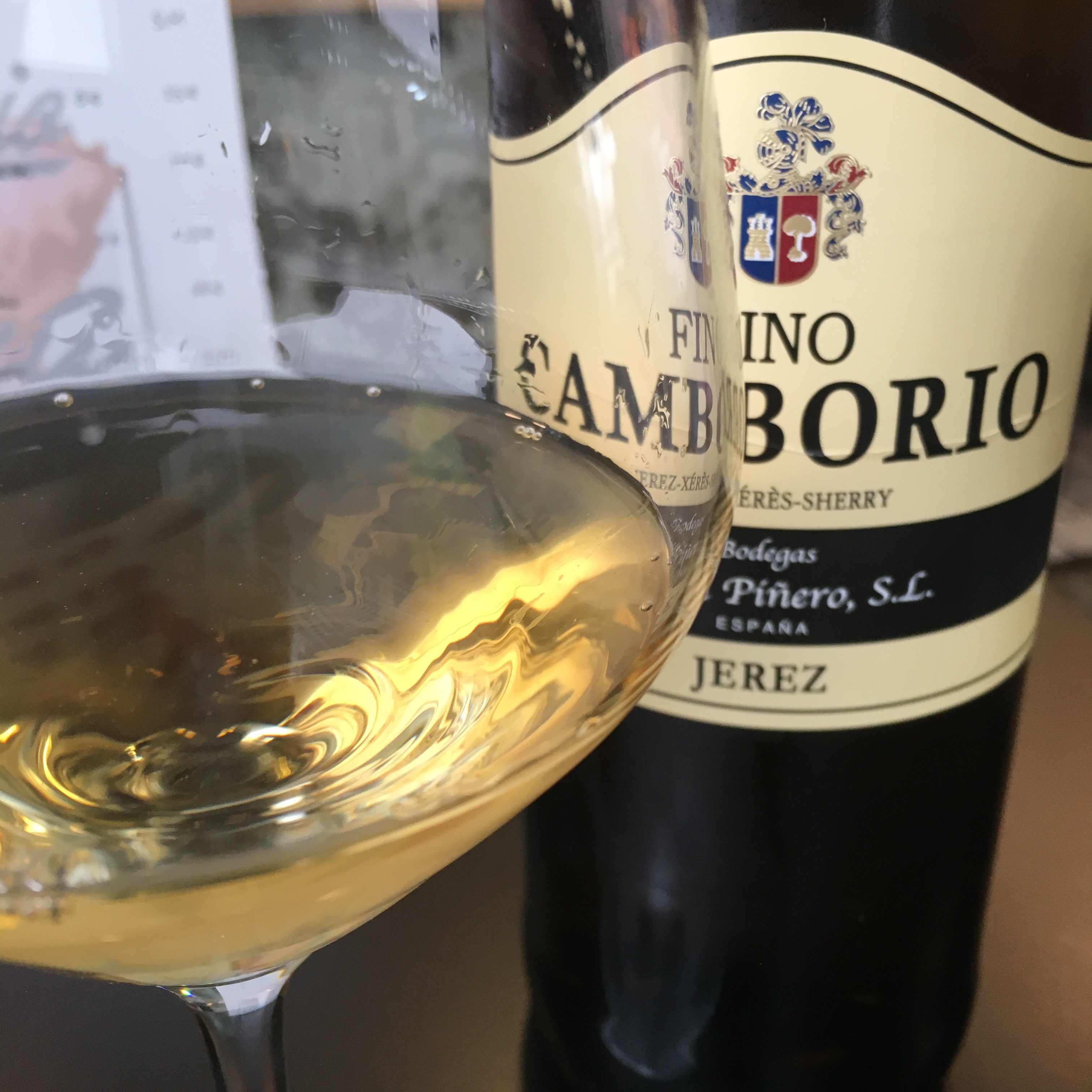
Not a great day today. There were still some laughs (as there always are around David and Diego at Territorio Era) but in general my lunchtime mood was pretty sombre, despite an excellent lunch, the perfect company and this beautiful, full flavoured fino, which is sharp on the edges, zingy at the start and mineral in the finish and has a big, wide palate. Mood restorer indeed!
Surtopiando

We had a fantastic dinner last night at Surtopia – the cooking and combinations just get better and better, the service is top class and super friendly and the wine available, well, it is a sherry lover’s dream. More particularly a manzanilla lover’s dream.
Last night I honoured my host by sticking to the Sanlucar wines, and three absolute belters they were too: the La Gitana en rama (the only place I know of in Madrid that has it, and in a fancy new bottle too), the Pastora Manzanilla Pasada (an absolute gem, with a lovely trace of apple upfront – whether green, golden or baked); and the Maruja Manzanilla Pasada, which was an absolute beast – so good I stuck with it for the rest of the meal.
I was struck once again by how fantastically well these wines accompanied the cooking: dry, saline, and structured. Probably not an accident in this case, but even so it was striking and made me wonder once again why you don’t see more of these kinds of wines being used as pairings.
In any event, this is not a problem at Surtopia – I tend to beat my own path but they have sherry pairings for their 6 or 9 course menus for a paltry sum. If you are curious about trying sherries there are still very few places better.
Encrucijado 2014
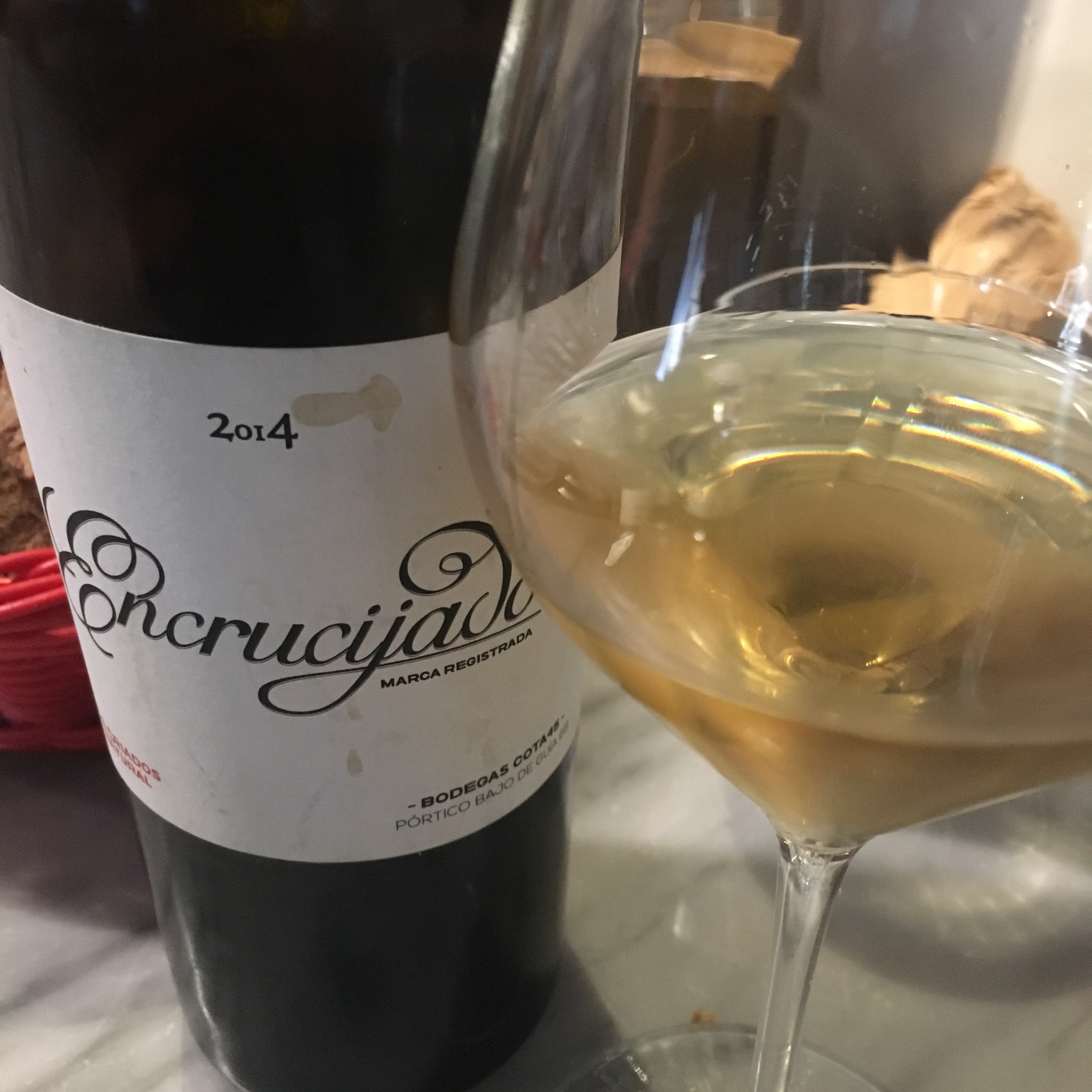
I had another glass of this at the bar of Angelita and it left me in two minds.
On the one hand, I feel privileged to have had the chance to try another glass. It confirmed my growing impression that it is a wine of some stature and getting better: an aromatic butterscotch and hazelnut on the nose, zingy acidity and more butterscotch on the palate and a sapid finish.
On the other hand, it depressed me to find that such a wine hadn’t been exhausted long ago. I wrote about this wine being available by the glass in Angelita on March 15, and even given the diminute reach of this below average blog it is shocking to me that the half dozen or so readers didn’t tool up there and drain the swamp in the nearly two months since. You hear a lot about the “sherry revolution” these days and you can’t chuck a half brick in Madrid without inadvertently vandalizing a so-called “sherry temple”, but here we have a bona fide cathedral to wine and on its list they have one of the most exciting wines being made, in tiny amounts, in the sherry triangle, and in two months they haven’t sold out. There really can only be two causes: people are not going to Angelita as much as they should (a scandal itself in my view) and those that do are not trying the right wine. It is enough to make a fella weep.
Let’s be clear: if you love wine, you should be supporting places like Angelita and the other fantastic bars and restaurants that Madrid is blessed with; and if you want to understand anything about the “sherry revolution” that is possible, you should be trying wines like Encrucijado.
Palo Cortado Marqués de Rodil
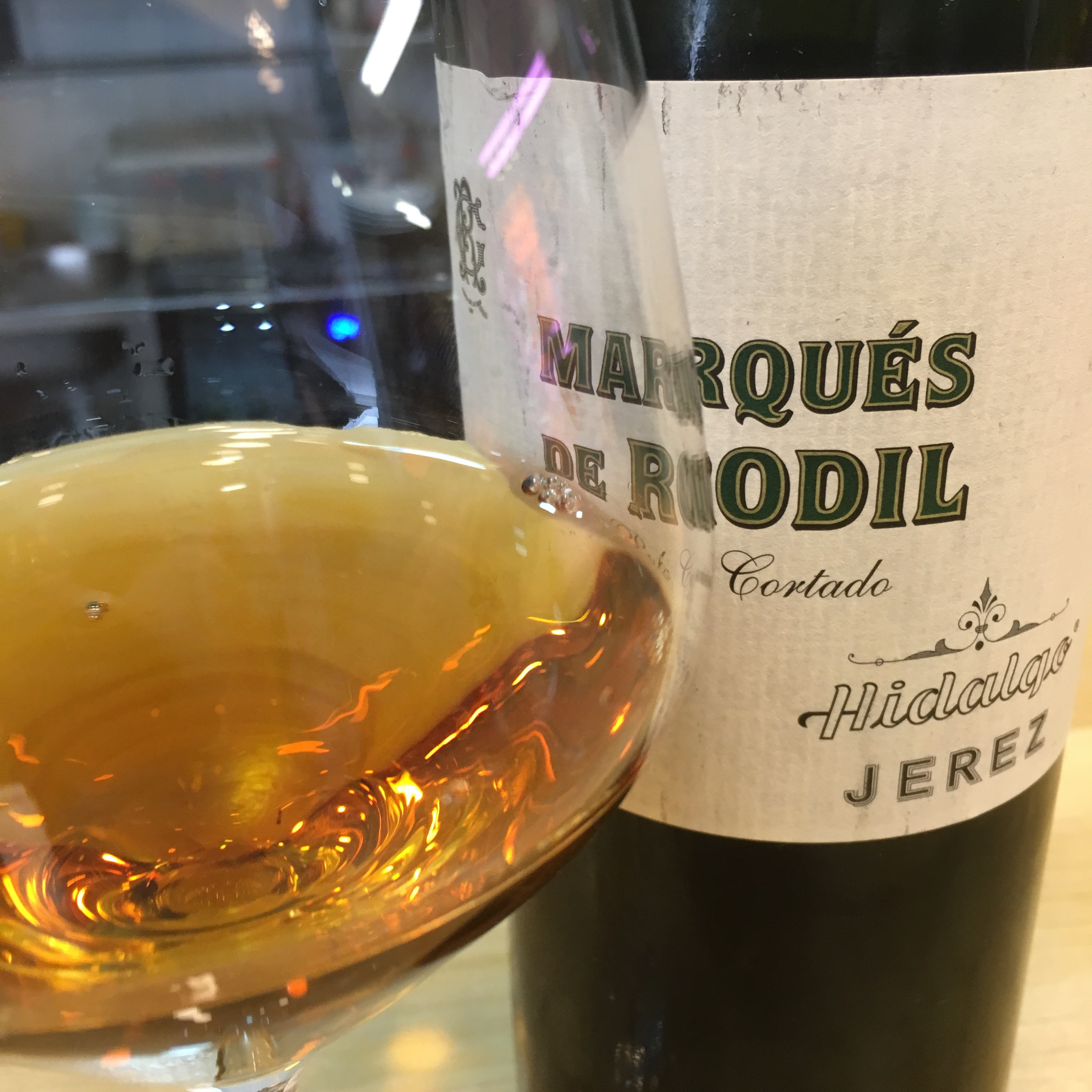
A beautiful palo cortado this from Emilio Hidalgo – balanced and super-elegant, almost a palo cortado fino. Clear as a bell and between a very dark gold and a light amber, has a lovely clean, piercing nose with fine sawdust and hazelnut. Dry, saline and sharp on the palate, again with roasted hazelnut.
Just a delicious wine, that is easier to drink than it is to find. There are a lot of bodegas that can produce as much palo cortado as they need, but for whatever reason, Emilio Hidalgo can only make as much as there is – the word the last time I spoke to them was that there was no more for now – and for the foreseeable.
I had this in Territorio Era, but if they don’t have a sherry there, it isn’t anywhere. And I am really glad I had a chance to have a look at it again. The first time I tried this wine, the bottle I had was not right – probably because it had been in the bottle a long long time, and just could not shake off the reduction. Since then I had a glass that was right in Taberna Verdejo, that just sang with dark chocolate, and I also had a glass at the Salon de los Vinos Generosos, but I never had a chance to think about it on either occasion (yes, as incredible as it seems, some thought goes into these posts).
The other problem this wine has, of course, is the exceptional, superb quality of the amontillados from the same house. In fact the more I think about it, the more I wonder where this wine comes from. A fella has some investigating to do.
Jose María Quiros (Bodegas Tradicion) in Taberna Palo Cortado
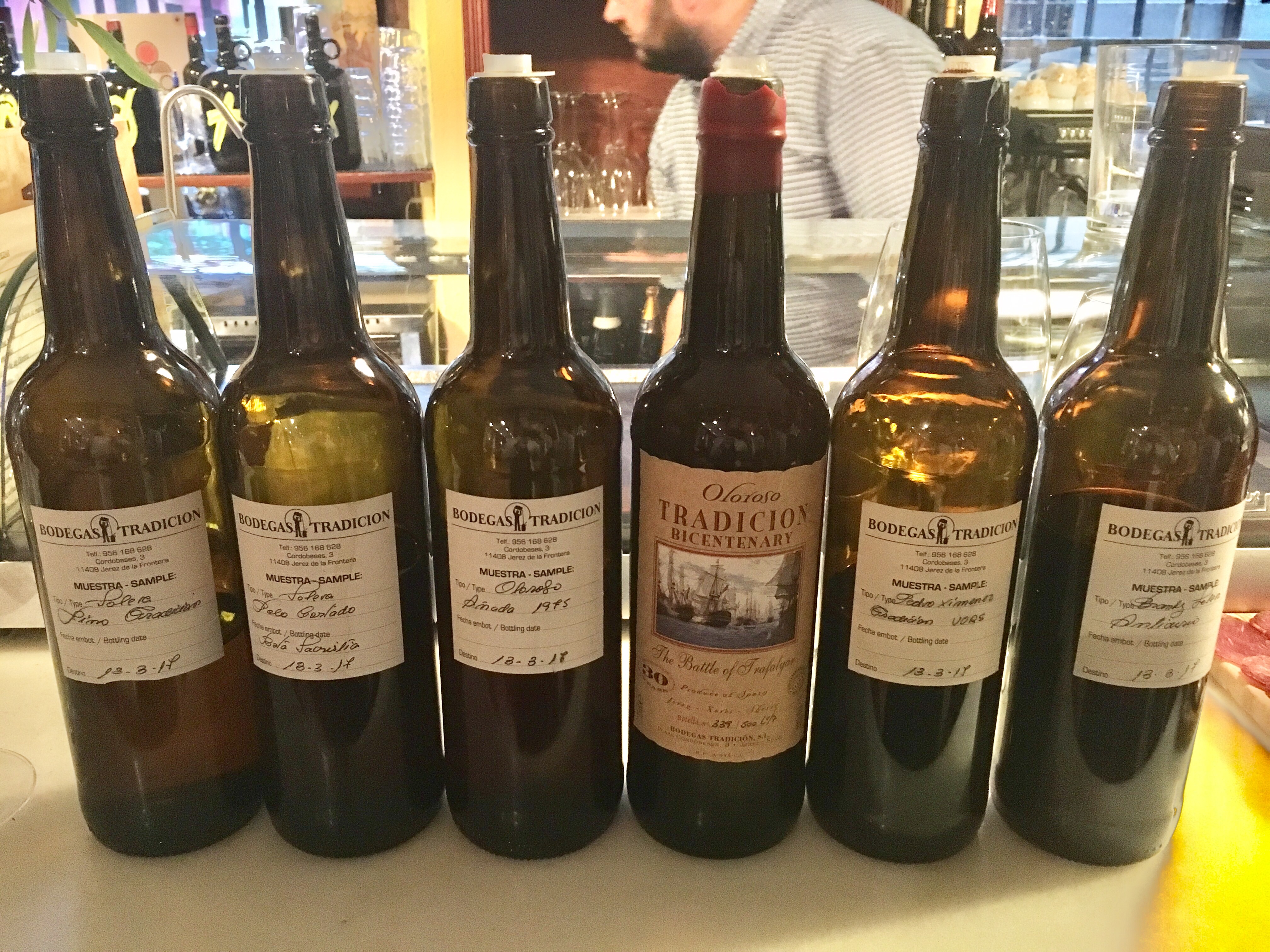
A fantastic evening last Monday tasting six unique and exceptional wines in the company of Jose María Quiros, winemaker at Bodegas Tradicion, amongst friends in Taberna Palo Cortado. The wines included a month old fino, freshly drawn from one of the two original botas of fino that later inspired their current soleras, a “forgotten” palo cortado from the Sacristia, a quite exceptional 1975 vintage oloroso, a bottle of the Battle of Trafalgar bicentenary oloroso, an ancient but fruitful pedro ximenez and one of the most flavourful and complex brandies I have come across in a long time.
Fino de Solera “El Origin”, Saca de Abril 2017. The fino came from botas were apparently originally acquired in 2006 together with other wines used to refresh the exceptional amontillado solera. At that time, the owner of the bodega’s declared intention was to focus on grand old wines rather than finos, but Jose Maria tucked two botas away in a corner and, after some time static ageing, started drawing and bottling them in 2009. The wines were such that he convinced the owners to invest in fino production and the rest is history: they now have 280 botas devoted to fino production, and the solera is still growing towards a target of 480 botas. These original botas haven’t been in a corner in the intervening years, however – they have been part of that solera, although Jose Maria reckoned they still had a particular character, and had drawn wine from both original botas before selecting one of the two.
The wine itself was a typically compact, elegant and fresh fino, despite its venerable age. Compared to the recent springtime sacas it didn’t seem to have the same degree of saline incisiveness but what it might have lacked in penetration it certainly made up for in aroma and flavour: had lovely bakery and apple flavours on the nose, like apple tarts, and even a little chamomile. Then on the palate it had a really fine zingyness to it – like a saline outline to the profile – and again nice flavours, again bakery, more baked apple and tending to bitter almonds. Top drawer, and the 2017 springtime saca when it comes looks like being a goody.
Solera Palo Cortado “Bota de la Sacristia”. This was wine that had originally been part of the palo cortado solera but which had been set aside in 2003 in half botas of 250 l botas and quite literally forgotten about – not refreshed, moved, or even touched since then. After those 14 years alone in close proximity with the american oak of the half bota the colour was deep and the nose was woody: lots of church furnitire, cigar box and even cigar tobacco, maybe some chocolate or coffee in the background. On the palate it was even more intense – intensely dry and acidic first up, those same woody caramel, very bitter dark chocolate and tobacco flavours and an equally sharp finish. Super intense: you can imagine this getting a heap of points in a cata, but maybe just a bit over the top.
Oloroso Tradición de Añada 1975. Of the wines, this with the fino was the highlight for me. It had a nose that was super fine and aromatic, a lot of of volatile, but if there was lacquer here it was laced with sweet spices and ginger and fine fresh sawdust. On the palate too there was that incisive freshness from the volatile, zingy salinity and crispness and flavours of sweet spices and rich caramel, fading to a really lovely long, sweetly spiced finish. After the super intense Palo Cortado this was super drinkable and elegant – maybe it was favoured by the contrast but even so.
Oloroso “Bicentenario Trafalgar”, Saca 2007. This was the only wine I had had before, a solera oloroso that had had 10 years in the bottle. Unfortunately, while the other bottle I tried had a thrilling, brandy-like aromatic nose, this one was really closed up and had a pungent air of reduction about it: one of the risks you take if you don’t drink these up I guess. On the palate it was still full of vigour, good acidity and salinity and slightly bitter almond caramel, cigar box and tobacco flavours, before a slightly sour finish that seemed accentuated by the bitterness on the nose.
Pedro Ximenez Tradición VORS (one of 400 bottles). Now this was a regal old wine: age guessed to be around 50 years, and it had all the qualities of a real old Jerez pedro ximenez. Dark as midnight, thick and coating the glass, with nose full of caramel, roasted nuts, peppery spices but, above all and despite the age, raisiny fruit. On the palate too, enough acidity, bitter dark chocolate and spice to balance and freshen the wine, but plenty of soft currant fruit character, fading to a long finish with the burnt caramel bitterness of the nose. Really fantastic stuff in fact.
Brandy Solera Anticuario. Last but not least came a brandy from a solera originally created by the legendary Agustin Blazquez, one of Jose María’s former employers. That brandy had been housed in pedro ximenez botas which were not acquired by Tradición, the brandy instead being housed in oloroso botas. The solera is now used to blend into Tradición’s own exceptional brandy, but this bottle was drawn from the original source and was as full of flavour a brandy as I can remember. Had that burnt wood colour, vanilla and noble wood nose, but a nice nutty sweetness – nutmeg was suggested and was dead on- and then the palate was exceptionally smooth for all the alcohol (48º) and concentration (over an estimated 40 years). Amazing also to see the tubidity of it: the effect of evaporation of alcohol that had literally absorbed particles from the barrel. A very, very dangerous liquid indeed, and it wasn’t even nine pm.
Jose María Quiros. The highlight, however was the opportunity to hear the thoughts of Jose María Quiros, one of the top winemakers in the region and a guy with the responsibility for some of its finest old wines. He spoke with considerable technical expertise but also a tangible passion and enthusiasm for the wines and an understanding of them as such, had a good sense of humour and I have to say I thought he was an absolutely top bloke.
It was fascinating to hear him discuss the kinds of wine they were trying to make, the reasons why and the methods used to achieve them, and in particular, his views on the challenges of making vintage wines. For instance, his focus on finding a balanced acidity and concentration in the wine and for avoiding excess, whether in those aspects or in the acetaldehides that can make finos so aromatic but can also make them less stable and more prone to evolution in the bottle. On that subject, I found his thoughts struck a chord with my own observation of how high acetaldehide wines tended not to age as well – or at least showed themselves more prone to evolution – and about the transformation of those acetaldehides into bitter and metallic notes over time. It made me reflect on a memorable vertical of the Tradición finos and how well they appeared to hold up over time (not that they get the time to evolve in this house).
It was also immensely cheering to hear that some 2015s have been set aside for ageing as vintage wines (remind me in 20 years or so) and of the increasing importance being placed on pago and terroir. I got the sense that in this case there wasn’t a lot of conviction that single pago wines were necessarily better than the carefully selected wines they currently sourced, but they did seem convinced of the marketing benefit of being able to name the pago, which is good news in itself.
And after all that, while not sure I have extracted full value from my notes, I certainly extracted full value from an exceptional tasting with one of the real experts. I also had a ball amongst a lot of good friends, and there can be no better surroundings than Taberna Palo Cortado, particularly when the delicious tapas start to appear as if by magic. Many thanks again to Jose María, Lorenzo and Miguel from Tradicion for a memorable evening and to Pakui at Palo Cortado for hosting us on her night off. Bravo all round!
An old bottle of La Ina

One of the classics, and here in a classic form, a bottle that must be ten years or so old, with the famous name of Domecq across the top. I tried this one at the bar of Territorio Era (a top spot if you want to try bottle aged and other rare sherries).
As you can see, the colour has certainly evolved in that time. It is beautifully clear but has taken on a hue halfway between yellow and orange amber. On the nose it is nutty and baked applet but just a little bit flat – not a big aromatic profile. Then on the palate it is dry and saline and, again, almond and baked apple flavours, with a bitter finish.
Very interesting – although maybe short on exuberance.
 undertheflor.com