Wines for all seasons

I am a big fan of en rama wines. I no longer have a category for them on the blog because almost all the wines I drink are en rama one way or the other, and I am not averse to filtered wines either, but on the whole if you offer me a filtered and an unfiltered wine I generally find the latter more interesting, more expressive and more likely to evolve in interesting ways.

I also like the fact that en rama wines have dates on them, even if only the date of the saca. It helps create a notion of scarcity, it gives wine writers a reason to try the wine again, and it also allows you to sell the wines as either very fresh (you see marketing along the lines of “straight from the barrel” and “raw”) or as very old (you see more and more “bottle aged” wines around). And most importantly, it gives you an excuse to announce the “launch” of the new saca, which has lead to people talking about a supposed “en rama season” in spring each year. It coincides with a couple of the bigger “launches” of en rama wines: the Tio Pepe en rama and the excellent Lustau “tres en rama”, and makes perfect commercial sense in terms of facilitating a big launch event/world tour and maximizing the impact generated.

Not all brands feel the same way. The longest running series of en rama bottlings is the Solear en rama by Barbadillo, which started a full 18 years ago, and one of the many things I admire about the series (in addition to the wine itself, which is cracking, and the labels, which are worth collecting in their own right) is that they produce a saca every season – spring, summer, autumn and winter. And they are not alone in releasing multiple sacas. Antonio Barbadillo’s excellent Sacristia AB releases two sacas of manzanilla a year, as do Tradición with their fino en rama. Maybe the most extreme case is Primitivo Collantes with his Arroyuelo en rama – the sacas are bottled to order – and the list could go on.

Of course, the season in which the saca takes place is of course highly relevant, and leads to very different wines. Generalizations are difficult but wines that are released in spring have been wintering under a vigorous veil of flor and tend to have a more marked biological influence, have a more incisive salinity and more green vegetation in aromas and flavours. It is easy to see why these are sold as “full of life”. Autumn sacas, by comparison, have been under a veil of flor that has groaned and sweated its way through the hot summer, the salinity is not quite as piercing and there is more oxidation of the wine, resulting in aromas and flavours that tend a little bit more to baked apples and roast nuts than fresh ones. (Probably the most complete account of the comparison is this one, from a vertical tasting of the Tradición finos, although I have also done a couple of side to sides with the Solear en rama here and elsewhere.)

But those very differences tell me that it makes no sense to focus on a single season for en rama wines. Looking back, two of my very favourite wines from the Solear series were the Dormouse and the Razorbill, from Autumn and Winter of 2015 (a very hot summer indeed), and it would be a great shame to have missed out on those or any of the autumn and winter sacas down the years. Indeed, the only saca of La Guita en rama so far was in October 2015 (and it is now drinking beautifully, by the way), and from memory I think I have only ever had winter sacas of the Fernando de Castilla en rama.

So whatever the marketing rationale, and despite the calls from some respected critics to do away with multiple releases per year in order to conform to the global standard of one vintage per vintage, I am not a believer in a single “en rama season”. Quite apart from anything else, winter is already depressing enough without depriving ourselves of these cracking wines.
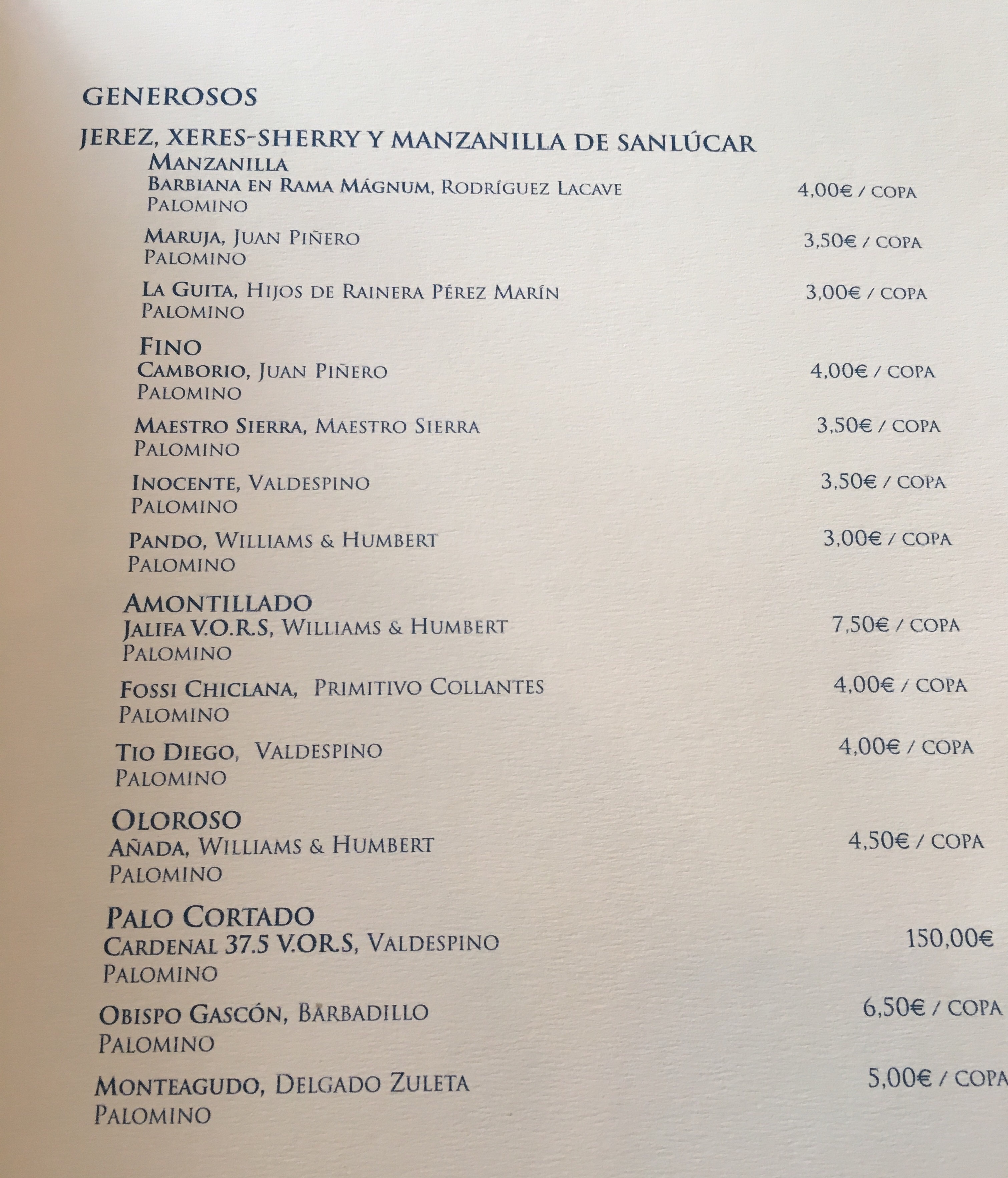


Narciso

A really solid sherry list this, from Narciso Brasserie, a relatively new opening in my neighbourhood. A lot of bases covered in terms of categories and in terms of styles within each category. The other place is represented by the Fino Capataz and Amontillado Carlos VII by Alvear and the Perez Barquero Amontillado and amongst the sweet wines they also had Emilin by Lustau, on what was a pretty impressive wine list overall.

Definitely one for my growing list in wine terms – and the steak tartare was very acceptable too.

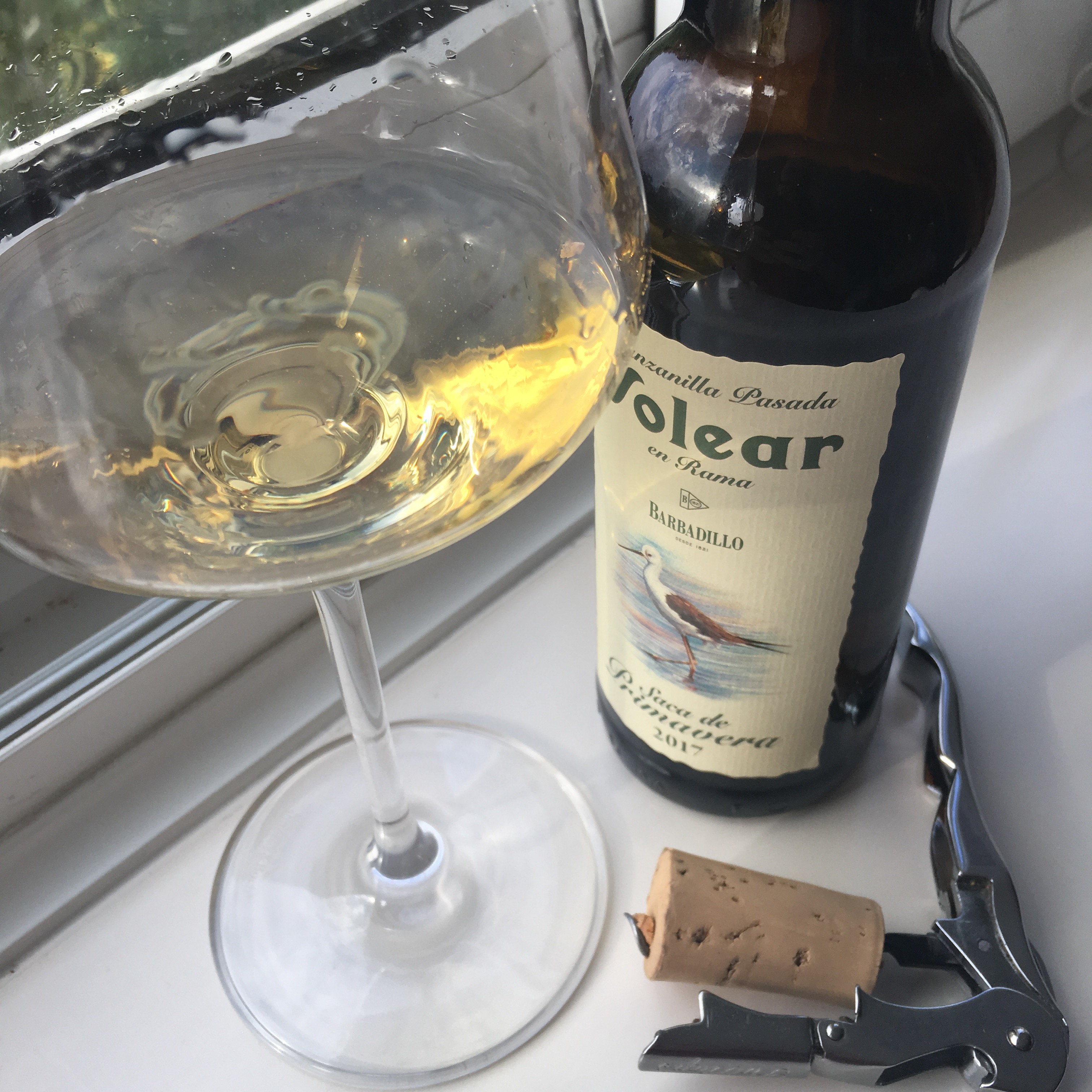
Manzanilla Solear en rama, Spring 2017

The latest from this fantastic series (a release every season since 1999) comes with a black winged stilt (cigüeñuela común) on the label.

It is a beautiful dark gold colour with maybe just a hint of green, and has a very very pungent nose (almost swimming-pool like in intensity) of salty iodine and sea herbs, almost like seaweed. On the palate it is just an explosion of sapidity, full of life, with really zingy, saline heat and spicey, peppery salad flavours.

An absolute belter – love these little bottles and this one seems to have come with a bit of extra oomph.


Fino Dos Palmas, 2016

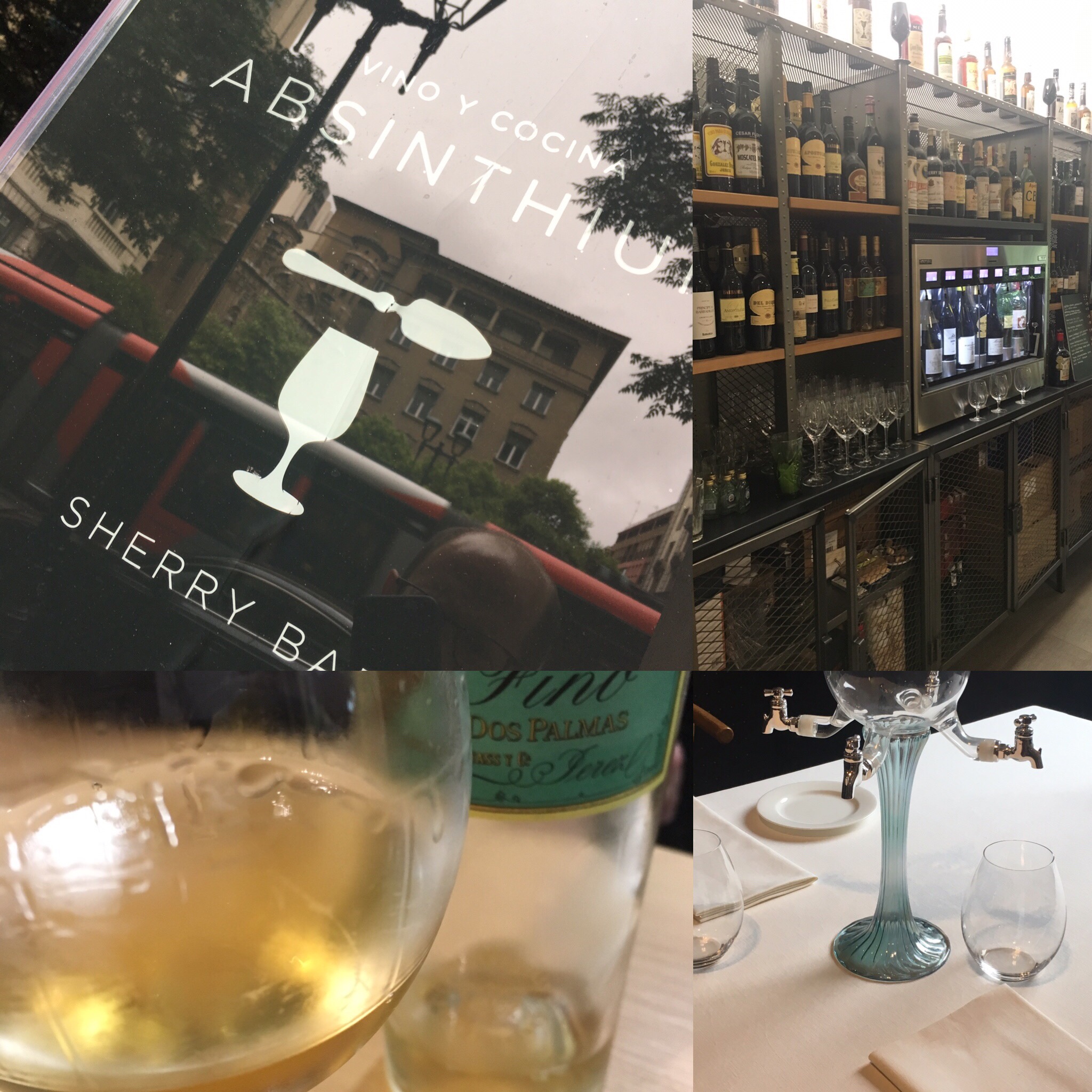
Had this during a recent visit to Zaragoza’s sherry temple, Absinthium, and must say it was the perfect aperitif.

A lovely rich gold colour – as you can see it was maybe just a little chilly. Appetising nose with fresh, piercing, salinity and beach grass and almonds in the back ground. Then on the palate it is fatty/creamy in texture, has a nice edge of salinity and again a pleasing, almond flavour to it. Not a very long finish but a fresh one.

Elegant, tasty, and fresh. Lovely stuff.

Fino que va para amontillado Criadera/A – 1/2017 

img_6648

I think we have now reached the limit in terms of length of wine name – this is getting to Riesling-like proportions. Was going to write this up as an amontillado fino but have gone with the manufacturer’s instructions.

It is the first saca of 2017 (or ever), one of the new releases by Alvear (you can try them all at Territorio Era), and as you can see is a pretty limited release – 1060 tiny bottles. 100% pedro ximenez with an age of around 10-12 years under flor and apparently from the criadera used to feed the solera of the amontillado VORS.

It has a bit more reddish brown than straw in colour and is pretty clear, if not quite cristaline. On the nose I find it much closer to an amontillado than a fino. I don’t get quite as much haybale biological action in the nose, just maybe a bit of sawdust whereas there is a piercing salty bitter almond aroma. On the palate too it wasn’t as fat or fatty as I expected. In fact I was surprised by just how dry and fine it is. An elegant palate, with a nice sharp acidity, a very piercing bitter almond flavour and a fresh, saline finish.

An elegant wine in a cheeky little bottle: get one if you can.


Solear en rama – Winter 2016


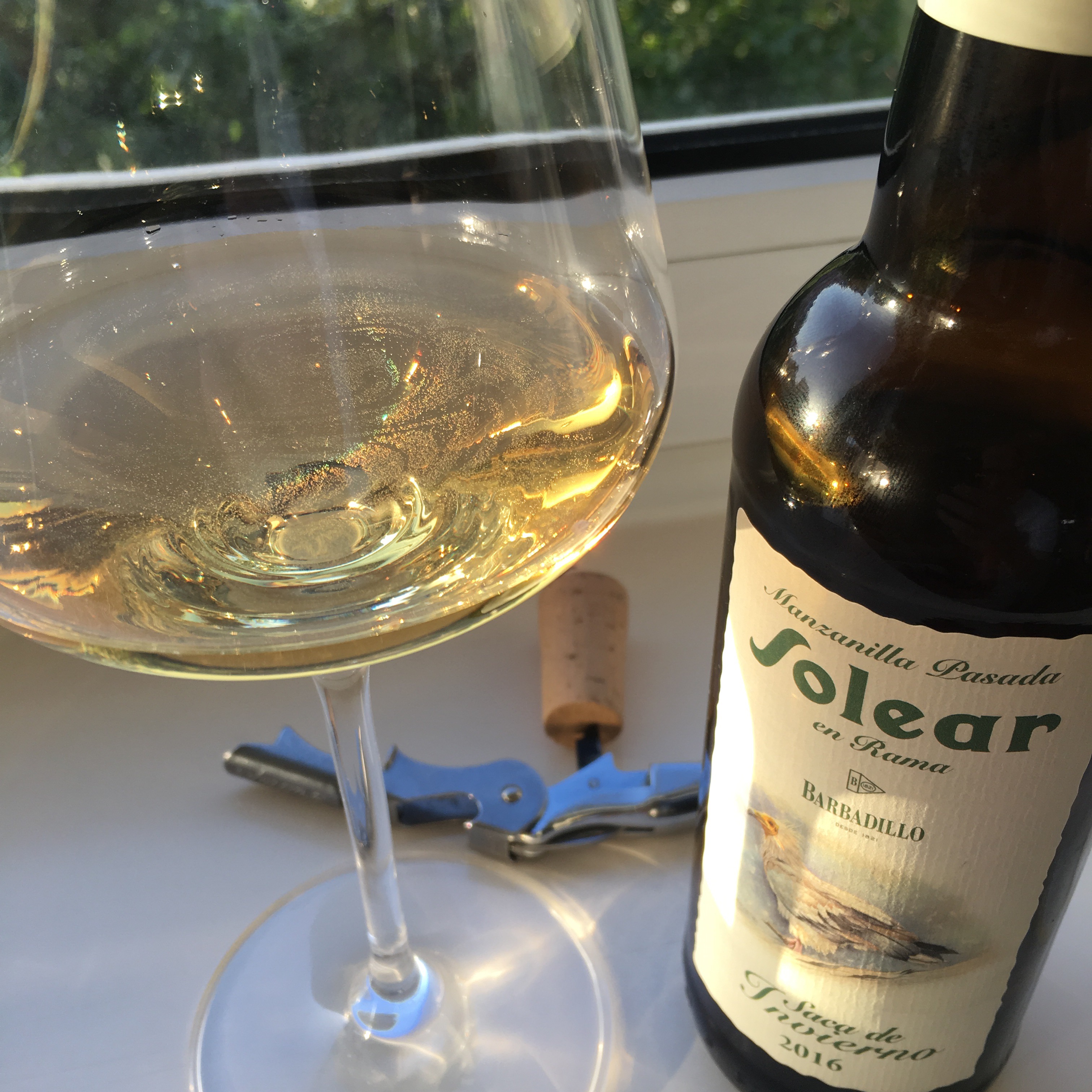
Although I fully understand the arguments in fabour of magnums, I also love these little bottles – just perfect for a pre prandial snifter. This one is full to the brim with delicious, characterful manzanilla and comes with a free gift – a tiny veil of flor (at least that’s what it looks like to this untutored eye. 


And just look at that photography too – through the neck of the bottle. Absolutely top drawer blogging tonight! 

Palo Cortado Privilegio 1860

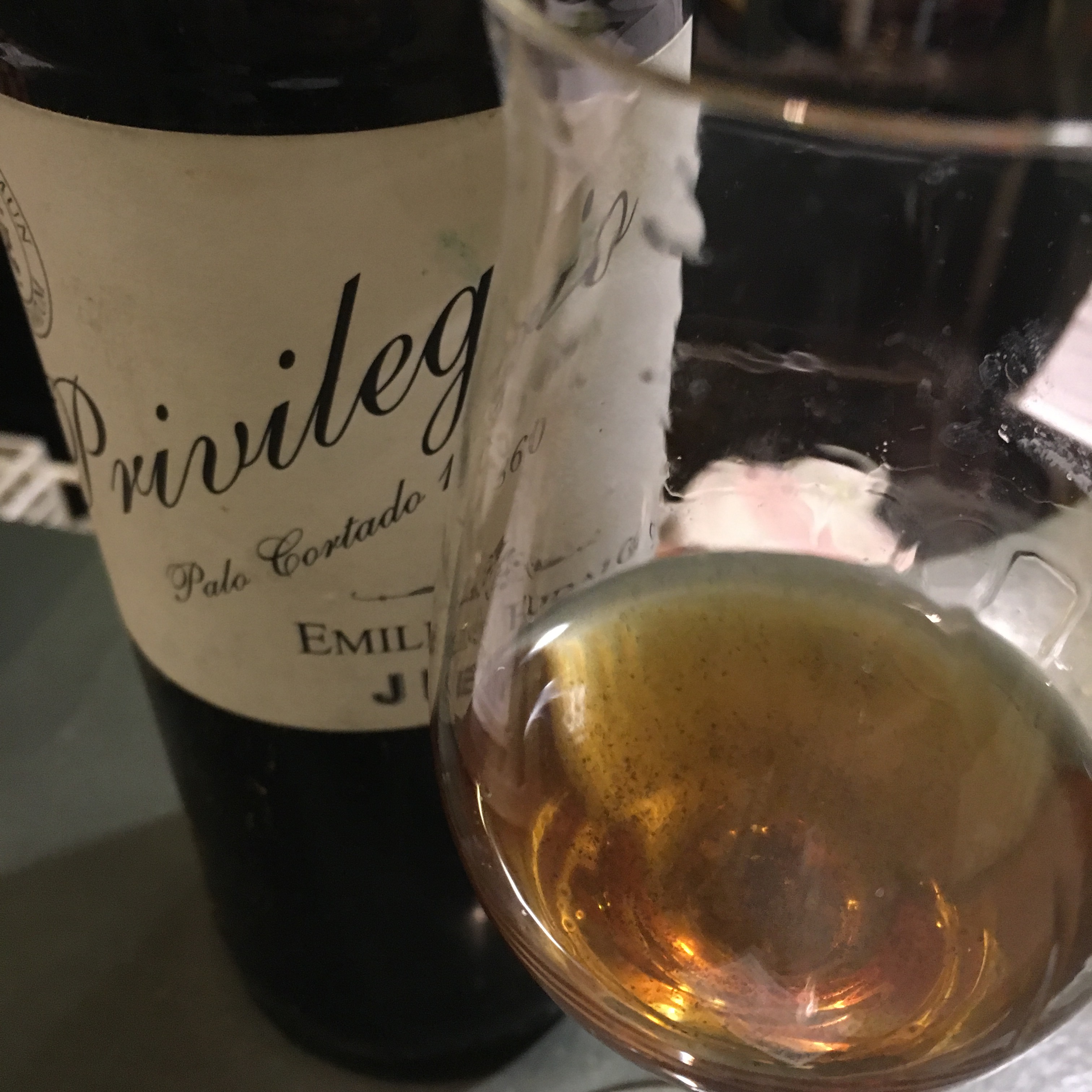
I was given this yesterday at La Matilde blind (I did say that your man was a gent) and although I never expected quite this I knew where it came from immediately – if I had been given time I would have guessed it was El Tresillo 1874. (I really ought to have known, since I have had this not once but twice before (he said name showing off unobtrusively).)

As you can see a lot of solids in the glass but it was a beautiful wine in every other respect. The colour and sheen, the sweet spicey nose, and the perfect profile of smooth acid, full body and long finish without any jarring astringency. Such a lot of silk on the palate and tasty silk too – notes of ginger, chocolate and spices. The sort of wine that you can enjoy for a long time – it is eternal on the palate and just keeps unwinding flavours on you.

Real class and a privilege indeed.

La Matilde

Second stop in Zaragoza and another must for visiting wine lovers – La Matilde – a classic, old school restaurant where you can eat fantastically well just metres aboce one of the finest, busiest, fullest wine cellars I have seen anywhere and, if you are lucky, drink some absolutely unique wines. 

The sommelier is not only the absolute boss in wine terms but also a true gent. You can see one of the highlights above and I will get back to that when I can but there was also a cracking old Emilin moscatel served with a twist of orange and your man had plenty in reserve. 

Absinthium


Absinthium is an obligatory destination for any sherry lover – or wine lover for that matter – in Zaragoza, and was in fact my first stop on arrival.

Top class – a really big selection and some cracking, classic wines on the shelves and in the fridge and the sommelier, Jesus Solanas, really really knows his business. Not just sherry on offer – some really nice, elegant wines from around the world available by the glass, and as the name suggests it is also one of the few places you can enjoy absinthe – even out of the tap as per the old school. An absinthe seemed a bit strong as a pre prandial snifter so I stuck to the healing wine and it was terrific – right in its prime.