Alvear Fino en Rama 2012 in Zalamero Taberna

The way I bang on about the new vintage finos coming out of Jerez you would think they were the pioneers but in fact it is not the case. Looking into this wine I discover that up at Alvear they have been producing single vintage finos since 1998 (a good few years before Williams & Humbert’s finos – at least as far as I know). In fact given the vocal supporters of Montilla Moriles I am surprised this hasn’t been pointed out to me before.

Anyway, you can see I am out of practice because I totally failed to note how long it had been in the bottle. It is obviously not long – five years or less and I would guess no more than four.

A beautiful The youthfulness is there in a bit of citrussy, grapey juiciness, but even so it has an almond nuttiness to it (I often find the almond more marked in px finos), and with the time in bottle (which I am guessing at two years) toasted notes. It is not as zingy as its big brother the Capataz, and in comparison big in the beam rather than fine and slippy, but still a fino in every respect and a fine one too.

So hail to the other place once again, and long live vintage wines!
Socaire 2016

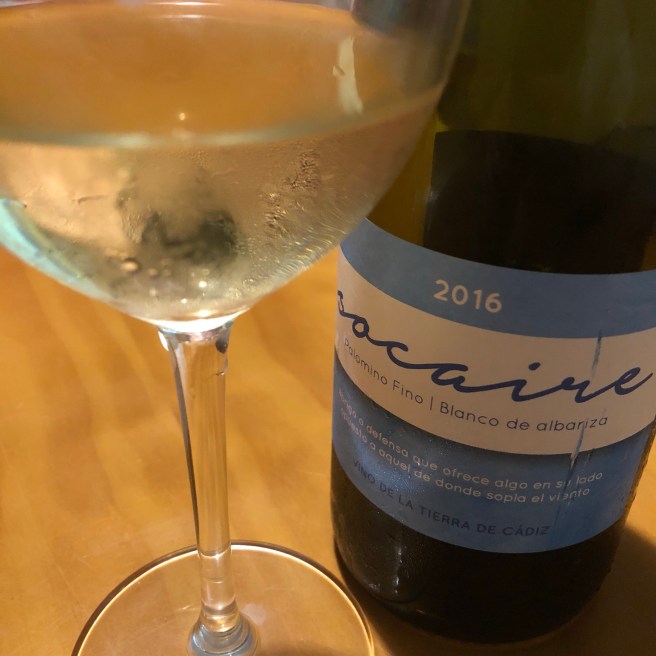
There she goes, the third vintage of Chiclana’s finest, and a wine that has in its short history acquired its own cult – socairismo. It is by Primitivo Collantes, a 100% unfortified palomino from the vines on Finca Matalian (I think), fermented and aged for more or less two years in botas that had formerly held Fino Arroyuelo. Not necessarily under flor, bot not necessarily not under flor either: there is definitely a touch of biological on the nose and the palate (although that might be accounted for by the barrel).

Whatever the process, the result is a cracking wine. A clear gold in appearance, has a nose of chalk, ripe apples, nuts and chamomile, then a zingy, tangy palate that is rich with a mineral finish. An exuberant, tasty wine (for connoisseurs, this is much closer to the explosive first vintage in 2014, with a touch less acidity and a touch more shape than the 2015).

Love to see the date proudly displayed on the label too – about time the authorities recognized and encouraged these wines. I had this when I visited Primitivo this summer with some chicharrones and a slice of the excellent local cheese. As I wrote then, the most impressive thing about Primitivo is not just the wine he makes, but the progress he has made against the tide. This wine is almost the embodiment: when he first had the idea he couldn’t convince the company, so paid for and bottled at least the 2014 himself.

Class wine from a class bloke.

Viña Matalian 2017

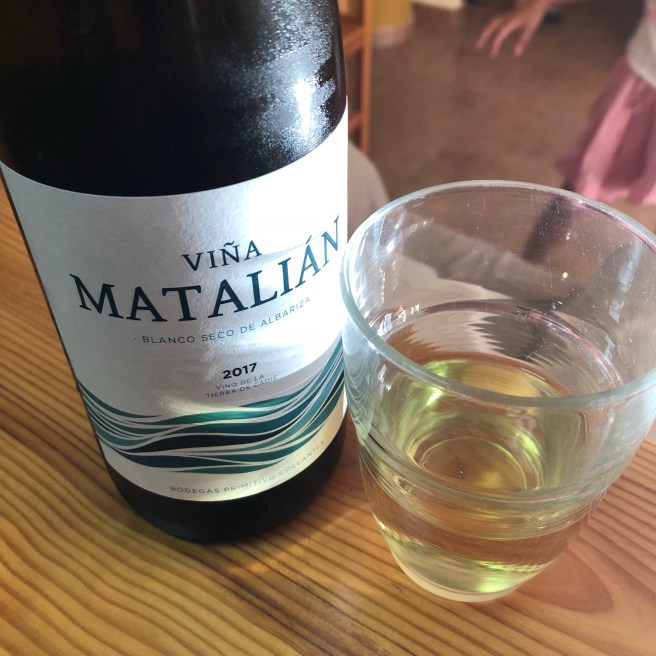
Viña Matalian 2017, seen here just South of its natural habitat in Chiclana but not in its natural vessel.

The simplest of the wines from Primitivo Collantes‘ Finca Matalian in Chiclana de la Frontera (see this link for a not very up to date summary of the full range (it is missing Socaire for a start)), this has always been a favourite of mine for summer drinking. It is as cheap, as they say, as chips, but is fresh, unassuming and beautifully gluggable.

This vintage seems to me to have a bit more fruit and concentration, which you notice more as you get into the bottle, but even so it is far too easy to drink, even from a rental property egg cup like this one!

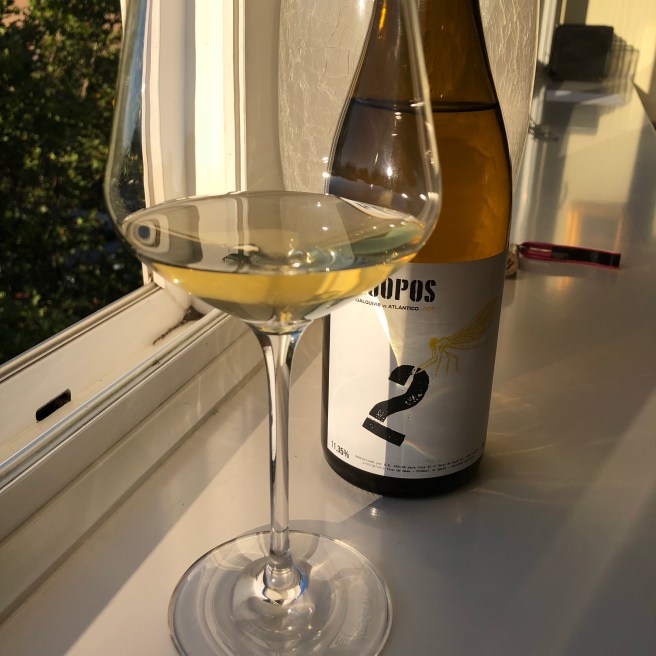
Thinking outside the box: Pitijopo Volume 2, Number 2

Eighteen months ago when a group of friends and I sat down to share Volume II of the Pitijopos this wine, from Miraflores Alta, was my pick of the crop so when I saw them being sold individually in Reserva y Cata recently I couldn’t resist picking it up for another dip.

And I am glad to say it is just as good as I remembered – maybe even a little finer. A little closed first up but the clouds soon burnt off and it grew into a really class, fresh and “vertical” (in the parlance) white wine with a lot of enjoyable lemony umami citrus on the nose and the palate and just a classy touch of salinity on the finish.

Lovely stuff and great memories.

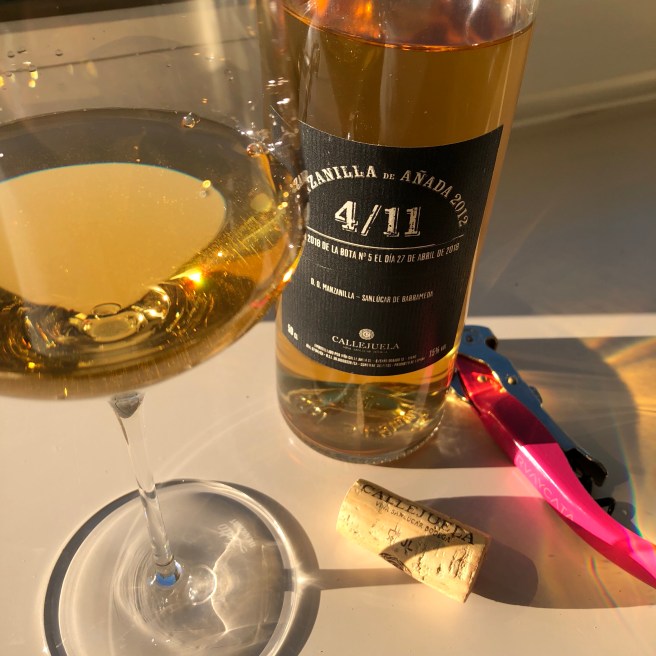
Manzanilla de Añada 2012 – 4/11

The fourth episode of this awesome saga comes with a darker colour, a richer nose and a softer feel. A real change from its three older (or younger?) siblings.

The series always promised to be an education in the effects of static ageing on the wines but it has also been a delight. The first wine had fruit and body resisting the biology: it was frankly a revelation at the time, and a glimpse of what could be possible with the minimum ageing under flor. The second was sharper, finer and the apple fruit and salinity marked it out as a real manzanilla. The third was a manzanilla with purpose: heavier with ozone and salinity. Now number four has oxidation and the resulting wine is enticing on the nose and full of mellow fruitfulness on the palate.

Nothing will ever repeat the emotion and excitement that accompanied that first wine or its significance – I remember it getting a standing ovation the first time I shared it with the guys-, but as a wine itself this may be the most enjoyable yet. It is a little beauty.


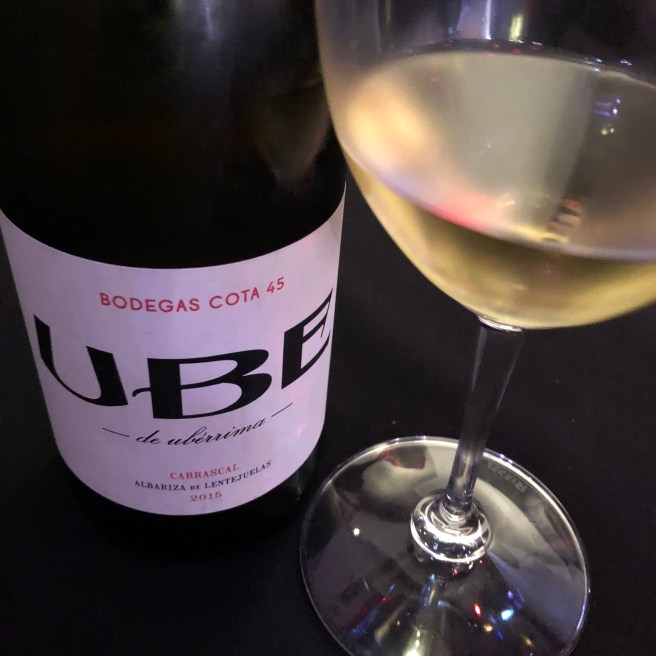
UBE Carrascal 2015

Sorry for the radio silence everybody: have been running around a lot lately and haven’t found time to get the posts out. Rest assured, however, that I have maintained my blood alcohol level and that the silence does not indicate abstinence. Rather, I have accumulated a big stack of draft posts.

Of which this is one: an encounter with the 2015 UBE Carrascal, by Cota 45. The original UBE and for me still my favourite: a wine that starts fresh, sharp and mineral and just grows in breadth and stewy, beefy flavour as it opens in the glass. A really expressive wine – this one started a little chilly but soon warmed up – and one that shows that you don’t have to compromise between freshness and flavour.

Fresh, expressive and flavourful. Top drawer.

The Williams 2009s in El Escaparate de Vallehermoso

It’s nice to discover new places and it’s nice to run into old friends, so you can’t argue with running into old friends in new places. These two wines – which I was able to enjoy yesterday at El Escaparate – are definitely old friends.

I first came across the 2016 sacas of these released as part of the Colección Añadas – in fact they were among the first añada (vintage specific) wines that I had tried.

The two have a lot in common: from the same palomino in the same vineyards in Añina and Carrascal (Jerez), aged for the same eight years in botas of american oak of 500 and 600L before the saca in April this year. The difference is that the fino was fortified to 15º after fermentation, allowing it to develop flor, whereas the oloroso was fortified to 18º and allowed to age “traditionally”. It makes for a great opportunity to compare and contrast the effects of the biological and oxidative ageing.

It is also really interesting to contrast the various sacas. The first saca was in february 2016 and there have been two or three before this one in April 2017, and it has been interesting to see how the fino, in particular, has changed over time.

It was always a rich, juicy fino with a touch of oxidation, but this one for me has gone over the top from fino to amontillado, with slightly less sharpness and caramel complementing the hazelnuts that, foe me, characterized this vintage. Just look at the colour of it for a start: it is barely distinguishable from the oloroso.

The oloroso too has changed: it always had a spirity, volatile heavy hazelnut nose but this one seems a little quieter by comparison – but maybe the bottle had been open a while, or maybe it was just the change in the fino that made them closer in character.

Two lovely wines, and absolutely perfect with the various delicious meats on offer at El Escaparate (they certainly did the job with Higinio’s finest breasts of Barbary duck and wood pigeon).

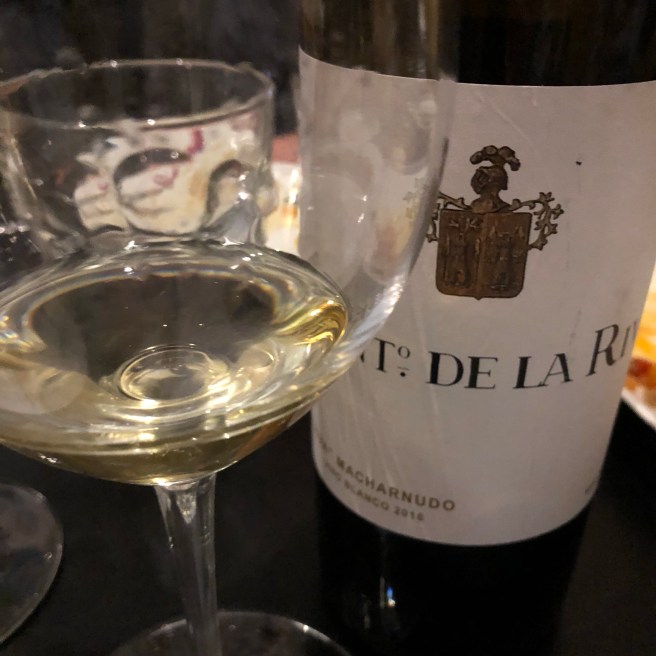
De la Riva Blanco de Macharnudo 2016

One of the most hotly anticipated white wines in ages, this is a white wine from palomino fino grown in Macharnudo and sold under the reborn label of Antonio de la Riva, acquired by Domecq back in the 1970s but now in the hands of none other than Ramiro Ibañez and Willy Perez. I took it to a really fun blind tasting a couple of weeks ago.

At first it came across as a delicate flower. A really inviting sweet, apple blossom nose and a nice mouthful of fresh white fruit on the palate, with some salinity at the end. Fresh and vital but elegant and refined rather than big and bold. Lovely stuff, no doubt about it, but as I happened to remark at the time, it surprised me at how delicate and floral it was, missing the intensity and concentration that the Barajuela wines have us accustomed to.

And that just shows why you shouldn’t take top class palomino white wines to a blind tasting, and why indeed you should keep your lip buttoned if you do. Because like all these palomino white wines even after just a little while open this seemed to grow in intensity and presence, and suddenly I was regretting my decision to share my bottle with seven other winelovers, however likeable.

And in fact I managed to nurse a glass long enough for the gods of blind tasting to punish me for my second error. Hearing my earlier comments, the aforementioned deities chose to serve me a wine I know pretty well – the Barajuela Fino 2013 (Saca de 2017) – two wines later such that I had both in the glass at the same time. And that intensity and presence? By now the De la Riva was singing at the top of its lungs whereas the Barajuela was fresh open, and maybe if not twins as such, the resemblance was uncanny.

I have heard this called the best of the blancos de albariza and I would not dispute that at all, it is a really top class white wine. I just wish I had kept the bottle to myself.


Amontillado de añada 2003 (Saca de noviembre 2017) in The One Wine

Recently I am starting a lot of posts with “not exactly a sherry temple but” and here is another one. Just two sherries open by the glass, but never mind the thickness, feel the quality …

This is a lovely, lively fine wine. Just on the orange side of old gold, with a brandy like nose of hazelnuts and polish and just a bit of sweetness. Then on the palate it has an acidic sharpness and a very elegant, fine palate with flavours of nuts, yeast, and minerals.

Absolutely top drawer. Enjoyed with a tomato salad and some smooth jazz but more of that in another post!

Oloroso de añada 1975 in Taberna Palo Cortado

Long overdue write up of a fantastic wine I had a good while ago in Taberna Palo Cortado – the Oloroso de Añada 1975 from Bodegas Tradición.

Bodegas Tradición are rightly famous for their VORS solera wines and I will always remember the tasting – also in Palo Cortado – when their enologist, Jose Maria Quiros, explaining how their biggest challenge was to keep the old wines tasting balanced and youthful. On that day this wine was one of the stars, and tasting it again nearly a year later it is still an exceptional wine.

The nose is very fine and brandy like, sweetness and spices in there with the furniture polish, and on the palate it is beautifully clean. I must admit that whenever I taste one of these vintage olorosos I am expecting so much acidity and concentration that they often come across as fresh and balanced but this really was. Again a nice acidity on the attack and then rich, gingery, spicey caramel flavours that grow in volume before fading away elegantly, and for a long time.

Really top class, and if you hurry they may still have some (they did last week).