Fino la Barajuela 2013

I have been after this wine by Bodegas Luis Perez for a good long while and am glad to say it was worth the wait.

It is a wine from some of the most famous real estate in the area: Pago Corregidor in Carrascal – the Northernmost and furthest inland of the great pagos of Jerez (dead North of Jerez on this map). The vines are on Albariza “Barajuela”, which is characterized by visible sedimentary layers, like a deck or “baraja” of cards and for producing fruit capable of wine with a muscular, horizontal quality. It has been statically aged and is still a baby compared to many finos around at only two years under flor, but there is no doubting its force of personality.

As you can see, it is a crystal clear, slightly golden colour and this might sound odd but I would describe the nose as “compact” – not a yeasty/acetaldehide nose but punchy almonds, melon, herbs and maybe just a bit of salinity. On the palate it is indeed big and muscular – with a punchy yeastiness, maybe some very mellow fruit like melon or pear, almonds, and some sapid zing. It is an intense experience, with a lot of body (still a high glycerin content you would say), structure and flavours but also a long, pleasant, fresh finish.

“Old school” stuff: it is said that back in the days when the wines of Jerez ruled the earth they were wines such as this -big, solid, wines quite distinct from today’s lighter styles. Drinking this you can absolutely believe it. Magnificent.


Las añadas en el Marco de Jerez

Los Sobrinos
Required reading (in Spanish) from Ramiro Ibañez and Luis “Willy” Perez via the following link – lossobrinosdehaurie.com
These two guys need no introduction – they are two of the most exciting wine makers working in the region (or anywhere) today – and this is the first section of a work they have been preparing for some time .
The title, literally “Vintages in the Jerez area”,  is intriguing and suggestive of where I think the region needs to go (witness my cabinet reshuffle and views on vintage chic) and early on you get a flavour that the authors (both of them involved in making vintage wines as we speak) are of a mind when they remind us that “the last two centuries in which the dynamic [solera] system has predominated over the static, represent only 7% of the 3000 years of viticulture in the province of Cadiz”.
This first section certainly lays down a solid base. 52 pages of cracking documents, photos (including the above shot) and explanations setting out the early history of the area from the point of view of the winemaking and the wines:
  • The first chapter describes the wines and winemaking in the area “before the generalized storing of wine” (i.e., before it became customary to age the wines in origin, at the end of the 18th Century) including the introduction of biological ageing in Sanlucar, probably during the 18th Century;
  • The second chapter then covers the period 1788-1830/40, which it terms the “centralization of Jerez”, covering issues such as the increased use of palomino fino; and
  • The third chapter covers the period 1840-1870 (the “refinement of Jerez before the precipice”), including the birth of the classifications and symbols and the refinement of the solera process.
It is fascinating stuff that repays study.

Pedro Ximenez Toro Albala 1986 

  
By Toro Albala, the top men when it comes to PX, and a vintage too. Has a cracking Ficha

Anyway, this is late night material. Dark black brown, gloopy, nose of black raisins and spices. 

On the palate it is sweet and concentrated, grapey raisins. Concentrated raisin – lightly spicey, sugary. It is a full flavour alright. Still juicy raisins though, california raisins from a little red box.

Luxurious and not OTT – really good. 

Vintage chic

992ae23a-d032-4d31-94af-1902d89eaec2

The issue of vintages has been on my mind a great deal lately. First, a couple of weeks ago I was lucky enough to take part in a brilliant tasting of vintage port organized by Vila Viniteca here in Madrid – including four examples of the fantastic 1994 vintage and a wonderful Niepoort from 1970 (thanks David). After that tasting, a few of us went for dinner which we washed down with a couple of vintage champagnes (what else would you drink after port?), including an amazing Pascual Doquet 1995 (thanks Guille). After all those vintages from those two splendid regions, this blogger was left musing on why he so rarely saw vintage sherries.

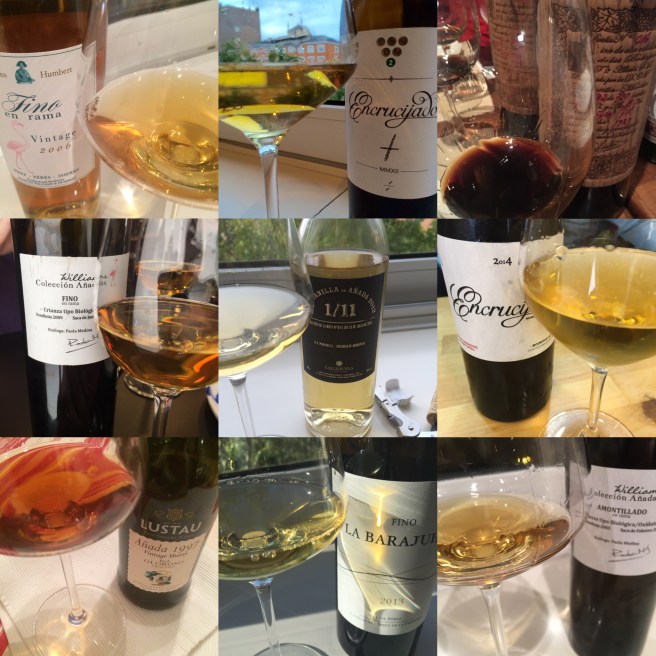
Not that there are none. The half dozen or so avid readers of this blog will recall brushes with vintage wines by Cota 45 (the Encrucijado MMXII, and again), Willams & Humbert (2006 fino en rama), Lustau (1997 Oloroso), la Callejuela 2012 Manzanilla de Añada (not once but twice), Ximenez Spinola (2014 Pedro Ximenez) and, most recently, Cota 45 again(the 2014 Pandorga), and although not blogged I have been lucky enough to imbibe several vintage palo cortados (the 1974, 1983 and 1987) by the great Gonzalez Byass (my favourite, the 1974, I haven’t seen around much).

Nevertheless, in percentage terms we are not talking a great deal of wine – eight posts of a total of 287 to date – which is surprising. I bet if you looked at a blog specialized in Port or Champagne it would be a different story and it is a situation I have lamented in the past.

I am not saying do away with soleras – you certainly should maintain miraculous creations like La Panesa, Inocente and others. I also appreciate that soleras do more than merely blend wines: the wines of different average ages contain different nutrients that interact with the different strains of flor and produce different effects (which is why it is frustrating that more producers don’t specify how many criaderas they use).

But it would be great to see how much can be achieved by the fruit of an individual year’s harvest. Anyone involved in cultivation will tell you that harvests can vary widely from year to year – I remember a cracking chat in a cider bar in Gijon where the lads were worrying about that year’s apples – and while it is mathematically impossible for every year to be above average, the same laws tell us that quite a few of them will be.

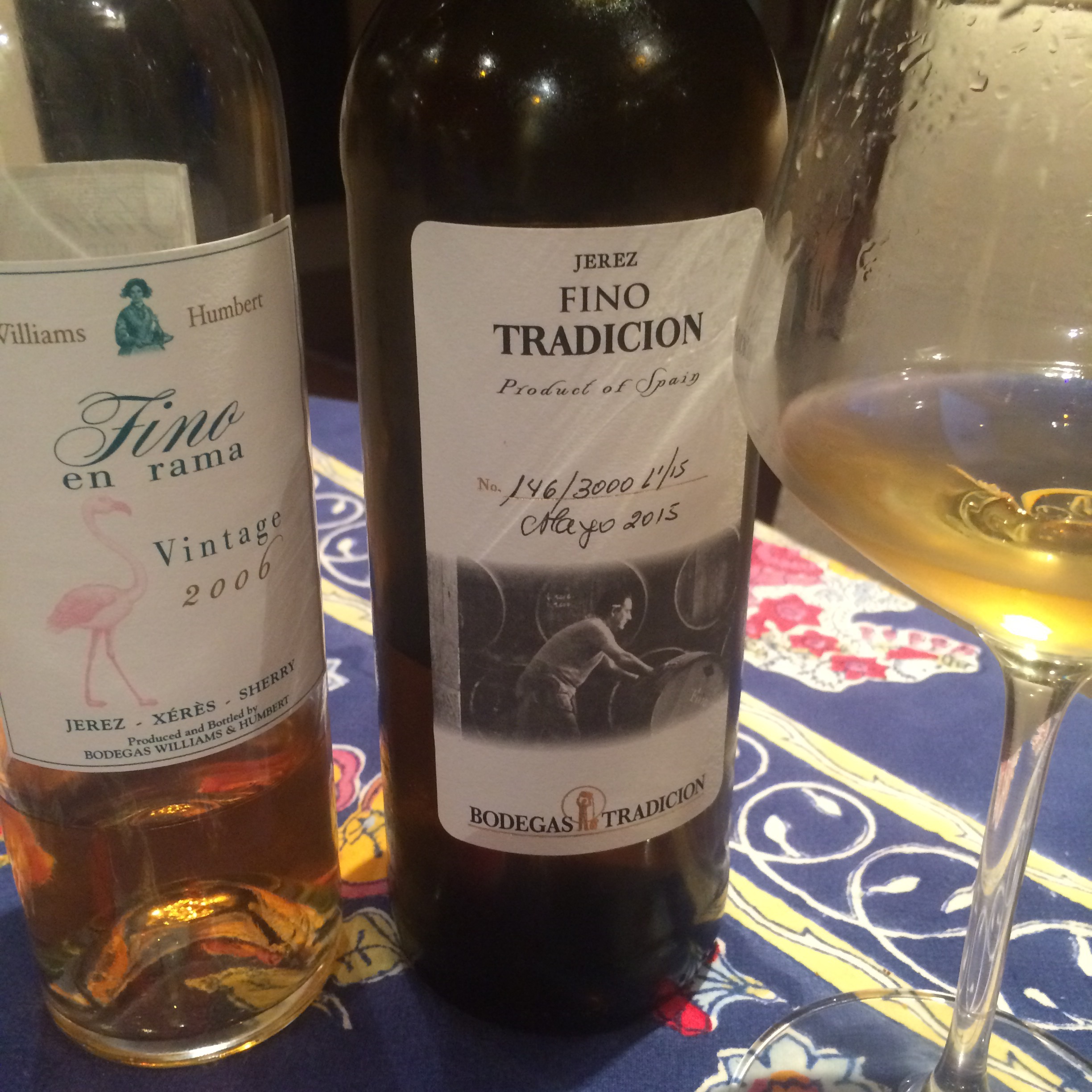
Indeed, although at this level anecdotal and not very scientific, I once carried out a comparison of vintage vs solera (the 2006 Fino en Rama and the Fino Tradicion may 2015). On that occasion, although the wines were different to start with, they would have been of approximately the same age at the time of consumption and the benefit of the solera was clear – the lovely umami fullness from the action of the flor – but so was the individuality of the vintage wine (which I slightly preferred).

This is why I am increasingly of the mind that a sytem similar to the one used in the Douro – where at the sobretablas stage, say, makers and Consejo Regulador determine whether to declare a vintage or not – would be an excellent way forward. (Particularly if allied with a bit of self restraint by the makers, say 2 or 3 vintages a decade like the best Port houses.) At the same time, they could of course continue solera production.

So it is great to see stuff like the piece this week by Paz Ivison in elmundovino (which has also been transcribed into English by the excellent sherrynotes) and even more exciting to see the first sections of the book being written by Ramiro Ibañez and Willy Perez (“Las Añadas en el marco de Jerez” or “Vintages in the Jerez Region”).

I really hope that it is just the beginning. I believe vintages are more interesting and provide scope for greater expression and differentiation and must be worth exploring further. In fact, winemakers: I promise that if you make them, I will buy them.

Pandorga 2014 

Here’s another interesting wine from Ramiro Ibañez at Cota 45, the “Pandorga” (meaning kite, hence the label), a 100% pedro ximenez, this one from 2014 and a much anticipated purchase from the Cuatrogatos Wine Club.

Interestingly, according to a note I just read this comes from PX grown on a vineyard you may have heard of: La Panesa, in Carrascal (which I think I am right in saying used to be the property of Emilio Hidalgo, and inspired the name of their famous fino). Harvested slightly late, the fruit is left in the sun in the traditional way (although I would guess slightly less than is usual), fermented and spends a year in bota – I believe this has literally just been bottled.

As with other wines by Cota 45, there seems to be a deliberate intention to allow the characteristics of the fruit to shine through: it is only 12% proof so you know it is going to be sweet and it doesn’t disappoint on that score, but it is relatively fresh and light by comparison to the heavier, darker styles of PX you may be accustomed to (not unlike the Ximenez Spinola Vintage 2014, although I think I remember that one as more raisiny).

As I have often said, I struggle to pick out the structure and features of sweeter wines, and on first tasting this it was no different, but a day later I am getting more from it. It is a honey-like amber in colour and not as cloudy as the picture above suggests (not sure what has happened there) – maybe just a little short of crystal clear. On the nose it is more grapey than raisiny – with a suggestion of that marmalade, old fruit aroma you get in the more intense champagnes.

On the tongue it is sugary rich like a fruit juice first up, very nicely integrated acidity, and now I am getting a real marmalade/intense apricot jam vibe at the back -bittersweet fruit. The finish isn’t sticky at all, but those fruit flavours hang around.

This is wine that you could drink gallons of without realizing (probably a good thing it comes in slightly smaller 50cl bottles) but also merits some study.

Ximenez Spinola Vintage 2014


Wine number three in the PX Party and this is a lovely thing. No mixtures here, a single añada pedro ximenez that is as fresh as a daisy. 

It seems to me that so many of the PX wines that you get are aged and transmit so much barrel (and don’t get me wrong, I love it) that it is really refreshing to have one so full of young life. This reminded me of a lovely Donnhoff that I had once – pure juice. In this case raisin juice. 

You can see the colour, light and fine for a PX, and the nose is a fresh box of California raisins. It is sweet and fruity, syrupy in the mouth, with just a little spicey alcohol kick at the back – enough so that it doesn’t seem sticky.

Really different than the other PX wines so far but a lovely wine. 

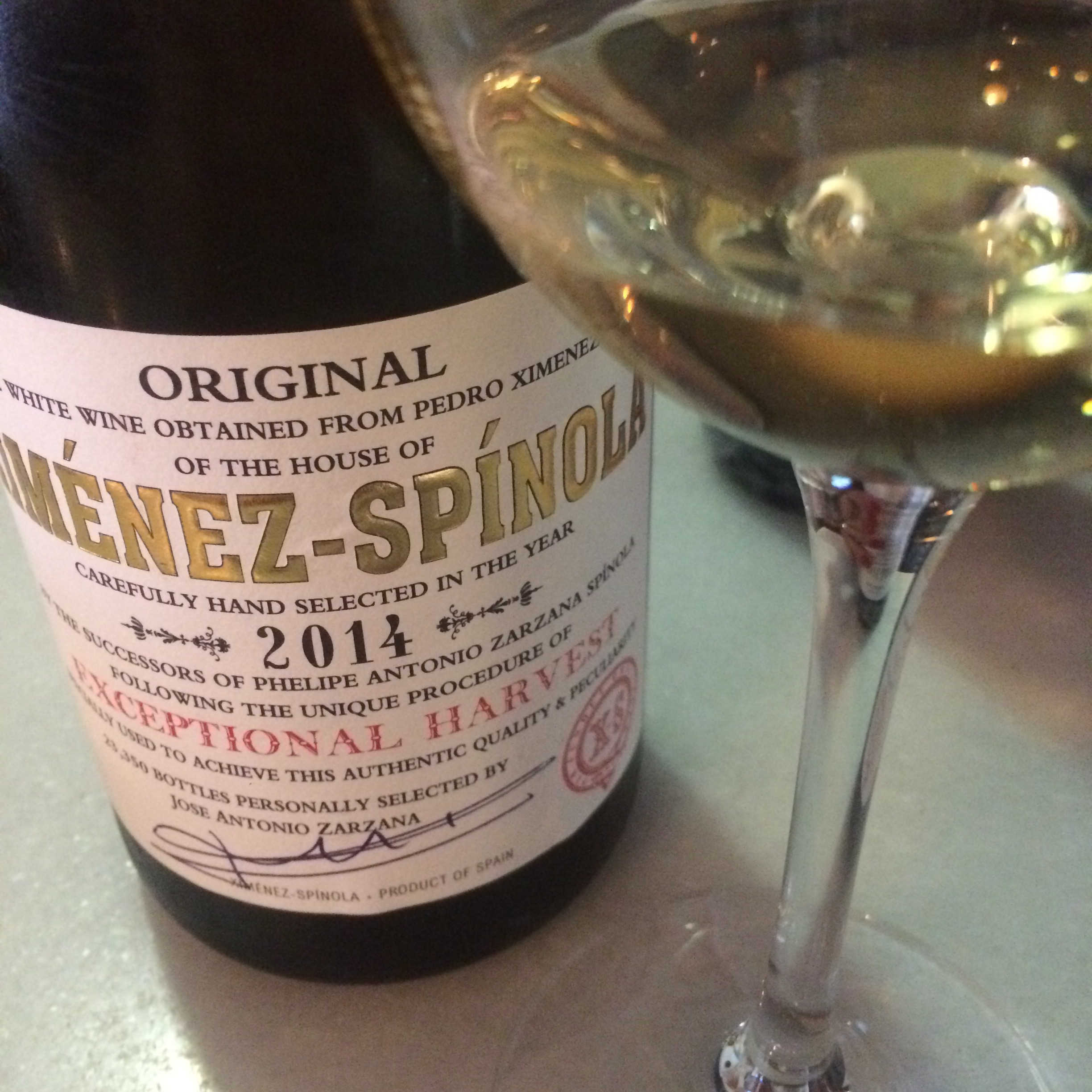
Ximenez Spinola Exceptional Harvest

This was the first of the lineup in today’s Ximenez Spinola in the Chula. Having tried so much unfortified palomino lately (the Tosca Cerrada, the Pitijopos, the Viña Matalian) I was really interest to try this unfortified pedro ximenez. I have to say I enjoyed it greatly.

It is a late harvest white table wine – the PX left on the vine for 21 days after it was ready – it is then macerated and fermented with its skins and aged on its lees for four months with light batonnage in old oak barrels (all this info off the impressive labels). It was a brainchild of sherry maverick Ramiro Ibañez (who pretty soon is going to need his own category on here) although I gather he is no longer involved.

It has a sweet nose but not raisin like, more grapey and soft fruit and nice bitter herbs. On the palate it is grapey, honeyed and herbal, nice and compact and the serious, herby bitterness almost balances the residual sweetness. Not as long as you expect but even that seems right in context. A nice, full bodied and full flavoured wine.

I really like it. Would be fascinating to try this against the Viña Matalian that is on the way.

Manzanilla de añada Callejuela 2012 – 1/11


More from the Night of the Pitijopos – and a new blogging low: failure to take any pictures of the wines. Luckily someone sent me a picture so I could cut this one.

This is excellent – really fresh, youthful and fruitful but elegant, polished and compact at the same time. I feel that it is maybe still a little meek although this could be down to its youth: the next couple of editions may well gain intensity and steel. In any event this is a lovely, light, enjoyable wine by any standards.

The group absolutely loved it, and I sensed some of the same enthusiasm I felt the first time I heard about this. It bears repeating: this is yet another fantastic, fascinating idea, and one that will excite any wine lover that hears of it.

Vintage vs Solera 

This was a fascinating comparison – have tasted both of these wines separately recently and the notes are below. Liked them both too.

The 2006 Vintage has more zing and is a little more intense, and has a slightly range of flavours – including buttery notes. On the other hand, there are more rounded, bread and nutty flavours in the solera-bred Tradicion fino. My first impression of the Vintage was that it had a big shape but was a little hollow and this umami is probably what I was missing.

Hard to choose between these two – I love fino and maybe prefer the flavour profile of the Tradicion, but the Vintage undisputably has a more precise structure and more discernible features. As they say around here – it is “mas vino” (more wine) and it probably wins by an elegant whisker.